Washing a Toyota Tundra without scratching the paint comes down to one rule: remove as much dirt as possible before anything touches the clear coat. A Tundra has big, flat panels that show swirls easily, so use a safe order, clean tools, gentle pressure, and fast drying instead of scrubbing harder.
Quick Answer
To wash a Tundra without scratching paint, rinse loose dirt first, clean wheels separately, foam the body, rinse again, then use a two-bucket wash with grit guards and a clean microfiber mitt. Wash top to bottom, dry with plush microfiber or air, and protect the finish with wax, sealant, or ceramic coating.
Key Takeaways
- Start with wheels and tires so brake dust does not move onto the paint.
- Pre-rinse and foam before hand washing to reduce grit on the surface.
- Use the two-bucket method, grit guards, and straight-line mitt passes to lower swirl risk.
- Dry quickly in the shade with clean microfiber towels or filtered air to prevent water spots.
- Use iron remover, clay, polish, wax, or ceramic only when the paint actually needs that step.
At a Glance
| Time Required | 45–90 minutes for a maintenance wash; 2–4 hours if you decontaminate and protect the paint |
| Difficulty | Easy to moderate |
| Tools Needed | pH-neutral car shampoo, two buckets, grit guards, microfiber wash mitts, wheel tools, plush drying towels, hose or pressure washer, optional foam cannon, iron remover, clay, polish, wax, sealant, or ceramic coating |
| Cost | About $50–$150 for basic wash gear; more if adding polishers or ceramic coating |
Quick Steps to Wash a Tundra Without Scratching Paint
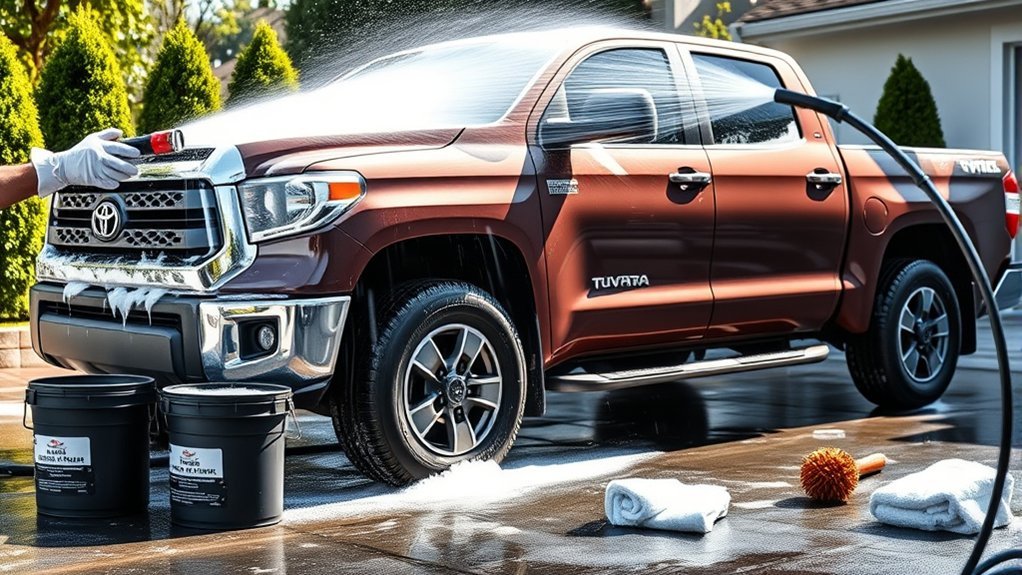
- Park in the shade and let panels cool. Hot paint dries soap and water too fast, which can leave spots and streaks.
- Clean wheels and tires first. Use separate brushes, towels, and cleaner for brake dust and road grime.
- Rinse the truck from top to bottom. Toyota’s exterior-care guidance recommends rinsing dirt and dust away before washing the body with a soft cloth or sponge and car wash soap when needed; see Toyota Owners exterior-care guidance.
- Foam the paint and let it dwell. Let the foam loosen bugs, dust, and road film, but do not let it dry.
- Rinse again before contact washing. This removes loosened grit before your mitt touches the paint.
- Wash panel by panel with two buckets. One bucket holds soapy water; the other holds rinse water. Use grit guards in both if possible.
- Rinse each section as you go. Do not let soap dry on the hood, roof, doors, or bed sides.
- Dry quickly with clean microfiber towels or air. Blot first, then use light straight-line passes.
- Add protection after the paint is clean and dry. Wax, sealant, or ceramic coating makes future washes easier and helps water release from the surface.
Warning: Never scrub dry dirt, use dish soap, wash in direct sun, or drag a dirty towel across the paint. Those shortcuts are common causes of swirls and micro-scratches.
[Products Worth Considering]

This adjustable foam cannon delivers thick, even foam for efficient pressure washer cleaning and comes with a dual connector for smooth switching between soap application and rinsing. Designed for use with a pressure washer, it includes multiple nozzle tips and an adjustable spray pattern to tackle vehicles and a wide range of outdoor cleaning jobs with ease.
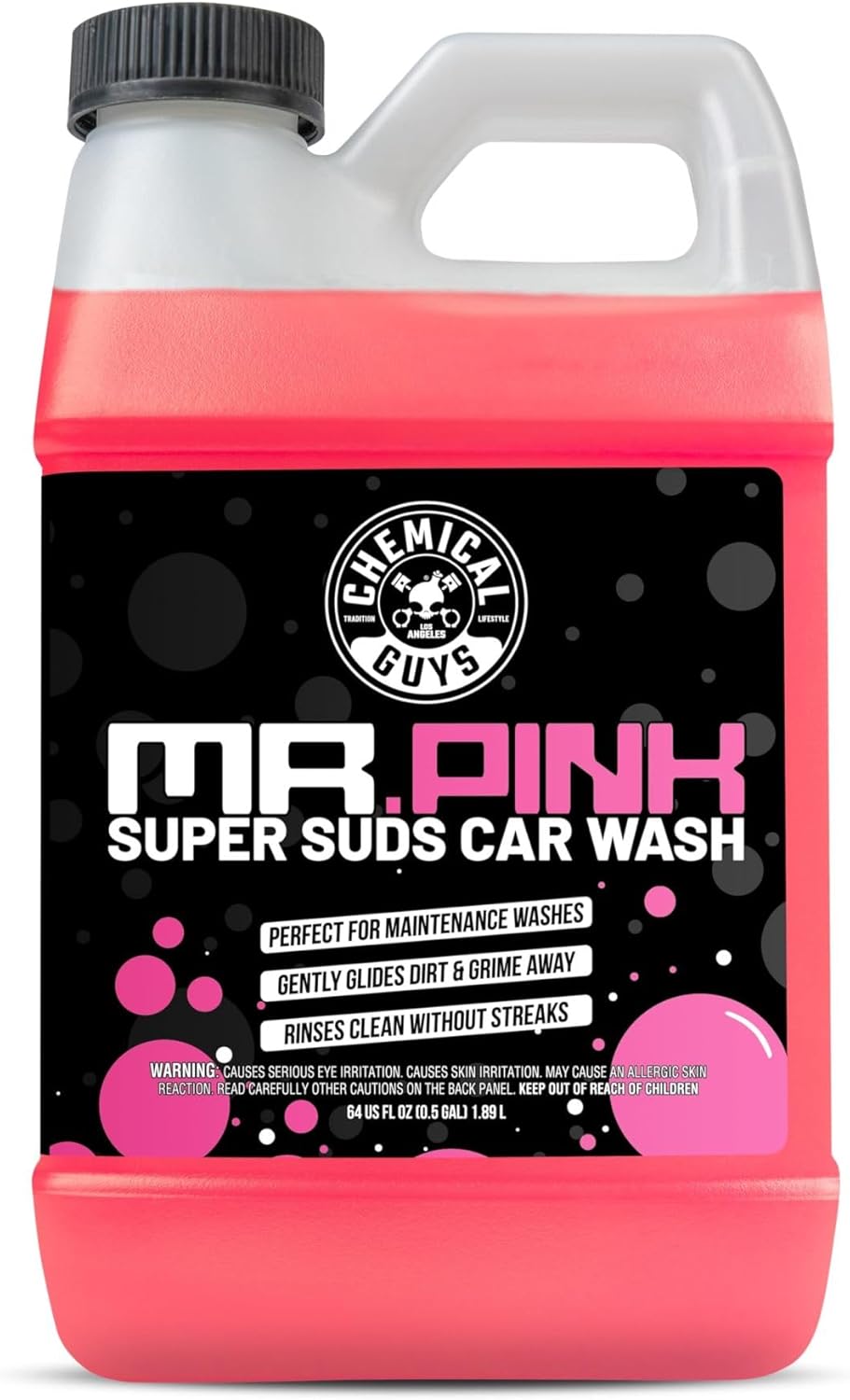
Chemical Guys Mr. Pink Car Wash Soap delivers thick, luxurious foam for safe and effective washing with a foam cannon, foam blaster, or bucket. Its pH-balanced formula helps lift dirt and grime while protecting wax, sealants, and ceramic coatings, leaving paint, glass, wheels, and trim clean and glossy.

Meguiar's Gold Class Car Wash combines cleaning and conditioning in one easy step for a smooth, high-gloss finish. Its advanced, biodegradable formula creates rich suds that lift away dirt and road grime while helping preserve existing wax protection. Versatile for bucket washing or foam cannon use, it leaves paint looking radiant, renewed, and ready for a professional-level detail.
Prep Your Tundra: Tools, Safety, and Wash Order
Set up before you spray water. Park on level ground, set the parking brake, fold the mirrors, remove loose bed items, and make sure the paint is cool to the touch. If you use a pressure washer, use a wide fan pattern, keep distance from trim, sensors, cameras, decals, and damaged paint, and avoid narrow jet nozzles. Kärcher’s car-washing guidance recommends using a flat jet and keeping distance from the surface when pressure washing a car; see Kärcher car-washing guidance.
[Products Worth Considering]
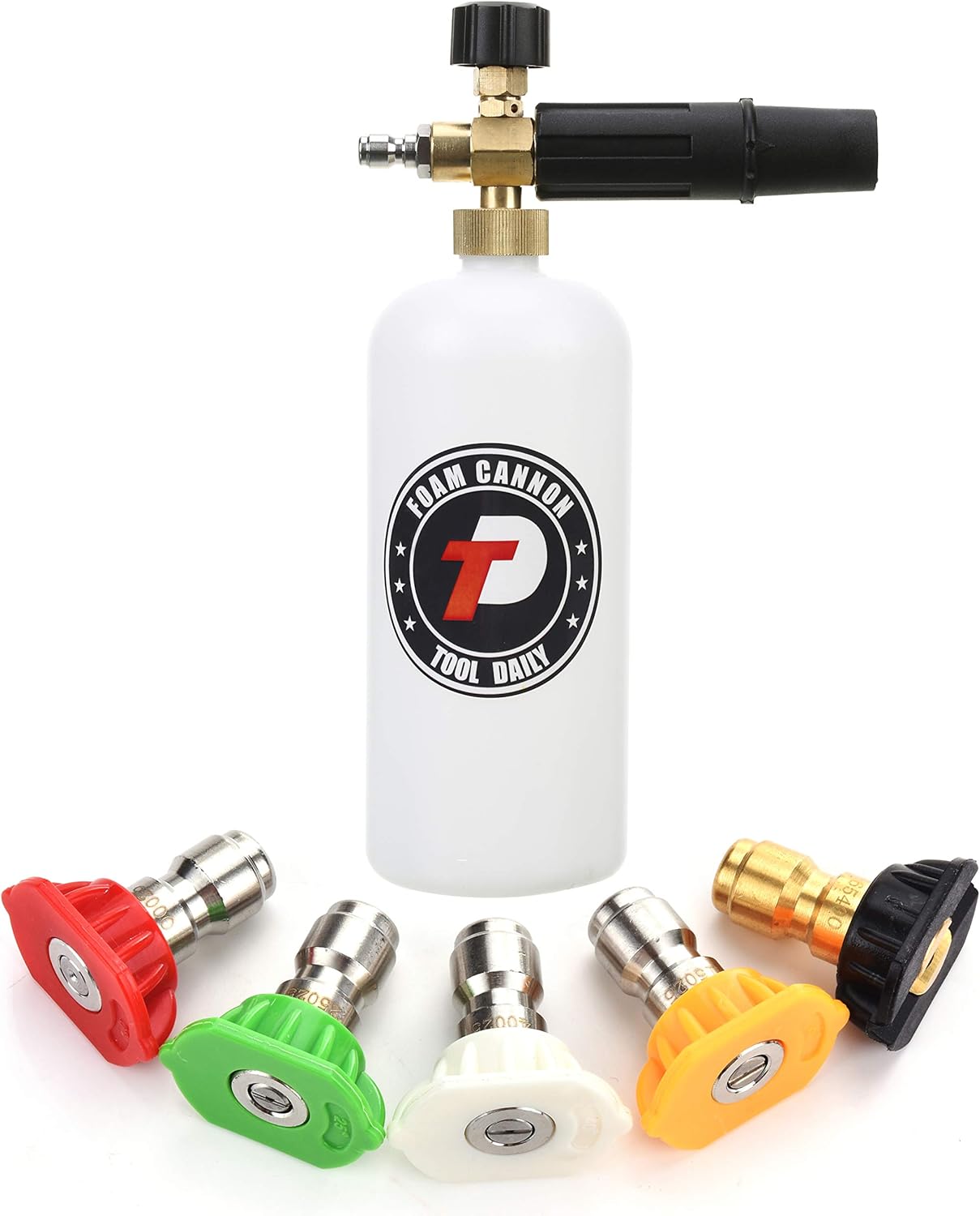
This foam cannon is designed to create thick, adjustable foam for more effective vehicle and surface cleaning when paired with a compatible pressure washer. It includes a 1/4 inch quick connect fitting, a 1 liter bottle, and five nozzle tips for versatile spray angles and applications. Ideal for washing cars, motorcycles, driveways, siding, roofs, windows, and other outdoor cleaning tasks.

This ceramic spray wax delivers long-lasting SiO2 protection with a high-gloss finish and strong water beading. It helps defend against oxidation, sun damage, dirt, and grime while making routine cleaning easier with a slick, self-cleaning surface. Safe for paint, wheels, plastic, rubber trim, and chrome, it offers versatile exterior protection for cars, trucks, RVs, and more.
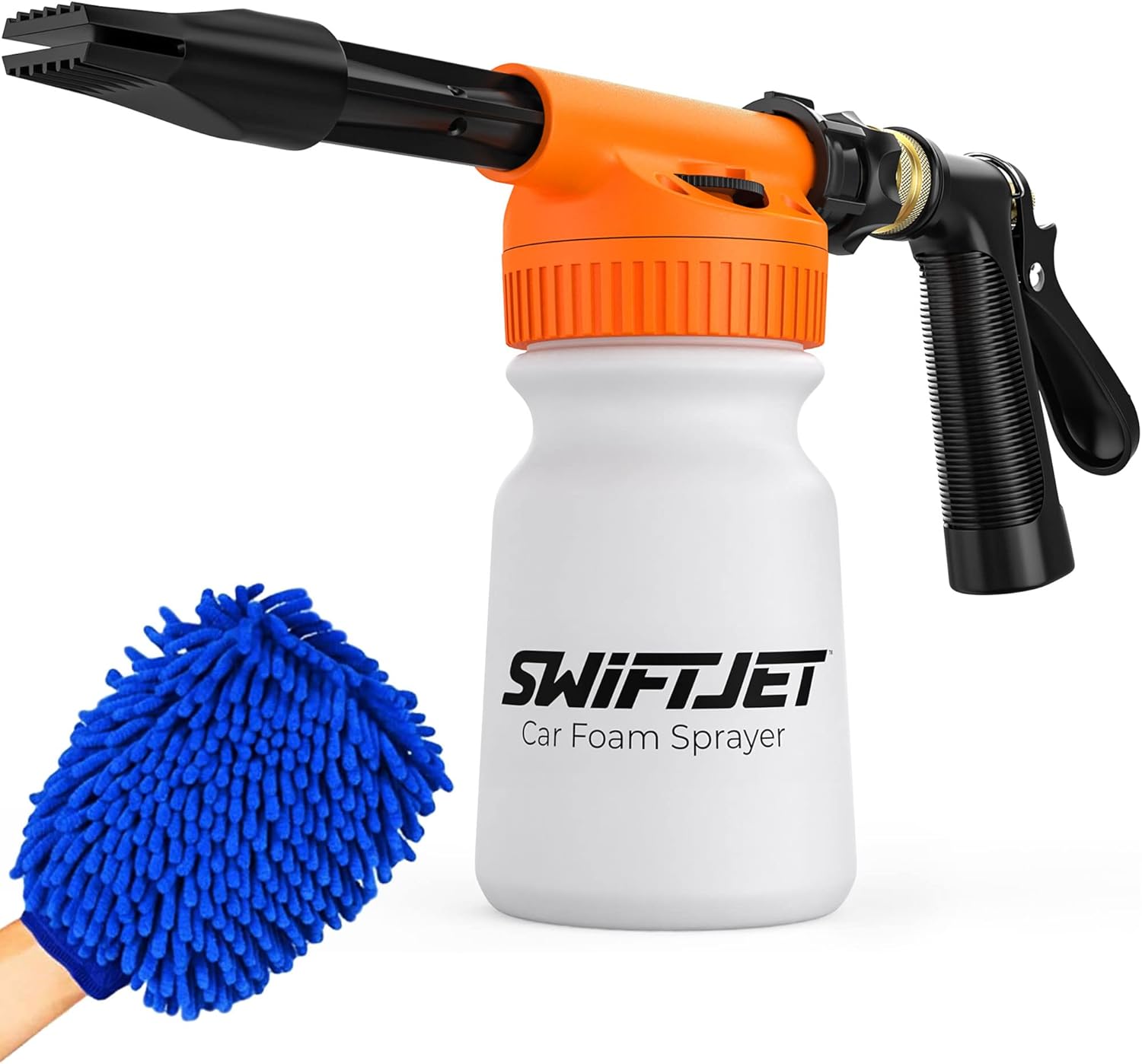
The SwiftJet Car Wash Foam Gun turns a standard garden hose into a powerful foam blaster for easier home car cleaning without a pressure washer. It produces thick, lubricating foam to help lift dirt and reduce scratches and swirl marks while giving you adjustable foam control for everything from light rinses to deep cleans. The included microfiber wash mitt adds extra convenience for a faster, more effective wash on cars, trucks, wheels, glass, and trim.
Essential Safety Steps
- Work in shade. Shade slows evaporation and gives soap more time to lubricate the paint.
- Use car-specific chemicals. Choose pH-neutral shampoo for routine washing and follow the label on wheel cleaners, bug removers, iron removers, and ceramic products.
- Keep wheel tools separate. Never use the same mitt or towel on wheels and paint.
- Inspect towels and mitts. A single trapped pebble or hard piece of grit can mark the clear coat.
- Watch runoff. If washing at home, direct water to grass or gravel when possible and avoid sending detergent-rich water into storm drains. The EPA notes that outdoor car washing can carry detergents, metals, hydrocarbons, and grime into storm drains; see the EPA stormwater vehicle-washing guide.
Gather Proper Tools
A safe Tundra wash starts with clean, paint-friendly tools. Use a pH-neutral car shampoo, two 5-gallon buckets, grit guards, a plush microfiber wash mitt, a separate wheel mitt or brush, soft detail brushes, microfiber drying towels, and a hose or pressure washer. A foam cannon is helpful, but it is not required; a hose pre-rinse and careful two-bucket wash can still be safe.
Pro Tip: Use more than one wash mitt on a full-size truck. Reserve one mitt for upper panels, one for middle panels, and one for lower rockers and rear bumper areas where grit is heaviest.
Wash Order Strategy
Use a clean-to-dirty order. Start with wheels and tires, then rinse the truck, foam the body, rinse the foam, contact-wash the paint from top to bottom, rinse again, and dry. The roof, glass, hood, and upper doors usually have less heavy grit than the lower panels, rocker areas, tailgate, and rear bumper, so save the dirtiest paint for last.
Foam, Iron-Decon, and Rinse: Safe Order to Avoid Dragging Grit
Foam is useful because it adds lubrication and helps loosen road film before contact washing. Spray the foam over cool paint, let it dwell for the product’s recommended time, and rinse it off before it dries. Do not treat foam as magic; it lowers risk, but the two-bucket contact wash still does the main cleaning.
Use iron remover only when needed, such as when the paint has orange specks, rough embedded contamination, heavy brake-dust fallout, or you are preparing for clay, polish, wax, sealant, or ceramic coating. Apply it to cool paint, avoid direct sun, let it dwell only as directed, and rinse thoroughly. Do not use iron remover as a casual weekly soap replacement.
Note: If your Tundra has matte decals, vinyl graphics, aftermarket wrap, unpainted trim, or recently repaired paint, check the cleaner label before using iron remover, bug remover, clay, polish, or ceramic coating.
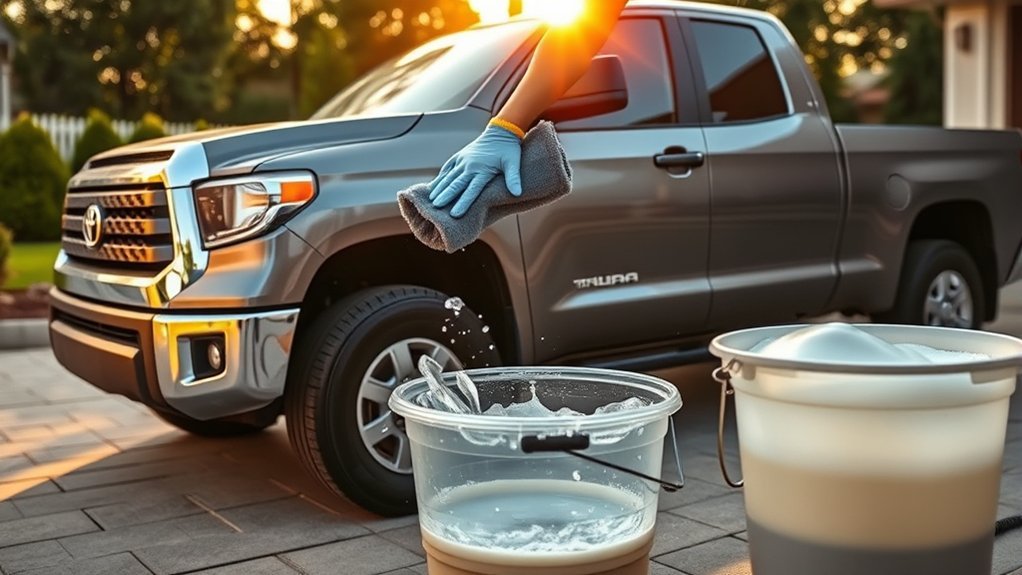
Use the Two-Bucket Method: Panel-by-Panel Steps to Prevent Swirls
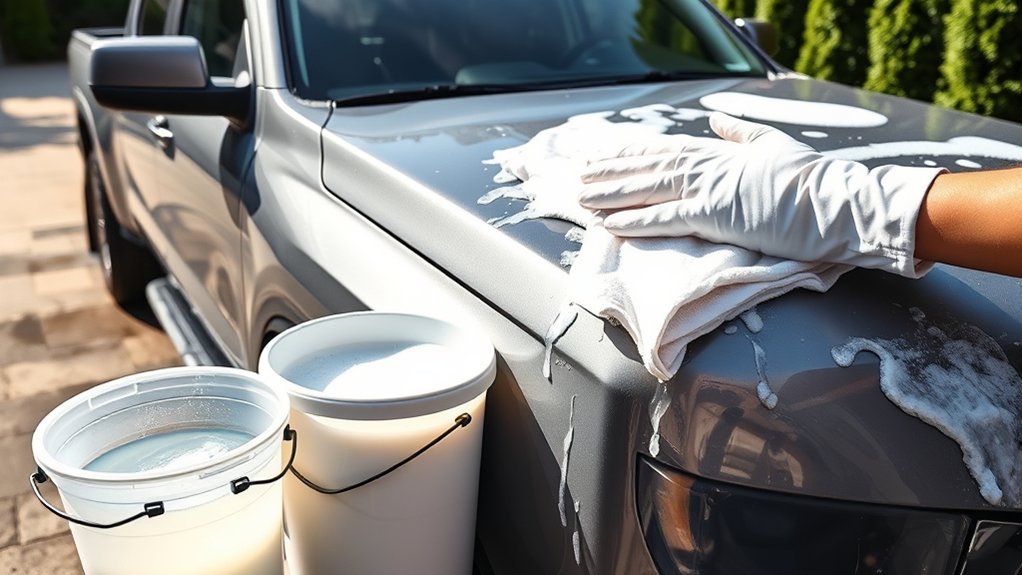
The two-bucket method keeps dirty rinse water away from your clean soap. Adam’s Polishes describes the method as one bucket for shampoo and one bucket for clean rinse water, with a grit guard or dirt lock at the bottom to help trap contamination; see Adam’s Polishes safe washing method.
- Fill the wash bucket with car shampoo and water according to the label.
- Fill the rinse bucket with clean water and place a grit guard in the bottom.
- Load the mitt with soap and wash one small section at a time.
- Use straight-line motions. Do not grind the mitt in circles or press hard.
- Rinse the mitt after each section. Rub it lightly against the grit guard to release dirt.
- Reload with clean soap before touching the next panel.
- Rinse panels often. Do not let soap dry while you work around the truck.
- Replace dirty rinse water. If the rinse bucket turns cloudy or gritty, dump it and refill it.
For the roof and hood, use a stable step platform instead of stretching across the paint. Leaning belt buckles, jacket zippers, watches, or buttons against the fenders can scratch just as easily as a dirty mitt.
Drying and Tips to Avoid Water Spots and Micro-Scratches
Drying is where many clean vehicles get new marks. Water spots form when minerals dry on the paint, and micro-scratches happen when a towel drags leftover grit. Work quickly, use clean towels, and keep pressure light.
Rapid Thorough Drying
- Sheet water off first. Remove the spray nozzle and let a gentle stream pull water off the panels.
- Blow out crevices if available. A filtered car dryer or blower helps clear mirrors, badges, grille pockets, handles, and bed trim.
- Use plush microfiber drying towels. Lay the towel on the panel, blot, then lightly pull in straight lines.
- Use a drying aid. A compatible quick detailer, spray wax, or drying aid adds slickness and reduces towel friction.
- Dry door jambs and tailgate edges last. These areas often hold grit, so keep separate towels for them.
Microfiber Technique Tips
Use soft, clean microfiber towels only. Fold each towel into quarters so you can switch to a fresh side as it gets damp. Wash microfiber separately from cotton towels, avoid fabric softener and dryer sheets, and use low heat. Before every wash, inspect towels for debris, hardened product, or rough edges. If a towel falls on the ground, retire it from paint duty until it is washed.
Preventing Water Spots
Water spots are easier to prevent than remove. Wash early or late in the day, keep panels cool, rinse thoroughly, and dry immediately. If your area has hard water, a final rinse with filtered or deionized water can help. If spots appear, use a dedicated water-spot remover only after checking that it is safe for your paint, trim, glass, and coating.
The safest wash is not the one with the most foam. It is the one with the least dirty contact.
Apply Paint Protection and Fix Existing Swirls: Clay, Polish, Wax, Ceramic
After the Tundra is clean and dry, inspect the paint. If it feels smooth and looks clear, you may only need wax or sealant. If it feels rough after washing, a clay treatment can remove bonded contamination. Meguiar’s says automotive clay removes bonded surface contaminants such as overspray, fallout, tree sap mist, and road tar; see the Meguiar’s clay kit guidance.
Use this order for deeper paint care:
- Wash and dry. Never clay or polish dirty paint.
- Iron-decon if needed. This helps dissolve ferrous contamination before claying.
- Clay with lubricant. Work small areas, use light pressure, and knead the clay often.
- Polish if swirls already exist. Wax and ceramic coating do not remove scratches; polishing levels minor defects in the clear coat.
- Protect the finish. Use wax for easy gloss, sealant for longer durability, or ceramic coating for stronger hydrophobic behavior and chemical resistance.
A ceramic coating can make maintenance easier, but it is not armor. Gtechniq explains that ceramic coatings bond to paint and improve hydrophobic and chemical resistance, but they do not make paint scratch-proof or stop rock chips; see Gtechniq ceramic coating guidance. If your Tundra already has swirls, polish first, then coat.
[Products Worth Considering]

This pressure washer gun and foam cannon combo is designed for efficient vehicle and outdoor cleaning with strong spray control and quick-change convenience. It connects to compatible pressure washer hoses and includes multiple nozzle tips plus an adjustable snow foam lance for washing cars, motorcycles, driveways, siding, and more. Built for flexible detailing and deep cleaning, it helps create thick foam and targeted spray patterns for better results.

This foam cannon is designed for pressure washers and delivers thick cleaning foam to help lift dirt, grime, and mud before you scrub. It features a 1/4-inch quick connect fitting, adjustable foam output, and a rotating nozzle for flexible coverage on vehicles and outdoor surfaces. The wide-mouth 1-liter bottle and durable brass and metal components make it a practical choice for regular detailing and home cleaning tasks.

This wide mouth foam cannon makes car washing easier by helping you mix soap quickly and produce thick, adjustable foam for a deeper clean. Its stable bottle design, durable brass and stainless steel connectors, and adjustable spray settings help improve coverage while reducing swirl marks during washing. Compatible with electric and gas pressure washers, it is built for reliable performance and everyday detailing.
How Often Should You Wash a Tundra?
For a daily-driven Tundra, washing every 2–4 weeks is a practical starting point. Wash sooner after road salt, mud, bug splatter, bird droppings, tree sap, beach driving, construction dust, or off-road trips. If the truck is garaged and lightly driven, you can stretch the interval as long as contamination is not sitting on the paint.
Troubleshooting Swirl Marks, Water Spots, and Streaks
| Problem | Likely Cause | Fix |
|---|---|---|
| New swirl marks | Dirty mitt, dirty towel, hard pressure, or circular scrubbing | Use cleaner wash media, lighter pressure, straight passes, and polish existing swirls if needed |
| Water spots | Hard water drying on hot panels | Wash in shade, dry faster, use drying aid, and consider filtered final rinse |
| Soap streaks | Too much soap or soap drying before rinse | Use correct dilution, work smaller sections, and rinse more often |
| Rough paint after washing | Bonded contaminants such as fallout, tar, sap, or overspray | Use iron remover if appropriate, then clay with lubricant and protect the paint |
| Brake dust on lower panels | Wheel cleaner, dirty brushes, or rinse water splashing onto paint | Clean wheels first, rinse thoroughly, and keep wheel tools separate from paint tools |
Frequently Asked Questions
How do I wash my car without scratching the paint?
Rinse loose dirt first, foam or pre-soak the paint, then wash with a clean microfiber mitt using the two-bucket method. Work top to bottom, rinse the mitt often, avoid heavy pressure, and dry with plush microfiber towels or air. Never scrub dry dirt or use the same tools for wheels and paint.
What can I wash my Tundra with that will not hurt the paint?
Use a pH-neutral car shampoo, clean microfiber wash mitts, soft wheel brushes, and plush drying towels. Avoid dish soap, household degreasers, abrasive sponges, bath towels, and dirty chamois. Strong chemicals should only be used when needed and only according to the product label.
Do I need a foam cannon to wash a Tundra safely?
No. A foam cannon helps loosen grime and adds lubrication, but safe contact washing matters more. If you do not have a foam cannon, rinse thoroughly with a hose, use a high-quality car shampoo, and follow the two-bucket method carefully.
How often should I use iron remover or clay on my Tundra?
Use iron remover or clay only when the paint needs decontamination. Signs include rough paint after washing, orange specks, heavy industrial fallout, or prep for polishing, wax, sealant, or ceramic coating. For many daily drivers, one to three times per year is enough.
Will ceramic coating stop scratches?
No. Ceramic coating can improve gloss, water behavior, and chemical resistance, but it does not make paint scratch-proof. You still need safe washing, clean mitts, and careful drying. Existing swirls should be polished before coating.
Conclusion
You can wash a Tundra without adding swirls by staying disciplined: wheels first, rinse thoroughly, foam or pre-soak, rinse again, contact-wash with two buckets, dry gently, and protect the paint afterward. The goal is not to scrub harder; it is to keep grit away from the clear coat at every step. Use clean microfiber, work in the shade, follow chemical labels, and save decontamination or polishing for the times the paint truly needs it.
Sources
- Toyota Owners — Cleaning and protecting the vehicle exterior — supports top-to-bottom rinsing, car wash soap, drying, and waxing guidance.
- U.S. EPA — Stormwater Best Management Practice: Vehicle Maintenance and Washing — supports runoff and storm-drain safety notes.
- Adam’s Polishes — Safe Car Washing Methods — supports two-bucket wash and grit-guard guidance.
- Meguiar’s — Microfiber Wash Mitt — supports microfiber mitt use for lifting and trapping dirt during washing.
- Meguiar’s — Smooth Surface Clay Kit — supports clay use for bonded surface contaminants.
- Gtechniq — Ceramic Coatings Guide — supports ceramic coating benefits and limitations.