
Toyota Tundra GCWR, GVWR, and GAWR Explained
Last updated: July 23, 2026 · Reviewed by: [VERIFY: add the real reviewer’s name and towing qualifications]
What’s in This Article
- What GVWR, GAWR, and GCWR Mean
- Tundra Weight Ratings at a Glance
- Where to Find Each Rating
- How to Check GCWR With Scale Weights
- How Tongue Weight Affects Payload
- What a Weight-Distribution Hitch Can and Cannot Do
- Worked Camper-Weight Example
- Pre-Trip Checks to Prevent Overload and Sway
- Frequently Asked Questions
GVWR is the maximum permitted weight of your loaded Tundra. GAWR is the maximum permitted weight on the front or rear axle. GCWR is the maximum permitted weight of the loaded truck and loaded trailer together. A trailer can be below the advertised tow rating and still overload the truck’s payload, rear axle, tires, receiver, or hitch hardware.
For your exact Tundra, use the certification label and Tire and Loading Information label on the driver’s door area, then match the truck’s model year and configuration to Toyota’s owner’s manual or towing table. Finish the check with actual scale weights whenever the combination is close to a limit.
Quick Answer
The lowest applicable rating controls. Keep the loaded truck below GVWR, each axle below GAWR, the loaded trailer below its trailer and tow ratings, and the complete rig below GCWR. Payload must cover passengers, cargo, added accessories, hitch hardware, and the trailer load carried by the truck.
Key Takeaways
- Use the labels and Toyota towing information for your exact model year and configuration.
- Do not use GVWR as a tow rating; GVWR applies to the loaded truck itself.
- Count occupants, cargo, accessories, hitch hardware, and tongue load against the truck’s available carrying capacity.
- Check front and rear axle weights separately because a truck can be below GVWR but above a GAWR.
- Use actual loaded weights—not brochure dry weights—when checking the trailer and combination.
What Do GVWR, GAWR, and GCWR Mean for a Toyota Tundra?
The National Highway Traffic Safety Administration defines GVWR as the manufacturer-specified loaded weight limit for one vehicle and GAWR as the manufacturer-specified load limit for one axle. In practical terms, your Tundra’s actual front-axle weight must stay below front GAWR, its rear-axle weight must stay below rear GAWR, and the sum of both truck axles must stay below GVWR.
GCWR means Gross Combination Weight Rating. It limits the actual combined weight of the loaded Tundra and loaded trailer. Toyota sets configuration-specific towing limits, so do not calculate a replacement GCWR by adding GVWRs. Use Toyota’s value for your truck, then compare it with the sum of the front axle, rear axle, and trailer-axle scale weights.
These ratings are ceilings, not a promise that every trailer below one number is suitable. You must also stay below Toyota’s trailer weight rating, the trailer’s GVWR and axle ratings, tire load limits, receiver and ball-mount limits, and any tongue-weight limit stated by Toyota or the hitch maker. The lowest limit wins.
Warning: Do not tow when the loaded truck, either axle, the trailer, any tire, the receiver, the ball mount, the hitch ball, or the full combination exceeds its applicable rating.
Tundra Weight Ratings at a Glance
| Term | What It Limits | Where to Check | Scale Comparison |
|---|---|---|---|
| GVWR | Loaded Tundra by itself | Certification label and owner’s manual | Front axle + rear axle |
| Front/Rear GAWR | Weight carried by one truck axle | Certification label | Each truck axle separately |
| Payload / occupant-and-cargo limit | People and weight added to the truck | Tire and Loading Information label | Confirm final loaded truck remains below GVWR and GAWR |
| GCWR | Loaded truck and loaded trailer together | Toyota owner’s manual or configuration-specific towing table | Front axle + rear axle + trailer axles |
| Trailer weight rating | Maximum loaded trailer Toyota permits the truck to tow | Toyota towing information for the exact configuration | Actual loaded trailer weight |
| Trailer GVWR / GAWR | Loaded trailer and its axle loads | Trailer certification label and manual | Loaded trailer and trailer axles |
Where Do You Find Tundra GVWR, GAWR, Payload, and GCWR?
Start at the driver’s door area. The certification label identifies GVWR and the front and rear GAWR values for the truck as certified. The Tire and Loading Information label states the maximum combined weight of occupants and cargo. Read both labels; one does not replace the other. For a closer walkthrough, see how to read the Tundra door sticker.
Do not expect the payload label to give every towing number. Find GCWR and the trailer weight rating in the owner’s manual or Toyota’s configuration-specific towing information. Match the model year, engine or powertrain, cab, bed, drivetrain, model code, and required towing equipment. Toyota’s advertised maximum is not the rating for every Tundra. See the separate Toyota Tundra towing-capacity guide for configuration-level context.
Curb weight is useful for planning, but a published curb-weight figure may not match your truck after options, dealer-installed equipment, aftermarket parts, tools, or permanent bed gear are added. A loaded truck-alone scale ticket is more reliable for final math. Added equipment reduces remaining carrying capacity pound for pound, even when the truck still sits level.
Note: Passengers, cargo, accessories, the ball mount or weight-distribution hitch, and the trailer load carried by the truck all affect the loaded truck’s GVWR and axle weights.
Plan the truck load before hitching. If the truck exceeds GVWR, a GAWR, a tire limit, or the payload label’s occupant-and-cargo allowance, remove weight or use a more capable truck-and-trailer combination. Moving cargo into the trailer is not an automatic fix because it can change trailer weight, tongue load, axle loading, and sway risk; reweigh after any major change.
How Do You Use GCWR to Check a Tundra and Trailer?
You do not create GCWR yourself. Toyota assigns GCWR and trailer weight ratings to specific Tundra configurations. Your job is to compare those ratings with actual loaded weights. The cleanest check uses a public scale with the same passengers, fuel, cargo, water, propane, batteries, hitch equipment, and trailer gear you plan to carry.
| Calculation | Formula | Limit to Check |
|---|---|---|
| Loaded truck weight | Front axle + rear axle | GVWR |
| Actual combination weight | Front axle + rear axle + trailer axles | GCWR |
| Actual loaded trailer weight | Hitched combination weight − loaded truck-alone weight | Toyota trailer weight rating and trailer GVWR |
| GCWR-limited trailer allowance | GCWR − actual loaded truck-alone weight | Use only as one limit; the lowest applicable rating still controls |
| Remaining GVWR margin | GVWR − actual loaded truck weight | Must remain zero or greater |
[Products Worth Considering]
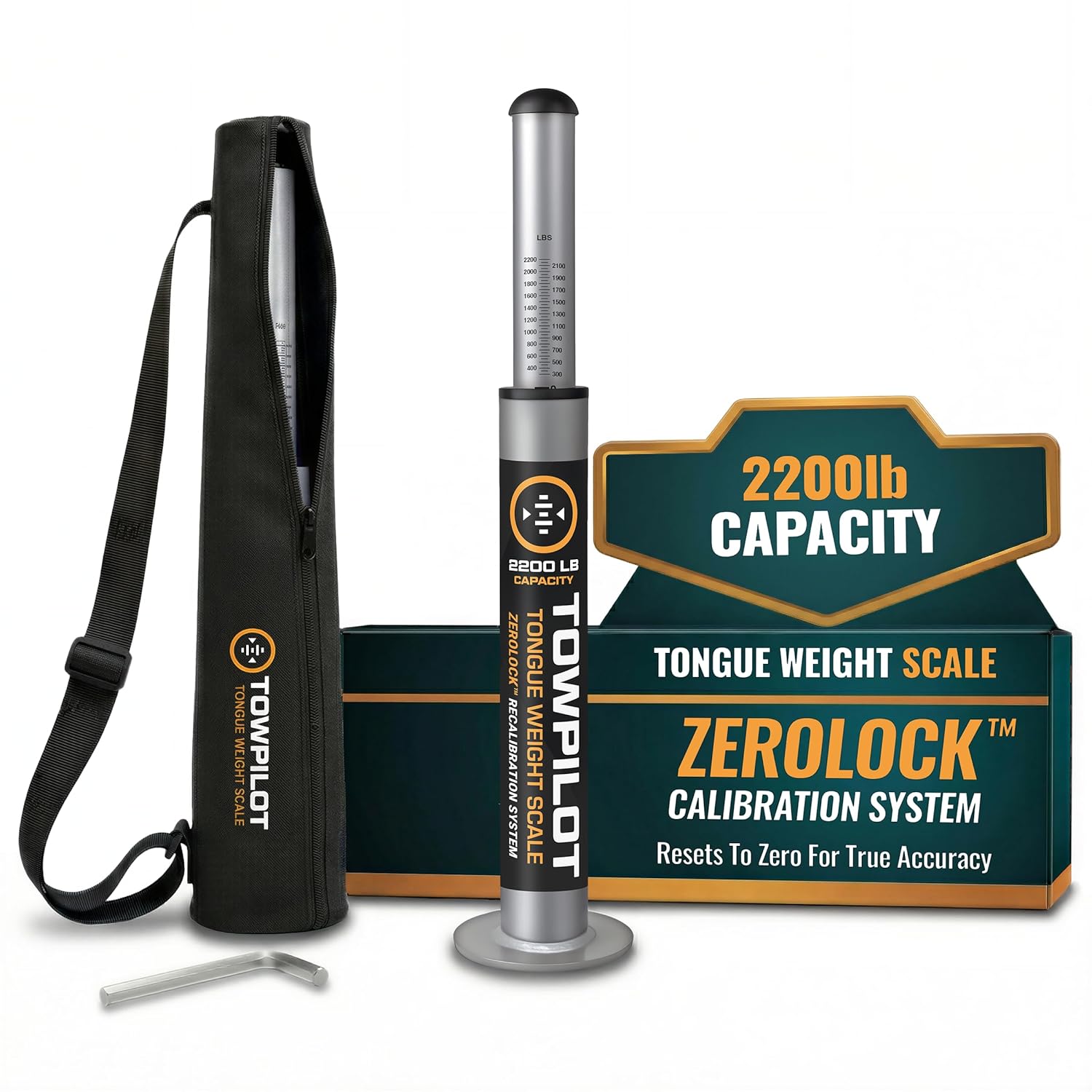
This trailer tongue weight scale helps you check hitch weight quickly and accurately before towing, reducing sway and improving overall safety. Built with durable steel and a spring mechanism, it works without batteries and includes a recalibration feature to maintain true-zero accuracy over time. It is designed for RVs, campers, and utility trailers, with a top plate that helps protect your coupler during use.
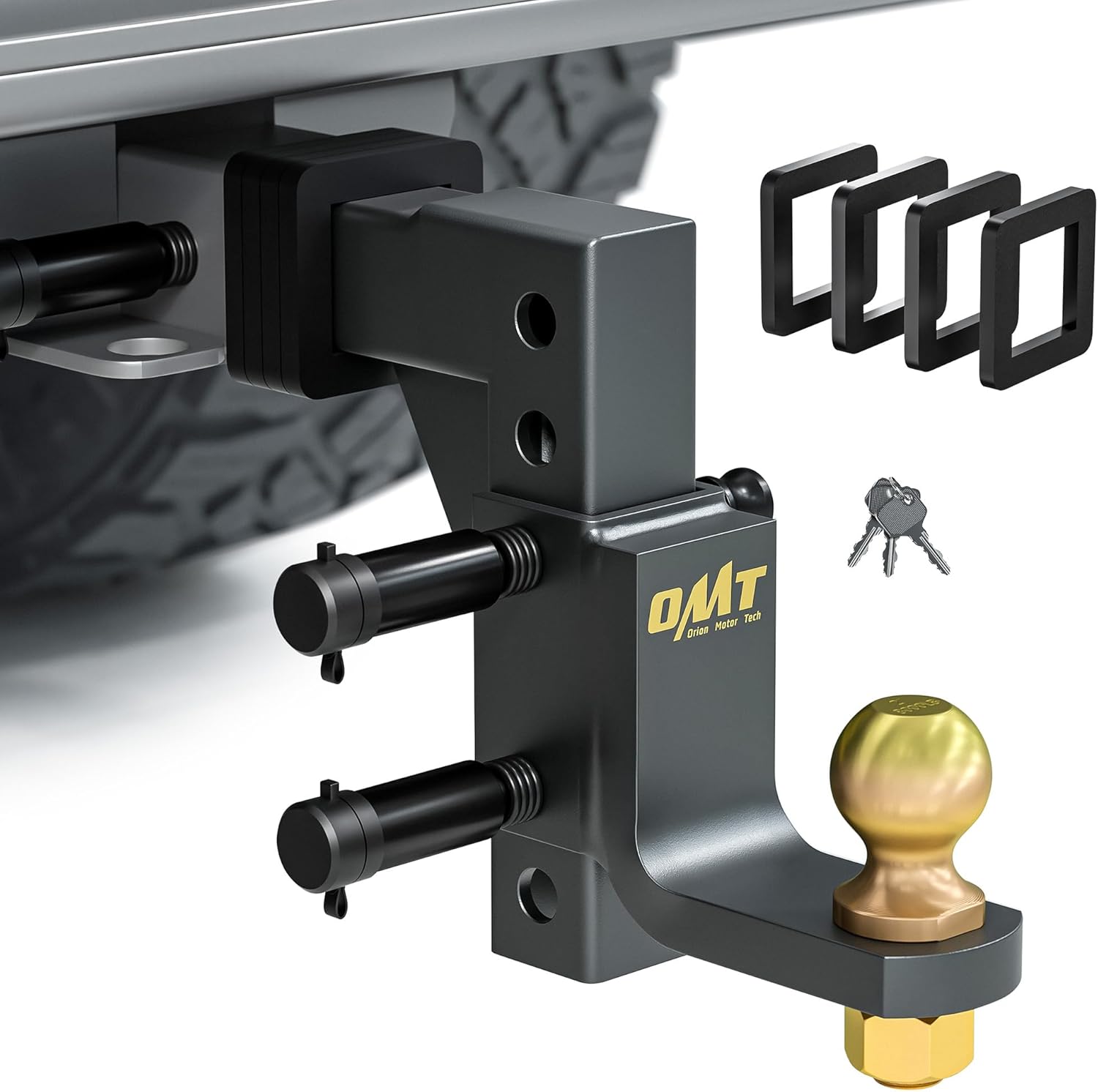
This adjustable trailer hitch ball mount is built for secure, versatile towing with a standard 2 inch receiver, a 2 inch ball, and both drop and rise adjustment for better fitment. Rated for heavy-duty towing and designed with anti-theft locking pins, it helps keep your trailer secure while resisting harsh weather and road conditions. The pre-assembled design makes installation fast and tool-free, so you can get hooked up and ready to tow with confidence.

This Andersen Hitches weight distribution hitch kit is designed to improve towing stability with a grease-free friction cone and tension chain system that helps reduce sway and bounce. It features a universal setup with a 2-inch ball and 4-inch drop/rise to suit many bumper-pull trailer applications, while making hitching and unhitching faster and easier than traditional spring bar systems. Built in the USA, it offers dependable performance for travelers, workers, and outdoor enthusiasts who need confident towing control.
Use These Three Scale Passes
- Weigh the complete loaded rig. Record the front axle, rear axle, and trailer-axle group separately. Their sum is actual combination weight.
- Weigh the loaded Tundra by itself. Keep passengers, cargo, fuel, and removable truck gear the same. Add the front and rear axle readings for actual loaded truck weight.
- Calculate actual trailer weight. Subtract the loaded truck-alone weight from the complete-rig weight. If you also need the truck’s actual added hitch load, compare the truck-axle totals hitched and unhitched with the same load conditions.
A weight-distribution hitch changes how load is shared among the truck’s front axle, rear axle, and trailer axles. That is why separate axle readings matter. Do not add measured tongue weight to a hitched combination scale total; the scale total already includes all weight and doing so would double-count it.
Does Tongue Weight Count Against Tundra Payload?
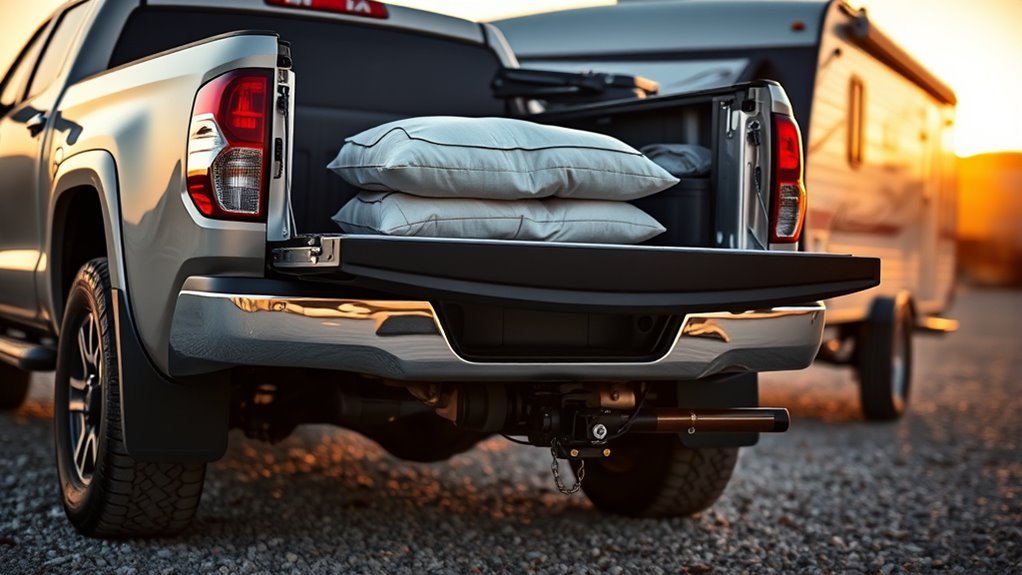
Yes. The trailer load carried by the Tundra increases the truck’s actual weight and axle loads, so it uses part of the truck’s available carrying capacity. Hitch hardware also adds weight. The scale-based test is simple: with the trailer connected and adjusted as Toyota and the hitch maker direct, the truck must remain below GVWR, front GAWR, rear GAWR, and the truck-tire load limits.
Many conventional bumper-pull travel trailers are loaded so tongue weight falls near 10% to 15% of actual loaded trailer weight, but the trailer maker’s stated range and Toyota’s limits control. Too little tongue load can contribute to sway. Too much can overload the rear axle, receiver, tires, or truck and can reduce front-axle loading. See the detailed Tundra tongue-weight guideline before using a percentage as a planning shortcut.
For a 6,500-pound loaded trailer, 10% equals 650 pounds and 15% equals 975 pounds. That is planning math only—not proof that either value fits your Tundra. Subtract occupants, cargo, accessories, and hitch hardware from the truck’s available carrying capacity, then verify the final axle and vehicle weights on a scale.
Does a Weight-Distribution Hitch Increase Tundra Payload?
No. A weight-distribution hitch can redistribute some load among the Tundra’s front axle, rear axle, and the trailer axles. It cannot raise Toyota’s GVWR, GAWR, GCWR, trailer weight rating, payload label value, tire ratings, or the ratings stamped on the receiver and hitch components.
Use weight distribution only when Toyota, the trailer maker, and the hitch maker allow or require it. Match every component to the trailer’s loaded Gross Trailer Weight and tongue load. The receiver, shank, ball mount, hitch ball, coupler, pins, spring bars, and fasteners must all be suitable for the setup. Review the Tundra hitch receiver guide and confirm the correct trailer ball size before connecting.
- Verify ratings and compatibility: confirm the receiver mode, shank size, ball diameter, Gross Trailer Weight rating, and tongue-weight rating.
- Set trailer attitude: select the correct rise or drop so the loaded trailer sits as its manufacturer specifies.
- Set weight distribution by measurement: follow Toyota and hitch-maker instructions, then verify front and rear axle weights instead of judging only by fender height.
- Inspect the full connection: torque hardware as specified, latch the coupler, cross the safety chains, attach the breakaway cable independently, connect wiring, and test lights and trailer brakes.
NHTSA explains that a weight-distributing hitch can transfer load toward the tow vehicle’s front axle when tongue load makes the front end too light. It is a setup and handling tool, not a capacity upgrade.
[Products Worth Considering]
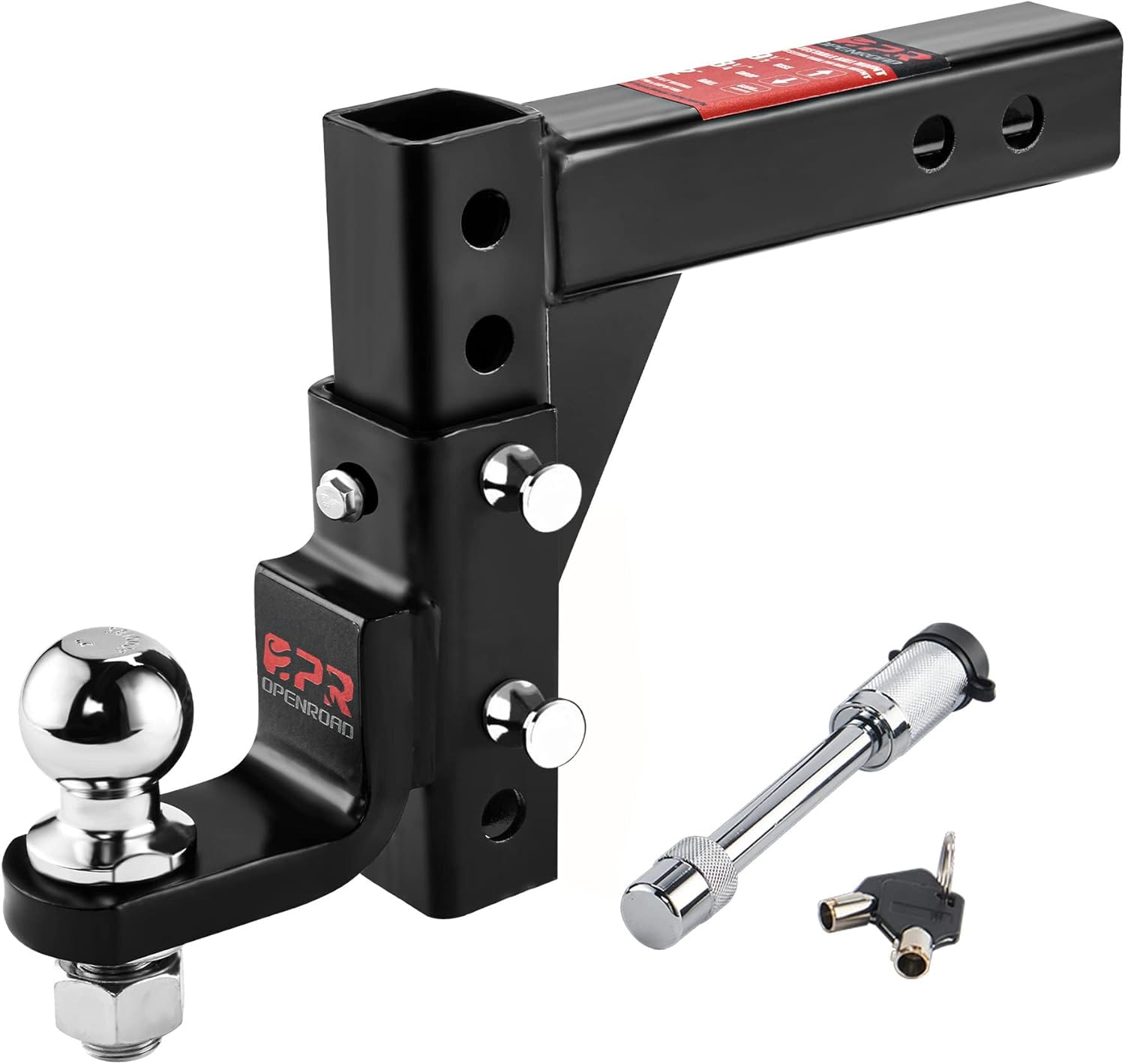
This adjustable trailer hitch ball mount is built for dependable towing with a strong steel construction and a versatile fit for 2-inch receivers. Its adjustable drop and rise settings help you dial in the right towing height, while the lock and keyed anti-theft design add security. A black powder-coated finish helps resist rust and wear for lasting performance on trucks and other towing setups.
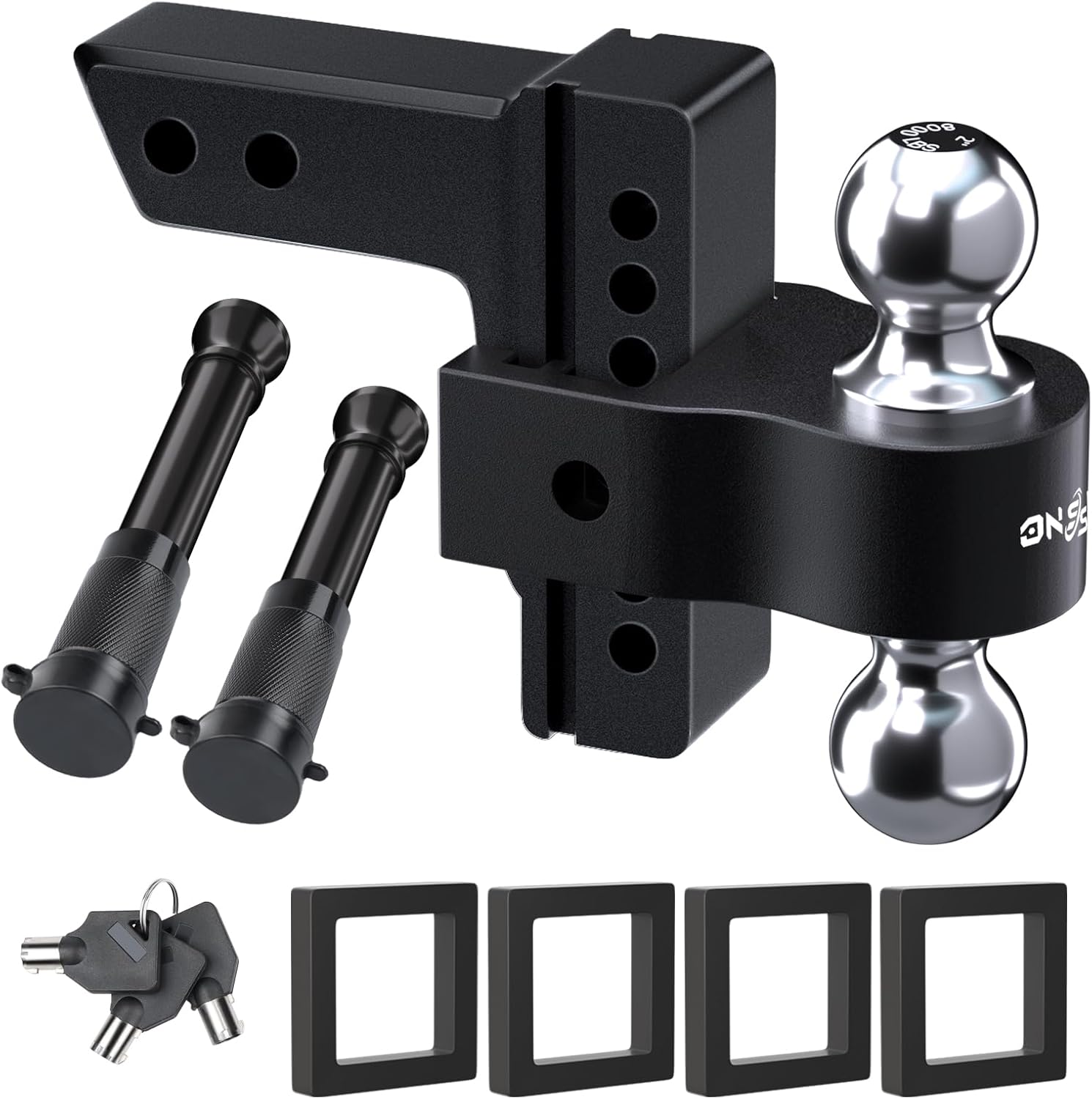
This adjustable trailer hitch is designed for 2-inch receivers and offers flexible towing with a 6-inch drop and rise range. Dual ball sizes help support different trailer setups, while the high-strength aluminum construction is built for dependable performance on tough jobs. Included hitch locks and silencers add security and help reduce noise for a smoother towing experience.

This proportional trailer brake controller provides smooth, responsive braking by automatically matching your tow vehicle’s stopping force for safer trailer control. The bright LED digital display makes it easy to monitor voltage output in real time, while adjustable braking and sync settings help tailor performance to different trailers and road conditions. Designed for quick installation and broad compatibility, it supports 1 to 4 axle trailers for dependable towing confidence.
Worked Example: A 6,500-Pound Loaded Camper
This example shows the sequence, not the rating of a particular Tundra. The draft’s 7,365-pound GVWR and 1,330-pound payload figures remain unverified for a specific 2024 CrewMax Limited. [VERIFY: replace those figures with values from a photographed label and Toyota towing table for the exact truck before publishing them as vehicle specifications.]
- Confirm the truck’s ratings. Record GVWR, front GAWR, rear GAWR, the occupant-and-cargo limit, GCWR, trailer weight rating, and receiver limits for the exact truck.
- Weigh the loaded truck alone. Include the people and gear that will be in the truck during the trip.
- Confirm loaded trailer weight. Use a scale after adding water, propane, batteries, food, and camping gear. Do not rely on brochure dry weight.
- Estimate a tongue-load planning range. For a 6,500-pound conventional trailer, 10% to 15% is 650 to 975 pounds, subject to the trailer maker’s instructions and every truck and hitch limit.
- Check the complete rig. Record front, rear, and trailer-axle weights with the hitch adjusted as directed.
- Compare every number. Check truck GVWR, both GAWR values, GCWR, Toyota’s trailer weight rating, trailer GVWR and GAWR, tire ratings, and all hitch-component ratings.
If any limit is exceeded, reduce load or change the truck, trailer, or equipment combination. Air springs or other leveling parts may change ride height, but they do not increase Toyota’s weight ratings. Reweigh after meaningful changes to cargo placement, water, hitch adjustment, accessories, or passengers.
[Products Worth Considering]
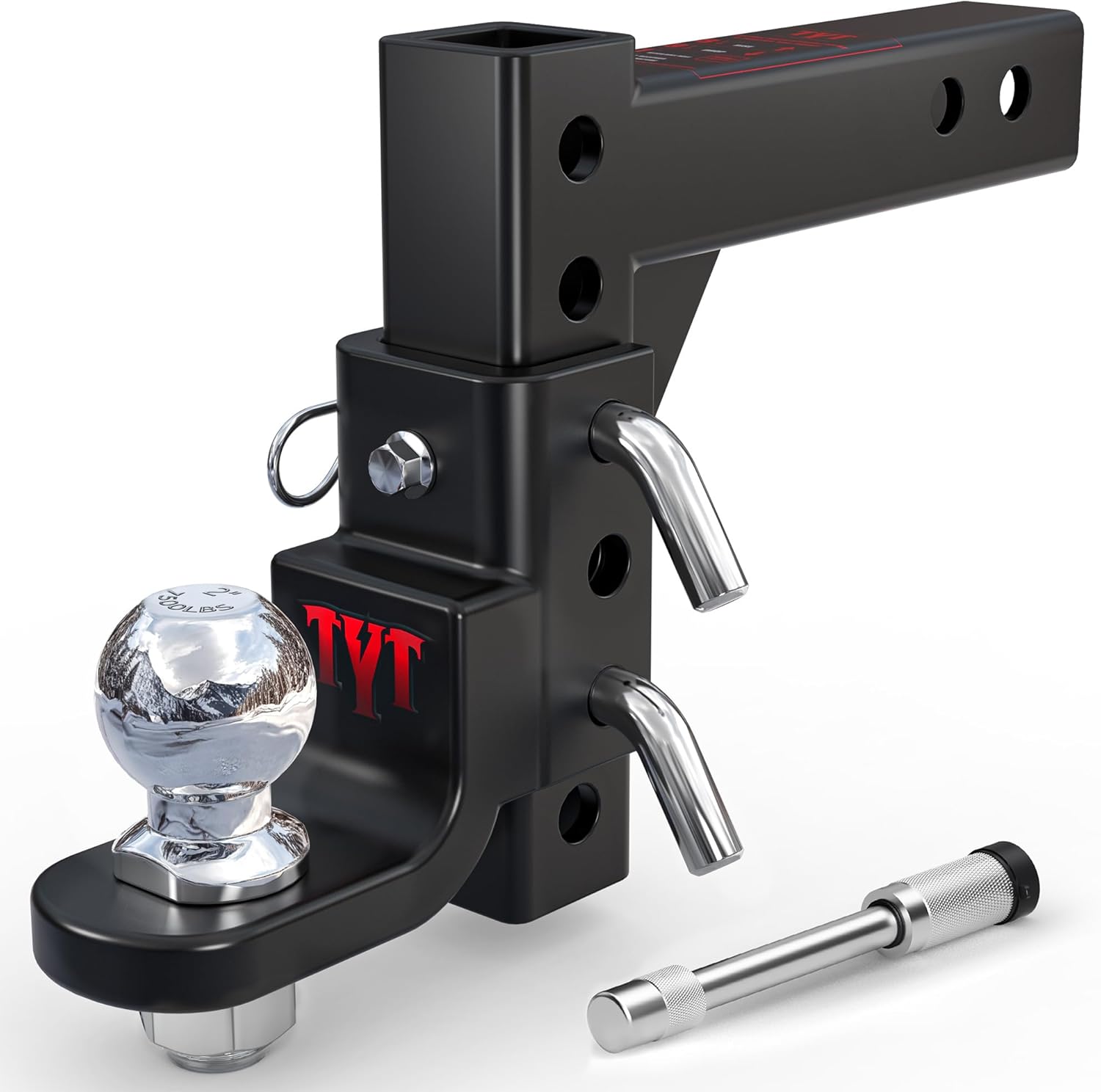
This adjustable trailer hitch ball mount is built for dependable towing with a standard 2-inch receiver and a high-capacity design suited for trucks, campers, boats, and utility trailers. Its adjustable rise and drop settings help you achieve a level tow, while the anti-rattle design supports a smoother, quieter ride. Complete with pins, clips, and a premium pin lock, it offers an easy installation and secure connection for everyday hauling needs.

This proportional electric brake controller automatically applies trailer brakes based on your vehicle's braking force and speed for smoother, more responsive stopping. It is compatible with a wide range of tow vehicles and trailer setups, and includes an LED display for easy setup, diagnostics, and manual braking control. The included mounting hardware and plug-and-play port help make installation simple and convenient.

These heavy-duty running board side steps are designed to improve access to your Toyota Tundra without reducing ground clearance. Built for Double Cab and CrewMax front door applications, they offer practical convenience for everyday entry, roof loading, and off-road use. The durable iron construction and easy no-drill installation make them a reliable upgrade for rugged driving.
What Should You Check Before Towing With a Tundra?
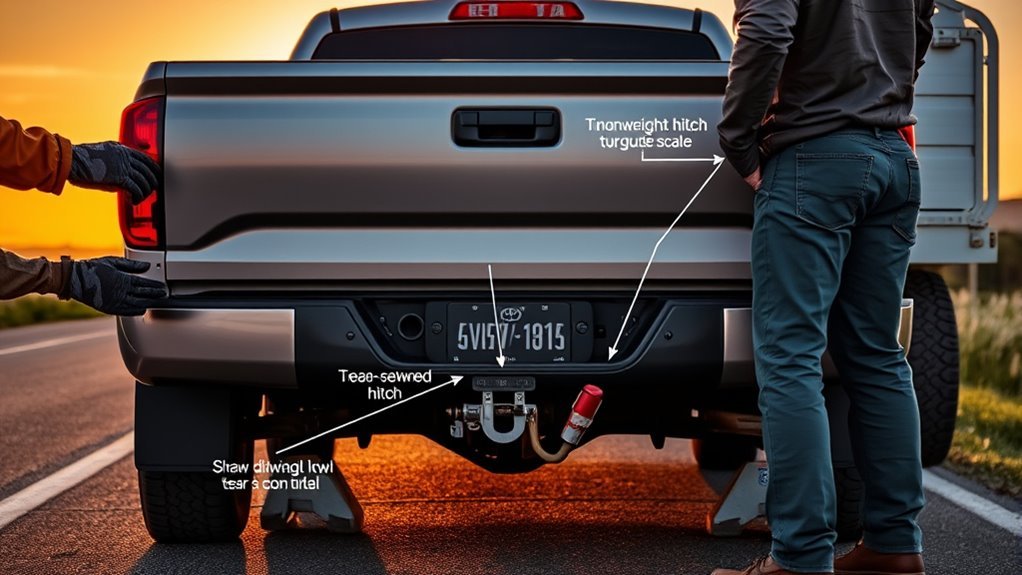
Check the loaded rig before each trip and again after major load changes. Water, batteries, propane, coolers, bikes, generators, and cargo moved behind or ahead of the trailer axles can change tongue load and axle weights. Use the same checklist each time so a familiar trailer does not hide a new loading problem.
Check Tongue Weight and Axle Loads
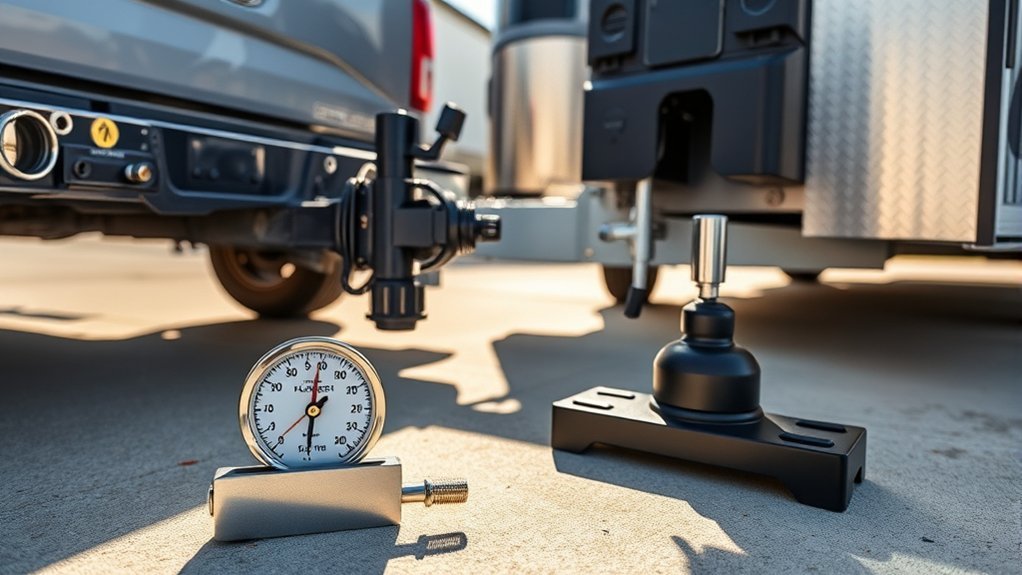
Measure or calculate tongue load with the trailer loaded for travel. A tongue-weight scale can help during setup, but public-scale axle readings show whether the final hitched truck stays within GVWR and both GAWR values. Follow the trailer maker’s target range and recheck after major cargo moves.
- Confirm the actual loaded trailer weight.
- Compare tongue load with the trailer maker’s range and hitch limits.
- Check the Tundra’s loaded front and rear axle weights.
- Confirm the complete rig remains below GCWR.
- Readjust and reweigh after major load or hitch changes.
Do not use a level-looking truck as proof that the load is legal or safe. Suspension aids can hide rear sag while the truck remains overloaded.
Inspect Tires, Wheels, and Brakes
Check truck and trailer tire pressures when the tires are cold. Use the Tundra’s tire placard and the trailer maker’s tire and load information. TPMS is a warning system, not a substitute for a gauge. Inspect tread, sidewalls, valve stems, wheel condition, and spare tires. Confirm wheel fasteners are torqued to the applicable manufacturer specification.
Test trailer brakes, the brake controller, breakaway system, lights, and connector before entering traffic. State brake and equipment rules vary, so confirm the requirements for every state on your route. Use the Toyota-recommended towing mode; this guide explains when to use Tundra Tow/Haul mode.
Secure the Load and Connection
Secure every item that could move during braking, turning, or rough-road travel. Shifting cargo can change tongue load, unbalance trailer tires, and contribute to sway. Use properly rated restraints, latch compartments, cross the safety chains under the tongue, and keep chains and wiring off the road.
- Keep the loaded Tundra below GVWR and each axle below GAWR.
- Keep the loaded trailer below its GVWR, GAWR, and tire limits.
- Place cargo according to the trailer maker’s loading instructions and balance it side to side.
- Confirm the coupler latch, safety chains, breakaway cable, electrical connector, lights, and brakes.
- Stop soon after departure to recheck straps, hitch hardware, tire condition, and load security.
Pro tip: Keep the latest truck-alone and complete-rig scale tickets with your towing checklist. They make later cargo changes easier to evaluate.
Frequently Asked Questions
What is GVWR vs. GCWR vs. GAWR?
GVWR limits the loaded Tundra by itself. GAWR limits the actual weight on one truck axle. GCWR limits the actual combined weight of the loaded Tundra and loaded trailer.
Does GVWR include trailer weight?
No. GVWR applies to the truck itself, including occupants, cargo, accessories, hitch hardware, and the trailer load carried by the truck. The trailer’s axle-supported weight is not part of truck GVWR, but the entire truck-and-trailer combination must remain below GCWR.
Where do I find the GCWR for my Tundra?
Use the Toyota owner’s manual or configuration-specific towing table for the truck’s model year and configuration. The door-area certification label normally supplies GVWR and GAWR, while the Tire and Loading Information label supplies the occupant-and-cargo limit. Do not assume GCWR from a general advertisement.
How do I calculate the trailer allowance from GCWR?
Subtract the Tundra’s actual loaded truck-alone weight from Toyota’s GCWR. The result is the GCWR-limited trailer allowance, but it is not automatically your final tow limit. Toyota’s trailer weight rating, truck GVWR and GAWR, payload, tire limits, receiver limits, and trailer ratings may produce a lower limit.
Does tongue weight count against Tundra payload?
Yes. The part of the trailer load carried by the truck increases the truck’s actual weight and axle loads. Hitch hardware, passengers, cargo, and added accessories also use the truck’s available carrying capacity.
Why can payload limit Tundra towing before the tow rating?
Tongue load, occupants, cargo, accessories, and hitch hardware can use the truck’s carrying capacity before the loaded trailer reaches Toyota’s maximum trailer weight rating. A trailer can therefore be below the advertised tow rating while the truck exceeds GVWR or rear GAWR.
Can a Toyota Tundra tow 12,000 pounds?
Toyota states that the 2026 Tundra offers an available maximum towing capacity of 12,000 pounds. That maximum applies only to qualifying configurations and equipment. Confirm the exact truck’s Toyota towing table, model code, labels, and loaded scale weights before planning a trailer near that figure.
Does a weight-distribution hitch increase payload?
No. It can redistribute load among the truck’s front axle, rear axle, and trailer axles, but it does not raise GVWR, GAWR, GCWR, payload, tire ratings, Toyota’s trailer weight rating, or any hitch-component rating.
Safety Disclaimer: This article provides general towing information and does not replace the Toyota owner’s manual, Toyota’s configuration-specific towing data, the trailer manual, hitch instructions, tire information, local law, or a qualified inspection. Follow the lowest applicable rating and stop if any number or setup detail remains uncertain.
Conclusion
Safe Tundra towing requires more than checking one advertised capacity. Verify the loaded truck against GVWR and both GAWR values, the trailer against Toyota’s trailer weight rating and the trailer’s own ratings, and the complete rig against GCWR. Then confirm tire, receiver, ball mount, hitch ball, coupler, and brake limits.
Record the exact ratings for your truck, weigh it loaded by itself, weigh the complete rig, and keep the scale tickets. Those three steps turn towing estimates into numbers you can check before the trip.
References
- 2026 Toyota Tundra: A Bold New Chapter in Full-Size Pickup Excellence – Toyota USA Newsroom, July 22, 2025
- Toyota Tundra eBrochure – Toyota
- 2026 Toyota Tundra Owner’s Manuals and Warranties – Toyota
- NHTSA interpretation for GVWR and GAWR definitions – National Highway Traffic Safety Administration
- Gross Combination Weight Rating Definition – Federal Motor Carrier Safety Administration, 2014
- Towing a Trailer: Being Equipped for Safety – National Highway Traffic Safety Administration


[…] To read your Toyota Tundra tire size and load data, start with the two labels on the driver-side door jamb. The Tire and Loading Information Label gives you the original tire size and recommended cold pressure. The Certification Label gives you the truck’s gross vehicle weight rating (GVWR) and front and rear gross axle weight ratings (GAWR). […]
[…] every rating: Check loaded trailer weight, loaded tongue weight, GVWR, GAWR, GCWR, and payload, plus the receiver, ball, hitch, spring-bar, tire, and trailer […]
[…] labels, hitch labels, and the owner’s manual for your exact configuration. This Toyota Tundra GVWR, GCWR, payload, and tongue-weight guide explains the rating terms, while Toyota’s 2025 Tundra trailer towing owner information gives […]
[…] with 10–15% of loaded trailer weight, then confirm it remains within your Tundra’s payload, axle, hitch, and tire ratings. An acceptable percentage does not override a lower truck, receiver, hitch, or tire […]