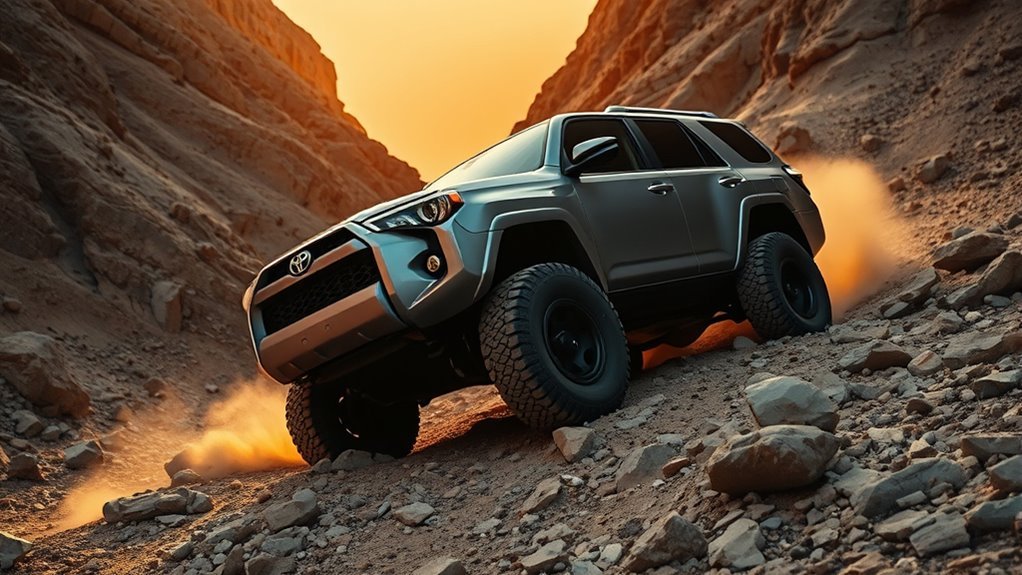
You get a high‑torque hybrid built for real driving: a 2.4L turbo mated to an integrated 48‑hp motor and 1.87 kWh battery to yield 326 hp and 465 lb‑ft while trimming fuel use toward ~23 mpg. The electric assist sharpens low‑end response, smooths city traffic, and keeps off‑road capability intact despite a ~300–400 lb weight gain and modest cargo tradeoffs. It’s engineered for power and practicality—keep going and you’ll uncover specifics on performance, packaging, and ownership.
What i‑FORCE MAX Is : Quick Verdict And Who It’s For
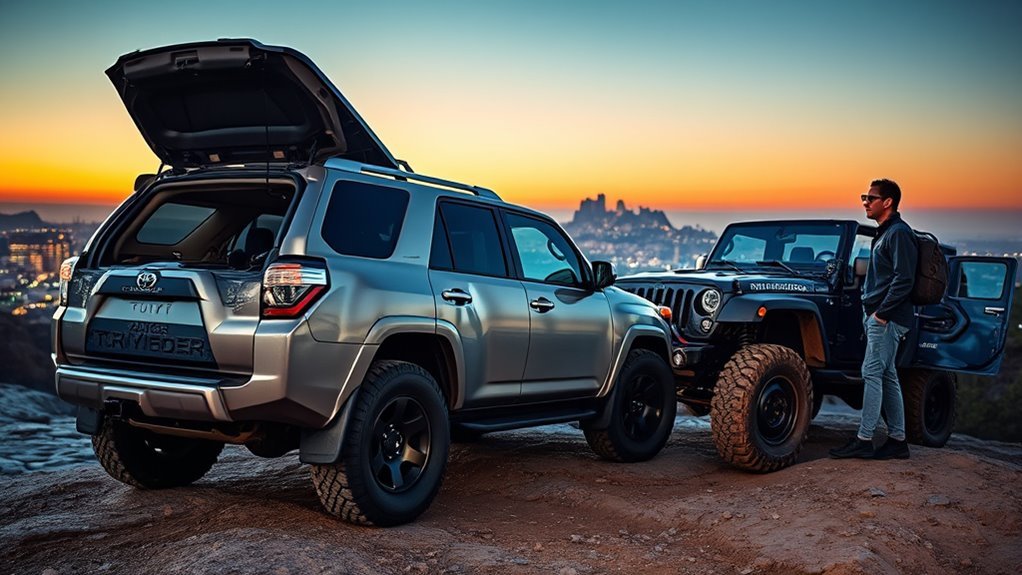
Think of the i‑FORCE MAX as Toyota’s performance-minded hybrid for the 4Runner: it pairs a 2.4L turbocharged engine with a 48‑hp electric motor to deliver 326 hp and 465 lb‑ft of torque, boosting acceleration and tow capacity while improving combined fuel economy to roughly 23–24 mpg versus about 17 mpg for the old V‑6. You’ll find a compact, purpose-built system that preserves the 4Runner’s rugged character while adding hybrid advantages: stronger low-end torque, smoother throttle response in traffic, and measurable gains in combined efficiency. If you crave capability without compromise, this is engineered liberation—you can tackle steep climbs or tow heavier loads and still reduce fuel stops. The package balances eco performance with real-world utility, so daily driving and off-road missions both improve. It’s not a mild-mannered economy option; it’s a targeted upgrade for drivers who want technical competence, tangible efficiency, and unshackled capability in one integrated powertrain.
[Products Worth Considering]
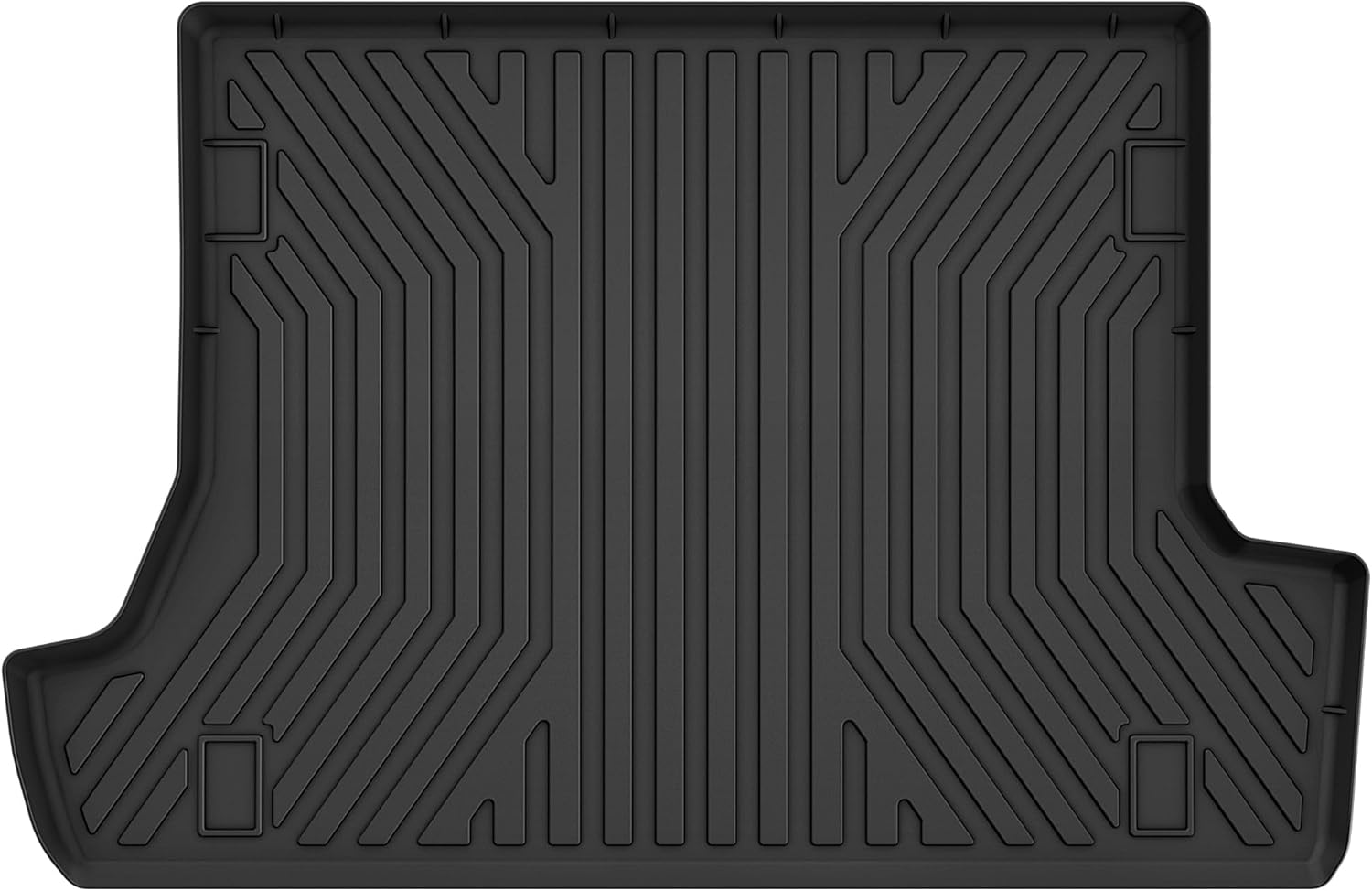
This custom cargo trunk liner is designed specifically for Toyota 4Runner models with a third row, helping protect the rear cargo area from dirt, spills, snow, and everyday mess. Precision-fit coverage and snap-in clips help keep it securely in place, while the durable TPE construction offers easy cleaning and dependable all-season performance. It’s a practical upgrade for keeping the interior tidy and maintaining resale value.

Upgrade your Toyota 4Runner with these heavy duty roof rack cross bars designed for raised side rails and secure cargo transport. The aluminum construction, anti-theft locking system, and tie-down loops help keep gear stable on the road while the low-profile design helps reduce wind noise. Easy to install with no drilling required, they provide a durable and convenient solution for road trips, hauling, and outdoor adventures.

Protect your Toyota 4Runner interior with custom-fit floor mats and a rear cargo liner designed for all-weather coverage. The 3D-scanned TPE construction offers a precise fit for multiple model years, while raised edges help guard against spills, mud, snow, and everyday debris. Built for durability and easy maintenance, this set delivers reliable cabin protection without trimming.
i‑FORCE MAX Powertrain: Engine, Motor, Battery, And Layout
At the heart of the i‑FORCE MAX is a compact, purpose-built hybrid system that pairs a 2.4‑liter turbocharged inline‑4 with a 48‑hp electric motor integrated into an 8‑speed automatic, producing a combined 326 hp and 465 lb‑ft of torque for noticeably stronger acceleration and tow performance. You’ll find the engine specifications focused on delivering usable power and torque curves rather than peak numbers alone, with the electric motor supplying immediate low-end torque to sharpen throttle response from standstill. The 1.87 kWh NiMH battery is compact, packaged to preserve ground clearance and approach/departure geometry, and it stores energy harvested via regenerative braking so you don’t need to plug in. Layout choices prioritize off-road capability and serviceability: motor integration into the transmission reduces drivetrain complexity and weight penalties. The hybrid advantages are clear—you get enhanced launch assist, smoother shifts in stop‑and‑go traffic, and retained ruggedness, all configured to free you from compromise between capability and efficiency.
Performance & Real‑World Numbers: 0–60, Torque, Weight, MPG
Acceleration is where the i‑FORCE MAX immediately proves its value: pairing a turbo 2.4‑liter with a compact electric motor yields a combined 326 hp and 465 lb‑ft that pushes the 4Runner to roughly mid‑6‑second 0–60 mph runs—quicker than the non‑hybrid’s high‑6 to low‑7‑second times—while the motor’s instant low‑end torque sharpens throttle response off the line and on technical off‑road sections. You’ll feel the torque benefits in hauling and merging, where the electric assist masks the hybrid’s 300–400 lb weight penalty and converts it into usable momentum. Fuel economy sits around 22–23 mpg combined, a modest but meaningful gain in a vehicle of this capability. For a clear performance comparison and practical expectations, consider these measured attributes:
- 0–60 mph: mid‑6s (i‑FORCE MAX) vs high‑6s–low‑7s (non‑hybrid)
- Peak torque: 465 lb‑ft — strong low‑end delivery
- Weight delta: +300–400 lbs, offset by powertrain
- Combined MPG: 22–23, slightly better than non‑hybrid
Driving Behavior: City, Highway, And Off‑Road Impressions
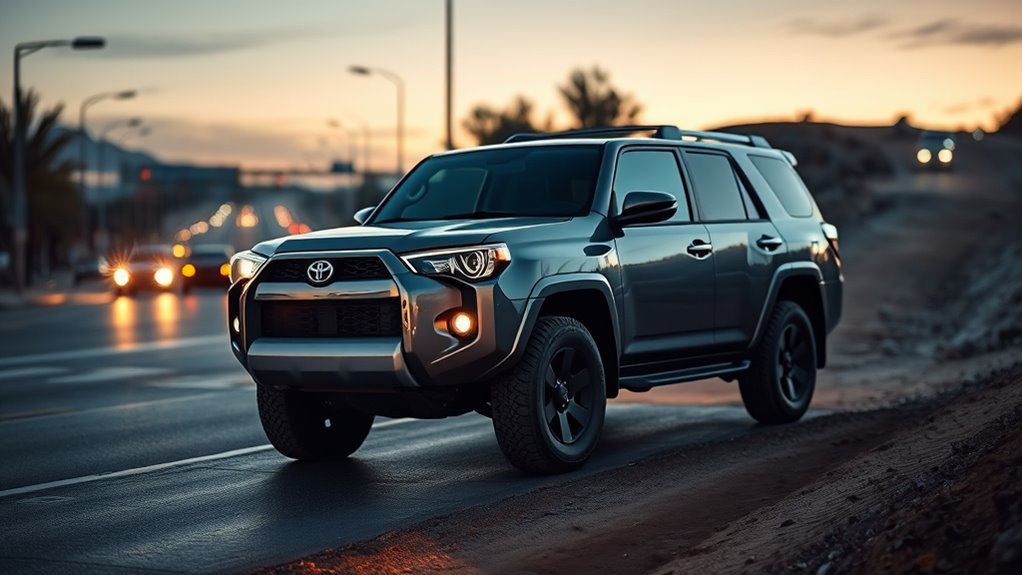
While the i‑FORCE MAX keeps the 4Runner’s rugged character intact, its electric assist changes how you drive it in everyday situations: you get sharper city responsiveness, stronger low‑end torque for smooth creeping and quicker launches, and reduced fuel use during low‑speed ops. On the highway, the hybrid delivers confident highway power and superior midrange thrust for passing, unlike the non‑hybrid that leans on downshifts and can feel laggy. Off‑road, both retain geometry and clearance; the hybrid’s extra torque helps on climbs and loose surfaces without tradeoffs.
| Situation | Effect |
|---|---|
| City starts | Electric assist boosts initial torque |
| Stop‑go | Smoother creeping, better efficiency |
| Highway passing | Stronger midrange, quicker overtakes |
| Transmission | 8‑speed shifts quick; minor mode swap delay |
| Off‑road | Enhanced climb traction, no geometry loss |
You’ll feel liberated by responsive control, predictable shifts, and tailored torque where you need it.
[Products Worth Considering]

This adjustable tri-ball trailer hitch gives you flexible towing support with three hitch ball sizes and a 4.5-inch rise and drop for level hauling across different vehicles and trailers. Built for durability and convenience, it includes a tow hook, D-ring shackle, and a secure locking system for dependable towing, recovery, and off-road versatility.

The DEWALT 20V MAX XR 1/2-inch high torque impact wrench delivers powerful fastening and breakaway performance for demanding jobs like wheel lugs, pipe flanges, and anchor setting. Its 4-mode control, variable speed trigger, and precision wrench mode help improve accuracy and reduce overtightening, while the on-tool LED light boosts visibility in dark work areas. Built with a brushless motor, battery guard, and durable housing, it is designed for tough jobsite use.
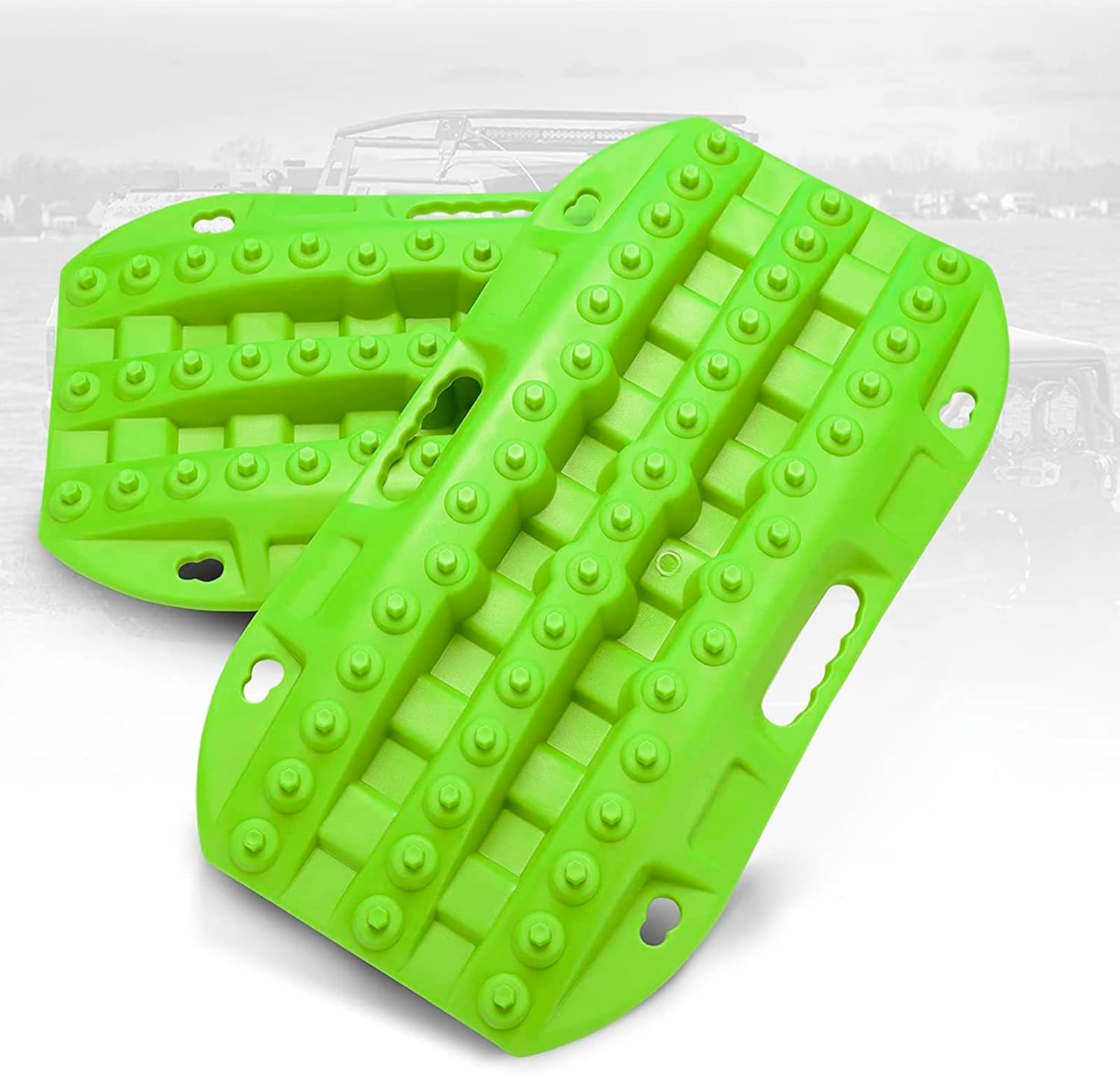
These short recovery traction boards are designed to help ATVs, UTVs, and other off-road vehicles regain grip in mud, sand, and snow. Built with strengthened teeth and a durable polypropylene construction, they provide reliable traction, easy handling, and year-round performance in tough conditions. Their nested, space-saving design and integrated shovels make them practical for carrying and using on remote adventures.
Choosing i‑FORCE MAX Or The 2.4T: Cargo, Towing, Cost, Ownership
Because the hybrid’s electric packaging and heft change practical trade‑offs, you’ll need to weigh power gains against space, towing, and ownership costs when choosing between i‑FORCE MAX and the 2.4T. The i‑FORCE MAX gives you 326 hp and 465 lb‑ft for sharper acceleration and recovery, but battery placement reduces cargo considerations—third‑row seating becomes limited and usable volume drops. The hybrid weighs ~300–400 lbs more, so evaluate towing capacity against that extra mass; peak torque helps, but gross towing may be similar or slightly constrained versus the lighter 2.4T.
- Compare payload and cargo considerations objectively: measure usable volume with seats up/down.
- Model towing capacity under real loads; heavier hybrid affects handling and trailer braking.
- Run ownership costs over your horizon: higher upfront price vs. fuel efficiency gains (≈23–24 mpg vs. 22 mpg).
- Factor resale and maintenance assumptions for liberated ownership choices.
Decide by mission: if you prioritize power and marginal fuel savings, choose i‑FORCE MAX; for max space and simplicity, stick with the 2.4T.
Frequently Asked Questions
What Does Iforce Max Hybrid Mean?
i‑FORCE MAX Hybrid means you get hybrid technology combining a turbo engine and electric motor to boost performance efficiency, giving you liberating low‑end torque, quicker shifts, regenerative braking, and improved fuel economy for versatile driving.
What Is the Difference Between 4runner I Force Max and Regular?
You get more power and torque with the i-FORCE MAX; performance comparison shows quicker acceleration and stronger low-end feel, while fuel efficiency slightly improves, though cargo/third-row space is reduced by the hybrid battery placement.
Conclusion
You’ll spot i‑FORCE MAX the way light hits chrome—sudden, precise, revealing gear and battery working together. You get a turbocharged 4‑cylinders plus motor, BSG and inverter orchestrating torque like linked hands, so acceleration, MPG and towing align with intent. On pavement or dirt you’ll feel altered weight and refined throttle response. Choose based on payload and cost: the hybrid’s efficiency and torque suit tech‑minded haulers; the 2.4T suits budget pragmatists.
[Products Worth Considering]

These off-road traction boards are designed to help vehicles recover from mud, sand, and snow with reliable grip and easier ramp-up. Their double-sided diamond construction, cross-shaped teeth, and contoured ramps improve traction while the durable polypropylene build stays flexible in harsh conditions. Convenient mounting points, ergonomic handles, and a visible leash make them practical to carry, store, and retrieve when recovery is needed.

Rhino USA D Ring Shackles provide a dependable recovery connection for off-road and towing setups, with a high break strength designed for demanding use. They fit most aftermarket bumpers and universal shackle mounts, and the included rubber isolator kit helps reduce noise, vibration, and wear. Built from chromoly steel with an anti-rust powder-coated finish, these shackles are made for long-lasting performance in harsh conditions.

These Nilight LED spot pods deliver focused white light for improved visibility on roads, trails, and job sites. The adjustable mounting brackets let you aim the beam where you need it, while the durable aluminum housing and IP67 waterproof design help them perform in tough outdoor conditions. Ideal for trucks, ATVs, UTVs, boats, and other universal-fit vehicles.