
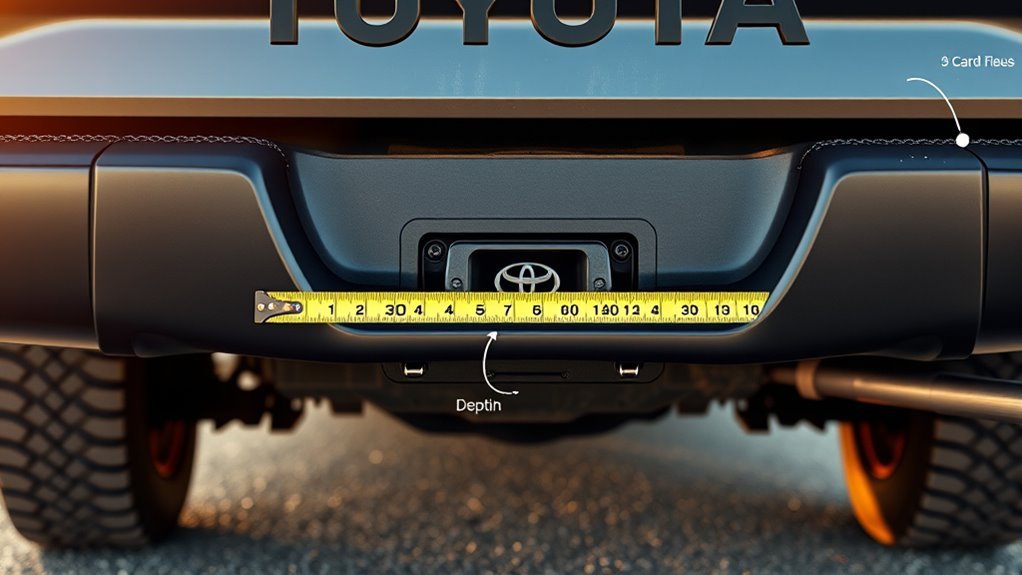
Published: March 29, 2026 · Last updated: July 31, 2026
Reviewed by: [VERIFY: add the real reviewer’s full name and towing-related qualifications before publication]
Most U.S.-market Toyota Tundras with a factory rear tow hitch use a nominal 2-inch square receiver, not a 2.5-inch receiver. Measure the inside width and height of the receiver opening before ordering because an older truck, replacement hitch, or aftermarket front receiver may differ.
A 2-inch opening tells you which accessory shank fits. It does not determine towing capacity, hitch-ball size, or whether a particular pin or lock is long enough for the receiver. Confirm the receiver label, accessory rating, pin diameter and usable span, trailer coupler, tongue weight, payload, and model-specific towing limits before towing.
Quick Answer
The usual factory rear receiver on a U.S.-market Toyota Tundra is nominally 2 inches by 2 inches inside, so a 2-inch-shank ball mount or accessory is the normal fit. Verify the opening on your truck, then check the receiver rating, pin diameter and usable span, ball-mount rating, coupler-stamped ball size, loaded tongue weight, payload, and exact tow rating.
Key Takeaways
- Most factory-equipped Tundras use a nominal 2-inch rear receiver, but measure an older, modified, or aftermarket hitch before ordering.
- A 2-inch opening describes accessory fit. It does not establish hitch class, towing capacity, or tongue-weight capacity.
- Toyota lists a 12,000-pound available maximum tow rating for the 2026 Tundra, but the rating for an individual truck may be lower.
- The trailer coupler decides the hitch-ball diameter. The receiver and accessory instructions decide the pin diameter and required usable span.
- Stop towing if you find cracks, bending, severe corrosion, damaged welds, enlarged pin holes, or abnormal movement.
At a Glance
| Time Required | About 10–20 minutes for a basic receiver, label, pin-fit, and ball-mount check |
| Difficulty | Easy for inspection; professional help recommended for damaged, unlabeled, or modified hitches |
| Tools Needed | Tape measure or calipers, flashlight, straightedge, gloves, and the accessory instructions; use a torque wrench only when installing hardware that has a published torque specification |
| Cost | Usually no cost for inspection; replacement mounts, locks, and rated anti-rattle hardware vary by required fit and rating |
What Size Hitch Receiver Does a Toyota Tundra Have?
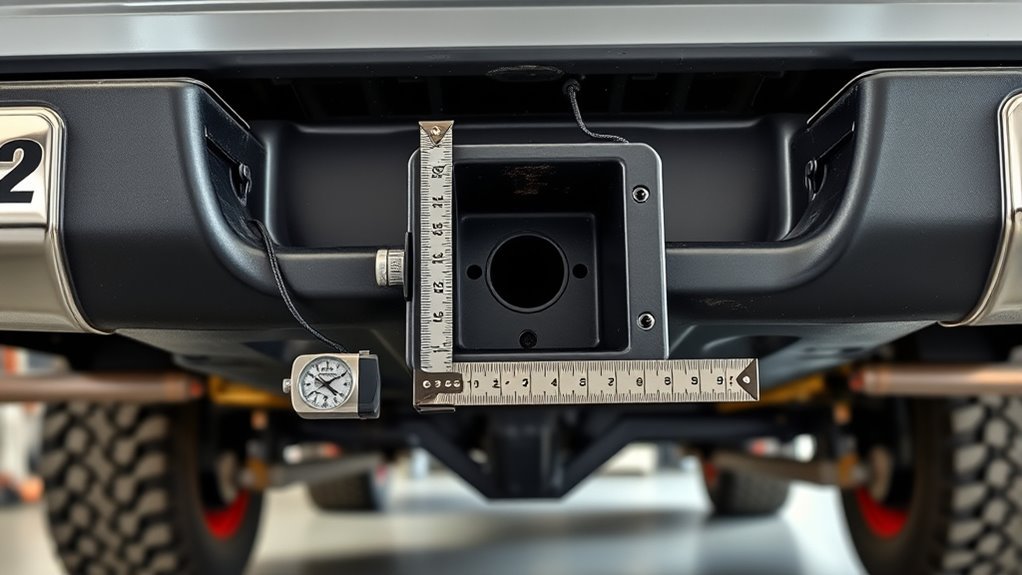
Most factory-equipped Toyota Tundras use a nominal 2-inch rear receiver. A standard 2-inch-shank ball mount, bike rack, cargo carrier, or other rear-hitch accessory is therefore the usual starting point. Measure the inside opening and read the receiver label before ordering, especially if the truck is older, modified, or equipped with an aftermarket hitch.
| Item | Usual Answer | Where to Verify It |
|---|---|---|
| Receiver opening | Nominal 2 inches by 2 inches inside on most factory-equipped Tundras | Inside opening measurement and receiver label |
| Accessory shank | 2-inch square shank | Accessory specifications |
| Hitch pin or lock | Often 5/8 inch in diameter, with enough usable span to clear both receiver walls | Receiver, accessory, and pin or lock specifications |
| Hitch ball | Must match the trailer coupler | Size stamped on the coupler |
| Towing limit | Varies by truck, receiver, equipment, and load | Truck labels, receiver label, and model-year manual |
For the 2026 model year, Toyota lists an available maximum towing capacity of up to 12,000 pounds, depending on configuration. Toyota also states that a tow hitch and combined 7/4-pin connector are standard on every 2026 Tundra grade. Toyota’s 2026 Tundra accessory portfolio includes accessories designed for 2-inch square towing receivers. Do not apply the 12,000-pound maximum to an older truck or a 2026 configuration with a lower individual rating.
How this guide was verified: Toyota’s current model information confirms the available 12,000-pound maximum and standard 7/4-pin tow connection. Toyota’s current accessory material supports 2-inch receiver compatibility. The receiver opening, label, and model-year owner’s manual on your truck still control the final fit and load limits.
Warning: Receiver size is not towing capacity. Your safe limit is controlled by the lowest-rated part in the complete setup, including the truck, receiver, ball mount, hitch ball, pin, trailer coupler, trailer tires, trailer brakes, and cargo load.
Why Does a 2-Inch Tundra Receiver Have Clearance or Rattle?
A nominal 2-inch receiver may not measure exactly 2.000 inches at every point. Paint thickness, manufacturing clearance, wear, corrosion, dirt, and accessory-shank dimensions can change how snugly the ball mount fits.
A small amount of clearance can be normal. Loud clunking, visible rocking, binding, an enlarged pin hole, or movement caused by damaged metal needs inspection before towing.
| What You Notice | Likely Cause | Best Fix |
|---|---|---|
| Slight movement | Normal receiver clearance | Use a properly rated anti-rattle device if needed |
| Loud clunking | Loose shank, worn accessory, or poor pin fit | Inspect the mount, pin hole, pin, and receiver before towing |
| Rust flakes or rough insertion | Corrosion or debris inside the tube | Clean, dry, inspect, and apply suitable corrosion protection |
| Visible cracks, bends, or torn welds | Damage, corrosion, or overload | Stop towing and have the hitch inspected or replaced |
How Do You Measure a Tundra Hitch Receiver?
Measure before buying a ball mount, bike rack, cargo carrier, hitch step, adapter, or anti-rattle device. This is especially important on a used truck because a previous owner may have replaced the original receiver.
- Measure the receiver opening. Measure the inside width and height of the square receiver tube. A nominal 2-inch receiver is designed for a 2-inch shank.
- Read the hitch label. Find the receiver’s weight-carrying and weight-distribution ratings. If the label is missing, do not assume a rating from the opening size.
- Check pin diameter and usable span. Many 2-inch receiver accessories use a 5/8-inch pin. The straight usable section must also be long enough to pass through both receiver walls and the accessory shank.
- Slide the accessory in fully. The pin holes should align without forcing, drilling, grinding, or enlarging either hole.
- Check engagement depth. The pin must pass fully through both sides of the receiver and the accessory shank, with the clip or lock seated as its manufacturer specifies.
- Test for abnormal play. Minor clearance may be normal. Binding, severe rocking, cracking, enlarged holes, or deformation is not.
Note: Clean loose dirt and rust scale before measuring. Buildup can make a correctly sized shank feel too tight, while worn or damaged metal can create excessive play.
[Products Worth Considering]
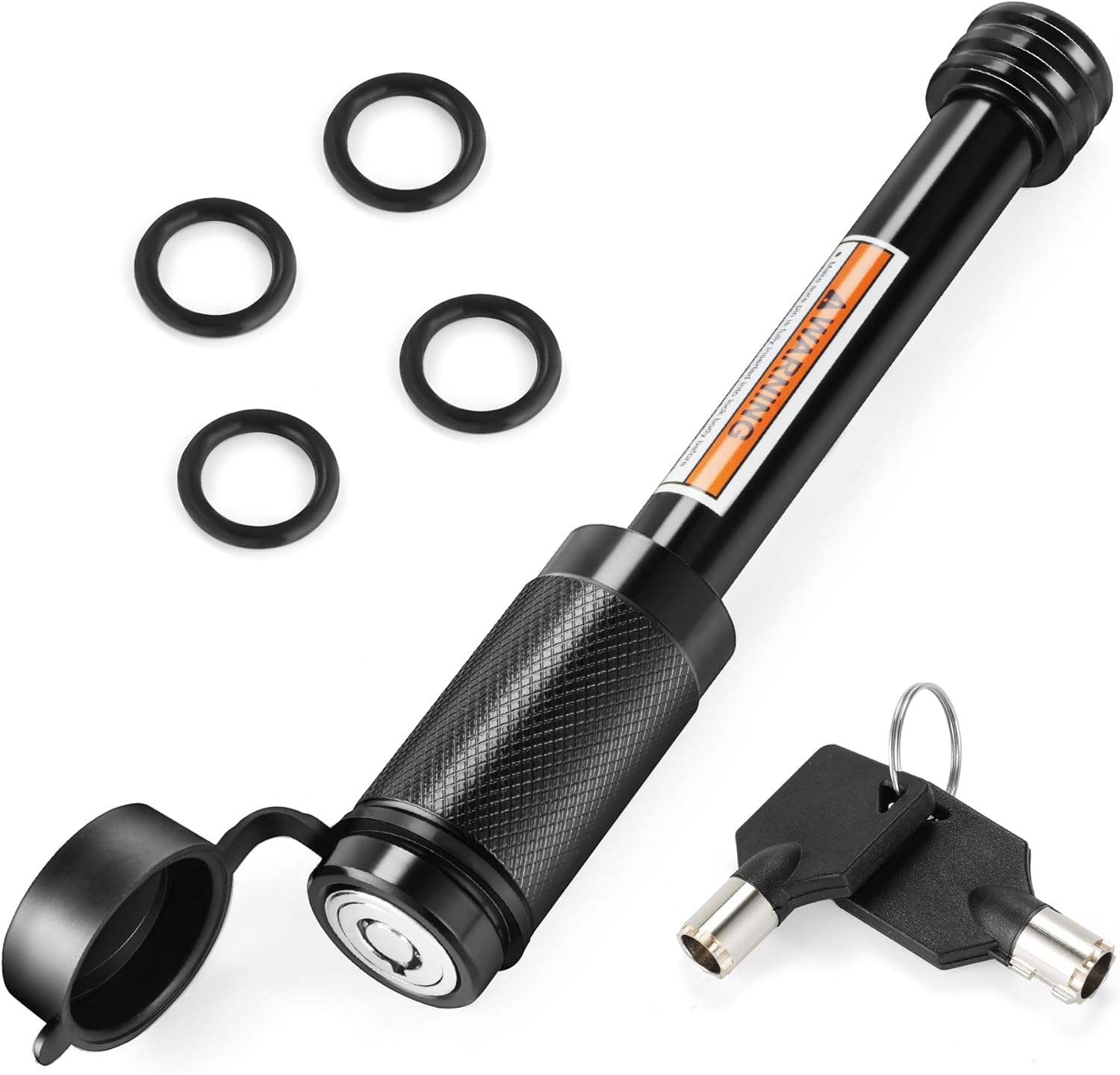
This trailer hitch pin lock helps secure your towing setup with a 5/8-inch pin and compatibility for most Class III and IV 2-inch and 2-1/2-inch receiver hitches. Built from durable carbon steel with a tamper-resistant tubular key system, it adds reliable anti-theft protection while the included rubber O-rings help reduce rattling noise during travel.

This trailer hitch pin lock is designed to secure Class III and IV 2-inch and 2-1/2-inch tow receivers, helping keep hitch-mounted gear protected during travel and storage. Its rotating head, tubular key design, and weather-resistant cap make it easy to use while helping guard against moisture, dust, and rust. Built from solid carbon steel with a zinc alloy lock core, it offers dependable towing security for trailers, cargo carriers, bike racks, and more.
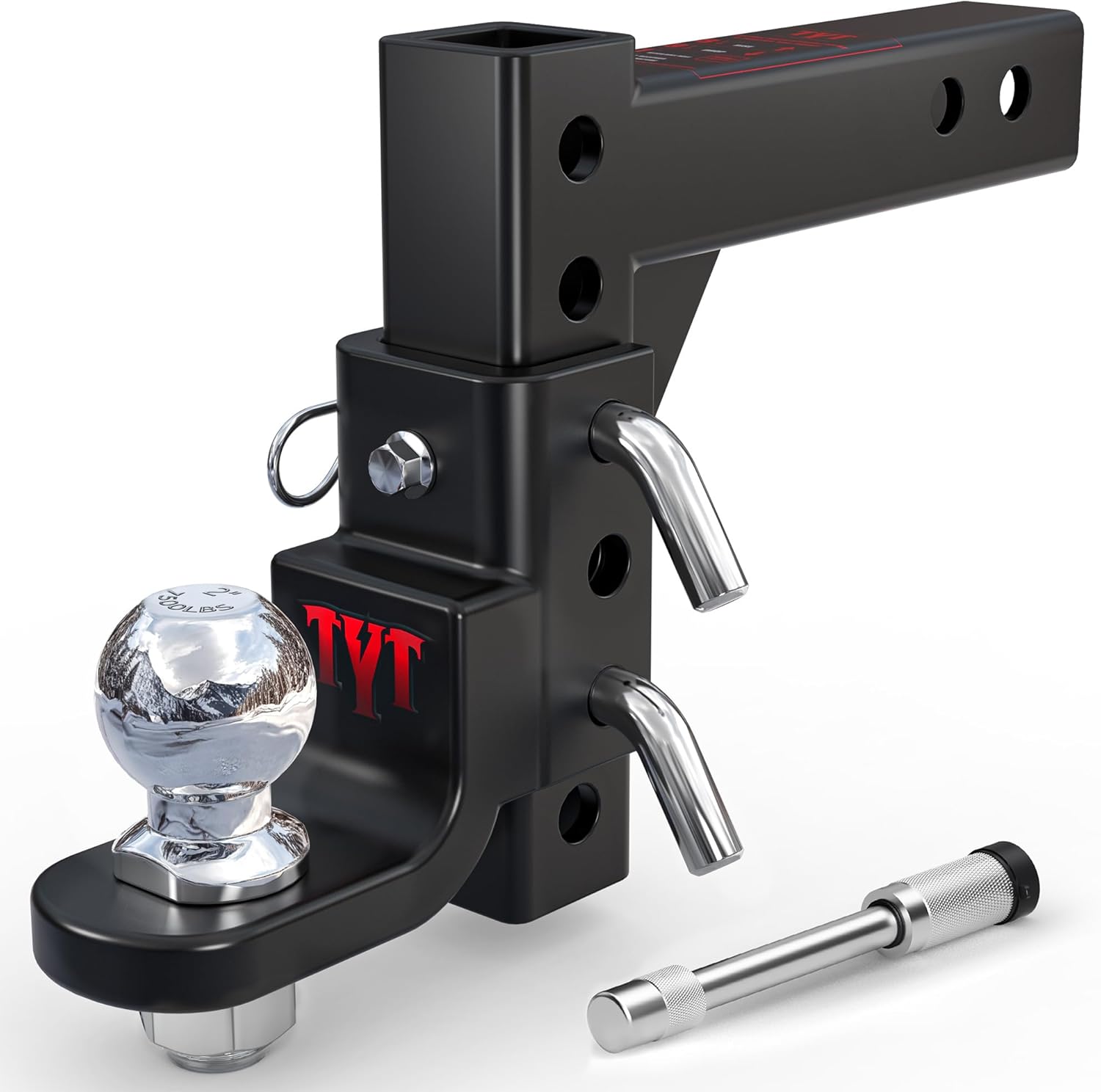
This adjustable trailer hitch ball mount is built for dependable towing with a standard 2-inch receiver and a high-capacity design suited for trucks, campers, boats, and utility trailers. Its adjustable rise and drop settings help you achieve a level tow, while the anti-rattle design supports a smoother, quieter ride. Complete with pins, clips, and a premium pin lock, it offers an easy installation and secure connection for everyday hauling needs.
Does a 2-Inch Tundra Receiver Automatically Mean Class IV?
No. A 2-inch opening describes accessory fit, not a universal hitch class or towing capacity. Two receivers can share the same 2-inch opening and have different ratings. The receiver label and the towing specifications for your exact Tundra determine the allowed trailer and tongue weight.
Your actual towing limit is the lowest rating in the complete combination. For definitions of the truck limits below, see the Tundra GVWR, GAWR, GCWR, and payload guide.
Check each of the following before towing:
| Item to Check | Why It Matters |
|---|---|
| Truck towing rating | Varies by model year, cab, bed, drivetrain, powertrain, axle, and tow equipment |
| Truck and axle limits (GVWR, GAWR, and payload) | Passengers, cargo, accessories, and tongue weight consume payload |
| Combined-weight limit (GCWR) | Limits the combined loaded weight of the truck and trailer |
| Receiver rating | May list different weight-carrying and weight-distribution limits |
| Ball mount and hitch ball | Must be rated for the loaded trailer and actual tongue weight |
| Trailer coupler and safety chains | Must fit correctly and carry adequate ratings for the trailer |
Toyota’s requirements for trailer brakes, sway control, and weight distribution vary by model year and loaded trailer weight. Follow the towing section of the owner’s manual for your exact truck rather than carrying a threshold over from another model year. When weight distribution is required or permitted, use the separate Tundra weight-distribution hitch setup guide with the instructions for your exact hitch.
Does the Tundra Hitch Receiver Size Change by Model Year?
Do not assume every Tundra or every installed hitch is identical. Toyota has changed tow packages, towing ratings, connectors, powertrains, and available equipment across the Tundra’s production history. A used truck may also have an aftermarket receiver that differs from the original part. A front-mounted receiver is a separate component and should not be identified from the rear-hitch specification.
Use this verification order:
- Read the receiver label. It should identify the hitch manufacturer or part information and list its weight ratings.
- Measure the inside opening. A nominal 2-inch receiver accepts a 2-inch square shank.
- Measure the pin path. Confirm the pin-hole diameter and the usable span required to clear the full outside width of the receiver.
- Check the model-year owner’s manual. Confirm towing capacity, payload limits, tongue-weight instructions, trailer-brake requirements, and weight-distribution guidance.
- Inspect for modifications. Look for replacement hardware, adapters, welded plates, drilled holes, damaged mounting points, or missing labels.
If the label is missing or the hitch has been modified, have a Toyota dealer or qualified towing shop identify and inspect the receiver before using it for a trailer.
What Hitch Ball and Ball Mount Does a Tundra Need?
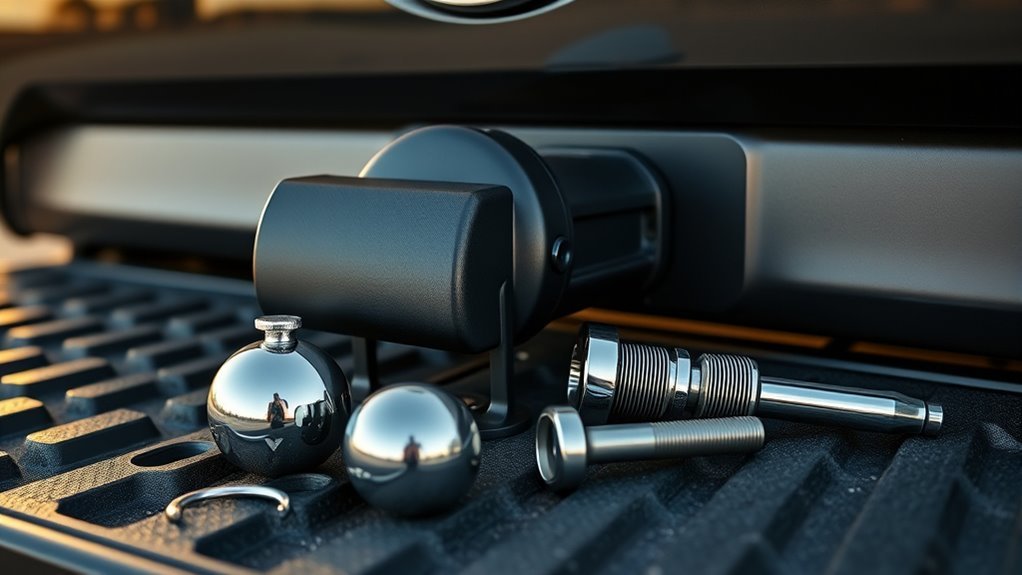
The receiver determines the ball-mount shank size. The trailer coupler determines the hitch-ball size. Common trailer-ball sizes include 1-7/8 inch, 2 inch, and 2-5/16 inch. Use the size stamped on the coupler and select a ball with a rating that meets or exceeds the loaded trailer weight. See the Toyota Tundra trailer-ball size guide for the ball, threaded shank, and torque checks.
You must also choose the correct ball-mount drop or rise so the loaded trailer sits level. A level trailer supports stable handling, even tire loading, secure coupler engagement, and predictable braking.
- Park the loaded Tundra and loaded trailer on firm, level ground.
- Measure from the ground to the top inside edge of the receiver opening.
- Level the trailer and measure from the ground to the bottom of the coupler.
- Use the difference to estimate the required ball-mount drop or rise.
- Confirm the ball-mount rating, ball-shank diameter, ball torque specification, and hitch-pin fit.
- Reconnect the loaded trailer and confirm that it sits level without exceeding the truck’s payload or axle limits.
Pro Tip: Measure with the passengers, cargo, accessories, and trailer load you normally carry. Rear suspension compression can change the drop or rise required.
[Products Worth Considering]
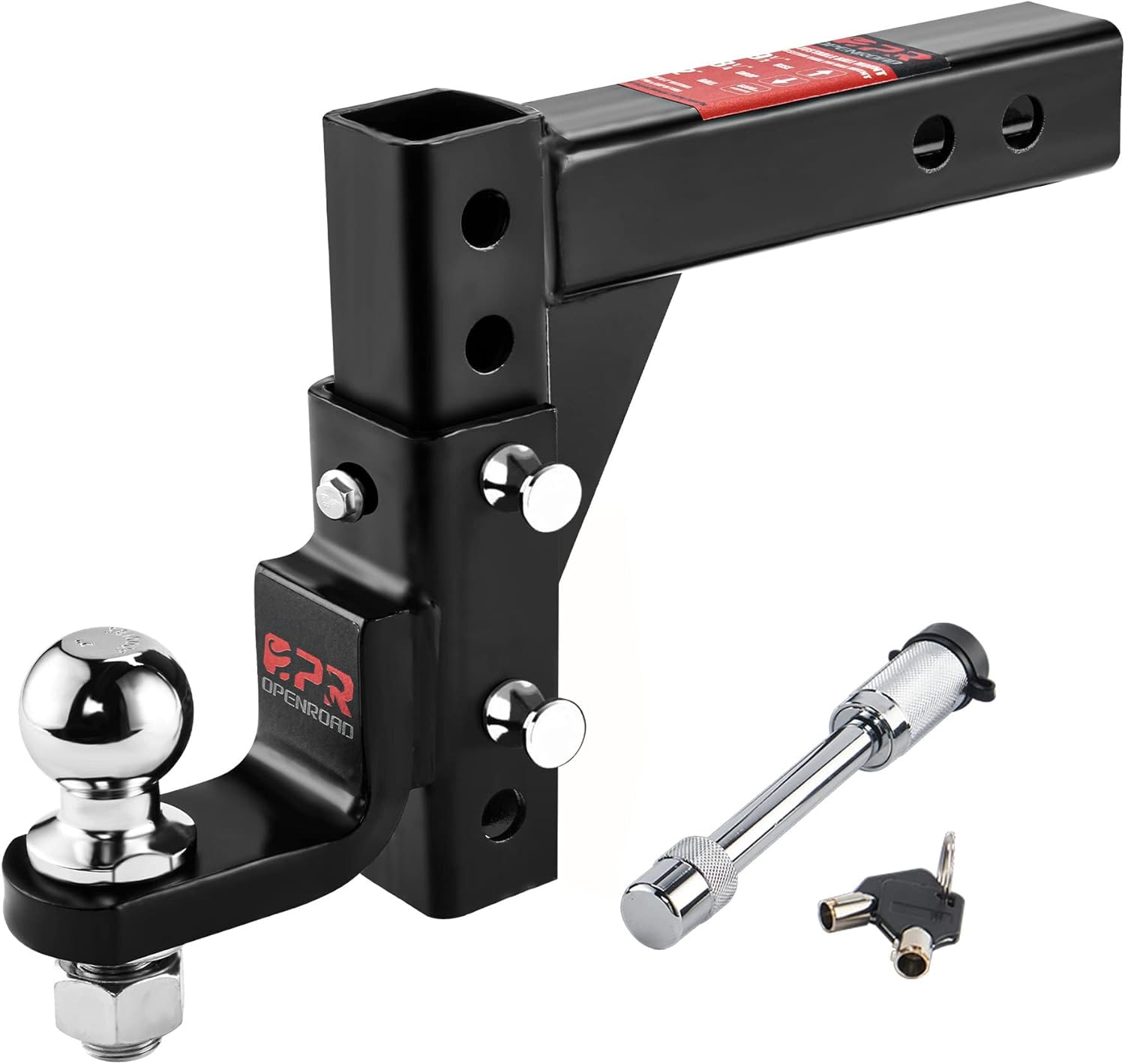
This adjustable trailer hitch ball mount is built for dependable towing with a strong steel construction and a versatile fit for 2-inch receivers. Its adjustable drop and rise settings help you dial in the right towing height, while the lock and keyed anti-theft design add security. A black powder-coated finish helps resist rust and wear for lasting performance on trucks and other towing setups.
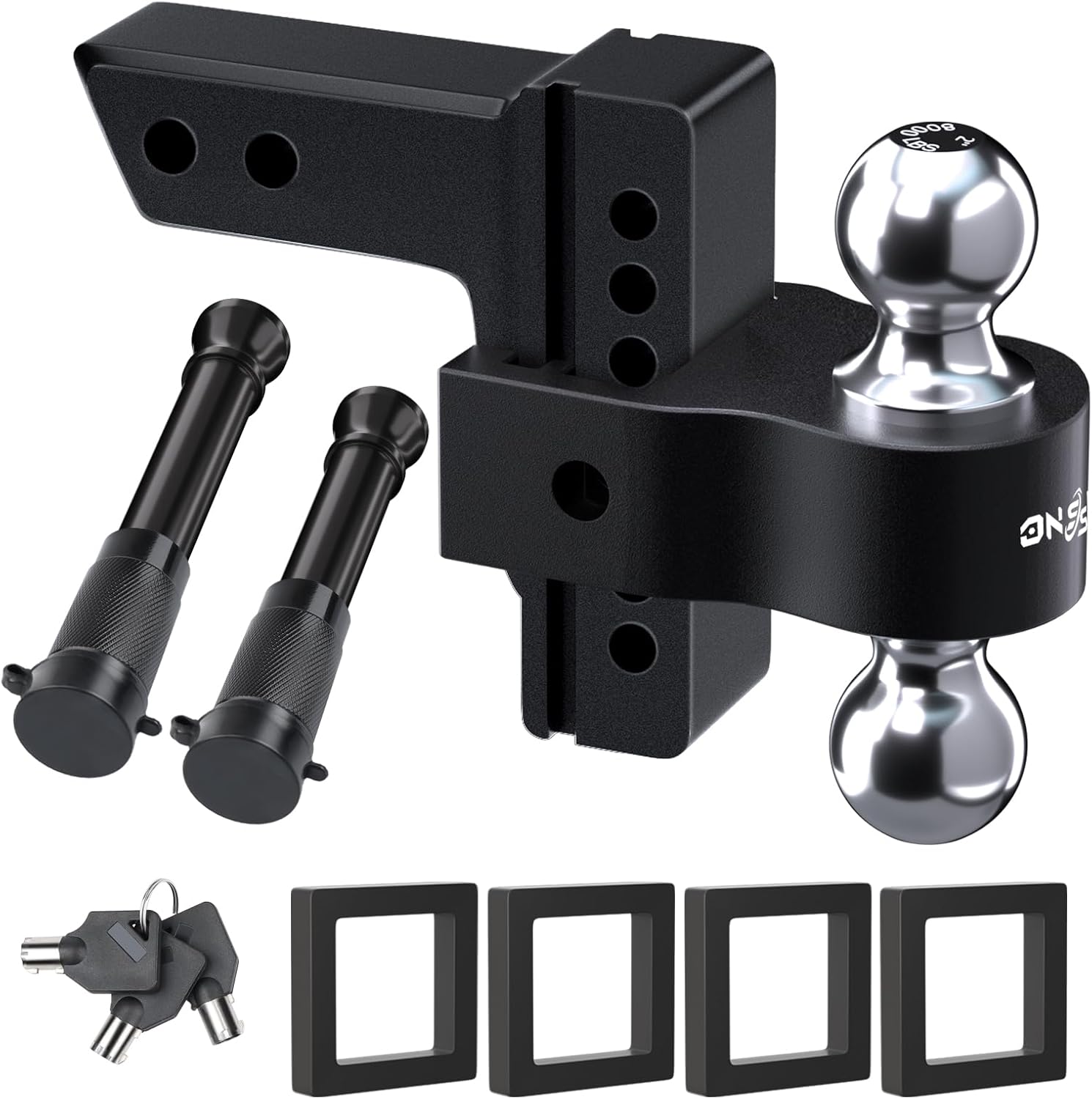
This adjustable trailer hitch is designed for 2-inch receivers and offers flexible towing with a 6-inch drop and rise range. Dual ball sizes help support different trailer setups, while the high-strength aluminum construction is built for dependable performance on tough jobs. Included hitch locks and silencers add security and help reduce noise for a smoother towing experience.
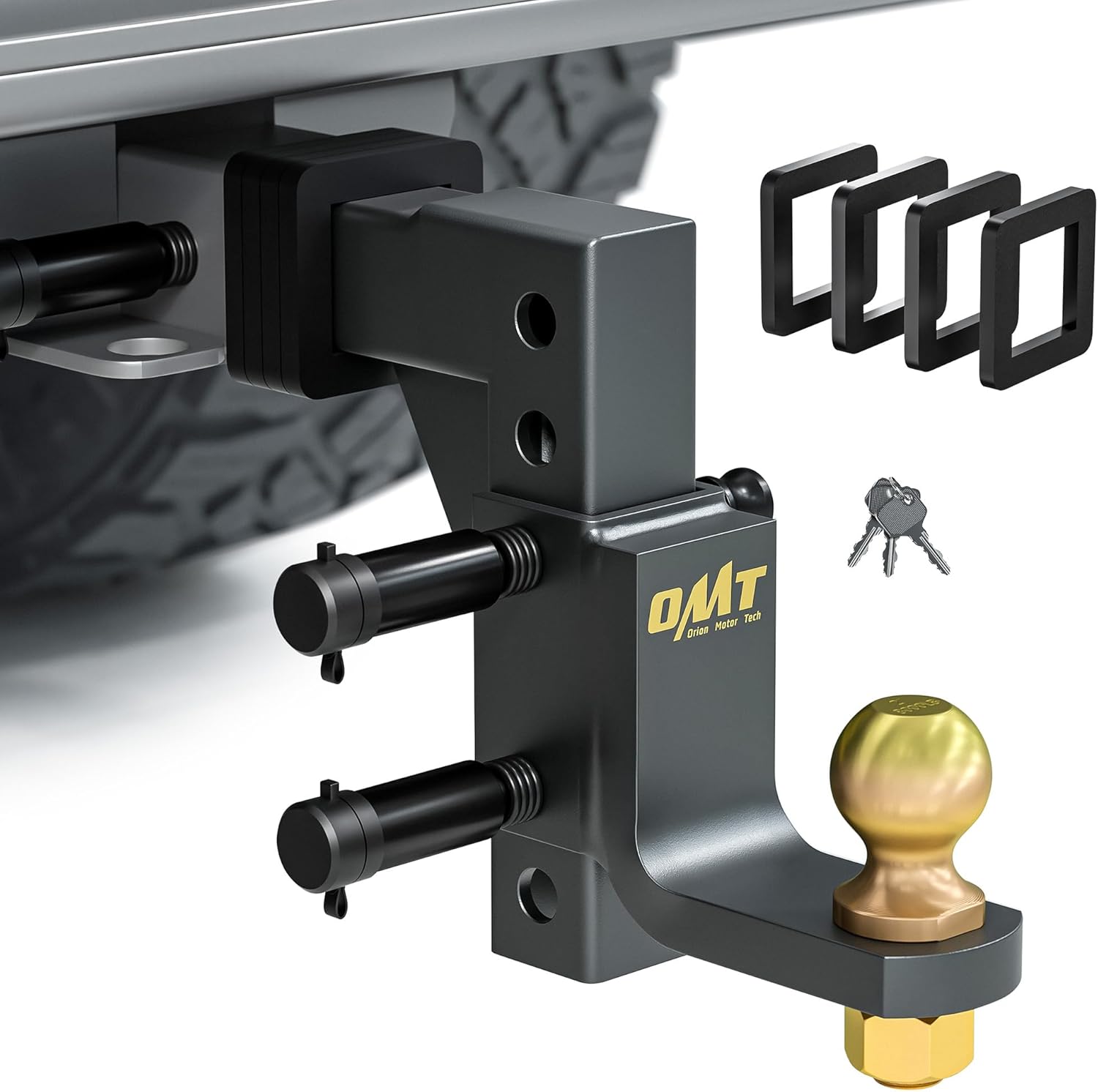
This adjustable trailer hitch ball mount is built for secure, versatile towing with a standard 2 inch receiver, a 2 inch ball, and both drop and rise adjustment for better fitment. Rated for heavy-duty towing and designed with anti-theft locking pins, it helps keep your trailer secure while resisting harsh weather and road conditions. The pre-assembled design makes installation fast and tool-free, so you can get hooked up and ready to tow with confidence.
How Should You Check Tongue Weight and Load Balance?
Tongue weight is the downward force the trailer applies to the hitch ball. Too little can contribute to trailer sway. Too much can consume payload, overload the rear axle, reduce steering control, and alter braking performance.
Use the tongue-weight range specified by the trailer manufacturer and the owner’s manual for your Tundra. Do not replace a model-specific requirement with a generic percentage. Tongue weight counts against the truck’s payload along with passengers, cargo, tools, bed accessories, hitch hardware, and other aftermarket equipment.
Verify tongue weight with an appropriate scale or weighing method after loading the trailer as it will travel. Moving cargo forward or rearward changes both tongue weight and trailer stability, so secure the final load before towing. The Tundra tongue-weight guide explains the calculation and scale checks in more detail.
A large advertised towing number does not make a setup safe. Every rating, connection, measurement, and load must work together before the trailer moves.
Which Anti-Rattle Devices and Locks Are Safe for a Tundra Receiver?
Anti-rattle hardware can reduce noise and minor movement, but not every device is approved for trailer towing. Some products are intended only for bike racks, cargo carriers, or other non-towing accessories. Use a device only when its manufacturer clearly approves it for your receiver size, accessory shape, and intended load.
[Products Worth Considering]

This Andersen Hitches weight distribution hitch kit is designed to improve towing stability with a grease-free friction cone and tension chain system that helps reduce sway and bounce. It features a universal setup with a 2-inch ball and 4-inch drop/rise to suit many bumper-pull trailer applications, while making hitching and unhitching faster and easier than traditional spring bar systems. Built in the USA, it offers dependable performance for travelers, workers, and outdoor enthusiasts who need confident towing control.

This adjustable tri-ball trailer hitch gives you flexible towing support with three hitch ball sizes and a 4.5-inch rise and drop for level hauling across different vehicles and trailers. Built for durability and convenience, it includes a tow hook, D-ring shackle, and a secure locking system for dependable towing, recovery, and off-road versatility.

This patented locking receiver pin helps secure your trailer and hitch against theft with a solid steel, tamper-resistant design. It fits standard 2-inch Class III and IV hitches, making it a reliable choice for trailers, RVs, and everyday towing setups. A weatherproof slide cap helps keep dirt and debris out for lasting performance, and the brand includes lifetime replacement support for added peace of mind.
Anti-Rattle Installation Tips
- Clean and inspect the receiver tube and accessory shank.
- Confirm that the device fits a 2-inch receiver and the shape of your accessory.
- Verify that the device is approved for trailer towing when it will be used with a trailer.
- Install and tighten it according to the manufacturer’s instructions.
- Use the correct hitch pin, clip, or rated lock.
- Recheck the hardware after a short drive and during regular towing stops.
Locking Hitch Options
A locking hitch pin can help deter theft, but it must match the receiver, pin-hole diameter, usable span, lock-body clearance, and intended load. A pin can have the correct diameter and still be too short to accept its clip or lock. Do not use a decorative or accessory-only lock for a towing connection unless the manufacturer rates it for that purpose.
Rust-Prevention Strategies
Moisture, road salt, launch-ramp water, dirt, and metal-on-metal movement can speed up corrosion. Keep the receiver clean, dry, and regularly inspected.
- Rinse off road salt, mud, or saltwater residue after exposure.
- Remove loose surface rust before it spreads.
- Inspect the receiver interior, hitch pin hole, mounting points, welds, and safety-chain loops.
- Apply a suitable rust-inhibiting coating to exposed metal while following the coating and hitch manufacturers’ instructions.
- Keep the hitch pin and lock clean and operating freely.
What Is the Safest Fix for a Loose Tundra Ball Mount?
Start with inspection and correctly rated parts. Do not use welding, drilling, grinding, or improvised material to hide a damaged or badly worn receiver.
| Fix | Best For | Caution |
|---|---|---|
| Rated anti-rattle clamp or wedge | Normal hitch noise and minor play | Confirm approval for towing, not only hitch-mounted accessories |
| Correct replacement ball mount | Loose, worn, poorly fitting, or incorrectly sized shank | Match the rating, rise or drop, ball shank, pin-hole position, and required pin usable span |
| Purpose-built hitch-fit shim | Minor clearance correction when approved by the manufacturer | Do not use it to conceal corrosion, deformation, or an enlarged pin hole |
| Professional inspection or receiver replacement | Bent, cracked, severely corroded, modified, or overloaded parts | Do not tow until the damaged component is corrected |
Warning: Welding, drilling, or grinding a rated hitch component can alter its strength, coating, fit, and warranty status. Replace a damaged or excessively worn part, or have a qualified towing shop inspect it.
When Should You Replace the Receiver or Hitch Accessory?
Replace or professionally inspect a ball mount, hitch ball, pin, lock, anti-rattle device, or receiver when the part no longer matches the trailer, lacks an adequate rating, or shows damage.
- The ball-mount rating is lower than the loaded trailer weight or actual tongue weight.
- The hitch ball does not match the size stamped on the trailer coupler.
- The ball-mount rise or drop leaves the loaded trailer noticeably nose-high or nose-low.
- The receiver, pin hole, welds, mounting points, or safety-chain loops show cracks, bending, severe rust, or deformation.
- The accessory pin hole cannot align without force or modification, or the correct-diameter pin does not have enough usable span for secure retention.
- The trailer requires weight-distribution equipment that the receiver or ball mount is not rated to use.
- The receiver label is missing and the hitch cannot be positively identified.
Do not use adapter sleeves, hitch extensions, or reducers without checking their ratings and instructions. These parts can add movement or leverage and may reduce the allowed load of the setup.
Pre-Tow Checklist for a Tundra 2-Inch Receiver
- Confirm the truck’s exact tow rating, payload, GVWR, GAWR, GCWR, and model-year owner’s-manual requirements. Use the Tundra towing-capacity guide only as a starting point; the truck labels and manual control.
- Read the receiver’s weight-carrying and weight-distribution ratings.
- Confirm that the ball mount, hitch ball, pin or lock, coupler, and safety chains are rated for the loaded trailer.
- Check the hitch-pin diameter and usable span; the clip or lock must seat fully outside the receiver wall.
- Match the hitch ball to the size stamped on the trailer coupler.
- Set the correct ball-mount drop or rise so the loaded trailer sits level.
- Measure or verify tongue weight using the range specified for the truck and trailer.
- Connect the safety chains according to the trailer manufacturer’s instructions and applicable local law.
- Connect the 7-pin or 4-pin wiring and test the running lights, turn signals, brake lights, and electric trailer brakes when equipped.
- Confirm that trailer brakes, sway-control equipment, and weight-distribution equipment meet the requirements for your exact setup.
- Check tire pressure, tire condition, and load ratings on the Tundra and trailer.
- Secure the coupler latch, hitch pin, clip or lock, breakaway cable, safety chains, and cargo tie-downs.
- Stop after a short initial drive and recheck the connection, tires, load, and anti-rattle hardware.
Frequently Asked Questions
What size hitch receiver is on a Toyota Tundra?
Most U.S.-market Toyota Tundras with a factory rear tow hitch use a nominal 2-inch-by-2-inch inside opening. Confirm the opening and rating label before ordering because an older truck may have an aftermarket or replacement hitch.
Is a Toyota Tundra hitch receiver 2 inches or 2.5 inches?
The usual factory rear receiver is nominally 2 inches by 2 inches inside, so a 2-inch accessory shank is normally required. Measure the inside opening if the hitch is aftermarket, modified, or missing its label.
What hitch pin size fits a Toyota Tundra 2-inch receiver?
Many 2-inch receiver accessories use a 5/8-inch pin, but diameter alone is not enough. Check the receiver and accessory instructions, then choose a pin or lock with enough usable span for the pin to pass through both receiver walls and the accessory shank while allowing the clip or lock to seat fully.
Does a 2-inch receiver mean the Tundra has a Class IV hitch?
No. The opening size describes accessory fit, not a guaranteed hitch class or capacity. Use the receiver’s rating label and the towing specifications for your exact truck.
Why does my 2-inch Tundra receiver measure slightly larger than 2 inches?
A receiver needs some clearance so the accessory shank can slide into place. Paint, wear, rust, dirt, and manufacturing clearance can affect the measurement. Excessive rocking, cracking, deformation, or pin-hole wear needs inspection before towing.
Does receiver size determine Toyota Tundra towing capacity?
No. Receiver size determines which shank fits. Towing capacity depends on the truck configuration and the ratings of the receiver, ball mount, hitch ball, trailer, tires, brakes, and other components.
Can every Toyota Tundra tow 12,000 pounds?
No. Toyota lists an available maximum towing capacity of 12,000 pounds for the 2026 Tundra, but the capacity of an individual truck varies by configuration. Check the truck’s labels, model-year manual, payload, drivetrain, cab, bed, powertrain, and towing equipment.
What hitch ball size do I need for a Tundra?
The trailer coupler decides the ball size. Common sizes include 1-7/8 inch, 2 inch, and 2-5/16 inch. Use the size stamped on the coupler and choose a ball rated for the loaded trailer.
How do I verify the receiver size on an older or used Tundra?
Read the receiver label, measure the inside width and height of the opening, and inspect the hitch for replacement hardware or modifications. Have a qualified shop identify it if the label is missing or the receiver has been altered.
Should I weld shims or plates into a loose hitch receiver?
Not as a routine repair. Welding or modifying a rated receiver can affect its strength, corrosion protection, fit, and warranty. Use properly rated anti-rattle hardware or a correctly fitting ball mount. Replace or professionally inspect a damaged receiver.
Conclusion
Most factory-equipped Toyota Tundras use a nominal 2-inch rear receiver, but that dimension only tells you which accessory shank normally fits. It does not establish the truck’s towing capacity, hitch class, required ball size, tongue-weight limit, or hitch-pin usable span.
Before buying, photograph the receiver label, measure the inside opening, and measure the full pin path through both receiver walls. Then match the ball to the trailer coupler, choose the correct rise or drop, and check the towing instructions for your exact model year. Stop and arrange an inspection if the receiver is cracked, bent, badly corroded, modified, unlabeled, or excessively worn.
Sources
- Toyota USA Newsroom: 2026 Toyota Tundra — supports the available 12,000-pound maximum towing-capacity statement and standard tow hitch with combined 7/4-pin connector for the 2026 model year.
- Toyota Truck Brochures — provides Toyota’s current 2026 Tundra model and accessory brochures; the accessory portfolio includes products designed for 2-inch square towing receivers.
- Toyota Owners Manual: Tundra Trailer Towing — provides model-specific towing definitions, limits, loading guidance, trailer-ball selection, and equipment instructions.
- U-Haul Trailer Hitch Guide — supports the distinction between receiver opening size and general hitch-class conventions.

[…] especially when it has an aftermarket hitch or belongs to an earlier model year. The site’s Tundra hitch receiver size guide explains the receiver side of the setup in more […]
[…] Hitch receiver, spare-tire area, and rear brackets […]
[…] Use towing parts that match the trailer’s loaded weight, not just its empty or “dry” weight. The receiver, ball mount, hitch ball, coupler, safety chains, breakaway system, brake controller, wiring, tires, and trailer hardware must work as one rated system. If you are unsure which receiver or connection your truck uses, check the Tundra hitch receiver size guide. […]