
For a Toyota Tundra towing a conventional bumper-pull trailer, Toyota’s owner guidance targets 9% to 11% of the trailer’s actual loaded weight as tongue weight. A 6,800 lb loaded trailer therefore calls for about 612–748 lb at the hitch. That percentage is only the starting point: the loaded truck must also stay within its payload, GVWR, front and rear GAWR, GCWR, receiver, ball mount, hitch ball, coupler, tire, and trailer ratings. Toyota lists the 2026 Tundra towing capacity at up to 12,000 lb when properly equipped, but the labels and manual for your exact truck control.
By Ryker Calloway · Last updated August 22, 2026
Quick Answer
Use 9% to 11% of actual loaded trailer weight for conventional towing with a Toyota Tundra, unless the owner’s manual for your exact model year or the trailer maker specifies otherwise. Then verify the measured load against every truck, hitch, tire, and trailer rating. A generic 10% to 15% trailer rule does not override Toyota’s Tundra-specific guidance.
Key Takeaways
- Toyota’s conventional-towing target is 9% to 11% of the trailer’s loaded weight.
- Tongue weight uses the Tundra’s payload and changes front and rear axle loads.
- A weight-distribution hitch redistributes load but does not increase Toyota’s ratings.
- Rear airbags may reduce sag, but they do not raise payload, GVWR, GAWR, GCWR, hitch, or tire limits.
- Use a tongue-weight gauge or a correctly planned public-scale sequence with the truck and trailer loaded for travel.
At a Glance
| Time Required | 15–30 minutes for calculation; about 30–60 minutes for multiple public-scale passes |
| Difficulty | Moderate |
| Tools Needed | Owner’s manual, door-jamb labels, hitch labels, calculator, and a tongue-weight scale or certified public scale |
| Cost | Usually low; scale fees vary, while a dedicated tongue-weight gauge is reusable |
What Tongue-Weight Percent Does Toyota Recommend for a Tundra?
For conventional towing, Toyota Tundra owner guidance uses 9% to 11% of gross trailer weight. Use the trailer’s actual loaded, trip-ready weight, not its dry brochure weight. Water, propane, batteries, fuel, tools, food, and camping gear can change both total trailer weight and tongue weight.
Calculate the 9% to 11% range first. Then check whether the measured tongue weight and axle loads fit every rating. For a 6,800 lb loaded trailer, Toyota’s target is 612–748 lb. If 748 lb would exceed payload, rear GAWR, receiver capacity, or another limit, do not simply force the trailer down to 612 lb without checking stability and the trailer maker’s instructions. Reduce or redistribute load, change compatible equipment, or choose a lighter trailer.
Toyota’s published trailering figures for current Tundra models follow the SAE J2807 towing standard, which is why the same truck body can carry different ratings depending on cab, bed, and drivetrain — there is no single number for “a Tundra,” only for your exact configuration.
The safe setup must satisfy both conditions: tongue weight must fall within the applicable range, and every truck, hitch, axle, tire, and trailer rating must remain within its limit.
Warning: Never exceed the lowest applicable rating among the Tundra’s GVWR, front or rear GAWR, GCWR, payload label, receiver, ball mount, hitch ball, trailer coupler, trailer GVWR, trailer axle ratings, wheels, or tire load ratings. A correct percentage does not make an overloaded combination safe.
Which Tundra Ratings Must You Check First?
Gather the numbers for your exact truck before calculating tongue weight. An advertised maximum tow rating does not account for every cab, bed, drivetrain, trim, option, accessory, passenger, or cargo combination. For a deeper explanation of the labels, see the Tundra GVWR, GAWR, GCWR, and payload guide.
- Owner’s manual: Find the towing section for your model year and powertrain.
- Certification label: Check GVWR and front/rear GAWR on the driver-side door area.
- Tire and Loading Information label: Use the “combined weight of occupants and cargo” value as the truck’s payload budget.
- Receiver and ball mount: Confirm the weight-carrying and weight-distribution ratings shown on the hardware.
- Hitch ball and coupler: Match the ball size and confirm both components are rated above the loaded trailer and tongue weight.
- Trailer labels: Check trailer GVWR, GAWR, coupler rating, wheel and tire ratings, and the trailer maker’s loading instructions.
- Actual loaded weight: Include water, propane, batteries, fuel, tools, food, cargo, and permanent accessories.
Note: Toyota’s 12,000 lb figure is an “up to” rating for a properly equipped 2026 Tundra. Your exact TWR, payload, axle limits, and hitch ratings may be lower.
How Do You Calculate Toyota Tundra Tongue Weight?
Use these formulas for a conventional bumper-pull trailer:
Target tongue weight = loaded trailer weight × 0.09 to 0.11
Actual tongue-weight percent = measured tongue weight ÷ loaded trailer weight × 100
| Loaded trailer weight | 9% tongue weight | 10% tongue weight | 11% tongue weight |
|---|---|---|---|
| 5,000 lb | 450 lb | 500 lb | 550 lb |
| 6,800 lb | 612 lb | 680 lb | 748 lb |
| 10,000 lb | 900 lb | 1,000 lb | 1,100 lb |
| 12,000 lb | 1,080 lb | 1,200 lb | 1,320 lb |
The 12,000 lb row shows why payload often becomes the practical limit before advertised tow capacity. Toyota advertises up to 1,850 lb of payload for the 2026 Tundra (down from 1,940 lb on 2024–2025 models — always confirm against your exact door-jamb label), but tongue weight of 1,080–1,320 lb could consume most of that amount before passengers, bed cargo, accessories, and hitch hardware are added. Use the payload label on your truck, not the model-wide maximum. For the full breakdown of how Toyota’s payload figures work across trims and model years, see the Tundra payload capacity guide.
Payload Formula You Should Not Skip
Tongue weight is part of the load carried by the truck. Use this quick check:
Remaining payload = door-label payload − passengers − in-cab cargo − bed cargo − added accessories − hitch hardware − measured tongue weight
If the result is negative, the Tundra is overloaded even when the trailer remains below the advertised tow rating. Remove weight, reduce the trailer load, move cargo to a suitable location without leaving the required tongue-weight range, or use a tow vehicle with more capacity.
Worked example: A Tundra with a 1,400 lb door-label payload carries 350 lb of occupants, 150 lb of cargo and accessories, 100 lb of hitch hardware, and 680 lb of tongue weight. Remaining payload is 120 lb: 1,400 − 350 − 150 − 100 − 680 = 120 lb.
Do Hitch Carriers Use the Same Percentage?
No. A hitch-mounted cargo carrier, bike rack, motorcycle carrier, or generator tray is not a trailer. Do not apply the 9% to 11% formula. The carrier and everything mounted on it create direct vertical load on the receiver.
Carrier hitch load = carrier weight + cargo weight + tiedowns and accessories
The full amount counts against the receiver’s vertical-load rating, the Tundra’s payload, rear GAWR, and rear-tire capacity. Because a carrier sits behind the bumper, leverage can also remove more load from the front axle than the same weight placed over or ahead of the rear axle in the bed. Extension adapters can increase leverage further and may reduce the receiver or accessory rating, so follow the hardware maker’s instructions.
What Sets the Maximum Toyota Tundra Tongue Weight?
The maximum safe tongue weight is the lowest applicable limit in the towing system. Toyota’s 9% to 11% range is a load-distribution target, not permission to exceed a component rating.
- Truck payload: Occupants, cargo, accessories, hitch hardware, and tongue weight use the same payload budget.
- GVWR and GAWR: The loaded truck and each axle must remain below the door-label ratings.
- GCWR and TWR: The combination and loaded trailer must remain within Toyota’s model-specific limits.
- Receiver and hitch hardware: Use the lowest rating on the receiver, ball mount, hitch ball, weight-distribution hitch, or coupler.
- Trailer and tires: Stay within the trailer GVWR, axle, wheel, and tire ratings.
For a 6,800 lb loaded trailer, Toyota’s tongue-weight target is 612–748 lb. A measured 680 lb equals 10%. It is acceptable only when the loaded truck, each axle, the combination, the hitch hardware, and the trailer all remain within their ratings.
How Do You Measure Tundra Tongue Weight Accurately?
Calculations provide a target. A scale verifies the loaded setup. Keep passengers, fuel, water, propane, tools, coolers, bikes, hitch equipment, and camping gear in the same positions used for travel.
Method 1: Tongue-Weight Scale or Gauge
- Park on firm, level ground and chock the trailer wheels.
- Load the trailer exactly as it will travel.
- Set the coupler at the same height it has when the trailer is level and connected to the Tundra.
- Place a properly rated tongue-weight scale under the coupler or tongue jack as its maker directs.
- Lower the jack until the scale carries the tongue load.
- Record the reading and divide it by the actual loaded trailer weight.
- Compare the result with Toyota’s 9% to 11% target and every component rating.
Method 2: Certified Public Scale
A multi-platform public scale, such as a CAT Scale, can report the Tundra’s steer axle, drive axle, trailer axle, and total combination weight. Keep occupants, cargo, fuel, and hitch hardware unchanged between passes.
- Pass 1, travel setup: Weigh the loaded Tundra and trailer with the weight-distribution bars engaged, if used.
- Pass 2, bars disengaged: Reweigh the same loaded combination with the spring bars fully disengaged but the trailer still coupled. This pass shows how the unassisted tongue load changes the truck axles.
- Pass 3, truck only: Unhitch in a safe area allowed by the scale operator, leave the same people, cargo, fuel, and removable hitch hardware in the Tundra, then weigh the truck alone.
Estimated tongue weight = Pass 2 truck axle total − Pass 3 truck axle total
Loaded trailer weight = Pass 2 combined total − Pass 3 truck total
Tongue-weight percent = estimated tongue weight ÷ loaded trailer weight × 100
Compare Pass 1 with Pass 2 to see how the weight-distribution hitch changes steer, drive, and trailer axle loads. Do not use the truck-weight increase from a bars-engaged pass as the trailer’s actual tongue weight because the hitch transfers part of the load to the trailer axles.
Example only: If the truck-alone total is 6,500 lb, the bars-disengaged truck axle total is 7,180 lb, and the combined total is 13,300 lb, estimated tongue weight is 680 lb and loaded trailer weight is 6,800 lb. The percentage is 10%.
When Does a Tundra Need a Weight-Distribution Hitch?
A weight-distribution hitch uses spring bars to transfer part of the load from the Tundra’s rear axle toward the front axle and trailer axles. Correct adjustment can restore steering response, braking balance, headlight aim, and suspension geometry. It does not remove the trailer’s actual tongue weight or increase any rating.
Toyota’s recent Tundra owner guidance states that a trailer over 5,000 lb requires a weight-distributing hitch with sufficient capacity. The same guidance calls for a sway-control device with sufficient capacity when gross trailer weight exceeds 2,000 lb. Check the manual for your exact model year before selecting or adjusting equipment.
When setting up a WDH, Toyota directs owners to return the front axle to its pre-coupling weight. If axle weight cannot be measured, use the model-year manual’s front-fender measurement procedure and do not pull the front below its original height. For the full procedure, see the Toyota Tundra weight-distribution hitch setup guide.
Airbags serve a different purpose. They can support ride height and reduce visible rear sag, but they do not increase payload, tongue-weight rating, GVWR, GAWR, GCWR, receiver capacity, tire capacity, or Toyota’s towing limits. A level-looking truck can still be overloaded.
| Equipment | What it helps | What it does not do |
|---|---|---|
| Weight-distribution hitch | Restores front-axle load and reduces rear-axle concentration when correctly rated and adjusted | Does not erase tongue weight or raise truck, hitch, tire, or trailer ratings |
| Airbags | Supports ride height and can reduce rear suspension sag | Does not increase payload, GVWR, GAWR, GCWR, hitch rating, or tire capacity |
[Products Worth Considering]
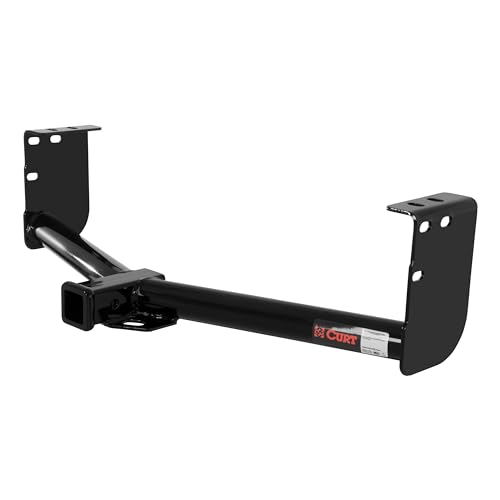
Rated to 6,000 lbs. gross trailer weight and 600 lbs. tongue weight

Allows for easy leveraging of weight distribution hookup brackets
What Should You Check Before Towing?
Repeat this checklist whenever passengers, cargo, tank levels, hitch settings, tires, or trailer equipment change.
- Confirm the trailer’s actual loaded weight.
- Calculate Toyota’s 9% to 11% tongue-weight range for conventional towing.
- Measure tongue weight and confirm the percentage.
- Check payload, GVWR, front GAWR, and rear GAWR with the loaded truck.
- Confirm the loaded combination remains below GCWR and the trailer remains below TWR and trailer GVWR.
- Confirm the receiver, ball mount, hitch ball, coupler, hitch pin, safety chains, wheels, and tires are rated for the load.
- Load heavy cargo low and near the trailer axle while preserving the required forward load bias.
- Keep the trailer at the attitude specified by the trailer and hitch makers.
- If using a WDH, follow both manuals and verify axle loads after adjustment.
- Set Toyota Tundra tire pressure from the truck placard and applicable tire load data; set trailer tires from the trailer and tire instructions.
- Test trailer lights, brakes, brake controller, breakaway cable, mirrors, chains, and coupler latch before driving.
[Products Worth Considering]
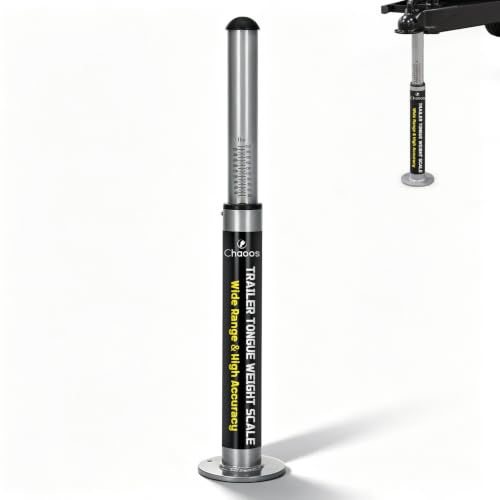
【Wide Range & High Accuracy】The Chaoos trailer tongue weight scale measures up to 2100 lbs with an accuracy within ±20 lbs, helping ensure proper tongue weight for safer towing and reduced trailer sway.

1800 lbs Heavy-Duty Capacity, built with strong carbon steel to handle your toughest loads with reliability

1800 lbs Heavy-Duty Capacity, built with strong carbon steel to handle your toughest loads with reliability
How Do You Fix Common Tongue-Weight Problems?
| Symptom | Likely cause | Action |
|---|---|---|
| Trailer sways or fishtails | Low tongue weight, rearward cargo, speed, wind, tire problems, or incorrect hitch setup | Slow down safely, inspect the rig, measure the load, restore the required range, check tires, and correct the hitch setup before continuing |
| Tundra rear sags heavily | Excess tongue weight, overloaded payload or rear axle, or an unadjusted WDH | Check scale tickets, reduce load, and adjust a properly rated WDH; do not treat airbags as added capacity |
| Steering feels light | Tongue load has removed too much weight from the front axle | Stop and verify axle loads; correct the load and WDH adjustment before highway driving |
| Rear GAWR, GVWR, or payload is exceeded | Too much truck cargo, tongue weight, accessory weight, or trailer load | Remove weight, reduce trailer load, or use a tow vehicle with more capacity |
| Carrier overloads the receiver | Carrier, cargo, extension, or leverage exceeds an applicable vertical-load rating | Reduce the load and follow the receiver, carrier, and adapter ratings |
For a full sway diagnosis, see how to stop trailer sway on a Toyota Tundra.
Do Fifth-Wheel and Gooseneck Tundras Use 9% to 11%?
No. The 9% to 11% target in this guide applies to conventional bumper-pull towing. Fifth-wheel and gooseneck towing uses a separate kingpin-weight formula instead. General towing-industry guidance places kingpin/pin weight at roughly 15% to 25% of gross trailer weight, often with a fixed maximum stated in pounds . Bed-mounted hitches also change how load reaches the truck’s axles. Use the exact Toyota manual, trailer manual, and hitch instructions for your model year, bed length, and equipment.
Safety note: This guide does not replace the Toyota owner’s manual, trailer manual, hitch instructions, component labels, scale tickets, or advice from a qualified towing professional who can inspect the actual rig.
Frequently Asked Questions
What is the ideal tongue-weight percentage for a Toyota Tundra?
For conventional bumper-pull towing, Toyota Tundra owner guidance uses 9% to 11% of actual loaded trailer weight. Follow the manual for your exact model year and the trailer maker’s instructions, then verify all ratings with measured weights.
Why does Toyota say 9% to 11% when many trailer guides say 10% to 15%?
Ten to 15% is common general guidance for many bumper-pull trailers. Toyota provides a narrower Tundra-specific target. Use the vehicle and trailer instructions that apply to your combination instead of replacing them with a generic range.
What is the tongue-weight limit on a Toyota Tundra?
There is no single limit for every Tundra. The safe maximum is the lowest applicable limit from the owner’s manual, payload label, GVWR, GAWR, GCWR, receiver, ball mount, hitch ball, coupler, tires, and trailer ratings.
Does tongue weight count against Tundra payload?
Yes. Tongue weight, occupants, cargo, added accessories, and hitch hardware all use the carrying capacity shown on the Tundra’s Tire and Loading Information label.
Does a weight-distribution hitch lower tongue weight?
No. It redistributes some load among the Tundra’s front and rear axles and the trailer axles. The trailer’s actual tongue weight still exists, and the hitch does not raise Toyota’s ratings.
Do airbags increase Tundra towing or tongue-weight capacity?
No. Airbags can reduce rear sag, but they do not increase payload, GVWR, GAWR, GCWR, receiver capacity, tire capacity, or Toyota’s towing limits.
How often should I measure tongue weight?
Measure it when you buy a trailer, change hitch equipment, add accessories, move major cargo, change tank levels, or notice sway, sag, or light steering. Recheck periodically even when trips appear similar.
Conclusion
For conventional Toyota Tundra towing, start with 9% to 11% of actual loaded trailer weight. Then measure the rig and check payload, GVWR, front and rear GAWR, GCWR, receiver, hitch hardware, tires, and trailer ratings. If any number is over its limit, reduce or change the load before driving. The next practical step is to load the truck and trailer for travel, calculate the target range, and verify it with a tongue-weight gauge or a three-pass public-scale check.
Sources
- Toyota 2026 Tundra Utility and Towing Specifications — supports the advertised maximum towing and payload figures.
- Toyota 2026 Tundra Manuals and Warranties — official location for model-year manuals and vehicle-specific instructions.
- Toyota Tundra Trailer-Towing Manual Section — supports the model-specific tongue-weight, sway-control, and weight-distribution guidance used in this article.
- CAT Scale How to Weigh — supports correct platform positioning for truck-and-trailer axle weights.
- National Trailer Safety Week Loading Guide — supports weighing, balanced loading, cargo securement, and following the trailer maker’s tongue-weight instructions.

[…] instructions. Measure the loaded setup rather than relying on a generic percentage. Use the Tundra tongue-weight guide for calculation and scale […]
[…] changes both tongue weight and trailer stability, so secure the final load before towing. The Tundra tongue-weight guide explains the calculation and scale checks in more […]