Last updated: July 23, 2026. This guide was checked against current Toyota towing information, federal certification-label rules, CAT Scale guidance, and manufacturer instructions for measuring trailer tongue weight.
To measure Toyota Tundra tongue weight, load the trailer exactly as it will travel, park on level ground, chock the wheels, and place a properly rated tongue-weight scale directly under the coupler at normal hitch height. For most conventional ball-coupled bumper-pull trailers, compare the reading with 10–15% of the fully loaded trailer weight. Then confirm the load still fits your Tundra’s payload, GVWR, front and rear GAWR, GCWR, receiver, hitch equipment, tires, and trailer ratings.
This guide covers conventional bumper-pull trailers. Fifth-wheel and gooseneck trailers use pin weight and require different calculations. The percentage target and your Tundra’s maximum permitted tongue load are also separate tests; both must pass.
Quick Answer
Load the trailer as it will travel, park level, chock the wheels, and use a tongue-weight scale under the coupler at normal hitch height. Compare the reading with 10–15% of loaded trailer weight, then confirm it remains within your Tundra’s payload, axle, hitch, and tire ratings. An acceptable percentage does not override a lower truck, receiver, hitch, or tire limit.
Key Takeaways
- For most conventional bumper-pull trailers, target tongue weight is 10–15% of loaded trailer weight.
- Tongue weight counts against your Tundra’s payload, along with passengers, cargo, accessories, and hitch hardware.
- The truck’s labels, model-year towing information, receiver, ball mount, hitch ball, tires, and trailer data plate all matter.
- A weight-distribution hitch can restore axle balance, but it does not erase tongue weight or raise any rating.
- Airbags can help level the truck, but they do not increase payload, GVWR, GAWR, GCWR, or hitch capacity.
- The 10–15% guideline does not apply to fifth-wheel or gooseneck pin weight.
At a Glance
| Time Required | 10–30 minutes with a tongue-weight scale; 30–60 minutes at a public scale |
| Difficulty | Easy to moderate |
| Tools Needed | Rated tongue-weight scale, wheel chocks, tape measure, notepad, or public-scale access |
| Cost | No added cost if you already own a scale; public-scale fees vary by location |
Three Checks Must Pass
- Trailer balance: The measured tongue-weight percentage is appropriate for the loaded trailer and its manufacturer’s instructions.
- Truck payload: Sticker payload minus occupants, cargo, accessories, hitch hardware, and actual tongue weight is zero or greater.
- Every rating: The truck, front axle, rear axle, combined vehicle, receiver, ball mount, hitch ball, tires, and trailer remain within their limits.
What Is Tongue Weight and Why It Matters for a Tundra
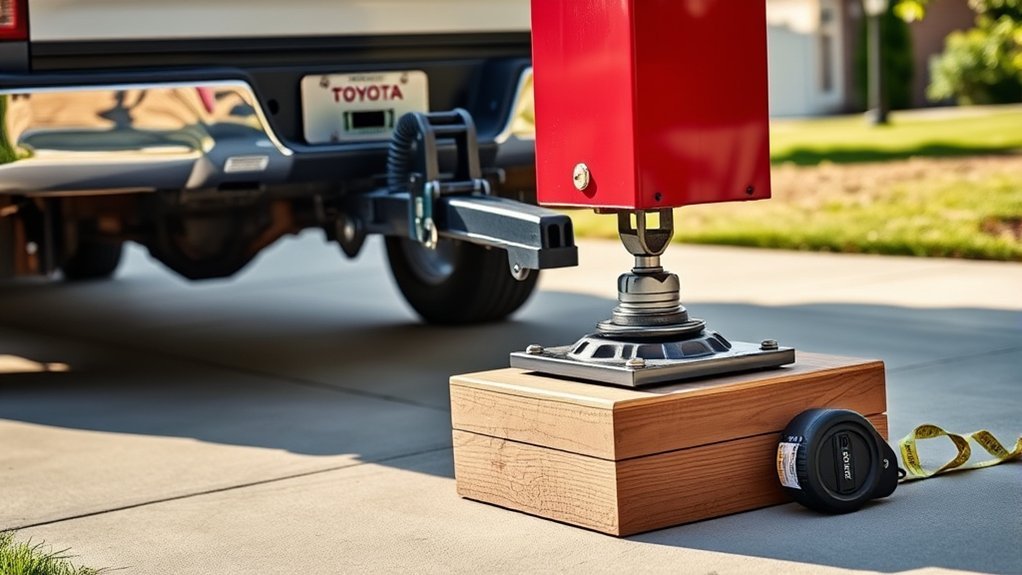
Tongue weight is the downward force the loaded trailer coupler places on the hitch ball. The Tundra carries that force, so it affects payload, axle loading, steering feel, braking, rear suspension squat, front-tire grip, and trailer stability.
For a conventional bumper-pull trailer, a commonly used starting range is 10–15% of gross loaded trailer weight. The North Carolina Division of Marine Fisheries states that tongue weight should be at least 10% and should not exceed 15% of gross trailer weight for proper handling. Always follow the trailer manufacturer’s instructions when they specify a different target.
For example, a loaded 7,000 lb conventional trailer has a general target range of about 700–1,050 lb. That does not mean every Tundra can carry 1,050 lb of tongue weight. The truck must still have enough payload and remain within its axle, hitch, tire, and vehicle ratings.
Too little tongue weight can make the trailer fishtail. Too much can overload the rear axle, remove load from the front axle, reduce steering grip, and consume the truck’s payload quickly.
For a conventional bumper-pull trailer, start with the trailer maker’s loading instructions or the general 10–15% range. Then verify that the measured load is within every truck, hitch, tire, and trailer rating.
What Percentage Should Toyota Tundra Tongue Weight Be?
Use the trailer’s actual loaded weight, not its dry or shipping weight. Water, propane, batteries, tools, camping gear, generators, food, fuel, and other cargo can change both total trailer weight and the load at the coupler.
This page focuses on measuring the actual load. For a deeper explanation of how to choose and interpret the range, see the Toyota Tundra tongue-weight percentage guide.
| Loaded Trailer Weight | 10% Tongue Weight | 15% Tongue Weight |
|---|---|---|
| 5,000 lb | 500 lb | 750 lb |
| 7,000 lb | 700 lb | 1,050 lb |
| 8,000 lb | 800 lb | 1,200 lb |
| 10,000 lb | 1,000 lb | 1,500 lb |
Formula: Loaded trailer weight × 0.10 = lower end of the general target. Loaded trailer weight × 0.15 = upper end of the general target.
Warning: The 10–15% target is not a maximum tongue-weight rating. It does not override your Tundra’s payload, GVWR, front or rear GAWR, GCWR, receiver, ball mount, hitch ball, tire, or trailer ratings. The lowest applicable limit controls the setup.
How Do You Find Your Tundra’s Payload and Hitch Limits?
Before measuring or adjusting the trailer, open the driver’s door and read the tire-and-loading sticker and certification label. For U.S. vehicles, the certification label includes GVWR and front and rear GAWR information and is normally placed in the driver’s door area under federal labeling rules.
Use the Tundra door-jamb sticker guide to identify the labels, but rely on the numbers printed on your truck.
Toyota currently advertises up to 12,000 lb of towing capacity for the 2026 Tundra. Toyota’s 2022 Tundra launch also listed a linewide maximum payload of 1,940 lb. These are best-case figures for specific configurations, not the limits for every Tundra.
Match the model year, cab, bed, drivetrain, powertrain, tow package, axle information, accessories, and installed equipment to Toyota’s towing information. Do not infer your truck’s rating from an advertisement or another Tundra.
Verify the Payload Sticker
Look for the line that says something like: “The combined weight of occupants and cargo should never exceed…” That number is the carrying capacity for your truck as labeled before you add passengers, cargo, accessories, hitch equipment, and trailer tongue weight.
Use this payload check:
- Start with the sticker’s occupant-and-cargo limit.
- Subtract the driver and passengers.
- Subtract cab, bed, roof, and accessory loads.
- Subtract hitch hardware, including the ball mount or weight-distribution hitch head and spring bars.
- Subtract measured tongue weight.
If the result is negative, the setup exceeds the truck’s labeled carrying capacity even when the trailer is below the advertised tow rating.
Account for Hitch Weight, GVWR, and Axle Ratings
Tongue weight is not “free” weight. It presses down on the Tundra and commonly adds substantial load to the rear axle. A conventional hitch can also remove some load from the front axle until a properly adjusted weight-distribution hitch restores part of it.
Check all of the following:
- GVWR: Maximum permitted loaded weight of the truck.
- Front and rear GAWR: Maximum permitted weight on each truck axle.
- GCWR: Maximum permitted combined weight of the loaded truck and loaded trailer.
- Receiver ratings: Check the applicable weight-carrying and weight-distribution limits.
- Ball mount and hitch ball ratings: Use the ratings stamped or labeled on the parts.
- Tire load capacity: Do not exceed the tire capacity at the vehicle manufacturer’s specified cold pressure.
- Trailer GVWR and axle ratings: Read the trailer certification or data label.
Note: A Tundra can run out of payload before it reaches its trailer-weight limit. This is common with travel trailers because the coupler load, hitch hardware, passengers, and truck cargo all use the same carrying capacity.
How Should You Load the Tundra and Trailer Before Weighing?
Accurate tongue-weight measurement starts with a repeatable travel-ready setup. Load the trailer as it will be used on the road, including propane, batteries, food, luggage, tools, generators, recreational gear, and removable accessories.
Load each water, waste, auxiliary-fuel, or other tank to the level it will have during travel, and record that level with the measurement. Tank location can move weight toward or away from the coupler.
Put the normal passengers, fuel, hitch equipment, and truck cargo in the Tundra before using a public scale so the axle readings represent the real combination.
- Park on a firm, level surface.
- Chock the trailer wheels before disconnecting from the truck.
- Set the trailer coupler to normal towing height.
- Keep the trailer level from front to rear unless its manufacturer specifies otherwise.
- Use the same fuel level, cargo placement, tank levels, and tire pressures when comparing readings.
- Secure all cargo so it cannot shift during measurement or travel.
- Record every measurement and loading change.
How Do You Measure Tundra Tongue Weight With a Scale?
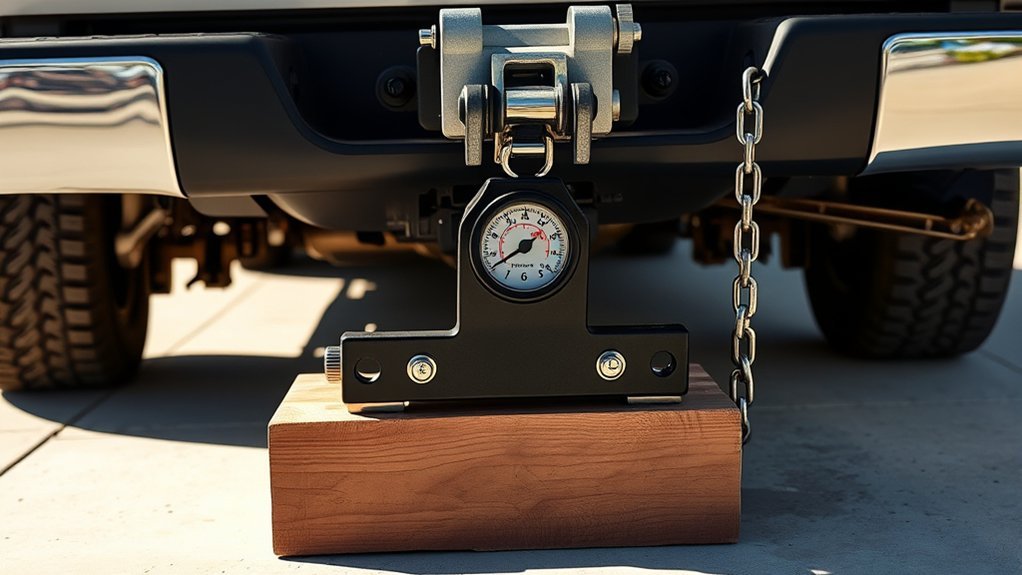
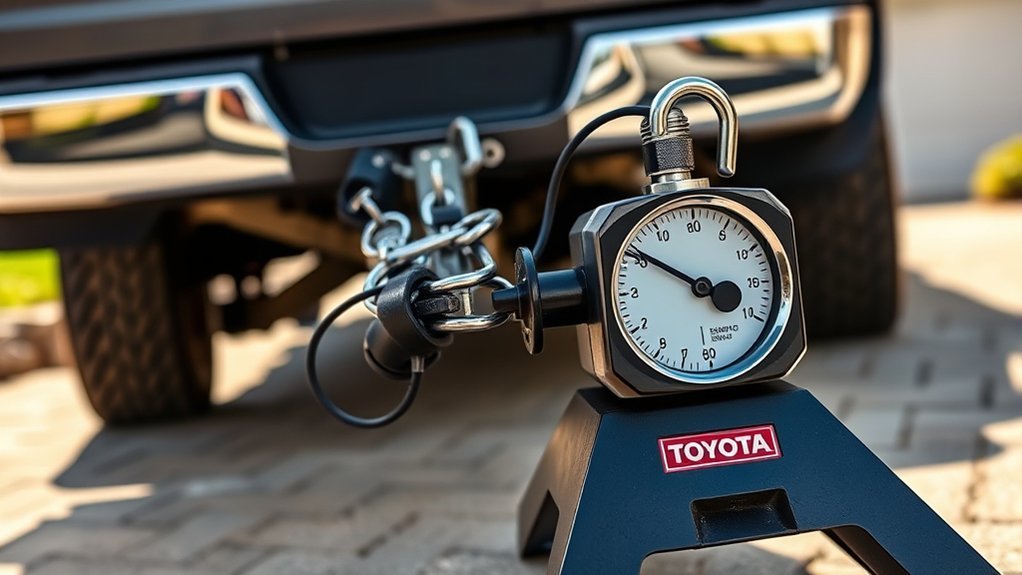
A dedicated tongue-weight scale is the simplest direct method for most bumper-pull trailers. It avoids lever calculations and does not require multiple public-scale tickets.
[Products Worth Considering]
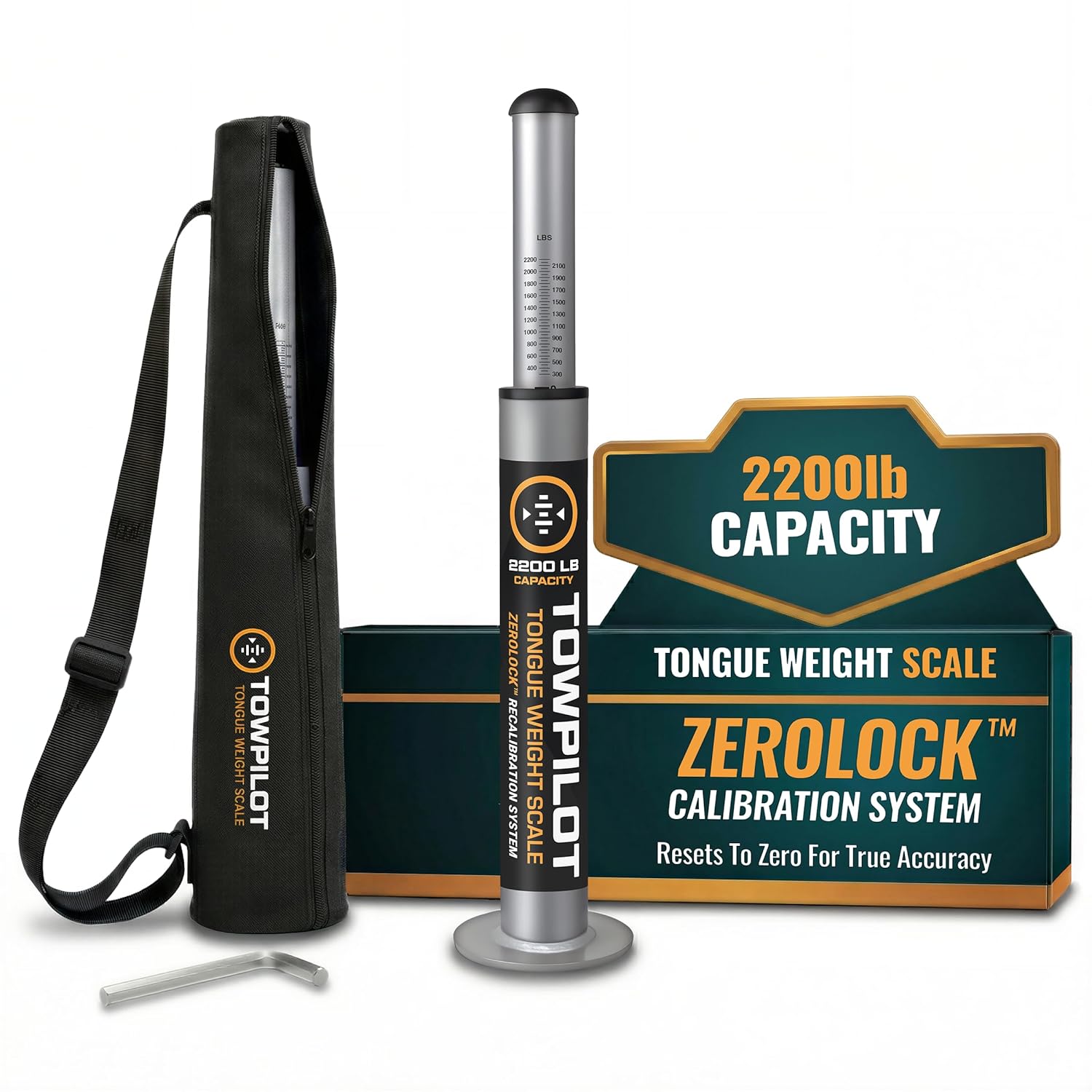
This trailer tongue weight scale helps you check hitch weight quickly and accurately before towing, reducing sway and improving overall safety. Built with durable steel and a spring mechanism, it works without batteries and includes a recalibration feature to maintain true-zero accuracy over time. It is designed for RVs, campers, and utility trailers, with a top plate that helps protect your coupler during use.
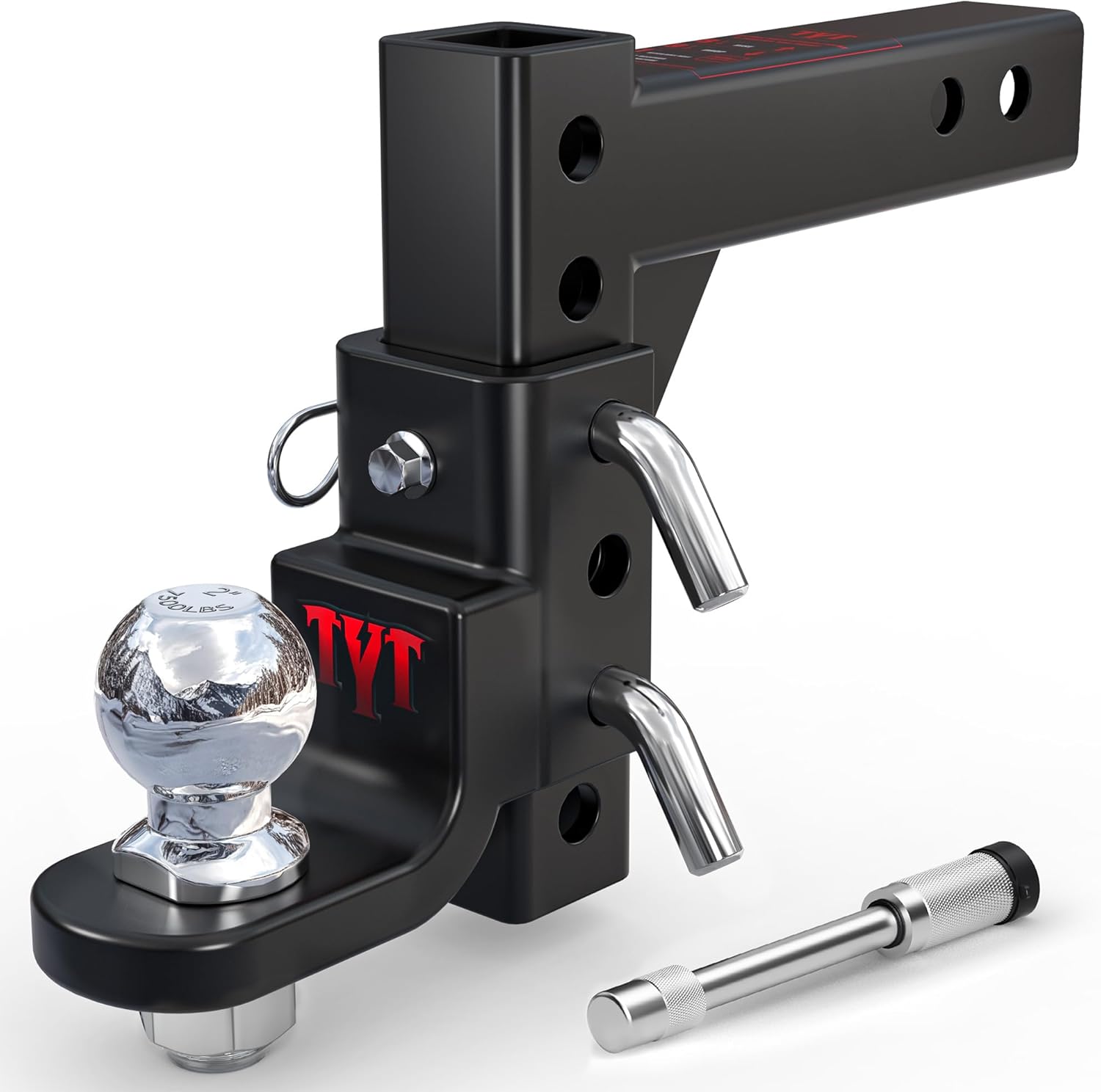
This adjustable trailer hitch ball mount is built for dependable towing with a standard 2-inch receiver and a high-capacity design suited for trucks, campers, boats, and utility trailers. Its adjustable rise and drop settings help you achieve a level tow, while the anti-rattle design supports a smoother, quieter ride. Complete with pins, clips, and a premium pin lock, it offers an easy installation and secure connection for everyday hauling needs.
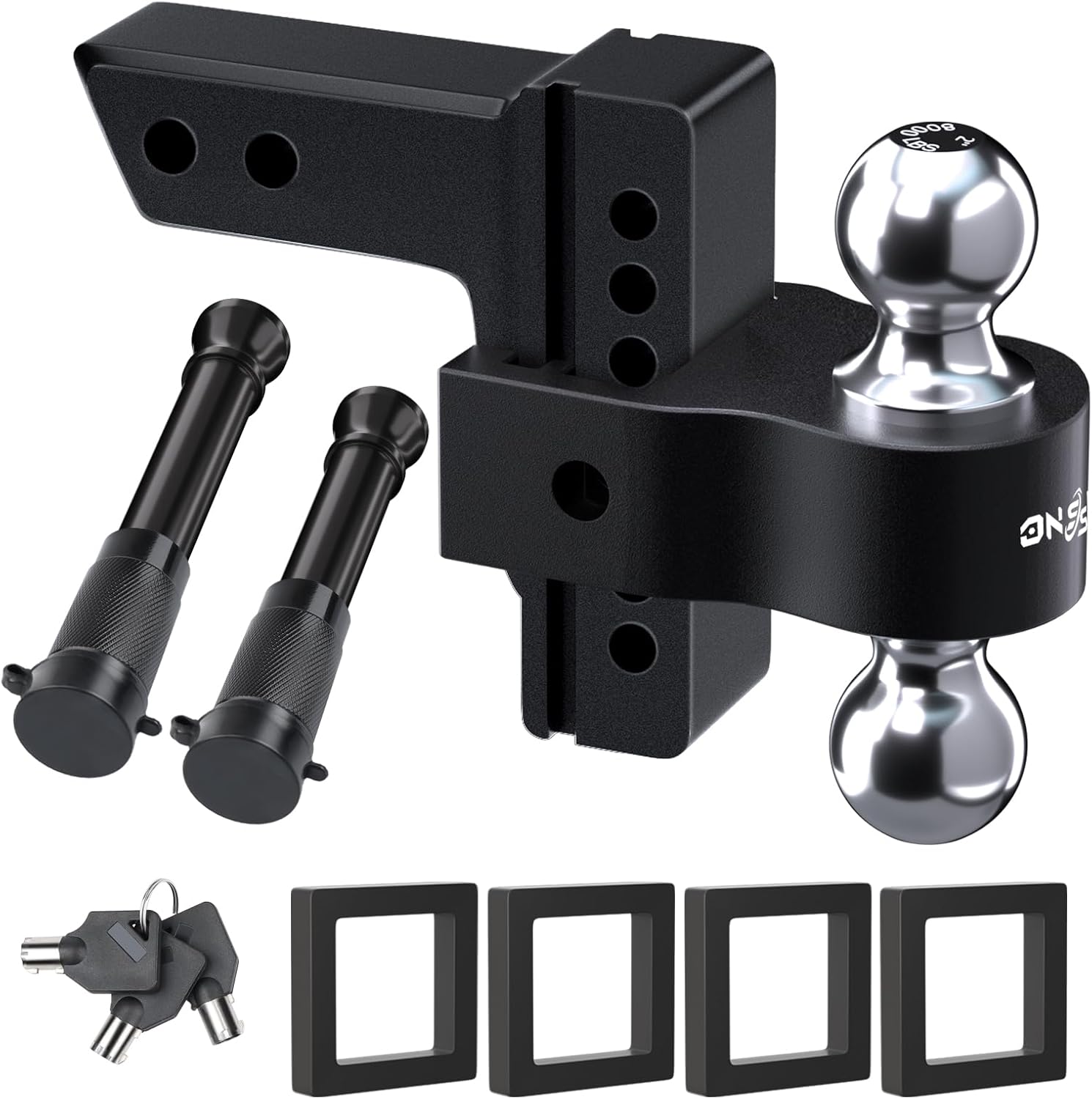
This adjustable trailer hitch is designed for 2-inch receivers and offers flexible towing with a 6-inch drop and rise range. Dual ball sizes help support different trailer setups, while the high-strength aluminum construction is built for dependable performance on tough jobs. Included hitch locks and silencers add security and help reduce noise for a smoother towing experience.
Proper Scale Placement
- Confirm the scale’s capacity, measuring range, surface requirements, and instructions cover the expected tongue weight.
- Load the trailer exactly as it will travel.
- Park on level ground and chock the trailer wheels.
- Disconnect the trailer from the Tundra.
- Place the scale directly under the coupler, or position it exactly as its manufacturer instructs.
- Raise or block the scale with components rated for the load so the coupler remains at normal hitch height.
- Lower the coupler slowly until its full load rests on the scale.
- Read the number after the display or dial settles.
For the closest direct reading, support the load at the coupler. If the scale maker permits measurement under the tongue jack, follow its placement or correction instructions because the jack is normally positioned behind the coupler and may produce a different reading.
Reading and Recording
Record the tongue-weight reading, loaded trailer weight, cargo layout, tank levels, propane status, battery location, hitch setup, and coupler height. Then divide tongue weight by loaded trailer weight and multiply by 100.
Tongue-weight percentage = measured tongue weight ÷ loaded trailer weight × 100.
If the trailer weighs 8,000 lb loaded and the scale reads 1,050 lb, the tongue-weight percentage is about 13.1%. That falls within the general 10–15% range, but the Tundra must still pass the payload, GVWR, axle, receiver, hitch, tire, and trailer checks.
Pro Tip: Remeasure after moving heavy cargo, changing tank levels, adding batteries, installing a generator rack, or switching hitch equipment. A small loading change can move a trailer outside its previous range.
Can You Measure Tongue Weight With a Bathroom Scale?
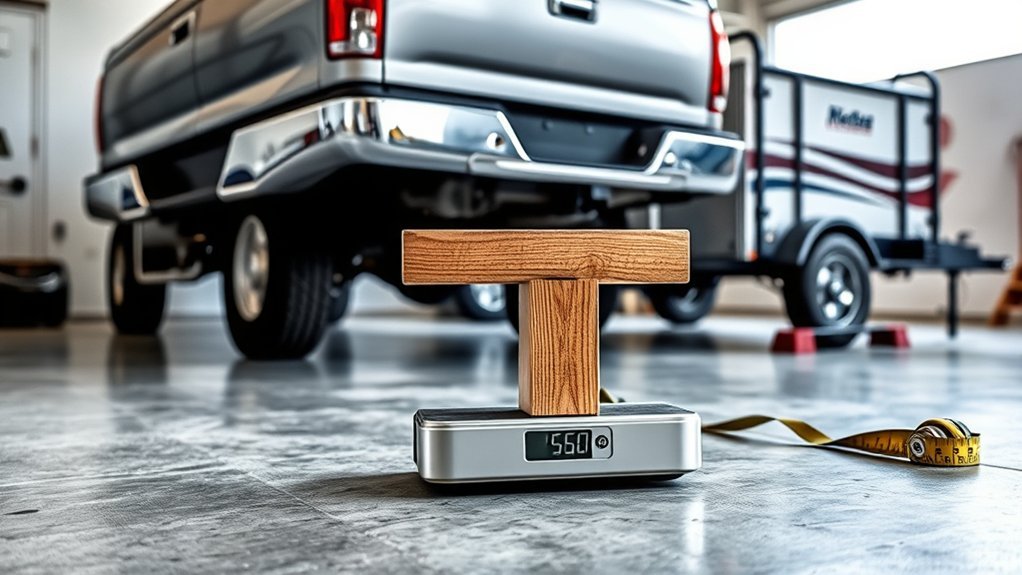
A bathroom scale can measure a light trailer directly or reduce the scale load through a correctly built lever. For a Tundra-sized travel trailer, a properly rated tongue-weight scale or public scale is usually safer and easier.
Do not use a DIY lever unless the scale, beam, pipes, blocks, supports, and ground can safely carry the expected forces without crushing, rolling, splitting, or slipping. Never crawl beneath the tongue or place hands near a pinch point.
[Products Worth Considering]

These heavy-duty running board side steps are designed to improve access to your Toyota Tundra without reducing ground clearance. Built for Double Cab and CrewMax front door applications, they offer practical convenience for everyday entry, roof loading, and off-road use. The durable iron construction and easy no-drill installation make them a reliable upgrade for rugged driving.
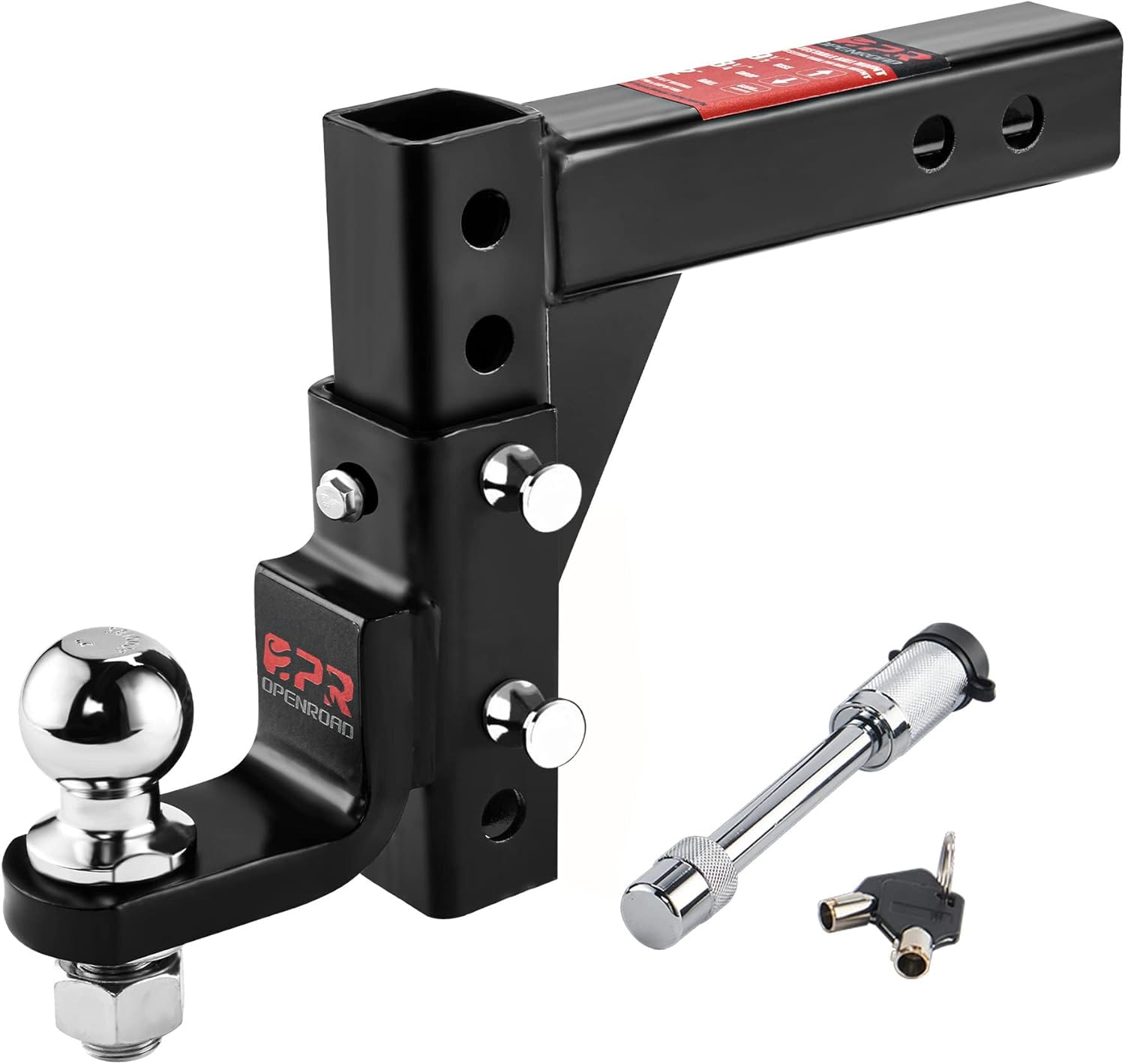
This adjustable trailer hitch ball mount is built for dependable towing with a strong steel construction and a versatile fit for 2-inch receivers. Its adjustable drop and rise settings help you dial in the right towing height, while the lock and keyed anti-theft design add security. A black powder-coated finish helps resist rust and wear for lasting performance on trucks and other towing setups.

This Andersen Hitches weight distribution hitch kit is designed to improve towing stability with a grease-free friction cone and tension chain system that helps reduce sway and bounce. It features a universal setup with a 2-inch ball and 4-inch drop/rise to suit many bumper-pull trailer applications, while making hitching and unhitching faster and easier than traditional spring bar systems. Built in the USA, it offers dependable performance for travelers, workers, and outdoor enthusiasts who need confident towing control.
Direct Bathroom-Scale Method
- Confirm the expected tongue weight is below the scale’s rated capacity.
- Place the scale on firm, flat, level concrete.
- Use a stable, load-rated support to bring the coupler to normal hitch height.
- Lower the coupler slowly onto the support point centered on the scale.
- Read and record the settled number.
Bathroom-Scale Lever Method for Heavier Tongue Weights
Use lever math only when every distance is measured from the same fulcrum point and the beam remains level and stable. The formula is:
Actual tongue weight = scale reading × (distance from fulcrum to scale ÷ distance from fulcrum to tongue support)
For a true 3:1 ratio, the scale support must be three times farther from the fulcrum than the tongue support. For example, if the tongue support is 1 foot from the fulcrum and the scale support is 3 feet from the fulcrum, multiply the scale reading by 3.
- Place a load-rated pipe or round bar on firm, level ground as the fulcrum and prevent it from rolling out of position.
- Place a straight, undamaged, load-rated beam across the fulcrum.
- Position the tongue support 1 foot from the fulcrum.
- Position the scale support 3 feet from the fulcrum on the other side.
- Confirm the beam and supports are stable and the scale is not overloaded by its share of the force.
- Lower the coupler slowly onto the tongue support.
- Multiply the settled scale reading by 3.
In a true 3:1 setup, a 300 lb scale reading represents about 900 lb of tongue weight. This is only a mathematical example; do not use a scale, beam, or support at or beyond its rating.
Warning: The “multiply by three” shortcut is correct only when the measured lever distances create a true 3:1 ratio. If the distances differ, use the full formula. Stop immediately if the beam bends, a support shifts, or any part of the setup appears unstable.
How Do You Calculate Tongue Weight From CAT Scale Tickets?
A certified public scale is useful because it can show the Tundra’s steer axle, drive axle, trailer axle, and total combined weight. CAT Scale instructs truck-and-trailer users to place the steer axle on platform 1, the truck’s rear or drive axle on platform 2, and the trailer axles on platform 3.
With the same passengers, fuel, cargo, accessories, and hitch hardware in both measurements, actual tongue weight equals the truck’s steer-plus-drive total with the trailer attached and weight-distribution tension removed, minus the loaded truck-only steer-plus-drive total.
Two-Pass Public-Scale Method
- Pass 1: Weigh the loaded Tundra without the trailer. Include the driver, passengers, fuel, truck cargo, accessories, ball mount, and weight-distribution hitch hardware that will remain with the truck. Record the steer axle, drive axle, and total truck weight.
- Pass 2: Weigh the same loaded Tundra and loaded trailer together. Keep the same passengers, cargo, fuel, and hitch equipment. If the hitch and scale operator’s instructions permit, remove or release weight-distribution spring-bar tension after positioning the combination so the truck carries the undivided coupler load. Do not drive on public roads in a configuration the hitch or vehicle manufacturer prohibits.
- Calculate actual tongue weight: Add the Pass 2 steer and drive axle weights. Subtract the Pass 1 steer-plus-drive total.
- Calculate loaded trailer weight: Subtract the Pass 1 loaded truck weight from the Pass 2 combined truck-and-trailer weight.
- Calculate the percentage: Divide tongue weight by loaded trailer weight and multiply by 100.
Worked CAT Scale Example
The following numbers are a hypothetical calculation, not a rating or measured result for a specific Tundra.
| Measurement | Example Weight |
|---|---|
| Loaded truck only: steer + drive | 6,600 lb |
| Truck axles with trailer attached and WDH tension removed | 7,500 lb |
| Combined truck-and-trailer weight | 14,400 lb |
- Tongue weight: 7,500 − 6,600 = 900 lb
- Loaded trailer weight: 14,400 − 6,600 = 7,800 lb
- Tongue-weight percentage: 900 ÷ 7,800 × 100 = about 11.5%
The 11.5% result is within the general range for many conventional trailers. The next step is to compare every axle and total from the tickets with the truck, hitch, tire, and trailer ratings.
Optional Third Pass for Weight-Distribution Hitches
If you use a weight-distribution hitch, complete another pass with the spring bars engaged and adjusted exactly as they will be on the road. This pass does not create a different underlying tongue weight. It shows how the hitch redistributes load among the Tundra’s front axle, rear axle, and trailer axles.
Compare the travel-ready axle readings with Toyota’s instructions, the hitch maker’s setup procedure, the truck’s front and rear GAWR, tire capacities, trailer axle ratings, and all other applicable limits.
Note: A weight-distribution hitch transfers part of the load between axles. It does not make the trailer’s coupler load disappear, and it does not increase payload, GVWR, GAWR, GCWR, receiver, or tire ratings.
What Should You Do if Tongue Weight Is Too High or Too Low?
After every loading adjustment, measure again. Do not judge tongue weight only by suspension squat or whether the truck appears level. A level-looking Tundra can be overloaded, while visible squat does not reveal the actual percentage or axle weights.
[Products Worth Considering]

This trailer tongue hitch coupler lock helps secure latch-type couplers and deter theft with a padlock-style design. Its high-strength construction, corrosion-resistant finish, and simple locking action make it a practical choice for trailer owners who want dependable protection and easy everyday use. Two keys are included for added convenience.

The CURT Venturer NEXT is a compact, time-delay electric trailer brake controller designed for dependable braking control from inside your vehicle. Its low-profile design, adjustable power and ramp time, and plug-and-play friendly setup make it a practical choice for towing with confidence. Built for 12-volt systems and compatible with electric over hydraulic brakes, it offers flexible installation without leveling or internal moving parts.

This proportional electric brake controller automatically applies trailer brakes based on your vehicle's braking force and speed for smoother, more responsive stopping. It is compatible with a wide range of tow vehicles and trailer setups, and includes an LED display for easy setup, diagnostics, and manual braking control. The included mounting hardware and plug-and-play port help make installation simple and convenient.
If Tongue Weight Is Too High
High tongue weight can exceed payload or rear-axle capacity and can remove too much load from the front axle. To reduce it:
- Move some cargo rearward toward the trailer axle in small steps.
- Do not concentrate heavy cargo at the rear wall or bumper.
- Remove unnecessary tongue-mounted or front-compartment cargo.
- Adjust front-mounted tank levels only when the trailer manufacturer allows it.
- Use a properly rated weight-distribution hitch when Toyota, the trailer maker, and hitch maker allow or require one.
- Choose a lighter trailer or higher-rated tow vehicle if the truck remains over a rating.
If Tongue Weight Is Too Low
Low tongue weight can contribute to trailer sway. To increase it:
- Move heavy cargo forward, ahead of or near the trailer axle.
- Remove heavy cargo from the rear of the trailer.
- Secure batteries, propane, tools, and gear so they cannot shift rearward.
- Confirm the trailer is level at normal hitch height.
- Remeasure until the trailer meets its balance target without exceeding a truck, hitch, tire, axle, or trailer rating.
If the Trailer Starts to Sway
If sway or fishtailing begins, hold the steering wheel steady, ease off the accelerator, and avoid sudden steering or abrupt tow-vehicle braking. Once the combination is stable, reduce speed gradually and stop in a safe place.
Use a trailer-brake controller’s manual control only when the vehicle, controller, and trailer instructions direct you to do so. Do not experiment with the control for the first time during an active sway event.
Before continuing, inspect the load, tongue-weight percentage, cargo security, tire pressures, hitch adjustment, trailer brakes, and speed for the conditions. See the full Toyota Tundra trailer-sway guide for prevention and troubleshooting steps.
Warning: Do not try to “drive through” continuing trailer sway at highway speed. Slow gradually, stop in a safe place, and correct the cause before resuming the trip.
Which Fix Matches the Measurement?
Use the measured numbers to choose the correction. Suspension appearance alone cannot tell you whether the combination is within its ratings.
| Issue | Best First Fix | Important Limit |
|---|---|---|
| Tongue weight too high | Move cargo rearward toward the axle in small steps or remove front cargo | Do not create a rear-heavy trailer |
| Tongue weight too low | Move cargo forward and remove rear-heavy loading | Recheck payload and axle weights |
| Front axle loses excessive load | Set up a rated weight-distribution hitch as instructed | A WDH does not increase any rating |
| Rear squat after correct WDH setup | Consider airbags for leveling and ride support only | Airbags do not increase payload or GAWR |
| Truck, axle, hitch, tire, or trailer remains overloaded | Reduce the load, use a lighter trailer, or use a higher-rated tow vehicle | Do not tow above a rating |
A properly rated weight-distribution hitch can restore part of the load removed from the front axle and reduce rear suspension squat. Adjust it according to Toyota, trailer, and hitch-manufacturer instructions, then verify the travel-ready axle weights on a scale.
Airbags can help level the rear suspension and improve ride control. They are not a payload or towing-capacity upgrade. If the Tundra is over GVWR, GAWR, GCWR, receiver rating, tire capacity, or payload, airbags do not make the combination compliant.
Pre-Trip Tongue-Weight and Towing Checklist
Before a long tow, complete this checklist after measuring and adjusting the load:
- Confirm the Tundra is within its labeled occupant-and-cargo limit, GVWR, front and rear GAWR, GCWR, tire capacities, and hitch ratings.
- Confirm the trailer is within its GVWR and axle ratings.
- Confirm the tongue-weight percentage matches the trailer maker’s instructions or the appropriate conventional-trailer range.
- Confirm the receiver, ball mount, hitch ball, coupler, and weight-distribution components are rated for the actual loads.
- Check that the coupler is fully latched and secured.
- Cross safety chains under the coupler and attach them to rated points.
- Connect the breakaway cable to its proper truck attachment point, not to a safety chain.
- Test trailer lights, brake lights, turn signals, and trailer brakes.
- Set and test the brake controller according to the vehicle, controller, and trailer instructions.
- Check cold tire pressure on the Tundra and trailer.
- Inspect tires for age cracking, damage, uneven wear, and sufficient load capacity.
- Torque lug nuts to the truck and trailer manufacturers’ specifications.
- Secure cargo so it cannot shift forward, rearward, or side to side.
- Stop after the first few miles to recheck the hitch, chains, electrical connection, cargo, straps, tires, and hubs.
Frequently Asked Questions
What is the tongue weight on a Toyota Tundra?
A Toyota Tundra does not have one universal tongue-weight number for every trailer or truck configuration. For most conventional bumper-pull trailers, start with the trailer maker’s instructions or the general 10–15% loaded-trailer range. Your maximum permitted tongue weight is the lowest applicable limit set by Toyota’s towing information, payload calculation, axle ratings, receiver, hitch equipment, tires, and trailer.
How do I know what my tongue weight is?
Measure it with a properly rated tongue-weight scale, a correctly built bathroom-scale lever, or a public scale. The most direct home method is a tongue-weight scale under the coupler at normal towing height with the trailer loaded exactly as it will travel.
What should the tongue weight be on a 7,000 lb trailer?
A 7,000 lb loaded conventional trailer has a general 10–15% target of about 700–1,050 lb. Follow the trailer manufacturer’s instructions and confirm your Tundra has enough payload, axle capacity, receiver capacity, hitch capacity, and tire capacity for the measured load.
What is the tongue weight of a 10,000 lb trailer?
A 10,000 lb loaded conventional trailer has a general target of 1,000–1,500 lb. That range does not mean a Tundra is permitted to carry the upper figure. The truck, receiver, hitch components, payload, axles, tires, and trailer must each remain within their ratings.
Does a weight-distribution hitch reduce tongue weight?
No. A weight-distribution hitch redistributes part of the load among the Tundra’s front axle, rear axle, and trailer axles. It does not eliminate the trailer’s underlying coupler load or increase the truck, hitch, tire, axle, or trailer ratings.
Does tongue weight count against Toyota Tundra payload?
Yes. Tongue weight is part of the load carried by the truck. It uses payload along with the driver, passengers, truck cargo, accessories, ball mount, and weight-distribution hitch hardware. A trailer can therefore be below the tow rating while the Tundra is over payload or GVWR.
Can airbags increase my Tundra’s towing or payload rating?
No. Airbags can help level the rear suspension, but they do not increase payload, GVWR, GAWR, GCWR, tire capacity, receiver rating, or legal capacity. If scale weights show an overload, reduce the load or use a more suitable tow vehicle.
Does the 10–15% rule apply to fifth-wheel or gooseneck trailers?
No. Fifth-wheel and gooseneck trailers place pin weight on a hitch mounted in or above the truck bed and use different loading calculations. Follow Toyota’s model-specific towing information and the trailer and hitch manufacturers’ instructions for those trailer types.
Conclusion
Measure Toyota Tundra tongue weight before a major towing trip and whenever the trailer load, tank levels, batteries, hitch equipment, or cargo position changes. For a conventional bumper-pull trailer, begin with the trailer manufacturer’s instructions or the general 10–15% range, but do not stop at the percentage.
Check the Tundra’s occupant-and-cargo limit, GVWR, front and rear GAWR, GCWR, receiver, hitch hardware, tires, and the trailer’s ratings. If one test fails, move or remove cargo, change the trailer or tow vehicle, and remeasure. Safe towing depends on measured travel-ready numbers, not advertised dry weights or how level the truck appears.
Sources
- North Carolina Division of Marine Fisheries: Safe Trailering, Towing & Boat Launching — tongue-weight range, trailer balance, and fishtailing guidance.
- Toyota Vehicles for Towing — current Toyota Tundra maximum towing-capacity context and owner’s-manual warning.
- Toyota USA Newsroom: Next-Generation 2022 Toyota Tundra — 12,000-pound maximum towing and 1,940-pound maximum payload context.
- Toyota Owner’s Manual: 2022 Tundra Hybrid Trailer Towing — Toyota towing cautions and overload guidance.
- CAT Scale: How To Weigh — platform placement for truck-and-trailer axle measurements.
- eCFR 49 CFR 567.4 — vehicle certification-label GVWR and GAWR requirements.
- CURT: How to Measure Tongue Weight — commercial-scale and bathroom-scale measurement methods.