
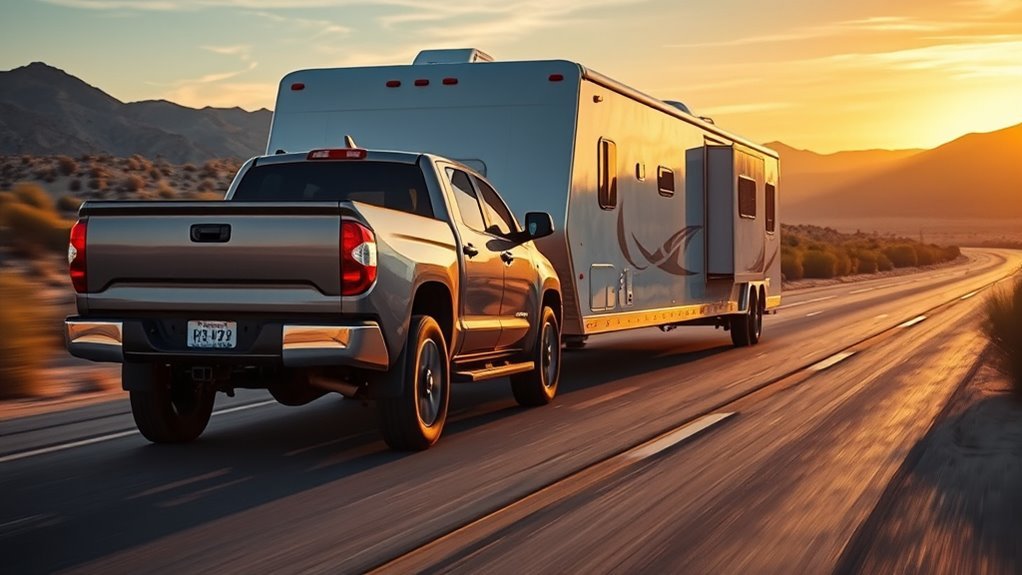
How to Stop Trailer Sway on a Toyota Tundra: Quick Answer
Last updated: July 31, 2026
Reviewed by: [VERIFY: add the real reviewer name and relevant towing qualifications before publication]
Method: This guide compares Toyota specifications, towing-system manuals, tire guidance, and trailer-manufacturer emergency procedures. It does not claim hands-on testing of a specific Tundra-and-trailer combination.
To stop Toyota Tundra trailer sway, grip the steering wheel, steer straight, and release the accelerator immediately but very gradually. Do not accelerate or apply the Tundra’s brakes during the sway event unless braking is necessary to avoid a collision. If the trailer has connected, correctly adjusted electric brakes and the trailer or brake-controller instructions permit it, apply the trailer brakes gently with the manual control. After the rig settles, pull over and correct the cause before continuing.
For the 2026 U.S.-market Tundra, Toyota specifies 9% to 11% tongue weight for conventional trailers, requires a sway-control device when gross trailer weight exceeds 2,000 pounds, requires a weight-distribution hitch when it exceeds 5,000 pounds, and limits towing speed to 65 mph or the lower applicable posted or trailer limit. Confirm the instructions for your exact model year in the Toyota Tundra owner’s manual.
Then load the trailer for travel, measure actual tongue weight, keep the Tundra below its payload and axle limits, secure cargo, set tire pressures from the correct placards or manuals, and use a compatible hitch adjusted to its manufacturer’s instructions.
Scope: This guide covers conventional bumper-pull trailers. Fifth-wheel and gooseneck trailers use different hitch geometry and pin-weight guidance. Tundra ratings and electronic towing features vary by model year and configuration, so check the manual and labels for your exact truck.
If Sway Starts While You Are Driving
- Grip the steering wheel and steer straight ahead.
- Release the accelerator immediately but very gradually.
- Do not apply the Tundra’s brakes unless you must avoid a collision.
- Apply trailer-only brakes gently with the manual controller only if the system is connected, working correctly, and its instructions permit this response.
- Stop in a safe place and inspect loading, tires, hitch hardware, and trailer brakes.
Key Takeaways
- For the 2026 U.S.-market Tundra, load a conventional trailer to 9% to 11% measured tongue weight unless a more restrictive component instruction applies.
- Toyota requires sway control above 2,000 pounds of gross trailer weight and a weight-distribution hitch above 5,000 pounds for the cited 2026 Tundra.
- Count passengers, truck cargo, hitch hardware, and trailer tongue load against the Tundra’s available payload.
- Place heavy cargo low, close to the trailer axle area, and far enough forward to achieve the specified measured tongue weight.
- If sway starts, steer straight, release the accelerator gradually, do not apply the Tundra’s brakes, and use trailer-only brakes gently only when the system instructions permit it.
- Do not exceed 65 mph while towing the cited 2026 Tundra, or any lower posted or trailer-specific limit.
- Air springs and other suspension aids do not increase Toyota’s payload, axle, receiver, or towing ratings.
What’s in This Article
- Quick Answer: How to Stop Trailer Sway
- Tundra-Specific Sway and Hitch Limits
- Quick Trailer-Sway Diagnostic Check
- Before You Begin: Tools and Safe Limits
- What Causes Trailer Sway in Toyota Tundras?
- Weighing: Tongue Weight, GVWR, and Payload
- Worked Tundra Payload Example
- Which Hitches and Sway-Control Solutions Work for Tundras?
- How to Set Up a Weight-Distribution Hitch Correctly
- Check Tires, Suspension, and Alignment to Reduce Trailer Sway
- Load Placement and Packing Tips to Prevent Sway
- What to Do When Trailer Sway Starts
- When to Upgrade Suspension or Choose a Bigger Tow Vehicle
- Frequently Asked Questions
- References
Tundra-Specific Sway and Hitch Limits
The table below turns the cited 2026 Tundra towing instructions into a quick pre-trip check. These are not substitute ratings for your receiver, hitch, coupler, trailer, tires, or exact truck configuration. The lowest applicable rating or more restrictive instruction controls.
| Item | 2026 Tundra Guidance | What It Means |
|---|---|---|
| Conventional trailer tongue weight | 9% to 11% of gross trailer weight | Measure the trailer fully loaded for travel; do not use dry brochure weight |
| Sway-control device | Required above 2,000 lb gross trailer weight | Use a compatible device with enough capacity |
| Weight-distribution hitch | Required above 5,000 lb gross trailer weight | Size and adjust it from actual loaded weights |
| Towing speed | 65 mph maximum | Use the lower of 65 mph, the posted towing limit, or the trailer maker’s limit |
| Front-axle restoration with WDH | Return to the pre-coupling axle weight or front-fender height | Do not pull the front lower than its original measurement |
Model-year instructions can differ. Verify these values in the manual for the exact Tundra you are towing with, especially when using an older truck, a non-U.S. model, or aftermarket receiver equipment.
Quick Trailer-Sway Diagnostic Check
Use the symptoms below to decide what to inspect first. Before troubleshooting by feel, confirm that the trailer meets Toyota’s tongue-weight, sway-control, weight-distribution, and towing-speed instructions. Do not keep increasing speed to find the point where the trailer becomes unstable.
| What You Notice | Most Likely Checks | What to Do Before Towing Again |
|---|---|---|
| Sway began after loading new cargo | Tongue weight, cargo position, unsecured items | Reweigh the tongue and secure or reposition cargo |
| Trailer exceeds 2,000 or 5,000 lb without the equipment Toyota requires | Sway-control and weight-distribution requirements | Install compatible, correctly rated equipment before towing again |
| Sway appears mainly near passing trucks or crosswinds | Speed, trailer profile, hitch adjustment, sway control | Reduce speed and verify the complete hitch setup |
| Tundra sits nose-high or steering feels light | Rear-axle load, payload, WDH adjustment | Measure axle loads and restore only the amount specified by the manuals |
| Trailer pulls, jerks, or brakes unevenly | Trailer brakes, controller connection, tire damage, wheel bearings | Stop towing until the braking or running-gear fault is repaired |
| Sway begins at a repeatable road speed | Loading, tongue weight, tires, hitch geometry, alignment | Treat the speed as a warning, not a safe operating threshold |
Before You Begin: Time, Tools, and Safe Limits
Set aside enough time to inspect and weigh the complete rig without rushing. A first-time hitch setup usually takes longer than a routine pre-trip check because you must load the trailer, measure the truck, adjust the hitch, and verify the result.
You may need a tongue-weight scale, access to a certified public scale, a tire-pressure gauge, wheel chocks, a torque wrench, the Tundra owner’s manual, the trailer manual, and the hitch manufacturer’s setup guide.
Use This Four-Gate Check Before Towing
A stable setup must pass all four gates. Passing one gate does not cancel a failure in another.
| Gate | Question | Pass Condition |
|---|---|---|
| Capacity | Are the truck, axles, receiver, hitch, trailer, tires, and combination within their ratings? | Every measured value stays below its applicable limit |
| Balance | Does the loaded trailer have the specified tongue weight and a stable cargo position? | Tongue weight is measured and cargo cannot shift |
| Hardware | Are the hitch, coupler, brakes, tires, bearings, and suspension compatible and serviceable? | The complete system passes inspection and setup checks |
| Road | Can you tow at a speed appropriate for wind, grade, traffic, and pavement? | The rig remains stable without relying on a repeatable sway threshold |
Check these items before you tow:
- Measure the trailer at its real travel weight, including water, fuel, batteries, propane, tools, food, and other cargo.
- Check the Tundra door-jamb payload and weight labels.
- Confirm GVWR, front and rear GAWR, GCWR, receiver rating, coupler rating, and maximum loaded trailer weight. The site’s Tundra GVWR, GCWR, and payload guide explains how the limits work together.
- For the cited 2026 Tundra, confirm 9% to 11% measured tongue weight for a conventional trailer.
- Use a compatible sway-control device above 2,000 pounds and a compatible weight-distribution hitch above 5,000 pounds of gross trailer weight.
- Match the hitch to the manufacturer’s loaded tongue-weight and trailer-weight sizing method.
- Confirm that the receiver, trailer frame, coupler, and brake system permit the hitch or sway-control equipment.
- Set truck and trailer tire pressure from the correct placards, manuals, or load-and-inflation guidance.
- Test the trailer brakes and controller at low speed according to the Tundra and brake-system instructions. Use the Toyota Tundra trailer-brake gain guide for the model-specific setup sequence.
- Plan to stay at or below 65 mph, or the lower posted towing or trailer-manufacturer limit.
Stop the setup if any measured weight exceeds a rating. A weight-distribution hitch can redistribute axle load, but it cannot erase tongue weight or increase the Tundra’s GVWR, GAWR, payload, receiver rating, GCWR, or maximum trailer-weight rating.
What Causes Trailer Sway in Toyota Tundras?
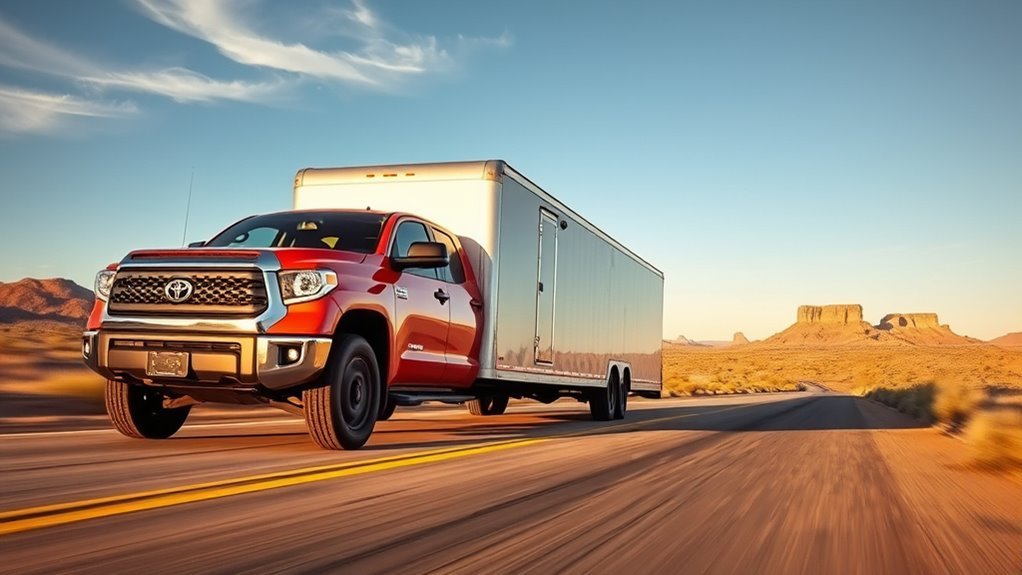
Trailer sway usually develops when a side force starts an oscillation and the trailer setup does not damp it quickly. Crosswinds, passing trucks, steering corrections, uneven pavement, downhill speed, and sudden lane changes can start the movement. Loading, tires, hitch geometry, and speed determine whether it settles or grows.
Start with trailer balance. Cargo placed too far behind the trailer axles reduces tongue weight and gives the trailer more leverage over the truck. Cargo that shifts while driving can change the balance even when the trailer was stable at the start of the trip. For the cited 2026 Tundra, measure a conventional trailer at 9% to 11% tongue weight after it is fully loaded for travel.
Check both sets of tires separately. Set the Tundra’s cold tire pressure from its door-jamb placard. Set trailer-tire pressure from the trailer placard, trailer manual, or the tire manufacturer’s load-and-inflation guidance. The maximum pressure molded into a tire sidewall is not automatically the recommended operating pressure.
Speed increases the energy in each swing and gives you less time to respond. Toyota limits the cited 2026 Tundra to 65 mph while towing, or the lower applicable posted or trailer-specific limit. Slow down further before strong crosswinds, downhill sections, rough pavement, or passing trucks unsettle the trailer.
Some Tundra model years and configurations include Trailer-Sway Control as part of the vehicle’s stability-control system. Treat it as backup assistance, not as a substitute for correct loading and hitch setup. Trailer-Sway Control may not reduce sway in every road, vehicle, trailer, or weather condition, and it will not operate normally if related stability-control systems are disabled or malfunctioning. Feature names, operation, and limitations can vary by year, so verify them in your exact Tundra owner’s manual. Review the towing features in the Tundra Tow Package guide for a deeper explanation of available towing technology.
Weighing: Tongue Weight, GVWR, and Payload
Stable towing begins with the actual loaded weights, not the trailer’s dry brochure figure. Measure the rig with the passengers, fuel, hitch hardware, truck-bed cargo, trailer supplies, liquids, batteries, and accessories you plan to carry.
For the cited 2026 U.S.-market Tundra, Toyota specifies 9% to 11% tongue weight for conventional towing. Use the actual loaded trailer weight, not dry or unloaded brochure weight. If the trailer, coupler, receiver, or hitch instructions give a narrower range or a lower limit, follow the more restrictive requirement. The final number must also keep the Tundra below payload, front and rear GAWR, GVWR, receiver, tire, and GCWR limits.
Payload formula: Remaining payload equals the door-jamb payload allowance minus occupants, in-cab cargo, bed cargo, accessories, hitch hardware, and trailer tongue load.
Worked Tundra Payload Example
This example shows why the advertised tow rating is not enough. Assume a conventional trailer weighs 7,000 pounds when loaded for travel. Toyota’s cited 9% to 11% range equals 630 to 770 pounds of tongue weight.
| Example Item | Weight |
|---|---|
| Door-label payload allowance | 1,500 lb |
| Occupants, in-cab cargo, and bed cargo | -575 lb |
| Hitch hardware and added accessories | -75 lb |
| Payload left for tongue weight | 850 lb |
| Toyota 9% to 11% tongue-weight range for the 7,000-lb trailer | 630–770 lb |
In this hypothetical case, the tongue-weight range fits inside the remaining payload, but that does not prove the setup is approved. You must still verify rear GAWR, GVWR, GCWR, tire, receiver, hitch, coupler, and trailer ratings with the rig loaded for travel.
Scale reminder: Do not add tongue weight to a hitched combination’s total scale weight. The scale already includes all truck and trailer weight; adding it again would double-count the load.
Tundra ratings vary by cab, bed, drivetrain, trim, powertrain, and equipment. Toyota lists 2026 lineup maximums of 12,000 pounds for towing and 1,850 pounds for payload, but your truck’s exact ratings may be lower. Use your truck’s labels, configuration-specific specifications, and owner’s manual instead of applying either lineup maximum to every Tundra.
A certified scale can also show whether the WDH is returning the correct amount of load to the front axle. A common verification process uses three separate weighings:
- Combination with the WDH engaged: Weigh the loaded Tundra and trailer with the hitch adjusted for travel.
- Combination with the WDH disengaged: Keep the trailer coupled, disengage the spring bars safely off the scale, and weigh again.
- Loaded Tundra alone: Weigh the truck with the same passengers, fuel, cargo, and hitch hardware.
Follow the scale operator’s rules and make hitch changes away from the weighing platform. For the cited 2026 Tundra, adjust the WDH until the front axle returns to its pre-coupling weight. If axle weight cannot be measured directly, use the front-fender-height procedure in the Toyota manual and do not pull the front below its original height.
| Item Checked | What It Confirms |
|---|---|
| Loaded tongue weight | Trailer balance and hitch-sizing input |
| Tundra front and rear axle weights | GAWR compliance and front-axle load restoration |
| Tundra gross vehicle weight | GVWR and payload compliance |
| Loaded trailer weight | Trailer, hitch, receiver, and tow-rating compliance |
| Combined weight | GCWR compliance |
If any measurement exceeds its rating, remove or reposition weight, reduce the load, or use a tow vehicle with more capacity before driving.
Which Hitches and Sway-Control Solutions Work for Tundras?
Choose equipment only after measuring the loaded trailer and confirming that the Tundra, receiver, trailer frame, coupler, and brake system permit it. For the cited 2026 Tundra, Toyota requires a sway-control device above 2,000 pounds of gross trailer weight and a weight-distribution hitch above 5,000 pounds. A sway-control device cannot correct an overloaded truck or a trailer with insufficient tongue weight.
| System Type | What It Does | What It Cannot Fix |
|---|---|---|
| Weight-distribution hitch | Uses spring-bar leverage to redistribute axle load | Overloaded payload, bad tires, or rear-heavy cargo |
| Integrated friction sway control | Adds resistance at the hitch head or frame brackets | Incorrect tongue weight or shifting cargo |
| Add-on friction sway bar | Adds adjustable resistance to side-to-side movement | An incompatible hitch, overloaded axle, or brake fault |
| Pivot-point-projection hitch | Changes the effective pivot geometry near the tow vehicle | Excess weight or neglected maintenance |
| Aftermarket electronic trailer sway control | Detects trailer yaw and applies trailer braking on compatible systems | Mechanical, loading, tire, or capacity problems |
The Equal-i-zer 4-Point system is one example of combined weight distribution and integrated friction sway resistance. The manufacturer’s 90-00-1200 manual listing gives maximum ratings of 1,200 pounds of tongue weight and 12,000 pounds of gross trailer weight. Those numbers are equipment limits, not a recommendation for a specific Tundra or trailer.
Blue Ox describes SwayPro as using tensioned spring bars and frame brackets to add centering resistance while distributing load. Treat that description as manufacturer guidance and follow the exact spring-bar sizing, bracket placement, and setup procedure for the selected model.
ProPride 3P uses a converging-link design that projects the trailer’s effective pivot point forward near the tow vehicle’s rear axle. It uses different geometry from friction-based systems and requires its own installation, hitching, and maintenance procedure.
These are examples, not universal recommendations or claims of independent testing. Compare system types in the site’s weight-distribution hitch versus sway-control guide, then size and install the selected equipment according to its manual.
Warning: Do not install or tension a weight-distribution hitch until you confirm compatibility with the Tundra receiver, hitch head, coupler, trailer frame, and trailer-brake system.
[Products Worth Considering]

The CURT 17200 Trailer Sway Control Kit helps limit lateral trailer movement to improve towing stability and control. It is designed to work with most weight distribution hitches or a sway tab mount, and includes a weld-on tab, spacer plate, and adjustable hardware for flexible installation. Built for smoother, straighter towing, it helps reduce sway and makes towing more confident on the road.
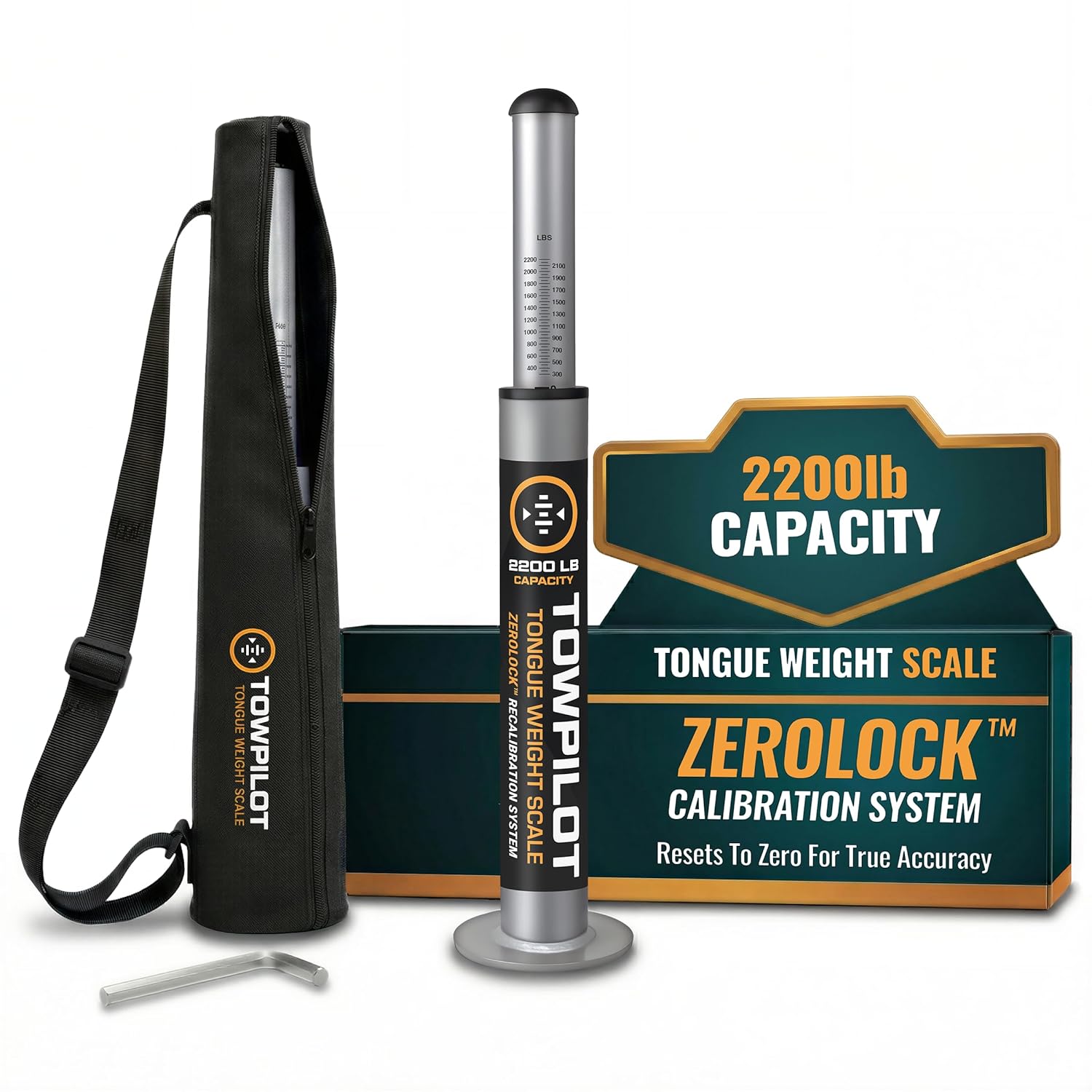
This trailer tongue weight scale helps you check hitch weight quickly and accurately before towing, reducing sway and improving overall safety. Built with durable steel and a spring mechanism, it works without batteries and includes a recalibration feature to maintain true-zero accuracy over time. It is designed for RVs, campers, and utility trailers, with a top plate that helps protect your coupler during use.

These replacement support brackets are designed to secure the spring bars on a trailer frame for CURT TruTrack weight distribution hitches. Their adjustable mounting holes help achieve precise leveling while the rigid construction supports integrated sway control for a steadier towing experience. A durable powder coat finish adds long-lasting protection, and the package includes two replacement brackets.
How to Set Up a Weight-Distribution Hitch Correctly
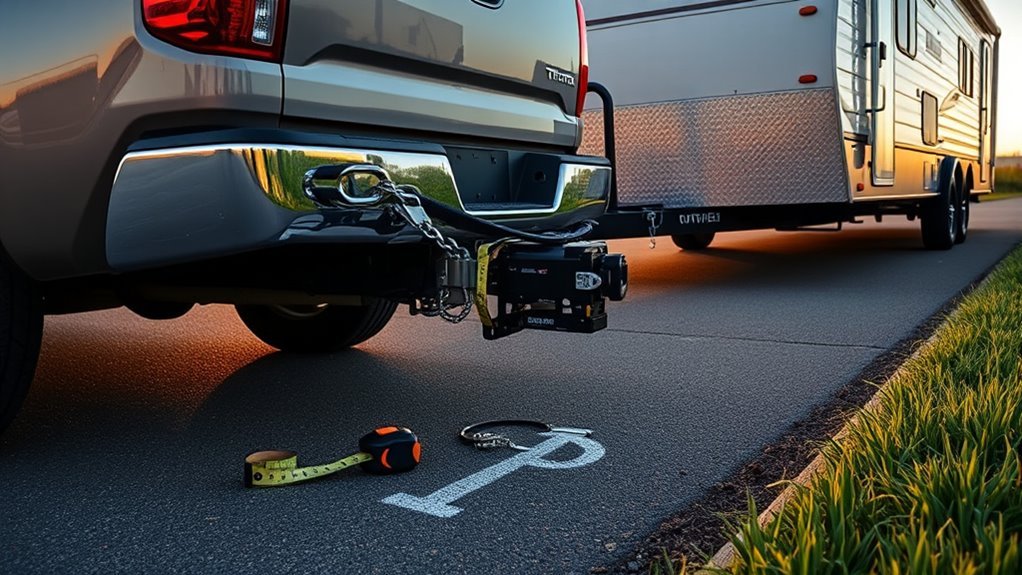
Load the truck and trailer as they will travel, then park on firm, level ground. Follow the hitch manufacturer’s procedure because head angle, bracket location, chain links, spring-bar attachment, lubrication, and torque requirements vary by design.
- Measure the uncoupled Tundra. Record the front and rear wheel-well heights at repeatable points or record the unloaded axle weights.
- Level the loaded trailer. Measure the coupler height and set the hitch-head height according to the hitch instructions.
- Couple and lock the trailer. Attach the safety chains, breakaway cable, electrical connector, and required retention pins.
- Attach the spring bars. Use the hitch maker’s specified brackets, chain links, or tension mechanism. Do not copy settings from another trailer.
- Set initial tension. For the cited 2026 Tundra, adjust in small steps until the front axle returns to its uncoupled weight or the front fender returns to its uncoupled height. Do not pull the front below the original measurement.
- Check trailer attitude. Confirm that the trailer sits at the maker’s target attitude and that the Tundra is not overloaded.
- Verify with a scale. Check front and rear axle weights, loaded truck weight, trailer weight, and combined weight.
- Torque and inspect. Tighten every fastener to its specified value and confirm the coupler latch, hitch pin, spring-bar retainers, safety chains, and breakaway cable.
Pro tip: Record the unloaded, coupled-without-tension, and final adjusted measurements. Those numbers make it easier to detect a changed load or incorrect hitch setting before a later trip.
The setup passes only when the trailer attitude and front-axle restoration match the applicable instructions and every measured axle, vehicle, trailer, receiver, and combined weight stays within its rating. For a full measurement sequence, use the site’s Toyota Tundra weight-distribution hitch setup guide.
[Products Worth Considering]

This Andersen Hitches weight distribution hitch kit is designed to improve towing stability with a grease-free friction cone and tension chain system that helps reduce sway and bounce. It features a universal setup with a 2-inch ball and 4-inch drop/rise to suit many bumper-pull trailer applications, while making hitching and unhitching faster and easier than traditional spring bar systems. Built in the USA, it offers dependable performance for travelers, workers, and outdoor enthusiasts who need confident towing control.

This trailer tongue hitch coupler lock helps secure latch-type couplers and deter theft with a padlock-style design. Its high-strength construction, corrosion-resistant finish, and simple locking action make it a practical choice for trailer owners who want dependable protection and easy everyday use. Two keys are included for added convenience.
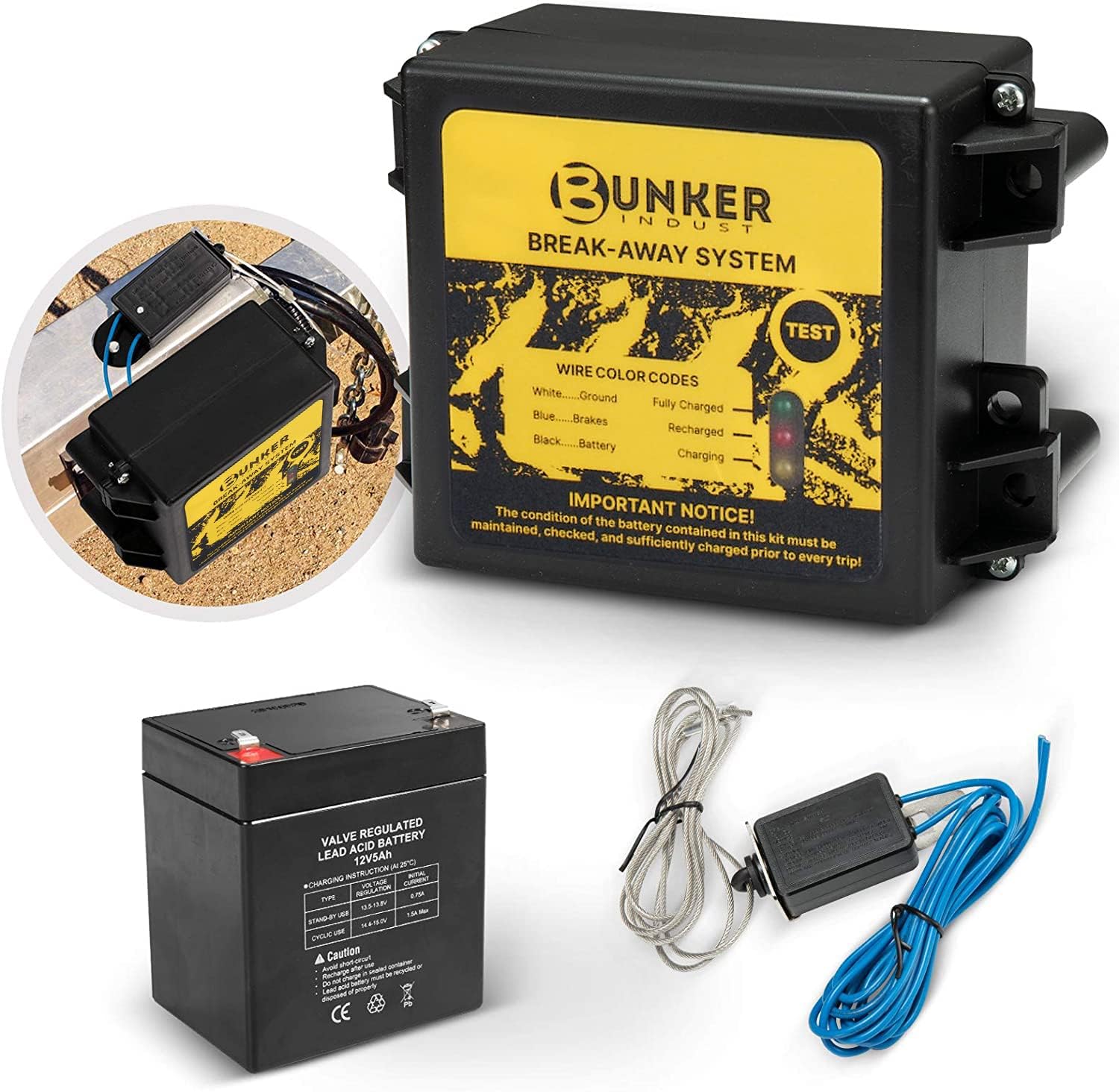
This trailer breakaway kit is designed for trailers with an existing electric brake system, helping activate the brakes if the trailer separates from the tow vehicle. It includes a battery, breakaway switch, and charger with an LED display for easy status checks, making it a practical safety upgrade for caravans and trailers. The side-mount design supports quick installation, while weather and corrosion resistance help it stand up to outdoor use.
Check Tires, Suspension, and Alignment to Reduce Trailer Sway
Damaged tires, incorrect inflation, worn suspension parts, or poor alignment can make a correctly loaded trailer harder to control.
Inspect the Tundra and trailer tires when cold. Look for cuts, bulges, cracking, punctures, uneven wear, exposed cords, mismatched load ratings, or other damage. Check that each tire and wheel can carry its measured share of the load.
Note: Use the Tundra door-jamb placard for the truck’s approved tire size and cold pressure. Goodyear’s auto and light-truck tire bulletin explains that the sidewall value is a maximum operating pressure, not automatically the vehicle’s recommended pressure. For trailer tires, use the trailer placard, trailer manual, or the tire manufacturer’s load-and-inflation guidance for that exact tire.
Inspect the Tundra’s shocks, bushings, mounts, wheel bearings, steering parts, and rear suspension components for leaks, damage, looseness, or excessive movement. Inspect the trailer suspension, wheel bearings, brakes, and mounting hardware according to the trailer manufacturer’s service schedule.
Check alignment after a lift, leveling kit, tire-size change, collision, or suspension repair. Incorrect toe, camber, or worn steering parts can make the Tundra wander and encourage repeated corrections.
Better shocks, a compatible rear sway bar, or air springs may reduce squat, bounce, or body roll when the truck remains within its ratings. These parts do not increase Toyota’s official payload, GVWR, GAWR, receiver, or towing limits.
[Products Worth Considering]

This trailer hitch lock helps secure your trailer and hitch-mounted accessories with a high-strength steel pin designed for 2-inch receivers. It includes a weather-resistant cap to help keep out dust and moisture, plus rubber O-rings to reduce rattling during towing. With two copper keys and a sturdy lock core, it offers added peace of mind and dependable everyday protection.
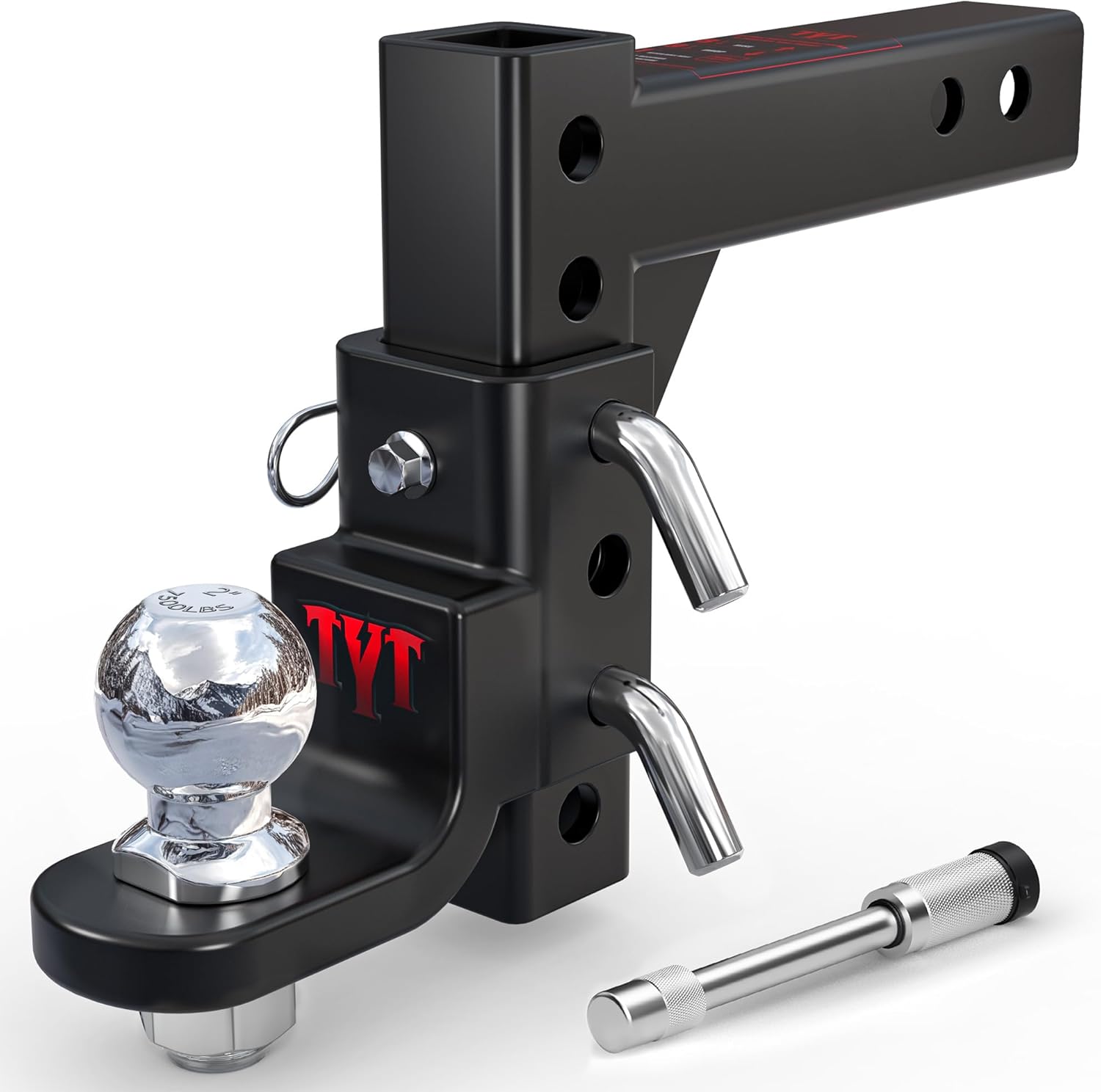
This adjustable trailer hitch ball mount is built for dependable towing with a standard 2-inch receiver and a high-capacity design suited for trucks, campers, boats, and utility trailers. Its adjustable rise and drop settings help you achieve a level tow, while the anti-rattle design supports a smoother, quieter ride. Complete with pins, clips, and a premium pin lock, it offers an easy installation and secure connection for everyday hauling needs.

This proportional trailer brake controller provides smooth, responsive braking by automatically matching your tow vehicle’s stopping force for safer trailer control. The bright LED digital display makes it easy to monitor voltage output in real time, while adjustable braking and sync settings help tailor performance to different trailers and road conditions. Designed for quick installation and broad compatibility, it supports 1 to 4 axle trailers for dependable towing confidence.
Load Placement and Packing Tips to Prevent Sway
Load placement determines how much of the trailer’s weight presses on the hitch and how easily cargo can start moving. Measure the final tongue weight instead of relying only on a visual front-versus-rear rule.
| Position | Action | Purpose |
|---|---|---|
| Low and near the axle area | Place dense cargo here first | Keeps the center of gravity lower |
| Slightly forward of the axle area | Move enough weight forward to reach the specified tongue load | Reduces rear-heavy instability |
| Far rear | Carry only light items when possible | Reduces leverage behind the axles |
| Left and right sides | Balance cargo and fixed equipment | Reduces side-to-side load imbalance |
| All cargo | Secure with equipment rated for the load | Prevents weight from moving during braking or cornering |
Include fixed and variable loads when you measure. Freshwater, wastewater, propane, batteries, generators, fuel, motorcycles, toolboxes, and rear-mounted cargo can change tongue weight substantially.
Reweigh after a major packing change. A trailer that towed correctly on one trip may become unstable after cargo, liquids, or equipment move to a different position.
What to Do When Trailer Sway Starts
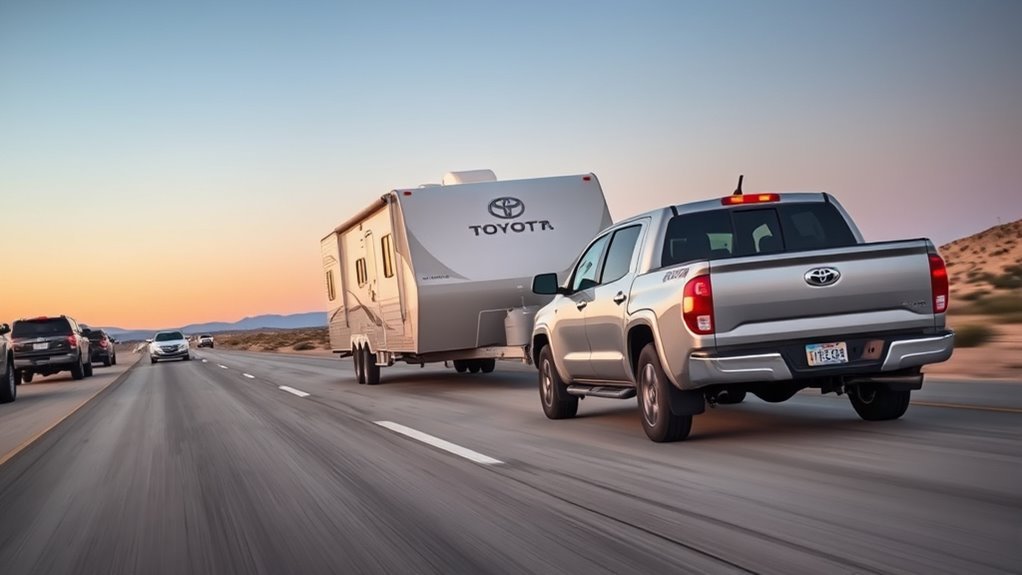
When sway starts, your first goal is to reduce speed without adding another steering or tow-vehicle braking input to the oscillation. Toyota instructs the driver to grip the wheel, steer straight, release the accelerator immediately but very gradually, avoid increasing speed, and avoid applying the vehicle brakes. Airstream’s emergency guidance adds that trailer-only brakes may be applied gently and progressively when the controller is accessible, the system works correctly, and the trailer instructions permit that response.
Warning: Do not accelerate to pull out of sway. Do not apply the Tundra’s brakes or make a large steering correction unless you must avoid an immediate collision.
Step 1: Take These Five Actions
- Grip the steering wheel and steer straight. Keep the Tundra in its lane with the smallest correction needed.
- Release the accelerator immediately but gradually. Let the combination lose speed without accelerating.
- Do not apply the Tundra’s brakes. Use them only if braking is necessary to avoid an immediate collision.
- Apply trailer-only brakes gently when permitted. Use the manual controller progressively only when the trailer brakes are connected, correctly adjusted, and the system instructions allow this response.
- Pull over after the sway stops. Use a safe location away from traffic before inspecting the rig.
Before any trip, practice locating and using the manual trailer-brake control at low speed in a clear area, following Toyota and brake-controller instructions. An emergency is not the time to search for the control or discover that the gain is wrong.
Step 2: Inspect the Rig Before Continuing
Do not treat a recovered sway event as proof that the setup is safe. Check the following before returning to highway speed:
- Look for cargo that moved, tipped, or broke free.
- Recheck tongue weight if the load position changed.
- Confirm that the coupler is fully seated and latched.
- Inspect the hitch pin, spring bars, brackets, chains, retainers, and breakaway cable.
- Check the trailer-brake connector and controller display for faults.
- Inspect every truck and trailer tire for damage, pressure loss, or unusual heat.
- Check for a damaged wheel, bearing, suspension part, or brake component.
Continue only after you identify and correct the likely cause. Repeated sway means the setup, load, speed, weather exposure, or equipment still needs attention.
When to Upgrade Suspension or Choose a Bigger Tow Vehicle
If sway continues after you correct loading, tongue weight, tires, trailer brakes, alignment, and hitch adjustment, compare the entire combination with the Tundra’s ratings again.
Suspension aids may reduce squat, bounce, or body roll when the measured load remains legal and within Toyota’s limits. Air springs, shocks, and sway bars do not increase payload, GVWR, rear GAWR, receiver rating, GCWR, or maximum trailer weight.
Check whether you can maintain the required tongue load without exceeding payload or rear GAWR. A WDH may move some load from the rear axle toward the front axle and trailer axles, but the tongue load still counts against the truck’s carrying capacity.
Consider a 3/4-ton or 1-ton platform when the loaded trailer, hitch, occupants, and truck cargo leave too little payload or rear-axle margin. Make that decision from scale weights and manufacturer ratings rather than the trailer’s dry weight or the truck lineup’s maximum tow number.
Frequently Asked Questions
What is the main cause of trailer sway?
Rear-heavy loading, insufficient tongue weight, or cargo that shifts can make a trailer unstable. Crosswinds, passing trucks, speed, damaged tires, brake faults, and steering inputs can then start or amplify the oscillation. Measure the loaded trailer and correct the cause instead of relying on sway-control equipment alone.
How do I know if my Tundra’s tongue weight is correct?
Weigh the trailer in its real travel condition and measure the load at the coupler. For the cited 2026 U.S.-market Tundra, Toyota specifies 9% to 11% tongue weight for conventional towing. The final setup must also remain within the truck’s payload, axle, tire, receiver, hitch, coupler, trailer, and combined-weight ratings.
Does Toyota require sway control or a weight-distribution hitch?
For the cited 2026 Tundra, Toyota requires a sway-control device when gross trailer weight exceeds 2,000 pounds and a weight-distribution hitch when gross trailer weight exceeds 5,000 pounds. Confirm the exact requirements in the owner’s manual for your model year and make sure every component is compatible and correctly rated.
Can too much tongue weight cause handling problems?
Yes. Excessive tongue weight can overload the Tundra’s payload, rear axle, receiver, hitch, or rear tires. It can also increase squat and reduce front-axle loading. More tongue weight is not safer once it exceeds a component rating or the specified range.
Can I use a friction sway bar instead of a weight-distribution hitch?
A friction sway bar resists side-to-side movement, but it does not redistribute axle load or correct poor loading. For the cited 2026 Tundra, a weight-distribution hitch is required above 5,000 pounds of gross trailer weight. Use only equipment permitted by the Tundra, receiver, trailer, coupler, and hitch instructions.
Does a weight-distribution hitch stop all trailer sway?
No. A correctly adjusted WDH can improve axle loading and steering balance, while an integrated sway-control design can add resistance. Neither system can correct insufficient tongue weight, loose cargo, damaged tires, excessive speed, overloaded axles, or incompatible equipment.
Do air bags or air springs stop trailer sway?
Air springs can reduce rear squat and improve ride control when the truck remains within its ratings. They do not correct rear-heavy trailer loading and do not increase the Tundra’s payload, GVWR, GAWR, receiver rating, GCWR, or towing capacity.
Does Toyota Trailer-Sway Control prevent all trailer sway?
No. Trailer-Sway Control is driver assistance on Tundra models equipped with it. It may not reduce sway in every road, trailer, vehicle, or weather condition, and it cannot make an overloaded, poorly loaded, damaged, or incorrectly hitched trailer safe.
Should I accelerate to pull a trailer out of sway?
No. Grip the steering wheel, steer straight, and release the accelerator immediately but very gradually. Do not apply the Tundra’s brakes unless needed to avoid a collision. Apply trailer-only brakes gently only when the connected system works correctly and its instructions permit that response.
What is the maximum towing speed for a 2026 Toyota Tundra?
Toyota’s cited 2026 Tundra guidance limits towing to 65 mph, the posted towing speed limit, or the trailer manufacturer’s limit, whichever is lower. Conditions may require a much lower speed, especially in crosswinds, rain, rough pavement, traffic, curves, or on grades.
At what speed does trailer sway become dangerous?
Sway is dangerous whenever the trailer begins to influence the Tundra’s direction. A repeatable sway speed is a warning to stop and diagnose the setup, not a safe operating threshold. Reduce speed and correct loading, tongue weight, tires, brakes, alignment, or hitch setup before towing again.
Why does my trailer sway only in crosswinds or near passing trucks?
Crosswinds and the pressure wave from a large passing vehicle can push a tall trailer sideways and start an oscillation. Reduce speed before the wind exposure, leave more space, steer steadily, and verify tongue weight, hitch adjustment, tire condition, and cargo security before the next trip.
Can I keep towing if sway stops after I slow down?
Do not assume the setup is safe because the sway stopped. Pull over and inspect cargo position, tongue weight, hitch hardware, tires, wheel bearings, suspension, trailer brakes, and the brake-controller connection. Continue only after you identify and correct the likely cause.
Safety Disclaimer: This article provides general towing-safety information and does not replace the instructions for your exact Tundra, receiver, hitch, trailer, coupler, tires, or brake system. Consult the applicable manuals, a qualified hitch installer, or a towing professional before operating near any rated limit.
Final Check Before You Tow
Do not leave the driveway until the loaded conventional trailer has the tongue weight specified for your Tundra, every truck and trailer rating has margin, required sway-control or weight-distribution equipment is installed correctly, and the tires and trailer brakes pass inspection. For the cited 2026 Tundra, that means 9% to 11% tongue weight, sway control above 2,000 pounds, a WDH above 5,000 pounds, and a towing speed no higher than 65 mph or the lower applicable limit.
If sway starts, steer straight, release the accelerator very gradually, and do not apply the Tundra’s brakes unless needed to avoid a collision. After the trailer settles, stop and find the cause before continuing. A stable tow comes from measured weights and a repeatable setup, not from relying on the Tundra’s maximum tow rating or electronic aids alone.
References
- 2026 Toyota Tundra Specifications and Maximum Towing Information, Toyota Motor Sales, U.S.A.
- 2026 Toyota Tundra: A Bold New Chapter in Full-Size Pickup Excellence, Toyota USA Newsroom
- 2026 Tundra Owner’s Manuals and Warranties, Toyota Motor Sales, U.S.A.
- What to Do If a Trailer Begins to Sway, Airstream Support
- How to Measure Tongue Weight, CURT Manufacturing
- Equal-i-zer 6K–14K Owner’s Manual and Weight Ratings, Equal-i-zer Hitch
- How SwayPro Uses Spring-Bar Tension for Sway Prevention, Blue Ox
- ProPride 3P Pivot Point Projection Explained, ProPride
- Tire Inflation Recommendations for Auto and Light Truck Tires, Goodyear Product Service Bulletin


[…] charge air carries more oxygen and helps reduce knock risk. That thermal control matters when you tow, climb grades, or drive in hot […]
[…] display to confirm the mode. Some modes may reset, deactivate, or change when you use Tow/Haul, four-wheel-drive low range (4L), Multi-Terrain Select, Downhill Assist Control, or other drive […]
[…] For a full sway diagnosis, see how to stop trailer sway on a Toyota Tundra. […]