Toyota Tundra Ground Clearance: Stock Specs, Angles, and Lift Trade-Offs
What’s in This Article
- Quick Answer: Tundra Ground Clearance and What It Means
- Tundra Stock Ground Clearance by Trim and Year
- Why Approach and Departure Angles Matter for Your Tundra
- How to Measure Tundra Ground Clearance Step by Step
- What Obstacles Can a Stock Tundra Clear?
- How Lift Kits Change Clearance and Angles
- Trade-Offs of Lifting a Tundra: Stability, MPG, and Suspension
- Home Clearance Checks and Recheck Points
- Best Suspension and Tire Upgrades for More Clearance
- Choosing the Right Clearance Setup for Your Off-Road Needs
- Frequently Asked Questions
You can avoid most underbody hits when you know your Toyota Tundra’s real ground clearance, not just a forum number. Toyota’s U.S. 2025 Tundra brochure lists minimum ground clearance at 9.3 inches for gas models and 8.5 inches for hybrid models, while some market spec sheets may report different running-clearance figures. This guide shows how to read those numbers, measure your own truck, and decide whether a lift, tires, or skid plates fit your driving needs.
Quick Answer: Tundra Ground Clearance and What It Means
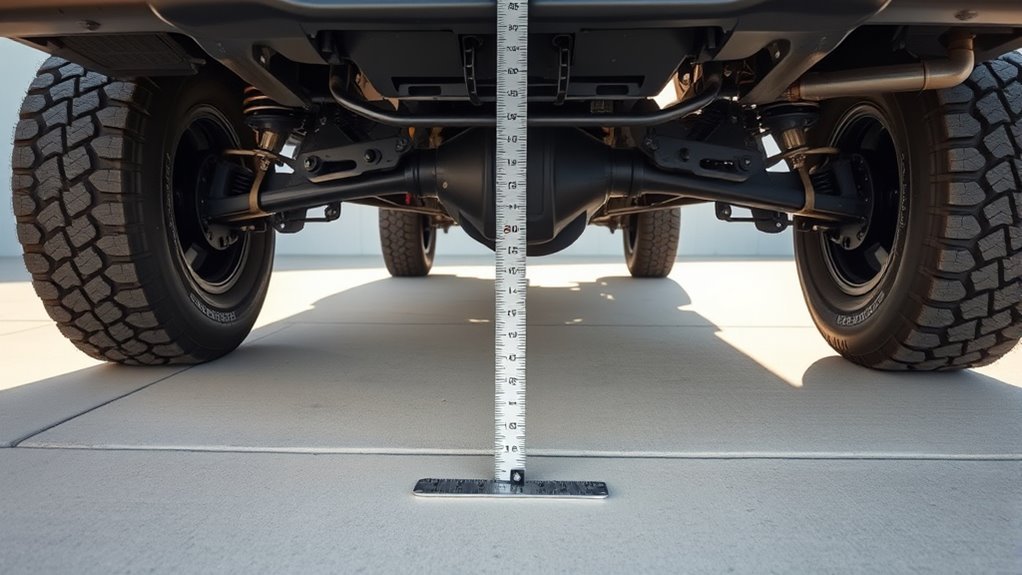
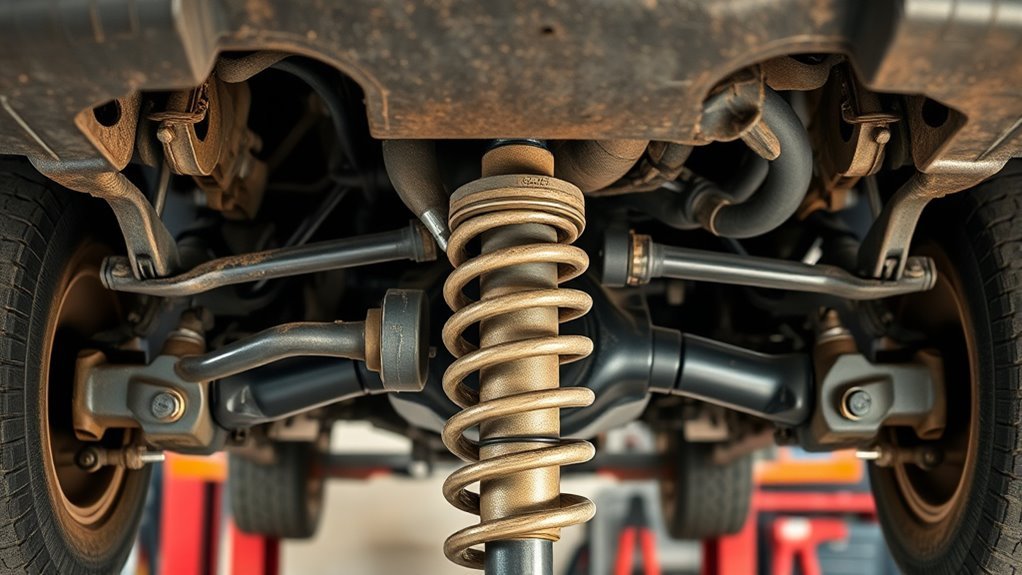
Toyota Tundra ground clearance means the vertical space between the ground and the lowest factory-mounted point under the truck. For recent U.S. third-generation Tundra models, Toyota lists 9.3 inches for gas versions and 8.5 inches for hybrid versions in its 2025 brochure. Your exact number can change with trim, cab, bed, tires, payload, skid plates, and market-specific specs.
Use ground clearance with approach angle, departure angle, and breakover angle. Clearance helps protect the middle of the truck, while those angles help you judge whether the front bumper, rear bumper, or belly will touch first.
Key Takeaways
- Check the exact year, market, trim, cab, bed, and powertrain before you trust any Tundra clearance number.
- Use Toyota’s U.S. minimum clearance numbers as a baseline, then measure your own truck at home.
- Do not assume a stock Tundra can clear an obstacle taller than its lowest measured underbody point.
- A lift kit can improve clearance and angles, but it can also change handling, braking feel, tire wear, and fuel use.
- Pick suspension and tire upgrades based on your terrain, not just the tallest lift you can buy.
Tundra Stock Ground Clearance by Trim and Year
You should compare stock ground clearance by model year, market, trim, cab, bed, and powertrain. Toyota’s U.S. 2025 Tundra brochure lists 9.3 inches of minimum ground clearance for gas models and 8.5 inches for hybrid models. It also lists standard approach and departure angles at 21.0 degrees and 24.0 degrees, with TRD Pro at 26.2 degrees and 24.2 degrees.
Some Toyota Canada 2026 spec sheets show higher ground-clearance values for certain configurations. That difference shows why you should not mix U.S. and Canadian numbers without checking the exact source.
Trim-Level Ground Clearance
Trim matters, but the powertrain and configuration can matter just as much. A gas SR, SR5, Limited, Platinum, or 1794 Edition may not share the same real-world low point as a hybrid i-FORCE MAX model. TRD Pro improves off-road geometry, but you should still confirm its listed clearance for your model year.
Use trim comparisons to match the truck to your driving needs. Daily drivers need stable handling and predictable tire wear. Trail-focused builds need more underbody protection, better approach angles, and enough room for the tires you plan to run.
| Spec Area | Recent U.S. Tundra Baseline | Why It Matters |
|---|---|---|
| Minimum ground clearance, gas | 9.3 in | Helps you judge center underbody clearance |
| Minimum ground clearance, hybrid | 8.5 in | Shows why powertrain can change low-point clearance |
| Standard approach/departure angle | 21.0° / 24.0° | Helps you judge bumper contact risk |
| TRD Pro approach/departure angle | 26.2° / 24.2° | Improves front-end obstacle entry angle |
Year-to-Year Variations
The 2022 redesign changed the Tundra’s frame, suspension layout, powertrain choices, and off-road geometry. That means you should not use older second-generation numbers for a 2022 or newer truck.
Check the spec sheet for your exact year before you buy parts. A lift kit, tire size, skid plate, or suspension option can change how the truck sits and where the lowest point sits.
Measurement Method Differences
Ground-clearance numbers can differ because not every source measures from the same point. Toyota may publish minimum ground clearance, while reviewers may measure at the frame, skid plate, differential, or another visible low point.
Payload also changes the number. Passengers, cargo, a bed rack, tools, and recovery gear can lower the truck enough to matter on a trail.
Note: Always compare the same measurement type when you look at ground-clearance numbers from two sources.
Why Approach and Departure Angles Matter for Your Tundra
If you take your Tundra off-road, approach and departure angles help you predict bumper contact. Approach angle tells you how steep an obstacle can be before the front bumper or skid area touches. Departure angle tells you the same thing for the rear of the truck.
Ground clearance protects the underside, but angles protect the front and rear overhangs. Toyota states that approach angle, departure angle, and ground clearance help define off-road geometry. Use all three before you choose a trail line.
Measure slopes, watch your overhangs, and avoid guessing. A slow, angled entry often prevents scraping better than a straight approach.
How to Measure Tundra Ground Clearance Step by Step
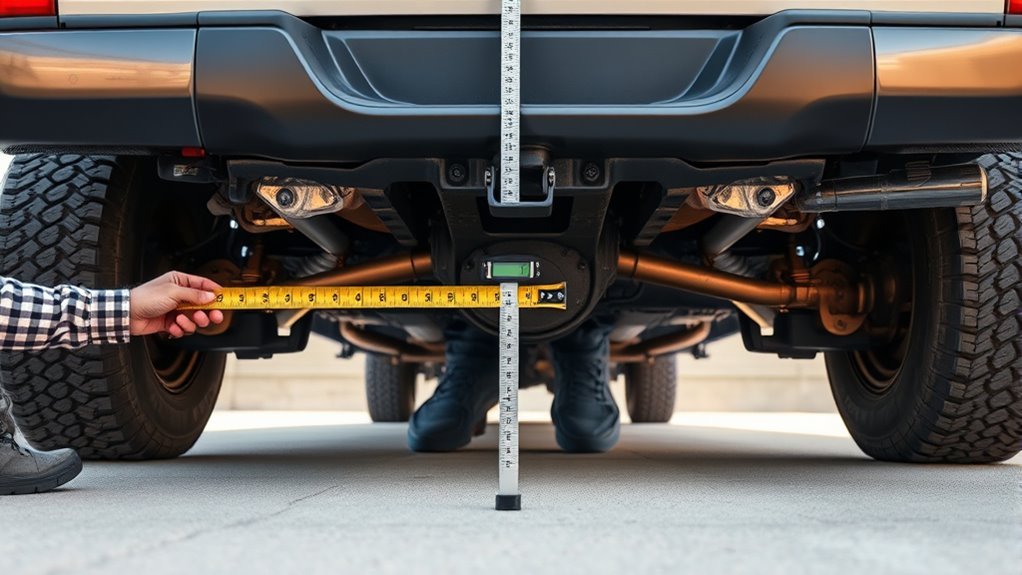
Estimated time: 10 to 15 minutes.
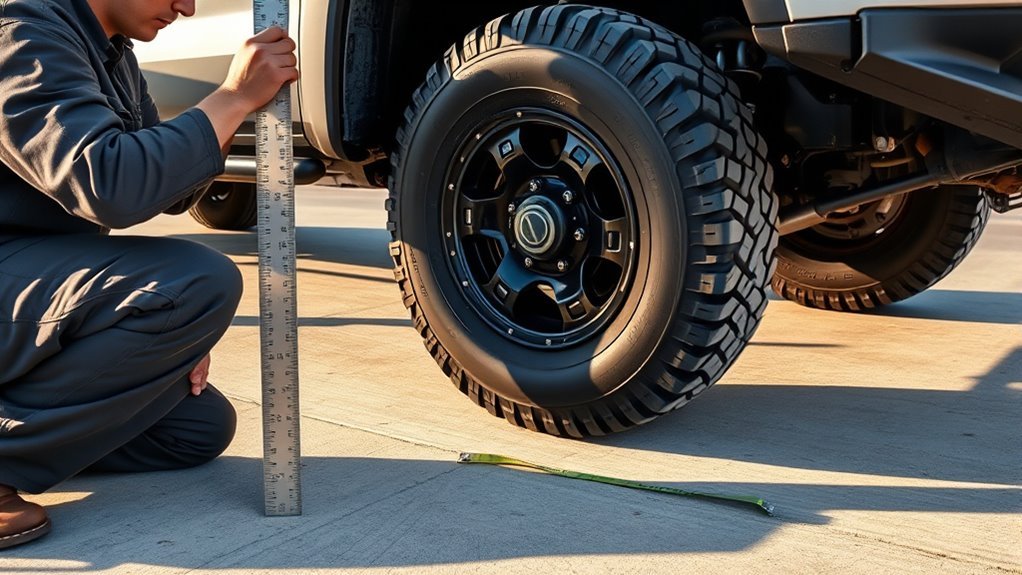
Measuring your Tundra at home gives you a number that matches your truck, tires, load, and suspension. Use a flat surface, a tape measure, a flashlight, chalk, and a notepad or phone.
What You Need Before You Measure
- A flat driveway or garage floor
- A tape measure or ruler
- A flashlight
- Chalk or painter’s tape
- A second person, if you want a steadier reading
- Park on a flat surface and set the parking brake.
- Load the truck the way you normally drive it, including common tools or cargo.
- Look under the truck and find the lowest factory-mounted point.
- Hold the tape measure straight up from the ground to that point.
- Record the number in inches and note the exact point you measured.
- Repeat the check at the front, center, rear, and near low drivetrain parts.
- Recheck after tire, lift, skid plate, or suspension changes.
Do not use one quick measurement as your final answer. Measure at several points and keep the lowest reading as your real trail-clearance number.
What Obstacles Can a Stock Tundra Clear?
A stock Tundra can handle many dirt roads, rutted paths, mild trail edges, curbs, and uneven driveways when you drive with care. But a ground-clearance number does not mean you can drive over an obstacle of the same height. You need room for suspension movement, tire placement, and trail angle.
Use the lowest measured point as your limit. If an object sits near that height, avoid centering it under the truck. Place tires on the high points when safe, or choose another line.
Low Curb and Rock Traversal
Common curbs and small rocks usually pose less risk than sharp trail rocks near your differential, skid plate, or exhaust. The shape of the obstacle matters as much as height. A round rock may roll or slide, while a sharp rock can hit a low point fast.
- Check the obstacle height before you commit.
- Keep sharp rocks away from the lowest underbody point.
- Use slow throttle so the suspension does not compress hard.
- Stop and choose a new line if you hear scraping.
Moderate Ramp and Driveway
A stock Tundra can manage many steep driveways and entry ramps when you approach at a slight angle. That angle helps one front tire climb first and can reduce front bumper contact.
Use the Tundra’s approach and departure angles as a guide. Standard U.S. 2025 geometry lists 21.0 degrees up front and 24.0 degrees at the rear, while TRD Pro improves the approach angle.
| Parameter | Recent U.S. Tundra Reference |
|---|---|
| Minimum ground clearance | 9.3 in gas / 8.5 in hybrid |
| Standard approach angle | 21.0° |
| Standard departure angle | 24.0° |
| TRD Pro approach/departure angle | 26.2° / 24.2° |
Stream Crossings and Logs
Do not use ground clearance as a safe water-depth rating. Toyota owner materials warn that water over the floor level can damage electrical equipment. If you cannot confirm water depth, bottom firmness, and exit angle, turn around.
Logs also need care. A log that sits lower than your measured clearance can still catch a skid plate, bracket, or exhaust part if the truck compresses as you cross it.
- Scout water and logs on foot only when conditions are safe.
- Enter shallow water slowly and keep a steady pace.
- Cross logs squarely when the line allows it.
- Keep recovery gear ready before you enter soft ground.
Warning: Avoid deep or fast-moving water because it can damage electronics, stall the engine, or sweep the truck off line.
How Lift Kits Change Clearance and Angles
A lift kit can raise your Tundra and improve its off-road geometry, but the actual gain depends on the kit. Toyota’s TRD 3-inch lift kit for eligible 2022 and newer Tundra 4×4 models adds 3 inches in front and 2 inches in back. Toyota says that kit adds 2.6 inches of ground clearance and changes approach and departure angles from 21.0°/24.0° to 26.0°/25.0°.
| Parameter | Toyota TRD 3-Inch Lift Kit Reference |
|---|---|
| Front lift | 3.0 in |
| Rear lift | 2.0 in |
| Ground-clearance gain | 2.6 in |
| Approach angle change | 21.0° to 26.0° |
| Departure angle change | 24.0° to 25.0° |
Check fitment before you buy any lift. Toyota says its TRD lift kit does not fit TRD Pro, TRD Sport, or trucks with optional Adaptive Variable Suspension (AVS) or air suspension.
[Products Worth Considering]

This smart tire tread depth gauge provides quick, accurate readings from 0 to 1 inch in 1/32-inch increments, helping drivers assess tire wear with confidence. Its color-coded display makes it easy to see tread condition at a glance, while the pocket clip adds convenient portability for garages, glove boxes, and on-the-go inspections. Designed for use on trucks, motorcycles, automobiles, and other passenger vehicles, it is a simple tool for safer tire maintenance.

This synthetic soft shackle set is designed for safer, easier off-road recovery with a simple loop-and-tighten setup that helps make vehicle pulls more straightforward. Built as a lightweight alternative to traditional metal shackles, it uses anti-scratch synthetic fiber to help protect your vehicle during recovery tasks. The two-pack format adds convenience for trail use, and Rhino USA backs the product with lifetime replacement support.

This front bumper license plate bracket is designed for Toyota vehicles from 2000 to 2026, offering a secure and street-legal way to mount your plate without covering important registration details. Made from durable, rust-proof materials, it helps protect your car’s finish while providing a clean, stable fit. The kit includes mounting hardware and a wrench for easier installation, making it a practical accessory for drivers who want a reliable plate holder solution.
Trade-Offs of Lifting a Tundra: Stability, MPG, and Suspension
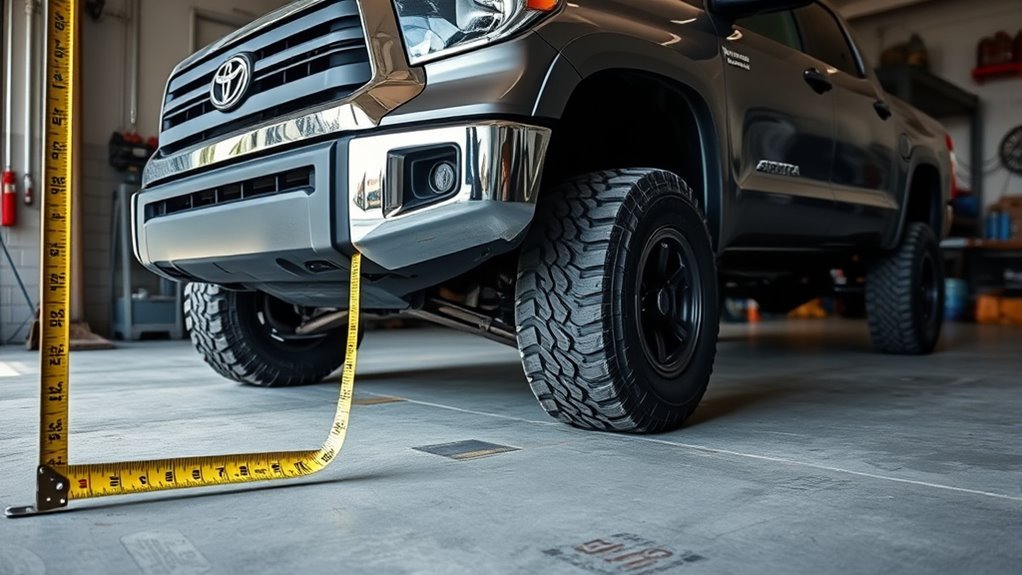
A lift can help your Tundra clear trail obstacles, but it also changes how the truck drives. Expect changes in steering feel, center of gravity, braking feel, tire wear, and fuel use. Plan the whole setup before you install parts.
Stability and Handling
Raising your Tundra raises the center of gravity. That can make the truck feel less settled in quick lane changes, fast corners, and emergency moves.
- Lower heavy cargo: Keep tools, recovery gear, and camping gear low in the bed.
- Choose wheels carefully: Avoid heavy wheel and tire setups that add too much rotating mass.
- Align the truck: Correct caster, camber, and toe after suspension work.
- Test safely: Drive at low speed first and confirm braking, steering, and tire clearance.
Fuel Economy Impact
A lift, larger tires, and heavier wheels can reduce fuel economy. They can add aerodynamic drag, rolling resistance, and rotating weight.
Do not rely on a fixed miles-per-gallon loss from another build. Track your own fuel use before and after the change, then decide whether the off-road gain fits your daily driving.
Suspension Wear and Tuning
A lift changes suspension angles and load paths. That can increase wear on shocks, springs, bushings, control arms, ball joints, brake lines, and steering parts.
Use parts designed for your Tundra’s year and configuration. After the install, check alignment, brake line routing, tire rub, axle angles, and fastener torque.
- Correct caster, camber, and toe after the lift.
- Match shocks and springs to your load and terrain.
- Inspect control arms, bushings, and ball joints often.
- Verify brake lines, steering, and driveline angles before hard use.
Home Clearance Checks and Recheck Points
Measure your Tundra at home before and after any change. Park on a flat surface, use the same load each time, and record the lowest point under the truck.
Take readings at the front skid area, center frame area, differential area, rear suspension area, and any low-mounted accessory. Your lowest number matters most because that point will hit first.
Save your readings with dates. This helps you spot sagging springs, worn tires, or changes after you add a bumper, winch, bed rack, camper shell, or skid plates.
Best Suspension and Tire Upgrades for More Clearance
If you want more clearance, choose parts that match your Tundra’s year, powertrain, cab, bed, load, and tire goal. Do not buy a lift or tire size only because another owner used it. Your wheel offset, payload, and driving style can change the result.
Prioritize upgrades that fit your Tundra’s year, tire size, and use. Fitment and reliability matter more than lift height.
- Coilover kits: These can add controlled height and better damping when you choose the right spring rate.
- Complete lift kits: These can improve clearance and angles when they include the right steering and brake-line parts.
- All-terrain tires: Larger tires can add clearance at the axle, but they may cause rubbing or speedometer error.
- Skid plates: These may reduce measured clearance slightly, but they protect low parts from trail damage.
- Air suspension support: Helper systems can manage load, but you must confirm off-road limits and compatibility.
Match tire diameter, wheel offset, and suspension travel before you buy. After the upgrade, confirm brake clearance, tire rub, speedometer accuracy, and spare-tire fit.
[Products Worth Considering]

Camco Trailer Aid Plus provides a 5 1/2-inch lift to make tandem tire changes on trailers and RVs easier and faster. Its strong polymer construction is lightweight, waterproof, rustproof, and built for dependable outdoor use, while the high weight capacity supports a wide range of trailer maintenance needs. Designed for convenient portability, it helps you change a flat without unloading cargo or horses.

This front license plate bracket is a direct replacement for compatible Toyota RAV4 models, offering an easy way to restore a damaged or missing front plate holder. Built from durable ABS material with the same dimensions as the original, it installs without modification and helps maintain a clean factory look.

Rhino USA D Ring Shackles provide a dependable recovery connection for off-road and towing setups, with a high break strength designed for demanding use. They fit most aftermarket bumpers and universal shackle mounts, and the included rubber isolator kit helps reduce noise, vibration, and wear. Built from chromoly steel with an anti-rust powder-coated finish, these shackles are made for long-lasting performance in harsh conditions.
Choosing the Right Clearance Setup for Your Off-Road Needs
Your best setup depends on where you drive. Mild forest roads may only need good tires, skid plates, and careful line choice. Rock trails may need more lift, stronger components, and more underbody protection.
Start with your measured clearance, not the advertised number. Then define your target obstacle height, tire size, approach angle, departure angle, and cargo load.
For rocky trails, focus on clearance, tire strength, skid plates, and slow-speed control. For sand and desert roads, focus on tire footprint, shock control, cooling, and stability. For daily driving, keep the lift moderate and protect ride quality.
A smart Tundra build gives you enough clearance without making the truck harder to drive every day.
[Products Worth Considering]

This DIY toe alignment tool kit helps home mechanics quickly check and adjust front-end toe after suspension, steering, or tire service. Stainless steel toe plates and dual tape measures provide a simple, reliable reference for reducing uneven tire wear and improving straight-line tracking without needing a full alignment machine.

This dial type tire tread depth gauge helps you quickly check tread wear on motorcycles, cars, trucks, and buses with easy-to-read 1/32-inch increments. Its colorful zone markings make it simple to assess tire condition for safer driving in different weather, while the durable zinc cast body and legible dial provide dependable everyday use.

This front bumper license plate bracket is designed for Toyota Camry and Camry Hybrid models from 2018 to 2026, offering a secure and street-legal way to mount your plate. Built from durable, rust-proof plastic with included screw bolts and a wrench, it helps protect your bumper paint while making installation straightforward. The bracket fits US and Canada plates and is made to keep your license plate and registration sticker visible.
Frequently Asked Questions
What is the ground clearance of a Toyota Tundra?
For recent U.S. third-generation Tundra models, Toyota’s 2025 brochure lists 9.3 inches for gas models and 8.5 inches for hybrid models. Your exact number can vary by market, year, trim, tires, load, and accessories.
Why do some Tundra clearance numbers say 10 inches or more?
Some sources use a different measurement point, market, or configuration. Canadian specs and reviewer measurements may not match U.S. minimum ground-clearance specs, so compare the source details before you rely on the number.
How do you measure ground clearance on a truck?
Park on level ground and measure straight up from the ground to the lowest factory-mounted underbody point. Repeat the check at several points and use the lowest reading as your practical clearance number.
Does a lift kit increase Tundra ground clearance?
Yes, a lift kit can increase clearance, but the gain depends on the kit. Toyota says its TRD 3-inch lift kit adds 2.6 inches of ground clearance on eligible 2022 and newer Tundra 4×4 models.
Can a stock Tundra drive through two feet of water?
Do not assume that. Toyota does not treat ground clearance as a water-depth rating, and owner materials warn that water above the floor can damage electrical equipment. Avoid deep water unless you have verified the route and prepared the truck correctly.
Safety Disclaimer: This article is for informational purposes only and does not replace professional vehicle inspection, off-road training, or Toyota owner manual guidance. Always inspect your truck, follow local laws, and use qualified technicians for suspension, brake, steering, and tire changes.
Conclusion
Your Tundra’s real ground clearance comes from the lowest point on your exact truck, not from one number copied across the web. Check Toyota’s spec sheet, measure your own truck, and use approach and departure angles before you choose a trail line. If you lift the truck, match the parts to your terrain and confirm alignment, braking, tire clearance, and handling. A measured setup gives you more confidence on the trail and fewer surprises under the truck.
References
- 2025 Toyota Tundra eBrochure — Toyota Motor Sales, U.S.A., 2025
- Explaining Toyota’s Vehicle Geometry — Toyota USA Newsroom, 2025
- Toyota Tundra Reaches New Heights with TRD 3-inch Lift Kit — Toyota USA Newsroom, 2022
- 2025 Tundra Owner’s Manuals and Warranties — Toyota Owners, 2025
- 2026 Toyota Tundra and Tundra Hybrid Specifications — Toyota Canada, 2026