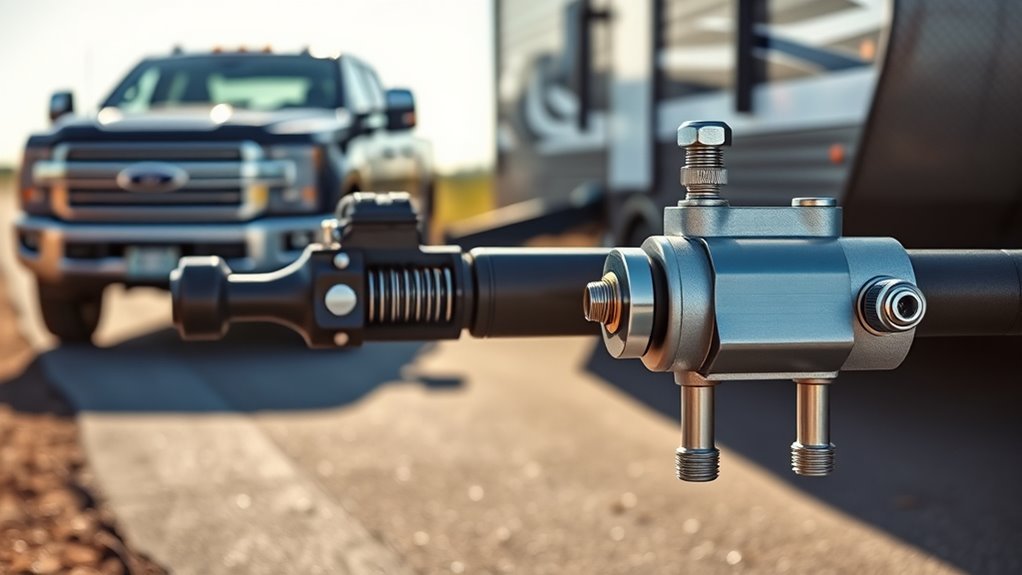
You need the right hitch setup for the way your trailer actually behaves. A weight-distribution hitch helps correct rear sag and front-axle lightness by spreading tongue weight across the tow vehicle and trailer axles. Sway control helps resist side-to-side trailer movement caused by wind, passing trucks, poor loading, speed, or uneven pavement. Many heavier travel trailers benefit from both, but the final decision should come from your tow vehicle owner’s manual, hitch receiver rating, measured tongue weight, and real handling symptoms.
Quick Answer
Use a weight-distribution hitch when tongue weight makes the tow vehicle squat, lifts weight from the front axle, or when your owner’s manual requires it. Add sway control when the trailer wanders, fishtails, or reacts strongly to wind and passing traffic. For many larger travel trailers, the safest setup is both.
Key Takeaways
- Weight distribution fixes load balance. It helps restore front-axle load, steering feel, braking stability, and a level ride.
- Sway control fixes lateral motion. It helps damp side-to-side trailer movement from crosswinds, passing vehicles, speed, and uneven pavement.
- They are not the same system. A weight-distribution hitch can improve stability, but it does not automatically eliminate sway unless it has integrated sway control.
- Check real ratings first. Your tow vehicle manual, receiver label, hitch rating, loaded trailer weight, and measured tongue weight matter more than a generic weight rule.
At a Glance
| Best For | Travel trailers, enclosed trailers, utility trailers, and other bumper-pull trailers that affect ride height or stability |
| Main Decision Point | Loaded trailer weight, tongue weight, tow vehicle rating, receiver rating, and handling symptoms |
| Setup Difficulty | Moderate; careful measuring, correct torque, and test driving are required |
| Tools Needed | Owner’s manuals, torque wrench, tape measure, level ground, tongue weight scale or public scale access |
Do I Need a Weight Distribution Hitch or Sway Control?
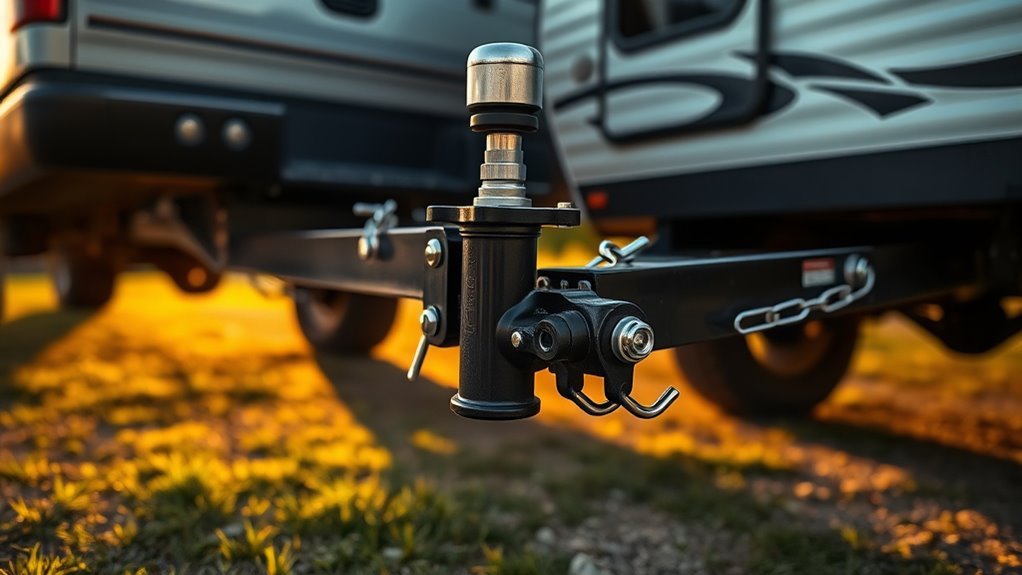
You need a weight-distribution hitch if the trailer’s tongue weight pushes the rear of the tow vehicle down enough to reduce steering response, braking balance, headlight aim, or ride control. You need sway control if the trailer moves side to side, gets pushed around by wind or passing trucks, or begins to oscillate after steering, braking, or pavement changes.
The safest way to decide is not by trailer weight alone. First, check your tow vehicle owner’s manual and the label on the hitch receiver. Some vehicles require sway control or weight distribution above specific trailer-weight thresholds, while others simply recommend them depending on the trailer and load. For example, Toyota’s owner guidance for some truck models lists specific requirements for sway control and weight-distributing equipment at certain trailer weights, which shows why the vehicle manual must come first.
Warning: Never use a weight-distribution hitch unless the tow vehicle, receiver, hitch head, ball mount, and trailer frame are rated for it. Some unibody vehicles, light-duty receivers, surge-brake trailers, and trailer frames have restrictions. Follow the tow vehicle and hitch manufacturer instructions before installation.
[Products Worth Considering]

The CURT 17200 Trailer Sway Control Kit helps limit lateral trailer movement to improve towing stability and control. It is designed to work with most weight distribution hitches or a sway tab mount, and includes a weld-on tab, spacer plate, and adjustable hardware for flexible installation. Built for smoother, straighter towing, it helps reduce sway and makes towing more confident on the road.

These replacement support brackets are designed to secure the spring bars on a trailer frame for CURT TruTrack weight distribution hitches. Their adjustable mounting holes help achieve precise leveling while the rigid construction supports integrated sway control for a steadier towing experience. A durable powder coat finish adds long-lasting protection, and the package includes two replacement brackets.

This Andersen Hitches weight distribution hitch kit is designed to improve towing stability with a grease-free friction cone and tension chain system that helps reduce sway and bounce. It features a universal setup with a 2-inch ball and 4-inch drop/rise to suit many bumper-pull trailer applications, while making hitching and unhitching faster and easier than traditional spring bar systems. Built in the USA, it offers dependable performance for travelers, workers, and outdoor enthusiasts who need confident towing control.
Weight Distribution: What It Does and When to Use It
A weight-distribution hitch uses spring bars to apply leverage between the tow vehicle and the trailer frame. Instead of letting most of the tongue weight press down behind the rear axle, the system transfers part of that load forward toward the tow vehicle’s front axle and rearward toward the trailer axles. Chevrolet describes weight distribution as using a weight-distributing hitch so some or all tongue weight is distributed from the rear toward the front of the tow vehicle.
This matters because a bumper-pull trailer acts like a lever. Too much load behind the tow vehicle’s rear axle can make the front end feel light, reduce steering precision, increase rear suspension squat, and change braking balance. Proper weight distribution helps restore the geometry the vehicle was designed to use.
When to Add One
Add a weight-distribution hitch when any of these conditions apply:
- The tow vehicle owner’s manual or receiver label requires weight distribution for your trailer weight or tongue weight.
- The trailer causes visible rear sag or a nose-up attitude in the tow vehicle.
- The front of the tow vehicle rises noticeably after coupling the loaded trailer.
- Steering feels light, vague, or delayed while towing.
- Braking feels less stable because the tow vehicle is no longer sitting level.
- You tow a taller or heavier travel trailer where the manufacturer recommends weight distribution.
Many towing guides use 5,000 pounds of gross trailer weight as a common point where weight distribution becomes more likely, but it is not a universal rule. A 4,500-pound trailer with high tongue weight may need weight distribution, while a properly loaded trailer below that may not. The correct answer depends on the tow vehicle, hitch receiver, trailer design, and measured loaded tongue weight.
How It Redistributes Weight
Without weight distribution, the trailer coupler presses downward on the hitch ball and loads the tow vehicle’s rear axle. A weight-distribution hitch adds spring-bar tension. Those bars push down on the trailer frame brackets and create leverage through the hitch head. That leverage helps return load to the tow vehicle’s front axle and trailer axles.
The result should be a more level combination, better steering authority, more predictable braking, and less porpoising over dips. It does not make the trailer lighter, increase the tow rating, or replace proper loading. It only helps distribute the tongue load within the limits of the equipment.
Setup and Adjustment Tips
Correct adjustment is what makes a weight-distribution hitch work. A poor setup can leave the front axle underloaded, overload the system, or create handling problems.
- Start on level ground. Load the tow vehicle and trailer the way they will travel.
- Measure before coupling. Measure the tow vehicle’s front wheel-well height while uncoupled.
- Measure after coupling without bars engaged. This shows how much the trailer lifts the front axle and compresses the rear suspension.
- Engage the spring bars and measure again. Follow the hitch manufacturer’s target for front-axle height return.
- Check trailer pitch. The trailer should generally sit level or slightly nose-down, unless the trailer manufacturer says otherwise.
- Torque every fastener to spec. Do not guess; use the hitch manual’s torque values.
- Test at low speed first. Recheck measurements and hardware after the first short tow and before long trips.
Pro Tip: Save your final measurements for each regular load. If you tow the same camper with the same cargo, water level, and passengers, those notes make future setup checks faster and more consistent.
Sway Control: What It Does and When to Use It
Sway control reduces side-to-side motion between the tow vehicle and trailer. Trailer sway can start from crosswinds, passing trucks, speed, uneven pavement, sudden steering inputs, soft tires, poor cargo placement, or too little tongue weight. Once sway begins, the trailer can act like a pendulum and feed more movement back into the tow vehicle.
Sway control devices do not fix an unsafe load. The Trailer Safety Week towing guide notes that improper loading is a common reason drivers lose control of a trailer and that front-to-back and side-to-side weight distribution are vital. That means sway control should be used with correct loading, proper tongue weight, good tires, safe speed, and a properly matched tow vehicle.
Types of Sway Control
Common sway-control options include:
- Friction sway bars: Add resistance between the trailer and tow vehicle. They are simple and affordable, but many must be adjusted or removed for tight backing depending on the design.
- Integrated sway-control weight-distribution hitches: Build sway resistance into the hitch through friction points, cams, or bracket geometry.
- Pivot-projection hitches: Use a more advanced linkage design to change the effective pivot point and reduce sway tendency.
- Electronic trailer or tow-vehicle sway systems: Use sensors and braking intervention to help correct sway, but they should be treated as a supplement to proper loading and hitch setup, not a cure for an unstable trailer.
When to Add Sway Control
Add sway control when you tow in conditions that create lateral force or when the trailer has a shape that catches wind. Tall travel trailers, enclosed cargo trailers, lightweight campers with large sidewalls, and trailers pulled on open highways are common candidates.
You should strongly consider sway control if:
- The trailer wiggles after steering corrections.
- Passing trucks push or pull the trailer.
- Crosswinds make the trailer drift or yaw.
- The trailer sways after bumps or lane changes.
- The tow vehicle manual requires a sway-control device for your trailer weight.
- You tow at highway speeds with a tall or long trailer.
Note: If a trailer sways badly, slow down and correct the cause. Do not mask a dangerous setup with more sway-control tension. Check tongue weight, cargo placement, tire pressure, trailer alignment, suspension condition, and tow vehicle ratings.
Weight Distribution vs Sway Control: What Each Does Best
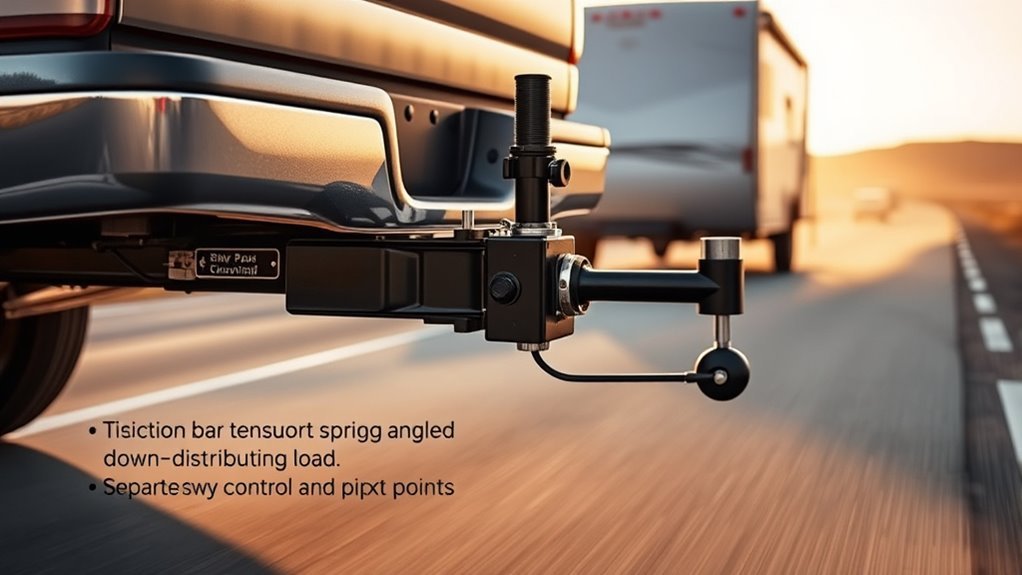
Weight distribution and sway control solve different towing problems. Treat them as complementary tools, not direct replacements.
| Feature | Weight Distribution Hitch | Sway Control |
|---|---|---|
| Main job | Redistributes tongue weight across axles | Resists side-to-side trailer movement |
| Fixes | Rear sag, light steering, poor front-axle load, uneven ride height | Wind push, fishtailing, yaw, passing-truck movement |
| Does not fix | Bad loading, low tongue weight, worn tires, or all sway by itself | Rear sag, overloaded rear axle, or an under-rated tow vehicle |
| Best sign you need it | The tow vehicle squats and the front end rises after coupling | The trailer wanders, wiggles, or gets pushed around laterally |
The SAE J2807 tow-rating practice shows why towing stability is more than engine power. Tow ratings account for vehicle performance at combined weight, and modern towing decisions should include vehicle dynamics, hitch structure, braking, and trailer response.
[Products Worth Considering]
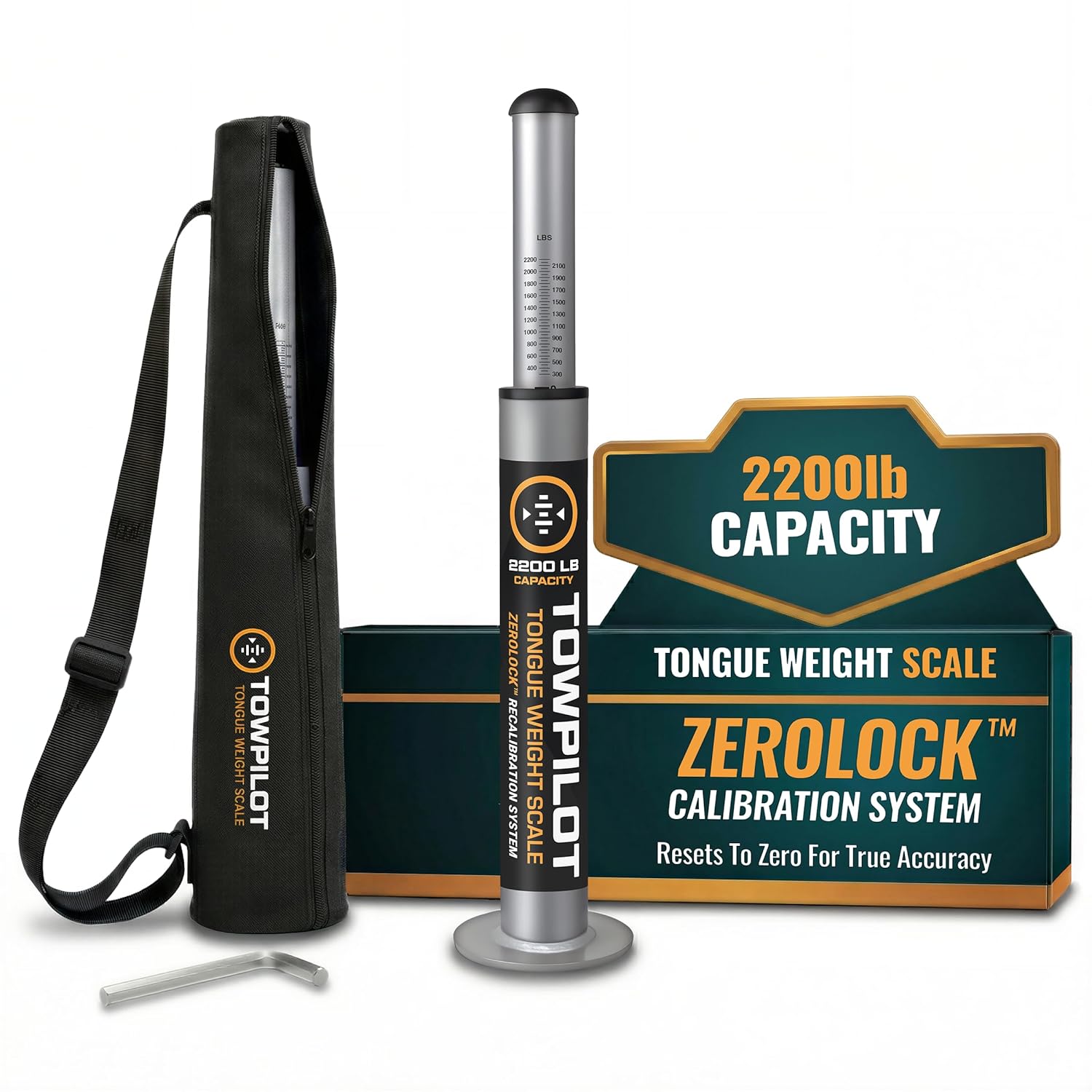
This trailer tongue weight scale helps you check hitch weight quickly and accurately before towing, reducing sway and improving overall safety. Built with durable steel and a spring mechanism, it works without batteries and includes a recalibration feature to maintain true-zero accuracy over time. It is designed for RVs, campers, and utility trailers, with a top plate that helps protect your coupler during use.
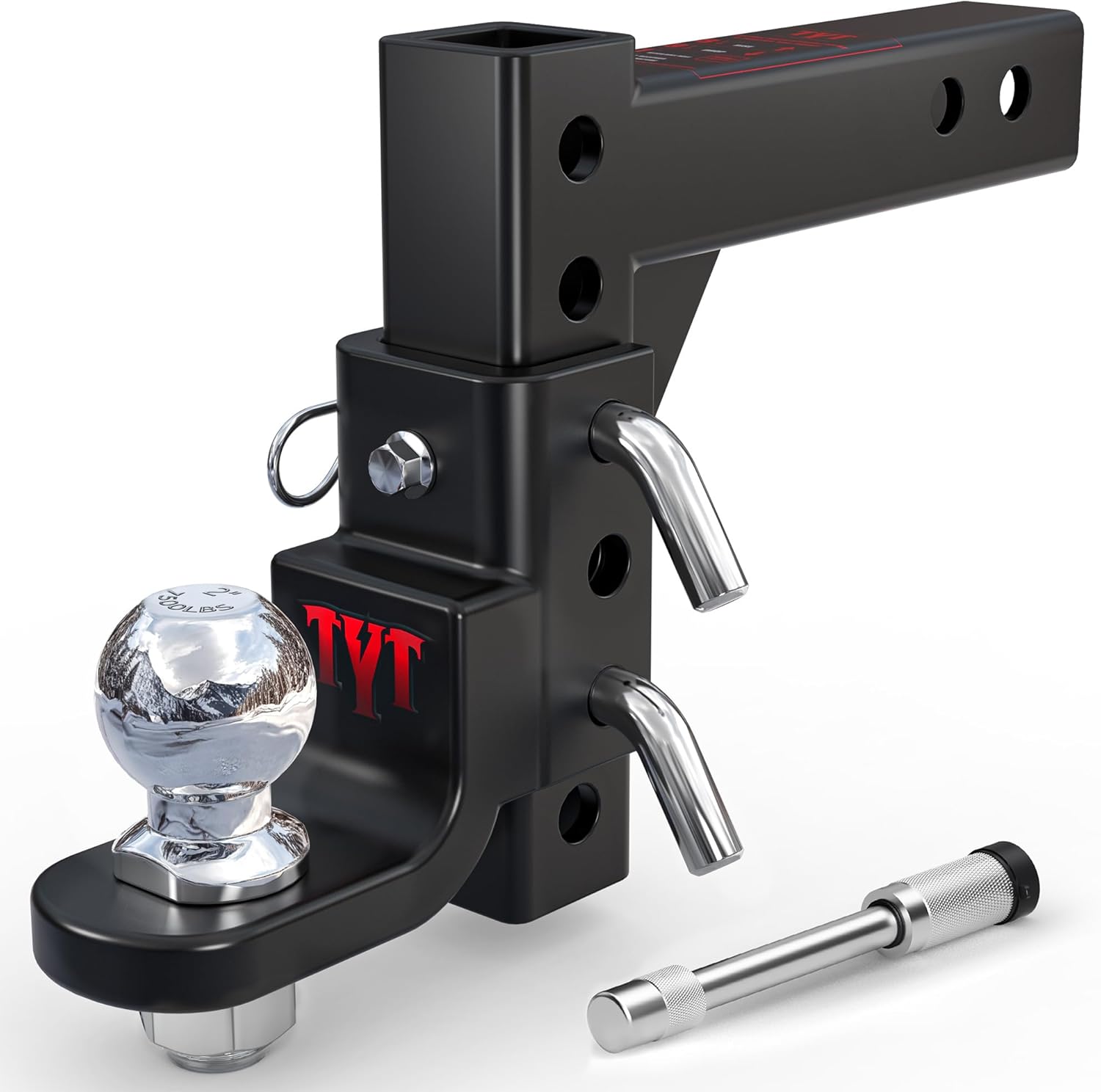
This adjustable trailer hitch ball mount is built for dependable towing with a standard 2-inch receiver and a high-capacity design suited for trucks, campers, boats, and utility trailers. Its adjustable rise and drop settings help you achieve a level tow, while the anti-rattle design supports a smoother, quieter ride. Complete with pins, clips, and a premium pin lock, it offers an easy installation and secure connection for everyday hauling needs.
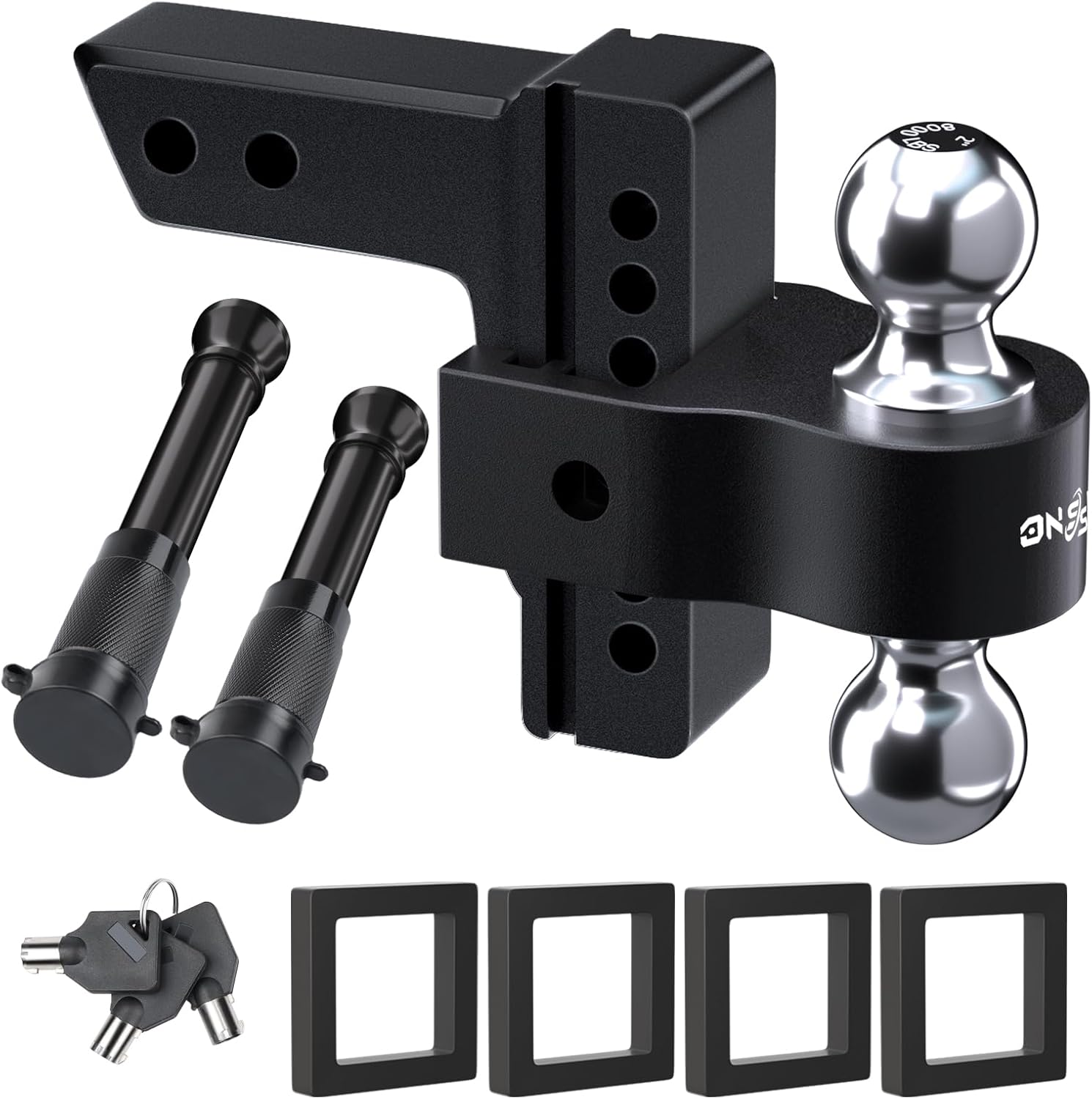
This adjustable trailer hitch is designed for 2-inch receivers and offers flexible towing with a 6-inch drop and rise range. Dual ball sizes help support different trailer setups, while the high-strength aluminum construction is built for dependable performance on tough jobs. Included hitch locks and silencers add security and help reduce noise for a smoother towing experience.
When to Use Both Together and Why It Helps
Use both a weight-distribution hitch and sway control when you need to manage vertical load and lateral motion at the same time. This is common with larger bumper-pull travel trailers, enclosed cargo trailers, and rigs that tow long distances on open highways.
Improved Braking Response
A properly adjusted weight-distribution hitch can help restore load to the tow vehicle’s front axle, which supports steering and braking stability. Sway control then helps keep the trailer aligned during deceleration so lateral movement does not make the stop feel unstable.
That combination is especially useful on downhill grades, in gusty weather, and during emergency slowdowns. It does not shorten stopping distance by magic, and it does not replace trailer brakes where brakes are required. It simply helps the tow vehicle and trailer stay better composed within their rated limits.
Reduced Trailer Sway
When the hitch is adjusted correctly and the trailer is loaded properly, sway control can reduce the small movements that turn into larger oscillations. A weight-distribution hitch with integrated sway control can be a clean solution because it handles load balance and sway resistance in one matched system.
The safest towing setup starts with correct loading and verified ratings. Hitch equipment improves control, but it cannot make an overloaded or poorly balanced trailer safe.
Choose and Set Up the Right Hitch Combo for Your Trailer
Choosing the right hitch combo starts with real numbers. The CURT Towing 101 guide emphasizes choosing equipment with enough capacity for the vehicle, trailer, and cargo. That means checking every part of the system, not just the trailer’s brochure weight.
- Find your tow vehicle ratings. Check GCWR, GVWR, GAWR, payload, maximum trailer weight, maximum tongue weight, and any weight-distribution requirements.
- Check the receiver label. Many receivers list separate weight-carrying and weight-distributing limits.
- Weigh the loaded trailer. Include water, propane, batteries, tools, food, camping gear, cargo, and accessories.
- Measure tongue weight. Conventional bumper-pull trailers often target roughly 10% to 15% of loaded trailer weight, but some owner’s manuals specify a different range.
- Match the hitch rating. Choose spring bars rated for the loaded tongue weight, not the dry trailer weight.
- Decide on sway control. Use it when required, when trailer shape or conditions call for it, or when the trailer shows lateral instability.
- Install exactly as instructed. Follow torque values, bracket placement, ball height, spring-bar angle, and clearance rules from the hitch manufacturer.
- Recheck after loading changes. Fresh water, toy haulers, cargo movement, or added batteries can change tongue weight and hitch adjustment.
Warning: Do not exceed payload, rear axle rating, receiver rating, spring-bar rating, trailer GVWR, or tire load capacity. A weight-distribution hitch does not raise any factory rating.
[Products Worth Considering]

This proportional trailer brake controller provides smooth, responsive braking by automatically matching your tow vehicle’s stopping force for safer trailer control. The bright LED digital display makes it easy to monitor voltage output in real time, while adjustable braking and sync settings help tailor performance to different trailers and road conditions. Designed for quick installation and broad compatibility, it supports 1 to 4 axle trailers for dependable towing confidence.

This proportional electric brake controller automatically applies trailer brakes based on your vehicle's braking force and speed for smoother, more responsive stopping. It is compatible with a wide range of tow vehicles and trailer setups, and includes an LED display for easy setup, diagnostics, and manual braking control. The included mounting hardware and plug-and-play port help make installation simple and convenient.
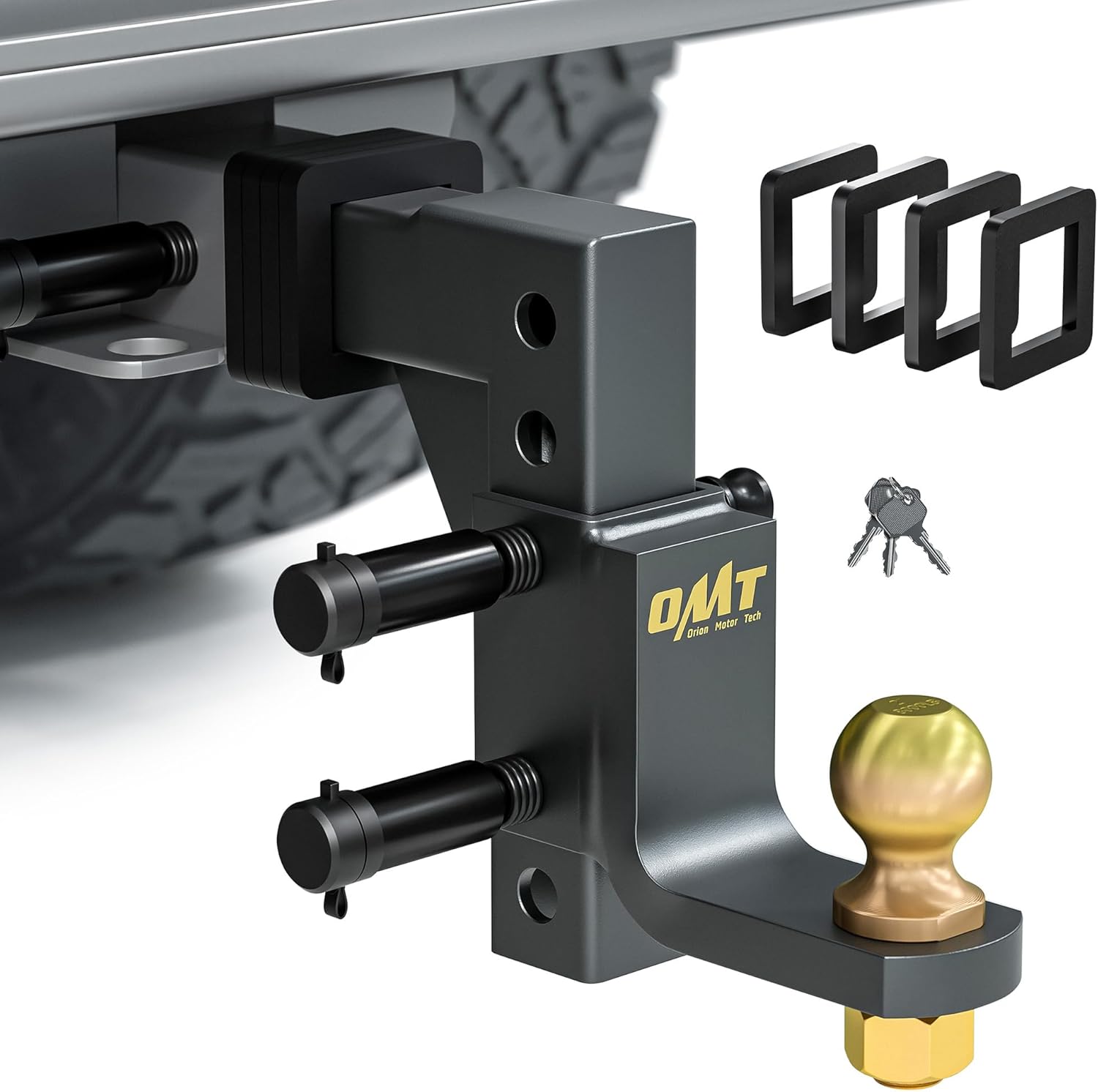
This adjustable trailer hitch ball mount is built for secure, versatile towing with a standard 2 inch receiver, a 2 inch ball, and both drop and rise adjustment for better fitment. Rated for heavy-duty towing and designed with anti-theft locking pins, it helps keep your trailer secure while resisting harsh weather and road conditions. The pre-assembled design makes installation fast and tool-free, so you can get hooked up and ready to tow with confidence.
Common Mistakes to Avoid
- Using dry trailer weight. Always base decisions on the loaded trailer, not the empty brochure number.
- Ignoring payload. Tongue weight, passengers, cargo, and accessories all count against tow vehicle payload.
- Choosing spring bars that are too stiff. Over-rated bars can make the ride harsh and reduce proper articulation.
- Assuming weight distribution controls all sway. Some systems include sway control, but a basic weight-distribution hitch may not.
- Loading too much weight behind the trailer axle. Rear-heavy loading is one of the fastest ways to create sway.
- Skipping maintenance. Worn brackets, loose bolts, dry friction surfaces, damaged chains, and underinflated tires all reduce safety.
What to Do If the Trailer Starts Swaying
If sway begins while driving, stay calm and avoid sudden steering or braking. Hold the wheel steady, ease off the accelerator, and let the combination slow down gradually. If your trailer has electric brakes and a brake controller, many vehicle towing guides recommend manually applying the trailer brakes to help pull the trailer back in line. Do not accelerate to “pull out of it,” and do not make sharp steering corrections.
After stopping in a safe place, inspect the setup before continuing. Check tire pressure, cargo shift, tongue weight, hitch hardware, sway-control adjustment, and whether wind or speed caused the problem. If the trailer keeps swaying, reduce speed or stop towing until the cause is corrected.
Frequently Asked Questions
Can weight distribution or sway control be retrofitted to an older trailer?
Yes, but only if the trailer frame, coupler, brakes, and attachment points are compatible with the equipment. Older trailers should be inspected for frame cracks, rust, weak A-frame members, and coupler wear before installing a weight-distribution or sway-control system.
Do insurance policies require weight distribution or sway control?
Most auto insurance policies do not list a universal weight-distribution or sway-control requirement, but claims can become complicated if the trailer was overloaded, improperly equipped, or used against manufacturer instructions. Keep receipts, manuals, ratings, and maintenance records for your towing equipment.
How often should I inspect a weight-distribution hitch?
Inspect the hitch before each trip. Check spring bars, brackets, pins, clips, chains, L-brackets or snap-up brackets, ball torque, shank hardware, and friction surfaces. Equal-i-zer’s setup guidance recommends checking hitch setup every time you tow and following the owner’s manual for maintenance and lubrication.
Can electronic sway control replace a mechanical sway-control hitch?
Electronic sway control can help, but it should not be treated as a replacement for correct loading, proper tongue weight, suitable hitch equipment, and any sway-control device required by the vehicle or trailer manufacturer. Think of electronics as a backup layer, not the foundation of trailer stability.
Are there standards or certifications for towing ratings and trailer equipment?
Yes. SAE J2807 is a widely referenced recommended practice for determining tow-vehicle trailer weight ratings. Trailer manufacturers may also follow federal safety standards, industry programs, and manufacturer-specific testing. For consumers, the practical step is to use equipment with clearly marked ratings and to follow the tow vehicle, trailer, and hitch manuals.
Do I still need proper tongue weight if I have sway control?
Yes. Sway control does not replace proper loading. A trailer with too little tongue weight can still become unstable, even with sway-control equipment installed. Measure the loaded tongue weight and keep it within the range specified by your trailer and tow vehicle manufacturers.
Conclusion
You do not always need both systems, but you should understand what each one does. Weight distribution corrects load balance by helping restore front-axle weight and level ride height. Sway control reduces lateral movement that can become fishtailing. If your trailer causes squat, light steering, or front-end rise, start with weight distribution. If it wanders in wind or passing traffic, add sway control. For heavier, taller, or long-distance towing, a properly rated weight-distribution hitch with integrated sway control is often the most stable and confidence-inspiring choice.
Sources
- Trailer Safety Week: Towing Safely Guide — trailer loading, hitching, maintenance, and safe towing fundamentals.
- Equal-i-zer Hitch Installation Guide — weight-distribution setup measurements, trailer pitch checks, and adjustment guidance.
- CURT Towing 101 Guide — towing equipment selection, hitching checks, and safe driving basics.
- SAE J2807 Recommended Practice — tow-vehicle trailer weight rating methodology and performance criteria.
- Toyota Tundra Owner’s Manual: Trailer Towing — example of vehicle-specific towing requirements for sway control and weight-distributing hitches.
- Chevrolet Accessories Hitch Trailering Package — owner’s manual verification and trailering capacity reminders.