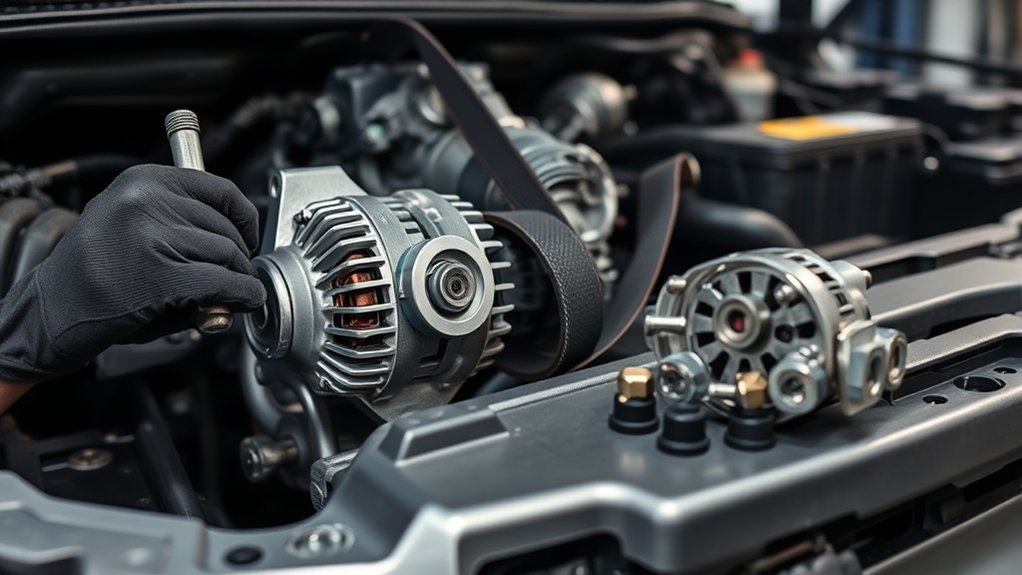
The Toyota Tundra maintenance schedule is a mileage-and-time roadmap for keeping your truck safe, reliable, and warranty-ready. Use it to match each service to your odometer, calendar, driving conditions, and exact model year. Late-model Tundras follow a 5,000-mile or 6-month service rhythm, but not every visit includes an oil change.
Quick Answer
The Toyota Tundra maintenance schedule is built around 5,000-mile or 6-month visits. Normal service includes tire rotation and inspections every 5,000 miles, while engine oil and filter replacement is generally every 10,000 miles or 12 months, or 5,000 miles or 6 months under special operating conditions.
Key Takeaways
- Use whichever comes first: mileage or time. Toyota’s current Tundra guide uses 5,000-mile or 6-month maintenance visits.
- Do not confuse the 5,000-mile service visit with the oil-change interval. Normal oil service is generally 10,000 miles or 12 months; special operating conditions shorten it to 5,000 miles or 6 months.
- For late-model Tundras, spark plugs appear in the maintenance chart at 40,000-mile intervals. Always verify your exact year’s guide.
- Keep receipts, mileage notes, and parts details. Toyota says maintenance can be done by you or any qualified service provider, but failures caused by improper maintenance or repairs are not covered.
At a Glance
| Time Required | 10–20 minutes to review your schedule; 1–3 hours for many routine shop visits |
| Difficulty | Easy to plan; moderate to advanced for hands-on maintenance |
| Tools Needed | Owner’s manual, warranty and maintenance guide, odometer reading, service records, VIN |
| Cost | Free to check the schedule; service cost varies by mileage, parts, location, and driving conditions |
How to Read Your Tundra Maintenance Schedule

Start with two numbers: your odometer reading and the number of months since the last scheduled service. Toyota recommends scheduled maintenance for current Tundra models every 5,000 miles or 6 months, whichever comes first. If you drive 5,000 miles before 6 months, service it at 5,000 miles. If 6 months arrives first, service it even if you drove fewer miles.
Then read the chart by item. Some tasks are marked as inspections, some are replacements, and some are “perform” items. In Toyota maintenance charts, the common abbreviations are:
- I: Inspect
- R: Replace
- P: Perform
- T: Torque
Note: This guide is written for U.S. Toyota Tundra maintenance planning and reflects the current late-model schedule. Older Tundra generations, hybrid models, regional manuals, and special equipment can differ, so always confirm your exact model year and trim.
Find Your Correct Tundra Schedule: Manual vs. Online
The correct schedule is the one Toyota published for your exact Tundra model year. Check the printed Warranty & Maintenance Guide in the glovebox first. If it is missing, use the official Toyota Owners manuals and warranties page and select your Tundra year.
Use this process:
- Confirm the model year. Do not assume a 2018, 2021, 2024, and 2026 Tundra use the same schedule.
- Confirm the powertrain. Gas and i-FORCE MAX hybrid models may share many items, but hybrid and inverter coolant references apply only when equipped.
- Download the Warranty & Maintenance Guide. This is the schedule Toyota uses for mileage and time intervals.
- Check your VIN for recalls and service campaigns. Use Toyota’s official recall lookup before a service visit.
- Save the records. Keep the invoice, odometer reading, date, parts used, and services performed.
Mileage vs. Time: How Tundra Intervals Work
The Tundra schedule uses a “whichever comes first” rule. That means a low-mileage truck still needs scheduled maintenance by time, while a high-mileage truck needs it by odometer.
| Situation | What to do |
|---|---|
| You drive 5,000 miles in 4 months | Schedule the 5,000-mile service now. |
| You drive only 2,000 miles in 6 months | Schedule the 6-month service now. |
| You tow, haul, drive dusty roads, or make repeated short trips in freezing weather | Use the special operating conditions chart for shorter or additional service items. |
Oil Change vs. 5,000-Mile Service
This is the most common Tundra maintenance mistake: the truck may need a 5,000-mile service visit without needing an oil change at every 5,000 miles under normal conditions.
For current late-model Tundras, the schedule generally works like this:
- Every 5,000 miles or 6 months: rotate tires, inspect key items, check fluid levels, inspect brakes, and perform other chart items.
- Every 10,000 miles or 12 months under normal use: replace engine oil and oil filter.
- Every 5,000 miles or 6 months under special operating conditions: replace engine oil and oil filter more often, regardless of oil used.
Warning: Do not reset the maintenance reminder until the required maintenance has actually been completed. Resetting the message only clears the reminder; it does not service the truck.
[Products Worth Considering]

This replacement filter set is designed for a range of Toyota hybrid vehicles, including popular models like RAV4 Hybrid, Camry Hybrid, Highlander Hybrid, Sienna, Venza, and more. It combines cabin and engine filtration to help support cleaner airflow, reduce dust and odors, and protect your HVAC and engine systems. Built for easy installation and extended service life, it offers a convenient maintenance upgrade for compatible hybrid and gas-only Corolla models.

This dual filter kit helps keep your vehicle running and riding cleaner by replacing both the engine air filter and cabin air filter at the same time. It is designed for a range of Toyota and Lexus hybrid models, helping support engine performance while reducing odors and airborne particles inside the cabin. Built with high-quality filtration materials, it offers a convenient maintenance solution for routine filter replacement.

This dial type tire tread depth gauge helps you quickly check tread wear on motorcycles, cars, trucks, and buses with easy-to-read 1/32-inch increments. Its colorful zone markings make it simple to assess tire condition for safer driving in different weather, while the durable zinc cast body and legible dial provide dependable everyday use.
Tundra Maintenance Items: Oil, Filters, Fluids, Tires
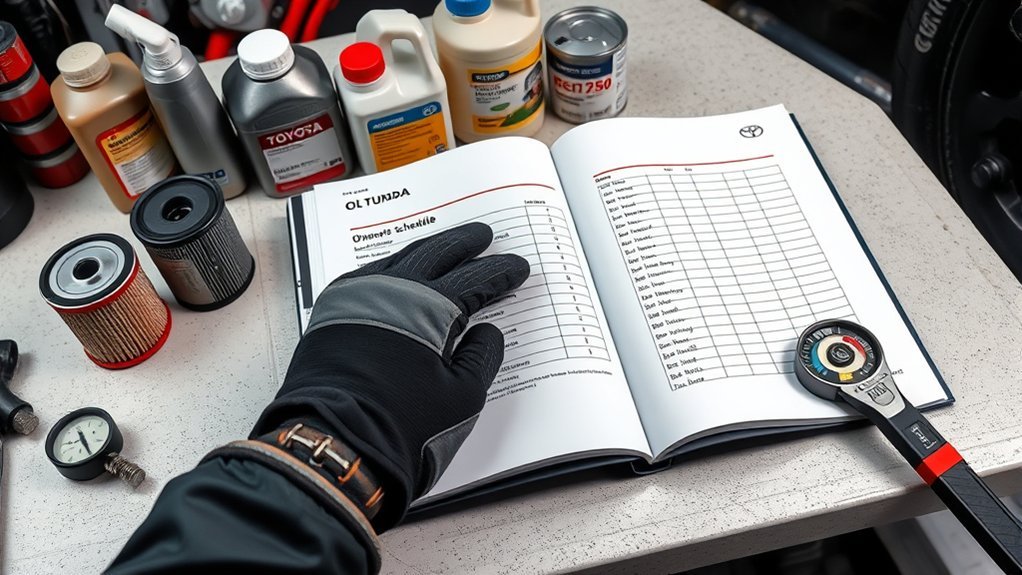
The schedule is easier to follow when you group the tasks by system.
[Products Worth Considering]

This A-Premium cartridge engine oil filter is designed for a wide range of Toyota and Lexus vehicles, helping support cleaner oil flow and dependable engine protection. With high filtration efficiency and included O-rings, it offers a practical replacement solution for routine maintenance. Built for extended service intervals, it is suitable for conventional or synthetic oil applications.

This 12-pack oil filter and drain plug washer set is designed for a wide range of Toyota and Scion vehicles, helping support clean oil flow and dependable engine performance. It replaces several common OE part numbers and offers an easy-fit solution for routine maintenance. Built with corrosion-resistant materials and efficient filtration, it helps keep engine contaminants out and supports longer service life.

This brake bleeder hose kit helps remove old brake fluid and air from motorcycle brake and clutch systems quickly and efficiently. Its one-way check valve prevents air from being drawn back into the system, while the easy-to-connect clips make bleeding simple for routine maintenance. Built for reliable use, it is a practical tool for keeping motorcycle braking performance responsive.
Engine Oil and Oil Filter
Use the oil viscosity and specification listed in your owner’s manual. For late-model Tundras, normal oil and filter service is generally every 10,000 miles or 12 months, while special operating conditions shorten the interval to 5,000 miles or 6 months.
Engine Air Filter and Cabin Air Filter
The current Tundra chart lists the engine air filter and cabin air filter at scheduled replacement intervals, with earlier attention when conditions shorten filter life. Dusty roads, desert driving, urban traffic, and heavy traffic can make the cabin filter dirty sooner.
Fluids
At scheduled services, inspect fluid levels and condition. The maintenance guide specifically calls out sealed transmissions, transfer cases, differentials, power steering fluid if equipped, brake fluid level and condition, and engine/inverter/intercooler coolant if equipped. Replace fluids when the chart says to replace them, when condition testing shows they are due, or when a qualified technician finds contamination or leaks.
Tires
Rotate tires every 5,000 miles or 6 months according to the schedule. Check inflation pressure, tread depth, sidewall damage, and uneven wear at the same time. The National Highway Traffic Safety Administration warns that poor tire maintenance, including underinflation and failure to rotate tires, can increase the risk of tire failure.
Pro Tip: Build a repeating reminder for every 5,000 miles or 6 months, then add a separate oil reminder for 10,000 miles or 12 months unless your driving conditions require the shorter oil interval.
Maintenance Indicators: “Required” vs. Oil Countdown
A Tundra maintenance reminder is a prompt to follow the maintenance schedule. It is not a full diagnostic scan, and it does not automatically prove that only one item is due.
Use the reminder this way:
- Check the odometer and the months since the last service.
- Open the maintenance chart for your model year.
- Complete every item listed for that mileage/time interval.
- Record the date, mileage, services, and parts.
- Reset the reminder only after the work is complete.
If your truck also displays an oil-life or oil-service countdown, treat it as a separate oil-service cue. The safest approach is to follow the more conservative requirement when the schedule, time, mileage, driving conditions, or vehicle reminder indicates service is due.
Spark Plugs, Emissions, and Warranty Guidance
For current late-model Tundra schedules, spark plugs are listed at 40,000-mile intervals, including 40,000, 80,000, and 120,000 miles. The maintenance guide notes that spark plug service is required under the terms of the Emission Control Warranty.
Use the correct replacement plugs for your engine and have the work done by a qualified technician if you are not experienced with ignition-system service. Incorrect plug type, improper torque, damaged coil connectors, or debris in the plug wells can cause misfires or expensive repairs.
Note: Some older Tundra engines and non-U.S. schedules may use different spark plug intervals. Always follow the guide for your exact model year and engine.
Adjusting the Schedule for Severe Duty Use

Toyota’s maintenance guide calls these “special operating conditions.” Use the special chart only when the majority of your driving fits the listed conditions. Occasional use does not automatically mean every severe-use item applies.
| Driving condition | Schedule effect |
|---|---|
| Dirt roads or dusty roads | More frequent inspections for air filter, suspension, steering, drive shaft boots, and related items; oil and filter may move to 5,000 miles or 6 months. |
| Repeated trips under 5 miles in freezing temperatures | Oil and filter service moves to 5,000 miles or 6 months. |
| Towing, car-top carrier use, or heavy vehicle loading | Additional driveline-fluid replacement and torque checks may apply at charted intervals. |
| Road salt exposure | Additional chassis and propeller shaft bolt checks may apply. |
Off-Road Daily Maintenance
If you drive off-road through deep sand, mud, or water, inspect the truck before normal driving resumes. Toyota’s off-road checklist includes ball joints and dust covers, brake lines and hoses, brake pads and discs, differential oil, drive shaft boots, engine air filter, chassis and body fasteners, steering linkage and boots, transfer case oil on 4WD models, and transmission fluid or oil.
Warning: Deep mud, sand, water, towing, and heavy loads can hide damage. If you see leaks, torn boots, brake damage, abnormal noises, vibration, or warning lights, have the truck inspected before continuing hard use.
Keeping Records: Verifying Oil and Filter Changes
Good records protect your resale value and help with warranty questions. Toyota says maintenance records should include the service date, mileage, description of service, and parts installed. Toyota also says it will not deny a warranty claim solely because you lack records, but damage or failure caused by lack of proper maintenance is not covered.
Service Receipt Verification
After each service, confirm that the receipt lists the correct mileage, oil type if oil was changed, oil filter, tire rotation, inspections, and any replaced parts. Save the receipt as a paper copy, scan, or photo.
Tamper Marking Techniques
If you want extra confirmation that a filter was changed, ask the shop to mark the old filter before service or use your own service log with photos before and after. A paint mark across the filter and fixed mounting area can show whether the filter was removed, but do not rely on the mark alone. The invoice and oil condition still matter.
Post-Service Oil Check
After an oil service, park on level ground and follow the owner’s manual procedure to verify the oil level. Look for leaks under the truck, confirm the oil cap and dipstick are secure, and check that the maintenance reminder was reset only after the service was completed.
Service Options and Genuine Parts Access
You do not have to use a Toyota dealer for every maintenance item. Toyota says maintenance and repairs may be performed by you or by any automotive service provider you choose. However, damage caused by improper maintenance or repairs is not covered under warranty.
[Products Worth Considering]

This 50-pack of tire tread depth gauges offers a simple way to check tire wear quickly and accurately. Color-coded reading zones make it easy to see tread condition at a glance, while the compact design and pocket clip support convenient everyday carry. Built for repeated use, these gauges help drivers monitor tire safety with confidence.

This engine and cabin air filter combo is designed to help keep your vehicle’s air cleaner while supporting reliable engine performance. It includes HEPA cabin filtration for finer particle capture, a pre-filter and reinforced mesh for added engine air protection, and a removal tool to make replacement easier in tight spaces. Built for a wide range of Toyota and Lexus hybrid and gas models, it lets you replace both filters at once for added convenience.

This upgraded engine oil funnel kit makes oil changes cleaner and easier with a spill-proof design, flow control valve, and transparent body for precise filling. Built from durable polycarbonate and equipped with 12 adapters, two 45-degree elbows, and a debris filter, it fits a wide range of vehicles and works well in tight engine spaces. The secure, hands-free setup helps reduce mess while improving control during oil filling and fluid transfers.
Dealer vs. Independent Shop
A Toyota dealer can be useful for warranty work, software updates, recalls, service campaigns, hybrid-system checks, and model-specific questions. A qualified independent shop can also perform routine maintenance if it follows the Toyota schedule and uses appropriate parts and fluids.
Genuine Parts and Equivalent Parts
Toyota recommends Toyota Genuine Parts, but warranty coverage is not dependent on one specific brand of replacement parts. If you use non-Toyota parts, choose parts that are equivalent in quality and design, and keep the part numbers on your receipt.
Dealer-Recommended Services
A dealer or shop may suggest services more often than Toyota’s scheduled chart. Some may be useful based on inspection results, age, corrosion, towing, or local conditions. Ask the advisor to show where the item appears in the Toyota schedule or explain why inspection results make it necessary now.
Practical Checklist by Mileage: 0–150K
Use this as a planning overview, then confirm the exact items in your model-year guide.
| Mileage / Time | Typical scheduled focus |
|---|---|
| 5,000 miles / 6 months | Rotate tires, inspect fluid levels, brakes, wiper blades, floor mat installation, and charted safety items. |
| 10,000 miles / 12 months | Repeat 5k items and replace engine oil and oil filter under normal service. |
| 30,000 miles / 36 months | More complete inspection; replace scheduled filters; inspect driveline, brake, fuel, steering, and cooling-related items. |
| 40,000 miles | Replace spark plugs on current late-model schedules. |
| 60,000 miles / 72 months | Repeat scheduled inspections and filter service; inspect drive belts and driveline items; special-condition fluid replacements may apply. |
| 80,000 miles | Replace spark plugs again on current late-model schedules. |
| 100,000 miles / 120 months | Replace engine/intercooler coolant if applicable, according to the current maintenance chart. |
| 120,000 miles | Replace spark plugs again; continue oil, tire, brake, fluid, belt, steering, suspension, and driveline checks. |
| 150,000 miles and beyond | Continue the repeating chart. Expect more age-related inspections for belts, hoses, suspension, brakes, leaks, tires, and corrosion. |
Common Maintenance Mistakes to Avoid
- Using the wrong model year: Schedules can change by year, engine, and region.
- Skipping time-based service: Low mileage does not cancel the 6-month schedule.
- Assuming every 5,000-mile visit is an oil change: Normal oil intervals and inspection intervals are not always the same.
- Ignoring severe-use conditions: Towing, dusty roads, short freezing trips, and heavy loads can shorten intervals.
- Not checking recalls: Use your VIN before service so open campaigns can be handled.
- Losing receipts: Keep service records with date, mileage, service description, and parts.
Frequently Asked Questions
How do I figure out what maintenance is required on a Toyota Tundra?
Check your odometer, count the months since the last service, and open the Warranty & Maintenance Guide for your exact model year. Follow whichever comes first: mileage or time. Then complete every item listed for that interval, including any special operating condition items that apply to your driving.
How often does a Toyota Tundra need an oil change?
For current late-model Tundras, normal oil and filter replacement is generally every 10,000 miles or 12 months. If the truck is mainly driven under special operating conditions, such as dusty roads or repeated short trips in freezing weather, Toyota lists oil and filter replacement every 5,000 miles or 6 months.
What is included in a 60,000-mile Tundra service?
A 60,000-mile service usually repeats tire rotation, oil service if due, brake inspections, fluid checks, filter service, drive belt inspection, steering and suspension checks, and driveline inspections. Special-condition fluid replacements may apply if you tow, haul heavy loads, or use a car-top carrier.
What is the 100,000-mile service on a Toyota Tundra?
For current late-model Tundras, the 100,000-mile interval includes the normal repeating inspections and oil service if due, plus initial engine/intercooler coolant replacement if applicable. Spark plugs are not a 100,000-mile-only item on the current schedule; they appear at 40,000-mile intervals.
Do I have to use a Toyota dealer to keep my warranty?
No. Toyota says maintenance may be performed by you or by any automotive service provider you choose. However, damage or failure caused by improper maintenance or repairs is not covered, so keep records and use parts, fluids, and procedures that match Toyota specifications.
Conclusion
The easiest way to follow the Tundra maintenance schedule is to treat every 5,000 miles or 6 months as a checkpoint, then use your exact model-year chart to see which items are inspections, replacements, or severe-use services. Keep oil intervals, tire rotations, filters, spark plugs, fluids, off-road checks, and records separate in your log. That simple habit keeps the truck easier to maintain, easier to diagnose, and easier to support if a warranty question comes up.
Sources
- Toyota 2026 Tundra Warranty & Maintenance Guide — official maintenance intervals, special operating conditions, records, warranty, parts, and service-provider guidance.
- Toyota Owners Manuals and Warranties: 2026 Tundra — official source for model-year owner manuals and guides.
- Toyota Owners: Maintenance Requirements — maintenance reminder and scheduled maintenance reference.
- Toyota Recall Lookup — official Toyota VIN recall and service campaign lookup.
- NHTSA Tire Safety — tire inflation, rotation, tread, and safety guidance.
- NHTSA Recalls — official U.S. VIN recall lookup for vehicles, tires, and equipment.