For many recent U.S.-market models, the Toyota Tundra engine air filter replacement interval is 30,000 miles or 36 months under normal service. Toyota’s 2026 maintenance chart also calls for engine-air-filter inspection at each 5,000-mile/6-month service when the truck is driven primarily on dirt or dusty roads, plus daily checks after off-road travel through deep sand, mud, or water. Replace a filter sooner if it is damaged, excessively worn, oily, wet, heavily loaded with debris, warped, or unable to seal flat in the airbox. Use the maintenance guide and VIN-specific parts information for your exact model year and market as the final authority.
Last updated: September 1, 2026
How this guide was checked: The interval, special-use inspection guidance, filter-condition criteria, reusable-filter instructions, and MPG claims were checked against Toyota maintenance materials, Toyota’s current TRD/GR filter information, and U.S. DOE/EPA FuelEconomy.gov guidance. This article does not claim hands-on testing across every Tundra generation.
Quick Answer
For many recent U.S. Toyota Tundras, replace the engine air filter every 30,000 miles or 36 months under normal driving. Inspect it at each 5,000-mile/6-month service if you drive primarily on dirt or dusty roads. Check it after deep sand, mud, or water, and replace it sooner if the filter media, gasket, or airbox shows contamination or damage.
Key Takeaways
- Use 30,000 miles or 36 months as the normal-service baseline for many recent U.S. Tundra maintenance guides, then verify the schedule for your exact model year.
- Dusty roads and off-road use call for more frequent inspection, not automatic early replacement of a filter that remains clean and undamaged.
- A clean filter may improve acceleration when the old filter was clogged, but it is not a guaranteed MPG repair on a modern fuel-injected Tundra.
- Current 2022+ dual-airbox Tundras need both housings checked during service. Toyota’s current TRD performance-filter application requires two performance filters; confirm stock-filter fitment and quantity by VIN before ordering.
- OEM, TRD reusable, and quality aftermarket filters can all work, but correct fit, sealing, filtration, and maintenance matter more than price alone.
How Often Should You Change Your Tundra’s Air Filter?
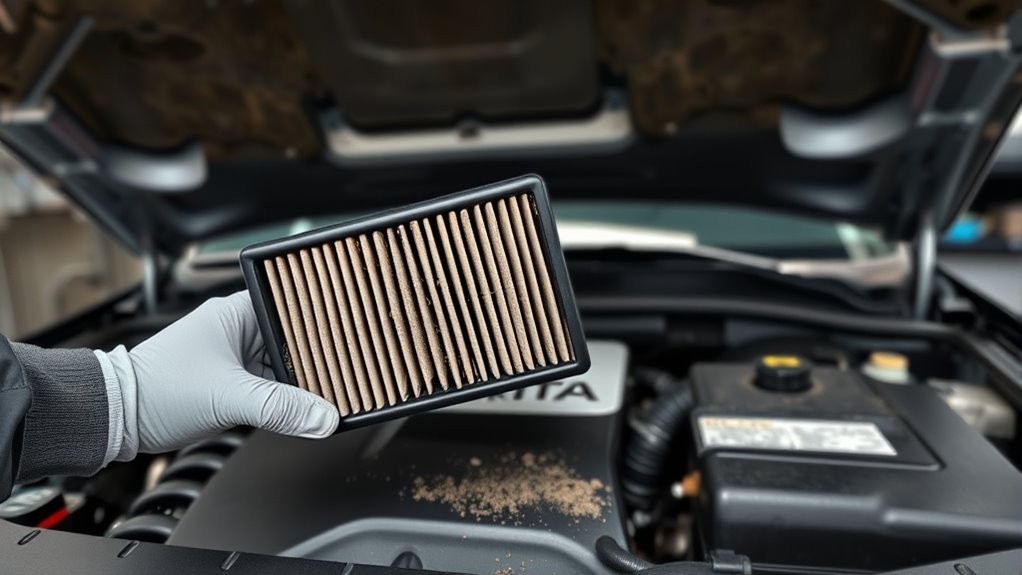
For normal driving, use your Toyota maintenance guide as the final authority. The 2026 Toyota Tundra Warranty & Maintenance Guide lists engine air filter replacement at 30,000-mile intervals. The 2021 Toyota Tundra Warranty & Maintenance Guide identifies the same service at 30,000 miles or 36 months. That makes 30,000 miles or 36 months a better evidence-based baseline than a broad 35,000-to-50,000-mile rule.
| Driving condition | What to do | Best trigger |
|---|---|---|
| Normal paved-road driving | Replace around 30,000 miles or 36 months on many recent U.S. Tundra schedules | Toyota maintenance guide for your exact model year |
| Dirt roads, dusty roads, desert areas, job sites, or farm roads | Inspect at each 5,000-mile/6-month service when this is your primary driving condition; replace when loaded, contaminated, or damaged | Condition of the filter, gasket, and airbox |
| Off-road through deep sand, mud, or water | Check the filter and airbox after the trip and during Toyota’s daily off-road checks | Mud, water, heavy dust, leaves, or debris in the airbox |
| TRD or GR reusable performance filter | Clean, dry, and re-oil it according to Toyota’s performance-filter instructions | Toyota recommends service every 6 months or 50,000 miles |
Decision Rule: Mileage sets the normal replacement point. Dusty or off-road driving changes how often you inspect the filter. Filter damage, contamination, moisture, oil, or a failed seal can justify replacement before the scheduled mileage.
This schedule affects engine breathing, throttle response, and intake protection. On modern fuel-injected vehicles, FuelEconomy.gov reports that replacing a clogged air filter can improve acceleration but does not improve fuel economy. Treat the filter as protection for the intake system rather than a guaranteed MPG repair.
Note: Toyota’s current TRD performance-filter listing states that Tundra and Sequoia require two performance air filters. Filter quantity and airbox layout vary by model year, engine, and filter design, so inspect the engine bay or confirm the correct part and quantity by VIN before ordering.
Does Your Tundra Use One or Two Engine Air Filters?
Do not assume every Tundra uses the same filter quantity. Current 2022+ third-generation Tundras use a dual-airbox layout, so both sides need to be checked during engine-air-filter service. Toyota’s current TRD performance air-filter listing specifically says the applicable Tundra and Sequoia setup requires two performance filters.
| Tundra layout | What to know | Before buying |
|---|---|---|
| 2022+ dual-airbox Tundra | Inspect and service both engine-air-filter housings; Toyota’s applicable TRD setup requires two performance filters | Confirm the stock or performance filter part and quantity by VIN |
| Earlier Tundra generations | Airbox design and filter fitment differ by year and engine, so do not copy the 2022+ quantity automatically | Use the model-year maintenance guide and VIN-based parts lookup |
If you own a 2022+ truck and want the complete removal and installation procedure rather than interval guidance, see our 2022+ Toyota Tundra engine air-filter replacement guide.
[Products Worth Considering]

This engine and cabin air filter combo is designed to help keep your vehicle’s air cleaner while supporting reliable engine performance. It includes HEPA cabin filtration for finer particle capture, a pre-filter and reinforced mesh for added engine air protection, and a removal tool to make replacement easier in tight spaces. Built for a wide range of Toyota and Lexus hybrid and gas models, it lets you replace both filters at once for added convenience.

This dual filter kit helps keep your vehicle running and riding cleaner by replacing both the engine air filter and cabin air filter at the same time. It is designed for a range of Toyota and Lexus hybrid models, helping support engine performance while reducing odors and airborne particles inside the cabin. Built with high-quality filtration materials, it offers a convenient maintenance solution for routine filter replacement.

This A-Premium engine air filter is designed to help maintain clean airflow for compatible Lexus and Toyota vehicles, supporting better engine performance and efficiency. It uses fine filtration media to capture debris while minimizing airflow restriction, making it a practical replacement for routine maintenance. With fitment for multiple popular models and a convenient boxed single-pack design, it offers a straightforward solution for keeping your engine protected.
Inspect Your Tundra Air Filter: Step-by-Step
Inspect your Tundra’s engine air filter during scheduled service and after dusty or off-road use. Work carefully so loose dirt does not fall into the intake.
- Park safely and let the engine cool. Set the parking brake and switch the truck off before opening an airbox.
- Find the airbox or airboxes. Filter location and quantity vary by model year and engine. On a dual-airbox truck, identify both housings before starting.
- Release the clips or fasteners. Lift the airbox lid only enough to remove the filter without stressing hoses, sensors, or wiring.
- Note the filter direction. Check how the gasket and pleats sit before removing the old filter.
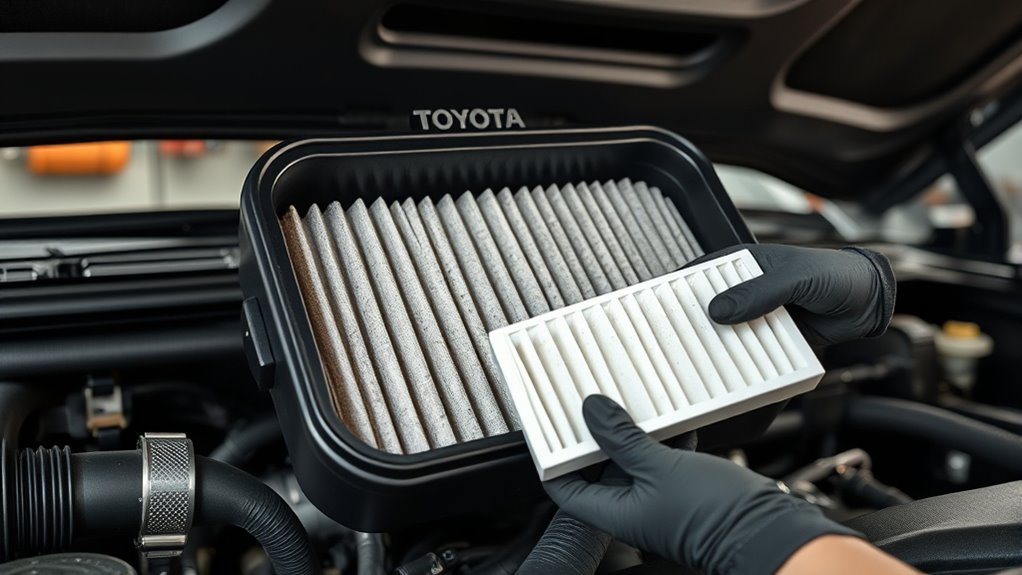
- Inspect the pleats and gasket. Replace the filter if it is packed with dirt, torn, wet, oil-soaked, warped, excessively worn, or if the seal is crushed or cracked.
- Check the airbox. Remove leaves, sand, or loose debris from the bottom of the box without pushing dirt into the intake tube.
- Install the filter evenly. Seat the gasket flat all the way around so unfiltered air cannot bypass the element.
- Close the airbox fully. Reattach every clip, repeat the process for each additional airbox, then start the truck and listen for an intake leak.
Warning: Never run the engine with an air filter removed. Do not let sand, leaves, fasteners, or loose debris enter the intake tube. On a turbocharged Tundra, contamination can reach costly intake and turbocharger components.
A quick color check helps, but color alone does not determine whether the filter needs replacement. Some filters darken during normal use while their pleats remain open and their seals remain intact. Check debris loading, media condition, moisture, oil contamination, warping, and gasket condition instead.
Should You Reinstall or Replace the Filter?
| What you find | Action | Reason |
|---|---|---|
| Light surface dust, open pleats, dry media, and a flat undamaged seal | Reinstall it if the maintenance schedule does not yet require replacement | Color alone does not prove that airflow is restricted |
| Pleats packed with sand, insects, leaves, seed fluff, or compacted dirt | Replace it | Heavy debris can restrict airflow and makes inspection of the media difficult |
| Torn media, a warped frame, or a cracked, flattened, or loose gasket | Replace it immediately | Damage can allow unfiltered air to bypass the filter |
| A wet or oil-soaked paper filter, or mud or water inside the airbox | Replace the paper filter and identify the source of contamination | Moisture, oil, and mud can damage the media or compromise airflow and sealing |
When to Change More Often: Driving Conditions
Adjust the inspection schedule to where and how you drive. If your Tundra spends most of its time on clean paved roads, the normal replacement interval is usually appropriate. If it regularly works in dust, mud, sand, or off-road conditions, inspect the filter more often and replace it early when its condition warrants it.
- Dirt or dusty roads: if this represents most of your driving, inspect the engine air filter at each 5,000-mile/6-month service and replace it when dirt loading is heavy or the filter is damaged.
- Desert driving or dust storms: inspect the filter and airbox after heavy exposure, even if the normal replacement mileage is not close.
- Off-road through deep sand, mud, or water: check the airbox after the trip and as part of Toyota’s daily off-road inspection guidance. Replace a contaminated or damaged paper filter.
- Towing or heavy loads: towing alone does not create Toyota’s dusty-road engine-air-filter inspection requirement, but towing on unpaved or dusty roads does.
- City smog and pollen: these contaminants can accumulate over time, but filter condition and the model-year maintenance guide remain better triggers than an arbitrary early replacement interval.
A clean, correctly seated engine air filter is inexpensive intake protection. A damaged or poorly seated filter can let unfiltered grit bypass the media.
Engine Air Filter vs. Cabin Air Filter
The engine air filter and cabin air filter perform different jobs. The engine air filter cleans air before it enters the engine. The cabin air filter cleans air entering the truck’s heating and air-conditioning system. Replacing the cabin filter may improve vent airflow or reduce cabin dust, but it will not protect the engine. Replacing the engine filter protects the intake system, but it will not correct weak airflow from the cabin vents.
[Products Worth Considering]

This Toyota replaceable air filter element is designed to help keep your engine intake clean by effectively removing contaminants. Built for reliable fit and routine maintenance, it supports cleaner airflow and helps protect engine performance over time. It is a practical replacement part for drivers looking to maintain proper filtration in compatible Toyota vehicles.

This replacement filter set is designed for a range of Toyota hybrid vehicles, including popular models like RAV4 Hybrid, Camry Hybrid, Highlander Hybrid, Sienna, Venza, and more. It combines cabin and engine filtration to help support cleaner airflow, reduce dust and odors, and protect your HVAC and engine systems. Built for easy installation and extended service life, it offers a convenient maintenance upgrade for compatible hybrid and gas-only Corolla models.

This engine air filter and cabin air filter combo is designed for compatible Toyota and Lexus vehicles to help maintain cleaner airflow for the engine and interior. The cabin filter uses HEPA filtration media to capture dust and fine airborne particles, while the engine filter adds a pre-filter layer and reinforced mesh for dependable protection. A removal tool is included to make filter replacement easier and more convenient.
Signs Your Tundra Air Filter Should Be Replaced Now
Replace the filter early if you see any of these problems:
- Pleats packed with sand, dirt, insects, leaves, or seed fluff
- Torn filter media or a cracked, flattened, or loose rubber seal
- Oil or water on a disposable paper filter
- A warped filter that will not sit flat in the airbox
- Unusual intake noise after service, which may indicate that the airbox is not sealed
- Sluggish acceleration under load when the filter is visibly clogged
If your truck develops a check-engine light, rough running, or strong hesitation immediately after filter service, recheck the airbox clips, intake tubes, nearby airflow-sensor connections, and filter seating. Scan the diagnostic code before replacing unrelated parts if the light remains on.
Choose the Right Filter for Your Tundra: OEM, TRD, Aftermarket
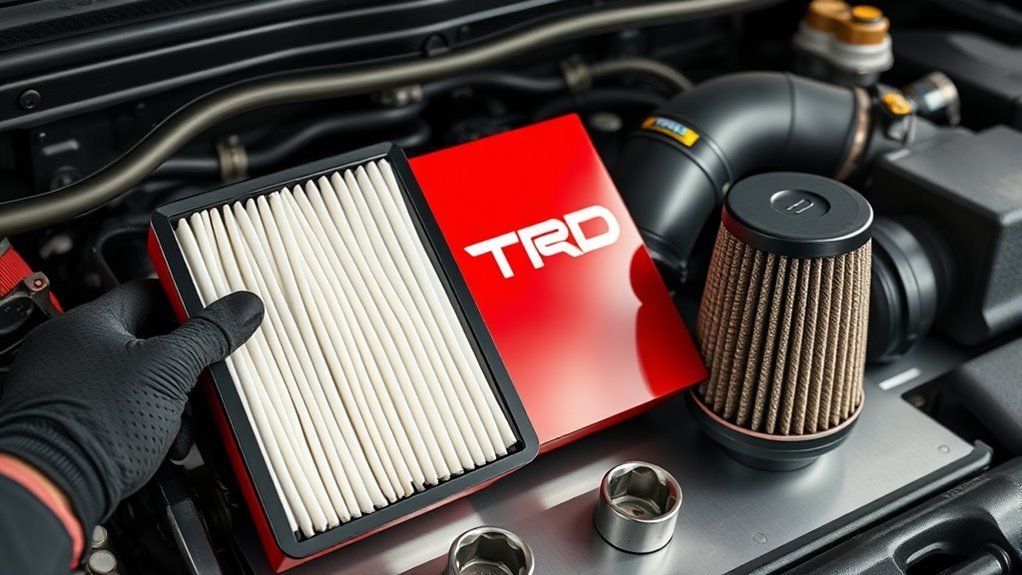
When choosing a replacement filter for your Tundra, compare fit, sealing, filtration, maintenance requirements, and total ownership cost. Toyota’s 2026 warranty guide states that warranty coverage is not dependent on using one particular replacement-part brand. It also warns that non-equivalent parts may impair emissions-system performance and that failures caused by improper maintenance or repairs may not receive coverage. Use a correctly fitting filter that meets appropriate quality standards and follow its maintenance instructions.
| Filter type | Best for | Watch-outs |
|---|---|---|
| OEM Toyota paper filter | Factory-style fit, predictable sealing, and simple replacement | Replace rather than wash; confirm the correct part and quantity by VIN |
| TRD reusable performance filter | Owners who want a washable and re-oilable Toyota performance option | You must clean, dry, and oil it correctly; confirm how many filters your application requires |
| Quality aftermarket filter | Owners seeking a different filtration design or replacement cost | Verify fit, gasket quality, filtration claims, quantity, and maintenance instructions |
Pro Tip: Before buying, enter your VIN on Toyota’s parts site or ask a dealer parts counter to confirm the filter and quantity. This reduces the chance of ordering the wrong filter or buying one when the application requires two.
If you choose a Toyota TRD performance air filter, follow the official cleaning process. Toyota’s TRD and GR performance air filter cleaning directions call for cleaner, a low-pressure rinse, natural drying, and careful oiling. Do not install a reusable filter while it is wet, and do not apply oil until it is completely dry.
[Products Worth Considering]

This vehicle-specific cabin and engine air filter combo is designed for Toyota RAV4 2.5L L4 models from 2013 through 2018, excluding hybrids. It helps improve cabin air quality by capturing pollutants while supporting engine airflow for smoother performance. With a direct replacement fit and simple home installation, it offers an easy way to maintain your vehicle.

The CARORY AF289 engine air filter is designed for a wide range of Toyota, Lexus, and Subaru vehicles, helping support steady airflow and efficient fuel combustion. It serves as a direct replacement for multiple OE and reference numbers, making it a practical choice for maintaining engine performance and smooth driving across many model years.

This KAX combo kit includes both an engine air filter and a cabin air filter for compatible Toyota and Lexus hybrid models, making routine maintenance simple and convenient. It helps support cleaner cabin air and reliable engine airflow with multi-layer filtration and activated charcoal odor control. Designed for easy installation, it offers a practical all-in-one replacement solution for scheduled upkeep.
Tundra Filter Maintenance Schedule and Tracking Tips
Set a baseline, then adjust inspections to your actual driving. For normal use, follow the Toyota maintenance chart for your model year. For dirt, dust, sand, mud, water, or repeated off-road use, inspect more often and replace the filter according to its condition.
- Record the date and odometer whenever you inspect, replace, or clean the filter.
- Write down the environment, such as normal pavement, dusty roads, job sites, desert driving, mud, towing, or off-road trips.
- Record the part used, including its brand, part number, type, and quantity.
- Save receipts for maintenance records and resale documentation.
- Set reminders for the next dusty-road inspection or normal replacement target shown in your model-year maintenance guide.
Toyota recommends keeping detailed maintenance records with the date, mileage, and service performed. You can place those records alongside the other milestones in your Toyota Tundra maintenance schedule. That habit helps document maintenance and prevents replacing a serviceable filter too early or leaving a loaded filter in place too long.
Frequently Asked Questions
How often should I replace my Toyota Tundra engine air filter?
For many recent U.S. Toyota Tundra maintenance schedules, replace it every 30,000 miles or 36 months under normal driving. If you drive primarily on dirt or dusty roads, inspect it at each 5,000-mile/6-month service and replace it sooner when it is loaded, damaged, wet, oily, warped, or unable to seal correctly.
Does a Toyota Tundra have one or two engine air filters?
Current 2022+ dual-airbox Tundras need both engine-air-filter housings checked during service. Toyota’s current TRD performance-filter listing states that its applicable Tundra and Sequoia setup requires two performance filters. Earlier Tundra airbox layouts vary, so confirm the correct filter quantity and part fitment by model year, engine, and VIN before ordering.
Can a dirty engine air filter hurt my Tundra’s gas mileage?
On modern fuel-injected vehicles, replacing a clogged air filter usually improves acceleration rather than fuel economy. If your Tundra suddenly loses MPG, also check tire pressure, driving conditions, fuel quality, alignment, brake drag, and diagnostic trouble codes.
Can I clean a paper Toyota Tundra engine air filter?
Do not wash or oil a disposable paper filter. Replace it if it is clogged, wet, oily, torn, warped, or damaged. Reusable TRD-style filters are different because their instructions require cleaning, complete natural drying, and re-oiling with the correct products.
Will an aftermarket air filter void my Toyota warranty?
Toyota states that warranty coverage is not dependent on using one particular replacement-part brand. However, a non-equivalent, wrong-fit, over-oiled, or improperly installed filter can contribute to a failure that may not receive warranty coverage. Use a correctly fitting filter that meets appropriate quality standards and follow its maintenance requirements.
Should I replace the air filter every oil change?
Usually no. Under normal driving, the engine air filter lasts longer than one routine service interval. Follow your Tundra maintenance schedule, inspect the filter when conditions require it, and replace it early only when dust, contamination, damage, or filter condition justifies it.
Should I check the air filter after driving through deep sand, mud, or water?
Yes. Toyota’s off-road daily maintenance guidance calls for checking the engine air filter when the truck is driven off-road through deep sand, mud, or water. Inspect the airbox for moisture and debris, and replace a paper filter if it is wet, oily, damaged, heavily contaminated, or unable to seal correctly.
How much does Toyota Tundra engine air filter replacement cost?
As of its June 18, 2026 update, RepairPal estimates Toyota Tundra air-filter replacement at about $54–$70 on average, while its 2022–2025 estimates are about $68–$85. Your actual cost can vary by location, filter quantity, filter type, labor rate, and whether you replace the filters yourself.
Conclusion
For many recent U.S. Toyota Tundras, use 30,000 miles or 36 months as the normal engine-air-filter replacement baseline. If you primarily drive on dirt or dusty roads, inspect the filter at each 5,000-mile/6-month service. Check it after deep sand, mud, or water, and replace it early when contamination, damage, moisture, oil, warping, or a poor seal warrants it. On a current dual-airbox Tundra, inspect and service both sides, confirm the correct filter quantity by VIN, and record the date and mileage after the job.
Sources
- Toyota 2026 Tundra Warranty & Maintenance Guide: official replacement chart, dusty-road inspections, off-road daily checks, warranty language, and filter-condition guidance
- Toyota 2021 Tundra Warranty & Maintenance Guide: 30,000-mile or 36-month replacement interval and dusty-road inspection guidance
- Toyota TRD Performance Air Filter #PTR03-34220: Toyota’s two-filter note for the listed Tundra and Sequoia performance-filter application
- Toyota Performance Air Filter Cleaning Kit Directions: TRD and GR reusable-filter cleaning, drying, oiling, and timing guidance
- FuelEconomy.gov Vehicle Maintenance Tips: effect of a clogged air filter on modern fuel-injected vehicle performance and fuel economy
- RepairPal Toyota Tundra Air Filter Replacement Cost: June 18, 2026 replacement-cost estimates