Last updated: August 27, 2026 — Month intervals added alongside every mileage figure, Toyota’s every-5,000-mile leakage inspection added, the off-road daily check list expanded to Toyota’s full item list, and new guidance added on dealer-recommended services and owner-performed maintenance.
The Toyota Tundra differential fluid change interval depends on the model year, drivetrain, and how the truck is used. For the 2026 Tundra, normal service calls for front and rear differential inspections every 15,000 miles or 18 months, and transfer-case inspections every 30,000 miles or 36 months. You will see a flat 30,000-mile differential change quoted widely for this truck. That number is not in Toyota’s normal-service chart — through 120,000 miles, front and rear differential oil appear there as inspection items only, with no mileage-based replacement scheduled at all. The 30,000-mile replacement is real, but it belongs to one specific footnote: towing, car-top carrier use, or heavy loading. Dirt or dusty-road use alone adds transfer-case oil replacement every 30,000 miles, and does not add a scheduled front or rear differential replacement.
Quick Answer
For a 2026 Tundra under normal service, inspect the front and rear differential oil every 15,000 miles or 18 months and the transfer-case oil every 30,000 miles or 36 months. Toyota schedules no mileage-based differential replacement under normal service through 120,000 miles. If the truck is used primarily for towing, a car-top carrier, or heavy loading, replace the front differential oil every 15,000 miles or 18 months and the rear differential and transfer-case oil every 30,000 miles or 36 months. If dirt or dusty-road driving is the only special condition, replace the transfer-case oil every 30,000 miles or 36 months and continue the normal differential inspections.
Key Takeaways
- Do not use one interval for every Tundra. Check the Toyota manuals and warranties page for your exact model year.
- Every Toyota interval is mileage or months, whichever comes first. A low-mileage truck can reach the 18-month or 36-month checkpoint long before the odometer figure.
- Under normal service, Toyota’s 2026 chart lists differential oil as an inspection item — there is no scheduled replacement mileage through 120,000 miles.
- For the 2026 chart, towing or heavy loading triggers scheduled front, rear, and transfer-case replacement; dirt or dusty-road use alone triggers scheduled transfer-case replacement, not differential replacement.
- At every 5,000-mile or six-month service, Toyota’s fluid-level check includes inspecting sealed transmissions, transfer cases, and differentials for signs of leakage.
- A 4WD Tundra has a front differential, rear differential, and transfer case. A 2WD Tundra has only the rear differential from that list.
- Toyota states that services a dealer recommends beyond the scheduled log are not required to keep warranty coverage intact.
- Use the exact fluid specification, fill procedure, capacity, and plug torque listed for each component.
- Always loosen the fill plug before draining, support the truck safely, and recycle used oil properly.
Source basis: This guide reads Toyota’s Tundra maintenance rows together with their condition footnotes for the third-generation truck (2022–2026). In that chart, the towing/heavy-load footnote applies to the front differential, rear differential, and transfer case, while the dirt/dust footnote applies to transfer-case replacement but not scheduled differential replacement. Every interval is expressed as mileage or months, whichever comes first, and the general fluid-level inspection at each 5,000-mile service includes checking sealed differentials and transfer cases for leakage. API and ASTM sources define GL-5 performance, and EPA guidance covers used-oil handling. Another model year’s guide overrides this example.
At a Glance
| Normal Service | Inspect front and rear differential oil every 15,000 miles or 18 months; inspect transfer-case oil every 30,000 miles or 36 months. No mileage-based replacement is scheduled. |
| Primarily Towing or Heavy Loads | Replace front differential oil every 15,000 miles or 18 months; replace rear differential and transfer-case oil every 30,000 miles or 36 months. |
| Difficulty | Moderate DIY job. The truck must stay level and safely supported during filling, because these components set their final level at the fill opening rather than by measured volume. |
| Tools Needed | Fluid pump, drain pan, correct sockets or hex keys, torque wrench, new gaskets or crush washers, gloves, eye protection, wheel chocks, and properly rated jack stands if lifting is required |
How Often Should You Change Toyota Tundra Differential Fluid?
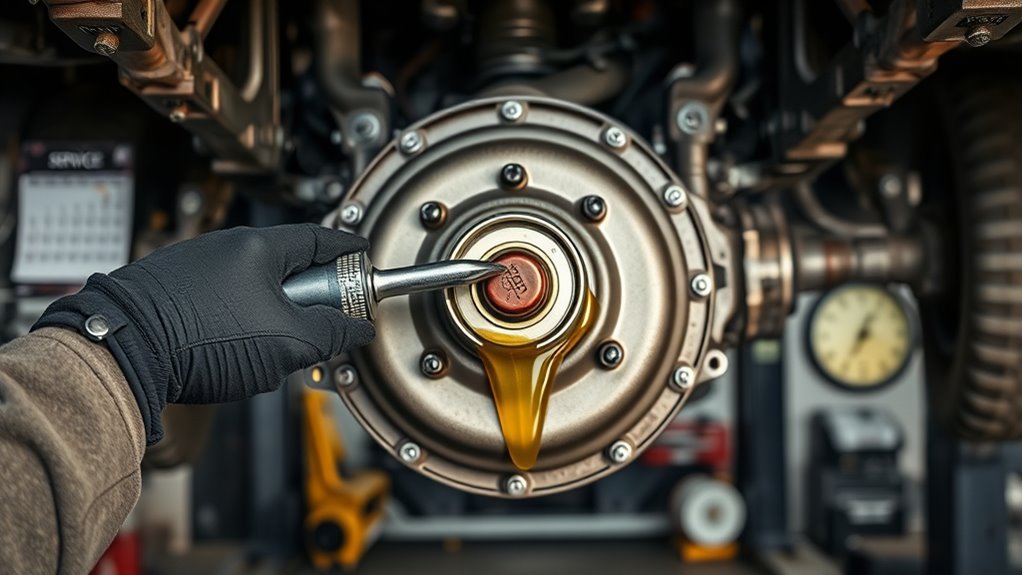
The correct interval comes from the maintenance guide for your model year. Toyota separates normal service from special operating conditions, and the extra work applies only when the named condition represents most of the truck’s use. The 2026 chart also uses separate footnotes for towing/heavy loading and dirt/dust operation, so those conditions should not be combined. Every checkpoint is mileage or months, whichever arrives first. The table below decodes the current chart.
| Driving Use | Front Differential | Rear Differential | Transfer Case |
|---|---|---|---|
| Every scheduled visit (5,000 miles or 6 months) | Inspected for signs of leakage as part of the fluid-level check. | Inspected for signs of leakage as part of the fluid-level check. | Inspected for signs of leakage as part of the fluid-level check. |
| Normal 2026 service | Inspect every 15,000 miles or 18 months. No scheduled replacement. | Inspect every 15,000 miles or 18 months. No scheduled replacement. | Inspect every 30,000 miles or 36 months. No scheduled replacement. |
| Primarily towing, using a car-top carrier, or carrying heavy loads | Replace every 15,000 miles or 18 months. | Replace every 30,000 miles or 36 months. | Replace every 30,000 miles or 36 months on 4WD models. |
| Primarily driving on dirt or dusty roads | No added replacement interval for dirt/dust alone; inspect at the normal 15,000-mile or 18-month checkpoints. | No added replacement interval for dirt/dust alone; inspect at the normal 15,000-mile or 18-month checkpoints. | Replace every 30,000 miles or 36 months on 4WD models. |
| After off-road use or water exposure | Check daily during off-road use. Replace promptly if the oil is milky, foamy, gritty, or otherwise contaminated. | Check daily during off-road use. Replace promptly if the oil is milky, foamy, gritty, or otherwise contaminated. | Check daily on 4WD models and replace promptly if contaminated. |
The table is not a universal schedule for every Tundra. Older generations may use different inspection points, fluid specifications, and special-condition intervals. If the truck has an unknown service history, a baseline fluid inspection or change can remove uncertainty after you confirm the correct specifications.
The distinction that trips up most owners is the difference between an inspection item and a replacement item. Under normal service, Toyota’s chart never assigns the front or rear differential a replacement mileage — not at 30,000, not at 60,000, not through 120,000 miles. Those components are inspected, and they are replaced when the inspection, a leak, contamination, or a repair calls for it. A scheduled replacement mileage appears only once a special operating condition applies to the majority of your driving.
How to Read the 2026 Footnotes
Do not treat every special condition as the same schedule. In Toyota’s 2026 chart, towing, car-top carrier use, or heavy loading drives the 15,000-mile front differential and 30,000-mile rear differential and transfer-case replacements. Dirt or dusty-road driving drives the 30,000-mile transfer-case replacement, while the front and rear differentials remain on their normal inspection schedule unless another condition also applies. Toyota’s own note is explicit: perform these additional services only if the majority of your driving is done under the condition indicated. Occasional towing or an annual camping trip does not move you onto the severe schedule.
Note: A 2WD Tundra has a rear differential, but it does not have a front differential or transfer case to service. A 4WD Tundra has all three service points.
What Does Toyota Require for the Fluid and Service?
Toyota’s maintenance and fluid information is model-year specific. Before buying fluid, open the correct owner’s manual and warranty and maintenance guide for your truck. The Tundra name covers multiple generations, engines, axles, transfer cases, and fluid requirements. This page focuses on service timing; for model-year viscosity and oil-selection details, see the Tundra differential oil guide.
Your Tundra’s differentials call for a gear oil meeting a stated viscosity, a Toyota requirement, and an axle lubricant category such as API GL-5 — and the exact combination changes by model year and axle. API GL-5 is a performance category associated with axle gears, particularly hypoid gears, operating under high-speed shock-load or low-speed, high-torque conditions. It does not identify the correct viscosity, capacity, or Toyota specification by itself. The transfer case may require a different Toyota fluid, so do not use differential gear oil in the transfer case unless the manual specifically permits it.
[Products Worth Considering]

This brake bleeder bottle is designed to make fluid bleeding easier for one-person use with a built-in check valve and magnetic mount. The flexible hose fits most bleeder valves and helps reduce the chance of air entering the system during service. With a practical fluid capacity and universal fit, it is a handy tool for brake maintenance and repair.

These genuine Toyota oil drain plug gaskets are designed to help maintain a reliable seal during oil changes, reducing the chance of leaks and supporting proper engine maintenance. With an OEM fit and trusted Toyota quality, they are a practical choice for routine service on compatible vehicles. The convenient quantity pack is ideal for keeping multiple maintenance intervals covered.

The Funnel King 32950 Oil Drain Pan is a compact fluid catch basin designed for clean, easy draining during routine maintenance. Its open shape and pour edge help transfer used oil, coolant, and other shop fluids with less mess, while the lightweight polypropylene construction stands up to common automotive chemicals. Sized to fit under many cars and small engines, it is a practical choice for garages, workshops, and DIY oil changes.
Before You Buy Fluid, Check These Details
Confirm every service detail against the manual, maintenance guide, repair information, or a Toyota parts counter using your VIN. Year, trim, and engine size are not enough on their own, because drivetrain components vary within the same model year.
- Drivetrain: Confirm whether the truck is 2WD or 4WD.
- Service points: Identify the rear differential, front differential if equipped, and transfer case if equipped.
- Fluid specification: Match the required Toyota fluid, viscosity, lubricant category, and any transfer-case-specific requirement.
- Capacity and fill method: Confirm how much fluid each component takes and how Toyota defines the correct fill level.
- Plug torque: Use the torque specification for the exact drain and fill plugs.
- Washers or gaskets: Replace crush washers or plug gaskets when the manual or parts catalog calls for it.
- Axle requirements: Add a friction modifier only when the exact axle and fluid specification requires one.
Warning: Never guess the viscosity, lubricant category, or transfer-case fluid type. The wrong fluid can reduce lubrication performance or contribute to noise and component damage. Match the fluid label to every requirement in the manual.
How Do You Check Tundra Differential and Transfer-Case Oil?
A quick inspection helps you decide whether scheduled service can wait or the truck needs attention now. Work on a level surface, let hot components cool enough to handle safely, and wear gloves and eye protection.
- Find the fill plug first. Confirm that it can be loosened before removing a drain plug. Draining the oil before discovering a seized fill plug can leave the truck undriveable.
- Check for leaks. Look around the differential housing, axle seals, pinion seal, transfer-case seams, and drain and fill plugs. Toyota treats these as sealed components: if you suspect leakage from one, have it inspected by a dealer rather than simply refilling it.
- Check the level and sample the oil. Follow the model-year procedure for the correct level. Look for milkiness, foam, grit, metallic debris, or an abnormal burnt odor. Color alone does not determine whether the fluid is serviceable.
- Inspect the drain-plug magnet if equipped. A small amount of fine gray paste may be normal. Chunks, flakes, or heavy metal buildup require further investigation.
- Record what you find. Note the odometer, fluid condition, leaks, noises, and whether towing or off-road use has increased since the last inspection.
Service the component promptly if the fluid is below the specified level, looks milky or foamy, contains visible grit or large metal particles, or has an abnormal burnt odor. Milky fluid commonly indicates water contamination. A low level usually means you also need to locate the leak rather than simply topping it off.
[Products Worth Considering]

This 12-pack oil filter and drain plug washer set is designed for a wide range of Toyota and Scion vehicles, helping support clean oil flow and dependable engine performance. It replaces several common OE part numbers and offers an easy-fit solution for routine maintenance. Built with corrosion-resistant materials and efficient filtration, it helps keep engine contaminants out and supports longer service life.

The Scepter AM07029 Oil Drain Pan makes oil changes cleaner and easier by helping contain spills and reducing mess in the garage or driveway. Its lidded opening, removable drain screen, and gasketed pour spout support convenient collection, transport, and disposal of fluids. Built from durable high-density polyethylene, it resists rust, dents, and corrosion for reliable use with engine oil, transmission fluid, hydraulic fluid, and antifreeze.

This mech-style heavy metal key fob cover is designed to protect compatible Toyota E-style smart keys with a precise 1:1 fit. Built with a durable zinc alloy frame and soft silicone buttons, it helps guard against daily wear while keeping full access to key functions. The set includes a metal keychain and screwdriver for easy installation, making it a practical upgrade for select Toyota models.
When Should You Shorten the Service Interval?
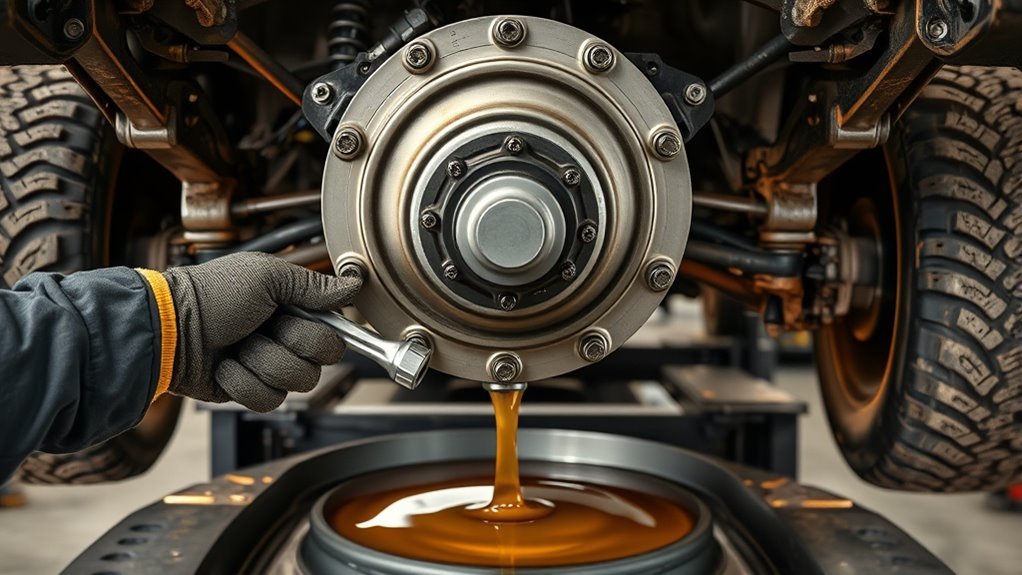
Use the special operating conditions section for your exact model year when a listed demanding condition represents most of the truck’s driving. In the 2026 guide, towing, car-top carrier use, or heavy loading triggers scheduled replacement for the front differential, rear differential, and transfer case. Dirt or dusty-road operation triggers scheduled transfer-case replacement, but not added front or rear differential replacement.
Heat, steep grades, repeated low-speed torque, and water exposure are practical reasons to inspect the fluid more closely, but they carry no fixed Toyota interval of their own unless your model-year guide assigns one. Treat them as inspection triggers instead: after a hard day of that kind of work, check the level and condition at the next opportunity and service the component immediately if the oil is low, milky, foamy, gritty, or burnt-smelling.
Towing and Load Frequency
If your Tundra tows only occasionally, continue following the normal inspection schedule unless the fluid condition or another listed condition requires earlier work. If towing, car-top carrier use, or heavy loading represents most of the truck’s use, apply the special-condition schedule for your model year.
- Occasional towing: Inspect on schedule and check sooner after unusually heavy, hot, or mountainous operation.
- Frequent towing in a 2026 Tundra: Replace the front differential oil every 15,000 miles or 18 months and the rear differential and transfer-case oil every 30,000 miles or 36 months.
- Don’t stop at the differentials: The same towing footnote also calls for automatic transmission fluid replacement at 60,000 and 120,000 miles, and Toyota shortens the engine oil and filter interval to 5,000 miles or six months for anyone driving primarily under any listed special operating condition, regardless of which oil grade is used.
- Heavy work-truck duty: Use the exact special-condition chart and inspect immediately if the fluid is low, contaminated, or accompanied by new drivetrain noise.
Before a long tow through steep grades, also use the Toyota Tundra mountain towing checklist to review load limits, brakes, tires, hitch setup, and cooling stops.
Off-Road and Severe Conditions
Off-road maintenance is not controlled by mileage at all. Toyota’s guide carries a separate off-road daily maintenance list, and it applies whenever you take the truck off-road through deep sand, mud, or water. On those days, the checks are performed daily, on top of whatever mileage interval you are on:
- Ball joints and dust covers
- Brake lines and hoses
- Brake pads and discs
- Differential oil
- Drive shaft boots
- Engine air filter
- Nuts and bolts on the chassis and body
- Steering linkage and boots
- Transfer case oil (4WD models)
- Transmission fluid or oil
Mud, water, and repeated low-speed torque can expose the components to contamination or high loads faster than any mileage figure predicts. After a deep-water crossing, inspect the fluid as soon as practical. Replace it promptly if it looks milky, foamy, gray, or separated.
Pro Tip: If you off-road often, keep the correct drain and fill plug gaskets or crush washers in your maintenance kit. Confirm the part numbers for your model year before ordering them.
How Do You Verify the Correct Fluid?
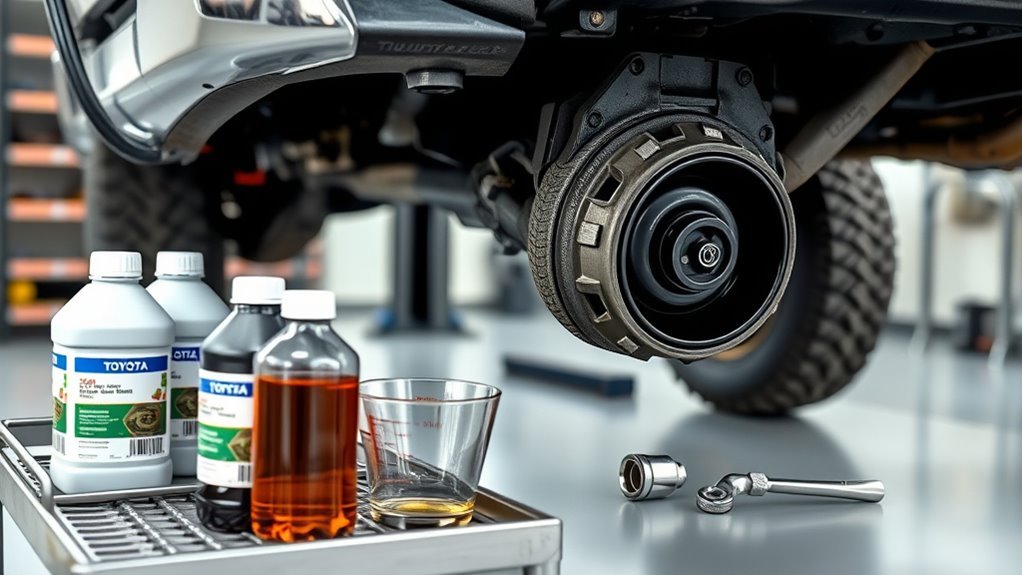
Choose fluid by the complete Toyota specification for the component, not by brand or the GL category alone. For a model-year breakdown of Tundra differential viscosities and specifications, use the year-by-year differential oil guide; keep this interval page focused on when service is due.
| Component | What to Verify | Important Note |
|---|---|---|
| Rear differential | Toyota-required gear-oil viscosity, lubricant category, capacity, fill procedure, and plug torque. | This is the service point every Tundra has. |
| Front differential | Toyota-required differential oil for the model year and 4WD axle. | Applies to 4WD models only, and it is the component with the shortest severe-service interval. |
| Transfer case | Exact Toyota transfer-case fluid specification, capacity, fill method, and plug torque. | Do not assume it uses the same oil as either differential. |
| Axle with a special friction requirement | Whether the manual calls for a compatible fluid or an additional friction modifier. | Do not add a friction modifier unless the exact axle and fluid specification requires it. |
When the manual calls for a GL-5 differential oil, choose a product that clearly states that it meets the required category and every other listed specification. The ASTM D7450-24 standard covers performance requirements for API Category GL-5-type rear axle lubricants intended for hypoid gears under high-load operating conditions.
Can You Change Tundra Differential Fluid Yourself?
A Tundra differential and transfer-case fluid service can be a manageable DIY job for an experienced owner, but the truck must remain safely supported and level during filling. Many driveline components use the fill opening to establish the final level. Tilting the truck can produce an incorrect fill.
Doing the work yourself does not forfeit your coverage. Toyota states that maintenance and repair services may be performed by you or by any automotive service provider you choose, and that a warranty claim will not be denied solely because you used someone other than a Toyota dealership. Toyota also states it will not deny a claim solely because you lack records proving the maintenance was done. The limit is straightforward: damage or failure caused by improper maintenance, or by using fluids other than those specified, is not covered. That is precisely why the fluid specification and the fill procedure matter more than who holds the wrench.
Warning: Never rely on a jack alone while working under a truck. Use properly rated jack stands on a solid surface, chock the wheels, and follow the lifting points in the owner’s manual.
The following steps are a planning checklist, not a substitute for the model-year repair procedure:
- Confirm the specifications. Check the manual for fluid type, capacity, fill procedure, drain and fill plug torque, and gasket or crush washer requirements.
- Gather the tools. You will usually need a drain pan, fluid pump, correct sockets or hex keys, torque wrench, gloves, eye protection, and replacement washers or gaskets.
- Loosen the fill plug first. Confirm that the component can be refilled before draining it.
- Drain and inspect the old fluid. Remove the drain plug, inspect the oil, and clean the plug magnet if equipped.
- Install the required new seal. Replace the washer or gasket when Toyota’s service information calls for it.
- Refill using the specified procedure. Pump in the correct fluid until it reaches the level defined in the repair information.
- Torque the plugs. Use the exact specification for that component and model year.
- Check for leaks. Road-test the truck when safe, then inspect the plugs and nearby seals again.
Use a Toyota dealer or qualified independent shop if a fill plug is seized, the component is leaking, the old fluid contains large metal particles, you are uncertain about the specification, or you cannot support the vehicle safely.
[Products Worth Considering]

CHAPIN’s low-profile oil drain pan is designed to slide under low-clearance vehicles and equipment, making fluid changes easier in tight spaces. The large splash-free target area helps reduce mess while the molded carry handles support easier lifting, pouring, and storage. Built for draining oil, coolant, and other automotive fluids, it offers a practical high-capacity solution for routine maintenance.

This flexible oil funnel is designed to make fluid changes cleaner and easier by guiding oil around obstacles like skid plates and crossmembers. Its shape-retaining core and silicone body can be molded for custom positioning, while the heat-resistant, leak-proof design helps prevent spills during draining and filter removal. Reusable and easy to clean, it works well for cars, trucks, motorcycles, and other hard-to-reach fluid fill or drain applications.

This upgraded engine oil funnel kit makes oil changes cleaner and easier with a spill-proof design, flow control valve, and transparent body for precise filling. Built from durable polycarbonate and equipped with 12 adapters, two 45-degree elbows, and a debris filter, it fits a wide range of vehicles and works well in tight engine spaces. The secure, hands-free setup helps reduce mess while improving control during oil filling and fluid transfers.
How Should You Choose the Right Schedule?
Start with the factory schedule, then adjust for the truck’s actual operating conditions and the condition of each fluid. Avoid applying one owner-created mileage number to every model year and component.
It also helps to know where a dealer’s recommendation sits relative to the factory schedule. Toyota’s guide addresses this directly: a dealer may recommend more frequent maintenance intervals or more services than the scheduled maintenance log lists, and those additional services are not required to maintain your warranty coverage. A 30,000-mile differential service quoted to a Tundra that has never towed is a dealer-recommended service, not a Toyota-required one. That does not automatically make it a bad idea — fresh gear oil is inexpensive insurance, and an inspection may well justify it — but you are entitled to ask which line of the maintenance log the recommendation comes from, and to decline it without risking coverage.
| Schedule Type | Best For | How to Apply It |
|---|---|---|
| Factory normal-service schedule | Daily driving with limited towing, loading, dirt-road, or off-road use. | Inspect at the model-year checkpoints, in miles or months, and replace when the guide, fluid condition, a leak, or a repair requires it. |
| Factory special-condition schedule | A truck used primarily for a condition listed in its maintenance guide. | Apply the additional component-specific replacement intervals listed for that condition. |
| Baseline service for unknown history | A used truck without reliable driveline-fluid records. | Inspect all equipped service points and consider changing them after confirming the correct fluids and procedures. |
| Immediate condition-based service | Milky or foamy oil, low level, water exposure, heavy metal debris, leaks, overheating signs, or new gear noise. | Service the fluid promptly and investigate the cause rather than waiting for the next mileage checkpoint. |
What Warning Signs Require Attention?
Low or contaminated differential oil can contribute to noise, heat, leaks, or abnormal wear. These symptoms do not prove that the differential or transfer case has failed, but they do justify an inspection.
- Whine during acceleration or deceleration: Check the fluid level and look for metal debris. Gear or bearing wear may need professional diagnosis.
- Grinding, clunking, or chatter: Inspect the fluid and related axle, universal-joint, driveshaft, and suspension components.
- Oil spots under the axle: Check the plug seals, housing or cover, pinion seal, and axle seals.
- Milky or foamy fluid: Treat it as likely water contamination and service the component promptly.
- Abnormal burnt odor: Check for low fluid, leakage, overheating, or severe-duty operation.
If you find large metal flakes, recurring leaks, or loud gear noise, do not rely on a fluid change alone. Have the axle or transfer case inspected before continued driving causes more damage.
What Should You Record After Service?
A maintenance log prevents guesswork later. Record the date, odometer, component serviced, fluid brand and complete specification, quantity used, plug torque, washer or gasket part numbers, and the old fluid’s condition. Keep receipts and photograph the bottle label so the specification can be confirmed later. Toyota will not deny a warranty claim solely because you lack records, but records are what let you prove the correct fluid went in if a driveline failure is ever disputed.
Use genuine Toyota parts or alternatives that clearly match Toyota’s requirements. Exact fit is especially important for drain and fill plug washers, transfer-case fluid, and any axle with a special friction requirement.
Environmental note: The U.S. EPA states that used oil from one oil change can contaminate one million gallons of fresh water. Collect the fluid carefully and take it to a recycling or used-oil collection site.
Collect used gear oil and transfer-case fluid in a clean drain pan and transfer it to a sealed container. Do not mix it with solvents, antifreeze, water, paint, pesticides, or other chemicals.
Frequently Asked Questions
How often should I change the differential fluid on my Toyota Tundra?
Check the maintenance guide for your model year. For the 2026 Tundra, normal service lists periodic inspections rather than a replacement interval — front and rear differential oil are inspected every 15,000 miles or 18 months, with no scheduled replacement mileage through 120,000 miles. If towing, car-top carrier use, or heavy loading represents most of the truck’s use, the 2026 chart calls for front differential oil every 15,000 miles or 18 months and rear differential oil every 30,000 miles or 36 months.
Is a 30,000-mile differential fluid change mandatory for normal driving?
Not for the 2026 Tundra under normal service. Toyota lists front and rear differential oil as inspection items at 15,000-mile or 18-month checkpoints. The 30,000-mile rear differential replacement applies when towing, car-top carrier use, or heavy loading represents most of the truck’s driving.
Does dirt-road driving require front differential oil every 15,000 miles?
Not by itself in Toyota’s 2026 Tundra chart. Dirt or dusty-road driving adds transfer-case oil replacement every 30,000 miles or 36 months on 4WD models. The 15,000-mile front differential replacement is tied to towing, car-top carrier use, or heavy loading. Inspect all equipped driveline fluids after off-road use and replace any contaminated oil promptly.
My dealer recommends a differential service at 30,000 miles. Is it required?
Not by the factory schedule, unless a special operating condition applies to most of your driving. Toyota’s guide states that a dealer may recommend more frequent intervals or more services than the scheduled maintenance log lists, and that those additional services are not required to maintain warranty coverage. Ask which line of the maintenance log the recommendation comes from. If the answer is an inspection finding or a listed special condition, it is justified; if the truck has never towed and the fluid inspects clean, it is optional.
Does changing the differential fluid myself void my Toyota warranty?
No. Toyota states that maintenance may be performed by you or by any automotive service provider you choose, and that a claim will not be denied solely because you used someone other than a Toyota dealership or because you lack records. What is not covered is damage or failure caused by improper maintenance or by using fluids other than those specified. Use the correct fluid, follow the fill procedure and plug torque, and keep your receipts.
Is the interval based on miles or months?
Both — whichever comes first. Toyota’s checkpoints are 15,000 miles or 18 months for the differentials and 30,000 miles or 36 months for the transfer case, with a general service every 5,000 miles or six months. A low-mileage truck reaches the time limit long before the mileage limit, so a Tundra driven 4,000 miles a year is still due for its differential inspection at 18 months.
Should I change the front differential and transfer-case fluid at the same time?
Servicing all equipped driveline components together can simplify recordkeeping, but their intervals and fluid specifications may differ. Under the towing condition the front differential comes due twice as often as the transfer case. A 2WD Tundra has no front differential or transfer case. Verify each component separately before combining the work.
Can I use the same fluid in the differential and transfer case?
Do not assume that you can. A differential may require gear oil with a stated viscosity and GL category, while the transfer case may require a different Toyota fluid. Match the full specification for each component.
What fluid should I use in a Toyota Tundra differential?
Use the complete Toyota-required specification for your model year, axle, and drivetrain, which may combine a viscosity, a Toyota specification, and a GL performance category. Do not select fluid from the GL category or brand alone. For the full year-by-year breakdown, see the Tundra differential fluid type guide.
Is dark differential oil always bad?
No. Fluid can darken during use, and color alone does not determine its condition. Low level, milkiness, foam, visible grit, large metal particles, an abnormal burnt odor, or new axle noise is more concerning.
Should I change the fluid after a water crossing?
Inspect the differential and transfer-case fluid as soon as practical. Toyota’s off-road daily maintenance list calls for checking differential oil and transfer-case oil every day the truck is driven through deep sand, mud, or water. If the fluid looks milky, foamy, gray, or separated, treat it as water contamination and replace it promptly. Also inspect the breathers if the truck is exposed to water regularly.
Can I change Tundra differential fluid myself?
Yes, if you can safely support and level the truck, identify the correct plugs, follow the model-year fill procedure, use the correct fluid, and torque the plugs properly. Use a qualified shop if a plug is seized, the component is leaking, or you cannot verify the specifications.
Conclusion
Start with the maintenance guide for your exact Toyota Tundra. For the 2026 truck, normal service means front and rear differential inspections every 15,000 miles or 18 months and transfer-case inspections every 30,000 miles or 36 months, with no scheduled replacement mileage attached to either differential. If towing, car-top carrier use, or heavy loading represents most of the driving, replace the front differential oil every 15,000 miles or 18 months and the rear differential and transfer-case oil every 30,000 miles or 36 months. Dirt or dusty-road use alone adds 30,000-mile transfer-case replacement, not scheduled differential replacement. Inspect sooner after off-road use or water exposure, treat a dealer’s extra recommendations as optional unless an inspection or a listed condition supports them, and confirm the exact fluid, capacity, fill procedure, plug torque, and seals before draining anything.
Sources
- 2026 Toyota Tundra Warranty & Maintenance Guide: recommended-service rows, special-condition rows, and condition footnotes used to distinguish towing/heavy-load service from dirt/dust service.
- Toyota Tundra Warranty & Maintenance Guide (third generation): mileage-or-months checkpoint structure, the every-5,000-mile sealed-component leakage inspection, the off-road daily maintenance list, dealer-recommended maintenance policy, and owner-performed maintenance provisions.
- Toyota Manuals and Warranties: model-specific Toyota owner manual and warranty resources.
- API Publication 1560: gear lubricant service designations, including API GL-5.
- ASTM D7450-24: performance requirements for API Category GL-5 rear axle lubricants.
- U.S. EPA Used Oil Quick Start Guide: used-oil handling, storage, contamination prevention, and recycling guidance.