Toyota Tundra Slow Cranking: 6 Tests to Find the Cause
Toyota Tundra slow cranking usually points to one of five areas: a weak or undercharged 12-volt battery, resistance in the terminals, cables, or grounds, a worn starter, oil that creates excessive cold drag, or mechanical drag. On a gasoline Tundra, test in this order: battery capacity, cranking voltage, positive- and ground-side voltage drop, starter current draw, then oil specification and mechanical load.
Use a different path when the engine rotates at a normal, even speed but takes several seconds to fire. That is a long-crank or hard-start symptom, which can involve fuel-pressure bleed-down, weak spark, incorrect sensor data, injector problems, an immobilizer fault, or an intake-air leak. Separating slow rotation from delayed combustion prevents unnecessary battery, starter, or fuel-pump replacement.
Model scope: Toyota’s 2026 Tundra lineup includes an i-FORCE gasoline powertrain and an i-FORCE MAX hybrid powertrain. The conventional battery, cable, voltage-drop, and starter-current tests below apply only when Toyota’s repair information specifies them for your gasoline model. If yours is an i-FORCE MAX hybrid, follow the hybrid-specific procedure, check the 12-volt supply and displayed warnings first, and do not probe or disconnect high-voltage components. Toyota’s i-FORCE MAX build documentation lists a conventional 12-volt starter for cranking the gas engine, so hybridization does not eliminate the starter itself — but the surrounding control logic, interlocks, and high-voltage components are unique to the hybrid system and still require Toyota’s hybrid-specific procedure. [VERIFY: confirm the 12-volt starter specification against your exact model year and trim’s factory service data] If you’re unsure which generation or engine your truck has, see the site’s Tundra generations guide.
Quick Answer
If your gasoline Tundra’s engine rotates slowly, test battery capacity, cranking voltage, positive- and ground-side voltage drop, starter current draw, and oil specification first. Dim lights, a weak horn, or rapid clicking strengthen the battery-or-connection path. If the engine rotates normally but starts late, move to fuel pressure, spark, sensor data, immobilizer status, injector sealing, and intake-leak checks. Fuel pressure can extend cranking time, but it does not normally reduce conventional starter speed.
Key Takeaways
- Identify whether the engine turns slowly, clicks without turning, or turns normally but starts late.
- Confirm whether your Tundra has the gasoline or i-FORCE MAX hybrid powertrain.
- Test the battery and starter circuit before replacing fuel-system parts on a conventional gasoline model.
- Use voltage-drop readings to find hidden resistance in cables, terminals, and grounds.
- Compare starter current draw with cranking speed before condemning the starter.
- Use the oil viscosity, battery specification, and test procedure listed for your exact model year.
- Stop testing if you smell fuel, see smoke, hear grinding, or find an overheating cable.
Source basis: The symptom split and model-specific caution were checked against Toyota owner and service information. The 12.6-volt resting and approximately 9.6-volt cranking references come from DENSO’s general starter guidance, while the positive- and ground-side voltage-drop targets come from Fluke. Toyota’s specification for your exact year, engine, battery type, and temperature always takes priority.
Is It a Slow Crank or a Long Crank?
Listen to the engine before connecting a meter. The sound and speed of the starting attempt determine which system you should test first. Toyota owner guidance pairs slow starter rotation with clues such as dim interior lights, dim headlights, or a weak horn, which can point toward a discharged battery or loose or corroded battery connections.
| What You Hear or Notice | Likely Diagnostic Path | First Checks |
|---|---|---|
| Engine rotates slowly or sounds labored | Battery, cables, grounds, starter, oil viscosity, or mechanical drag | Battery load test, cranking voltage, voltage drop, and current draw |
| Rapid clicking, one heavy click, dim lights, or a weak horn | Low available voltage, poor connection, starter control circuit, or starter fault | Battery state, terminal tightness, grounds, relay, and starter-control voltage |
| Engine rotates normally but takes several seconds to fire | Fuel pressure, spark, injectors, sensor data, immobilizer, or intake air | Scan data, fuel-pressure retention, ignition output, and air-leak inspection |
| Grinding, scraping, or starter free-spinning | Starter drive, ring gear, mounting, or engagement fault | Stop repeated attempts and arrange mechanical inspection |
| Battery becomes weak again after charging or replacement | Charging fault, parasitic draw, loose connection, or unsuitable battery | Charging-system test and key-off current-draw test |
| i-FORCE MAX hybrid’s READY indicator does not illuminate or hybrid warnings appear | 12-volt supply, hybrid control system, interlock, sensor, or high-voltage system fault | Check displayed warnings, scan hybrid-capable modules, and follow Toyota’s hybrid-specific procedure |
If the starter does not rotate the engine at all, use this separate Tundra no-start troubleshooting checklist. This page is focused on slow rotation and normal-speed long cranking, not a complete no-crank diagnosis.
What’s in This Article
Quick Checklist: 6 Tests for Slow Tundra Starts
Tools You’ll Need
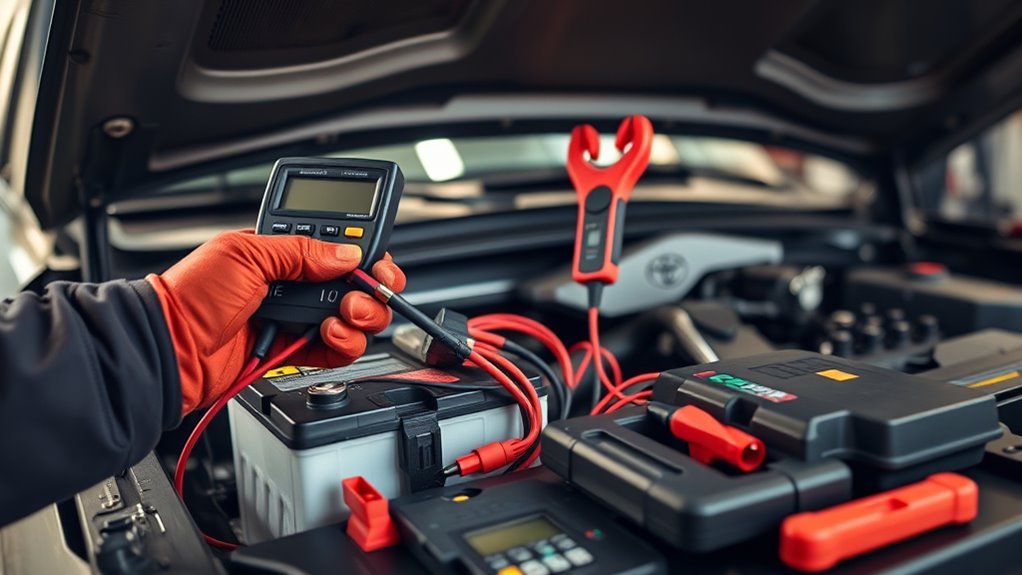
- Digital multimeter rated for automotive DC voltage and millivolt-range voltage-drop testing
- Clamp-on inductive amp probe, for starter current-draw testing
- Battery load tester or conductance tester
- Basic hand tools for terminal cleaning and cable inspection
- OBD2 scan tool capable of showing live data, needed only for the normal-speed long-crank path
- Classify the symptom. Decide whether the engine rotates slowly, does not rotate, or rotates normally but takes too long to fire.
- Confirm the powertrain. Use the conventional starter tests only when they match your gasoline Tundra’s system. Follow hybrid-specific repair information for an i-FORCE MAX model.
- Inspect the battery and connections. Check for loose clamps, corrosion, damaged cables, a swollen case, or an unsecured hold-down.
- Test battery condition. Measure resting voltage, then perform a proper load or conductance test. Do not approve or reject the battery from open-circuit voltage alone.
- Measure starter-circuit voltage drop. Test both the positive cable path and the ground path while the engine cranks.
- Compare starter current draw with cranking speed. Investigate fuel, spark, and sensor data only when rotation speed is normal.
A fully charged conventional 12-volt battery often reads about 12.6 volts at rest. DENSO’s starter troubleshooting guidance uses approximately 9.6 volts at 20°C to 25°C as a general cranking-voltage reference and describes roughly 200 to 250 rpm as a general cranking-speed range. These are screening references, not universal Tundra pass-or-fail limits. Toyota’s temperature-corrected specification for your exact model takes priority.
Write down each result. Record the outside temperature, resting voltage, cranking voltage, positive-side voltage drop, ground-side voltage drop, current draw, and exact symptom. A result log helps you detect an intermittent cable or cold-weather pattern.
[Products Worth Considering]

This AstroAI clamp meter delivers accurate electrical testing for AC/DC voltage, AC current, resistance, capacitance, continuity, diode checks, and live wire detection in one compact tool. Its auto-ranging design, backlit LCD, flashlight, data hold, and audible/visual alerts make it practical for both home and industrial troubleshooting. Built with enhanced safety standards and non-contact voltage detection, it helps users diagnose electrical issues with greater confidence and convenience.

The TOPDON VeriDiag X800 BT is a wireless bidirectional automotive diagnostic scanner designed for full-system troubleshooting, active testing, and advanced service resets. It supports broad vehicle coverage, live data viewing, AutoVIN identification, and lifetime free updates to help DIYers and professionals diagnose issues faster and with greater confidence.

The TOPDON BT100 helps you quickly check the health and charge status of 12V lead-acid batteries with clear analytical results, including state of health, state of charge, voltage, and cranking performance. It supports a wide range of battery types and vehicles, making it a practical tool for diagnosing starting and charging issues at home or in the shop. Compact and easy to use, it provides fast, reliable testing without needing to charge the device first.
What Does Slow Cranking Actually Mean?
Slow cranking means the starter is not rotating the engine at its expected speed. A conventional starting system needs enough battery voltage, adequate current capacity, low-resistance cable paths, a healthy starter, and an engine that can turn without excessive drag.
How the symptom changes can narrow the path. If a correctly connected, approved booster source makes the engine rotate much faster, available battery power or circuit resistance remains likely. If cranking stays slow despite a known-good power source and correct connections, compare cable voltage drop, starter current draw, oil specification, and mechanical drag. A jump-start response is a clue, not a final diagnosis.
The battery supplies electrical power. The positive cable carries current to the starter, while the engine and chassis grounds complete the circuit. Resistance at any terminal, cable, ground strap, relay connection, or starter connection can reduce available starter power.
The starter can also fail internally. Worn brushes, bushings, windings, drive components, or a damaged magnetic switch can raise current draw or reduce torque. Thick oil, an incorrect oil grade, internal engine drag, or accessory drag can make a healthy starter work harder.
Fuel pressure, spark, injectors, and engine-control sensor data affect whether combustion begins. They usually do not control how fast a conventional starter rotates the engine. Keep those systems under the normal-speed long-crank path unless test results show that starter speed is acceptable.
Battery, Starter, and Wiring Tests to Rule Them Out
Test the conventional starting circuit in a fixed order. Begin with battery condition and physical connections. Then measure voltage drop while cranking. Finish with current draw and starter inspection only after confirming that power reaches the starter correctly.
[Products Worth Considering]

The V500 Pro is an all-in-one automotive electrical diagnostic tool that combines circuit testing, wire tracing, oscilloscope analysis, multimeter functions, injector testing, relay and fuse checks, and component activation in one device. It helps technicians and DIY users quickly find open circuits, short circuits, broken wires, and current leaks while reducing disassembly and guesswork. With a rotating screen, built-in flashlight, and adjustable low-voltage power supply, it is designed to speed up troubleshooting in tight and low-light work areas.

The Fluke 15B+ Digital Multimeter is a rugged, easy-to-use tool designed for accurate electrical troubleshooting in residential, commercial, automotive, and equipment applications. It measures AC/DC voltage and current, resistance, continuity, diode, and capacitance, helping you diagnose problems quickly and confidently. With a safety-focused design and one-handed operation, it is built for dependable everyday use.

The Autel MaxiCOM MK900BT is a professional bidirectional diagnostic scan tool built for modern vehicles with advanced system coverage and fast, accurate troubleshooting. It supports 3000+ active tests, 40+ service functions, all-system diagnostics, Auto VIN, pre/post scan reports, and newer vehicle protocols for broad compatibility. Designed for technicians and serious DIY users, it delivers efficient maintenance, smarter diagnostics, and expanded service capabilities across a wide range of makes and models.
Battery Voltage Check
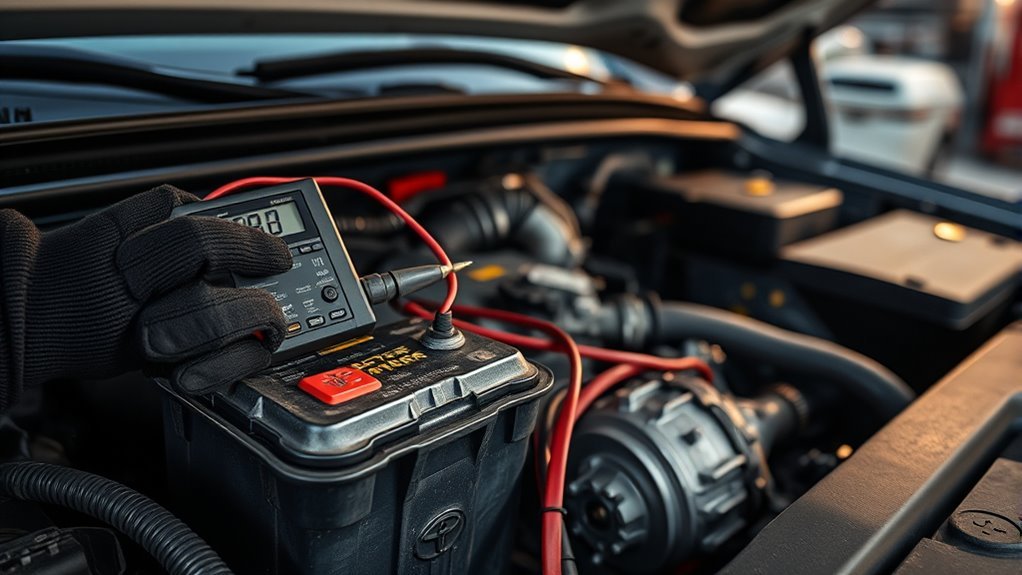
Turn off the lights, climate system, and accessories. Let surface charge settle according to your tester’s instructions, then measure voltage directly at the battery posts rather than on the cable clamps.
A reading near 12.6 volts commonly indicates a fully charged conventional lead-acid battery, but resting voltage does not prove that the battery can supply starter current. Use a load tester or suitable conductance tester and follow the battery manufacturer’s procedure. Also confirm the installed battery’s cold cranking amps (CCA) rating and group size against Toyota’s specification for your model and trim: a fully charged battery that is undersized or mismatched for the truck can still crank the engine slowly under load.
Watch battery voltage during cranking. Approximately 9.6 volts at moderate room temperature is a general reference, but temperature, battery type, engine, and Toyota specifications can change the acceptable limit. A low reading can result from a discharged or weak battery, excessive starter draw, poor connections, or mechanical drag.
Check the battery case, hold-down, terminal clamps, cable ends, and ground connections. Dim headlights, weak interior lights, or a weak horn during the starting attempt support this path, but they do not replace a load or conductance test. Clean corrosion safely and tighten connections to the correct specification. Do not place meter probes on corrosion, paint, or loose hardware.
Starter Crank Test
Measure starter current draw only with the correct clamp meter and repair information. Keep the transmission in Park or Neutral, apply the parking brake, and follow the approved procedure for preventing the engine from starting during the test.
Interpret current draw together with cranking speed:
- High current draw and slow rotation: suspect an internally worn starter, mechanical binding, excessive oil viscosity, or engine drag.
- Low current draw and slow rotation: suspect resistance in the power or ground circuit, poor starter contact, or a control-circuit problem.
- Low cranking voltage: test battery charge and capacity before blaming the starter.
- Normal electrical readings with slow rotation: investigate starter condition and mechanical drag using Toyota service information.
Grinding, scraping, or free-spinning requires a different inspection. Stop repeated starting attempts because a damaged starter drive or ring gear can become more expensive if it continues to grind.
Wiring and Grounds
Voltage-drop testing finds resistance that an ordinary continuity check can miss. Measure the circuit while it carries starter current.
For a positive-side test, place one meter lead on the battery positive post and the other on the starter’s main battery connection. Crank the engine and record the highest reading. Fluke’s voltage-drop procedure gives approximately 0.3 volts as a typical positive-side target. DENSO considers 0.5 volts or less acceptable across the complete positive path. Use Toyota’s specification when it differs.
For the ground-side test, measure between a clean point on the starter housing or engine block and the battery negative post while cranking. Approximately 0.2 volts or less is a common guideline. Use Toyota specifications when they differ.
A higher reading can indicate corrosion, a loose terminal, damaged cable strands, a weak ground strap, poor starter mounting contact, or heat-damaged wiring. Test smaller sections of the circuit until the voltage drop changes sharply. The fault is usually between that point and the previous test point.
| Test Result | What It Suggests | Next Step |
|---|---|---|
| Low battery voltage during cranking | Weak charge, poor battery capacity, excessive starter load, or engine drag | Charge and load-test the battery, then compare current draw |
| Excessive positive-side voltage drop | Resistance in a positive cable, terminal, connection, or starter switch path | Test smaller positive-side sections to isolate the loss |
| Excessive ground-side voltage drop | Weak battery ground, engine ground, starter mounting contact, or cable | Clean, tighten, and retest each ground path |
| High current draw with slow rotation | Starter damage, mechanical binding, thick oil, or excessive engine drag | Confirm oil specification, then inspect the starter and mechanical load |
| Cranking becomes much faster with an approved booster source | Low battery charge or capacity, or voltage loss in the starting circuit | Load-test the battery and repeat positive- and ground-side voltage-drop tests |
| Cranking stays slow with a known-good power source and acceptable voltage drop | High starter load, incorrect oil, accessory drag, or internal engine drag | Compare current draw with Toyota specifications and inspect mechanical load |
Warning: Disable the ignition or fuel system only by following the repair manual. Keep hands, tools, test leads, hair, and clothing away from belts, fans, pulleys, and other moving parts. Avoid repeated prolonged cranking, and follow the manual’s cranking-time and starter cool-down instructions.
What If the Battery Keeps Becoming Weak?
A replacement battery will not solve a charging fault, loose connection, or key-off electrical draw. After the engine starts, test charging-system operation with the procedure and specification for your model year.
If the battery repeatedly loses charge after the truck sits, perform a parasitic-draw test. Allow vehicle modules to enter sleep mode before measuring current. Opening doors, operating the key fob, or waking a module can invalidate the reading.
Do not disconnect the battery while the engine runs as a charging-system test. That method can create voltage spikes and damage electronic modules.
What If It Cranks at Normal Speed but Starts Late?
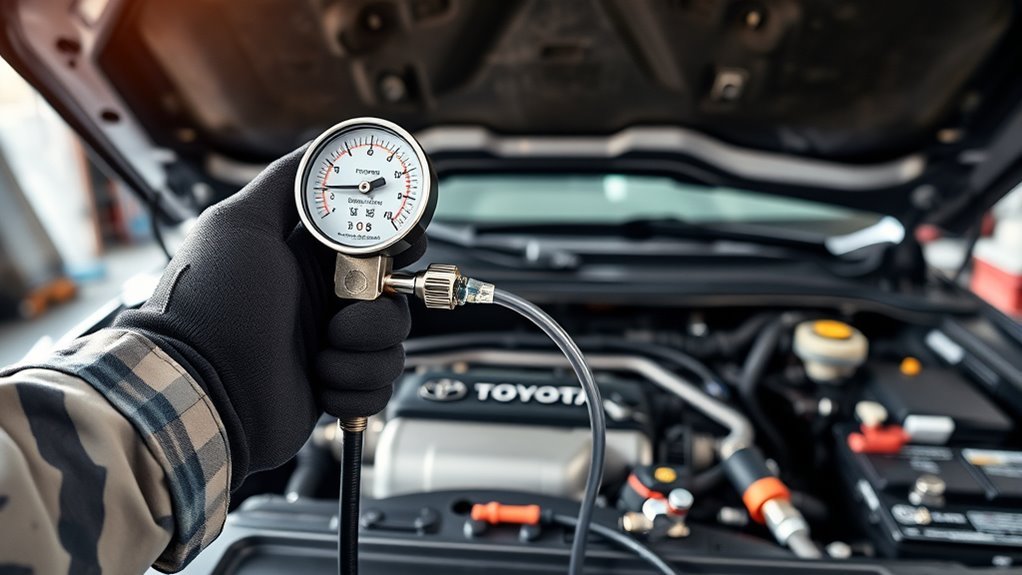
If the engine rotates at a normal, even speed but takes several seconds to start, the conventional starter circuit may not be the main problem. Move to fuel pressure, ignition output, injector operation, engine-control data, immobilizer status, and intake-air checks. Note whether the delay occurs only after an overnight park, only when hot, or after refueling because each pattern changes the most useful next test.
Scan for stored and pending trouble codes before disconnecting the battery or clearing data. Review relevant live data, including engine speed during cranking, coolant temperature, intake-air temperature, crankshaft and camshaft synchronization, and fuel-pressure data when the vehicle reports it. Learn what the scan connector and code system do in this guide to OBD2 diagnostics.
Use a fuel-pressure gauge only at the approved test point and with the correct Toyota procedure. Pressure requirements vary by model year, engine, and fuel system. Measure pressure during the commanded pump operation, while cranking, and after shutdown when the procedure calls for a retention test.
A rapid pressure drop after shutdown can involve a leaking injector, pump check valve, regulator, line, or another fuel-system component. Do not replace the pump from a key-cycling result alone.
Turning the ignition on, waiting briefly, and then trying to start can be a useful observation on models that command pump operation during that sequence. Not every Tundra commands the pump in the same way. If repeated cycling consistently shortens a normal-speed long crank, confirm pressure behavior with the correct service procedure and test equipment.
Use the fuel grade and ethanol allowance listed in the owner’s manual or fuel-door information for your exact Tundra. Do not assume E85 compatibility unless Toyota identifies the vehicle as a flex-fuel model. For tank size and fill-up planning by trim and year, see the site’s Tundra fuel tank capacity guide.
Check your 17-character VIN through NHTSA’s recall lookup or Toyota’s owner resources. Recall coverage is VIN-specific, so symptoms or model year alone do not prove that a campaign applies.
Warning: Fuel pressure testing can release gasoline under pressure. Work away from flames and sparks, wear eye protection, follow the depressurization procedure, and stop immediately if you smell raw fuel or see a leak.
Why Does Cold Weather Make a Tundra Crank Slowly?
Cold weather can expose a marginal battery, increase resistance at poor connections, and increase the effort needed to rotate the engine. Oil also becomes more resistant to flow as temperature falls, so a conventional starter may need more torque during the first cold start.
Begin with the battery and cable tests rather than assuming the fuel system is at fault. Compare cold and warm cranking voltage, starter speed, voltage drop, and current draw. A clear temperature pattern can help a technician reproduce the problem.
If the truck is slow only after sitting overnight, separate two patterns. Slow physical rotation points toward battery discharge, parasitic draw, cable resistance, oil viscosity, starter load, or mechanical drag. Normal-speed rotation followed by a delayed start points toward fuel-pressure retention, injector sealing, ignition output, sensor data, or an intake leak.
Cold-Weather Battery and Oil Effects
Confirm that the engine contains the oil viscosity listed for the vehicle and expected temperature range. An incorrect or excessively viscous oil can increase cranking load. Do not change viscosity solely to hide a starter or battery problem.
Inspect the battery rating and condition. A battery can show acceptable resting voltage yet fail under a cold, high-current load. Test capacity using equipment that accounts for battery temperature and type.
Check terminals and ground straps for corrosion or looseness. A connection that works when warm may develop enough resistance in cold conditions to slow the starter.
When Fuel Priming Matters
Fuel priming belongs under the normal-speed long-crank diagnosis. If the starter rotates the engine normally but combustion begins late after an overnight park, test fuel-pressure retention, ignition output, injector sealing, and temperature-sensor data.
Do not use a priming routine as a permanent repair. A repeatable change in starting time is a diagnostic clue that should be confirmed with pressure and scan data.
Practical DIY Fixes for Slow Cranking
Repair only what the test results support. Use this order:
- Confirm whether the truck uses the gasoline or i-FORCE MAX hybrid powertrain.
- Charge the 12-volt battery fully and test its capacity using the correct procedure.
- Clean and tighten battery terminals and approved ground connections.
- Repair any conventional starter cable or connection that fails a voltage-drop test.
- Confirm that the installed battery matches the specification for the truck.
- Confirm the correct engine-oil specification and level.
- On an applicable gasoline model, test starter current draw only after the power and ground paths pass.
- Test the charging system or parasitic draw if the battery repeatedly becomes weak.
- Investigate fuel, spark, injector, sensor, or air faults when engine rotation speed is normal.
Do not replace spark plugs, ignition coils, injectors, a fuel pump, a battery, or a starter because each part appears on a generic symptom list. Match the part to a failed test.
Pro tip: Save the meter readings with the date, outside temperature, engine temperature, powertrain type, and time since the truck last ran. Intermittent starting faults are easier to diagnose when you can show the exact conditions.
[Products Worth Considering]

This Yuirote universal car motor diagnostic tool helps drivers quickly detect engine fault codes and identify system issues for routine inspections and maintenance. It also supports electronic parking brake reset and emergency release functions, making it useful for handling EPB-related problems without a repair shop visit. Its compact, ergonomic design and broad vehicle compatibility make it a practical choice for car owners and DIY repair enthusiasts.

This plug-and-play OBD2 scanner helps drivers quickly read and clear engine error codes while providing live data, freeze frame information, I/M readiness, and MIL status for more confident troubleshooting. It adds a built-in voltage test and clear status indicators to support electrical checks and faster diagnostics, making it a practical choice for home users, car enthusiasts, and repair professionals. Compatible with most OBDII vehicles since 1996 and designed with an easy-to-use interface, it offers broad coverage and simple operation in one compact tool.

This automotive test light combines a bright LED voltage display with quick polarity indication for fast, accurate circuit checks in a wide range of vehicle systems. It helps diagnose battery, charging, lighting, and fuse issues with a sharp stainless probe, long spring wire, and easy-to-use alligator clip for efficient troubleshooting.
When to Call the Dealer or a Shop
Call a qualified shop when the battery and connection checks pass but a gasoline Tundra still rotates slowly. Bring your recorded voltage, voltage-drop, current-draw, temperature, and scan results.
A dealer or Toyota-specialist shop is especially useful when the fault may involve an i-FORCE MAX hybrid system, immobilizer, module communication, software, service campaign, or model-specific starting logic. Ask whether the shop has access to current Toyota repair information and bidirectional scan capability.
Stop repeated starting attempts and arrange professional help when you notice any of these signs:
- Raw-fuel odor or a visible fuel leak
- Smoke, melted insulation, or a hot battery cable
- Grinding, scraping, or starter free-spinning
- A swollen, cracked, frozen, or leaking battery
- A hybrid-system or high-voltage warning
- Repeated no-start events that could leave you stranded
- Abnormal engine knocking or signs of mechanical binding
Ask for a written diagnostic plan before approving parts. The plan should state which test failed and how the proposed repair addresses that result.
Frequently Asked Questions
Why Does My Toyota Tundra Crank Slowly?
A gasoline Tundra usually cranks slowly because the battery cannot supply enough power, resistance is limiting current through the cables or grounds, the starter is worn, the oil is too viscous for the conditions, or the engine has excessive mechanical drag.
How Can I Tell a Weak Battery From a Bad Starter?
Test battery capacity, cranking voltage, cable voltage drop, and starter current draw together. Low battery capacity points toward the battery. Excessive voltage drop points toward cables or grounds. High current draw with slow rotation can indicate starter wear or mechanical drag.
Why Does My Tundra Crank Slowly With a New Battery?
A new battery will not fix loose terminals, corroded cables, weak grounds, excessive starter draw, an incorrect battery specification, a charging fault, parasitic drain, thick oil, or mechanical drag. Verify that the battery is fully charged, then continue with voltage-drop and current-draw testing when applicable.
What Voltage Should a Tundra Battery Show While Cranking?
About 9.6 volts at moderate room temperature is a common general reference for a conventional 12-volt starting system. The correct minimum depends on temperature, battery type, engine, and Toyota service specifications.
Can a Bad Fuel Pump Make a Tundra Crank Slowly?
A fuel-pump or pressure-retention fault can make the engine crank longer before it fires, but it does not normally reduce a conventional starter’s rotation speed. Test the battery, starter circuit, grounds, oil specification, and mechanical drag first when the engine physically turns slowly.
Why Does My Tundra Crank Slowly Only in Cold Weather?
Cold conditions can reduce available battery performance and increase engine drag as oil thickens. Cold weather can also expose resistance at weak terminals, cables, or ground straps. Test the battery under load and confirm the correct oil specification.
Does This Diagnosis Apply to a Tundra i-FORCE MAX Hybrid?
The symptom-classification and basic 12-volt battery checks may still help, but do not assume that every conventional starter-current or starter-circuit procedure applies to an i-FORCE MAX hybrid. Follow Toyota’s hybrid-specific repair information and do not test high-voltage components without appropriate training and equipment.
Why Does My Tundra Crank Slowly After Sitting Overnight?
If the engine physically rotates slowly after an overnight park, test battery charge and capacity, key-off electrical draw, cable voltage drop, grounds, starter load, and oil specification. If it rotates normally but takes longer to fire, test fuel-pressure retention, injector sealing, ignition output, temperature-sensor data, and intake leaks instead.
Does a Jump-Start Prove the Battery Is Bad?
No. Faster cranking with a correctly connected booster source shows that available electrical power or circuit resistance is involved, but it does not identify the failed part by itself. Load-test the battery and measure positive- and ground-side voltage drop before replacing the battery, cables, or starter.
Safety Disclaimer: This article is for informational purposes only and does not replace professional vehicle diagnosis or repair advice. Follow the Toyota repair procedure for your exact model and powertrain, use properly rated test equipment and safety gear, and consult a qualified technician before working around fuel, batteries, starter circuits, hybrid systems, or moving engine parts.
Conclusion
A gasoline Toyota Tundra that rotates slowly needs a conventional starting-system diagnosis first. Test battery capacity, terminal condition, cranking voltage, cable voltage drop, grounds, starter current draw, oil specification, and possible mechanical drag in that order.
Move to fuel pressure, spark, injector, sensor, and air-leak checks when the engine rotates at a normal speed but takes too long to fire. For an i-FORCE MAX hybrid, use the hybrid-specific Toyota procedure. Record each result and stop replacing parts from symptoms alone. If the basic tests pass or the truck shows grinding, smoke, fuel leakage, hybrid warnings, or repeated no-start events, take the test log to a qualified shop.
References
- Toyota Manuals and Warranties – Toyota
- 2026 Toyota Tundra Powertrain Information – Toyota
- Starter Troubleshooting – DENSO
- How to Check Starter Circuit Voltage Drop with a Multimeter – Fluke
- VIN Recall Lookup – National Highway Traffic Safety Administration