

Last updated: July 31, 2026 — checked against Toyota’s 2026 U.S. Tundra and Tundra i-FORCE MAX maintenance charts.
The Toyota Tundra maintenance schedule uses 5,000-mile or six-month checkpoints, whichever comes first. For 2026 trucks under normal use, the 5,000-mile visit is mainly inspection and tire rotation, while engine oil and filter replacement is due at 10,000 miles or 12 months. Toyota shortens the oil interval to 5,000 miles or six months when most driving is on dirt or dusty roads, or when the truck repeatedly makes trips of less than five miles in freezing temperatures. Regular towing or heavy loading changes selected transmission, differential, and transfer-case intervals instead of automatically creating a 5,000-mile oil interval.
How this guide was checked: The mileage summaries below were compared with Toyota’s 2026 U.S. maintenance charts for the gasoline Tundra and the Tundra i-FORCE MAX. The factory schedule is separated from dealer-recommended add-ons. Older model years can differ, so confirm the chart for your exact year, engine, drivetrain, and use conditions.
Quick Answer
Service a current Toyota Tundra every 5,000 miles or six months. Under normal use, replace the engine oil and filter every 10,000 miles or 12 months. Use the 5,000-mile oil interval only when the applicable Toyota special-condition rule fits most of your driving. Towing and heavy loading require closer driveline service, including exact transmission and differential intervals listed below.
Key Takeaways
- Use 5,000 miles or six months as the basic inspection and tire-rotation checkpoint, even if you drive fewer miles.
- For 2026 Tundras, normal-use oil and filter service is due every 10,000 miles or 12 months.
- Dirt or dusty-road use and repeated short trips in freezing weather can shorten the oil interval to 5,000 miles or six months.
- Towing or heavy loading adds exact driveline-fluid work: transmission fluid at 60,000-mile blocks, front differential oil at 15,000-mile blocks, and rear differential oil at 30,000-mile blocks under the applicable 2026 conditions.
- The i-FORCE MAX adds hybrid-battery cooling-intake filter checks and cleaning, plus a separate inverter/intercooler coolant interval.
- Keep receipts, mileage, dates, fluid specifications, and part numbers so warranty and resale conversations stay simple.
Toyota Tundra Maintenance Schedule by Mileage
This table is a planning summary, not a replacement for the model-year chart. “Inspect” means check the listed component and correct a problem if needed. Special-use replacements apply only when the Toyota condition shown in the guide matches how the truck is regularly used.
| Mileage / Time | Normal-Use Focus | Special or Hybrid Items |
|---|---|---|
| 5,000 miles / 6 months | Rotate tires; inspect brakes, fluid levels, wipers, floor mats, and other charted items. | Replace oil/filter for qualifying dirt, dust, or repeated short freezing trips. Inspect the i-FORCE MAX hybrid-battery cooling intake filter. |
| 10,000 miles / 12 months | Repeat the 5,000-mile work and replace engine oil and filter. | Continue the 5,000-mile oil interval when the qualifying special condition remains your normal use. |
| 15,000 miles / 18 months | Add detailed brake, steering, suspension, driveshaft, radiator, exhaust, differential, and related inspections. | Replace front differential oil when regularly towing, using a car-top carrier, or carrying heavy loads. |
| 20,000 miles / 24 months | Repeat scheduled inspections, tire rotation, and normal oil/filter service. | Clean the i-FORCE MAX hybrid-battery cooling intake filter; inspect it at each 5,000-mile checkpoint. |
| 30,000 miles / 36 months | Replace engine and cabin air filters; inspect automatic transmission fluid, differential oils, transfer-case oil if equipped, and brake thickness/runout. | Replace rear differential and transfer-case oil under the applicable towing, heavy-load, or dirt/dust conditions. |
| 40,000 miles / 48 months | Replace spark plugs and complete the normal 10,000-mile oil service. | Clean the i-FORCE MAX hybrid-battery cooling intake filter. |
| 60,000 miles / 72 months | Replace air filters; inspect transmission, differentials, transfer case, belts, brakes, steering, and suspension. | Replace automatic transmission fluid for regular towing, car-top carrier use, or heavy loading. Complete applicable 15,000- and 30,000-mile differential/transfer-case work. |
| 80,000 miles / 96 months | Replace spark plugs and complete the normal oil/filter service. | Clean the i-FORCE MAX hybrid-battery cooling intake filter. |
| 100,000 miles / 120 months | Replace engine/intercooler coolant for the first time under the current chart. | Continue applicable hybrid-filter and severe-use driveline work. |
| 120,000 miles / 144 months | Replace spark plugs and air filters; inspect normal-use automatic transmission fluid. The 2026 non-hybrid guide also lists brake-booster vacuum-pump replacement at this block. | Replace automatic transmission fluid for qualifying towing/heavy-loading use; clean the i-FORCE MAX hybrid-battery cooling intake filter. |
| 150,000 miles / 180 months | Replace engine/intercooler coolant again; inspect automatic transmission fluid under normal use. | For the i-FORCE MAX, the current guide lists initial inverter/intercooler coolant replacement at this block. |
At a Glance
| Time Required | 30–90 minutes for routine inspections and rotation; longer for driveline fluids, spark plugs, coolant, or transmission service |
| Difficulty | Beginner for checks and records; intermediate to professional for fluids, brakes, spark plugs, and lifted-truck work |
| Tools Needed | Owner’s manual, service log, tire gauge, torque wrench, proper jack stands or lift, drain pans, and a scan/OBD tool when diagnosing warning lights |
| Cost | Varies by model year, engine, region, fluid type, and whether you use DIY, an independent shop, or dealer service |
What Is Due at 5,000 and 10,000 Miles?
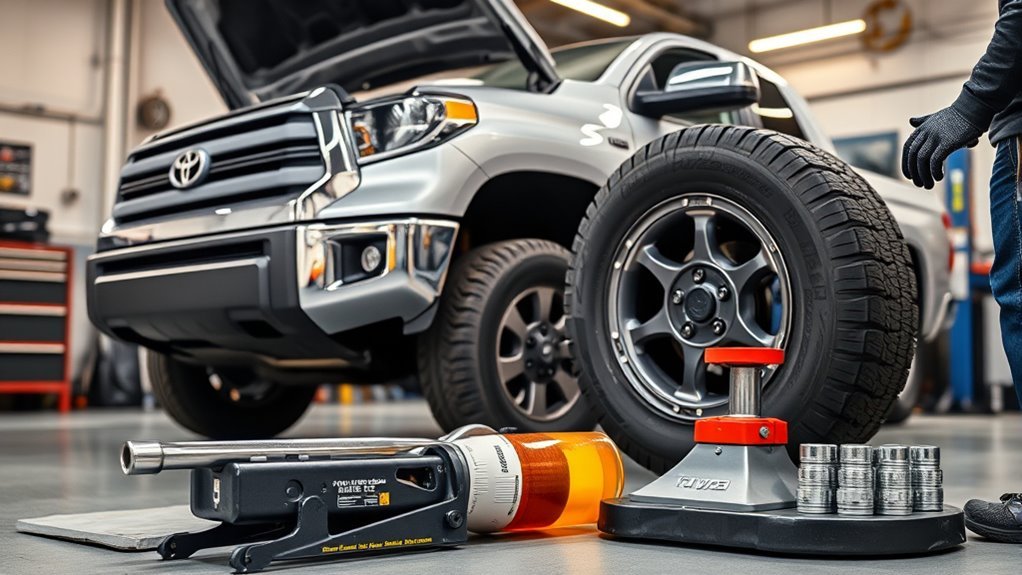
At 5,000 miles or six months, rotate the tires and complete Toyota’s charted inspections. These include fluid levels, brakes, wiper blades, floor-mat installation, and the other components listed for the truck’s configuration and use. This visit can reveal uneven tire wear, leaks, damaged boots, loose hardware, weak wipers, or abnormal brake wear before the next road trip.
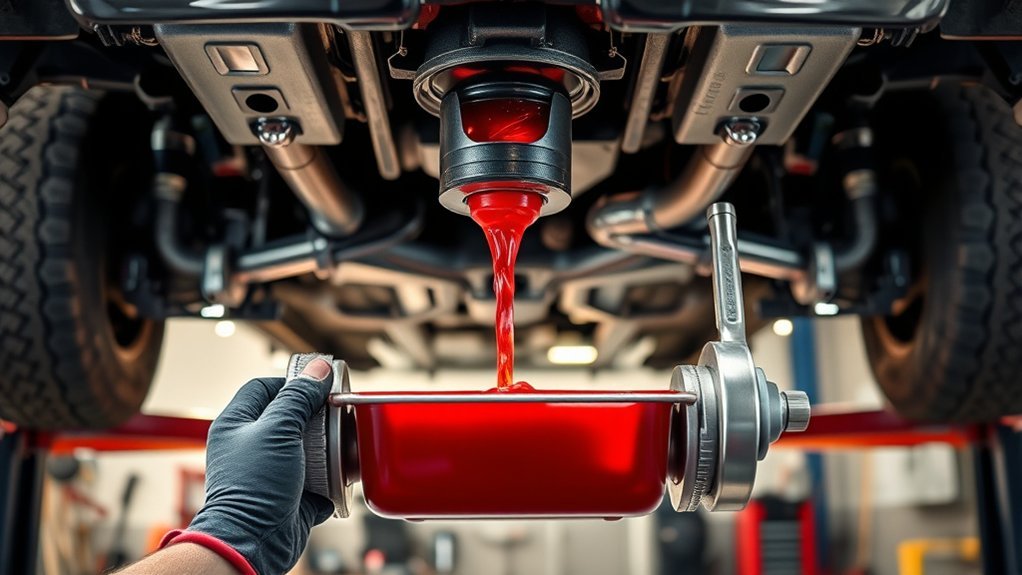
At 10,000 miles or 12 months, repeat the checkpoint items and replace the engine oil and oil filter under normal conditions. Use a 5,000-mile oil interval only when most driving is on dirt or dusty roads, or when the truck repeatedly makes trips of less than five miles in freezing temperatures. Towing alone is not listed as a 5,000-mile oil trigger in Toyota’s 2026 chart.
- At 5,000 miles: rotate tires, inspect brakes, check fluid levels and wipers, and record the mileage and date.
- At 10,000 miles: repeat the 5,000-mile work and replace the engine oil and oil filter under normal use.
- For qualifying dirt, dust, or short freezing trips: replace the oil and filter every 5,000 miles or six months.
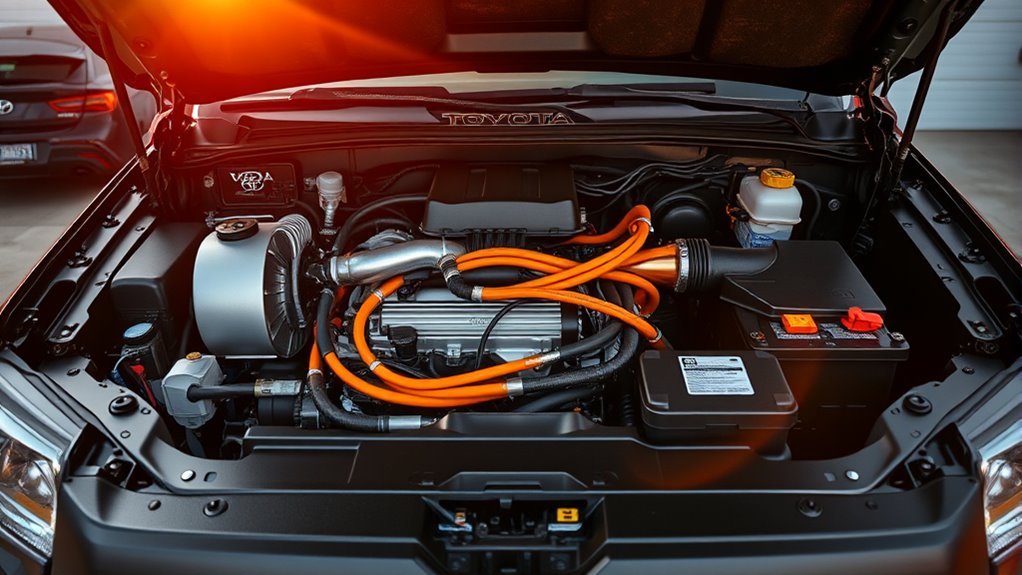
- For i-FORCE MAX trucks: inspect the hybrid-battery cooling intake filter at each 5,000-mile checkpoint and clean it if needed.
For oil quantity and filter details by configuration, see the Toyota Tundra oil capacity and filter guide.
Warning: Do not reset the Tundra maintenance-required reminder just to clear the message. Complete the required service first, record it, and then reset the correct reminder.
[Products Worth Considering]

This replacement filter set is designed for a range of Toyota hybrid vehicles, including popular models like RAV4 Hybrid, Camry Hybrid, Highlander Hybrid, Sienna, Venza, and more. It combines cabin and engine filtration to help support cleaner airflow, reduce dust and odors, and protect your HVAC and engine systems. Built for easy installation and extended service life, it offers a convenient maintenance upgrade for compatible hybrid and gas-only Corolla models.

This A-Premium engine air filter is designed to help maintain clean airflow for compatible Lexus and Toyota vehicles, supporting better engine performance and efficiency. It uses fine filtration media to capture debris while minimizing airflow restriction, making it a practical replacement for routine maintenance. With fitment for multiple popular models and a convenient boxed single-pack design, it offers a straightforward solution for keeping your engine protected.

This dual filter kit helps keep your vehicle running and riding cleaner by replacing both the engine air filter and cabin air filter at the same time. It is designed for a range of Toyota and Lexus hybrid models, helping support engine performance while reducing odors and airborne particles inside the cabin. Built with high-quality filtration materials, it offers a convenient maintenance solution for routine filter replacement.
What Does a Tundra 30,000-Mile Service Include?
At 15,000 miles, the schedule adds closer inspections of the brake lines and hoses, brake pads and discs, ball joints and dust covers, steering linkage, driveshaft boots, exhaust system, radiator and condenser, front and rear differentials, and other charted components. For trucks regularly used for towing, a car-top carrier, or heavy loading, the 2026 schedule also calls for front differential oil replacement at this 15,000-mile block.
At 30,000 miles, replace the cabin air filter and engine air filter. Toyota’s chart also calls for automatic transmission fluid inspection, brake lining/drum and brake pad/disc measurements, front and rear differential inspection, and transfer-case inspection on equipped trucks. Under the applicable special-use conditions, rear differential oil and transfer-case oil are replaced at this block.
| Mileage | Factory-Schedule Focus | Special-Use Difference |
|---|---|---|
| 15,000 miles | Detailed brake, steering, suspension, driveshaft, radiator, exhaust, differential, and related inspections | Replace front differential oil for regular towing, car-top carrier use, or heavy loading |
| 30,000 miles | Replace cabin and engine air filters; inspect automatic transmission fluid, differentials, transfer case if equipped, and brake thickness/runout | Replace rear differential oil for regular towing/heavy loading; replace transfer-case oil for the listed dirt/dust or towing/heavy-load conditions |
A “30,000-mile service package” sold by a shop may include work beyond Toyota’s chart. Ask for a line-item estimate and identify which services are factory-scheduled, which are based on an inspection result, and which are optional preventive add-ons.
[Products Worth Considering]

This KAX combo kit includes both an engine air filter and a cabin air filter for compatible Toyota and Lexus hybrid models, making routine maintenance simple and convenient. It helps support cleaner cabin air and reliable engine airflow with multi-layer filtration and activated charcoal odor control. Designed for easy installation, it offers a practical all-in-one replacement solution for scheduled upkeep.

This cabin and engine air filter kit is designed for a wide range of compatible Toyota, Scion, and Pontiac models, helping improve airflow and keep your HVAC and engine systems cleaner. The activated carbon cabin filter helps reduce odors and trapped debris, while the engine air filter supports efficient performance with extended service life. It is easy to install and offers a convenient replacement solution for routine vehicle maintenance.
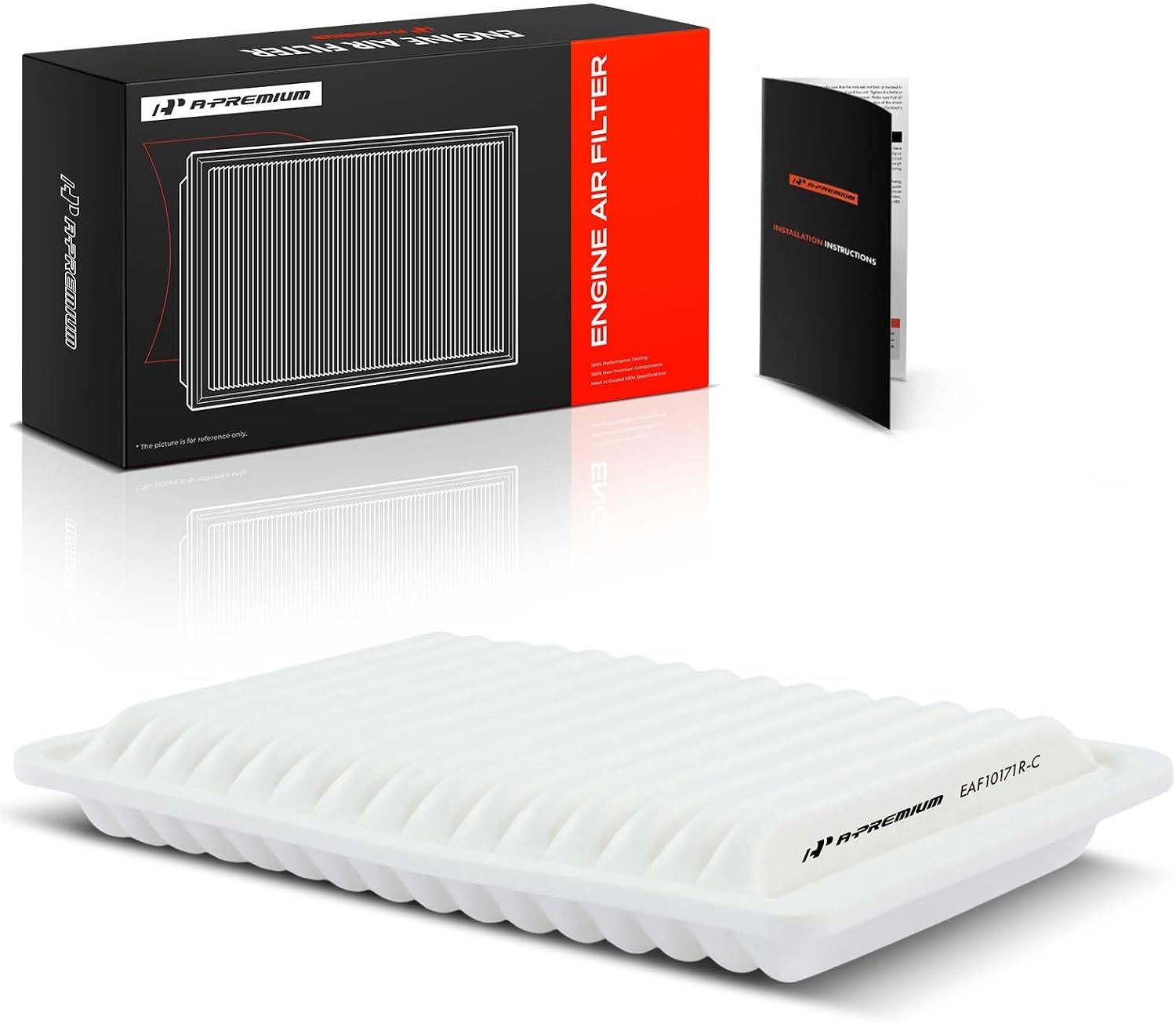
This A-Premium engine air filter is designed to help Toyota Camry and Venza models maintain cleaner airflow and stronger engine performance. Its fine filtration media captures debris while keeping air moving efficiently, and the rectangular, front-mounted design offers a direct replacement fit for select vehicles. Replace it regularly to support engine efficiency and cleaner intake air.
When Should Tundra Transmission and Differential Fluids Be Changed?
For a 2026 Tundra under normal use, Toyota schedules automatic transmission fluid inspections rather than automatic replacement at every major milestone. Regular towing, car-top carrier use, or heavy vehicle loading adds transmission-fluid replacement at 60,000 and 120,000 miles. Differential and transfer-case intervals are shorter under the listed special conditions.
| Item | 2026 Normal Use | 2026 Special-Use Interval |
|---|---|---|
| Automatic transmission fluid | Inspect at 30,000, 60,000, 90,000, 120,000, and 150,000 miles | Replace at 60,000 and 120,000 miles for regular towing, car-top carrier use, or heavy loading |
| Front differential oil | Inspect at charted 15,000-mile checkpoints if equipped | Replace every 15,000 miles for regular towing, car-top carrier use, or heavy loading |
| Rear differential oil | Inspect at charted 15,000-mile checkpoints | Replace every 30,000 miles for regular towing, car-top carrier use, or heavy loading |
| Transfer-case oil | Inspect at charted 30,000-mile checkpoints if equipped | Replace every 30,000 miles under the applicable dirt/dust or towing/heavy-load conditions |
| Engine/intercooler coolant | Replace first at 100,000 miles/120 months, then every 50,000 miles/60 months | Use the same charted interval unless inspection, contamination, repair work, or model-specific guidance requires earlier service |
Use the fluid specification listed for the exact truck. The wrong automatic transmission, differential, or transfer-case fluid can create shift, lubrication, or compatibility problems. For more detail, see the Tundra transmission fluid guide, Tundra differential service guide, and Tundra transfer-case service guide.
Do not wait for the chart: Grinding, binding, shuddering, delayed engagement, visible leakage, overheating, or an unusual fluid odor requires diagnosis when it appears.
[Products Worth Considering]

This 6-pack engine oil filter set is designed for Toyota applications and compatible cross-reference part numbers, helping support clean oil flow and dependable engine protection. Built from quality materials and featuring 99% multi-pass efficiency, it is made to help extend engine life and maintain performance between service intervals. The included six filters make it a practical choice for routine maintenance and multiple oil changes.

This flexible oil funnel is designed to make fluid changes cleaner and easier by guiding oil around obstacles like skid plates and crossmembers. Its shape-retaining core and silicone body can be molded for custom positioning, while the heat-resistant, leak-proof design helps prevent spills during draining and filter removal. Reusable and easy to clean, it works well for cars, trucks, motorcycles, and other hard-to-reach fluid fill or drain applications.

This engine and cabin air filter combo is designed to help keep your vehicle’s air cleaner while supporting reliable engine performance. It includes HEPA cabin filtration for finer particle capture, a pre-filter and reinforced mesh for added engine air protection, and a removal tool to make replacement easier in tight spaces. Built for a wide range of Toyota and Lexus hybrid and gas models, it lets you replace both filters at once for added convenience.
What Is Due at 60,000 to 150,000 Miles?
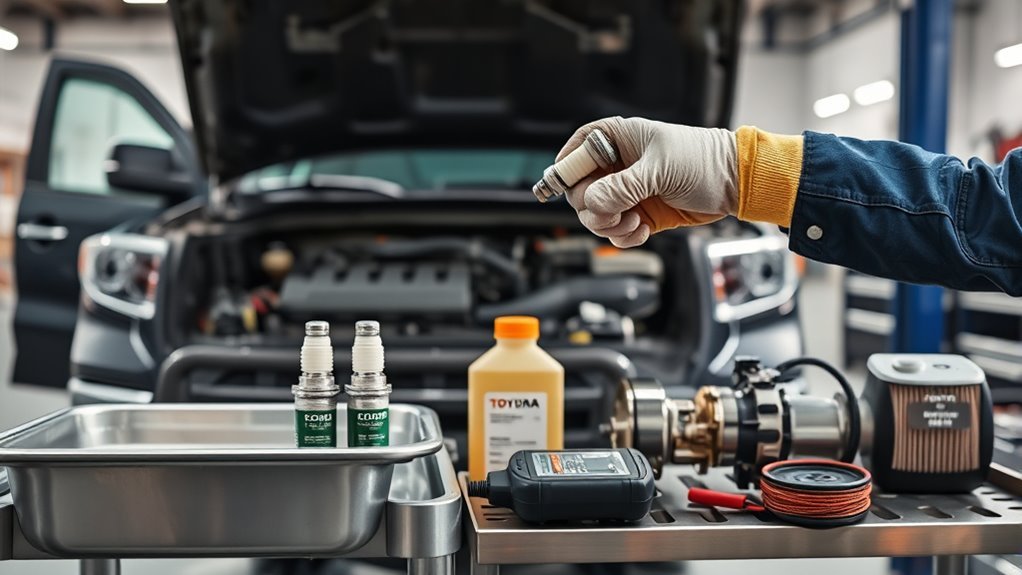
From 60,000 miles onward, the schedule repeats earlier inspection and filter cycles while adding spark plugs, coolant, and model-specific long-term items. The correct work still depends on normal versus special use, 2WD versus 4WD, and gasoline versus i-FORCE MAX configuration.
| Service | Current 2026 Guidance |
|---|---|
| Transmission fluid, normal use | Inspect at 60,000, 90,000, 120,000, and 150,000 miles; repair a leak or address a diagnosed fluid problem when found |
| Transmission fluid, towing/heavy loading | Replace at 60,000 and 120,000 miles under the listed regular-use conditions |
| Spark plugs | Replace at 40,000, 80,000, and 120,000 miles in the current 2026 charts |
| Engine/intercooler coolant | First replacement at 100,000 miles/120 months, then every 50,000 miles/60 months |
| Cabin and engine air filters | Replace at 30,000-mile blocks, or sooner when inspection shows restriction, contamination, or poor airflow |
| Brake-booster vacuum pump | The 2026 non-hybrid guide lists replacement at 120,000 miles; confirm applicability in the exact model-year guide |
Do not add a “timing belt at 90,000 miles” service unless the owner materials for the exact truck list it. Current-generation Tundra planning should follow the actual charted components rather than a generic truck checklist. See the Tundra timing belt versus timing chain guide for generation-specific context.
Pro Tip: Keep a one-page service log in the glove box or cloud storage. Include mileage, date, oil viscosity, fluid type, filter brand and part number, tire-rotation pattern, inspection findings, and receipt photos.
How Is i-FORCE MAX Hybrid Maintenance Different?
The i-FORCE MAX follows the same basic 5,000-mile checkpoint rhythm but adds hybrid-specific work. Toyota’s 2026 hybrid chart calls for inspection of the hybrid-battery cooling intake filter at every 5,000-mile checkpoint. Clean it when inspection shows a need and at each listed 20,000-mile cleaning block. A blocked intake can reduce cooling airflow around the hybrid battery system.
- Every 5,000 miles: inspect the hybrid-battery cooling intake filter and clean it if needed.
- Every 20,000 miles: complete the charted filter cleaning.
- At 100,000 miles: replace the engine/intercooler coolant under the current chart.
- At 150,000 miles: replace the inverter/intercooler coolant for the first time under the current chart.
Keep the intake area clear and follow the exact cleaning method in the owner materials. For location and airflow details, see the Tundra hybrid battery cooling guide.
Hybrid safety: Do not touch, disconnect, or repair orange high-voltage cables or hybrid-system components unless you have the required training and protective equipment.
What Counts as Severe-Duty Tundra Use?
Toyota applies special operating-condition items when most of the truck’s driving fits the stated condition. An occasional tow or one dirt-road trip does not automatically move every service item to a severe schedule. Match each maintenance item to the condition named in the model-year chart.
- Oil and filter: use the 5,000-mile/6-month interval when most driving is on dirt or dusty roads, or when the truck repeatedly makes trips of less than five miles in freezing temperatures.
- Automatic transmission fluid: replace at 60,000 and 120,000 miles when regularly towing, using a car-top carrier, or carrying heavy loads.
- Front differential oil: replace every 15,000 miles under the listed towing/carrier/heavy-load condition.
- Rear differential oil: replace every 30,000 miles under the listed towing/carrier/heavy-load condition.
- Transfer-case oil: replace every 30,000 miles on equipped trucks under the applicable dirt/dust or towing/heavy-load condition.
- Road salt: inspect and tighten the charted chassis and body fasteners at the listed checkpoints.
- Brakes and towing hardware: inspect pads, rotors, lines, hoses, hitch hardware, safety chains, wiring, trailer brakes, connectors, corrosion, and Tundra tire pressures before a towing trip.
After driving off-road through deep sand, mud, or water, inspect the truck as soon as practical. Toyota’s off-road list includes ball joints and dust covers, brake lines and hoses, brake linings/pads/discs, differential oil, driveshaft boots, engine air filter, chassis/body fasteners, steering linkage, transfer-case oil on 4WD models, and transmission fluid or oil.
How Do You Track Tundra Maintenance and Protect the Warranty?
Keep a record of the service date, mileage, work performed, and parts or fluids installed. Toyota states that maintenance can be performed by the owner or by an automotive service provider of the owner’s choice. It also states that a warranty claim will not be denied solely because records are missing or a non-dealer performed the work. Damage or failure caused by improper maintenance or repair may still be excluded.
Aftermarket parts do not automatically void the entire vehicle warranty. Federal Trade Commission guidance says a manufacturer or dealer generally must show that an improper repair or aftermarket part caused the damage before denying coverage for that repair. Use parts and fluids that meet Toyota specifications, and keep receipts. Review Toyota’s Tundra manuals and warranty resources, the FTC’s auto-warranty guidance, and 16 CFR Part 700.
How Do You Review a Tundra Service Estimate?
A dealer or repair shop may recommend sensible preventive work that is not due in Toyota’s basic mileage chart. That does not make every extra service necessary at the same time. Review the estimate line by line before approving it.
| Question to Ask | What the Answer Should Clarify |
|---|---|
| Is this item listed at my mileage? | Whether it is factory-scheduled for the exact model year and configuration |
| Is it due because of my use? | Which Toyota special condition applies: dirt/dust, short freezing trips, towing, heavy loading, road salt, or off-road use |
| Did an inspection find a problem? | The measurement, leak, contamination, fault code, damage, or wear that supports the recommendation |
| What fluid or part specification will be used? | The exact Toyota-required specification and the quantity or part number on the estimate |
| Is this optional preventive work? | Whether the item is a shop recommendation rather than a requirement for maintaining warranty coverage |
Save the final invoice with the odometer reading and note any recommendation you declined. That creates a useful record if the same component is inspected again later.
How Do You Reset the Tundra Maintenance Reminder?
Reset the reminder only after the required work is complete. Toyota’s late-model digital guidance uses the meter-control switches and multi-information display: open the settings display, select Vehicle Settings, choose Scheduled Maintenance, and confirm Yes. Menu wording can vary by model year and display, and older Tundras may use a trip/odometer-button procedure. Match the reset method to the exact owner’s manual.
Resetting a reminder does not perform or verify the service. Record the work first so the next alert corresponds to a real maintenance date and mileage.
Safety warning: Vehicle maintenance can involve hot oil, hot coolant, pressurized systems, brake dust, heavy tires, and a raised truck. Use proper jack stands or a lift, wear eye protection, follow torque specifications, and leave high-voltage hybrid components and brake-system repairs to qualified technicians if you are not trained.
Frequently Asked Questions
How often should a Toyota Tundra be serviced?
Use a 5,000-mile or six-month checkpoint, whichever comes first. For a 2026 Tundra under normal use, engine oil and filter replacement is due every 10,000 miles or 12 months, while tire rotation and scheduled inspections continue every 5,000 miles or six months.
What is included in a Toyota Tundra 30,000-mile service?
The current 2026 schedule includes engine and cabin air-filter replacement, automatic transmission fluid inspection, brake thickness/runout checks, differential inspection, transfer-case inspection if equipped, tire rotation, normal oil/filter service, and the other recurring checks. Special-use trucks may also need rear differential and transfer-case oil replacement.
Does towing require a 5,000-mile oil change on a 2026 Tundra?
Not by itself. Toyota’s 2026 chart ties the 5,000-mile oil interval to primary dirt or dusty-road driving and repeated trips of less than five miles in freezing temperatures. Regular towing or heavy loading instead adds specific transmission, differential, transfer-case, and inspection work.
How often should Tundra transmission fluid be changed?
For a 2026 Tundra under normal use, Toyota lists transmission-fluid inspections at 30,000-mile blocks through 150,000 miles rather than a universal replacement interval. For regular towing, car-top carrier use, or heavy loading, the chart calls for replacement at 60,000 and 120,000 miles.
What maintenance is different on a Tundra i-FORCE MAX?
The i-FORCE MAX adds hybrid-battery cooling intake filter inspections at each 5,000-mile checkpoint, scheduled cleaning at 20,000-mile blocks, and initial inverter/intercooler coolant replacement at 150,000 miles under the current 2026 chart.
How does warranty affect required maintenance scheduling?
Keep records with service dates, mileage, parts, fluids, and receipts. Toyota says a claim will not be denied solely because records are missing or a non-dealer performed the work, but damage caused by improper maintenance or repair may not be covered.
Which fluids require Toyota specifications?
Use fluids that meet the specifications in the exact owner’s manual for engine oil, automatic transmission fluid, differential oil, transfer-case oil, brake fluid, engine/intercooler coolant, and inverter/intercooler coolant on the i-FORCE MAX. The required specification matters more than the brand name.
Can aftermarket parts be used for major services?
Yes. Choose parts that meet the vehicle’s specifications and keep receipts. An aftermarket part does not automatically void the entire warranty, but damage caused by an unsuitable part or poor installation may not be covered.
How do you reset the maintenance reminder on a Tundra?
After completing the service, newer Tundras generally reset through the multi-information display: open the settings screen, choose Vehicle Settings, select Scheduled Maintenance, and confirm Yes. Older model years may use a trip/odometer-button method, so check the exact owner’s manual.
Is the Toyota Tundra maintenance schedule the same for every model year?
No. Older V8 Tundras, current twin-turbo V6 trucks, i-FORCE MAX models, 2WD trucks, 4WD trucks, and special-use vehicles can have different requirements. Confirm the schedule using the exact model year, engine, drivetrain, and owner materials.
What is the difference between normal service and severe-duty service?
Normal service applies when repeated harsh conditions do not define most of the truck’s use. Toyota’s special operating conditions include specific patterns such as regular towing or heavy loading, dirt or dusty roads, road salt, repeated short freezing-weather trips, and off-road driving. Each condition changes only the maintenance items tied to it in the chart.
Conclusion
Use the odometer, elapsed time, and actual driving conditions together. Start with the 5,000-mile or six-month checkpoint, apply the normal 10,000-mile oil interval unless Toyota’s specific shorter-interval condition fits, and add the exact towing, differential, transfer-case, or hybrid work when it becomes due. Compare each service estimate with the model-year chart, use the required fluid specifications, and save the completed-service record.
Sources
- Toyota 2026 Tundra Warranty & Maintenance Guide — gasoline-model maintenance intervals, normal versus special operating conditions, oil, filters, spark plugs, transmission, differential, transfer case, coolant, and warranty records
- Toyota Manuals and Warranties — model selector for the exact Tundra or Tundra Hybrid year and owner materials
- Toyota Tundra Digital Manual: Maintenance Requirements — late-model maintenance-reminder guidance
- Federal Trade Commission: Auto Warranty Tips — independent service, aftermarket parts, records, and warranty-rights guidance
- 16 CFR Part 700: Magnuson-Moss Warranty Act Interpretations — federal warranty interpretations concerning authorized parts and service conditions


[…] broader service planning, use the site’s Tundra maintenance schedule and then confirm the instructions for your exact model […]
[…] the correct fuel with a current Toyota Tundra maintenance schedule. Healthy spark plugs, proper oil, unrestricted airflow, correct cooling-system operation, and […]
[…] the use and discuss an appropriate interval with a Toyota service department. The site’s Toyota Tundra maintenance schedule by mileage explains the normal and special-condition checkpoints in more […]
[…] the truck’s complete service rhythm, use the Toyota Tundra maintenance schedule by mileage and confirm it against the owner materials for your model […]