
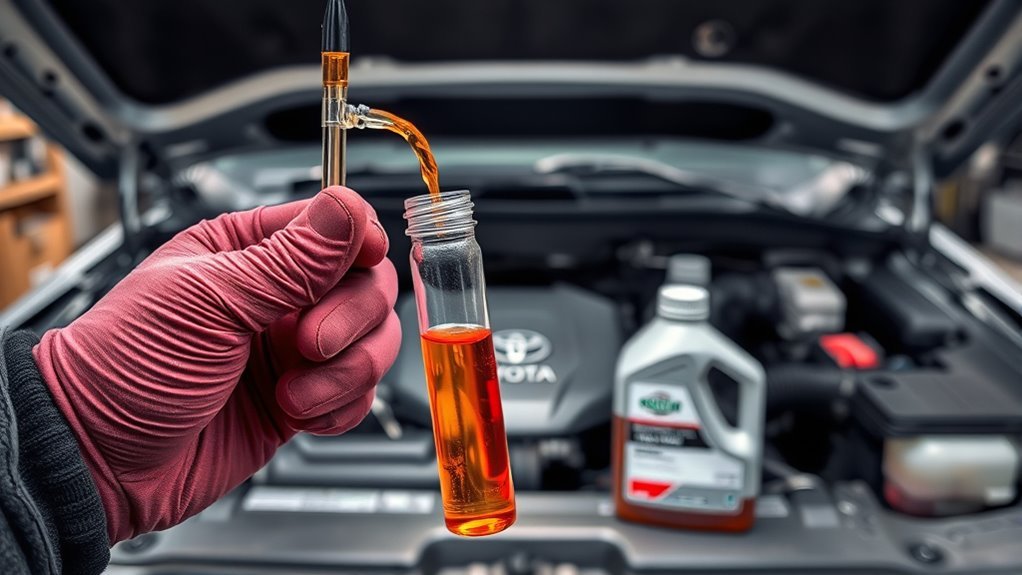
The correct Toyota Tundra transmission fluid depends on the model year and transmission. The 2001 Tundra owner’s manual lists D-II or DEXRON III, the 2003 manual specifies Toyota Genuine ATF Type T-IV, and the 2005 manual specifies Toyota Genuine ATF WS. These examples show how the requirement changed between model years, but a broad year chart is not the final authority. Confirm the specification in your exact owner’s manual, through a Toyota VIN lookup, and on the transmission dipstick, fill plug, or identification label before opening a bottle.
Last updated: July 22, 2026 · Reviewed against Toyota owner’s manuals, maintenance guides, and current fluid-manufacturer data sheets.
Quick Answer
Toyota Genuine ATF WS is the common specification for many 2005 and newer Tundra automatics. The 2003 manual specifies Toyota Genuine ATF Type T-IV, while the 2001 manual lists D-II or DEXRON III. Do not choose fluid from the model year alone. Verify the exact truck by owner’s manual, VIN, transmission identification, and dipstick or fill-plug markings.
Key Takeaways
- Do not assume every Tundra uses WS. Toyota changed the automatic-transmission fluid specification between model years.
- Do not mix WS, T-IV, and Dexron-type fluids. They are different specifications with different friction characteristics.
- Many WS Tundras use a sealed level-check system. The final level depends on a defined fluid-temperature and overflow procedure.
- Verify aftermarket fluid from its current label or data sheet. A generic “multi-vehicle” claim is not enough.
- Do not confuse the transmission with the transfer case. They are separate components with separate plugs, capacities, fluids, and level procedures.
Which Transmission Fluid Does Each Toyota Tundra Year Use?
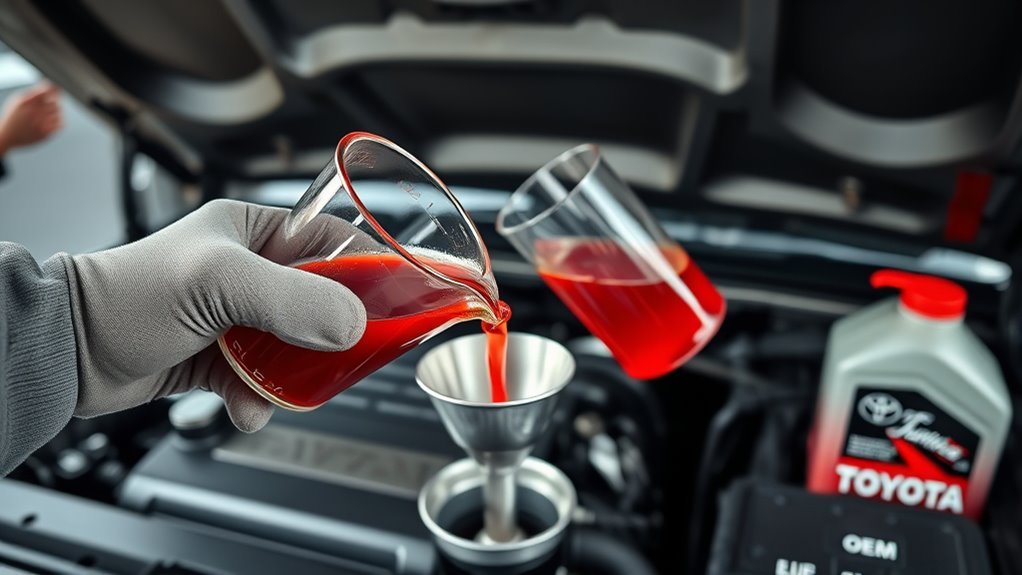
The safest way to identify the correct Toyota Tundra transmission fluid is to start with documentation for the exact truck. The 2001 Tundra owner’s manual lists D-II or DEXRON III automatic transmission fluid. The 2003 Tundra owner’s manual specifies Toyota Genuine ATF Type T-IV, while the 2005 Tundra owner’s manual specifies Toyota Genuine ATF WS.
| Tundra model year | Documented or common ATF specification | How to use this information |
|---|---|---|
| 2000–2002 | Early Dexron-type ATF. The 2001 manual lists D-II or DEXRON III. | Confirm the exact year and transmission in its owner’s manual. Do not apply the 2001 listing automatically to a swapped or rebuilt transmission. |
| 2003 | Toyota Genuine ATF Type T-IV, identified in the manual as JWS3309 or NWS6500. | Use T-IV or a current fluid whose manufacturer explicitly lists the required Toyota T-IV specification. |
| 2004 | Verify the exact truck before purchase. | Check the owner’s manual, VIN record, dipstick label, and transmission identification instead of relying on the model year alone. |
| 2005–2006 | Toyota Genuine ATF WS on applicable automatic transmissions. The 2005 manual identifies WS as JWS3324 or NWS9638. | Confirm the transmission and its markings, especially if the truck has been rebuilt, imported, or modified. |
| 2007–2021 | Toyota Genuine ATF WS is the common specification for the factory automatics in this generation. | Verify the exact engine, transmission, owner’s manual, and service procedure before draining fluid. |
| 2022 and newer | Toyota Genuine ATF WS is listed for current third-generation Tundra automatic transmissions. | Use the current owner’s manual or a Toyota VIN lookup because specifications and procedures can change during a generation. |
Use This Verification Order
- Check the exact owner’s manual or Toyota VIN record. This is the primary specification source.
- Confirm the transmission markings. Inspect the dipstick label, fill-plug marking, or transmission identification tag where applicable.
- Account for non-original equipment. A rebuilt, swapped, imported, or modified truck must be identified by the transmission actually installed, not only by the vehicle model year.
Transmission versus transfer case: These are separate components. Even when a newer transfer case also calls for ATF WS, it has different plugs, capacity, and level-setting instructions. See the Toyota Tundra transfer-case fluid guide before servicing the four-wheel-drive system.
[Products Worth Considering]

Automatic Transmission Fluid WS is a world-spec fluid specifically designed for sealed, automatic transmissions.

For use in 95% of vehicles including most CVTs in operation with US registered light duty applications
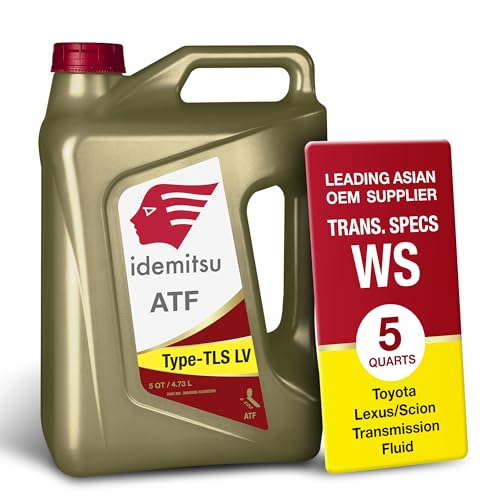
Optimized viscosity and advanced friction reducing additive technology provide exceptional fuel economy performance
Why Does the Exact ATF Specification Matter?
Automatic transmission fluid does more than lubricate gears. It transfers hydraulic pressure, controls clutch engagement, affects torque-converter lockup, carries heat, and influences shift timing and feel. A fluid with the wrong friction behavior can cause harsh shifts, delayed engagement, shudder, vibration, or poor lockup operation.
For WS-equipped trucks, Toyota Genuine World Standard ATF, part number 00289-ATFWS, is formulated for applicable Toyota automatic transmissions and transaxles. For T-IV trucks, use Toyota Genuine ATF Type T-IV or a current fluid that explicitly lists Toyota T-IV or JWS3309 compatibility. For an early Dexron-equipped truck, use a product whose manufacturer clearly states that it meets the exact Dexron requirement in that truck’s manual.
Warning: Do not mix Toyota WS, Toyota T-IV, and Dexron-type ATF as a routine substitute. If the wrong fluid was added and the truck develops slipping, shudder, abnormal shifts, vibration, or overheating, stop driving when it is safe and have the transmission inspected.
Can You Use Aftermarket ATF in a Toyota Tundra?
Toyota Genuine fluid is the simplest way to match the factory specification. An aftermarket fluid can be reasonable when its current bottle label or technical data sheet explicitly lists the exact Toyota or industry specification required by the transmission. The phrase “multi-vehicle ATF” by itself does not establish compatibility.
| Required specification | Lowest-risk choice | Aftermarket selection rule |
|---|---|---|
| Toyota WS | Toyota Genuine ATF WS | Use only a current product whose manufacturer lists Toyota WS or JWS3324 compatibility. Manufacturer examples include Aisin ATF-0WS, Idemitsu ATF Type TLS-LV, and ENEOS Import ATF Model T-W. |
| Toyota T-IV | Toyota Genuine ATF Type T-IV | Use only a current fluid whose manufacturer explicitly lists Toyota T-IV, JWS3309, or NWS6500 compatibility. |
| D-II or DEXRON III | The Dexron-type ATF required by the owner’s manual | Use a current product only when its manufacturer states that it is suitable for the exact older Dexron requirement. Do not assume every newer Dexron-labeled fluid is suitable without checking its documentation. |
Compatibility reminder: Fluid formulations, labels, and manufacturer recommendations can change. Recheck the current bottle and technical data sheet when you purchase the fluid rather than relying only on an older product name.
Pro Tip: Keep the receipt and photograph the front and back labels before service. Record the fluid brand, specification, quantity, date, and mileage with the truck’s maintenance history.
[Products Worth Considering]

For best performance, follow the manufacturer's recommendations in your vehicle owner’s manual.
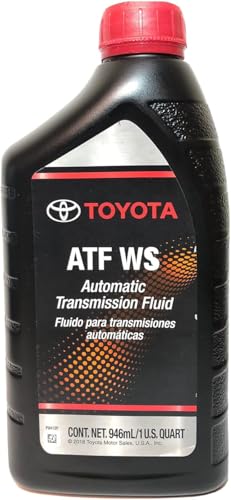
Transmission Fluid

Genuine Toyota 00279-000T4-01 ATF T-Iv Quart
How Do You Check and Change Tundra Transmission Fluid?
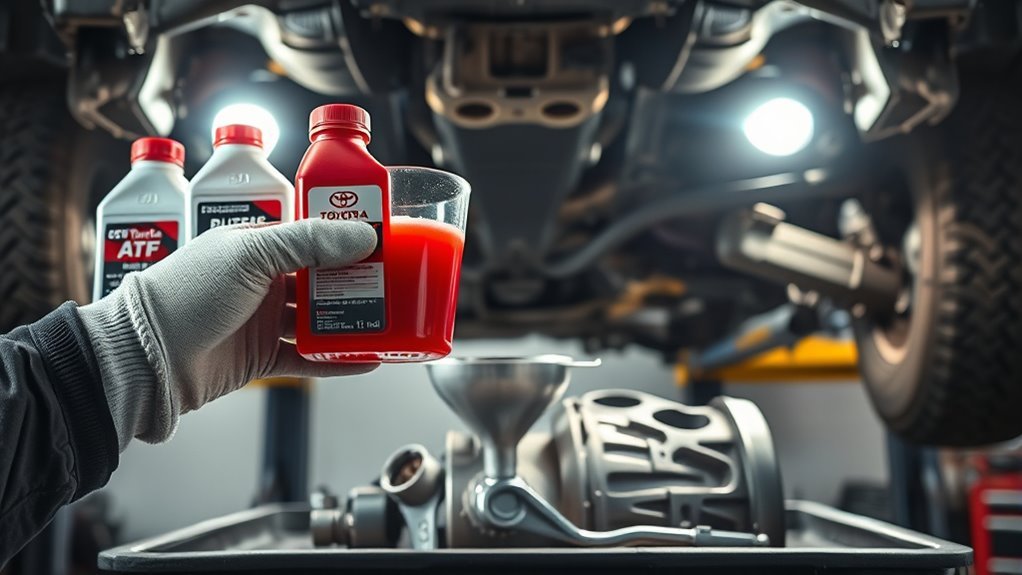
At a Glance
| Planning Time | Allow about one to two hours for a basic drain-and-fill; sealed-system work may take longer. |
| Difficulty | Moderate. A sealed WS transmission is more demanding than a dipstick-equipped model. |
| Tools Needed | Drain pan, gloves, safety glasses, jack stands or lift, correct sockets or hex bits, torque wrench, funnel or fluid pump, and an approved temperature-check method for a sealed transmission |
| Cost | Varies by fluid quantity, sealing washers, and tools. Check current local fluid pricing before service. |
[Products Worth Considering]

For use in 95% of vehicles including most CVTs in operation with US registered light duty applications

6Qt Genuine 00289-ATFWS

Genuine OEM Toyota Transmission Fluid
Before You Start
- Confirm the ATF specification from the exact owner’s manual, VIN record, dipstick label, fill-plug marking, or transmission identification.
- Confirm the transmission drain and fill-plug locations from reliable service information. Do not confuse them with the engine-oil, transfer-case, or differential plugs.
- Identify both transmission plugs and loosen the correct fill plug before removing the drain plug. Do not empty a transmission that you cannot refill.
- Park on a level surface and support the truck securely. Never work under a vehicle held only by a jack.
- Wear gloves and eye protection. ATF, exhaust parts, and transmission components can be hot.
- Have new drain and fill-plug sealing washers ready when the service procedure calls for them.
- Collect used ATF in a clean drain pan and take it to an approved recycling location.
How Do You Check a Dipstick-Equipped Tundra?
An older non-sealed Tundra may have a transmission dipstick. Follow the exact manual procedure because the required fluid temperature and engine-running condition can vary. A common process is to warm the truck, park on level ground, apply the parking brake, move the shifter through each position, return it to Park, and read the specified dipstick range. Add only the correct ATF in small amounts. Recheck after each addition because overfilling can aerate the fluid and cause shifting problems.
How Do You Check a Sealed WS Tundra?
Many WS-equipped transmissions do not have a dipstick. Toyota’s support guidance describes these as sealed systems and directs owners to the applicable owner’s manual and Warranty & Maintenance Guide. Fluid level is checked through a fill-and-overflow procedure while the ATF is within a specified temperature range. The truck must remain level, and the correct temperature-check method is essential.
Measuring the drained fluid gives you a useful starting refill quantity, but it does not establish the final level. A previous leak, underfill, overfill, or incomplete service can make the removed amount inaccurate. Finish with Toyota’s specified temperature-and-overflow check or use a Toyota dealer or qualified transmission technician.
Warning: Do not set a sealed WS transmission’s level by filling only until fluid reaches the ordinary fill opening. The overflow system and defined temperature range determine the correct level. Checking too cold or too hot can leave the unit underfilled or overfilled.
Basic Drain-and-Fill Process
- Verify the required fluid. Match the exact specification before opening or draining anything.
- Identify both plugs. Confirm the transmission fill and drain plugs, then loosen the fill plug first.
- Warm the transmission lightly. A short drive may help the fluid drain, but allow enough cooling time to prevent burns.
- Lift and level the truck. Use a stable lift or properly positioned jack stands. A tilted truck can produce an incorrect level.
- Drain and inspect the fluid. Capture it in a clean pan. Note its amount, odor, color, and any visible debris.
- Refill with the correct ATF. Use a clean funnel or fluid pump appropriate for the transmission design.
- Set the final level. Use the specified dipstick procedure on dipstick models or Toyota’s temperature-and-overflow procedure on sealed systems.
- Install the plugs correctly. Use the required sealing washers and service-manual torque specifications.
- Check the result. Start the truck, move the selector through the required positions, inspect for leaks, and test drive only after the level procedure is complete.
Drain-and-refill examples: The 2001 and 2003 Tundra manuals list up to 2.0 L / 2.1 qt, while the 2005 manual lists up to 3.0 L / 3.2 qt. These are model-year-specific drain-and-refill references—not universal capacities or complete dry-fill quantities. The actual amount can differ with the transmission, fluid temperature, pan removal, cooler drainback, and service method.
When Should You Change Toyota Tundra Transmission Fluid?
Use the Warranty & Maintenance Guide for the exact model year and operating conditions. Toyota schedules can distinguish between normal use and special operating conditions. As one documented example, the 2021 Tundra maintenance guide calls for automatic-transmission-fluid replacement at 60,000 miles or 72 months when the truck is used under listed conditions such as towing, carrying a car-top carrier, or heavy vehicle loading. That example is not a universal interval for every Tundra.
Inspect the transmission sooner when the truck tows frequently, hauls heavy loads, operates off-road, sees sustained heat, or spends substantial time in severe stop-and-go service. Fluid that smells burnt, appears unusually dark, contains debris, or accompanies slipping, shudder, delayed engagement, or overheating calls for diagnosis. Adding fresh fluid alone will not repair worn clutches, a failing torque converter, a restricted cooler, or a valve-body problem.
What Causes Common Tundra ATF and Shifting Problems?
Fluid-related symptoms can come from an incorrect specification, low or excessive fluid level, a leak, overheating, contamination, or an internal mechanical or electronic fault. Confirm the fluid and level correctly before assuming that a drain-and-fill will solve the problem.
| Symptom | Possible causes | What to do |
|---|---|---|
| Harsh shifts or delayed engagement | Wrong ATF, low or excessive level, old fluid, valve-body wear, or an electronic fault | Confirm the specification and level procedure, scan for transmission codes, and diagnose the fault before replacing parts or flushing fluid. |
| Shudder during lockup or light acceleration | Incorrect friction characteristics, degraded fluid, torque-converter trouble, or another vibration source | Verify the ATF first. If the specification and level are correct, diagnose the torque converter, mounts, driveline, and engine-related vibration sources. |
| ATF-temperature warning or overheating | Heavy towing, low fluid, cooler restriction, wrong ATF, or a cooling-system fault | Stop safely, let the truck cool, inspect for leaks, and avoid further towing until the cooler circuit and transmission have been checked. |
| Red, reddish-brown, or brown fluid leak | Pan seal, plug washer, cooler line, or transmission seal | Identify and repair the leak, then refill and set the level with the exact procedure for that transmission. |
| Burnt odor, black fluid, or visible debris | Excess heat, clutch wear, neglected maintenance, or internal failure | Do not treat a power flush as an automatic cure. Check for diagnostic codes, slipping, debris, and internal damage before choosing a service method. |
The correct Tundra ATF service depends on four matches: the actual transmission, the exact fluid specification, the required temperature range, and the correct final level.
Frequently Asked Questions
What kind of transmission fluid does a Toyota Tundra take?
It depends on the model year and transmission. The 2001 manual lists D-II or DEXRON III, the 2003 manual specifies Toyota Genuine ATF Type T-IV, and the 2005 manual specifies Toyota Genuine ATF WS. Confirm the exact truck through its owner’s manual, VIN, and transmission markings.
What type of transmission fluid does a 2003 Toyota Tundra use?
The 2003 Toyota Tundra owner’s manual specifies Toyota Genuine ATF Type T-IV. It also identifies the specification as JWS3309 or NWS6500.
Can I use Toyota ATF WS instead of T-IV?
Do not substitute WS for T-IV unless Toyota service information for the exact transmission permits it. WS and T-IV are different specifications with different friction behavior. Use the fluid listed for the transmission that is actually installed.
How much transmission fluid does a Tundra drain-and-fill take?
There is no universal amount. The 2001 and 2003 manuals list up to 2.0 L / 2.1 qt for a drain-and-refill, while the 2005 manual lists up to 3.0 L / 3.2 qt. Those are model-year-specific reference quantities, not total dry capacities. Set the final level with the factory procedure.
How often should Toyota Tundra transmission fluid be changed?
Follow the Warranty & Maintenance Guide for the exact year and use. For example, the 2021 guide calls for replacement at 60,000 miles or 72 months under listed special conditions such as towing, car-top carrier use, or heavy loading. Other model years and operating conditions can have different requirements.
What is the difference between Toyota ATF TC and FE?
TC and FE are Toyota continuously variable transmission fluid terms used in other Toyota vehicles. They are not the normal automatic-transmission-fluid choices for a Tundra. Do not use either fluid unless the owner’s manual for the exact vehicle and transmission specifically requires it.
Conclusion
The safest Toyota Tundra transmission-fluid choice is the one documented for the transmission actually installed in the truck. Confirm the owner’s manual or VIN record, check the transmission markings, and use Toyota Genuine fluid or a clearly documented specification match. Loosen the correct fill plug before draining, keep the truck level, and use the required temperature procedure on a sealed WS system. Slipping, shudder, overheating, burnt fluid, debris, or leaks need diagnosis rather than a blind top-off or flush.
Sources
- Toyota 2001 Tundra Owner’s Manual — D-II or DEXRON III specification and drain-and-refill reference.
- Toyota 2003 Tundra Owner’s Manual — Toyota Genuine ATF Type T-IV, JWS3309/NWS6500 language, drain-and-refill reference, and wrong-fluid warning.
- Toyota 2005 Tundra Owner’s Manual — Toyota Genuine ATF WS, JWS3324/NWS9638 language, drain-and-refill reference, and wrong-fluid warning.
- Toyota World Standard Automatic Transmission Fluid — Toyota Genuine ATF WS part number and product purpose.
- Toyota Support: Vehicles Without Transmission Dipsticks — sealed-transmission guidance.
- Toyota Support: Transmission Fluid Inspection and Replacement — direction to use the applicable maintenance guide.
- Toyota 2021 Tundra Warranty & Maintenance Guide — special-operating-condition maintenance requirements.
- Aisin ATF-0WS Technical Data Sheet, Idemitsu ATF Type TLS-LV, and ENEOS Import ATF Model T-W — manufacturer compatibility information for named aftermarket examples.


[…] year-by-year ATF guidance, see the Toyota Tundra transmission fluid guide. The exact owner’s manual, VIN-specific Toyota information, dipstick label, or fill-plug […]
[…] plug locations, and level-check procedures can vary by model year. Review the correct guide and Toyota Tundra transmission fluid type information, then verify every service detail by VIN before buying fluid or opening the […]