
Last updated: July 31, 2026
What’s in This Article
- Signs of a Sticking Caliper
- Identify the Front or Rear Caliper Design
- Why Tundra Calipers Stick: Hydraulic vs Mechanical Causes
- Quick Checks Before and After You Lift the Truck
- Step-by-Step Diagnosis
- When It’s Not the Caliper
- When to Seek a Professional
- Rebuild or Replace?
- Pad Pins, Slide Hardware, and Lubricants
- Bleeding, Flushing, and Fluid Checks
- Parts, Fitment, and Prevention Checklist
- Frequently Asked Questions
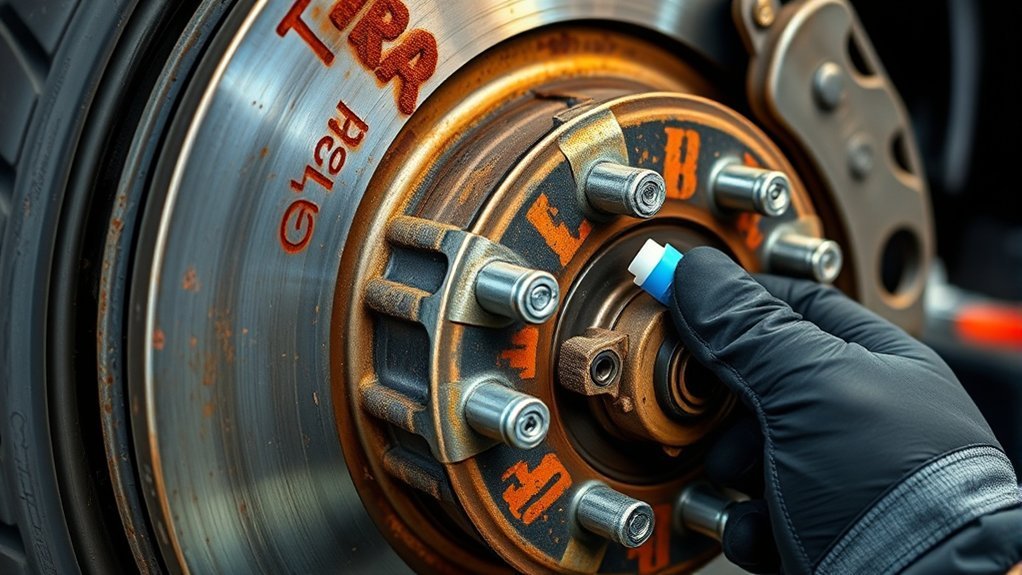
A Toyota Tundra brake caliper is likely sticking when one wheel stays noticeably hotter than the matching wheel, the truck feels held back or pulls, and that wheel is harder to rotate after the truck is safely lifted. Do not assume every Tundra caliper uses slide pins. Many Tundra front brakes use a fixed multi-piston caliper with pad-retaining pins, while rear brake designs vary by model year. Identify the affected axle and caliper design before cleaning, lubricating, rebuilding, or replacing anything.
Quick Answer
First compare left-to-right wheel temperature with a non-contact infrared thermometer, then lift the truck safely and compare wheel drag. On a fixed front caliper, common causes include a seized piston, pads binding on retaining hardware, or trapped hydraulic pressure. On a floating rear caliper, a piston or guide pin may bind. If opening the bleeder makes the wheel release, pressure is being trapped upstream; if the wheel stays tight, suspect a mechanical brake fault or another source of drag. Because opening the hydraulic system affects braking safety, leave that test to a qualified person unless you have the correct service information and tools.
Key Takeaways
- A hot wheel, burning smell, smoke, severe pull, fluid leak, or soft pedal is a stop-driving warning.
- A wheel-spin test shows that a corner is dragging, but it does not prove the caliper is the cause.
- Many Tundra front calipers are fixed multi-piston units. Their pad-retaining pins are not caliper slide pins.
- A large side-to-side temperature difference is more useful than a universal temperature cutoff because brake heat changes with speed, load, braking, weather, and measurement location.
- Verify parts and procedures by VIN, model year, axle, rotor package, and the applicable Toyota repair information.
Signs of a Sticking Caliper on a Toyota Tundra
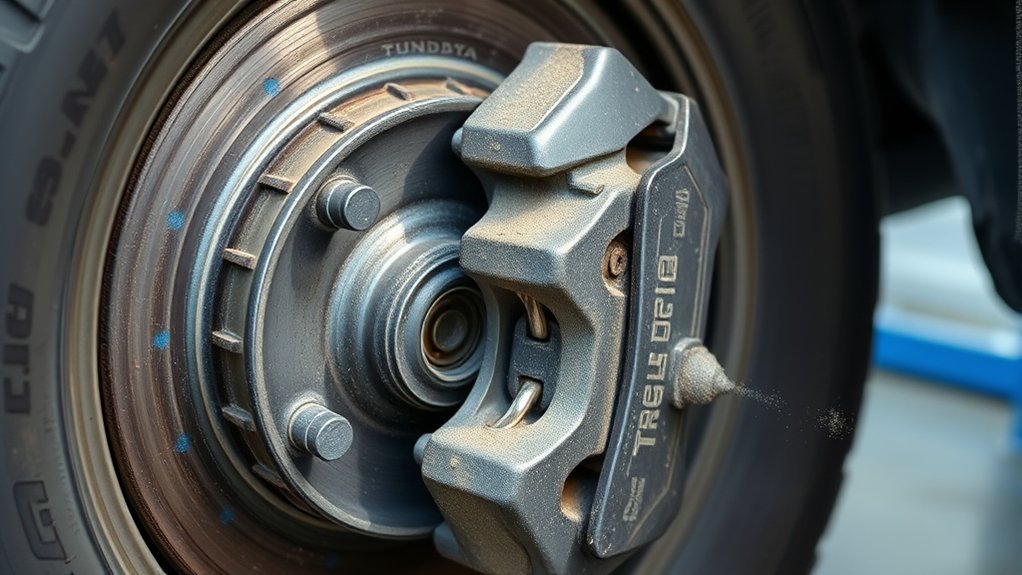
A sticking caliper keeps one or more brake pads in contact with the rotor after you release the pedal. Typical signs include one wheel producing much more heat or brake dust than the opposite wheel, a burning odor, reduced coasting, uneven pad wear, and a wheel that is difficult to rotate after safe lifting. The truck may pull, but the direction alone is not a reliable diagnosis: a dragging brake and a weak brake can produce different pull patterns.
Squealing or groaning can occur with drag, but noise by itself does not confirm a seized caliper. Compare both sides and look for a group of symptoms rather than relying on one clue.
| Observation | What It Suggests | Diagnostic Strength |
|---|---|---|
| One matching wheel is much hotter | Persistent brake drag or another friction source | Strong |
| One pad is much thinner than its mate | Piston, pad, or guide-hardware binding | Strong |
| Wheel is hard to rotate when lifted | Brake, bearing, shield, or parking-brake drag | Moderate |
| Squeal without heat or drag | Pad, shim, rotor, or hardware noise | Weak |
Identify Your Tundra’s Caliper Design Before You Diagnose It
Do not apply a generic sliding-caliper procedure to every Tundra. Many Tundra front brakes use a fixed caliper with pistons on both sides of the rotor. The pads are held by retaining pins and an anti-rattle spring; the caliper body does not slide sideways on guide pins. In that design, front drag is commonly related to one or more pistons, pad-retaining hardware, pad contact points, or trapped hydraulic pressure.
Rear brake construction varies by generation and model year. A floating rear caliper may use genuine slide pins, and later systems may add electronic parking-brake service requirements. Confirm what is on the truck and use the model-year repair manual before loosening hardware or retracting a piston.
Fast identification: Pad-retaining pins that pass through a fixed front caliper are not slide pins. Actual slide pins allow a floating caliper body to move relative to its bracket.
Why Tundra Calipers Stick: Hydraulic vs Mechanical Causes
A Tundra brake can stay applied for either a mechanical reason at the wheel or a hydraulic reason that keeps pressure in the caliper.
Mechanical causes include a corroded or scored piston, a damaged piston boot, pads rusted into their contact points, corroded retaining pins, distorted hardware, or seized guide pins on a floating caliper. A wheel bearing, bent dust shield, or parking-brake mechanism can also create drag that feels like a caliper problem.
Hydraulic causes include an internally restricted flexible hose or another upstream fault that prevents pressure from returning after the pedal is released. An ABS or master-cylinder problem is less likely when only one wheel drags, but it belongs in the diagnosis when more than one wheel is affected, warning lights are present, or the drag pattern does not follow one hose or caliper.
Quick Checks Before and After You Lift the Truck
Before lifting the truck, note whether it coasts normally, pulls, smells hot, or produces smoke. Only perform a brief comparison drive if braking remains normal and there is no severe pull, leak, smoke, or soft pedal. Use a non-contact infrared thermometer to compare the same location on the left and right wheel or rotor area. Do not touch a rotor, caliper, or wheel that may be overheated.
A wheel-spin test requires the tire to be off the ground. Chock the wheels, use Toyota-approved lifting points, support the truck on stands rated for its weight, and follow the owner’s manual before rotating a wheel by hand.
Wheel Spin Test After Lifting
With the transmission and parking-brake conditions set as required for the axle you are testing, rotate each matching wheel by hand and compare resistance. Some pad contact is normal. A wheel that is dramatically harder to turn or stops much sooner than the opposite wheel has abnormal drag, but the test does not identify the exact component.
Remove the wheel and inspect for a rubbing dust shield, bearing roughness, parking-brake drag, pad binding, or a caliper that remains applied. Never run the engine or place the truck in gear while it is supported for a hand-spin inspection.
| Observation | Next Check |
|---|---|
| One wheel has much more drag | Pads, piston, guide hardware, bearing, shield, and parking brake |
| Drag releases when the bleeder is opened | Trapped hydraulic pressure upstream |
| Drag remains with the bleeder open | Mechanical brake fault or non-brake drag |
Infrared Heat Check
After the same controlled drive, measure the same point on each side. A large left-to-right difference matters more than a single universal temperature number. Compare rotor to rotor or wheel to wheel, not a rotor face on one side with a hub on the other.
Stop testing and arrange a tow if you see smoke, smell a strong burning odor, find a fluid leak, or notice a rapidly increasing temperature difference. Heat can damage pads, rotors, seals, bearings, and nearby components even when the original fault is limited to one caliper.
Step-by-Step Diagnosis: Lift, Spin, Inspect, and Isolate
Warning: Do not drive a Tundra with smoke, a fluid leak, a soft pedal, severe pulling, or a wheel that remains heavily applied. Have it towed for inspection.
Use a sequence that separates drag from its cause. First compare wheel resistance. Next remove the wheel and compare pad wear, rotor condition, boots, pins, contact points, and hoses. Then determine whether the caliper is being held mechanically or by trapped hydraulic pressure. Do not replace a caliper until the hose and surrounding hardware have been considered.
Lift and Wheel Spin
Park on a firm, level surface. Chock the wheels, use the correct lifting points, and place the truck on properly rated jack stands. Follow the owner’s manual because safe lifting details and parking-brake use depend on which axle is raised.
Rotate the matching wheels and record the difference. A rough, notchy feel suggests a bearing or contact problem. Smooth but heavy resistance can come from the service brake or parking brake. Inspect flexible hoses for cracks, bulges, abrasion, kinks, and incorrect routing, but remember that an internally restricted hose may look normal from the outside.
Pad and Caliper Inspection
Remove the wheel and inspect the brake design before testing movement.
- Compare pad wear: Measure inner and outer pads and compare them with the opposite side. Heat checking, crumbling, glazing, or tapered wear calls for a wider brake inspection.
- Fixed front caliper: Inspect the piston boots, pad-retaining pins, anti-rattle spring, and pad contact areas. Use the service-manual method and a suitable multi-piston spreader to assess piston movement. Block the other pistons so one cannot be forced out while another is compressed.
- Floating caliper: Check that the caliper moves freely on its actual guide pins and that the boots are intact. A dry or corroded guide pin can create uneven pad wear.
- Check non-caliper drag: Look for a bent dust shield, bearing roughness, debris, or a parking-brake mechanism that does not release.
Do not force a Tundra multi-piston caliper with one C-clamp without controlling the other pistons. If a piston is corroded, cocked, leaking, or will not retract with the correct tool, replace or professionally rebuild the caliper according to the repair manual.
Thermal Gun Patterns
An infrared thermometer is most useful for patterns, not universal cutoffs. Measure matching components immediately after the same drive and use the table below to decide what to inspect next.
| Temperature Pattern | Likely Direction | Next Check |
|---|---|---|
| One rotor is much hotter than its mate | Drag at that corner | Wheel spin, pad wear, piston, hardware, and hose-pressure test |
| Both wheels on one axle are unusually hot | Driving load or shared hydraulic/control issue | Pedal release, master cylinder, ABS data, and driving conditions |
| Rotor temperatures are similar but drag remains | Early brake drag or non-brake resistance | Bearing, shield, parking brake, and cold wheel-spin comparison |
When It’s Not the Caliper: Brake Hoses, ABS, and Master Cylinder Checks
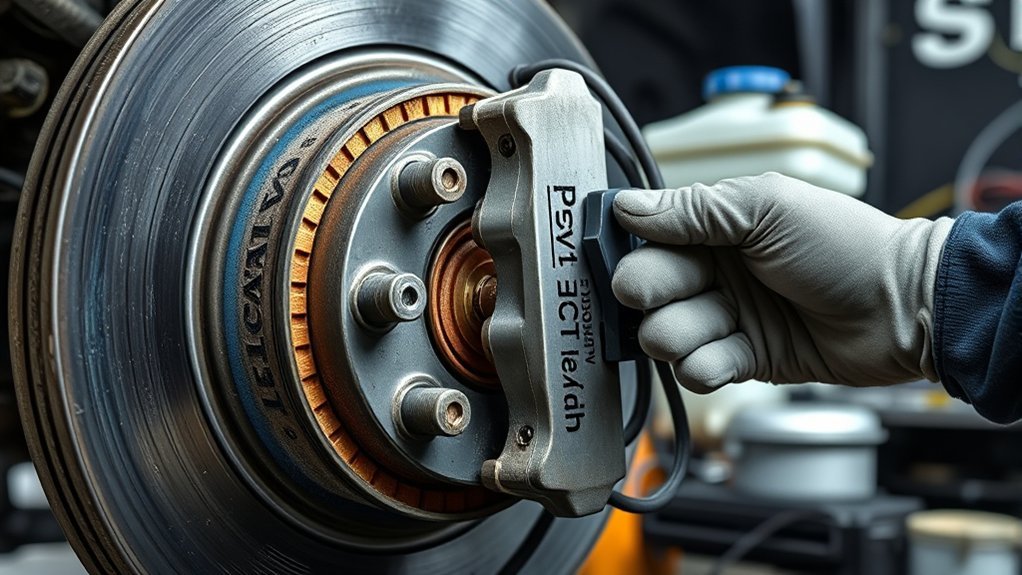
A flexible hose can restrict return flow internally while looking normal outside. That is why squeezing the hose or inspecting its surface cannot rule it out. A qualified technician can isolate trapped pressure by safely opening the bleeder on the dragging caliper. If the wheel releases immediately, the caliper was being held by hydraulic pressure; the hose and upstream system need further testing. If the wheel stays tight, the fault is more likely mechanical at that corner or unrelated to the hydraulic brake.
- Flexible hose: Inspect routing and external damage, then use a pressure-release test if internal restriction is suspected.
- ABS or stability-control system: Scan for diagnostic trouble codes and review wheel-speed and brake-control data when warning lights, pulsing, or multi-wheel drag are present.
- Master cylinder and pedal release: Consider these when more than one wheel stays applied or pressure does not return normally.
- Brake fluid: Check level, contamination, and the specified fluid type. Color alone is not a complete moisture or condition test. Use the owner’s manual, reservoir cap, and model-year repair information.
When to Seek a Professional
Take the Tundra to a qualified brake technician if the pedal is soft, the vehicle loses braking force, fluid is leaking, a wheel smokes, the ABS warning light stays on, or the truck pulls hard. These symptoms require more than a basic pad-and-hardware inspection.
Professional help is also the safer choice when a bleeder screw is seized, the caliper bore or piston is pitted, a brake line is corroded, an electronic parking brake needs service mode, or the repair manual calls for scan-tool bleeding or ABS actuator procedures. Brake work is not a suitable place to improvise torque values, fluid specifications, or bleeding sequences.
Rebuild or Replace? Choosing the Right Tundra Caliper Fix
Rebuilding can be reasonable when the correct seal kit is available, the bore and pistons are serviceable, and the person doing the work can inspect and assemble a safety-critical hydraulic component correctly. Replacement is the better choice when there is pitting, scoring, leakage, heat damage, a damaged casting, seized bleeders, repeated sticking, or uncertain rebuild quality.
| Finding | Best Direction |
|---|---|
| Clean serviceable bore and piston; correct kit available | Rebuild may be practical for an experienced technician |
| Pitting, scoring, leak, damaged boot seat, or heavy heat damage | Replace the caliper |
| Bleeder test releases the drag | Diagnose the hose or upstream pressure before condemning the caliper |
| Pads or rotors are heat damaged or unevenly worn | Service pads and rotors as matched axle components |
Note: A caliper can be replaced individually when the opposite caliper passes inspection. Replacing both calipers may be sensible when both are the same age and similarly corroded, but it is not an automatic rule. Pads and rotors should be evaluated and serviced in matched axle sets.
Verify the replacement by VIN, model year, axle, brake package, rotor dimensions, and caliper identification. Tundra calipers are not universally interchangeable across generations or brake packages.
[Products Worth Considering]

Bosch QuietCast premium ceramic rear brake pads are engineered for quiet, reliable stopping power with low dust performance. Featuring pre-attached multilayer shims, corrosion-resistant backing plates, and OE-style slots and chamfers, this set is designed for smooth fitment and long-lasting durability. It includes pads for one axle, plus hardware and lubricant where available, making installation easier for compatible Lexus, Pontiac, and Toyota vehicles.

This brake caliper compression tool makes brake pad replacement faster by retracting single, dual, or quad pistons with minimal effort. Built for compatibility across many cars, trucks, ATVs, UTVs, and SUVs, it delivers strong pressing power for efficient maintenance. The durable aluminum alloy and steel construction, along with organized EPE foam storage, help keep it protected and ready for repeated use.

This Yuirote universal car motor diagnostic tool helps drivers quickly detect engine fault codes and identify system issues for routine inspections and maintenance. It also supports electronic parking brake reset and emergency release functions, making it useful for handling EPB-related problems without a repair shop visit. Its compact, ergonomic design and broad vehicle compatibility make it a practical choice for car owners and DIY repair enthusiasts.
Pad Pins, Slide Hardware, and Lubricants That Prevent Repeat Drag
The correct service depends on the caliper design. On a fixed Tundra front caliper, clean and inspect the pad-retaining pins, anti-rattle spring, pad edges, and specified contact points. On a floating caliper, remove and inspect the actual guide pins, boots, and bores. Replace pitted, bent, swollen, torn, or badly corroded hardware rather than hiding damage under grease.
- Clean reusable metal hardware with an appropriate brake-cleaning method and inspect it for wear or deformation.
- Use only the lubricant and application points specified for the model-year brake assembly.
- Apply a thin, controlled film where specified. Do not pack cavities with grease or mix incompatible lubricants.
- Keep lubricant and cleaner off rotor faces, pad friction material, and rubber parts unless the product and repair manual specifically approve that use.
Retaining pins, guide pins, pad contact points, shims, and piston seals do different jobs. Treating all of them as “slide hardware” leads to incorrect service.
[Products Worth Considering]

This brake caliper compression tool helps make disc brake pad replacement and caliper servicing faster, safer, and more controlled. Its universal ratcheting design supports multi-angle operation in tight wheel spaces, while the sturdy steel build and widened contact plate help reduce slipping and uneven force during maintenance. Two caliper hooks are included to simplify solo brake work and keep components organized.
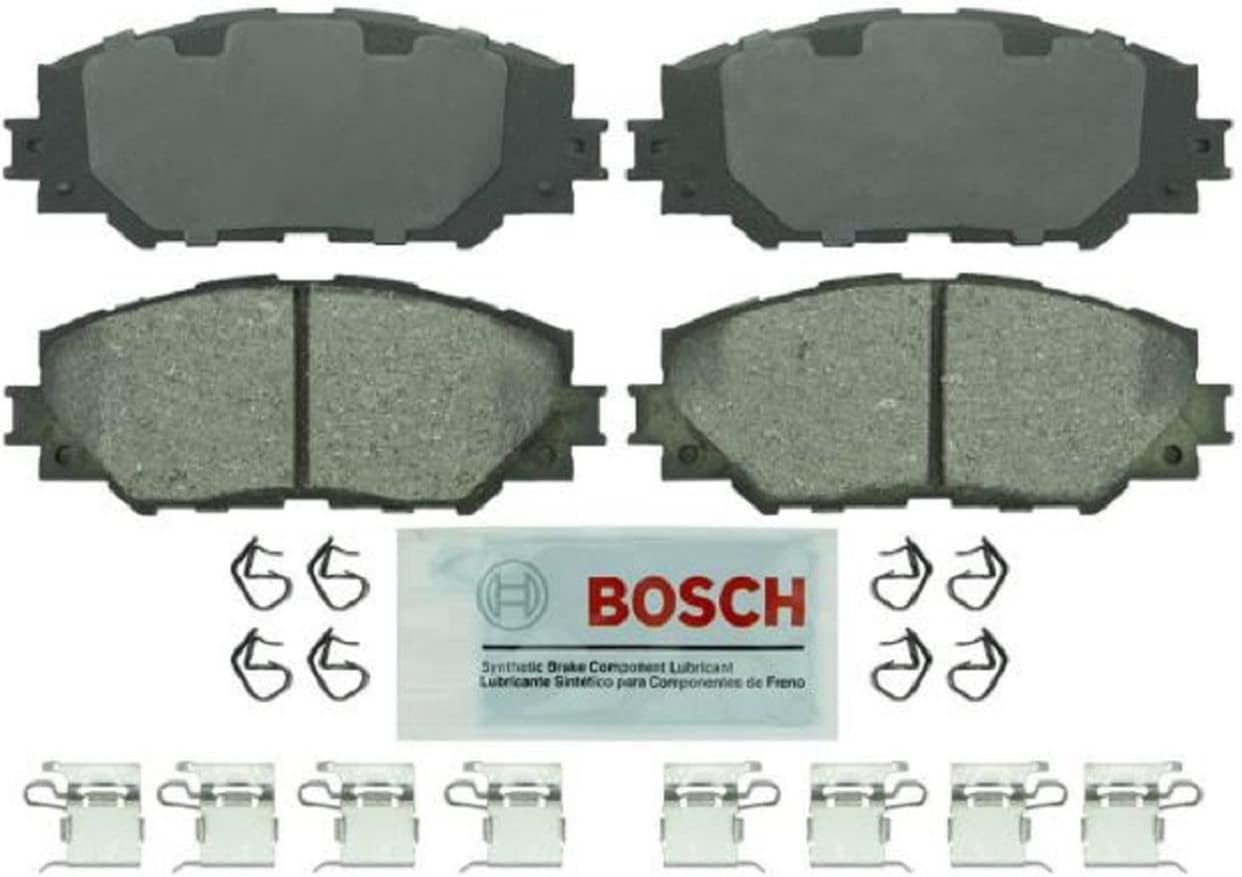
Bosch Blue ceramic front brake pads deliver dependable stopping power with platform-specific friction material designed for select Lexus, Pontiac, Scion, and Toyota vehicles. OE-style shims, slots, and chamfers help promote quiet braking, while the rust-inhibitive coating supports long-lasting performance and cleaner operation. The set includes hardware and synthetic lubricant for easier installation on one axle.

This brake caliper hanger set helps hold calipers securely during brake pad changes and other suspension or axle work, making brake service safer and more convenient. Built from durable steel with rust-resistant coating, it features rubber tips to help prevent scratches and protect brake hoses and surrounding components. Brightly colored and easy to spot, it is a practical mechanic tool for keeping calipers supported while you work.
Bleeding, Fluid Flushing, and Brake Fluid Quality Checks
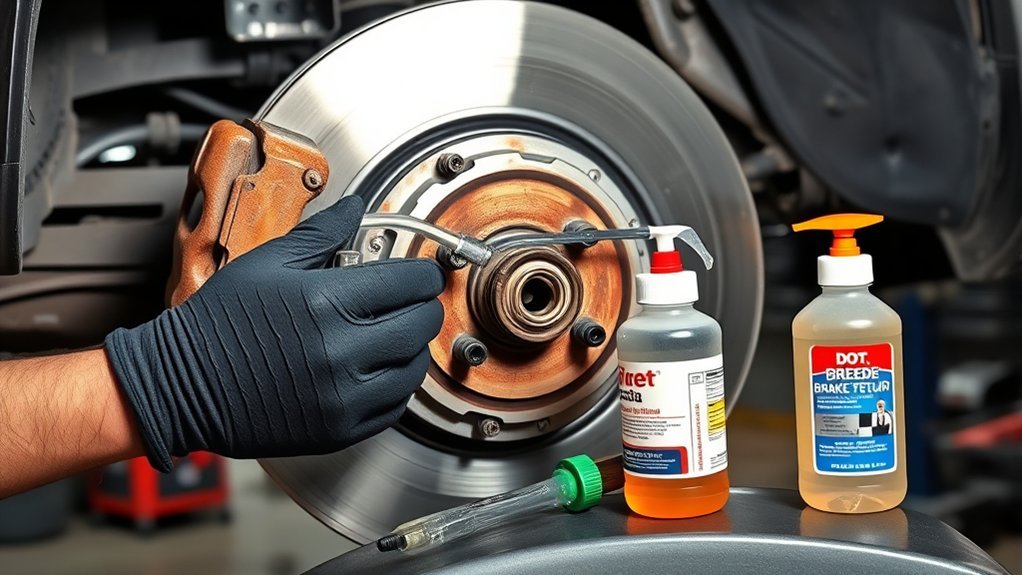
Bleed the brake system after a hose, caliper, line, bleeder, master cylinder, or other hydraulic connection has been opened. Use the fluid specification printed on the reservoir cap and confirmed in the applicable Toyota owner’s or repair manual. Do not substitute a generic DOT recommendation across all Tundra years.
Follow the model-year bleeding sequence and any ABS actuator instructions. Keep the reservoir above its minimum level, prevent dirt from entering, use clean equipment, and confirm that the pedal is firm with no leaks before moving the truck. A scan tool or prescribed actuator procedure may be required after some ABS-related work.
Pro tip: Bleeding removes air introduced during hydraulic work. It does not repair a seized piston, rusted pad hardware, restricted hose, or binding parking brake.
After the repair, perform a stationary leak and pedal check, then a low-speed brake test in a safe area. Recheck wheel drag and compare left-to-right temperatures. Stop if the pedal changes, a wheel reheats, or the truck pulls.
Parts, Fitment, and a Maintenance Checklist to Prevent Repeat Failures
Caliper and labor costs vary widely by Tundra generation, axle, brake package, new versus remanufactured construction, local labor rate, and the amount of heat damage. A quote should identify whether it includes the caliper, hose, pads, rotors, hardware, fluid, bleeding, and any core charge. Do not choose a caliper by a broad year range alone.
| Item | Inspect or Replace When |
|---|---|
| Caliper | Piston binds, leaks, is pitted, or the casting or bleeder is damaged |
| Pads and rotors | Wear is uneven, friction material is damaged, or the rotor is heat checked, scored, warped, or below specification |
| Flexible hose | It is cracked, bulged, abraded, kinked, incorrectly routed, leaking, or proven to trap pressure |
| Pins, clips, springs, and boots | They are bent, torn, swollen, pitted, seized, weak, or heavily corroded |
| Brake fluid | Service is due under the applicable schedule, contamination is confirmed, or hydraulic work requires replacement or bleeding |
- Record the exact fitment: VIN, model year, axle, caliper identification, rotor dimensions, and brake package.
- Inspect both sides: Compare pad thickness, rotor condition, boots, pins, hoses, and wheel temperature.
- Correct the cause: Do not install a new caliper while leaving a restricted hose or rusted pad hardware in place.
- Use model-specific service data: Follow Toyota procedures for torque, fluid, bleeding, electronic parking brake, and ABS work.
- Validate the repair: Check pedal feel, leaks, free wheel rotation, low-speed braking, and side-to-side temperature after the test.
[Products Worth Considering]
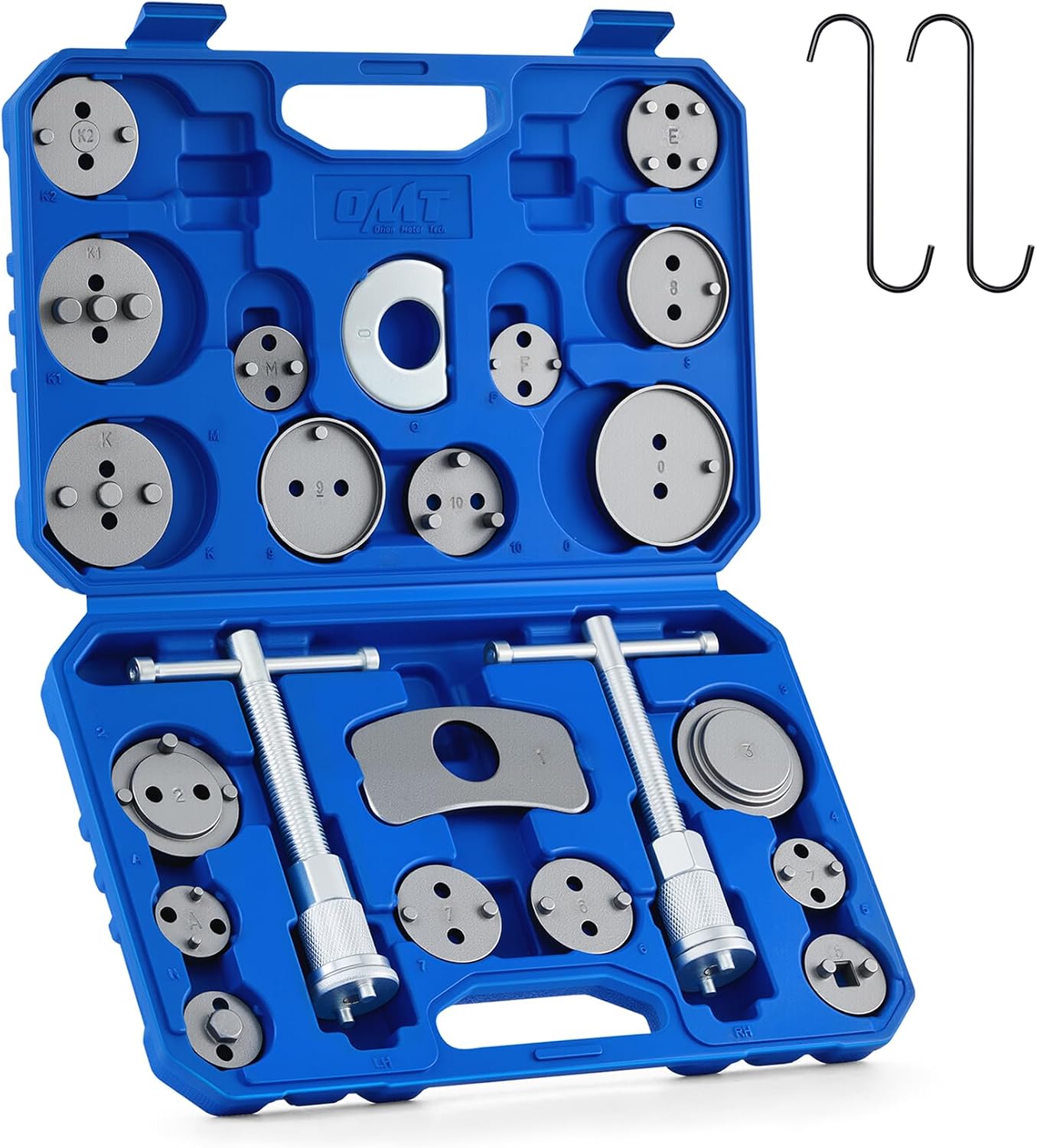
This 24-piece brake caliper compression tool set helps you quickly and safely rotate pistons back into the caliper during brake pad service. It includes multiple adapters, retaining plates, thrust bolt assemblies, and hangers for broad vehicle compatibility, while the heavy-duty steel construction and organized storage case make it ideal for reliable shop or home repairs.

Bendix Premium Ceramic Front Brake Pads are engineered to match original equipment fit, form, and function for a straightforward replacement. Built with durable materials to help resist wear and corrosion, they support consistent braking performance and reduced brake fade for everyday driving. These pads are a dependable choice for compatible Pontiac, Scion, Toyota, and related vehicles.

This mech-style heavy metal key fob cover is designed to protect compatible Toyota E-style smart keys with a precise 1:1 fit. Built with a durable zinc alloy frame and soft silicone buttons, it helps guard against daily wear while keeping full access to key functions. The set includes a metal keychain and screwdriver for easy installation, making it a practical upgrade for select Toyota models.
Frequently Asked Questions
How Do I Know if the Caliper or Brake Hose Is Sticking?
After abnormal drag is confirmed, a qualified technician can carefully open the caliper bleeder. If the wheel releases, trapped hydraulic pressure points to the hose or another upstream source. If it remains tight, suspect the piston, pads, hardware, parking brake, bearing, or another mechanical cause.
Can You Fix a Brake Caliper That Is Sticking?
Sometimes. A floating caliper may only need correct guide-pin and pad-hardware service. A fixed caliper may need pad-retaining hardware service or a professional rebuild. Replace a caliper with a leaking, pitted, scored, heat-damaged, or non-retracting piston or bore.
Can I Drive With a Sticking Tundra Caliper?
Do not continue driving when the wheel is smoking, extremely hot, leaking fluid, pulling hard, or causing a soft pedal or reduced braking. Arrange a tow. Even mild drag can quickly damage pads, rotors, seals, bearings, and tires, so have it inspected promptly.
Do Tundra Brake Calipers Have Slide Pins?
It depends on the axle and model year. Many Tundra front calipers are fixed multi-piston units with pad-retaining pins, not guide pins. Floating rear calipers may use actual slide pins. Identify the assembly before applying lubricant or ordering hardware.
Can WD-40 Fix a Stuck Brake Caliper?
No. WD-40 is not a substitute for the model-specific brake lubricant, and spraying it on a brake assembly does not repair corrosion, a seized piston, trapped hydraulic pressure, or damaged hardware.
Can I Spray Brake Cleaner on a Caliper?
Brake cleaner can be used on approved metal brake parts when the assembly is cool and the product directions allow it. Protect paint and rubber components, provide ventilation, wear eye protection, and keep cleaner off the pad friction material unless the service procedure specifically calls for cleaning that part.
What Type of Lubricant Is Best for Calipers?
Use the lubricant specified in the Toyota repair information for that exact contact point. Guide pins, shims, pad contact areas, and rubber components may require different compatible products. Keep all lubricant off rotor faces and pad friction material.
Should Tundra Calipers Be Replaced in Pairs?
Not automatically. One failed caliper can be replaced if the opposite side is inspected and works correctly. Replacing both may be sensible when both are the same age and similarly corroded. Pads and rotors should be evaluated and serviced as matched axle components.
Safety Disclaimer: This article is for informational purposes only and does not constitute professional automotive or safety advice. Brake system work directly affects vehicle safety. If you’re uncertain about any procedure described here, have the repair performed by a qualified mechanic.
Conclusion
A Toyota Tundra sticking brake caliper should be diagnosed in this order: confirm abnormal heat or drag, identify the caliper design, inspect pads and hardware, separate mechanical binding from trapped hydraulic pressure, and check for heat damage. Do not assume a front pad-retaining pin is a slide pin, and do not condemn a caliper before considering the flexible hose and other sources of drag.
Stop driving when there is smoke, leakage, severe pulling, a soft pedal, or reduced braking. After the repair, verify a firm pedal, no leaks, free wheel rotation, even low-speed braking, and similar left-to-right temperatures.
References
- Toyota Manuals and Warranties — Toyota Motor Sales, U.S.A.
- T-SB-0043-24 Rev2: Front Brake Squeal — Toyota Motor Sales, U.S.A. (2022–2024 Tundra and Tundra Hybrid)
- Toyota Tundra Front Brake Inspection Procedure — service-manual reference for piston, bore, pad, spring, rotor thickness, and runout inspection
- Vehicle Safety Resources — National Highway Traffic Safety Administration


[…] dead trailer light can turn a simple tow into a safety risk fast. Most Toyota Tundra trailer light problems come from a short list of causes: a blown TOW TAIL fuse, a weak ground, […]