Last updated: September 16, 2026
On a Toyota Tundra, TRD means Toyota Racing Development. The badge can identify a dedicated off-road grade such as TRD Pro, an available package such as TRD Off-Road, model-year-specific appearance equipment such as TRD Rally, or separate Toyota TRD accessories. It does not automatically mean a bigger engine or more horsepower. The exact suspension, traction hardware, wheels, tires, protection, and performance equipment depend on the model year, trim, drivetrain, and package.
Quick Answer
TRD on a Toyota Tundra stands for Toyota Racing Development. On the 2026 Tundra, the main off-road choices are the dedicated TRD Pro grade and the available TRD Off-Road Package on eligible trims. TRD upgrades usually focus on suspension, traction, underbody protection, wheels, tires, and styling rather than automatically adding engine power. Toyota also offers a separate TRD Performance Package for compatible current-generation Tundras.
Key Takeaways
- TRD means Toyota Racing Development, Toyota’s performance-engineering identity for vehicle development, parts, and accessories.
- On a Tundra, TRD can describe a full grade, an option package, or a separate accessory rather than one universal specification.
- A TRD Pro is a dedicated Tundra grade, while TRD Off-Road is an available package on select grades.
- The 2026 Tundra uses twin-turbo V6 powertrains; the older 5.7-liter V8 belongs to the previous generation.
- Toyota has announced an updated 2027 Tundra with a new Trailhunter package and revised TRD Pro hardware, with additional 2027 specifications scheduled for fall 2026.
What TRD Tundra Means

TRD stands for Toyota Racing Development. The name is tied to Toyota’s performance engineering, competition work, vehicle development, and accessory programs. Since 2025, Toyota’s North American racing programs compete under the Toyota Gazoo Racing North America banner, while TRD U.S.A. continues technical and engineering support.
On the Tundra, TRD is not one single part or one universal package. It can refer to a complete grade, such as the Tundra TRD Pro; an option package, such as the TRD Off-Road Package; model-year-specific packages such as TRD Rally or TRD Sport; or separate TRD accessories and performance parts.
Depending on the model year and configuration, TRD equipment can include tuned shocks, off-road drive modes, an electronically locking rear differential, skid plates, special wheels, all-terrain tires, exterior badging, interior details, or performance accessories. That is why two Tundras wearing TRD branding can have substantially different hardware.
Note: TRD equipment changes by model year and configuration. Check the window sticker, Toyota build information, owner documentation, and visible hardware before assuming what a particular used or new truck includes.
TRD’s Racing DNA and the Tundra
TRD grew from Toyota’s racing and performance work, but a Tundra with TRD equipment is not simply a race truck with street plates. Toyota applies the engineering name to production suspension parts, off-road systems, accessories, and performance hardware designed for specific vehicle applications.
Racing-Bred Engineering
On modern Tundras, that engineering shows up in functional parts such as off-road suspension components, skid plates, electronically locking rear differentials, cameras, and traction-control systems. Those features can help the driver maintain traction and protect vulnerable components on rocks, ruts, sand, snow, mud, and loose dirt.
Toyota has also highlighted TRD’s work on production components rather than treating TRD as a badge-only program. Toyota’s manufacturing coverage has documented TRD involvement with parts such as Tundra and Tacoma upper control arms in cooperation with production engineering and research-and-development teams.
Performance Suspension Tuning
Suspension is one of the clearest differences between a standard road-focused Tundra and many TRD configurations. The 2026 TRD Off-Road Package uses Bilstein off-road shocks, while the 2026 TRD Pro uses a more specialized FOX-shock suspension with a 1.1-inch front lift.
The result is not simply a taller or more aggressive-looking truck. Different dampers and suspension tuning change how the truck controls body movement, repeated bumps, washboard surfaces, and uneven terrain. The trade-off is that trail-focused tires and suspension can also change pavement ride, road noise, and handling feel.
Heritage-Inspired Styling
TRD Tundras also use distinct styling. Depending on the model year and package, that can include unique wheels, TRD badging, special grille treatments, skid plates, contrasting interior details, and model-specific graphics.
The 2026 Tundra TRD Rally Package, for example, uses Toyota’s tri-color graphics as a visual reference to its Baja racing history. Styling helps distinguish the packages, but the more important differences for off-road use are the suspension, traction systems, tires, differential hardware, and protection underneath the truck.
Which TRD Trims and Packages the Tundra Offers
The easiest way to understand Tundra TRD terminology is to separate grades from packages. SR5, Limited, Platinum, 1794 Edition, TRD Pro, and Capstone are grades in the 2026 lineup. TRD Off-Road and TRD Rally are packages or equipment groups rather than replacements for every underlying grade.
| TRD Name | What It Is | 2026 Focus |
|---|---|---|
| TRD Pro | Dedicated Tundra grade | FOX off-road suspension, 1.1-in. front lift, 18-in. BBS forged wheels, Falken WILDPEAK all-terrain tires, heritage-style grille and trail hardware |
| TRD Off-Road | Package on eligible grades | Bilstein off-road suspension, TRD wheels and all-terrain tires, skid plates, and additional traction technology on applicable 4WD configurations |
| TRD Rally | Model-year-specific package | Baja-inspired tri-color graphics plus package-specific TRD equipment |
| TRD Performance Package | Separate Toyota Genuine accessory/performance package | Airflow, exhaust, throttle/calibration, and engine-performance upgrades rather than an off-road trim designation |
[Products Worth Considering]

This Tesla interior cleaner kit is designed to safely clean and protect vegan leather seats, trim, and other delicate cabin surfaces across Model 3, Y, S, and X vehicles. Its pH-balanced formula helps lift dirt, spills, and dye transfer without harming factory coatings, while the included microfiber towel supports scratch-free, streak-free detailing. It is a simple all-in-one solution for keeping your Tesla interior looking fresh and well maintained.

This Tesla interior cleaner is designed to help keep seats, consoles, dashboards, door panels, and other high-touch cabin surfaces looking fresh. It works on white and black vegan leather to remove everyday dirt, smudges, and light stains with a simple spray-and-wipe routine. The kit includes a larger bottle and towel, making it a practical maintenance accessory for Tesla owners who want easy interior care.
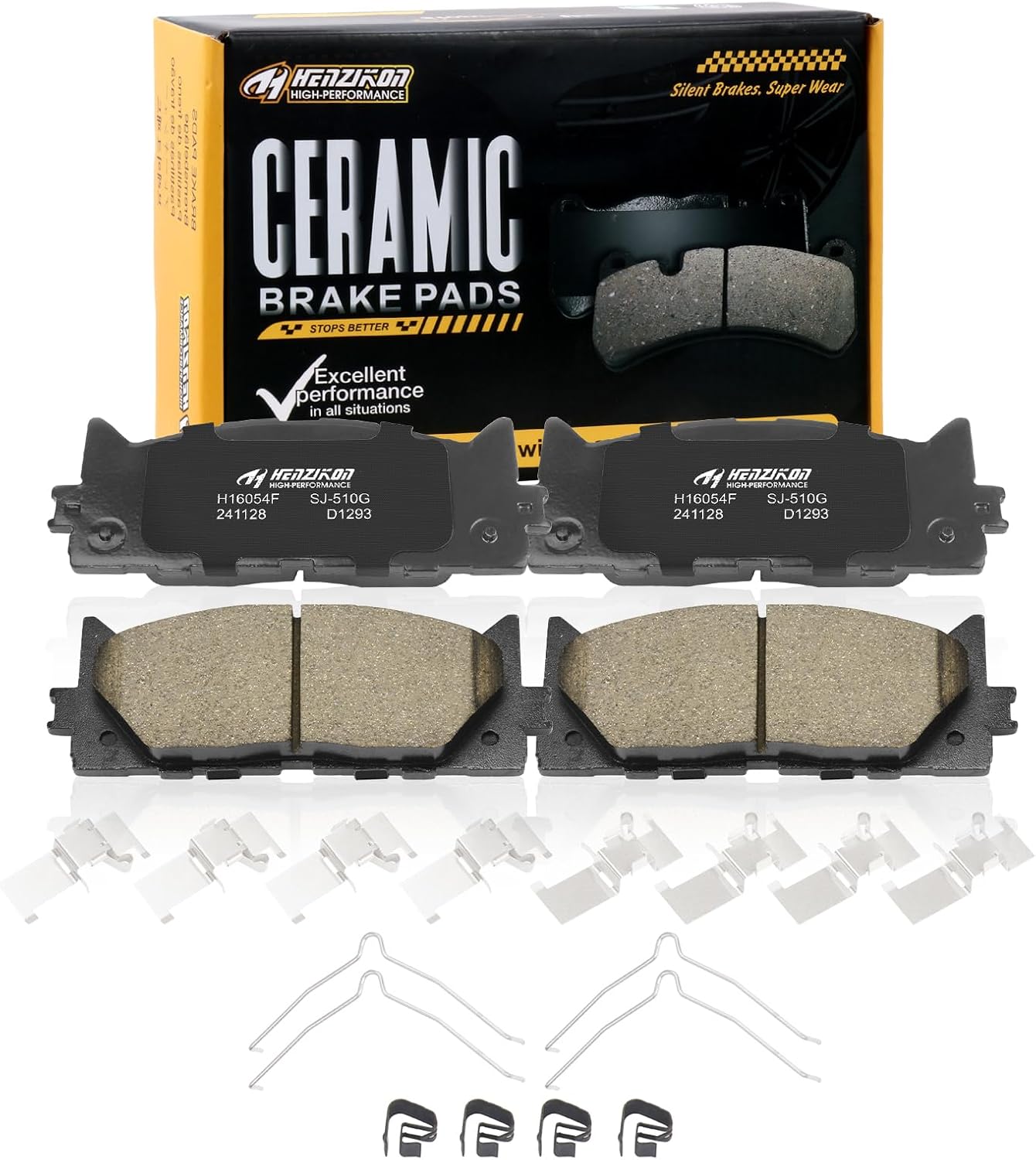
These ceramic front brake pads are designed for compatible Toyota Avalon, Camry, and Lexus ES-series vehicles, offering dependable stopping power and smooth, consistent braking performance. Built with included hardware for easier installation, they help reduce squealing and brake dust while supporting long-term durability for everyday driving.
Tundra TRD Pro
The TRD Pro is the most off-road-focused dedicated Tundra grade in Toyota’s 2026 lineup. Toyota lists 18-inch BBS forged-aluminum wheels with Falken WILDPEAK all-terrain tires, TRD Pro suspension with FOX shocks and a 1.1-inch front lift, and a heritage-inspired “TOYOTA” grille with an LED light bar and marker lights.
TRD Pro also combines that suspension hardware with the truck’s off-road traction technology and underbody protection. It is therefore different from a regular Tundra that has only cosmetic TRD accessories added later.
Tundra TRD Off-Road Package
The TRD Off-Road Package adds trail-oriented equipment without requiring the dedicated TRD Pro grade. For the 2026 Tundra, Toyota lists the package on SR5, Limited, Platinum, and 1794 Edition.
The 2026 package uses 18-inch wheels on SR5 and 20-inch wheels on Limited, Platinum, and 1794 Edition, with Falken WILDPEAK all-terrain tires and Bilstein off-road shocks. Applicable 4WD configurations add trail technology such as the electronically locking rear differential, Multi-Terrain Select, and Crawl Control.
Tundra TRD Rally and TRD Sport Notes
The TRD Rally Package appears in Toyota’s 2026 Tundra marketing and uses tri-color graphics inspired by Toyota’s Baja racing history. Its exact equipment should be checked against the build sheet because package content can vary by model year and configuration.
The TRD Sport name has appeared on earlier current-generation and previous-generation Tundras as a more road-oriented TRD package. For example, earlier third-generation versions used 20-inch TRD wheels and a lowered sport suspension. Do not assume an older TRD Sport specification applies to a 2026 truck simply because both carry TRD branding.
What Changes for the 2027 Tundra?
Toyota announced the updated 2027 Tundra in July 2026. The biggest new off-road naming change is a Trailhunter Package based on the SR5 grade. Trailhunter is not another TRD badge: Toyota says it uses an Old Man Emu upgraded suspension, Michelin LTX Trail 265/70R18 tires, front recovery hooks, additional underbody protection, Multi-Terrain Select, Crawl Control, and a locking rear differential.
Toyota also announced revised TRD Pro hardware for 2027, including Tundra-tuned FOX enhanced QS3 shocks and standard red tow hooks. Toyota said additional 2027 specifications and pricing would be announced in fall 2026, so shoppers comparing 2026 and 2027 trucks should check the final model-year specifications rather than assuming every 2026 feature carries over unchanged.
Pro Tip: Shop by the build sheet, not the bedside decal. “TRD Pro,” “TRD Off-Road,” “TRD Rally,” “TRD Sport,” and “TRD Performance Package” can represent very different hardware.
TRD-Tuned Suspension and Off-Road Hardware

The biggest functional difference on many TRD Tundras is underneath the truck. Suspension components, differential hardware, tires, wheels, and skid plates determine much more about trail performance than exterior badges do.
On TRD Pro and applicable 4WD Tundras equipped with the TRD Off-Road Package, Toyota has offered trail systems such as Multi-Terrain Select, Crawl Control, Downhill Assist Control, an electronically locking rear differential, and a Multi-Terrain Monitor on applicable configurations.
Those systems solve different traction problems. Multi-Terrain Select adjusts vehicle responses for different surfaces. Crawl Control manages very low off-road speed so the driver can concentrate more on steering. A locking rear differential mechanically links rear-wheel speed to improve traction when one side has much less grip.
[Products Worth Considering]

These OEM-style mud flaps are designed for Toyota RAV4 and RAV4 Hybrid models to help reduce mud, stone, and road spray damage while driving. The no-drill installation uses adhesive and included hardware for a fast, secure fit, and the durable PP thermoplastic construction is built to handle harsh weather conditions. They also provide a helpful reduction in rear road noise on rough surfaces.

This front windshield sunshade is designed to help keep your Toyota RAV4 cooler by reducing heat buildup after parking in direct sunlight. It blocks most UV rays to help protect your dashboard, seats, and steering wheel from sun damage, while the accordion folding design makes it easy to set up, store, and transport. Built with a durable triple-laminate construction and a silver reflective surface, it offers practical everyday sun protection for compatible RAV4 models.

Common TRD Off-Road Hardware
- Upgraded shocks: Help control body motion and repeated impacts on rough surfaces.
- Skid plates: Protect vulnerable underbody components from rocks and trail debris.
- All-terrain tires: Trade some road refinement for stronger loose-surface traction.
- Off-road wheels: Match the package’s tire and durability requirements while creating the TRD stance.
- Electronic locking rear differential: Helps both rear wheels contribute when one side has limited traction.
- Off-road cameras and drive modes: Help the driver place the truck and control wheelspin more accurately on difficult terrain.
Does a Tundra TRD Have More Horsepower?
Not automatically. TRD Pro and TRD Off-Road branding mainly identifies suspension, traction, protection, tire, wheel, and styling changes. Engine output depends on the installed powertrain and whether the truck has a separate performance package.
For the 2026 U.S. retail Tundra, Toyota lists the i-FORCE twin-turbo V6 at up to 389 horsepower and 479 lb-ft of torque. The i-FORCE MAX twin-turbo V6 hybrid produces 437 horsepower and 583 lb-ft of torque. The 2026 TRD Pro uses the i-FORCE MAX powertrain.
There is an important exception: Toyota also offers a separate TRD Performance Package for compatible current-generation Tundras. Toyota introduced the package with output increasing from 389 to 421 horsepower on the i-FORCE engine and from 437 to 469 horsepower on i-FORCE MAX. The package uses higher-flow intake hardware, a cat-back exhaust, and revised engine management, and Toyota’s 2026 accessory portfolio continues to list the TRD Performance Package.
That performance accessory is different from simply having a TRD Off-Road package or TRD Pro badge. When buying a used truck, verify the actual installed hardware and build records rather than assuming a TRD emblem proves that the performance package is present.
Older Tundras are different again. Previous-generation trucks were available with the 5.7-liter i-FORCE V8, rated at 381 horsepower and 401 lb-ft of torque. A 5.7-liter Tundra TRD therefore refers to an older generation rather than the 2026 truck.
Warning: A TRD badge alone does not prove that a Tundra has increased engine output. Confirm the powertrain and any TRD Performance Package through the build information and installed hardware.
TRD Exhaust and Performance Parts
Toyota’s current accessory catalog includes TRD performance hardware such as exhaust components, a TRD Performance Package, suspension upgrades, skid plates, and other Tundra-specific accessories. Fitment and emissions requirements can differ by model year, powertrain, and location.
A standalone exhaust should not be assumed to change the truck’s towing rating or deliver the same output as the complete TRD Performance Package. When modifying a modern Tundra, verify exact compatibility and any required fuel, calibration, emissions, or warranty conditions for that part.
TRD Tundra Towing, Payload, and Daily Use
A TRD Tundra is still a full-size pickup, so trail capability must be considered alongside towing, payload, and everyday comfort. Toyota lists the 2026 Tundra at a maximum towing capacity of up to 12,000 pounds and a maximum payload of up to 1,850 pounds when properly equipped.
Those numbers are lineup maximums, not the rating of every TRD configuration. Actual towing and payload limits depend on the cab, bed, drivetrain, engine, grade, options, passengers, accessories, and cargo. Use the specific truck’s certification labels, owner documentation, and towing information rather than applying Toyota’s maximum headline figure to every Tundra.
TRD suspension, tires, traction aids, and protection can be useful on rough work roads, campsites, boat ramps, ranch tracks, snow, and unpaved routes. They do not automatically increase a particular truck’s payload or tow rating.
For most buyers, the important TRD question is not “How much more can it tow?” but “Which suspension, traction, tire, and protection hardware does this exact truck add?”
Exterior, Interior, and Convenience Upgrades

TRD Tundras are easy to recognize because Toyota pairs many packages with visual changes. Depending on the model year and configuration, you may see a heritage-style grille, dark or forged wheels, TRD badging, model-specific paint, skid plates, special seat trim, red accents, a TRD shift knob, floor mats, or graphics.
Interior comfort still depends heavily on the underlying grade. A Limited with the TRD Off-Road Package, for example, starts with a different comfort and feature set than an SR5 with TRD Off-Road. TRD Pro combines its own trail hardware with a distinct cabin and exterior identity.
For 2026, Toyota also moved the Tundra lineup to a 32.2-gallon fuel tank across all grades. Equipment such as towing technology and convenience features still varies by grade and configuration, so check the actual build rather than assuming every TRD truck is equipped identically.
TRD Parts, Dealer Options, and Aftermarket Add-Ons
If you want more capability from a Tundra, there are three broad paths: buy a factory TRD configuration, add compatible Toyota Genuine or TRD accessories, or use aftermarket parts. The right route depends on the hardware you need and the compromises you are willing to accept.
[Products Worth Considering]

Genuine OEM
TRD Dealer Options
Toyota’s Tundra accessory portfolio includes parts and packages such as suspension components, skid plates, wheels, exhaust hardware, a TRD Performance Package, bed accessories, and appearance pieces. Exact availability depends on model year and configuration.
The main advantage of vehicle-specific Toyota accessories is documented fitment. A dealer or Toyota parts catalog can confirm whether a component is intended for the exact VIN, trim, drivetrain, and model year. That matters because modifications can interact with cameras, sensors, driver-assistance systems, suspension geometry, towing hardware, and powertrain calibration.
Aftermarket TRD Add-Ons
Aftermarket parts offer a much wider selection, but they also require more fitment work. Lift kits, oversized tires, wheel spacers, exhaust systems, tuners, and suspension swaps can change ride quality, fuel economy, braking, steering, speedometer accuracy, alignment, emissions compliance, and the operation of related vehicle systems.
| Upgrade | Main Benefit | What to Check First |
|---|---|---|
| TRD or upgraded shocks | Better control on rough roads | Model-year fitment and ride height |
| Skid plates | Underbody protection | Compatibility with trim and drivetrain |
| All-terrain tires | Improved loose-surface grip | Load rating, clearance, rubbing, and road noise |
| TRD exhaust | Sound and exhaust-flow change | Exact fitment, emissions requirements, and warranty terms |
| TRD Performance Package | Factory-developed engine performance increase | VIN/powertrain compatibility, required fuel, and package installation requirements |
Warranty, Maintenance, and Historic Supercharger Notes
Warranty coverage depends on the vehicle, the component, how it was installed, and the applicable Toyota warranty terms. Toyota Genuine Parts and accessories have their own coverage conditions, so owners should use the warranty documentation for the specific vehicle and part rather than assuming every TRD-branded component receives identical coverage.
Older Tundra enthusiasts may also encounter trucks equipped with TRD supercharger hardware. Toyota sold TRD supercharger systems and still lists some related service parts for older applications, but those systems belong to an earlier generation of Toyota performance products rather than the current Tundra powertrain strategy.
If you are considering a used supercharged Tundra, verify the exact kit, installation records, tune, required fuel, emissions compliance, maintenance history, and current parts support. For a current-generation Tundra, Toyota’s documented options focus instead on its twin-turbo powertrains, TRD Performance Package, suspension upgrades, tires, protection, and other accessories.
How to Tell If a Tundra Really Has TRD Equipment
Badges alone are not enough. Owners can add TRD decals, grille inserts, wheels, floor mats, and other appearance pieces after purchase. Those additions do not automatically turn the truck into a factory TRD Pro or prove that it was built with the full TRD Off-Road Package.
Use this checklist when shopping:
- Check the window sticker or build information: Look for “TRD Pro,” “TRD Off-Road Package,” “TRD Rally Package,” “TRD Performance Package,” or the specific accessory names.
- Verify the VIN with Toyota or a dealer: Confirm factory build details and compatible accessories.
- Inspect the hardware: Compare the shocks, skid plates, wheels, tires, differential equipment, intake/exhaust hardware, and interior details with the documented package.
- Confirm drivetrain-dependent equipment: Some of the most useful TRD off-road systems are tied to 4WD configurations.
- Review modification and service records: A used modified truck should have documentation showing what was installed and how it has been maintained.
Is TRD Worth It on a Toyota Tundra?
TRD equipment makes the strongest functional case when you regularly drive on rough roads, snow, loose surfaces, trails, campsites, work sites, or other places where upgraded dampers, all-terrain tires, skid plates, a rear locker, and off-road control systems are useful.
If most of your driving is on smooth pavement, compare those benefits against the additional cost, tire noise, suspension feel, and equipment you could buy on a more road-focused Tundra. A standard Tundra still provides the core truck platform, towing capability, and utility without requiring an off-road package.
For shoppers who want a specific combination of luxury and off-road equipment, the TRD Off-Road Package can be especially useful because Toyota offers it on several 2026 grades. Buyers who want the dedicated factory off-road grade can compare that equipment with TRD Pro. For used trucks, verify the build sheet first because cosmetic TRD parts can be installed separately.
Frequently Asked Questions
What does TRD mean on a Toyota Tundra?
TRD means Toyota Racing Development. On a Tundra, it can refer to Toyota-developed off-road or performance grades, packages, suspension, traction hardware, protection, wheels, tires, styling, and accessories. The exact equipment depends on the model year and configuration.
What is the difference between TRD Pro and TRD Off-Road on a Tundra?
TRD Pro is a dedicated Tundra grade with more specialized factory off-road hardware. TRD Off-Road is a package available on eligible grades. For 2026, Toyota lists TRD Off-Road on SR5, Limited, Platinum, and 1794 Edition, while TRD Pro gets features such as FOX shocks, a 1.1-inch front lift, 18-inch BBS forged wheels, and Falken WILDPEAK all-terrain tires.
Is TRD the same as SR5 on a Tundra?
No. SR5 is a Tundra grade. TRD describes Toyota performance and off-road equipment. An eligible SR5 can be ordered with the TRD Off-Road Package, so a truck can be both an SR5 and a TRD Off-Road Tundra.
Does TRD mean the Tundra has more horsepower?
Not by itself. TRD Pro and TRD Off-Road mainly change suspension, traction, protection, wheels, tires, and styling. Toyota also offers a separate TRD Performance Package for compatible current-generation Tundras that does increase engine output.
Is a TRD Tundra good for towing?
A properly configured TRD Tundra can tow, but TRD branding does not determine the tow rating. Toyota lists the 2026 Tundra lineup at up to 12,000 pounds when properly equipped. Check the specific truck’s configuration, payload label, and towing documentation before selecting a trailer.
Is TRD worth it on a Tundra?
TRD equipment is most useful if you regularly drive on trails, rough roads, loose surfaces, snow, work sites, or other terrain where upgraded suspension, traction systems, skid plates, and all-terrain tires are valuable. For mostly paved driving, compare the added cost and road manners with a non-TRD configuration.
What is changing on the 2027 Tundra?
Toyota has announced an updated 2027 Tundra with a new Trailhunter package, revised exterior design, newer multimedia and safety technology, and updated TRD Pro suspension hardware. Toyota said complete 2027 specifications and pricing would be announced in fall 2026.
Conclusion
TRD on a Toyota Tundra means Toyota Racing Development, but the badge does not describe one universal package. TRD Pro is a dedicated off-road grade, TRD Off-Road adds trail hardware to eligible grades, TRD Rally provides model-year-specific equipment and styling, and the separate TRD Performance Package can add actual engine performance.
For the 2026 Tundra, Toyota lists 389 hp and 479 lb-ft for the i-FORCE engine, 437 hp and 583 lb-ft for i-FORCE MAX, up to 12,000 pounds of towing, and up to 1,850 pounds of payload. Toyota has also announced the 2027 Tundra, including a new Trailhunter package and revised TRD Pro suspension, so buyers comparing model years should verify the final build rather than relying on the badge alone.
The practical next step is simple: check the window sticker or Toyota build information and identify the exact suspension, drivetrain, differential, tire, protection, and performance equipment fitted to the truck you are considering.
Sources
- Toyota Customer Support: What is TRD? — supports the Toyota Racing Development meaning.
- Toyota: 2026 Tundra — supports current retail powertrain output, towing, payload, TRD family, and 2026 trim information.
- Toyota: 2026 Tundra eBrochure — supports 2026 TRD Off-Road package availability, wheels, tires, suspension, and TRD equipment.
- Toyota USA Newsroom: 2026 Toyota Tundra — supports 2026 model-year updates and the 32.2-gallon fuel tank.
- Toyota USA Newsroom: 2027 Toyota Tundra — supports the announced Trailhunter package, updated TRD Pro hardware, and 2027 timing.
- Toyota USA Newsroom: Tundra TRD Performance Package — supports the package’s engine-output changes, intake, exhaust, calibration, and fuel requirements at introduction.
- Toyota: 2026 Tundra Accessory Portfolio — confirms the TRD Performance Package and other current Toyota accessories.
- Toyota USA Newsroom: Toyota Gazoo Racing North America Transition — supports the 2025 North American motorsports naming change and TRD U.S.A.’s continuing technical role.
- Toyota USA Newsroom: 2021 Tundra — supports the previous-generation 5.7-liter V8 output of 381 hp and 401 lb-ft.
- Toyota Owners: Manuals and Warranties — supports checking vehicle-specific owner and warranty documentation.