To adjust Tundra tow mirrors correctly, set your driving position first, extend the mirrors for the trailer, power-adjust the upper flat glass for the trailer side and adjacent lane, then manually position the lower convex glass for a wider view. The exact extension controls depend on the truck: many earlier factory Tundra tow mirrors extend manually, while equipped 2022-and-newer Tundras use power-extending and power-folding tow mirrors.
Last updated: August 31, 2026 · Review basis: Toyota owner documentation, current Toyota Tundra feature information, and NHTSA mirror guidance. This guide does not claim hands-on testing of your specific truck-and-trailer combination.
Quick Answer
To adjust Tundra tow mirrors, sit in your normal driving position and extend the mirrors if needed for the trailer. Set the upper mirror so you retain a small trailer reference while seeing the adjacent lane. Toyota recommends that the outer two-thirds of the upper mirror show images other than the truck and trailer. Manually adjust the lower convex section for a useful view of the trailer and surrounding area, then make the final check after hitching and loading.
Key Takeaways
- Use the upper mirror for the main road, lane, and trailer-side view.
- Use the lower convex mirror for a wider field of view and useful backing reference points.
- Many earlier factory Tundra tow mirrors extend manually; equipped 2022-and-newer factory power tow mirrors use separate power extend/retract and fold controls.
- Toyota recommends keeping most of the outer mirror area on the surroundings rather than filling the glass with your truck or trailer.
- Do not adjust mirrors while driving, and do not drive with the mirrors folded.
- Blind Spot Monitor and Rear Cross Traffic Alert are driver-assist features only. Always confirm the lane and surroundings yourself.
At a Glance
| Time Required | 5–10 minutes before towing |
| Difficulty | Easy |
| Tools Needed | None; gloves can help with a stiff lower lens |
| Cost | Free, unless a mirror is damaged or needs replacement |
Note: Exact controls vary by model year, trim, and mirror package. For your truck’s switch layout and feature limitations, check the Toyota Tundra outside rear view mirror instructions or the owner’s manual for your model year.
Which Tundra Tow Mirror Controls Do You Have?
Tundra tow mirrors do not all extend the same way. Check the model year and equipment before following the switch instructions.
| Tundra Setup | Typical Factory Operation | What to Do |
|---|---|---|
| Many 2007–2021 factory extendable tow-mirror setups | Upper glass may be power-adjustable; lower glass is manually positioned; extension is commonly manual | Slide the mirror housing outward by hand if your owner’s manual specifies manual extension, then adjust the glass |
| 2022-and-newer factory power tow mirrors, if equipped | Power extension/retraction and power folding; power-adjustable upper glass with a manually positioned lower convex section | Use the dedicated extend/retract control before setting the upper and lower glass |
Aftermarket mirrors may work differently from either factory setup. Do not force a mirror housing because it looks extendable. Confirm the instructions for the exact mirror installed on your truck.
Adjust Your Tundra Tow Mirrors: Quick Steps
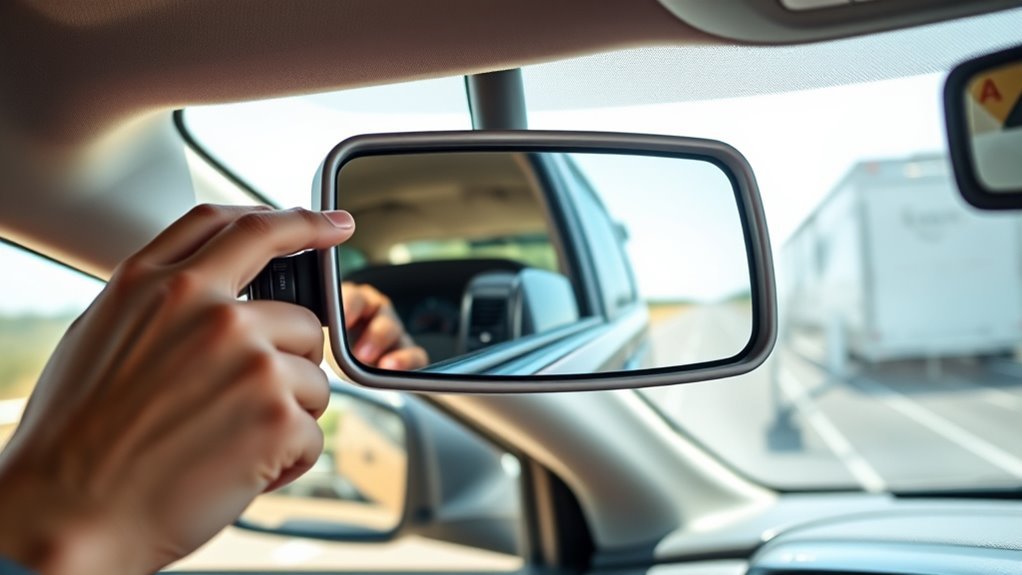
Start by sitting the way you actually drive. Adjust your seat, steering wheel, and posture first, because even a small seating change alters the mirror view.
- Extend the tow mirrors if needed. On equipped 2022-and-newer factory power tow mirrors, use the extend/retract control. Many earlier factory extendable mirrors slide outward manually. Follow the owner’s manual for your exact truck.
- Select the driver or passenger mirror. Use the mirror selector switch to choose the side you want to adjust.
- Set the upper mirror first. Power-adjust the upper flat mirror so you can see the trailer side without letting it fill most of the glass. Toyota recommends that the outer two-thirds show images other than the vehicle and trailer.
- Set the lower convex mirror second. Adjust the lower lens by hand using firm, even pressure. Toyota recommends an appropriate view of the towed object while keeping the outer two-thirds of the lower mirror on images other than the trailer.
- Hitch and load the trailer, then recheck. Trailer width, tongue load, cargo, and ride height can change the view.
- Test at low speed. In a safe area, back a short distance and make a gentle turn while confirming that both trailer sides remain visible.
The goal is not to stare at a large section of your own truck or trailer. Keep enough trailer edge as a position reference while using most of the mirror area for traffic, lane, and surrounding-space awareness.
Warning: Do not adjust the mirrors while driving. Do not drive with the mirrors folded. If your truck has heated mirrors, avoid touching the mirror surface while the defogger is on because the glass can become hot.
Use Power Controls and the Fold Button on Tundra Mirrors
Tundra mirror systems can separate mirror selection, glass adjustment, folding, and towing-mirror extension. Do not assume one switch performs every function.
| Control | What It Does | Best Use |
|---|---|---|
| Mirror selector | Chooses left or right mirror | Use before adjusting mirror angle |
| Four-way adjustment switch | Moves the power-adjustable mirror glass up, down, left, or right | Set the upper mirror’s road and trailer view |
| Fold switch or fold button | Folds or unfolds the mirror housing, if equipped | Use for tight parking, car washes, or garage clearance |
| Extend/retract switch | Moves equipped power tow mirrors outward or back in | Extend for a wide trailer; retract when the extra width is not needed |
| Rear defogger / mirror heater | Clears outside mirror fog or light ice, if equipped | Use in mist, frost, or cold rain; do not touch hot glass |
Some equipped Tundras also have a linked reverse-mirror function. On systems that support it, selecting L or R can allow the outside mirrors to angle downward when Reverse is selected, and the truck may remember an adjusted reverse position. Feature availability and operation vary by model year. See the site’s Toyota Tundra backup camera and reverse-mirror guide for the related backing controls.
If a mirror will not move in cold weather, do not keep forcing the motor or housing. Remove ice and snow first, then try the control again. Frozen mirrors may not fold, extend, retract, or adjust normally until the obstruction is cleared.
When to Extend Mirrors: Towing vs Daily Driving
Extend towing mirrors when a wide trailer blocks the normal rear-side view. Campers, enclosed trailers, horse trailers, and wide boats can hide traffic behind the trailer if the mirrors remain too close to the cab.
Extend the mirrors before the final towing adjustment. Set the upper glass so you retain a small trailer reference without letting the trailer take over most of the mirror. You need enough trailer edge to judge position and enough surrounding view to detect nearby traffic.
Without a trailer, retract power-extendable mirrors or manually extended mirrors when the extra width is not needed. Make sure folded mirrors are returned to the normal driving position before moving the truck.
Pro Tip: Remember two basic setups: one for normal driving and one for your usual trailer. Even if you know the familiar position, recheck the mirrors whenever the trailer, cargo, hitch load, or seating position changes.
Aim the Lower Convex Lens for Backing and Tire View
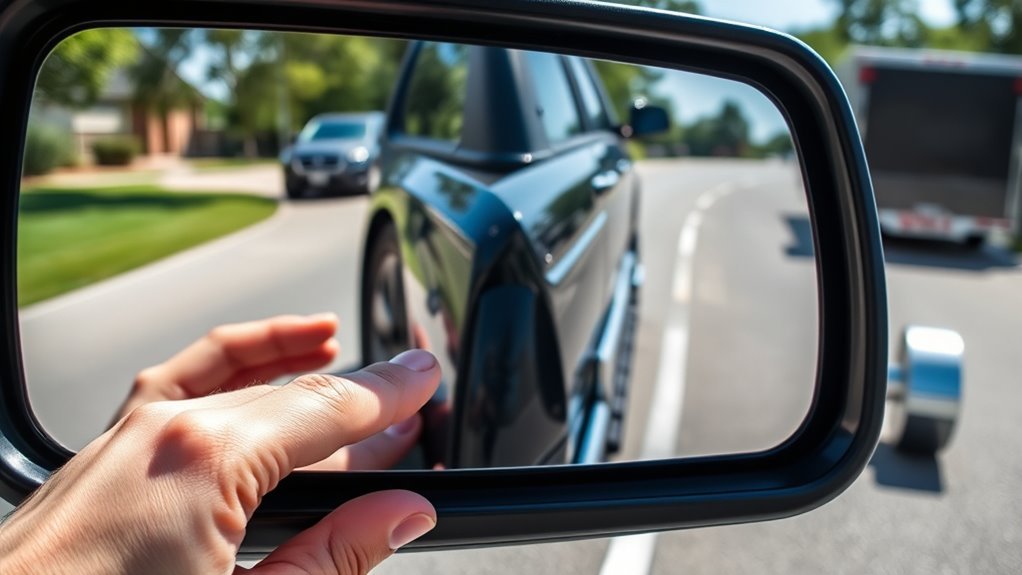
The lower convex lens is your wide-angle helper. It does not replace the upper mirror, backup camera, or a spotter, but it can show a wider area beside and behind the truck and trailer.
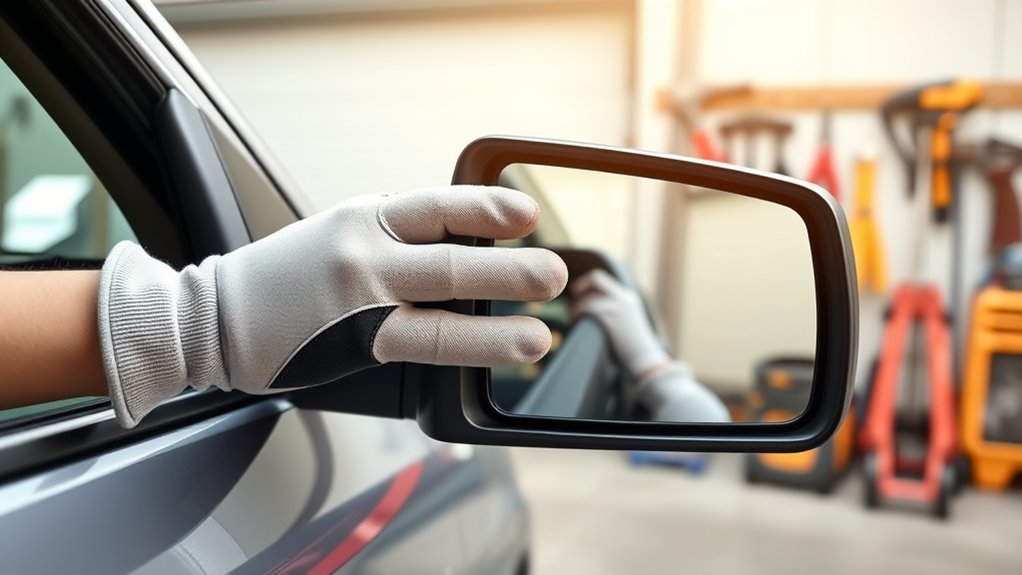
Use firm, even pressure on the lower lens. Press near the edges rather than jabbing the center. Small movements can change the view noticeably, so adjust a little, return to your normal driving position, and check the result before moving it again.
Start with Toyota’s towing baseline: retain a useful view of the towed object while keeping much of the outer field on the area beyond the trailer. For slow backing, you can then fine-tune the lower lens slightly downward to include useful reference points such as the trailer edge, wheel area, curb, or nearby ground.
For highway towing, a slightly farther-outward lower-mirror position may give you more useful adjacent-lane coverage. Keep enough trailer reference to understand its position without sacrificing the wider view.
Best Positions to Reduce Blind Spots for Lane Changes
To reduce blind spots, avoid filling the upper mirrors with your own truck. A small truck or trailer reference can help with positioning, but most of the mirror should show the lane and surrounding roadway.
The National Highway Traffic Safety Administration recommends positioning outside mirrors to maximize visibility and explains that moving the mirrors slightly outward can show more roadway. NHTSA still advises looking over your shoulder before changing lanes because mirrors cannot remove every blind spot.
When towing, use Toyota’s trailer-specific mirror guidance as the starting point rather than applying a normal no-trailer mirror position blindly. After setting the trailer view, verify that traffic moves smoothly from your direct view into the upper mirror and lower convex mirror without disappearing for an extended period.
Mirrors and warning indicators improve awareness, but they do not show everything. Signal early, check the mirrors, use Blind Spot Monitor if equipped, and confirm the lane yourself before moving over.
Test the view in a safe, quiet area before a trip. A parked vehicle or helper can show you where an object appears in the upper mirror, transitions into the lower convex mirror, and finally enters your direct side view.
Common Problems: Stiff Lenses, Limited Travel, Vibration, and Fixes
Towing mirrors are larger than standard mirrors, so the correct fix depends on what is resisting movement:
- Stiff lower lens: Use both hands or a gloved hand and press evenly. Do not twist the housing.
- Limited lower-lens travel: Use the most useful compromise. Keep trailer reference while preserving as much surrounding visibility as the mirror allows.
- Mirror will not fold, extend, or retract: Check for ice, snow, dirt, or another obstruction before operating it again.
- Mirror vibration: Confirm an extendable mirror is fully seated in its intended position. For an aftermarket add-on mirror, inspect the straps, clips, and fitment.
- Passenger-side view feels wrong: Return to your normal driving posture and adjust in small steps rather than leaning toward the passenger side while setting it.
- View changed after loading: Recheck the mirrors after changing tongue load, cargo, passengers, hitch setup, or trailer.
Note: If the mirror glass, housing, wiring, heater, turn signal, camera, BSM indicator, or power-fold/extend feature stops working, do not keep forcing the control. Inspect for visible damage and have the system checked before relying on it for towing.
[Products Worth Considering]

This frameless convex blind spot mirror helps expand your field of view for safer lane changes, passing, and merging. The HD glass design offers a clear, wide-angle rear view, while the swivel mount supports flexible positioning for cars, SUVs, trucks, vans, and RVs. Easy to install and built for all-weather use, it is a practical upgrade for everyday driving confidence.

These clip-on towing mirror extenders expand your field of view to help reduce blind spots when towing trailers, RVs, boats, and campers. The dual-mirror design pairs a larger main mirror with an adjustable close-range mirror for safer lane changes, backing, and highway driving. A molded rain guard, stable clamp system, and durable construction help maintain clear visibility and secure performance in changing road conditions.

This Snap & Zap towing mirror set adds expanded rear visibility for safer towing on compatible Toyota Tundra and Sequoia models. The clip-on design installs easily with no tools or drilling, fits over the factory mirrors, and still allows the mirrors to fold without removal. It includes both driver and passenger side extensions and is molded to match the original mirror shape for a secure, OE-style fit.
Owner Tips: Pressure, Reference Points, and Test Drives

The easiest way to fine-tune tow mirrors is to use fixed reference points you understand from the driver’s seat: the trailer edge, fender or wheel area, lane line, curb, garage edge, or a parked vehicle.
After each adjustment, ask three questions:
- Can I see enough of the trailer to judge its position? If not, extend the mirror if applicable or bring the upper glass slightly inward.
- Can I see the adjacent lane? If not, move the upper mirror outward and reduce how much truck or trailer fills the glass.
- Can I judge the trailer during low-speed backing? If not, fine-tune the lower convex mirror until you have a useful trailer and surrounding-space reference.
Then make a short low-speed test in a safe location. For a complete backing procedure, use the separate Toyota Tundra trailer backing guide rather than treating mirror adjustment as the entire backing process.
Blind Spot Monitor and Rear Cross Traffic Alert Notes
If your Tundra has Blind Spot Monitor, remember that it supplements your visual checks. Toyota describes Tundra BSM as using rear-side radar sensors behind the left and right portions of the rear bumper and alerting the driver through indicators in the outside mirrors. The warning indicator is in the mirror, but the radar sensor itself is not.
On appropriately equipped newer Tundras, the towing logic can account for a connected trailer. Toyota states that the available BSM can extend its detection area in consideration of a detected trailer, and current Tundra feature information says BSM can recognize blind spots for both the truck and trailer when used with the applicable integrated trailer-brake setup. Availability and behavior vary by model year and equipment, so confirm the owner’s manual for your truck.
Keep the rear-bumper sensor areas clean. Do not cover the sensor areas with stickers, accessories, tape, heavy mud, snow, or unapproved modifications. If the bumper or sensor area is hit, removed, modified, or replaced, have the system inspected because sensor misalignment can affect detection.
Rear Cross Traffic Alert, when equipped, is also a supplementary system. Do not assume an electronic alert proves the entire area beside or behind a trailer is clear. Use the mirrors, available camera views, direct observation, and a spotter when visibility is limited.
[Products Worth Considering]

These clip-on towing mirrors expand your rear view for safer towing, helping you see your trailer and blind spots more clearly when changing lanes or backing up. The dual-arm design adds stability and reduces vibration, while the adjustable fit and weather-resistant build support reliable use on trucks, SUVs, RVs, and trailers.

This direct replacement passenger side mirror glass is designed for select Toyota RAV4, 4Runner, and Tacoma models, offering OEM-quality fitment and dependable visibility. The convex heated glass helps reduce fog and defrost buildup, while the included spotter mirrors improve blind-spot awareness for safer driving. It also comes with an anti-fog film and pry tool for easier installation and enhanced everyday convenience.

These round blind spot mirrors add a wider viewing angle to help improve lane changes, passing, and everyday driving safety. The frameless convex HD glass design offers a slim, clear rear view while the adjustable swivel mount makes positioning quick and easy. Compatible with cars, SUVs, vans, and trucks, this two-pack is a simple upgrade for reducing blind spots.
Aftermarket and Sport Mirror Options: When to Replace
Replace or upgrade the mirrors when correct adjustment no longer provides a stable, usable view. Cracked glass, fogged lenses, loose housings, failed electrical features, or severe vibration can make lane changes and trailer backing harder to judge.
[Products Worth Considering]

These universal clip-on towing mirrors help expand rear visibility and reduce blind spots when towing with trucks, SUVs, RVs, and trailers. A rainproof molded guard helps keep the mirror surface clearer in wet or snowy conditions, while the adjustable swivel joint and secure clamps provide a stable, customizable view. Tool-free installation and included storage bag make them convenient for travel and everyday towing use.
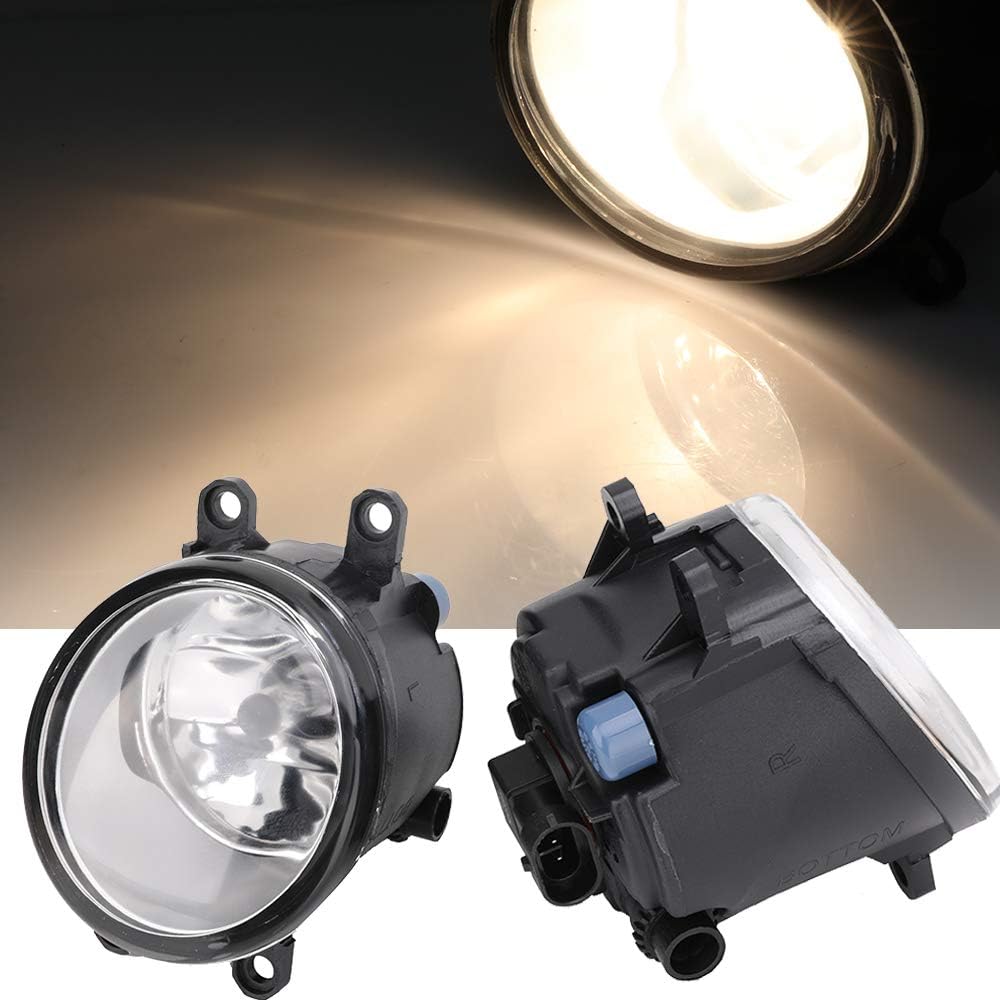
This left and right fog light assembly is designed to restore visibility and safety in foggy or inclement weather. Built for a wide range of Toyota and Lexus vehicles, it offers plug-and-play installation, DOT/SAE certification, and waterproof performance for dependable daily driving.

These universal clip-on towing mirror extenders expand your rear view for safer towing with trailers, RVs, SUVs, trucks, and caravans. The convex, adjustable design helps reduce blind spots while offering a wide, clear field of vision, and the tool-free installation makes setup quick and convenient. Built for stable, removable use, they are designed to fit most vehicles and improve visibility on every towing trip.
When to Replace
Inspect or replace Tundra towing mirrors if the glass is cracked, the housing is loose, an equipped turn signal or heater has failed, the mirror shakes badly at speed, or the adjustment mechanism no longer holds position.
Before buying a replacement, match it to the exact model year, trim, wiring, and factory features. Check compatibility with power adjustment, folding, extension, heat, turn signals, memory, puddle lamps, cameras, and Blind Spot Monitor indicators where applicable.
Slimmer Mirrors vs Tow Mirrors
A slimmer mirror can reduce width during normal driving, but frequent towing usually benefits from a stable mirror that can move farther outward and includes a useful convex section. If you replace factory tow mirrors with a smaller design, confirm that the new setup still provides adequate trailer-side visibility and remains compatible with any factory wiring, cameras, and warning indicators.
Warning: Be careful with aftermarket mirrors that affect cameras, Blind Spot Monitor indicators, wiring, or other driver-assist components. Use parts made for your exact Tundra configuration, and use qualified installation for safety-related electrical features.
Frequently Asked Questions
Can Tundra towing mirrors be heated to clear ice and fog?
Yes, if your Tundra is equipped with outside-mirror defoggers. Depending on the model year and equipment, the rear-window defogger can also operate the outside-mirror defoggers. Remove heavy snow or ice before operating a frozen mirror, and do not touch heated mirror glass while the defogger is running because it can become hot.
Does adjusting Tundra mirror glass affect BSM or camera calibration?
Normal mirror-glass adjustment changes your visual field but is not the same as calibrating the truck’s radar or camera systems. On equipped Tundras, BSM radar sensors are located at the rear bumper while warning indicators appear in the outside mirrors. If a mirror containing a camera, wiring, or BSM indicator is damaged or replaced, verify the repair requirements for that exact system.
Where are the Tundra Blind Spot Monitor sensors located?
On Tundras equipped with Blind Spot Monitor, Toyota describes rear-side radar sensors installed behind the left and right portions of the rear bumper. The outside mirrors contain the warning indicators; the primary BSM radar sensors are not inside the mirror housings.
How do towing mirrors impact garage parking clearance?
Extended towing mirrors increase the truck’s effective width. Retract extendable mirrors and fold folding mirrors when needed for a tight garage, car wash, drive-through, or narrow parking space. Return the mirrors to their normal driving position before driving.
Are Tundra mirror housings painted to match the truck color?
It depends on the trim, package, and replacement part. Mirror caps may be body-color, black, chrome, or paintable. When replacing a housing or cap, match the exact model year, trim, color requirements, wiring, and mirror features.
Should I adjust tow mirrors before or after hitching the trailer?
Make a rough adjustment before hitching, but do the final setup after the trailer is connected and loaded. Trailer width, hitch load, cargo, and resulting ride height can change the view from the driver’s seat.
Why does the passenger-side tow mirror feel harder to set?
The passenger mirror is farther from your eyes, so small movements can be harder to judge. Stay in your normal driving posture, move the upper mirror in small steps, and use the lower convex section to add a wider trailer-side and adjacent-lane view.
Conclusion
For the best Tundra tow-mirror view, set the mirrors in order: normal driving position, mirror extension, upper glass, then lower convex glass. Keep enough trailer edge to judge position, but use most of the mirror area for the roadway and surroundings. Make the final check with the trailer hitched and loaded, and treat BSM, RCTA, cameras, and mirrors as aids rather than substitutes for directly confirming that the path or lane is clear.
Sources
- Toyota Owners: 2025 Tundra outside rear view mirrors — mirror controls, defoggers, folding, extending, and Toyota’s recommended towing-mirror angle.
- Toyota Owners: 2025 Tundra Blind Spot Monitor — BSM operation, radar sensors, mirror indicators, and driver-assist cautions.
- Toyota USA Newsroom: 2025 Toyota Tundra — power-extending/folding tow mirrors, mirror heating, BSM indicators, cameras, and trailer-aware BSM information.
- NHTSA: Minimize Blind Spots Using Outside Mirrors — outward mirror positioning, visibility, blind spots, and shoulder-check guidance.
- eCFR: 49 CFR 571.111, Standard No. 111; Rear Visibility — federal rear-visibility device and system requirements.