

Choosing between DOT 3 and DOT 4 brake fluid for a Toyota Tundra starts with one rule: follow the fluid grade printed on your brake-fluid reservoir cap and listed in your owner’s manual. Do not choose DOT 4 just because it has a higher boiling point. Many older Tundras specify DOT 3, while some newer Tundras may allow DOT 3 or DOT 4. The safest choice is the grade Toyota lists for your exact model year.
Quick Answer
Use the brake fluid grade shown on your Toyota Tundra’s reservoir cap or owner’s manual. Older Tundras commonly call for FMVSS No. 116 DOT 3 / SAE J1703. Some newer Tundras may allow DOT 3 or DOT 4. If both are listed, DOT 4 gives a higher boiling-point margin.
Key Takeaways
- Check the cap and manual first. Do not assume every Tundra uses DOT 4.
- DOT 4 has higher federal minimum boiling points than DOT 3, which can help under towing, mountain driving, or repeated hard braking when DOT 4 is approved for your truck.
- Never use DOT 5 silicone brake fluid in a Tundra brake system designed for DOT 3 or DOT 4.
- Old, wet brake fluid is the real problem. Moisture lowers boiling point and can promote internal corrosion.
- If the pedal is soft after bleeding, do not drive. Air may still be trapped in the system or the ABS module may need a proper service procedure.
DOT 3 or DOT 4 for Your Toyota Tundra?
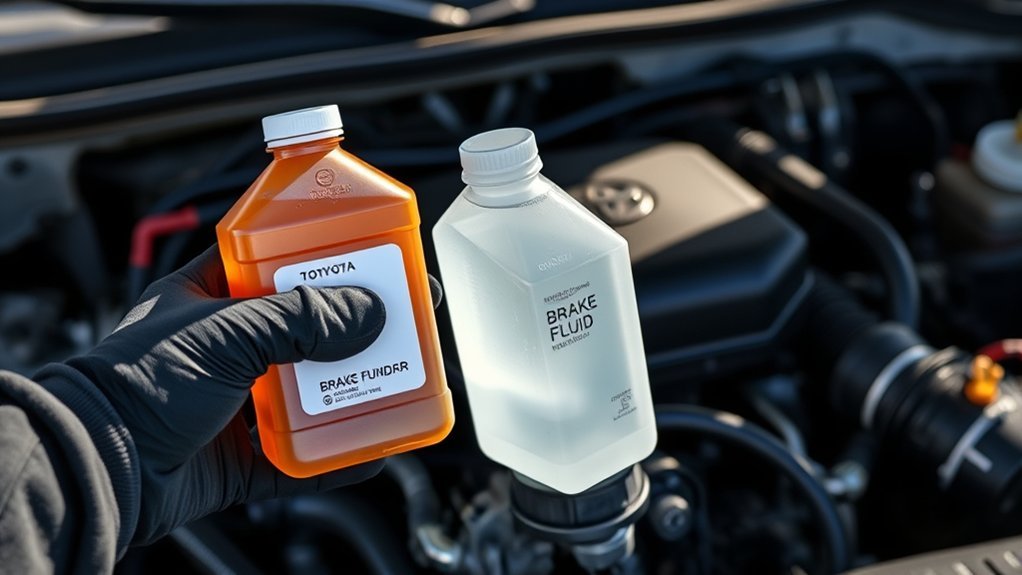
For most owners, the correct answer is simple: use the fluid Toyota specifies for your exact Tundra. Look at the brake-fluid reservoir cap first. Then confirm it in the owner’s manual or Toyota’s manual lookup page.
Older Tundra service information commonly lists SAE J1703 or FMVSS No. 116 DOT 3. Some newer Tundra manuals may list SAE J1703 / FMVSS No. 116 DOT 3 or SAE J1704 / FMVSS No. 116 DOT 4. That is why a blanket “always use DOT 4” answer is not accurate enough for a brake-system article.
| What your Tundra says | What to use | Best practice |
|---|---|---|
| Cap/manual says DOT 3 only | Use fresh DOT 3 that meets FMVSS No. 116 / SAE J1703 | Do not change grades unless Toyota service information or a qualified technician confirms it is acceptable. |
| Cap/manual says DOT 3 or DOT 4 | DOT 3 or DOT 4 is acceptable | Choose DOT 4 if you tow, haul, drive steep grades, or want more boiling-point margin. |
| Fluid type is unknown | Do not top off blindly | Have the system inspected and flushed with the correct grade. |
| Someone added DOT 5 silicone | Do not drive until inspected | A full professional brake-system service may be required. |
Warning: Brake fluid is safety-critical. If you are unsure what fluid is in the truck, if the brake pedal feels soft, or if the brake warning light is on, stop guessing and have the system inspected before driving.
[Products Worth Considering]

These Amazon Basics steel jack auto stands provide dependable support for vehicle maintenance with a self-locking ratchet design for easy height adjustment. Built from durable steel with a rustproof coating, they meet recognized safety standards and are designed for sedans and urban SUVs. The pair offers a stable, easy-to-read solution for routine garage work and comes backed by a limited warranty.

This windshield sun shade umbrella is designed for Toyota Tundra models from 2007 to 2026, helping block harsh sunlight and reduce interior heat buildup. Its reflective cooling coating and high-density fabric work together to protect dashboards, seats, and trim while keeping the cabin more comfortable. The umbrella-style design installs quickly, folds down easily, and stores neatly for everyday convenience.
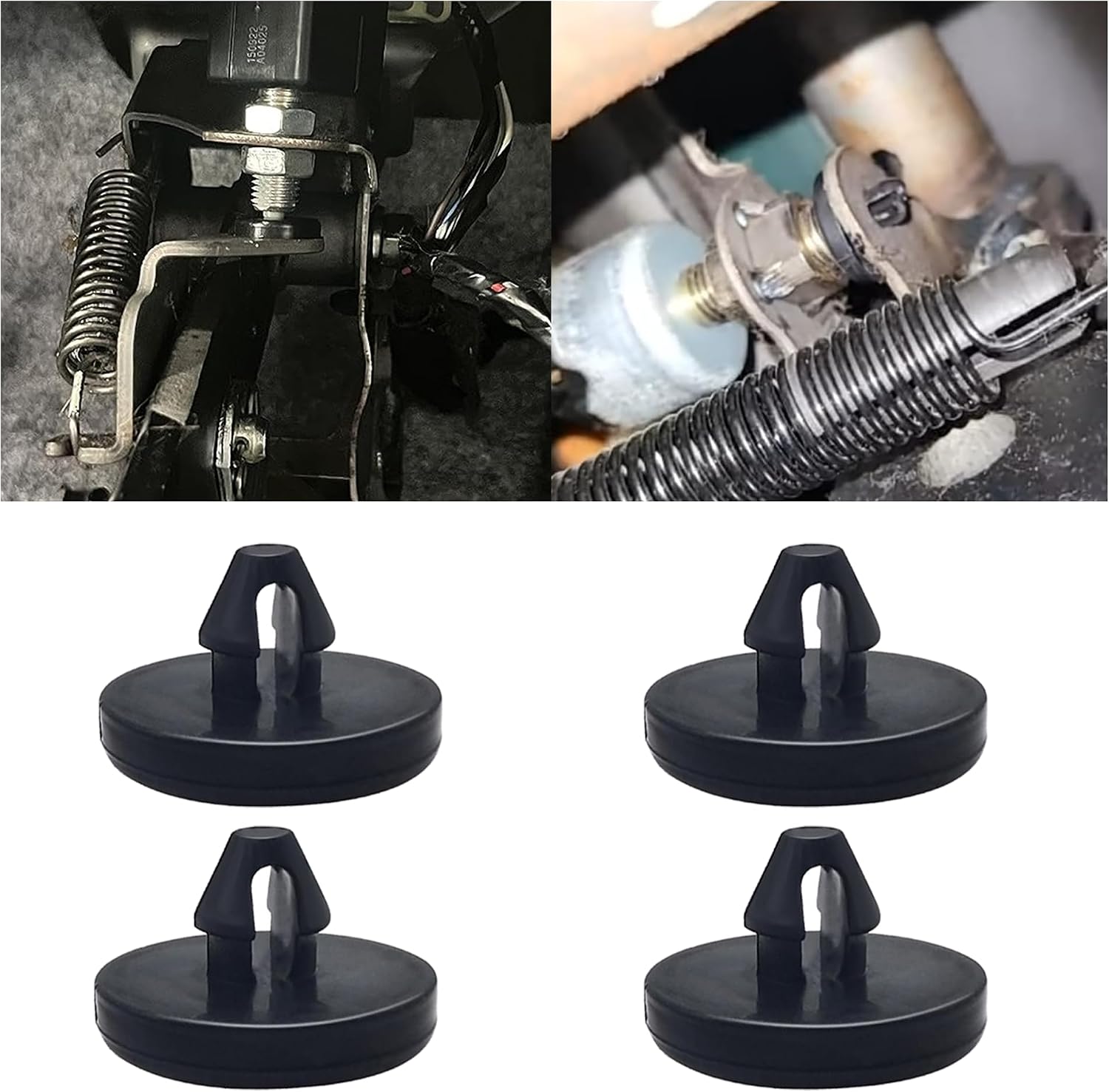
This brake pedal stop pad set is designed as an OEM replacement for compatible Toyota, Lexus, and Scion models, helping restore proper brake light switch function when the brake light stays on. Made from durable nylon, these compact stoppers are built for reliable long-term use and quick, tool-free installation. The set includes multiple pieces for convenient replacement and sharing.
How DOT 3 and DOT 4 Differ: Boiling Point, Chemistry, and Moisture
DOT ratings are performance categories, not brand names. The key difference between DOT 3 and DOT 4 is boiling-point performance. Under the federal brake-fluid standard, DOT 4 has higher minimum dry and wet boiling points than DOT 3.
| Fluid grade | Minimum dry boiling point | Minimum wet boiling point | Typical use |
|---|---|---|---|
| DOT 3 | 205°C / 401°F | 140°C / 284°F | Normal street driving where DOT 3 is specified |
| DOT 4 | 230°C / 446°F | 155°C / 311°F | Higher heat use where DOT 4 is approved |
| DOT 5 | 260°C / 500°F | 180°C / 356°F | Silicone-based specialty fluid; not for Tundra systems designed for DOT 3/DOT 4 |
“Dry” boiling point refers to new fluid from a sealed container. “Wet” boiling point reflects fluid after it has absorbed moisture. For a truck that tows, hauls, or sees long downhill braking, the wet boiling point matters because brake fluid ages in the real world.
Boiling Point Differences
When brakes get hot, fluid with too low a boiling point can form vapor bubbles. Vapor compresses, so the pedal can feel soft or sink farther than normal. DOT 4’s higher boiling-point minimums can provide extra margin during repeated braking, but only use DOT 4 if your Tundra allows it.
DOT 4 does not make a brake system “stronger” by itself. It simply gives more heat margin when the system is designed or approved for that fluid.
Chemical Makeup and Moisture
DOT 3 and DOT 4 fluids used in modern passenger vehicles are glycol-based brake fluids. They are hygroscopic, meaning they absorb moisture over time. That moisture lowers boiling point and can contribute to internal corrosion in brake lines, calipers, wheel cylinders, and ABS components.
Do not leave brake-fluid bottles open on the shelf and use them months later. Once a container has been opened, it can absorb moisture from the air. For brake work, use fluid from a clean, tightly sealed container and avoid dirt, oil, water, or petroleum contamination.
Pro Tip: Buy only the amount of brake fluid you need for the job. A fresh sealed bottle is better than an old half-used bottle that has been sitting in the garage.
What Toyota Recommends for the Tundra
Toyota’s recommendation depends on the exact Tundra model year and market. The safest process is:
- Read the reservoir cap. It is the fastest check under the hood.
- Confirm in the owner’s manual. Use Toyota’s official manual lookup if you do not have the printed manual.
- Match the DOT grade and standard. Look for language such as FMVSS No. 116 DOT 3, SAE J1703, SAE J1704, or DOT 4.
- Do not downgrade or experiment. If the system calls for DOT 4, do not fill it with DOT 3. If it calls for DOT 3 only, do not assume DOT 4 is approved unless service information confirms it.
This matters because brake fluid affects seal compatibility, ABS operation, boiling-point margin, pedal feel, and corrosion protection. The right fluid is the one that meets Toyota’s specification for your truck.
Note: Toyota’s public service guidance is to replace brake fluid as needed after inspection. Many shops use a 2–3 year preventive interval for glycol-based brake fluid, especially in humid climates or towing use, but your manual and inspection results should guide the service decision.
Compatibility: What Not to Mix With DOT 3 or DOT 4
DOT 3 and DOT 4 are often discussed together because both are common glycol-based brake fluids. However, “can mix” does not always mean “best practice.” Mixing a higher-grade DOT 4 with old DOT 3 can leave you with unknown performance closer to the older, wetter, lower-performing fluid.
Avoid DOT 5
Do not mix DOT 5 silicone brake fluid with DOT 3 or DOT 4. DOT 5 is a different chemistry. It is not the same as DOT 5.1, and it is not a smart upgrade for a Tundra brake system designed for DOT 3 or DOT 4.
DOT 5 silicone fluid can separate from glycol-based fluid and create unpredictable pedal feel, difficult bleeding, and ABS performance problems. If DOT 5 was accidentally added, do not keep topping off the reservoir. Have the system inspected and serviced properly.
Silicone Fluid and ABS
A Tundra’s ABS system depends on consistent hydraulic behavior. Silicone-based DOT 5 is not the right fluid for an ABS-equipped Toyota system that specifies DOT 3 or DOT 4. It can trap air more easily and can make bleeding difficult.
Stick with the fluid grade Toyota lists. For most Tundra owners, that means DOT 3, or DOT 3/DOT 4 where both are approved for the model year.
DOT 5.1 Is Not DOT 5
DOT 5.1 creates confusion because of the name. DOT 5.1 is a non-silicone brake-fluid category, while DOT 5 is silicone-based. Even so, you should not jump to DOT 5.1 unless your vehicle information or a qualified technician confirms it is appropriate.
If you are changing fluid grades, a full flush is the cleanest approach because it removes old, wet fluid and gives you known performance. The reason is not that DOT 5.1 must “remove glycol residue”; the reason is that fresh, uncontaminated fluid is always better than a mixed, unknown blend.
Braking When Towing or Hauling: DOT 3 vs DOT 4
Towing and hauling create more brake heat. Long downhill grades, heavy trailers, repeated stops, oversized tires, and hot weather can push brake fluid harder than normal commuting. If your Tundra allows DOT 4, using a quality DOT 4 fluid can provide a higher boiling-point margin than DOT 3.
That does not mean DOT 4 fixes worn pads, warped rotors, seized calipers, overloaded trailers, or weak trailer brakes. Brake fluid is one part of the system. If your truck tows often, also inspect:
- Brake pads and rotors
- Calipers and slide pins
- Brake hoses and hard lines
- Trailer brake controller settings
- Trailer brake condition
- Brake-fluid moisture and color
- ABS or brake warning lights
If the pedal gets soft during towing, stop in a safe place and let the brakes cool. Do not continue downhill with a fading pedal. Use lower gears, reduce speed, and service the brake system before the next tow.
Brake Fluid Life: Flush Intervals and Moisture Effects
Brake fluid does not last forever. DOT 3 and DOT 4 absorb moisture through normal service life. As moisture increases, boiling point drops and corrosion risk rises. That is why fluid condition matters more than color alone.
Toyota’s public guidance is to replace brake fluid as needed after inspection. In real-world service, many technicians recommend testing or replacing glycol-based brake fluid about every 2–3 years, sooner if the truck sees heavy towing, humid weather, frequent short trips, off-road water crossings, or repeated hard braking.
Use these practical rules:
- Inspect the fluid at every service. Low fluid can indicate pad wear or a leak.
- Test moisture if the fluid is old. A shop can test moisture and copper content.
- Flush if the fluid is dark, contaminated, wet, or unknown. Do not rely on topping off as maintenance.
- Service sooner for towing or severe use. More heat means less margin for degraded fluid.
Warning: A dropping brake-fluid level can mean a leak or worn brake components. Do not just refill and ignore it. Find the cause.
How to Tell Your Brake Fluid Needs Changing
Brake fluid can be bad before it looks terrible, but these checks can help you decide when service is due:
| Check | What to look for | What it may mean |
|---|---|---|
| Fluid level | Below MIN mark | Pad wear, leak, or improper service |
| Color | Very dark, cloudy, or dirty | Old or contaminated fluid |
| Pedal feel | Spongy, sinking, or inconsistent pedal | Air, leak, boiling, or hydraulic problem |
| Moisture test | High water content | Reduced boiling point |
| Copper test strip | High copper reading | Internal corrosion byproducts and aged fluid |
A soft pedal after brake work usually means air remains in the system. On some vehicles, an ABS bleed procedure may be needed to move trapped air out of the ABS hydraulic unit. If you cannot get a firm pedal, stop and use a qualified shop.
How to Switch Safely From DOT 3 to DOT 4
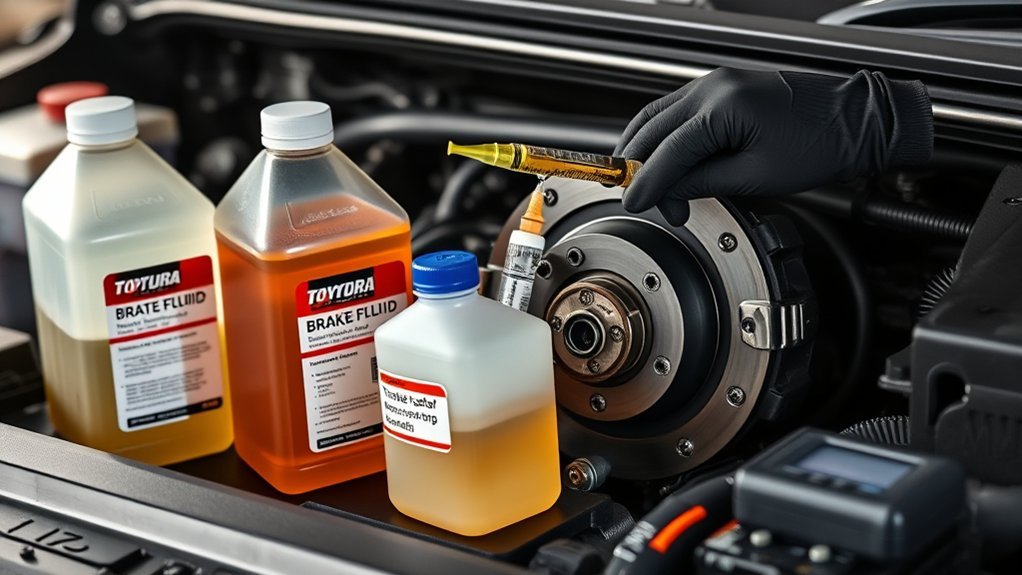
Switch from DOT 3 to DOT 4 only if your Tundra’s manual, reservoir cap, or Toyota service information allows DOT 4. If your truck is DOT 3-only and you cannot verify DOT 4 compatibility, stay with fresh DOT 3.
At a Glance
| Time Required | 45–90 minutes for an experienced DIYer |
| Difficulty | Intermediate; professional help recommended if ABS bleeding is required |
| Tools Needed | Correct brake fluid, bleeder wrench, clear hose, catch bottle, gloves, eye protection, jack stands if lifting, and possibly a scan tool |
| Cost | Usually low for fluid and basic supplies; higher if a shop performs ABS bleeding or repairs leaks |
[Products Worth Considering]

Bosch QuietCast premium ceramic rear brake pads are engineered for quiet, reliable stopping power with low dust performance. Featuring pre-attached multilayer shims, corrosion-resistant backing plates, and OE-style slots and chamfers, this set is designed for smooth fitment and long-lasting durability. It includes pads for one axle, plus hardware and lubricant where available, making installation easier for compatible Lexus, Pontiac, and Toyota vehicles.

This mech-style heavy metal key fob cover is designed to protect compatible Toyota E-style smart keys with a precise 1:1 fit. Built with a durable zinc alloy frame and soft silicone buttons, it helps guard against daily wear while keeping full access to key functions. The set includes a metal keychain and screwdriver for easy installation, making it a practical upgrade for select Toyota models.

This flexible oil funnel is designed to make fluid changes cleaner and easier by guiding oil around obstacles like skid plates and crossmembers. Its shape-retaining core and silicone body can be molded for custom positioning, while the heat-resistant, leak-proof design helps prevent spills during draining and filter removal. Reusable and easy to clean, it works well for cars, trucks, motorcycles, and other hard-to-reach fluid fill or drain applications.
Safe Flush Steps
- Confirm the correct fluid. Match the reservoir cap and owner’s manual. Use only clean fluid from a sealed container.
- Protect paint and eyes. Brake fluid can damage paint and irritate skin or eyes. Wear gloves and safety glasses. Keep water and towels nearby for spills.
- Remove old fluid from the reservoir. Use a clean suction tool, but do not expose the system to dirt.
- Refill with the approved fluid. Keep the reservoir between MIN and MAX during the entire process.
- Bleed the brakes in the correct sequence. Follow Toyota service information for your model year. Do not assume the sequence is the same on every truck.
- Watch for clean, bubble-free fluid. Continue until old fluid and air are removed from each bleeder.
- Address ABS if needed. If air entered the ABS unit or the pedal will not firm up, a scan-tool ABS bleed procedure may be required.
- Check for leaks. Inspect bleeders, hoses, calipers, lines, and the master cylinder.
- Verify pedal feel before driving. The pedal should be firm and consistent with the engine running and off.
- Dispose of old fluid properly. Used brake fluid should go to an appropriate recycling or hazardous-waste facility.
Warning: Never road-test a Tundra with a spongy pedal after a flush. Recheck the bleed procedure, inspect for leaks, and get professional help if the pedal is not firm.
Best DOT 3 and DOT 4 Brake Fluid Picks for Tundra Owners
The best brake fluid is not the most expensive bottle on the shelf. It is the correct DOT grade, from a reputable brand, in a fresh sealed container, used before it absorbs moisture.
For a Tundra that specifies DOT 3, choose a name-brand DOT 3 fluid that meets FMVSS No. 116 DOT 3 and SAE J1703. For a Tundra that allows DOT 4, choose a DOT 4 fluid that meets FMVSS No. 116 DOT 4 and SAE J1704. For towing or mountain driving, compare the wet boiling point on the bottle, because that number better reflects aged-fluid performance.
Good shopping criteria:
- Correct DOT grade for your exact Tundra
- Sealed, undamaged container
- Clear FMVSS and SAE compliance on the label
- Published wet boiling point
- Fresh purchase from a store with normal product turnover
- No mystery “universal” fluid unless it clearly meets your required spec
Avoid using old opened fluid, unlabeled fluid, or fluid from a dirty container. Brake fluid is cheaper than brake-system repairs.
[Products Worth Considering]
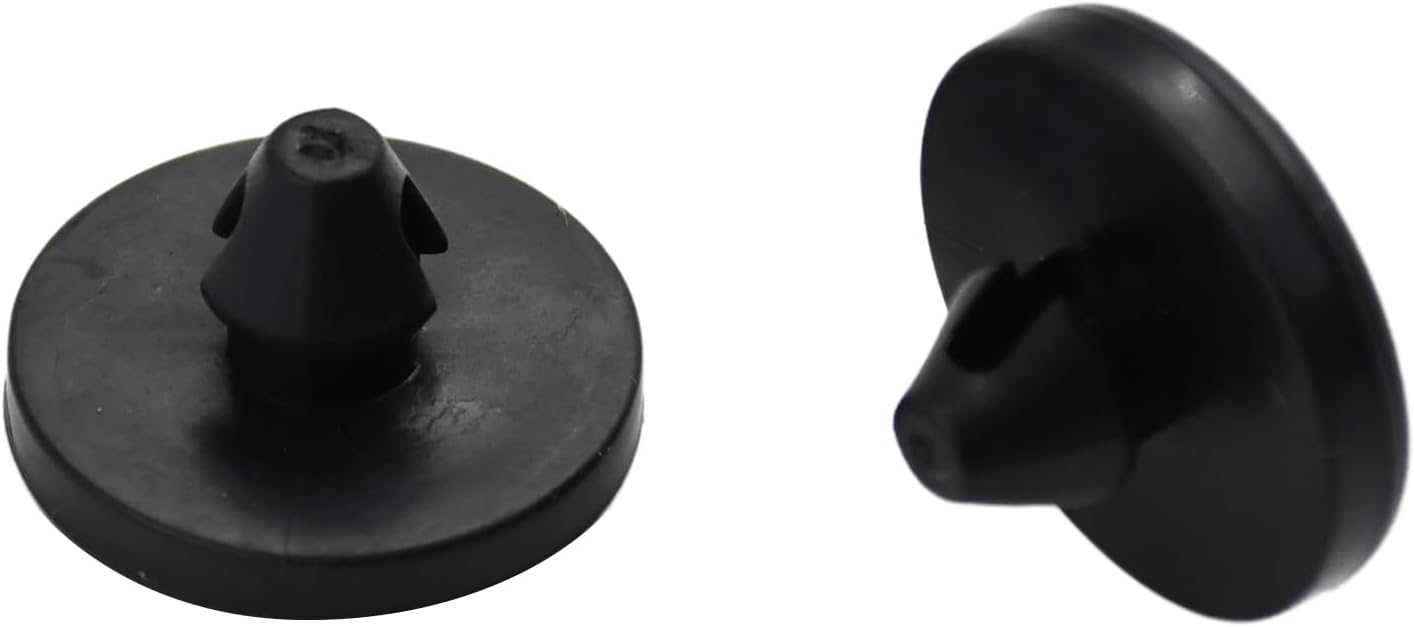
This brake switch stopper set helps restore proper brake pedal and brake light switch operation on a wide range of Toyota, Lexus, and Scion vehicles. Designed as a direct replacement part, it supports reliable pedal contact and can help fix worn or missing stoppers that affect brake light function. The package includes two stoppers for convenient replacement or spare use.

Bendix Premium Ceramic Front Brake Pads are engineered to match original equipment fit, form, and function for a straightforward replacement. Built with durable materials to help resist wear and corrosion, they support consistent braking performance and reduced brake fade for everyday driving. These pads are a dependable choice for compatible Pontiac, Scion, Toyota, and related vehicles.

This brake switch stopper helps restore proper brake light operation by providing a precise pedal stopping point, reducing issues where brake lights stay on. Made from durable nylon, it is designed for easy installation and dependable fitment across many Toyota, Lexus, and Scion models. The multi-pack supply makes it convenient to replace worn stoppers and keep spares on hand for future maintenance.
Frequently Asked Questions
Can you mix DOT 3 and DOT 4 brake fluid on a Toyota Tundra?
DOT 3 and DOT 4 are generally compatible glycol-based brake fluids, but mixing is not the best maintenance practice. If your Tundra allows DOT 4, a full flush with fresh DOT 4 is better than topping off old DOT 3. If your truck specifies DOT 3 only, use DOT 3 unless Toyota service information confirms another grade is acceptable.
Can you use DOT 4 brake fluid in a Toyota Tundra?
Use DOT 4 only if your Tundra’s reservoir cap, owner’s manual, or Toyota service information allows DOT 4. DOT 4 has a higher boiling-point minimum than DOT 3, but the correct fluid is still the one specified for your exact truck.
What kind of brake fluid does a 2014 Toyota Tundra take?
A 2014 Toyota Tundra is commonly listed with SAE J1703 or FMVSS No. 116 DOT 3 brake fluid. Always confirm on the reservoir cap and in the owner’s manual for your truck before buying fluid.
Is DOT 3 or DOT 4 more corrosive?
Neither should be treated as automatically “more corrosive” in normal use. The bigger corrosion risk is old brake fluid that has absorbed moisture or become contaminated. Replace or flush fluid when testing, age, color, or service history shows it is due.
Is DOT 5.1 safe for a Toyota Tundra?
DOT 5.1 is not the same as DOT 5 silicone fluid, but you should still use it only if your vehicle information or a qualified Toyota technician confirms it is acceptable. For most owners, DOT 3 or DOT 4 as listed on the cap/manual is the safer choice.
How often should Toyota Tundra brake fluid be changed?
Toyota’s public guidance is to replace brake fluid as needed after inspection. Many shops recommend testing or replacing glycol-based brake fluid about every 2–3 years, especially in humid climates or towing use. Follow your maintenance guide, inspection results, and service history.
Conclusion
For a Toyota Tundra, the best brake fluid is the one your truck specifies. Do not assume DOT 4 is always correct. Check the reservoir cap and owner’s manual first. If your Tundra allows DOT 3 or DOT 4, DOT 4 can offer extra heat margin for towing, hauling, and repeated braking. If your Tundra calls for DOT 3 only, use fresh DOT 3 unless Toyota service information confirms otherwise.
Never mix in DOT 5 silicone fluid, never ignore a soft pedal, and never treat topping off as a substitute for proper brake service. Clean, fresh, correctly specified fluid keeps the hydraulic system predictable and helps your Tundra stop the way it should.
Sources
- Toyota Owners Manuals and Warranties — official lookup for model-year owner’s manuals and maintenance information.
- Toyota Support: Brake Fluid Replacement — Toyota’s public guidance that brake fluid should be replaced as needed after inspection.
- 49 CFR 571.116: Motor Vehicle Brake Fluids — federal brake-fluid performance, boiling-point, labeling, color, and compatibility requirements.
- NHTSA Interpretation 12089.MLS — confirms DOT 4 wet boiling-point labeling requirements under FMVSS No. 116.
- Toyota Tundra Service Manual Excerpt: Brake Fluid Replacement — service procedure excerpt listing DOT 3 fluid and bleeding cautions for a Tundra brake-fluid replacement procedure.

[…] vehicle-specific examples, see the related RAV4 brake-fluid guide, Toyota Camry DOT3 guide, and Toyota Tundra DOT3 vs DOT4 guide. Those pages should be used for model-specific requirements, while this page covers the general […]
[…] The correct brake-fluid grade also depends on model year. Toyota documentation for different Tundra generations can specify DOT 3 or allow DOT 3 and DOT 4, so the reservoir cap and model-year owner’s manual are the controlling references. Newer Toyota material can list FMVSS No.116 DOT 3 / SAE J1703 or FMVSS No.116 DOT 4 / SAE J1704 brake fluid, while older Tundras may specify DOT 3 only. For a deeper model-year comparison, see the Toyota Tundra DOT 3 vs DOT 4 guide. […]