If your Toyota Supra overheats on hot days, treat it like a warning, not an inconvenience. High ambient heat, stop-and-go traffic, low coolant, trapped air, a weak fan, a stuck thermostat, or a restricted radiator can all push temperatures too high. The safest first move is to pull over, shut the engine off, let it cool, and inspect the cooling system only when it is safe to touch.
Quick Answer
A Supra usually overheats on hot days because the cooling system cannot remove heat fast enough. The most common causes are low coolant, leaks, air trapped in the system, a failing thermostat, a weak water pump, blocked radiator fins, or cooling fans that are not turning on when the car is idling or moving slowly.
Key Takeaways
- If the temperature warning appears, pull over safely, turn off the A/C, shut the engine down, and let the car cool before opening anything under the hood.
- Never remove the coolant cap or radiator cap when the engine is hot; the system is pressurized and can spray scalding coolant.
- Do not assume every Supra uses the same coolant. Check your owner’s manual, reservoir label, or dealer by VIN before topping off.
- Overheating at idle often points to fan or airflow problems; overheating at highway speed often points to low coolant, radiator restriction, thermostat, water pump, or head-gasket concerns.
- If coolant keeps disappearing, the temperature warning returns, or you see steam, smoke, milky oil, or sweet exhaust odor, stop driving and get the car inspected.
At a Glance
| Time Required | 15–30 minutes for a roadside cool-down; 30–90 minutes for basic inspection and bleeding |
| Difficulty | Beginner for visual checks; intermediate to advanced for bleeding or repairs |
| Tools Needed | Gloves, flashlight, clean rag, correct coolant, funnel, OBD scanner, and service manual procedure |
| Cost | $15–$80 for coolant and simple supplies; more if a thermostat, fan, radiator, pump, or leak repair is needed |
Immediate Actions to Take When Your Supra Overheats
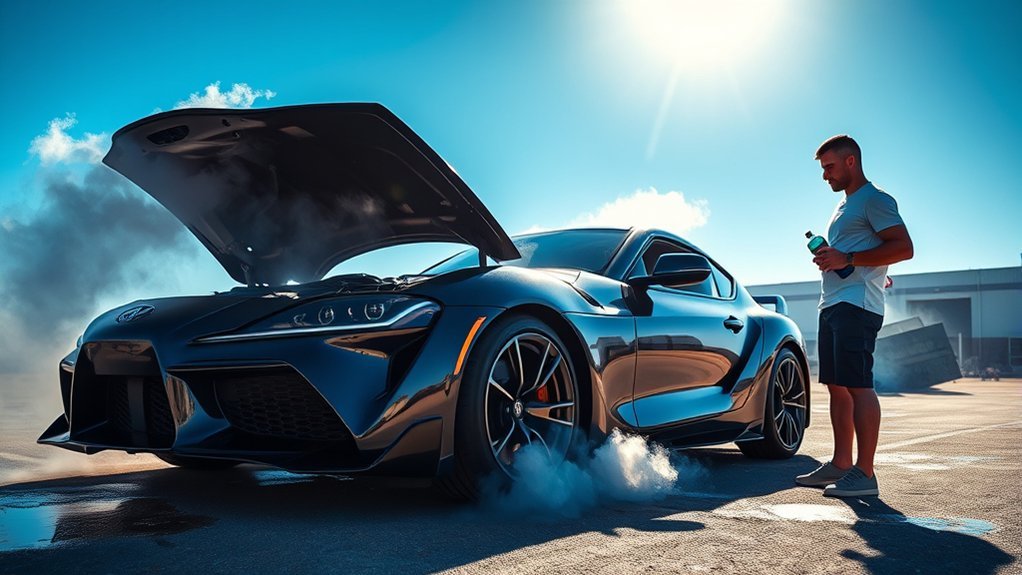
When your Supra overheats, act quickly and calmly. Turn off the A/C, switch the heater to full hot only if you are still moving to a safe place, and pull over as soon as it is safe. Once parked, turn on the hazard lights, shift to Park or neutral, set the parking brake, and shut the engine off.
Warning: Never open the radiator cap, coolant expansion tank cap, or any pressurized cooling-system cap while the engine is hot. Hot coolant and steam can cause severe burns.
Let the engine cool for at least 15–30 minutes before opening the hood. If steam is coming from the engine bay, stay clear until it stops. After the engine cools, check the coolant reservoir level, look under the car for puddles, and inspect visible hoses for splits, swelling, crusty residue, or fresh wet spots.
If the reservoir is low and you have the correct coolant for your exact Supra, add coolant only after the engine has cooled. If you are not sure which coolant your car uses, add only enough distilled water in an emergency to reach a safe place, then have the system drained, refilled, and checked. Toyota provides model-year owner’s manuals through its official Supra manuals page, and that is the best place to confirm the correct procedure for your car.
Do not keep driving if the warning light returns, the gauge climbs again, coolant pours out, or the engine runs rough. In those cases, call for a tow. Driving an overheated engine can turn a small coolant leak into a warped cylinder head, head-gasket failure, or complete engine failure.
[Products Worth Considering]

This 3-in-1 snow brush combines powerful ice-crushing performance with a paint-safe bristle design to help clear heavy snow and thick ice without harming your vehicle. The extendable shaft reaches from shorter to longer length for better access across windshields, windows, and roofs, while the 360° pivoting head makes snow removal easier from multiple angles. A comfortable non-slip grip and detachable design add convenience for winter use and storage.

This spill-proof radiator coolant filling funnel kit helps you refill cooling systems cleanly while reducing trapped air pockets that can affect heater and engine performance. It includes a 5-inch extension bar and 45-degree elbow for easier access under shrouds or at awkward angles. Color-matched caps for dedicated adapters make setup simpler and more organized.
This EL-50448 TPMS relearn tool helps quickly activate and reset tire pressure sensors so your vehicle’s monitoring system stays accurate after tire rotations, sensor replacement, or seasonal tire changes. Designed for many GM-related vehicles and compatible with common 315 and 433 MHz TPMS systems, it offers simple one-button operation and reliable performance for clearing warning lights and relearning sensor positions.
Common Causes of Overheating in the Toyota Supra
Overheating in a Toyota Supra usually comes from one of three problems: the system is low on coolant, coolant is not circulating correctly, or airflow through the radiator is not strong enough. Hot weather makes each issue worse because the radiator has less temperature difference to work with.
| Cause | What You May Notice | Best Next Step |
|---|---|---|
| Low coolant | Low reservoir level, sweet smell, warning message, heater blowing cool air | Check for leaks before topping off with the correct coolant |
| Coolant leak | Puddles, crusty residue, wet hoses, dripping near radiator or water pump | Pressure-test the system and repair the leak |
| Air trapped in the system | Gurgling, temperature swings, poor cabin heat after coolant service | Bleed the system using the model-specific procedure |
| Stuck thermostat | Rapid overheating after startup or sudden temperature changes | Test and replace the thermostat if it does not open correctly |
| Cooling fan problem | Overheats in traffic but cools down at speed | Check fan operation, fuse, relay, wiring, and fan control signal |
| Blocked radiator fins | Runs hot on hot days, after track use, or after driving through debris | Clean bugs, leaves, dirt, and bent fins carefully |
| Weak water pump | Overheating, coolant seepage, bearing noise, or poor circulation | Inspect pump operation and replace if faulty |
One important Supra-specific note: older Mk4 Supras and modern GR Supras do not share the same cooling-system layout, parts, or service steps. The 2020-and-newer GR Supra is a shared-platform car, so coolant type and bleeding procedures may differ from other Toyota models. Do not rely on coolant color alone, and do not assume “Toyota red” or “Toyota pink” is correct for every Supra. Use the coolant specification listed in your owner’s manual, reservoir label, repair manual, or dealer VIN lookup.
Note: Toyota’s genuine coolant catalog is useful for many Toyota models, but your Supra’s exact coolant specification should still be confirmed by model year and VIN before mixing or topping off.
How to Check the Cooling System After It Cools
Once the engine is fully cool, do a basic inspection before adding fluid or restarting the car. Start at the coolant reservoir. The level should be between the minimum and maximum marks when the engine is cold. If it is below the minimum mark, the car may have a leak, trapped air, or a recent service issue.
- Check coolant level: Look at the reservoir markings with the car parked on level ground.
- Look for leaks: Check under the front of the car, around the radiator, hose connections, reservoir, water pump area, and heater-hose area.
- Inspect hoses: Replace hoses that are cracked, swollen, oil-soaked, brittle, or leaking at the clamps.
- Check the radiator area: Remove leaves, bugs, plastic bags, and dirt from the grille and radiator fins using gentle water pressure.
- Watch the fans: When the engine reaches operating temperature or the A/C is on, the electric cooling fan should operate as commanded. If it does not, inspect the fuse, relay, wiring, fan motor, and control circuit.
- Scan for codes: An OBD scanner can reveal coolant-temperature sensor, fan-control, thermostat, or pump-related trouble codes.
If the level is low but you cannot find an external leak, do not ignore it. Coolant can leak internally through a head gasket, turbocharger cooling passage, oil cooler, heater core, or other component depending on the engine. Signs include white exhaust smoke, a sweet smell from the exhaust, milky oil, unexplained coolant loss, or bubbles in the reservoir.
[Products Worth Considering]

This portable tire inflator delivers fast, convenient inflation for cars, bikes, motorcycles, and balls with dual power options from a rechargeable battery or a 12V car cord. Its digital LCD pressure gauge and automatic shutoff help prevent over-inflation, while multiple preset modes and a custom setting make it easy to use for different inflation tasks. Built-in flashlight and USB power ports add extra emergency utility on the road.

This universal brake bleeder kit makes one-person brake and clutch line bleeding simple by using compressed air to create stable vacuum-assisted fluid flow. Its extra-large 3L tank helps complete full-system flushes with fewer interruptions, while the included refill bottle, flexible hose, and universal adapter support clean, efficient use on standard and ABS brake systems.
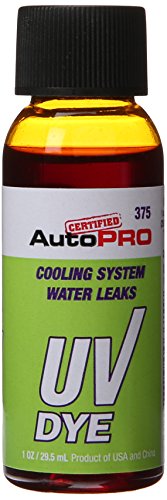
Contains one application of radiator/engine cooling system UV leak detection dye
How to Effectively Bleed Your Cooling System
Bleeding the cooling system removes trapped air. Air pockets can stop coolant from flowing through key parts of the engine, which can cause gurgling noises, poor cabin heat, and sudden temperature spikes. This is especially common after a coolant drain, hose replacement, radiator replacement, thermostat work, or water-pump service.
Warning: Do not bleed a Supra by guessing. Some models use an expansion tank, electric pump, or model-specific service mode. The wrong method can leave air trapped or create a burn risk.
For many older cooling systems, bleeding may involve raising the front of the car slightly, filling the system slowly, setting the heater to full hot, running the engine with the correct fill point open, and using a spill-free funnel until bubbles stop. However, modern GR Supra procedures can be different, so follow the service manual for your model year.
- Start cold: The engine must be cool before any cap is opened.
- Use the correct coolant: Match the exact specification for your Supra. Never mix random coolant types by color.
- Fill slowly: Pour coolant slowly to reduce trapped air.
- Set cabin heat correctly: Set the heater to the correct temperature setting required by the service procedure so coolant can circulate through the heater core.
- Run the proper bleed procedure: Use the manual method or electronic bleed procedure specified for your vehicle.
- Watch the temperature: Stop if the temperature climbs too high, the warning light returns, or coolant starts overflowing heavily.
- Recheck after cooling: After the engine cools fully, recheck the reservoir level and top off only to the correct cold mark.
Pro Tip: If overheating started right after a coolant service, hose replacement, thermostat job, or radiator repair, trapped air should be high on your suspect list.
Indicators of Cooling System Malfunction
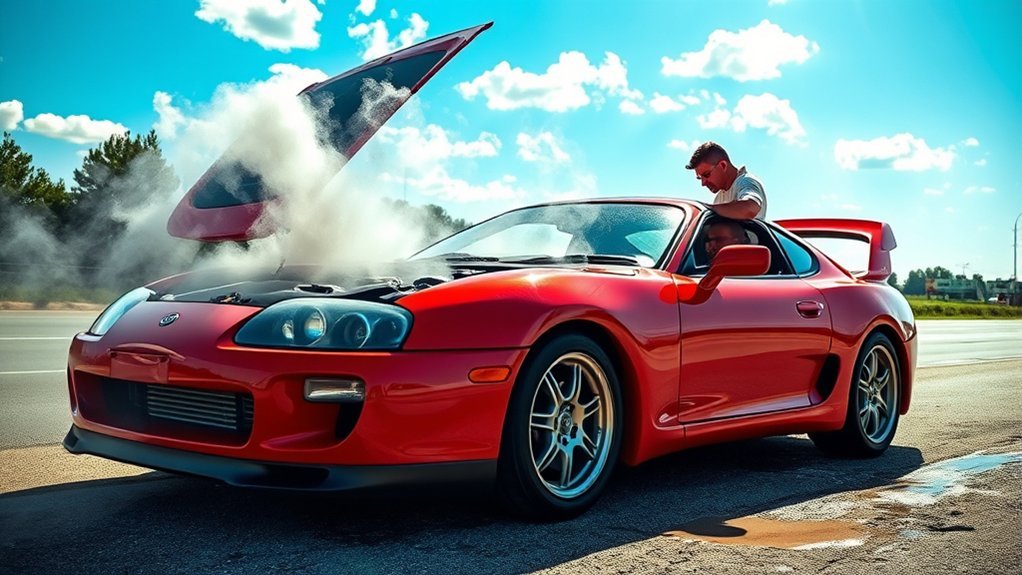
A healthy Supra cooling system should hold pressure, maintain a stable coolant level, cycle fans when needed, and keep engine temperature under control in traffic and on the highway. Watch for these warning signs:
- Coolant leaks: Puddles, wet hoses, crusty residue, or a falling reservoir level point to coolant loss.
- Temperature warning or gauge spike: A warning light, red-zone gauge, or high coolant-temperature reading means the system is not keeping up.
- Weak cabin heat: If the heater blows cold while the engine is hot, coolant may be low or air may be trapped.
- Gurgling noises: Sloshing or bubbling sounds can indicate trapped air or boiling coolant.
- Fan not running: A fan that never turns on in traffic can cause low-speed overheating.
- Sweet smell: A sweet odor after driving often points to leaking coolant.
- Steam or smoke: Steam from the hood is a stop-driving-now symptom.
- Milky engine oil: Oil that looks creamy or milky can mean coolant is mixing with oil, which needs immediate diagnosis.
Why Your Supra Overheats Only on Hot Days
If your Supra behaves normally in mild weather but overheats on hot days, the cooling system may be close to its limit. Summer heat exposes weak parts because the radiator has to shed engine heat into already-hot outside air. Small problems that seem harmless in cooler weather can become obvious in traffic, on long climbs, with the A/C running, or during spirited driving.
Use the pattern to narrow the cause:
- Overheats at idle or in traffic: Look first at cooling fans, fan relays, fan control, debris in the radiator fins, A/C condenser blockage, and low coolant.
- Overheats at highway speed: Suspect low coolant, a restricted radiator, stuck thermostat, weak water pump, collapsed hose, air pocket, or combustion-gas intrusion.
- Overheats after a recent repair: Check for trapped air, incorrect coolant fill, loose clamps, or a connector left unplugged.
- Overheats with A/C on: Check fan operation and airflow through the condenser and radiator stack.
- Overheats during hard driving or track use: Inspect coolant condition, radiator capacity, airflow, oil temperature, charge-air cooling, and whether the car needs track-focused maintenance.
A hot-day overheating problem is often a cooling system that was already marginal. Heat, A/C load, traffic, and hard driving simply reveal the weak part sooner.
Maintenance Tips to Prevent Overheating in Your Toyota Supra
Preventing overheating is easier and cheaper than repairing heat damage. Make cooling-system checks part of your routine, especially before summer, road trips, mountain drives, or track days.
- Check coolant level when cold: Look at the reservoir every few weeks and before long drives.
- Use the right coolant: Confirm the exact specification from the manual, reservoir label, or dealer. Toyota’s Genuine Toyota Coolant page can help with Toyota coolant options, but Supra owners should still verify by VIN.
- Do not mix coolant types: Mixing incompatible coolants can reduce corrosion protection and may cause deposits or poor performance.
- Inspect hoses and clamps: Replace any hose that is soft, swollen, cracked, oil-soaked, or leaking.
- Keep airflow clear: Clean bugs, leaves, and dirt from the grille, condenser, and radiator fins using low pressure.
- Test fan operation: Fans matter most in traffic and with the A/C on.
- Replace old caps when needed: A weak pressure cap can lower the boiling point and allow coolant loss.
- Follow service intervals: Use the maintenance schedule for your model year instead of guessing.
- Dispose of used coolant correctly: Used antifreeze should go to a recycling center, repair facility, or household hazardous waste program, not down a drain or onto the ground.
Note: Coolant color is not a reliable specification. Two coolants can look similar and still use different chemistry. Always match the written specification.
When to Get Professional Help for Cooling Problems
If you’re noticing persistent overheating despite basic maintenance, it is time to get professional help. Cooling systems are pressure-based, and some problems only show up with a pressure test, combustion-gas test, thermal scan, scan-tool command, or lift inspection.
Warning Signs To Observe
Get the Supra inspected if you notice any of these symptoms:
- Temperature warning: A coolant-temperature warning, red-zone gauge, or repeated “engine overheated” message needs diagnosis.
- Repeated coolant loss: If the reservoir drops again after topping off, there is a leak or internal issue.
- Steam from the hood: Stop driving and let the car cool before inspection.
- Oil contamination: Milky oil or rising oil level can indicate coolant mixing with oil.
- Sweet exhaust odor or white smoke: These can point to internal coolant burning.
- Fan failure: A cooling fan that does not operate when commanded can quickly overheat the car in traffic.
Persistent Overheating Issues
Persistent overheating can come from a deeper issue, even if the coolant reservoir looks full. A stuck thermostat, partially blocked radiator, weak pump, incorrect bleed procedure, bad sensor, faulty fan control, or combustion gases entering the cooling system can all cause repeat temperature spikes.
A shop can pressure-test the cooling system, check for leaks under load, command the fans with a scan tool, compare live coolant-temperature readings, verify thermostat operation, and test for combustion gases in the coolant. These tests are much safer than repeatedly topping off coolant and hoping the problem goes away.
Unexplained Fluid Loss
Unexplained fluid loss is one of the biggest red flags. If coolant disappears but you do not see a puddle, the leak may only happen while driving, when the system is hot and pressurized, or it may be internal.
- Milky oil: Stop driving and check for coolant contamination.
- Sweet-smelling exhaust: This may indicate coolant entering the combustion chamber.
- Wet carpet or foggy windows: A leaking heater core can put coolant inside the cabin.
- Crusty residue: Dried coolant often leaves white, pink, green, or blue residue around leak points.
- Pressure loss: A cooling-system pressure test can expose leaks that are not visible when the car is cold.
Frequently Asked Questions
Why does my car overheat on hot days?
Your car overheats on hot days because the cooling system is under more stress. High outside temperature, A/C use, slow traffic, low coolant, poor airflow, a weak fan, trapped air, a restricted radiator, or a failing thermostat can all keep the system from shedding heat fast enough.
Can I keep driving my Supra if it overheats?
No. If the temperature warning appears, pull over safely and shut the engine off. Continuing to drive can cause head-gasket failure, warped metal parts, damaged seals, and major engine damage.
What coolant should I put in a Toyota Supra?
Use the coolant specification listed for your exact model year and VIN. Do not rely only on color or assume every Supra uses the same Toyota coolant. If you are unsure, check the owner’s manual, reservoir label, or Toyota dealer before topping off.
Why does my Supra overheat in traffic but not on the highway?
That pattern often points to an airflow issue. At highway speed, air naturally moves through the radiator. In traffic, the cooling fan has to do that job. Check fan operation, fan relays, wiring, coolant level, radiator debris, and A/C condenser blockage.
Why does my Supra overheat after I changed coolant?
The most likely causes are trapped air, incorrect coolant level, a loose hose clamp, a cap not sealed correctly, or the wrong bleeding procedure. Recheck the system cold and follow the service manual bleed procedure for your model.
Is it safe to open the coolant cap after waiting 15 minutes?
Not always. Fifteen minutes may not be enough if the engine is very hot. Wait until the system is cool to the touch, use gloves and a rag, and open the cap slowly only if the manual allows it. If steam or pressure remains, wait longer.
Conclusion
A Supra that overheats on hot days is telling you the cooling system needs attention. Start with the safe steps: pull over, shut the engine off, let it cool, and check coolant level and visible leaks only when it is safe. From there, look for the pattern. Idle overheating points toward fans and airflow; highway overheating points more toward coolant flow, radiator restriction, thermostat, pump, air pockets, or deeper engine issues.
Quick DIY checks can help, but repeated overheating is not something to gamble with. Use the correct coolant, follow the correct bleed procedure, and get a professional diagnosis if coolant keeps disappearing or the warning returns. That is how you keep your Supra cool under pressure instead of turning a hot-day warning into an expensive repair.
Sources
- Toyota Supra Owner’s Manuals and Warranties — official model-year manuals and owner guidance for Supra maintenance procedures.
- Toyota 2020 Supra Owner’s Manuals — official Toyota owner-manual access for earlier GR Supra model years.
- Genuine Toyota Coolant — Toyota’s official coolant category page for Toyota coolant options and fitment checking.
- AAA: Car Overheating Causes and Solutions — general overheating causes such as thermostat, radiator, coolant, and water-pump problems.
- Consumer Reports: What to Do if Your Car Overheats — roadside safety steps and common overheating causes.
- U.S. EPA: Household Hazardous Waste — guidance for safe handling and disposal of household hazardous materials such as automotive fluids.