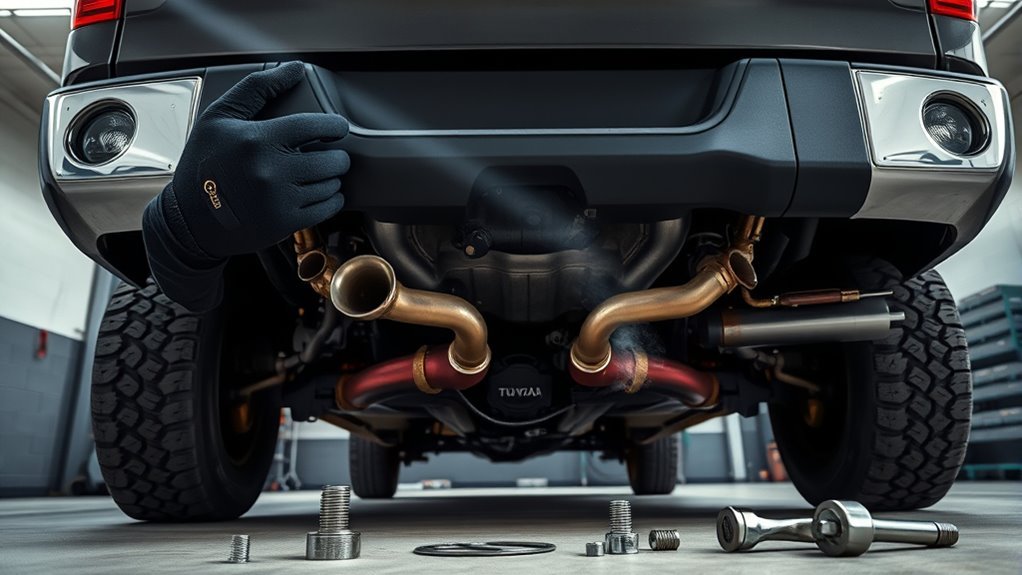
Your Toyota Tundra’s TRAC, VSC, and Auto LSD systems are there to help the truck keep grip, stay pointed where you steer, and recover from low-traction situations. The right setting depends on your model year, drivetrain, terrain, and whether you are driving on public roads or working through a slow off-road recovery. Use this guide as a practical overview, then confirm the exact button labels and indicator lights in your Tundra owner’s manual.
Quick Answer
Leave TRAC and VSC on for normal driving, rain, towing, and most snow-covered roads. Turn TRAC off only when the truck is stuck and needs controlled wheel spin. Turn both TRAC and VSC off only for low-speed recovery or controlled off-road use. Auto LSD is a 2WD or 2WD-mode traction aid, not a 4WD replacement.
Key Takeaways
- TRAC limits wheel spin by reducing power and/or applying brake force, so keep it on unless it is stopping you from rocking the truck free.
- VSC helps correct skids and loss of directional control, so it should stay on for public-road driving and towing.
- Auto LSD uses traction-control braking to help a spinning drive wheel, but its availability and operation vary by model year and drivetrain.
- Do not pull fuses or permanently defeat stability systems. If warning lights stay on, scan the ABS/VSC system and repair the fault.
At a Glance
| Time Required | Under 1 minute to change settings; longer if troubleshooting a warning light |
| Difficulty | Easy for basic button use; moderate for diagnosis |
| Tools Needed | Owner’s manual; ABS/VSC-capable scan tool for persistent warning lights |
| Cost | No cost to use the systems; repair cost depends on the stored fault code and failed part |
When to Leave TRAC, VSC, and Auto LSD On or Off

For normal driving, keep TRAC and VSC on. These systems are built to help the Tundra maintain traction and stability when tires start to slip, the truck begins to yaw, or engine power needs to be reduced. That matters most on wet pavement, icy roads, gravel shoulders, highway ramps, and while towing.
Turn TRAC off only when the system is making a stuck situation worse. Toyota’s own guidance says that when the vehicle is stuck in mud, dirt, or snow, TRAC may reduce power to the wheels, and turning it off may make it easier to rock the truck free. For the general Toyota VSC OFF button explanation, Toyota also notes that pressing and releasing the VSC OFF switch turns TRAC off, while holding it for about three seconds turns both TRAC and VSC off: Toyota Support: When should I use the VSC OFF button?
Warning: Do not turn VSC off for normal road driving, high-speed driving, rain, ice, towing, or traffic. Stability control is a safety system, not a performance toy for public roads.
Auto LSD is different. It is not a mechanical locker and it is not the same as 4WD. On equipped Tundras, Auto LSD uses traction-control logic to help limit drive-wheel spin. Toyota’s current Tundra manual describes Auto LSD as a feature for 2WD models that operates below 62 mph, and older Tundra manuals may describe it as usable on 2WD models or in 2WD mode on 4WD models. Either way, treat Auto LSD as a 2WD or 2WD-mode aid, not something you engage while relying on 4H or 4L.
[Products Worth Considering]

This TPMS sensor training tool is designed for Ford, Lincoln, and Mercury vehicles with compatible tire pressure sensors, helping activate sensors after tire rotations or sensor replacement. It supports relearning and warning light reset workflows with a simple one-button operation, making tire pressure maintenance easier and faster. Built for reliable use and broad vehicle compatibility, it is a practical accessory for TPMS service and sensor activation.

These X-BULL recovery traction tracks help drivers get unstuck from sand, snow, mud, or ice with a stable U-shaped elastic design and a wavy ramp that makes tire entry easier. Built from reinforced nylon, they are flexible, impact-resistant, and designed to perform in extreme temperatures while providing reliable emergency traction for a wide range of vehicles.

BUNKER INDUST off-road traction boards help vehicles regain grip in mud, sand, and snow with a double-sided diamond array and cross-shaped teeth for improved bite and stability. Built from upgraded automotive-grade polypropylene, they resist UV damage, cold-weather brittleness, and wheel-spin heat while remaining flexible enough to handle demanding recovery situations. Contoured ramps, ergonomic handles, and multiple mounting points make them practical to use, store, and retrieve when adventure turns into recovery.
Step-by-Step: Turn TRAC, VSC, and Auto LSD On or Off
The exact switch name and dashboard message can vary by model year. Your button may be labeled VSC OFF, TRAC OFF, or use an icon. Use this model-neutral process and verify it against your owner’s manual.
- For normal driving: Start the truck and leave the systems alone. TRAC and VSC default to on because that is the safest setup for public roads.
- To turn TRAC off: Quickly press and release the VSC OFF/TRAC OFF switch. The TRAC OFF message or indicator should appear. Use this when the truck is stuck and you need limited wheel spin to rock free.
- To turn both TRAC and VSC off: With the truck stopped or moving slowly in a safe area, press and hold the switch for about 3 seconds. The TRAC OFF and VSC OFF indicators should appear. Use this only for low-speed recovery or controlled off-road conditions.
- To use Auto LSD, if equipped: Make sure the truck is in the correct 2WD or 2WD-mode setting for your model year, then activate Auto LSD according to the owner’s manual. The Auto LSD indicator should appear when active.
- To return to normal: Press the switch again or restart the truck. Confirm that TRAC/VSC warnings are off before returning to road speed.
Note: If your Tundra is a newer 2022+ model, do not assume older forum instructions apply. Current Toyota manual pages describe Auto LSD differently than many older second-generation Tundra guides.
TRAC vs. VSC vs. Auto LSD: What Each System Does
| System | What It Does | Best Use | Avoid Turning Off When |
|---|---|---|---|
| TRAC | Reduces wheel spin by managing power and brake force. | Daily driving, rain, light snow, gravel roads. | You are on public roads or driving at speed. |
| VSC | Helps correct skids by comparing steering input with vehicle movement. | Normal roads, emergency maneuvers, towing, wet or icy pavement. | You need stability protection, especially on pavement. |
| Auto LSD | Uses traction-control braking to help a spinning drive wheel regain useful traction. | Low-traction 2WD or 2WD-mode situations, depending on model year. | You are in 4WD operation or driving on dry pavement unless your manual says otherwise. |
| 4H / 4L | Splits drive through the 4WD system for more off-road traction. | Loose surfaces, trails, deep snow, mud, low-speed off-road work. | You are on dry pavement with a part-time 4WD system. |
The original “Mode 0, Mode 1, Mode 2, Mode 3” style language you may see online is not the clearest way to think about a Tundra. A safer approach is to ask: Am I on public roads? Am I stuck? Am I in 2WD, 4H, or 4L? Do I need stability protection or controlled wheel spin?
[Products Worth Considering]

These short off-road traction boards are designed to help ATV and UTV drivers recover from mud, sand, and snow with added convenience and portability. Built with strengthened teeth and a stable bottom channel design, they help prevent wheel slip and improve traction in tough terrain. Made from durable automotive-grade polypropylene, they are lightweight, easy to clean, and suited for year-round use in extreme temperatures. Built-in shovels, ergonomic handles, and nesting storage make them practical for compact vehicle setups.

This Andersen Hitches weight distribution hitch kit is designed to improve towing stability with a grease-free friction cone and tension chain system that helps reduce sway and bounce. It features a universal setup with a 2-inch ball and 4-inch drop/rise to suit many bumper-pull trailer applications, while making hitching and unhitching faster and easier than traditional spring bar systems. Built in the USA, it offers dependable performance for travelers, workers, and outdoor enthusiasts who need confident towing control.
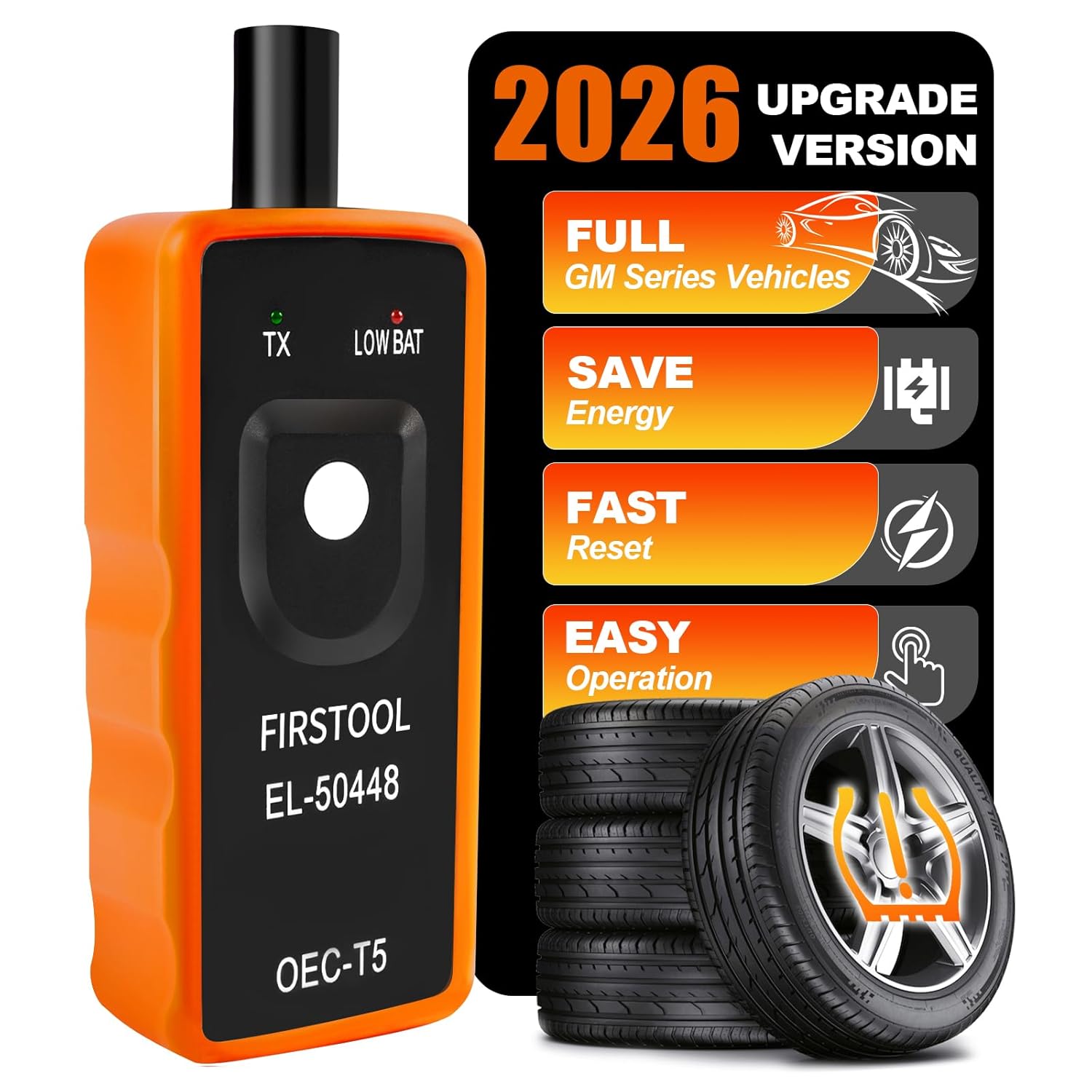
This EL-50448 TPMS relearn tool helps quickly activate and reset tire pressure sensors so your vehicle’s monitoring system stays accurate after tire rotations, sensor replacement, or seasonal tire changes. Designed for many GM-related vehicles and compatible with common 315 and 433 MHz TPMS systems, it offers simple one-button operation and reliable performance for clearing warning lights and relearning sensor positions.
When to Use Each Setting by Terrain
| Condition | Recommended Setup | Why |
|---|---|---|
| Dry pavement | TRAC on, VSC on | Maximum safety margin and predictable handling. |
| Rain or icy pavement | TRAC on, VSC on | The systems help limit spin, sliding, and loss of directional control. |
| Light snow on roads | TRAC on, VSC on; use 4H if appropriate | You still want stability control at road speed. |
| Stuck in mud, dirt, sand, or snow | Turn TRAC off first; turn VSC off only if needed | TRAC may cut power when you need controlled wheel spin to rock free. |
| Loose trail or deep snow off-road | Use the correct 4WD range; reduce electronic intervention only as needed | 4WD and steady throttle usually matter more than defeating safety systems. |
| Towing | TRAC on, VSC on, Trailer Sway Control on if equipped | Stability aids are especially important with trailer weight behind the truck. |
[Products Worth Considering]
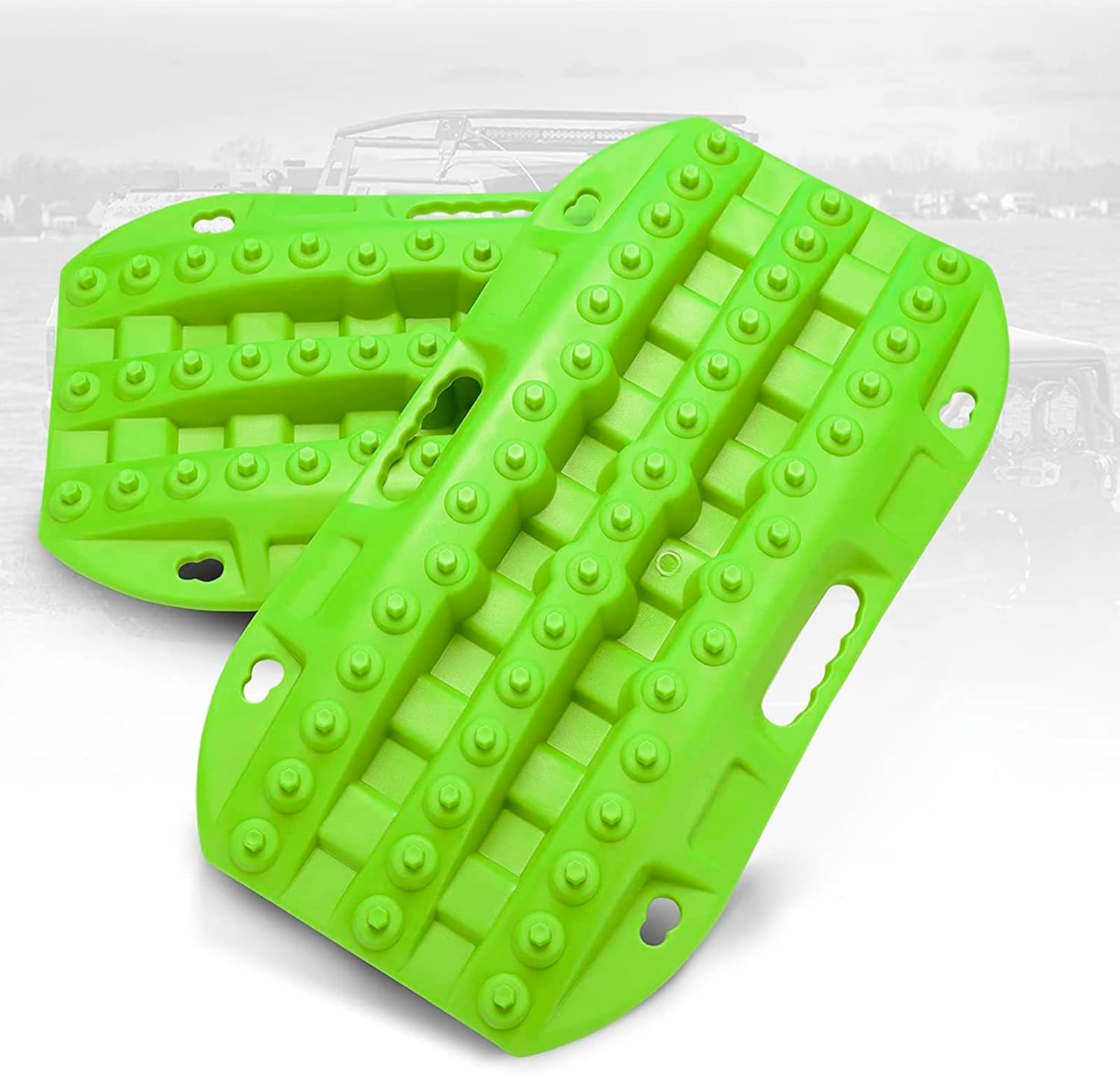
These short recovery traction boards are designed to help ATVs, UTVs, and other off-road vehicles regain grip in mud, sand, and snow. Built with strengthened teeth and a durable polypropylene construction, they provide reliable traction, easy handling, and year-round performance in tough conditions. Their nested, space-saving design and integrated shovels make them practical for carrying and using on remote adventures.

These replacement support brackets are designed to secure the spring bars on a trailer frame for CURT TruTrack weight distribution hitches. Their adjustable mounting holes help achieve precise leveling while the rigid construction supports integrated sway control for a steadier towing experience. A durable powder coat finish adds long-lasting protection, and the package includes two replacement brackets.

These heavy-duty running board side steps are designed to improve access to your Toyota Tundra without reducing ground clearance. Built for Double Cab and CrewMax front door applications, they offer practical convenience for everyday entry, roof loading, and off-road use. The durable iron construction and easy no-drill installation make them a reliable upgrade for rugged driving.
Why TRAC or VSC Might Re-Enable
TRAC and VSC do not always stay in the last setting forever. Toyota’s current Tundra driving-assist information explains that after TRAC, Trailer Sway Control, and VSC are turned off, the systems are automatically re-enabled when the engine switch is turned off. It also notes that if only TRAC is turned off, TRAC may turn back on when vehicle speed increases: Toyota Tundra Driving Assist Systems.
Auto LSD can also stop operating if the brake system overheats because the system uses brake force to manage wheel spin. If that happens, stop in a safe place and allow the system to cool. Do not keep forcing the truck while warning lights are active.
- Restarted truck: Expect disabled systems to return to normal.
- Speed increased: TRAC may come back on if only TRAC was turned off.
- Brake overheating: Auto LSD may pause operation to protect the brake system.
- Fault detected: ABS, VSC, or TRAC lights that stay on unexpectedly need diagnosis.
Getting Unstuck Safely
If the Tundra is stuck in mud, dirt, sand, or snow, start with recovery basics before using more throttle. Toyota’s stuck-vehicle procedure includes clearing material from around the wheels, placing wood, stones, traction boards, or similar material under the tires, restarting the engine, shifting to Drive or Reverse, and accelerating cautiously: Toyota Tundra: If the Vehicle Becomes Stuck.
- Stop and look around the truck. Make sure people, vehicles, rocks, trees, and recovery straps are clear of the path.
- Clear mud, snow, or sand from around the tires and under the frame if the truck is high-centered.
- Place traction boards, gravel, wood, or other stable material in front of or behind the drive tires.
- Turn TRAC off if power reduction is preventing controlled wheel movement.
- Use gentle throttle. Avoid spinning the tires at high speed because that can dig deeper, damage tires, or overheat brakes.
- Once free, re-enable TRAC and VSC before returning to normal driving.
Pro Tip: If you often drive off-road, carry traction boards, a shovel, a tire gauge, a portable compressor, and recovery gear rated for the truck’s weight. The right recovery tools are safer than extra throttle.
Off-Road Tips for Tundra: Tire Pressure, 4WD, and Technique
TRAC, VSC, and Auto LSD can help, but off-road traction still comes down to tires, speed, line choice, throttle control, and drivetrain selection. Use 4H for loose surfaces where you need more traction at moderate speed, and use 4L for slow technical terrain where control matters more than momentum.
Airing down tires can improve off-road ride quality and footprint, but there is no universal safe PSI for every Tundra. Tire size, load, wheel design, sidewall strength, terrain, and speed all matter. NHTSA’s TireWise guidance emphasizes tire pressure, tread, rotation, and tire maintenance as core safety items: NHTSA TireWise. If you air down off-road, keep speeds low, watch for bead loss or sidewall damage, and reinflate to the door-placard pressure before highway driving.
Use electronics as helpers, not substitutes: choose the right 2WD/4WD setting, keep throttle smooth, protect your tires, and turn safety systems back on as soon as the recovery or trail section is over.
- Use steady throttle: Sudden throttle spikes create wheel spin and trigger electronic intervention.
- Use 4L for control: Low range helps the truck crawl without needing aggressive pedal input.
- Avoid brake overheating: Auto LSD and traction systems can use the brakes, so repeated spinning can build heat.
- Reinflate before road speed: Underinflated tires can overheat and handle poorly on pavement.
Troubleshooting Lights, Fuses, and Permanent Disabling Risks
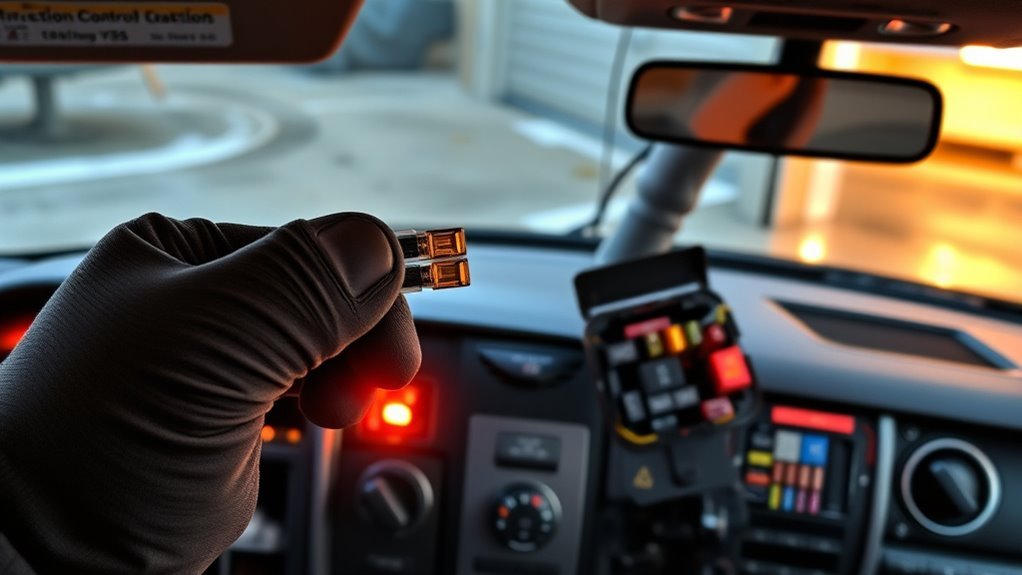
A TRAC OFF or VSC OFF light is not always a problem. If you pressed the button, the light may simply be confirming the selected mode. The concern is a warning light that appears unexpectedly, stays on after restart, appears with ABS or check-engine lights, or comes with poor braking or traction behavior.
What the Lights Usually Mean
- TRAC OFF after pressing the switch: TRAC is disabled by driver input.
- VSC OFF after holding the switch: VSC is disabled by driver input.
- Auto LSD light: Auto LSD is active on equipped models, or the system needs attention if it will not turn off as expected.
- ABS + VSC + TRAC lights together: The truck may have a shared sensor, brake, wiring, or module fault.
- Check engine + VSC/TRAC lights: Some Toyota systems reduce traction/stability functions when an engine-management fault is present.
What to Check First
- Press the switch again and restart the truck to rule out accidental activation.
- Check tire pressures and confirm all tires are the correct size and similar tread depth.
- Inspect for obvious wheel-speed sensor damage, especially after off-road driving.
- Check brake fluid level only if you know how to do it safely and use the correct fluid from the manual.
- Scan the truck with a tool that can read ABS, traction, and stability-control codes, not just engine codes.
- Have a qualified technician inspect the system if warning lights return.
Warning: Do not pull ABS, TRAC, or VSC fuses to permanently disable safety systems. Electronic stability control systems are designed to reduce crashes caused by loss of directional control, and disabling them can affect braking and stability behavior. See the federal ESC safety standard at 49 CFR § 571.126.
Safety Tradeoffs: When Disabling Systems Helps and When It Is Dangerous
Disabling traction or stability control trades automatic correction for more driver control. That can help in a narrow set of conditions: low-speed recovery, deep mud, deep sand, fresh snow, or a controlled off-road obstacle where wheel spin is necessary. It is dangerous on public roads because the same wheel spin or yaw that helps off-road can become a skid, fishtail, or rollover risk at speed.
Use the least amount of disablement that solves the problem. If TRAC OFF is enough to rock the truck free, do not also turn VSC off. If 4L and smooth throttle solve the trail obstacle, leave the electronics alone. As soon as the road or trail surface normalizes, return the truck to its default safety setting.
- Helpful: Low-speed stuck recovery where TRAC is cutting too much power.
- Sometimes helpful: Loose off-road terrain where controlled wheel spin maintains momentum.
- Risky: Wet, icy, or paved roads where VSC can help correct loss of control.
- Not recommended: Drifting, sliding, or aggressive maneuvers on public roads.
Frequently Asked Questions
Why is my VSC OFF and traction control light on?
If you pressed the VSC OFF/TRAC OFF switch, the lights may simply be confirming that one or both systems are disabled. If the lights appear by themselves, stay on after restart, or appear with ABS or check-engine lights, scan the ABS/VSC system for fault codes.
How much does it cost to fix VSC on a Toyota Tundra?
The cost depends on the cause. A simple diagnostic scan or reset is much cheaper than replacing a wheel-speed sensor, repairing wiring, or replacing an ABS actuator/module. Get the stored codes first; guessing from the light alone usually wastes money.
Can I drive my Toyota Tundra with the VSC light on?
You may be able to drive carefully if the truck otherwise brakes and handles normally, but stability control may be reduced or unavailable. Avoid towing, high speeds, slippery roads, and aggressive maneuvers until the fault is diagnosed. If ABS or brake warnings are also on, treat it as urgent.
Should VSC be on or off?
VSC should be on for normal driving, rain, snow-covered roads, towing, and highway use. Turn it off only when it is actively preventing a low-speed recovery or controlled off-road maneuver, and turn it back on as soon as conditions return to normal.
Does Auto LSD work in 4WD on a Toyota Tundra?
Do not assume it does. Toyota’s current Tundra Auto LSD page describes the system as usable only on 2WD models, while some older Tundra manuals describe use on 2WD models or in 2WD mode on 4WD models. Check your model-year manual before using it.
What speed does Auto LSD work under?
Toyota’s current Tundra Auto LSD information lists operation under 62 mph, or 100 km/h. Treat Auto LSD as a low-traction aid, not something to use for high-speed driving.
Is it safe to pull a fuse to disable TRAC or VSC?
No. Pulling fuses can disable ABS, traction, stability, or related brake functions and can make the truck less predictable. Use the factory switch for temporary control changes, and repair faults instead of bypassing safety systems.
Conclusion
For most Tundra drivers, the safest rule is simple: leave TRAC and VSC on unless you are stuck or moving slowly off-road and need controlled wheel spin. Auto LSD can be useful on equipped trucks, but it is model-year and drivetrain specific, so do not treat it as a universal 4WD feature. Use the factory switch, avoid fuse work, keep tire pressure safe for the conditions, and re-enable the systems before returning to normal driving.
Sources
- Toyota Support: When should I use the VSC OFF button? — backs up TRAC/VSC button behavior and stuck-snow/mud use.
- Toyota Tundra Owner’s Manual: Driving Assist Systems — backs up TRAC OFF use and automatic reactivation behavior.
- Toyota Tundra Owner’s Manual: Auto LSD System — backs up Auto LSD purpose, 2WD-model limitation, and 62 mph operating threshold.
- Toyota Tundra Owner’s Manual: If the Vehicle Becomes Stuck — backs up safe stuck-vehicle recovery steps.
- NHTSA TireWise — backs up tire-pressure and tire-maintenance safety guidance.
- 49 CFR § 571.126: Electronic Stability Control Systems — backs up the safety purpose of stability-control systems.