
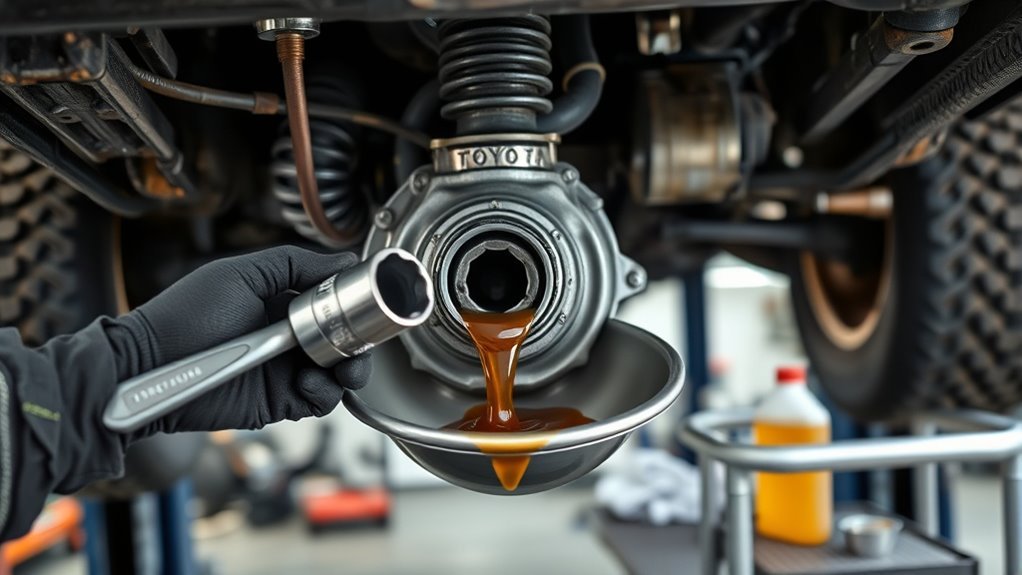
A failed transfer case can turn a capable 4WD truck into a costly repair. Many Tundra owners ignore this small fluid service until the truck shifts poorly, leaks, or makes noise. The right fluid, fill level, and service routine help your 4WD system work when you need it.
Quick Answer
Most 2007 to 2021 Toyota Tundra 4WD models use Toyota Transfer Gear Oil LF SAE 75W in the transfer case, with a typical capacity of about 1.5 liters or 1.6 quarts. Some 2022 and newer Tundra models use Toyota Genuine ATF WS instead, so check your exact owner’s manual before buying fluid. Refill until fluid reaches the fill hole, use new sealing washers, and torque the plugs to your model’s service spec.
Key Takeaways
- Use the Toyota-specified transfer case fluid for your model year, not a forum shortcut.
- Many 2007 to 2021 Tundra 4WD models hold about 1.5 liters or 1.6 quarts.
- Inspect transfer case oil on Toyota’s schedule and replace it sooner under towing, dirt, dust, or heavy-load use.
- Remove the fill plug before the drain plug so you don’t empty a case you can’t refill.
- Use new sealing washers and your model’s plug torque spec to reduce leak risk.
What Fluid Does a Tundra Transfer Case Use?
Warning: The wrong transfer case fluid can cause poor 4WD engagement, noise, leaks, and faster internal wear.
This guide applies mainly to second-generation Toyota Tundras from 2007 to 2021. Third-generation Tundra owners, 2022 and newer, should verify their fluid specification in the exact owner’s manual because many newer trucks use a different transfer case fluid.
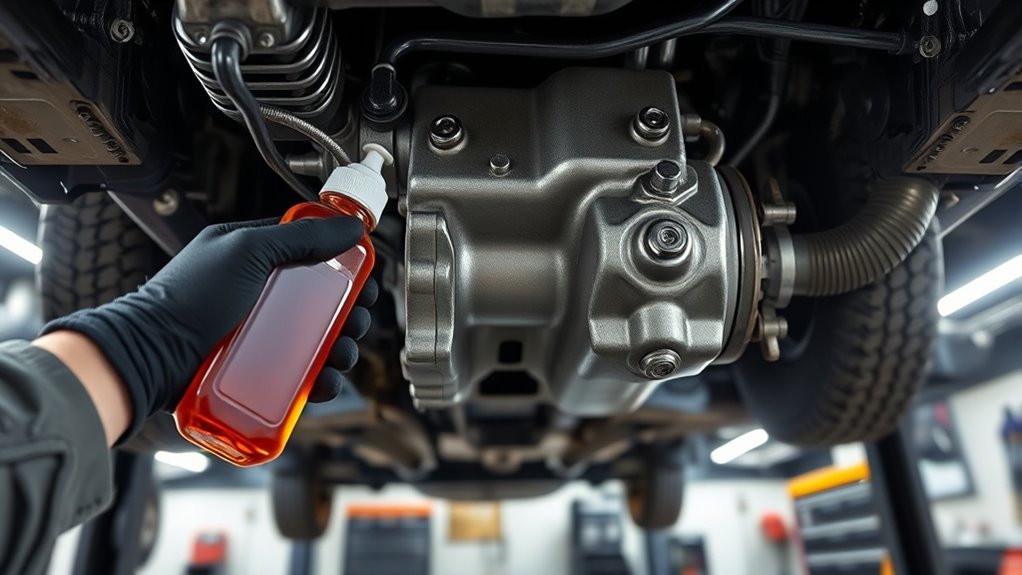
Your Tundra’s transfer case requires the fluid Toyota lists for your model year. Many 2007 to 2021 U.S. 4WD models list Toyota Transfer Gear Oil LF SAE 75W for the transfer case. Some newer Tundras list Toyota Genuine ATF WS, so don’t assume one fluid fits every generation.
Don’t substitute 75W-90 gear oil or automatic transmission fluid unless your manual clearly allows it. Gear oil and automatic transmission fluid use different viscosity ranges and additive packages. A fluid mismatch can change shift feel even when the truck shows no warning light.
Some owners use high-quality aftermarket fluids when the viscosity and performance standard match the manual. That choice carries more risk than using the exact Toyota fluid. Confirm the label, bottle part number, and model-year fit before you switch.
How Much Fluid the Tundra Transfer Case Holds
Many 2007 to 2021 Toyota Tundra 4WD models hold about 1.5 liters or 1.6 quarts of transfer case fluid. Some model years and newer generations can differ. Buy enough fluid for your exact truck and use the fill hole as the final level check.
Level the vehicle on a flat surface before you drain and refill. A tilted truck can make the transfer case look full too early or too late. Fill until fluid starts to trickle from the fill opening.
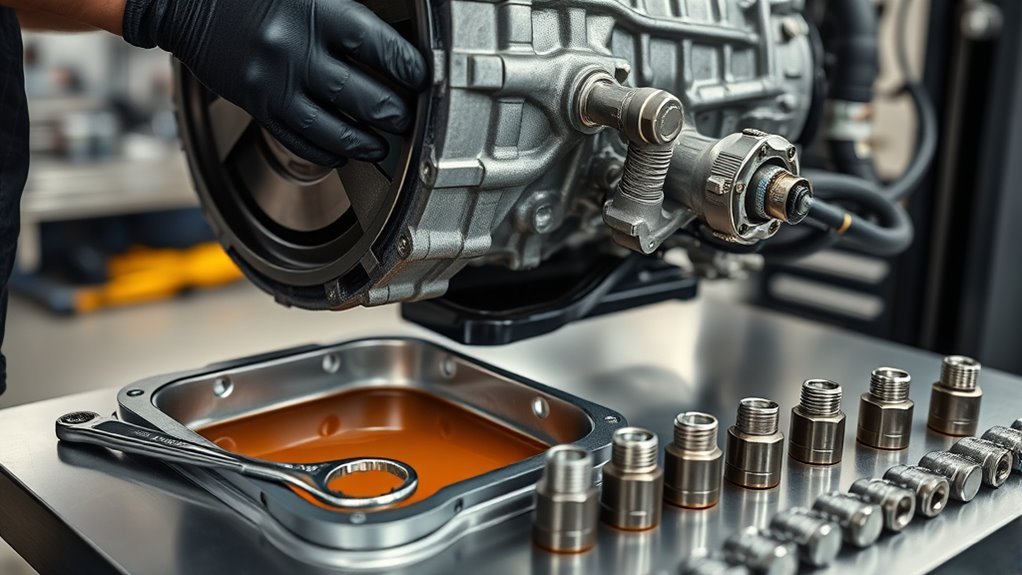
Inspect the drained fluid before you discard it. Dark, gritty, or metallic fluid can point to heat, wear, or contamination. Heavy metal buildup on the drain plug magnet calls for deeper inspection before you keep driving.
Which Oils Work: Toyota LF 75W, ATF WS, and Alternatives
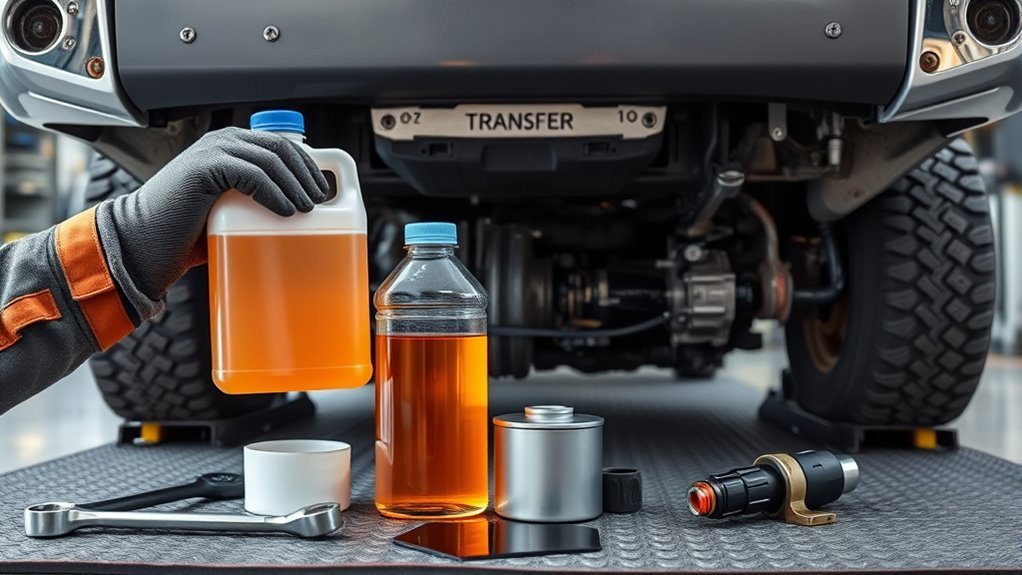
Toyota specifies a particular transfer case fluid by generation and drivetrain. For many 2007 to 2021 Tundra 4WD trucks, the correct fluid is Toyota Transfer Gear Oil LF SAE 75W. For many 2022 and newer Tundras, Toyota Genuine ATF WS may apply.
Aftermarket 75W fluids can work only when they match the required Toyota specification. A 75W-90 GL-5 bottle may look close, but it doesn’t equal Toyota LF 75W by default. Check the owner’s manual before you use any substitute.
| Choice | Best Use | Caution |
|---|---|---|
| Toyota Transfer Gear Oil LF SAE 75W | Many 2007 to 2021 Tundra 4WD models | Costs more than common gear oil |
| Toyota Genuine ATF WS | Many 2022 and newer Tundra models | Not for older models unless specified |
| Aftermarket 75W fluid | Possible substitute when it matches spec | Confirm compatibility before use |
| 75W-90 GL-5 gear oil | Only when your manual allows it | Do not use as a default substitute |
After you choose the fluid, drain the case fully, clean the drain plug magnet, refill to the fill-hole level, and test 4WD engagement before normal road use.
[Products Worth Considering]

The Scepter AM07029 Oil Drain Pan makes oil changes cleaner and easier by helping contain spills and reducing mess in the garage or driveway. Its lidded opening, removable drain screen, and gasketed pour spout support convenient collection, transport, and disposal of fluids. Built from durable high-density polyethylene, it resists rust, dents, and corrosion for reliable use with engine oil, transmission fluid, hydraulic fluid, and antifreeze.

CHAPIN’s low-profile oil drain pan is designed to slide under low-clearance vehicles and equipment, making fluid changes easier in tight spaces. The large splash-free target area helps reduce mess while the molded carry handles support easier lifting, pouring, and storage. Built for draining oil, coolant, and other automotive fluids, it offers a practical high-capacity solution for routine maintenance.

This flexible oil funnel is designed to make fluid changes cleaner and easier by guiding oil around obstacles like skid plates and crossmembers. Its shape-retaining core and silicone body can be molded for custom positioning, while the heat-resistant, leak-proof design helps prevent spills during draining and filter removal. Reusable and easy to clean, it works well for cars, trucks, motorcycles, and other hard-to-reach fluid fill or drain applications.
Cost, Dealer Practices, and OEM vs. Aftermarket Fluids
You need to balance fluid cost against compatibility risk. Toyota OEM fluid often costs more per bottle, but it removes the guesswork. Aftermarket fluid can save money only when it truly matches the required spec.
Note: Fluid prices change by region and retailer, so confirm current pricing with your local Toyota dealer or parts store.
[Products Worth Considering]

These genuine Toyota oil drain plug gaskets are designed to help maintain a reliable seal during oil changes, reducing the chance of leaks and supporting proper engine maintenance. With an OEM fit and trusted Toyota quality, they are a practical choice for routine service on compatible vehicles. The convenient quantity pack is ideal for keeping multiple maintenance intervals covered.

This 12-pack oil filter and drain plug washer set is designed for a wide range of Toyota and Scion vehicles, helping support clean oil flow and dependable engine performance. It replaces several common OE part numbers and offers an easy-fit solution for routine maintenance. Built with corrosion-resistant materials and efficient filtration, it helps keep engine contaminants out and supports longer service life.

This brake bleeder bottle is designed to make fluid bleeding easier for one-person use with a built-in check valve and magnetic mount. The flexible hose fits most bleeder valves and helps reduce the chance of air entering the system during service. With a practical fluid capacity and universal fit, it is a handy tool for brake maintenance and repair.
OEM vs. Aftermarket Cost
The core question for many owners is whether Toyota’s OEM fluid justifies the premium. OEM fluid gives you the cleanest spec match. Aftermarket products can work, but only after you confirm the exact viscosity and compatibility.
| Option | Cost Pattern | Risk Level |
|---|---|---|
| Toyota OEM fluid | Usually highest | Lowest spec risk |
| Confirmed aftermarket match | Often lower | Medium if specs match |
| Unverified substitute | May look cheaper | High repair risk |
Choose based on your model year, truck use, warranty status, and comfort with diagnosing shift issues later.
Dealer Fluid Preferences
Dealer recommendations can vary by location and service advisor. Some shops use Toyota OEM fluid only, while others may offer an aftermarket option. Ask which fluid they plan to use before you approve the job.
Dealers usually follow OEM guidance to reduce warranty disputes. Keep your receipt, fluid brand, specification, and service mileage after each transfer case service. That record helps if a warranty question or resale issue comes up later.
Long-Term Replacement Economics
A transfer case refill costs far less than a transfer case repair. Fluid, sealing washers, and basic labor make up the service cost. Internal damage can cost much more because the job can involve diagnosis, removal, rebuild parts, or replacement.
Test any new fluid choice carefully during the first few hundred miles. Watch for delayed 4WD engagement, new whining, vibration, seepage, or a burnt smell. If the truck behaves differently, stop and recheck the fluid spec and fill level.
| Item | Impact |
|---|---|
| Correct OEM fluid | Best spec compliance and lowest guesswork |
| Verified aftermarket fluid | Possible savings with careful spec matching |
| Wrong fluid | Higher risk of shifting problems and wear |
When to Change Transfer Case Fluid
Toyota’s maintenance guidance tells you to inspect or replace transfer case oil at specified intervals. Under special operating conditions, such as dirt roads, dusty roads, towing, heavy loading, or car-top carrier use, Toyota calls for transfer case oil replacement at the listed service points.
For normal use, many owners choose a preventive transfer case fluid change around 60,000 miles. Severe use deserves earlier service, often around 30,000-mile intervals. Your owner’s manual and driving conditions should guide the final schedule.
Check the fluid sooner if you tow, drive off-road, run in dust, or use the truck in extreme temperatures. Dark color, burnt smell, grit, or metal flakes mean you should service the transfer case early. Don’t wait for noise or failed 4WD engagement.
Tools and Parts for Tundra Transfer Case Service
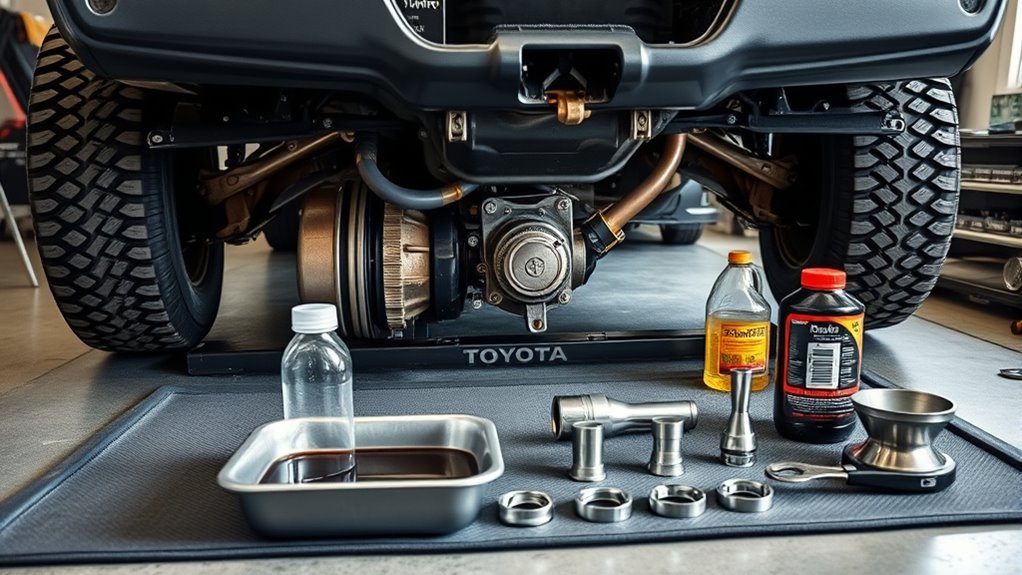
Gather everything before you start. Stopping mid-job to find a missing tool extends the service time and raises the chance of dirt entering the case.
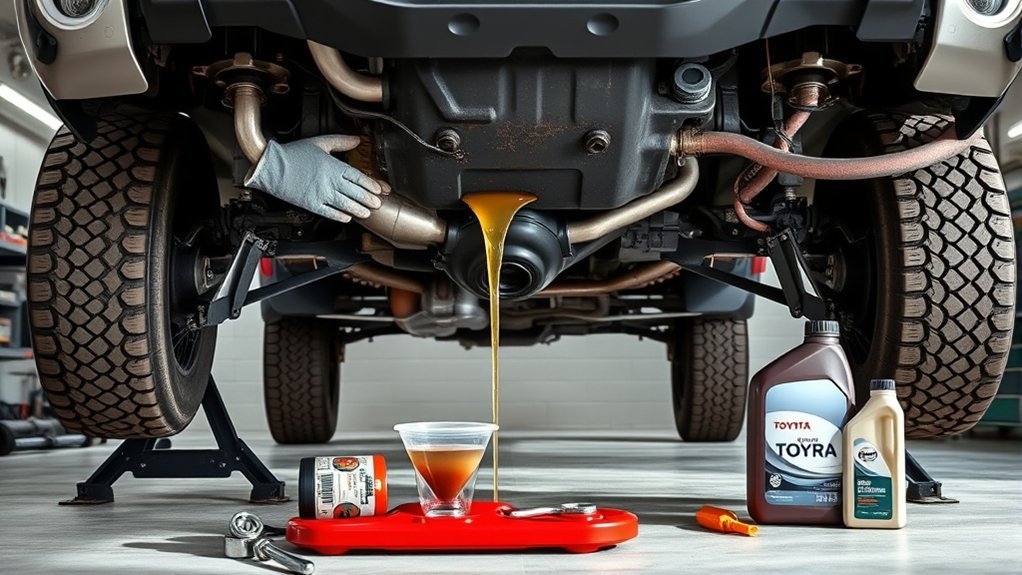
You’ll need the Toyota-specified transfer case fluid, new sealing washers or gaskets for both plugs, a drain pan, gloves, shop rags, a fluid pump, and a torque wrench. Many 2007 to 2021 Tundra transfer case plugs use a 24 mm or 15/16-inch socket, but you should confirm your plug type before service.
Buy slightly more fluid than the stated capacity so you can fill until fluid reaches the fill hole. Use new sealing washers instead of thread tape unless your service manual calls for a different sealing method. A calibrated torque wrench protects the plugs and aluminum housing from damage.
[Products Worth Considering]

This mech-style heavy metal key fob cover is designed to protect compatible Toyota E-style smart keys with a precise 1:1 fit. Built with a durable zinc alloy frame and soft silicone buttons, it helps guard against daily wear while keeping full access to key functions. The set includes a metal keychain and screwdriver for easy installation, making it a practical upgrade for select Toyota models.

The Funnel King 32950 Oil Drain Pan is a compact fluid catch basin designed for clean, easy draining during routine maintenance. Its open shape and pour edge help transfer used oil, coolant, and other shop fluids with less mess, while the lightweight polypropylene construction stands up to common automotive chemicals. Sized to fit under many cars and small engines, it is a practical choice for garages, workshops, and DIY oil changes.

These heavy-duty running board side steps are designed to improve access to your Toyota Tundra without reducing ground clearance. Built for Double Cab and CrewMax front door applications, they offer practical convenience for everyday entry, roof loading, and off-road use. The durable iron construction and easy no-drill installation make them a reliable upgrade for rugged driving.
Step-by-Step: Draining and Refilling a Tundra Transfer Case
Estimated time: 30 to 45 minutes
Pro tip: Remove the fill plug before the drain plug so you can confirm access before the case sits empty.
- Park on a level surface. Let the transfer case cool for at least 30 minutes before you touch any plugs.
- Position your drain pan. Place it directly under the transfer case drain plug.
- Remove the fill plug first. Confirm the plug turns freely before you drain the case.
- Remove the drain plug. Let the old fluid drain fully into the pan for 5 to 10 minutes.
- Inspect the drain plug magnet. Clean off metal paste and note any heavy chips or chunks.
- Install a new drain plug sealing washer. Reinstall the drain plug and torque it to your model’s service spec.
- Pump new fluid into the fill hole. Fill until fluid starts to trickle from the opening.
- Install a new fill plug sealing washer. Reinstall the fill plug and torque it to your model’s service spec.
- Test the 4WD system. Run the vehicle, shift through 2WD and 4WD modes, and check both plugs for seepage after a short drive.
Common Problems After Fluid Changes and How to Troubleshoot Them
Test 4WD engagement right after a fluid change. Incorrect fluid, a low fill level, or a leaking plug can delay or prevent proper transfer case operation. If you hear clunking, whining, or vibration, stop and check the fluid type and level before you keep driving.
4WD Engagement Issues
Start by confirming that you used the correct fluid and filled the case on a level surface. Most post-service engagement problems trace back to a fluid mismatch, low fluid, or a leak. If you switched from OEM fluid and lost response, consider returning to the exact Toyota spec.
- Confirm the fluid brand, viscosity, and specification match your owner’s manual.
- Level the vehicle and verify the fill level at the fill hole.
- Test 4WD engagement in a safe area and note shift timing.
Inspect the drain and fill plugs for proper sealing. Replace damaged sealing washers and retorque the plugs to the correct spec. A slow leak can lower the level enough to cause problems within a few hundred miles.
Noisy Transfer Case
Unusual noise after a fluid change usually points to one of three causes: wrong fluid, incorrect fill level, or an existing internal wear issue. Check the simple items first before you assume major damage.
Verify the fluid product and viscosity against your manual. If the fluid doesn’t match, drain and refill with the correct fluid. If noise continues after you confirm the right fluid and level, schedule an inspection of the gears, bearings, seals, and mounts.
Leaks and Seals
Check both plugs after the first short drive. Loose plugs, reused damaged washers, or cross-threaded plugs can create seepage. Fix leaks quickly because the transfer case holds a small amount of fluid.
- Look for fluid pooling under the transfer case after the truck runs.
- Check for wetness around bolt heads, seams, and the case housing.
- Wipe suspect areas clean, run the vehicle briefly, then check for fresh fluid.
If you find a leak, replace damaged washers or plugs, retorque to spec, and retest until the area stays dry.
Maintenance Tips to Extend Transfer Case Life
Use the Toyota-specified fluid for your model year and keep the truck level during service. Remove the fill plug before the drain plug every time. Replace the sealing washers and torque the plugs to the proper service spec.
Check the fluid level and case condition during routine oil changes. Dark color, burnt smell, grit, or metal flakes mean you should service the transfer case early. Inspect the housing, plugs, seals, and nearby skid plates during each visit under the truck.
After every refill, run the drivetrain through 2WD and 4WD modes and recheck for seepage. If you find metal chunks or hear persistent noise after a correct fluid change, pull a sample and consult a qualified technician. Early diagnosis keeps a small service from becoming a major drivetrain repair.
Frequently Asked Questions
How Often Should I Change the Transfer Case Fluid in a Tundra?
Inspect transfer case oil according to your Toyota maintenance guide. Replace it earlier if you tow, drive on dirt or dusty roads, carry heavy loads, or see dark, burnt, gritty, or metallic fluid. Many owners use a 60,000-mile preventive interval for normal use, but severe use can justify shorter intervals.
How Much Transfer Case Fluid Does a Toyota Tundra Take?
Many 2007 to 2021 Toyota Tundra 4WD models take about 1.5 liters or 1.6 quarts. Some newer models can take more and may use a different fluid. Always fill to the fill-hole level on a flat surface instead of relying only on a fixed amount.
Is Transfer Case Fluid the Same as Transmission Fluid in a Toyota?
No. Transfer case fluid and automatic transmission fluid serve different components with different needs. Some newer Tundra transfer cases may use Toyota Genuine ATF WS, but many older Tundras use Toyota Transfer Gear Oil LF SAE 75W.
What Happens If I Use the Wrong Fluid in My Tundra Transfer Case?
The first symptom may include delayed 4WD engagement, noise, vibration, or leaking. A wrong viscosity or additive package can increase wear over time. If you used the wrong fluid, drain and refill with the correct manual-listed spec as soon as possible.
Can I Mix OEM and Aftermarket Transfer Case Fluid?
You should avoid mixing different transfer case fluids. Different products can use different additive packages. When you switch from OEM to aftermarket, or back to OEM, do a complete drain and refill.
Conclusion
Your Tundra transfer case depends on the exact fluid Toyota lists for your model year. Check your manual, use the correct capacity range, and refill to the fill-hole level on a flat surface.
If you notice noise, delayed 4WD engagement, or leaks after service, check the fluid type, fill level, sealing washers, and plug torque first. These simple checks solve many post-service problems.
Schedule your next transfer case service alongside your next transmission fluid change. A simple record of the date, mileage, and fluid spec makes future maintenance much easier.
References
- Toyota Owner Resources and Manuals — Toyota Motor Corporation, 2026
- 2021 Toyota Tundra Warranty & Maintenance Guide — Toyota Motor Corporation, 2021
- Toyota Tundra 50 Fluids and Capacities — Toyota-Club.Net, based on Toyota owner manuals
- Toyota Tundra Transfer Case Fluid Change Guide — Blauparts, 2024
- Vehicle Maintenance Recommendations — National Highway Traffic Safety Administration (NHTSA)



[…] to turn steady. If the light keeps flashing, scan for codes, check wiring and grounds, inspect transfer case fluid, and avoid forcing the […]
[…] model-year manual, front and rear capacities, axle equipment, and separate Toyota Tundra transfer-case fluid […]
[…] also calls for ATF WS, it has different plugs, capacity, and level-setting instructions. See the Toyota Tundra transfer-case fluid guide before servicing the four-wheel-drive […]