

Last updated: July 31, 2026. Toyota maintenance guidance, fluid specifications, sealed-transmission cautions, and the 2026 RAV4 powertrain lineup were rechecked.
What’s in This Article
- Why Transmission Fluid Matters for Your RAV4
- When Should You Change Your RAV4’s Transmission Fluid?
- Signs It’s Time for a RAV4 Transmission Fluid Change
- How to Check Your RAV4’s Transmission Fluid Condition
- Should You DIY or Hire a Pro for Your RAV4’s Transmission Service?
- Drain and Refill vs. Flush: Which Service Fits Your RAV4?
- How Regular Maintenance Extends Your RAV4’s Lifespan
- Frequently Asked Questions
There is no single Toyota RAV4 transmission-fluid interval that applies to every year and powertrain. Use the maintenance guide for your exact RAV4 as the baseline. In Toyota’s 2019 U.S. RAV4 guide, automatic transmission fluid replacement appears at 60,000 miles or 72 months only under listed special operating conditions, including primarily towing, heavy loading, car-top-carrier use, or extensive low-speed operation. A leak, burnt odor, slipping, delayed engagement, harsh shifts, or a warning light calls for diagnosis now rather than waiting for a mileage milestone.
Quick Answer
Check the maintenance guide for your exact model year, powertrain, drivetrain, and market. Toyota’s 2019 RAV4 maintenance guide lists automatic transmission fluid replacement at 60,000 miles or 72 months for specified severe-use conditions, not as a universal interval. Under normal use, follow the guide’s inspection schedule and address leaks or shifting symptoms promptly. Do not approve a machine flush or add fluid until the shop confirms the correct Toyota specification and factory level-setting procedure for your transmission.
| Your Situation | What the Schedule Means | Best Next Step |
|---|---|---|
| Normal commuting with no symptoms | No universal RAV4 change interval applies across all years | Follow the exact maintenance guide and inspect for leaks |
| Primarily towing, heavy loading, or car-top-carrier use | Toyota’s checked 2019 guide lists replacement at 60,000 miles or 72 months | Confirm that the condition and interval match your model-year guide |
| Leak, burnt odor, slipping, delayed drive, harsh shifts, or warning light | This is a diagnostic issue, not a routine interval question | Arrange an inspection before more driving or fluid service |
| High mileage with unknown service history | Mileage alone does not identify the safest service method | Have the fluid, codes, leaks, and shift operation assessed first |
Key Takeaways
- Use the maintenance guide for your exact RAV4 instead of a blanket 30,000-, 60,000-, or 100,000-mile rule.
- Toyota’s checked 2019 guide lists replacement at 60,000 miles or 72 months when the vehicle is driven primarily under specified severe-use conditions.
- Match the fluid specification exactly. Some earlier RAV4 applications call for Toyota ATF T-IV, while many later applications call for Toyota ATF WS.
- Do not diagnose fluid condition by color alone. Combine odor, debris, fluid level, leaks, warning lights, and shift behavior.
- Many newer RAV4 transmissions and hybrid transaxles have no user dipstick, so the vehicle must be level and the fluid must be checked through the factory plug-and-level procedure.
Why Transmission Fluid Matters for Your RAV4

Transmission fluid lubricates internal surfaces, carries heat, and provides the hydraulic and friction characteristics a conventional automatic transmission needs to operate correctly. A RAV4 Hybrid uses a different power-split transaxle design, but its specified fluid still protects gears, bearings, and motor-generator components. That is why the transmission type and fluid specification must be confirmed before service.
A routine drain and refill removes the fluid that leaves through the drain opening. Toyota’s general transmission-service explainer says a fluid change commonly replaces about 30% to 40% of the total fluid, while a machine flush exchanges much more. The amount removed from a specific RAV4 varies by transmission design and procedure, so refill quantity should come from the factory service information and the measured level-setting process, not a generic online capacity.
Fluid-spec note: Toyota sells both ATF T-IV and ATF WS for applications that call for those fluids. Check the owner’s manual, Toyota service information, VIN-matched parts data, or a dealer parts desk before buying fluid. Do not assume the newest fluid replaces an older specification.
When Should You Change Your RAV4’s Transmission Fluid?
The safest interval comes from the maintenance guide for the exact vehicle. Toyota schedules can differ by model year, gas or hybrid powertrain, drivetrain, market, and operating conditions. Use the broader RAV4 maintenance schedule to identify the correct guide, then use the transmission section here to decide what the listed inspection or replacement item means.
What Does Toyota’s 60,000-Mile RAV4 Interval Actually Mean?
In the checked 2019 U.S. RAV4 guide, the 60,000-mile or 72-month visit includes inspection of the sealed transmission for leakage. Fluid replacement is added only when the vehicle is driven primarily while towing, using a car-top carrier, carrying heavy loads, or doing extensive idling and low-speed driving such as taxi or delivery work. The guide does not present 60,000 miles as a blanket replacement interval for every owner.
Toyota’s 2024 U.S. RAV4 Hybrid maintenance guide also lists transmission-fluid replacement at 60,000 miles or 72 months under its specified towing, car-top-carrier, or heavy-loading condition. This supports a condition-based decision, but it does not mean every gas, hybrid, and plug-in hybrid RAV4 shares one identical schedule.
Four Checks Before You Approve Service
- Identify the vehicle: Confirm model year, gas/hybrid/plug-in hybrid powertrain, FWD/AWD, market, and transmission or transaxle type.
- Read the exact maintenance entry: Separate Toyota-scheduled work from dealer-recommended or optional preventive service.
- Describe how the vehicle is used: Tell the shop about frequent towing, heavy loading, long idling, delivery work, mountain driving, or other sustained high-load use.
- Review symptoms and history: A leak, fault code, burnt odor, abnormal noise, or poor shifting requires diagnosis before choosing a drain-and-refill or machine exchange.
Signs It’s Time for a RAV4 Transmission Fluid Change
Transmission symptoms do not prove that old fluid is the only problem. Low fluid from a leak, an electrical fault, a valve-body problem, internal wear, an engine issue, or a hybrid-system fault can produce similar behavior. Treat the signs below as reasons to inspect the vehicle, not as permission to pour in fluid or order a flush.
| What You Notice | What It May Indicate | Action |
|---|---|---|
| Fresh red or brown oily leak under the vehicle | A transmission, transaxle, cooler-line, seal, or other fluid leak | Check the source and fluid level before driving farther |
| Burnt odor, black fluid, or visible debris | Overheating, oxidation, clutch material, or internal wear | Request diagnosis before selecting a service method |
| Delayed engagement, slipping, harsh shifts, shudder, or repeated gear hunting | Low or incorrect fluid, control faults, or internal transmission wear | Scan for codes and inspect level, leaks, and operating condition |
| Grinding, loss of drive, major leak, or an overheating warning | Possible serious damage or unsafe fluid loss | Stop driving and arrange professional assistance |
Color is only one clue: Fluid naturally changes appearance with use, and different fluids do not always look identical. A dark sample deserves attention, but the diagnosis should also consider odor, contamination, level, leaks, fault codes, and how the vehicle drives.
How to Check Your RAV4’s Transmission Fluid Condition
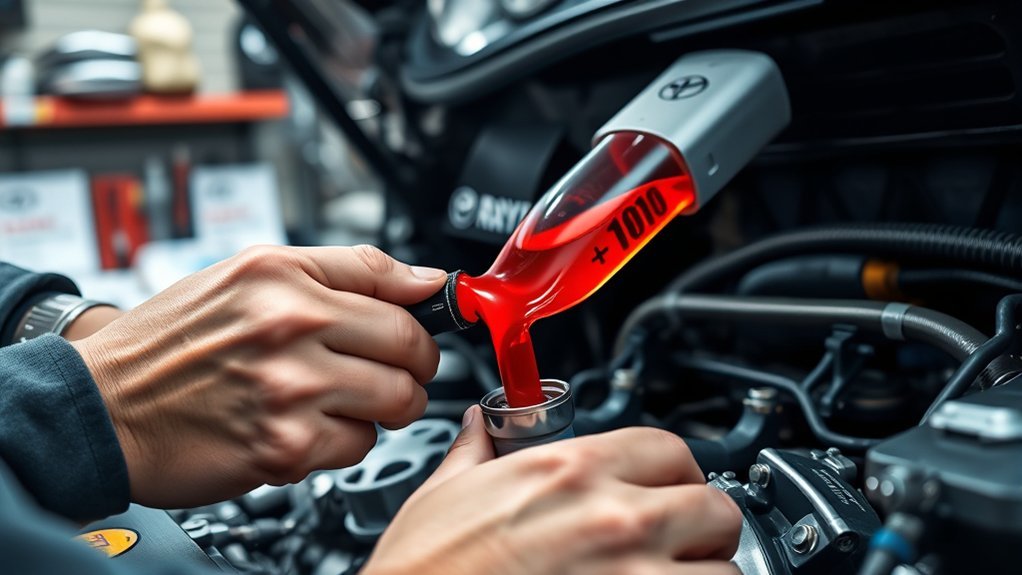
Warning: Many newer RAV4 transmissions and hybrid transaxles have no dipstick. Their fluid level is checked with the vehicle level, through service plugs, under a model-specific temperature and operating procedure. Do not remove a fill, drain, or overflow plug unless you have the exact Toyota procedure and can support the vehicle safely.
[Products Worth Considering]

This upgraded engine oil funnel kit makes oil changes cleaner and easier with a spill-proof design, flow control valve, and transparent body for precise filling. Built from durable polycarbonate and equipped with 12 adapters, two 45-degree elbows, and a debris filter, it fits a wide range of vehicles and works well in tight engine spaces. The secure, hands-free setup helps reduce mess while improving control during oil filling and fluid transfers.

This flexible oil funnel is designed to make fluid changes cleaner and easier by guiding oil around obstacles like skid plates and crossmembers. Its shape-retaining core and silicone body can be molded for custom positioning, while the heat-resistant, leak-proof design helps prevent spills during draining and filter removal. Reusable and easy to clean, it works well for cars, trucks, motorcycles, and other hard-to-reach fluid fill or drain applications.

This Yuirote universal car motor diagnostic tool helps drivers quickly detect engine fault codes and identify system issues for routine inspections and maintenance. It also supports electronic parking brake reset and emergency release functions, making it useful for handling EPB-related problems without a repair shop visit. Its compact, ergonomic design and broad vehicle compatibility make it a practical choice for car owners and DIY repair enthusiasts.
If Your RAV4 Has a Transmission Dipstick
Use the owner’s manual or factory service procedure for your model. A typical older-RAV4 automatic-transmission check includes these steps, but the exact temperature range, selector sequence, and markings can vary:
- Warm the transmission: Drive until the fluid reaches the specified operating range, then park on level ground and set the parking brake.
- Cycle the selector: With the engine idling and the brake applied, move through the specified gear positions and return to Park.
- Read the dipstick: Remove it, wipe it with a lint-free cloth, reinstall it fully, then remove it again and read the correct HOT range.
- Inspect the sample: Note odor, visible debris, foam, and unusual discoloration. Do not overfill, and do not add a different fluid specification.
What Does “Sealed Transmission” Mean on a RAV4?
“Sealed” usually means there is no routine owner dipstick. It does not mean the unit is permanently closed or that leaks can be ignored. A technician checks the level through fill and overflow openings while the vehicle is level and the fluid is within the specified temperature range. On some RAV4 procedures, scan-tool data or a prescribed temperature-check mode is used to set the level accurately.
Should You DIY or Hire a Pro for Your RAV4’s Transmission Service?
DIY service is reasonable only when you have the exact procedure, correct fluid, safe lifting equipment, replacement gaskets or washers, calibrated torque tools, and a reliable way to set the fluid level. A sealed unit adds more risk because measuring only what drains out does not replace the required temperature-and-overflow check.
| DIY May Fit When | Use a Professional When |
|---|---|
| The factory procedure is available for the exact transmission | The RAV4 has no dipstick or requires a temperature-based overflow check |
| You can keep the vehicle level and support it safely | There is a leak, warning light, fault code, burnt odor, or drivability symptom |
| You have the specified fluid, new seals, and torque data | The service history is unknown and mileage is high |
| You can capture, measure, and recycle the used fluid correctly | You cannot verify the fill plug opens before draining the unit |
Pro tip: Before draining any sealed transmission, confirm that the fill plug can be removed and that you have the correct new gasket or washer. Draining first and discovering a seized fill plug can leave the vehicle immobilized.
A careful drain and refill can be appropriate when it matches Toyota’s procedure and the transmission is operating normally. Professional service is the safer choice when precise temperature control, scan data, leak diagnosis, or internal-condition assessment is required.
[Products Worth Considering]

These genuine Toyota oil drain plug gaskets are designed to help maintain a reliable seal during oil changes, reducing the chance of leaks and supporting proper engine maintenance. With an OEM fit and trusted Toyota quality, they are a practical choice for routine service on compatible vehicles. The convenient quantity pack is ideal for keeping multiple maintenance intervals covered.
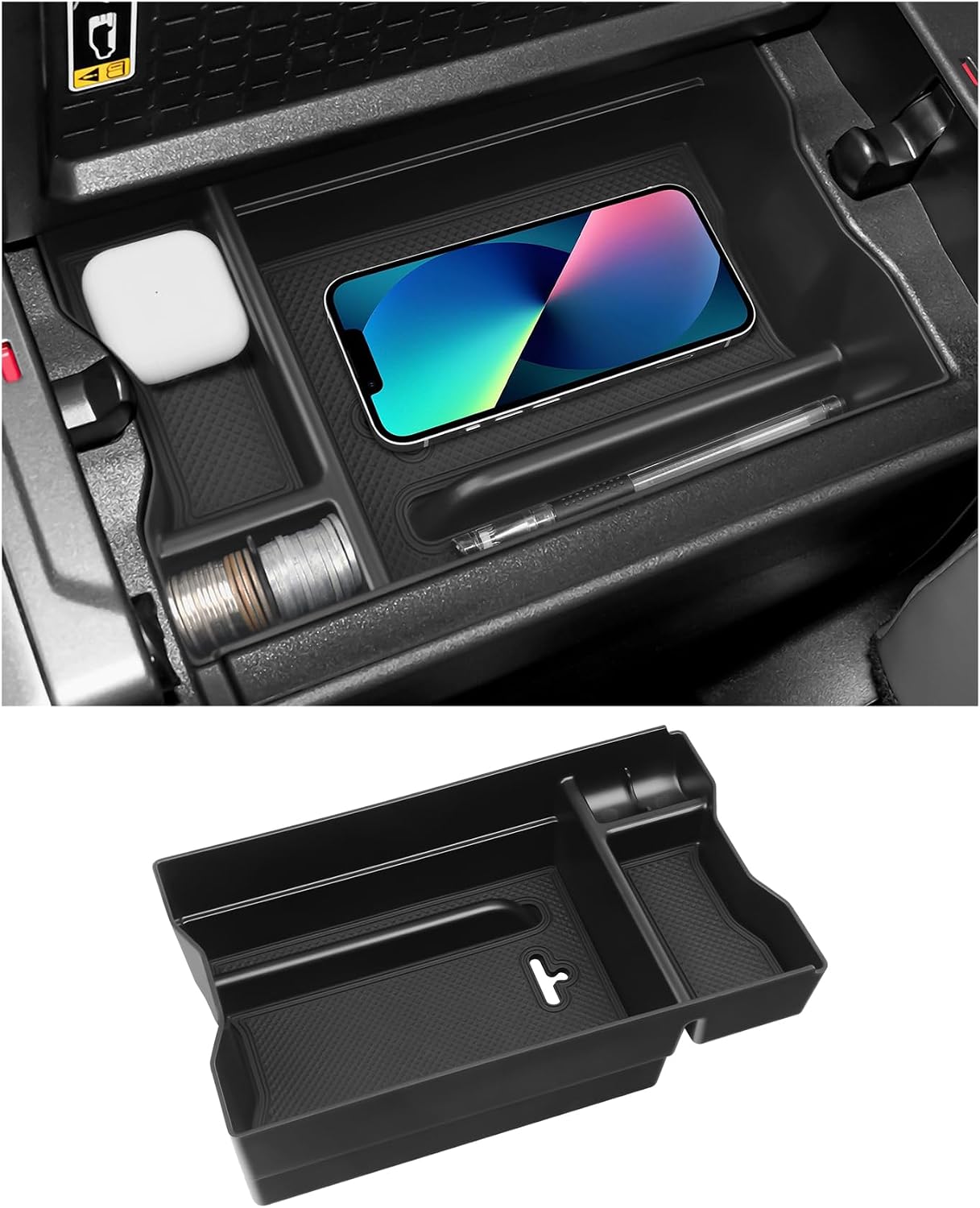
This center console organizer adds a convenient secondary storage layer to compatible Toyota RAV4 hybrid models, helping keep sunglasses, keys, coins, phones, and other small items neatly arranged. Built from durable ABS plastic with a matte finish, it fits directly into the armrest area for quick, tool-free installation and easy removal. Non-slip rubber mats help reduce sliding and noise while maximizing usable storage space inside the console.

This custom-fit cargo net is designed for the 2026 Toyota RAV4 to help keep your trunk organized and secure during everyday driving. It helps hold groceries, tools, and smaller items in place while reducing rolling and shifting, and the heavy-duty carabiners support reliable installation. The net also offers convenient storage and easy access for SUVs and other compatible vehicles.
Drain and Refill vs. Flush: Which Service Fits Your RAV4?
A shop may use “transmission service” to describe different jobs. Ask for the exact procedure in writing before approving the work.
| Service | What It Does | When It May Fit | Main Caution |
|---|---|---|---|
| Drain and refill | Replaces the fluid that drains from the unit, then resets the level | Routine condition-based maintenance on a normally operating transmission | Only part of the total fluid may leave during one service |
| Pan or strainer service | Removes the pan when the transmission design or repair procedure calls for it | Inspection, leak repair, or model-specific maintenance | Not every RAV4 schedule calls for routine pan or strainer replacement |
| Machine fluid exchange or flush | Exchanges a larger share of the old fluid through service equipment | Only after the shop confirms compatibility with the vehicle and fluid condition | It should not replace diagnosis or the factory level-setting procedure |
Toyota’s general explainer distinguishes a fluid change from a flush, and the checked RAV4 maintenance guides call for fluid inspection or replacement rather than naming a universal machine-flush interval. On a high-mileage RAV4 with unknown history, ask the technician to document leaks, codes, fluid condition, and shift operation before recommending any exchange method.
[Products Worth Considering]

This replacement filter set is designed for a range of Toyota hybrid vehicles, including popular models like RAV4 Hybrid, Camry Hybrid, Highlander Hybrid, Sienna, Venza, and more. It combines cabin and engine filtration to help support cleaner airflow, reduce dust and odors, and protect your HVAC and engine systems. Built for easy installation and extended service life, it offers a convenient maintenance upgrade for compatible hybrid and gas-only Corolla models.

This center console armrest cover is designed to fit the 2026 Toyota RAV4 for added comfort and a cleaner interior look. Made with breathable vegan leather and a thick cushioned feel, it helps reduce arm fatigue on long drives while protecting the console from pet paws, dirt, and sticky fingerprints. The band-secured design installs easily with no tools required and blends with the OEM-style interior.

This passenger storage organizer mat is designed to fit the 2026 Toyota RAV4 for a clean, factory-style look with no gaps. It helps protect the original console area from scratches and daily wear while giving you a handy place to store phones, sunglasses, wallets, coins, and cards. Made from durable silicone, it stays in place, reduces rattling, and is easy to remove and clean.
How Regular Maintenance Extends Your RAV4’s Lifespan
Transmission care works best as part of a complete maintenance record. Cooling-system faults, leaks, incorrect fluid, towing load, and delayed repairs can all affect drivetrain stress. The goal is not to change fluid as often as possible. It is to use the correct fluid and procedure at the interval or condition that applies to the vehicle.
Preventive Maintenance Practices
- Save the exact schedule: Keep the PDF or Toyota Owners page for the model year and powertrain with your service records.
- Inspect for leaks: Look for fresh fluid beneath the vehicle and ask the shop to identify the source instead of assuming every red or brown leak is ATF.
- Record the service method: Note whether the job was a drain and refill, pan service, repair refill, or machine exchange, plus the fluid brand and specification.
- Recheck after service: Watch for leaks, warning lights, delayed engagement, abnormal noise, or new shift behavior.
Cost-Effective DIY Methods
The lowest-cost safe action is often inspection and recordkeeping, not opening a sealed transmission. Use this division of work:
| Task | Tools Needed | Tips |
|---|---|---|
| Leak and symptom check | Flashlight, clean cardboard, service log | Record the location, color, odor, and timing of any leak or symptom |
| Dipstick inspection on an applicable older model | Lint-free cloth, exact manual procedure | Use the specified temperature, engine state, and dipstick range |
| Fluid drain/refill | Model-specific tools, drain pan, pump or funnel, torque wrench | Open the fill point first and use new sealing washers or gaskets |
| Used-fluid disposal | Sealable labeled containers | Use an approved local automotive-fluid collection point |
Importance of Fluid Quality
The correct specification matters more than a marketing claim such as “universal” or “compatible with most vehicles.” Toyota’s 2021 U.S. RAV4 owner’s information lists Toyota Genuine ATF WS for that gasoline model and warns that another fluid type may cause abnormal noise, vibration, or damage. Earlier RAV4 applications may specify T-IV instead. Confirm the exact application before mixing, topping up, or authorizing service.
Fluid condition also needs context. A burnt odor, debris, foam, low level, or rapid discoloration after service can point to overheating, aeration, contamination, leakage, or internal wear. Fresh fluid may improve lubrication, but it cannot repair worn clutches, bearings, solenoids, or damaged controls.
Frequently Asked Questions
How Often Should You Change Transmission Fluid in a Toyota RAV4?
Use the maintenance guide for your exact RAV4. In Toyota’s checked 2019 U.S. guide, automatic transmission fluid replacement is listed at 60,000 miles or 72 months when the vehicle is driven primarily under specified towing, heavy-loading, car-top-carrier, or long low-speed conditions. That is not a universal interval for every RAV4.
At What Mileage Does Toyota Recommend a Transmission Flush?
The checked RAV4 maintenance guides call for inspection or fluid replacement and do not establish one universal machine-flush mileage. Ask the shop whether it proposes a drain and refill, pan service, or machine exchange, and require the procedure to match the exact transmission and fluid specification.
Can You Use Any WS-Compatible Fluid in a RAV4?
Toyota Genuine ATF WS is the lowest-ambiguity choice when the manual calls for WS. An aftermarket fluid should be used only when its manufacturer clearly states the required specification and a qualified technician confirms it for the exact RAV4. Never assume WS is correct for an older RAV4 that specifies T-IV or another fluid.
Does a RAV4 Hybrid Use the Same Transmission Fluid Schedule?
Not automatically. A RAV4 Hybrid or Plug-in Hybrid uses a hybrid transaxle rather than the conventional stepped automatic found in gas-only versions from some model years. Check the hybrid maintenance guide and fluid specification for the exact year. For 2026, Toyota moved the U.S. RAV4 lineup to Hybrid and Plug-in Hybrid powertrains.
Can Changing Old Fluid Damage a High-Mileage RAV4?
New fluid does not create existing internal wear, but a transmission that already slips, overheats, contains debris, or has unknown service history needs diagnosis before service. A fluid change may reveal an underlying problem that old, contaminated fluid was masking. Ask for a pre-service road test, code scan, leak check, and fluid-condition assessment.
How Much Transmission Fluid Does a RAV4 Need?
Capacity varies by model year, transmission, drivetrain, and whether you mean a drain-and-refill amount or total dry capacity. Do not buy or pour fluid from one generic RAV4 number. Confirm the factory specification, measure what drains when the procedure requires it, and set the final level using the correct dipstick or overflow method.
Does “Sealed” Mean the Fluid Never Needs Attention?
No. It usually means the transmission has no owner dipstick and uses service plugs for checking or filling. Toyota maintenance guides still call for inspection for leakage, and some list fluid replacement under specific operating conditions. A sealed transmission should be checked with the correct level and temperature procedure.
Automotive Safety Disclaimer: This article gives general maintenance information and does not replace the Toyota repair procedure or professional mechanical advice. Use safe lifting practices, protect yourself from hot fluid, and stop driving if the RAV4 loses drive, grinds, leaks heavily, or displays an overheating or transmission-related warning.
Conclusion
Start with the maintenance guide for your exact RAV4, then match the service decision to how the vehicle is used and how it is behaving. Toyota’s checked schedules support condition-based replacement rather than one universal interval for every model. Use the specified fluid, distinguish a drain and refill from a machine exchange, and do not guess at the level on a sealed transmission. When symptoms or an unknown high-mileage history are involved, inspection comes before fluid service.
References
- How Often Should You Change Your Transmission Fluid?, Toyota, accessed July 2026
- 2019 RAV4 Warranty & Maintenance Guide, Toyota, 2019
- 2021 RAV4 Maintenance Data, Toyota Owners
- 2024 RAV4 Hybrid Manuals and Warranty Guide, Toyota Owners
- Toyota World Standard Automatic Transmission Fluid, Toyota Genuine Parts, accessed July 2026
- Toyota ATF T-IV, Toyota Genuine Parts, accessed July 2026
- The Next Adventure Begins: 2026 RAV4 Arrives This Winter, Toyota USA Newsroom, 2025



[…] your next transfer case service alongside your next transmission fluid change. A simple record of the date, mileage, and fluid spec makes future maintenance much […]
[…] — covers the first 600 miles of ownership and matters more than many new owners expect. Your new Toyota RAV4 may feel ready for hard use right away, but the first few hundred miles still matter. Toyota […]