
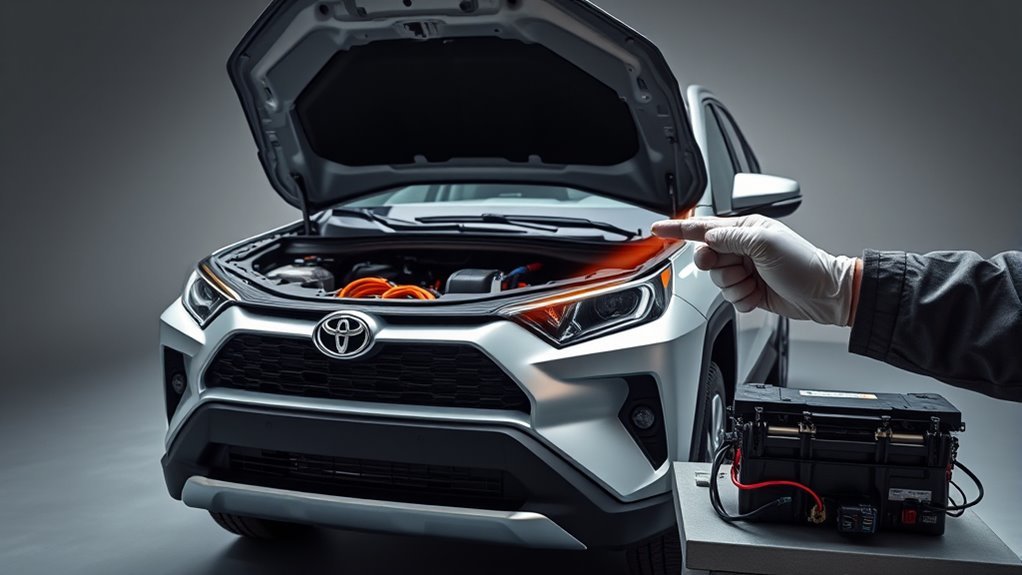
The Toyota RAV4 Hybrid uses a full-hybrid powertrain that blends a gasoline engine, electric motor-generators, a high-voltage battery, an inverter, and an electronic control system. In daily driving, you do not choose which part does the work. The vehicle decides when to use electric drive, engine power, regenerative braking, or a mix of all three.
Quick Answer
The RAV4 Hybrid is a self-charging hybrid. Its engine, MG1 generator, MG2 drive motor, battery, inverter, and power-split gear work together to move the SUV efficiently. MG2 can drive the wheels and recover energy during braking, while AWD models use a separate rear electric motor for added traction.
Key Takeaways
- The standard RAV4 Hybrid does not plug in; it charges its hybrid battery through the gasoline engine and regenerative braking.
- MG1 mainly starts the engine, controls generator speed, and helps charge the battery; MG2 supplies drive torque and captures braking energy.
- The power-split gear acts like the brain of the mechanical side, blending engine and electric power without a conventional stepped transmission.
- RAV4 Hybrid AWD models use an electronic rear motor instead of a mechanical driveshaft to the rear axle.
- Hybrid maintenance is mostly normal vehicle maintenance, but the high-voltage system is not a DIY service area.
RAV4 Hybrid Design: Series-Parallel Power-Split Basics
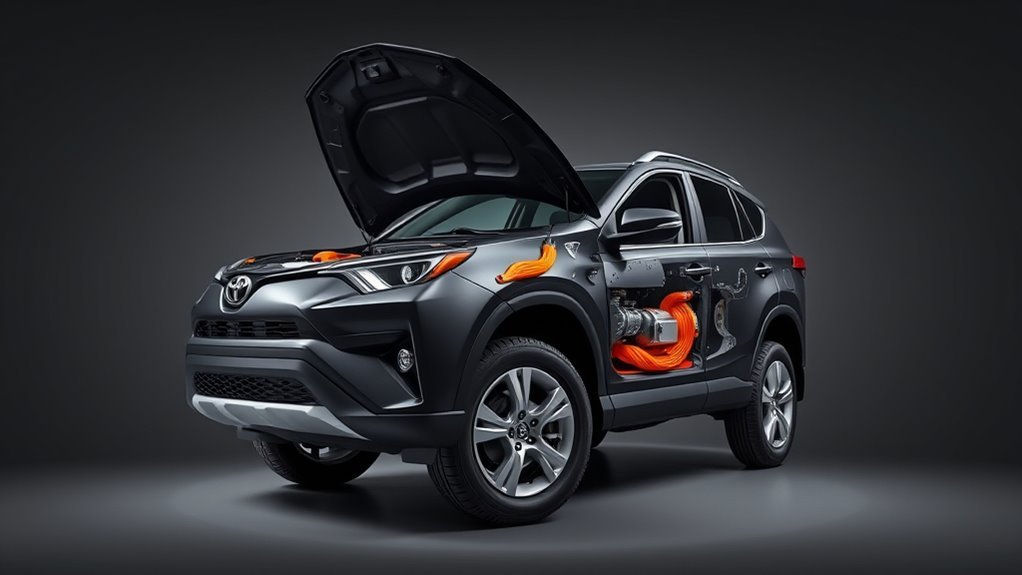
The RAV4 Hybrid uses Toyota’s series-parallel hybrid approach. That means the vehicle can use electric power, gasoline power, or both at the same time. Toyota describes its Toyota Hybrid System II as a design that improves power and fuel economy by reducing size, weight, and energy losses in the hybrid components.
The core idea is simple: the engine is most efficient in certain operating ranges, while electric motors are strong at low speed and during quick torque requests. The RAV4 Hybrid’s control computers constantly decide which source should do more work.
| Driving situation | What the hybrid system usually does |
|---|---|
| Starting from a stop | Uses electric torque when battery charge, temperature, and driver demand allow. |
| Normal cruising | Runs the gasoline engine in an efficient range and blends electric assist as needed. |
| Hard acceleration | Combines engine power with battery-fed motor torque for stronger response. |
| Coasting or braking | Turns motor rotation into electrical energy and stores it in the hybrid battery. |
| Low traction | AWD models can send torque to the rear wheels through a dedicated rear electric motor. |
This is why the RAV4 Hybrid does not feel like a traditional gas SUV with a normal automatic transmission. The power-split gear, motor-generators, and inverter let the system vary engine speed and electric assist without fixed gear steps.
Key Components: Battery, Inverter, MG1, MG2, and Power-Split Gear
Each part has a specific job, but the system works as one unit. The engine does not simply “charge a battery,” and the battery does not simply “run the car.” Power can move through mechanical and electrical paths depending on load, speed, temperature, and battery state of charge.
| Component | Main role | Owner signs to watch |
|---|---|---|
| Gasoline engine | Provides efficient cruising power and helps generate electricity when needed. | Rough running, warning lights, unusual fuel economy drop. |
| Hybrid battery | Stores energy for electric assist and low-speed EV operation. | Hybrid system warnings, blocked cooling intake, sudden mpg decline. |
| Inverter / converter | Converts high-voltage DC from the battery into AC for the motor-generators and helps support vehicle electrical systems. | Warning lights, reduced power, cooling-system issues. |
| MG1 | Starts the gasoline engine, works as a generator, and helps control the eCVT function. | No direct owner-service item; diagnose through Toyota scan data if warnings appear. |
| MG2 | Drives the front wheels through the hybrid transaxle and captures energy during regenerative braking. | Reduced acceleration, abnormal noises, hybrid warning messages. |
| Power-split gear | Blends engine speed, generator speed, and wheel output in the hybrid transaxle. | Gear whine, vibration, drivability problems. |
| Rear motor on AWD models | Adds rear-wheel torque when the Electronic On-Demand AWD system needs traction. | AWD warnings, traction-control warnings, unusual rear driveline sounds. |
Warning: Do not touch, disconnect, or try to service orange high-voltage cables, the hybrid battery, inverter, or motor-generator components. Toyota’s owner materials warn that hybrid high-voltage DC and AC systems can cause severe burns, electric shock, serious injury, or death. Use a qualified Toyota hybrid technician for high-voltage diagnosis or repair.
Pro Tip: Keep the hybrid battery cooling intake clear. Toyota’s owner instructions say to inspect the traction-battery air intake for dust or clogs, especially if a “Maintenance Required for Traction Battery Cooling Parts” message appears.
Battery life is one of the most common owner concerns. Toyota states that every Toyota hybrid battery is supported by a 10-year/150,000-mile limited warranty, whichever comes first, subject to warranty terms. That does not mean every battery will fail at that point; it means buyers should use the official warranty booklet for exact coverage.
Startup, Driving Modes, and How Power Flows in Normal Operation
When you press the start button, the RAV4 Hybrid does not always start the gasoline engine immediately. The vehicle wakes its control modules, checks system conditions, and enters READY mode if the hybrid system is ready to drive. The engine may stay off at first, then start later when power demand, battery state, cabin heat, emissions control, or temperature requires it.
In normal driving, the hybrid battery sends power through the inverter to the motor-generators. MG1 can spin the engine to start it smoothly. MG2 can provide drive torque and later act as a generator during deceleration. The gasoline engine contributes when load is higher or when the system decides engine operation is more efficient.
| Mode | What it changes | Best use |
|---|---|---|
| Normal | Balances throttle response, climate demand, and efficiency. | Everyday driving. |
| Eco | Softens response to help reduce fuel use. | City traffic and relaxed commuting. |
| Sport | Sharpens accelerator response. | Merging, passing, or hilly roads. |
| EV Mode | Attempts short electric-only operation when conditions allow. | Low-speed, light-load movement. |
| Trail / traction modes, when equipped | Adjusts drive force, braking, and traction behavior for loose surfaces. | Gravel, snow, dirt, and slippery driveways. |
Note: EV Mode in the standard RAV4 Hybrid is not the same as the long electric range of a plug-in hybrid. It works only for short, low-load situations when battery charge, speed, temperature, and system demand allow.
[Products Worth Considering]

This Toyota navigation SD card provides updated North America maps and points of interest for compatible factory navigation systems. It is preloaded with recent road and...
How RAV4 Regenerative Braking Recharges the Hybrid Battery
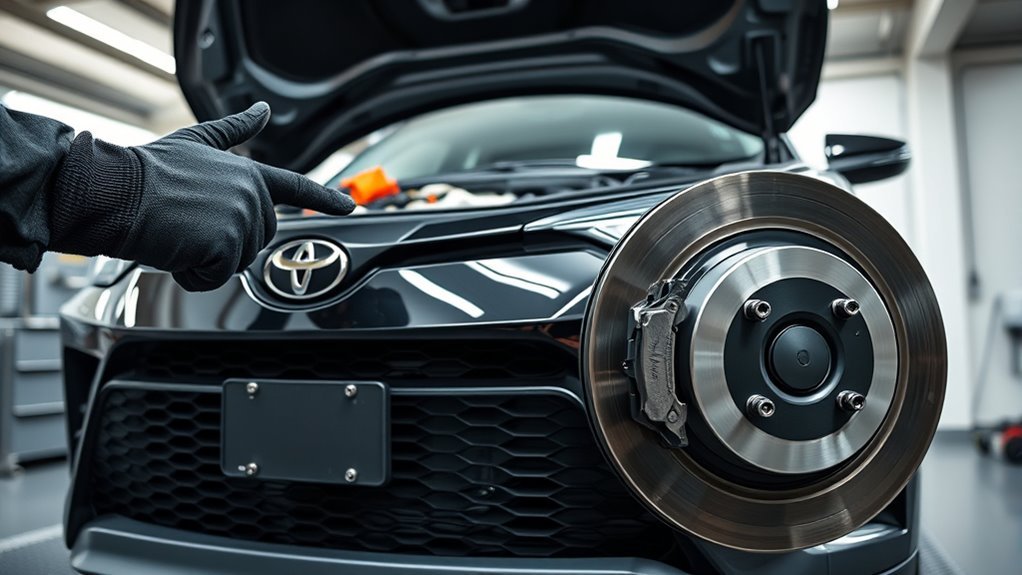
When you lift off the accelerator or press the brake pedal, the RAV4 Hybrid can use regenerative braking. Instead of wasting all motion as heat through the friction brakes, the hybrid system uses motor-generator resistance to slow the vehicle and send electrical energy back to the hybrid battery.
You may feel this as smooth deceleration, especially in stop-and-go traffic. The brake pedal is designed to blend regeneration with normal friction braking, so the vehicle can still stop predictably when you ask for more braking force.
- Light deceleration: the system can favor regeneration to recover energy.
- Hard braking: friction brakes add stopping force because safety and stopping distance come first.
- Low speed: regeneration becomes less effective, so friction brakes do more work near a stop.
- Full, cold, or hot battery: the system may limit regeneration to protect the battery.
Regenerative braking can reduce brake wear in normal driving, but it does not eliminate brake maintenance. Pads, rotors, calipers, brake fluid, and tires still need inspection on schedule.
RAV4 Hybrid AWD: Rear Motor Behavior and Real-World Benefits
RAV4 Hybrid AWD is different from a conventional mechanical AWD system. Instead of using a driveshaft to connect the front and rear axles, Toyota’s Electronic On-Demand AWD uses a rear electric motor-generator to add torque at the rear wheels when the system needs extra grip.
For the 2025 RAV4 Hybrid, Toyota said all Hybrid models came with standard Electronic On-Demand AWD. For the 2026 RAV4 Hybrid, Toyota lists Hybrid models with FWD or Electronic On-Demand AWD depending on grade, while PHEV models have AWD standard.
Toyota lists the 2026 RAV4 Hybrid at 226 net combined horsepower for FWD models and 236 net combined horsepower for AWD models, with a dedicated rear electric motor on AWD-equipped models.
In real driving, the rear motor can help when you pull away on wet pavement, climb a snowy driveway, accelerate out of a turn, or drive on loose gravel. It is not a replacement for winter tires, and it does not turn the RAV4 Hybrid into a rock crawler, but it improves traction without the weight and drag of a traditional transfer case and rear driveshaft.
RAV4 Hybrid vs. RAV4 Plug-in Hybrid: Do You Need to Charge It?
The standard RAV4 Hybrid is a hybrid electric vehicle, often shortened to HEV. You do not plug it in. Its battery is charged by regenerative braking and by the gasoline engine when the system needs to maintain charge.
The RAV4 Plug-in Hybrid, often shortened to PHEV, has a larger battery and is designed to be charged from an external power source. It can drive farther on electric power than the standard Hybrid before the gasoline engine is needed. Toyota’s 2026 RAV4 lineup includes both Hybrid and Plug-in Hybrid versions, so this distinction matters when comparing trims, range, charging, price, and fuel economy.
| Feature | RAV4 Hybrid | RAV4 Plug-in Hybrid |
|---|---|---|
| External charging | No | Yes |
| Battery size | Smaller hybrid battery | Larger plug-in battery |
| Electric-only driving | Short, low-load situations | Longer electric range when charged |
| Best fit | Drivers who want better mpg without charging | Drivers who can charge and want more electric driving |
[Products Worth Considering]

[2026 INTELLIGENT CHARGING UPGRADE — PRECISION CONTROL MEETS SMART SCHEDULING] After surveying 100K+ U.S. EV owners, the Raylix R&D team found that nearly all drivers recognized the necessity of adjustable current and scheduled charging. Our upgraded J1772 charger features 4-level adjustable current (8A/10A/12A/16A) and a 1–12 hour smart delay timer. Whether you're charging overnight or during off-peak hours, enjoy smarter energy use, lower costs, and total convenience—on your schedule.
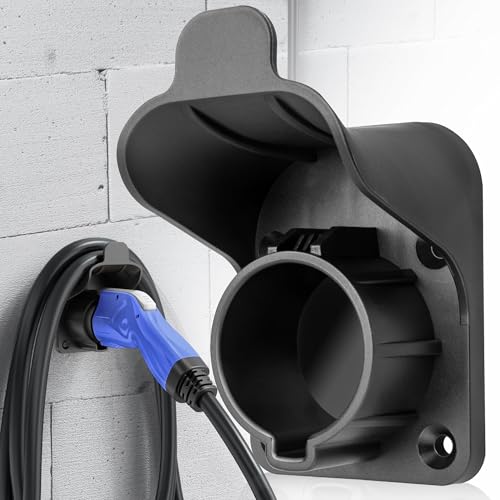
Fits All J1772 Plug: - This Portable EV Charger Cable Hanger compatible with most electric vehicle compatible with Rivian, Hyundai, Audi EV, Ford EV, Chevrolet VOLT, Volkswagen, Nissan, PHEV and all J1772 Charger Plug EV EVSE or plug in hybrid Type 1 connectors
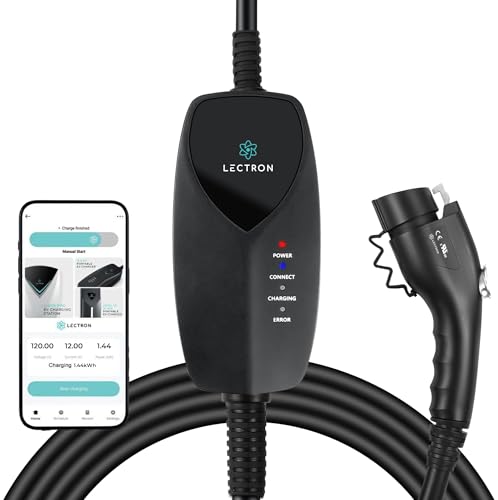
SMART WIFI & APP CONTROL - This portable Wifi-enabled EV charger allows you to keep tabs on your charging status in real-time, schedule your charging sessions, and even control how many kWh you want to charge your EV via the Lectron App
Common Warning Signs and Owner Checks
The RAV4 Hybrid system is built to manage itself, but owners can still watch for symptoms that deserve attention. Most high-voltage issues require diagnostic equipment, so the goal is not DIY repair. The goal is to notice problems early and avoid causing damage.
| Symptom | Possible cause | Best action |
|---|---|---|
| Hybrid system warning message | Battery, inverter, cooling, sensor, or control-system fault. | Schedule Toyota hybrid diagnosis. |
| Sudden fuel economy drop | Cold weather, tire pressure, driving style, blocked battery intake, or system issue. | Check tires and battery intake; service if warning lights remain. |
| Engine runs more than usual | Low battery charge, cabin heat demand, cold engine, highway load, or emissions warm-up. | Usually normal; investigate if paired with warnings or rough running. |
| No READY light or vehicle will not start | Often a weak 12-volt battery, not necessarily the hybrid battery. | Have the 12-volt battery tested before assuming a hybrid battery failure. |
| Unusual whine, grinding, or vibration | Could be tire, wheel bearing, brake, transaxle, or motor-related. | Do not ignore; get a professional inspection. |
[Products Worth Considering]

[Built-in 15+ Powerful Functions]: Compared to entry-level diagnostic tools, the AD200 not only has all of their functions, but it is also more professional and powerful. This vehicle code reader supports: read/clear code, I/M readiness, EVAP/o2 sensor test, freeze frame, real-time data stream curve and more. with those function, you can quickly check the cause of the engine check light (MIL), and reset it, but also can accurately read the dtc code and clear it, let your car back to health

Multi-Functions - Practical Multi-Functions OBD2 code reader features built-in OBD2 DTC lookup library, which help you to determine the cause of the engine light, read code, erase code, view freeze frame, I/M ready, vehicle information, data flow, real-time curve, get vehicle speed information, calculate load value, engine coolant temperature, get engine speed.

⚠️【Important Tips Before Purchase】1️⃣ Compatible with standard OBD II vehicles manufactured from 1996 onward in the US market. 2️⃣ Due to the Secure Gateway (SGW) / FCA AutoAuth security system, this tool is unable to access OBDII modules or clear codes for FCA vehicles (including Chrysler, Dodge, Jeep, etc.) produced after 2017. ⚠️3️⃣Vehicles equipped with an SGW module are also not supported. 4️⃣Functions are not universal. Please send a mes-sage via 📞auteldirect @ outlook . com📞 to check compatibility before ordering. Need any help? Please don't histate to con-tact us via above em-ail.
Frequently Asked Questions
What are the different levels of a Toyota RAV4 Hybrid?
For the U.S. 2026 RAV4 Hybrid lineup, Toyota lists Hybrid grades across Core, Rugged, and Sport designs, including LE, XLE Premium, Limited, Woodland, SE, and XSE. The RAV4 Plug-in Hybrid lineup includes its own grades, including SE, Woodland, XSE, and GR SPORT. For 2025, the RAV4 Hybrid lineup used a different structure that included LE, XLE, SE, Woodland Edition, XLE Premium, XSE, and Limited.
Does the RAV4 Hybrid need to be plugged in?
No. The standard RAV4 Hybrid is self-charging and does not use an external charging port. It charges the hybrid battery through regenerative braking and engine-driven generation. The RAV4 Plug-in Hybrid is different because it has a larger battery and can be charged from an outlet or charging station.
Can the RAV4 Hybrid drive on electricity only?
Yes, but only in limited situations. The standard RAV4 Hybrid can move in electric-only operation at low speeds and light loads when battery charge, system temperature, speed, and driver demand allow. If you accelerate harder, need cabin heat, or the battery state is low, the gasoline engine may start automatically.
Is RAV4 Hybrid AWD mechanical or electric?
RAV4 Hybrid AWD uses an electronic rear motor instead of a mechanical driveshaft to the rear axle. The front hybrid transaxle handles the front wheels, and the rear motor adds torque when the Electronic On-Demand AWD system needs extra traction.
Does regenerative braking replace normal brakes?
No. Regenerative braking helps recover energy and can reduce brake wear, but the RAV4 Hybrid still uses normal friction brakes. During hard stops, low-speed stops, or when the battery cannot accept much charge, the friction brakes do more of the work.
How long is the Toyota hybrid battery warranty?
Toyota states that every Toyota hybrid battery is supported by a 10-year/150,000-mile limited warranty, whichever comes first. Coverage details can vary by vehicle, model year, market, and warranty terms, so owners should check the official Warranty and Maintenance Guide for their exact RAV4.
Conclusion
The RAV4 Hybrid system works by blending engine power, electric assist, regenerative braking, and smart control software. MG1 helps start the engine and manage generation, MG2 drives the wheels and recovers energy, the inverter manages high-voltage power conversion, and the power-split gear keeps the system smooth without a conventional stepped transmission.
The key ownership takeaway is simple: the standard RAV4 Hybrid does not need plugging in, but it does need normal maintenance, a clear battery cooling intake, healthy tires, and proper diagnosis when warning lights appear. AWD models add an independent rear electric motor for traction, while Plug-in Hybrid models add external charging and a larger battery for more electric driving.
Sources
- Toyota USA Newsroom: 2026 RAV4 Arrives this Winter — 2026 RAV4 Hybrid/PHEV lineup, powertrains, AWD, grades, and output.
- Toyota USA Newsroom: 2025 Toyota RAV4 — 2025 RAV4 Hybrid system, standard Electronic On-Demand AWD, drive modes, and rear motor description.
- Toyota Global: Advancement of Toyota Hybrid System II — Toyota hybrid-system efficiency and 2.5-liter hybrid technology background.
- Toyota Owners: 2025 RAV4 Hybrid System Precautions — high-voltage safety precautions for hybrid components.
- Toyota Owners: Cleaning the Hybrid Battery Air Intake Vent — hybrid battery cooling intake inspection and cleaning guidance.
- Toyota Battery Warranty — Toyota hybrid battery limited warranty coverage.


[…] feature works. EV mode does not give you unlimited electric driving. It does not replace a plug-in hybrid system. You should use it for quiet, short maneuvers like parking or moving through slow streets. Do not […]
[…] a deeper mechanical explanation, see the Toyota RAV4 eCVT guide and the overview of how a RAV4 hybrid system blends engine and motor power. If you’re weighing whether the eCVT’s low-speed behavior […]