To check coolant in a 2015 Toyota Tundra, park on level ground and wait until the engine and radiator are completely cold. Read the translucent engine coolant reservoir from the side: Toyota says the cold level is satisfactory between LOW and FULL. If the level is on or below LOW, inspect for leaks and add Toyota Super Long Life Coolant or a specification-matched equivalent only to FULL. For a routine level check or small top-off, do not remove the radiator cap. An empty reservoir, overheating, or repeated coolant loss needs diagnosis rather than repeated topping off.
Last updated: August 31, 2026
Published: [VERIFY: add the original publication date from the CMS]
By: [VERIFY: add the real author name and relevant automotive-maintenance credentials]
Quick Answer
With the engine and radiator completely cold, read the translucent coolant reservoir from the side. Toyota specifies a satisfactory cold level between LOW and FULL. If the level is on or below LOW, inspect for leaks and add the specified coolant slowly to FULL. Do not remove the radiator cap for a routine level check or small reservoir top-off.
Key Takeaways
- Check the coolant only when the engine is cold; hot coolant can spray and cause serious burns.
- Use Toyota Super Long Life Coolant or an equivalent that matches Toyota’s specified coolant chemistry; do not choose by color alone.
- Do not overfill the reservoir. Add coolant slowly until it reaches the FULL mark when cold.
- An empty reservoir, rising temperature gauge, steam, or repeated level drop is a stop-and-diagnose warning.
At a Glance
| Time Required | 5–10 minutes of active work once the engine is fully cold; cool-down time varies |
| Difficulty | Easy DIY maintenance |
| Tools Needed | Gloves, safety glasses, clean funnel, absorbent pads or rags, flashlight, correct coolant |
| Cost | Varies by coolant quantity and product; diagnosis or repairs cost more if a leak is found |
How Do You Check Coolant in a 2015 Toyota Tundra?
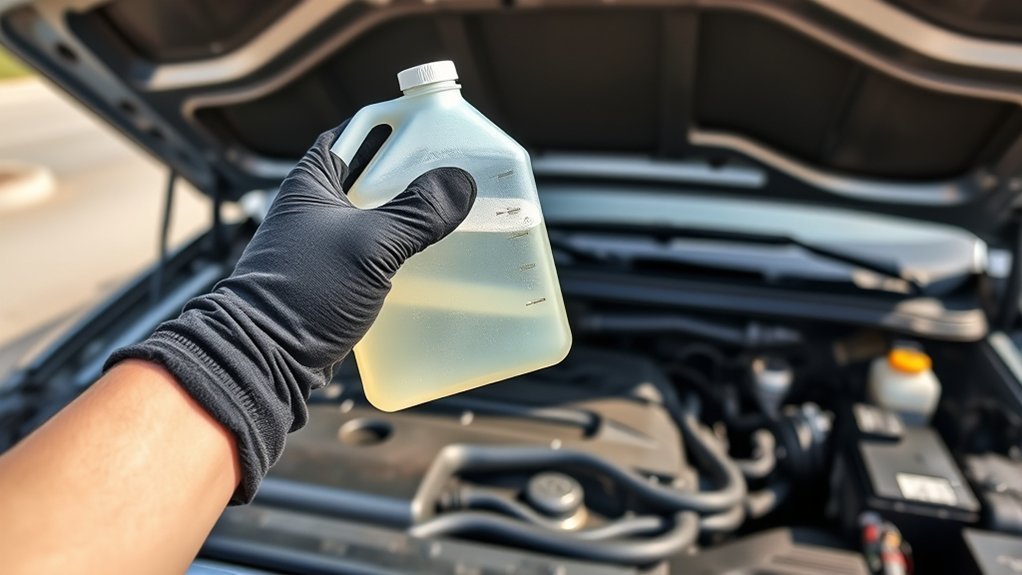
Use this process for a routine cold-engine level check and a small reservoir top-off. It is not a drain, flush, leak repair, or full cooling-system refill.
| Cold Reservoir Reading | What It Means | Next Step |
|---|---|---|
| Between LOW and FULL | Normal level | Secure the hood; no coolant is needed |
| At or below LOW | Coolant is low | Inspect for leaks, then add the correct coolant to FULL |
| Reservoir empty | Possible significant loss or trapped air after service | Do not assume a top-off is enough; diagnose the system |
| Above FULL | Overfilled when cold | Do not add more; correct the level using the service procedure |
- Park the Tundra on level ground and set the parking brake.
- Let the engine and radiator cool completely. You may open the hood after any steam has subsided, but do not use a fixed waiting time as a safety test; remove a coolant-system cap only when the system is fully cold.
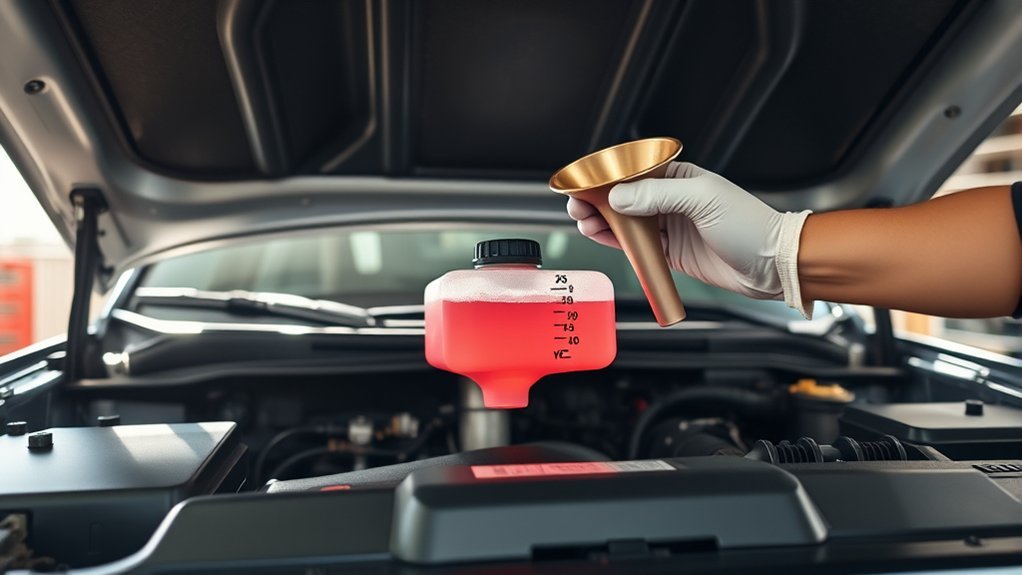
- Open the hood and locate the translucent engine coolant reservoir. Look for the LOW and FULL marks molded into the side of the tank.
- Read the coolant level from the side of the reservoir. The correct cold level should be between LOW and FULL.
- If the level is at or below LOW, inspect for obvious leaks before adding coolant.
- Remove the reservoir cap only when the engine is cold. Use a clean funnel and pour slowly.
- Add Toyota Super Long Life Coolant or an equivalent that matches the full coolant specification in the 2015 owner’s manual. U.S.-market Toyota Super Long Life Coolant is premixed 50/50 with deionized water. Pour slowly and stop at FULL.
- Secure the cap and absorb any spill immediately. Keep liquid coolant out of drains, soil, and regular trash; store recovered coolant in a covered container and follow local rules for contaminated rags or absorbents.
- If there is no active leak, steam, or abnormal temperature-gauge movement, drive normally while watching the gauge. Recheck the reservoir only after the engine is fully cold again.
Warning: Do not loosen the radiator cap or coolant reservoir cap while the engine and radiator are hot. High-temperature steam or coolant can spray out and cause serious burns. For a routine level check, read the reservoir without opening a cap; for a small top-off, open only the reservoir after the system is fully cold.
How Often Should You Check Tundra Coolant?
Toyota’s owner’s manual gives the cold-level checking method, while the Warranty & Maintenance Guide sets scheduled service intervals. Between scheduled services, check the reservoir before long trips or towing and any time you notice a coolant smell, visible leak, steam, or unusual temperature-gauge movement. Treat a level check as an inspection, not a replacement interval.
Coolant manages engine heat, provides freeze protection, and helps protect the cooling system from corrosion. Toyota says the replacement interval depends on the vehicle and coolant type, so use the 2015 Tundra owner and maintenance materials as the final schedule reference.
For a 2015 Tundra with unknown service history, treat coolant condition seriously. If the coolant is dirty, rusty, oily, sludged, or past its scheduled service interval, plan a proper coolant service rather than only topping off the reservoir. For broader interval guidance, see the Toyota Tundra coolant change interval guide, then confirm the schedule for the 2015 model year in Toyota’s maintenance materials.
Is It Safe to Check Coolant When the Engine Is Hot?
No. Read the reservoir only after the engine and radiator have cooled, and loosen neither the radiator cap nor the reservoir cap while the system is hot. Wear gloves and safety glasses, and keep children and pets away. Antifreeze can harm people and animals, while used coolant may contain contaminants, so contain spills immediately.
| Item | Purpose |
|---|---|
| Safety glasses | Protects eyes from splashes |
| Chemical-resistant gloves | Reduces skin contact with coolant |
| Clean funnel | Prevents spills and contamination |
| Rags or absorbent pads | Helps clean spills quickly |
| Covered, sealable container | Stores recovered liquid coolant for approved recycling or disposal |
Note: Do not pour used coolant onto the ground, into a sewer or floor drain, or dump it with regular trash. Keep liquid coolant in a covered container away from animals and use a local facility that accepts antifreeze. Follow local rules for coolant-soaked rags or absorbents. See the EPA used-antifreeze guidance and local disposal rules.
Where Is the Coolant Reservoir on a 2015 Tundra?
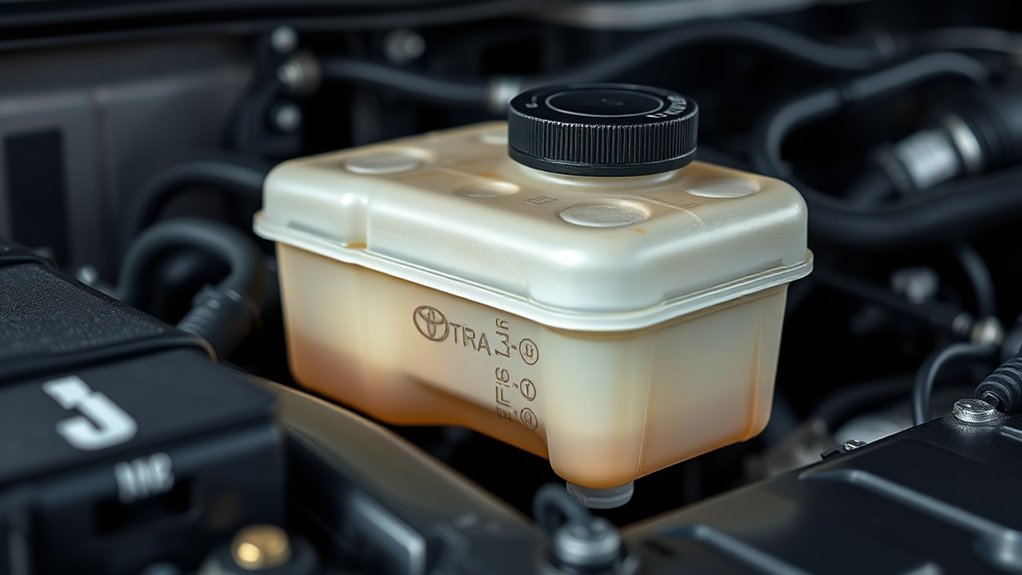
The 2015 Tundra uses a translucent engine coolant reservoir in the engine bay. Toyota’s Quick Reference Guide labels it in the engine-maintenance layout for the 4.6-liter V8 (1UR-FE) and 5.7-liter V8 (3UR-FE/3UR-FBE). Identify the tank by its coolant marking and LOW/FULL lines rather than relying only on a left-side or right-side description.
Locate the Coolant Reservoir
Open the hood and use the engine maintenance layout in your owner’s materials if needed. The reservoir is designed so you can read the fluid level from outside the tank without opening the cooling system. Use a flashlight if the plastic is cloudy or the lighting is poor.
Identify the Fill Line Marks
Read the molded marks on the side of the reservoir. When the engine is cold, the coolant should sit between LOW and FULL. If the level is at or below LOW, check for visible leaks before adding coolant. If the reservoir is empty, do not assume a simple top-off is enough; inspect the truck and arrange a cooling-system diagnosis.
Avoid Overfilling the Reservoir
Coolant expands as it heats. Filling above the FULL mark when cold can push coolant out of the overflow path after the engine warms up. Add small amounts, pause to let the level settle, and stop at FULL.
What Should Tundra Coolant Look and Smell Like?
Before adding fluid, inspect what you can see through the reservoir. Coolant should look consistent and be free of an oil film, excessive rust or scale, sludge, and floating debris. Dye color varies by product, so match the coolant specification on the label and in the owner’s manual rather than choosing by color alone.
| What You See or Smell | What It May Mean | What to Do |
|---|---|---|
| Consistent coolant with no oil film, heavy rust/scale, sludge, or debris | Likely normal if the level is stable | Top off only if the cold level is on or below LOW |
| Brown, rusty, cloudy, or sludgy coolant | Age, contamination, corrosion, or mixed coolant types | Schedule a coolant service and inspection |
| Oily sheen or milky residue | Possible oil/coolant contamination | Stop topping off and get a diagnosis |
| Sweet smell, steam, or hot coolant odor | Possible leak or overheating | Let the truck cool and inspect before driving farther |
Do You Need to Remove the Radiator Cap?
No. A routine level check uses the translucent reservoir, and a small top-off uses only the reservoir cap after the engine and radiator are completely cold. Do not open the radiator cap for this task. Opening the pressurized side of the system belongs to a model-specific service procedure.
Inspect the reservoir cap and surrounding area for cracks, damaged seals, dried residue, or wet spots. A damaged cap or tank can contribute to coolant loss. Use a replacement that matches the truck’s specifications.
[Products Worth Considering]

This coolant electric water pump is designed as a replacement for select Toyota vehicles, helping maintain proper engine cooling performance and reliable temperature control. Built to OE specifications, it offers fitment support for compatible Avalon, Camry, and RAV4 models with 2.5L L4 engines. It also includes cross-reference part numbers for easier matching and comes with after-sales support for covered defects.

This engine water pump kit is designed to help maintain reliable cooling performance across a wide range of compatible Toyota, Lexus, Scion, and Pontiac vehicles. Built with aluminum and tested for leak-free operation, it offers a direct replacement solution that supports engine efficiency and long-term service life. The kit includes a professional water pump and gasket for a convenient installation-ready repair.

This radiator burping funnel kit helps simplify coolant refilling, bleeding, flushing, and spill-free maintenance across a wide range of vehicles. Its translucent body with clear scale supports controlled filling, while multiple adaptors, caps, and extension pieces improve compatibility and access in tight engine bays. The built-in shut-off valve and rubber-gasket design help reduce spills and make cooling system service cleaner and more convenient.
What Coolant Should You Add to a 2015 Tundra?
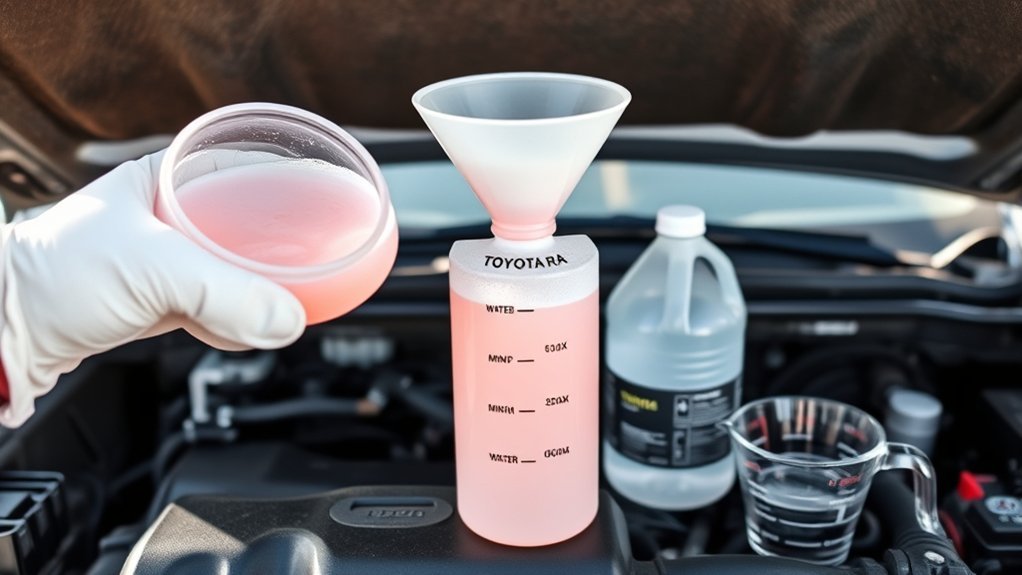
Use Toyota Super Long Life Coolant or a similar high-quality ethylene-glycol coolant that matches Toyota’s specified non-silicate, non-amine, non-nitrite, non-borate long-life hybrid organic acid chemistry. The 2015 owner’s manual states that U.S.-market Toyota Super Long Life Coolant is a 50% coolant/50% deionized-water mixture; the Canadian mixture is 55% coolant/45% deionized water. Check the label and service history before mixing products. If the existing coolant type is unknown, have the system identified or serviced instead of guessing. For more background, see the Toyota Tundra coolant type guide.
Follow the product label exactly. Do not dilute coolant labeled premixed or ready to use. Plain water is not a routine substitute because it lacks the specified corrosion, freeze, and boiling protection. Toyota’s overheating procedure allows water if coolant is unavailable in an emergency, but that is temporary roadside guidance; restore the correct coolant mixture as soon as practical.
Pro Tip: Keep a small notebook or phone note with the date, mileage, coolant added, and how much you used. If the level drops again soon, that record helps confirm a leak pattern.
[Products Worth Considering]

This spill-proof radiator coolant filling funnel kit helps you refill cooling systems cleanly while reducing trapped air pockets that can affect heater and engine performance. It includes a 5-inch extension bar and 45-degree elbow for easier access under shrouds or at awkward angles. Color-matched caps for dedicated adapters make setup simpler and more organized.

AISIN OE matched engine coolant thermostat delivers consistent temperature control for reliable cooling system performance. Built with high-quality materials and designed for perfect OE form, fit, and function, it helps maintain efficient engine operation across a wide range of compatible Lexus, Scion, and Toyota vehicles. The correct OE specified operating temperature supports dependable cooling, while note that a gasket is not included.

This flexible oil funnel is designed to make fluid changes cleaner and easier by guiding oil around obstacles like skid plates and crossmembers. Its shape-retaining core and silicone body can be molded for custom positioning, while the heat-resistant, leak-proof design helps prevent spills during draining and filter removal. Reusable and easy to clean, it works well for cars, trucks, motorcycles, and other hard-to-reach fluid fill or drain applications.
Do You Need to Bleed the Cooling System After a Top-Off?
A small reservoir top-off normally does not require a full bleeding procedure. Secure the cap, monitor the temperature gauge during normal driving, and recheck the reservoir after the engine becomes fully cold. Gurgling, unstable heater output, or a rising gauge can point to trapped air or another cooling-system problem.
- Secure the reservoir cap.
- Confirm the cold level is not above FULL and that no obvious leak is present.
- Drive only if the temperature gauge is normal and there is no steam or active leak.
- After parking, look for fresh drips or residue without reaching near hot or moving parts.
- Let the engine cool completely before opening the reservoir again.
- Recheck the reservoir. Add coolant only if the cold level is at or below LOW, and stop at FULL.
If the system was drained, a cooling-system part was replaced, the reservoir was empty, or the engine overheated, use the model-specific service-manual refill and bleeding procedure or have a qualified technician perform it. A full refill is not the same as a reservoir top-off.
[Products Worth Considering]

This versatile automotive funnel kit makes oil and coolant filling cleaner, safer, and more efficient across a wide range of vehicles. With multiple color-coded adapters, secure sealing, and hands-free locking support, it helps prevent leaks, spills, and mismatched fittings during maintenance. The organized magnetic storage and durable heat-resistant construction make it a practical choice for both DIY repairs and professional service work.

The OEMTOOLS coolant vacuum refill kit helps quickly refill a vehicle’s cooling system while removing trapped air that can lead to overheating and engine damage. It also performs vacuum leak tests to help confirm system integrity and reduce the chance of repeat repairs. With multiple bushings, adapters, and a tapered cone seal, it is designed for flexible use on many radiator and coolant bottle necks.

This engine coolant thermostat with seal is designed to help maintain proper engine temperature and support efficient cooling system performance. It is compatible with a wide range of Toyota, Lexus, Ford, Chevrolet, Mitsubishi, Scion, and Pontiac models, making it a versatile replacement choice for many vehicles. With included seal and durable metal-and-rubber construction, it offers a convenient fitment solution for cooling system repairs and maintenance.
Why Does the Coolant Level Keep Dropping?
Repeated coolant loss is not normal. A level change after recent cooling-system service can occur as trapped air purges, but a reservoir that keeps falling needs inspection. Track the cold level over the next few drives and look for external leaks, overheating signs, or internal contamination. If the temperature gauge rises or steam appears, follow the stop-driving guidance in the Toyota Tundra overheating guide.
Oil in Coolant
An oily film, milky residue, or chocolate-colored sludge can point to oil and coolant mixing. A head-gasket leak is one possible cause, but other internal leaks can produce similar contamination. Do not keep driving and topping off; arrange a pressure test, combustion-gas test, and professional diagnosis.
White Exhaust Smoke
Thick white exhaust that continues after warm-up, especially with a sweet odor and coolant loss, can indicate coolant entering the combustion chamber. Shut the truck down if it overheats, and avoid driving it until the cause is diagnosed.
External Coolant Leaks
Look for puddles, wet hoses, crusty pink or white residue, damp radiator seams, a leaking water pump, or stains near the reservoir cap. If the coolant level drops soon after replenishing, Toyota’s manual guidance is to visually check the radiator, hoses, engine coolant reservoir cap, drain cock, and water pump, then have the system tested if no leak is found.
| Symptom | Likely Concern | Immediate Action |
|---|---|---|
| Coolant puddle under truck | External leak | Do not drive far; inspect hoses, radiator, pump, and reservoir |
| Temperature gauge rising | Low coolant, airflow issue, thermostat issue, or leak | Pull over safely, shut down, and let the engine cool |
| Milky or oily coolant | Possible internal contamination | Get a professional diagnosis before driving |
| Repeated low reservoir | Slow leak or trapped air after service | Track level and schedule a pressure test |
When Should You See a Mechanic?
- Check the reservoir at scheduled maintenance, before long trips or towing, and whenever cooling-system symptoms appear.
- Inspect coolant color and surface condition every time you check the level.
- Use only the correct coolant type and avoid mixing unknown formulas.
- Absorb spills immediately, contain contaminated materials, and keep pets away.
- Record coolant additions by date and mileage.
- Schedule service if coolant is dirty, oily, rusty, low again after topping off, or if the truck overheats.
See a mechanic if you find persistent level drops, overheating, white exhaust smoke, coolant in the oil, oil in the coolant, or visible leaks you cannot repair confidently. Those signs can lead to engine damage if ignored. If the temperature gauge reaches the hot range or steam appears, stop driving safely and let the truck cool before inspection.
Frequently Asked Questions
Where do you put coolant in a 2015 Toyota Tundra?
For a routine cold-engine top-off, add coolant to the translucent engine coolant reservoir marked with LOW and FULL lines. Do not open the radiator cap for a normal level check or small top-off.
Should the coolant reservoir be full when the engine is cold?
The cold level can be anywhere between LOW and FULL. Add coolant only when the level is on or below LOW, and stop at FULL. Filling above FULL leaves too little expansion space.
What kind of coolant does a Toyota Tundra take?
Use Toyota Super Long Life Coolant or an equivalent that matches the full coolant specification in the 2015 Tundra owner’s manual. U.S.-market Toyota Super Long Life Coolant is premixed 50/50 with deionized water.
How often should you change the coolant in a Toyota Tundra?
Follow the 2015 Tundra Warranty & Maintenance Guide and the truck’s documented service history. Do not apply a generic interval based on coolant color. If the history is unknown, the coolant is contaminated, or the scheduled interval has passed, arrange the correct cooling-system service.
Is it safe to drive with low coolant in my Toyota?
No. Low coolant can cause overheating and engine damage. If the temperature gauge rises, steam appears, or you smell hot coolant, pull over safely, shut off the engine, and let it cool before inspecting the reservoir.
Can I add water instead of coolant?
Do not use plain water for a routine top-off. Toyota’s overheating procedure allows water if coolant is unavailable in an emergency, but that is a temporary roadside measure. Restore the correct coolant mixture as soon as practical.
Why does my coolant level keep dropping after I top it off?
A repeated drop can mean an external leak, trapped air after service, a damaged cap or tank, water-pump or radiator trouble, hose seepage, or an internal leak. Toyota specifically directs owners to inspect the radiator, hoses, reservoir cap, drain cock, and water pump when the level drops soon after replenishing. Schedule a pressure test if the source is not obvious.
How much coolant does a 2015 Toyota Tundra need?
For a routine reservoir top-off, you do not need the cooling system’s total capacity. With the engine cold, add only enough correct coolant to bring a level on or below LOW up to FULL. For a full drain and refill, the 2015 owner’s manual lists different capacities by engine and towing-package configuration, so use the exact specification and bleeding procedure for your truck.
Conclusion
Check the 2015 Tundra coolant only when the engine and radiator are fully cold and the truck is level. A reservoir reading between LOW and FULL is satisfactory; add the correct coolant only when the cold level is on or below LOW, and stop at FULL. Do not open the radiator cap for this routine task. An empty reservoir, contaminated coolant, repeated loss, steam, or a rising temperature gauge means the cooling system needs inspection before normal driving continues.
Sources
- Toyota Owners Manuals & Warranties: 2015 Tundra — official owner manual and maintenance guide access point.
- 2015 Toyota Tundra Quick Reference Guide — engine maintenance layout showing the engine coolant reservoir.
- Toyota Genuine Super Long Life Coolant — Toyota coolant product reference.
- Toyota: How Often to Change Engine Coolant — coolant function, coolant type, and general interval guidance.
- U.S. EPA: How Do I Dispose of Used Antifreeze? — used-antifreeze storage, recycling, and disposal guidance.