
The Toyota Tundra coolant flush interval in Toyota’s 2024 U.S. maintenance guide is 100,000 miles or 120 months for the first engine-coolant replacement, followed by 50,000 miles or 60 months between later replacements. The same guide lists the same schedule for intercooler coolant. Check the guide for your exact model year and market before using these numbers for a different Tundra.
This guide explains when a drain-and-refill is enough, when contamination or overheating needs diagnosis first, which coolant specification Toyota calls for, and how to handle the service safely. You can find more model-specific maintenance topics in the Toyota Tundra guide.
Affiliate disclosure: As an Amazon Associate, AutoReviewNest earns from qualifying purchases. This does not affect the price you pay.
Quick Answer
Toyota’s 2024 U.S. Tundra maintenance guide calls for the first engine-coolant and intercooler-coolant replacements at 100,000 miles or 120 months, then every 50,000 miles or 60 months. Service the affected circuit sooner if the coolant is contaminated, leaking, linked to overheating, or removed during a repair. Confirm the schedule in the guide for your exact model year.
Key Takeaways
- Toyota’s 2024 U.S. Tundra guide schedules the first engine-coolant and intercooler-coolant replacements at 100,000 miles/10 years, then every 50,000 miles/5 years.
- Use Genuine Toyota Super Long-Life Coolant or a manual-approved equivalent, and follow the container label before adding water.
- A routine service is normally a drain-and-refill, not an automatic chemical flush.
- Overheating, coolant loss, sludge, rust, heater problems, or cooling-system repairs are reasons to service the coolant early.
- Never open a hot cooling system, and always recycle or dispose of used coolant through an approved facility.
At a Glance
| Time Required | Varies by model year, cooling circuit, access, and bleeding procedure; allow time for a full cool-down and a final level check |
| Difficulty | Advanced DIY or professional service; Toyota’s 2024 guide says a qualified technician should perform coolant replacement |
| Tools Needed | Model-specific service information, drain pan, gloves, eye protection, suitable hand tools, approved coolant, fill or bleeding equipment, and a sealed waste container |
| Cost | DIY cost is mainly coolant and supplies; shop cost varies by labor rate, model, and whether diagnosis or repairs are needed |
Toyota Tundra Coolant Flush Interval
For the 2024 U.S. Tundra, Toyota lists the first engine-coolant replacement at 100,000 miles or 120 months, whichever comes first, followed by replacement every 50,000 miles or 60 months. Toyota’s 2024 Tundra Warranty & Maintenance Guide describes the service as draining and refilling the system with the specified ethylene-glycol coolant, then inspecting hoses and connections for corrosion or leaks.
| Service item | Recommended timing | What to do |
|---|---|---|
| First engine coolant replacement | 100,000 miles or 120 months | Drain and refill with Toyota-approved coolant; inspect hoses, clamps, radiator, and water pump area. |
| Later engine coolant replacements | Every 50,000 miles or 60 months | Repeat the coolant replacement and leak inspection. |
| Routine checks | At regular service, before long trips, and before towing | Check level, color, leaks, hose condition, and temperature behavior. |
| Early service | Any time symptoms appear | Replace coolant sooner if it is rusty, sludgy, diluted, contaminated, leaking, or disturbed during a repair. |
Note: Many shops use the phrase “coolant flush” for any coolant service. Toyota’s scheduled service is more accurately a coolant replacement or drain-and-refill. A chemical flush is not automatically required unless the system is contaminated, rusty, or being repaired for a specific cooling problem.
Do You Need a Drain-and-Refill or a Full Flush?
Choose the service by the coolant’s condition and the truck’s symptoms, not by the word a shop uses on its invoice. Toyota’s scheduled procedure is a drain-and-refill. Contamination, a wrong-fluid mix, repeated overheating, or a failed component calls for diagnosis before anyone forces cleaner or high-pressure flow through the system.
| What you find | Best next step | Why |
|---|---|---|
| Clean coolant and scheduled service is due | Drain and refill the specified circuit | This matches Toyota’s scheduled replacement procedure. |
| Unknown history or an uncertain coolant formula | Inspect, drain, and refill without mixing formulas | A controlled reset is safer than topping off with an unconfirmed product. |
| Rust, sludge, oil, grit, or gel-like material | Diagnose the contamination before flushing | The system may need a repair, targeted cleaning, or parts replacement. |
| Leak, overheating, or poor heater performance | Find and repair the fault, then refill and bleed correctly | Fresh coolant cannot repair a failed hose, cap, pump, thermostat, radiator, or seal. |
Does a Newer Tundra Have More Than One Coolant Circuit?
Toyota’s 2024 Tundra guide separately lists engine coolant and intercooler coolant. Both use the same initial and later replacement intervals in that guide. Do not assume every model year has the same drain points, fill capacity, or bleeding procedure. Check the exact maintenance guide and repair information before opening either circuit.
Should You Ever Flush It Every 30,000 Miles?
Do not use 30,000 miles or two years as the default for a 2024 U.S. Tundra filled with Toyota Super Long-Life Coolant. A shorter schedule may apply to another model year, a different coolant, a contaminated system, unknown service history, or a repair-specific recommendation. Use the maintenance guide for the exact truck instead of a universal interval.
Symptoms Your Toyota Tundra Needs Coolant Service Early
The schedule is the baseline, but symptoms matter more than mileage. If the cooling system is acting up, do not wait for 100,000 miles. Diagnose the problem and service the coolant or repair the system as needed.
Overheating or a High Temperature Gauge
A rising temperature gauge, warning message, steam, or coolant smell can point to low coolant, trapped air, a sticking thermostat, restricted flow, a clogged radiator, a weak cap, or a leak. Pull over safely if the truck overheats. Let it cool completely before inspecting anything under the hood.
Warning: Never loosen a radiator cap or coolant reservoir cap while the engine is hot. The cooling system can be under pressure, and hot coolant or steam can spray out and cause serious burns.
Heater Not Producing Heat
If the cabin heater blows cold or only lukewarm air, the system may be low on coolant, contain trapped air, or have poor circulation through the heater core. Check the coolant level only when the engine is fully cool. Because hose routing and temperature checks vary by engine, use model-specific diagnostic information rather than relying on a universal touch test.
Rusty, Sludgy, or Contaminated Coolant
Healthy Toyota coolant should look clean and consistent. Brown, muddy, oily, gritty, or gel-like coolant is not normal. Contamination can reduce heat transfer, block narrow passages, damage seals, and shorten water pump life. If you see rust flakes or sludge, a simple top-off is not enough; the cooling system needs inspection and service.
Coolant Level Keeps Dropping
If the reservoir level falls soon after topping off, look for leaks around hoses, clamps, radiator seams, coolant reservoirs, drain cocks, water pump areas, and the heater core. A cooling-system pressure test can help locate a leak. Do not keep adding coolant without finding the cause.
Which Coolant Should You Use?
Use Genuine Toyota Super Long-Life Coolant or a similar high-quality coolant that matches Toyota’s specification: an ethylene-glycol coolant that is non-silicate, non-amine, non-borate, and made with long-life hybrid organic acid technology. Check the container label before adding water, and do not dilute a product labeled pre-mixed or ready to use.
Color helps identify many Toyota coolants, but color alone is not a reliable compatibility test. Use the owner’s manual, bottle label, and Toyota specification instead of grabbing any “pink” or “Asian vehicle” coolant from the shelf.
Pro Tip: If the coolant history is unknown, do not mix formulas. Have the system drained, inspected, and refilled with the correct Toyota-approved coolant.
[Products Worth Considering]

This spill-proof radiator coolant filling funnel kit helps you refill cooling systems cleanly while reducing trapped air pockets that can affect heater and engine performance. It includes a 5-inch extension bar and 45-degree elbow for easier access under shrouds or at awkward angles. Color-matched caps for dedicated adapters make setup simpler and more organized.

This engine water pump kit is designed to help maintain reliable cooling performance across a wide range of compatible Toyota, Lexus, Scion, and Pontiac vehicles. Built with aluminum and tested for leak-free operation, it offers a direct replacement solution that supports engine efficiency and long-term service life. The kit includes a professional water pump and gasket for a convenient installation-ready repair.

This coolant electric water pump is designed as a replacement for select Toyota vehicles, helping maintain proper engine cooling performance and reliable temperature control. Built to OE specifications, it offers fitment support for compatible Avalon, Camry, and RAV4 models with 2.5L L4 engines. It also includes cross-reference part numbers for easier matching and comes with after-sales support for covered defects.
Can You Use Water?
Do not use plain water as the normal fill. The specified coolant mixture provides freeze protection, boil-over protection, lubrication, and corrosion control. If the correct coolant is unavailable, follow the emergency guidance for the exact model or seek roadside assistance rather than guessing at a mixture. Restore the system with approved coolant before normal driving.
DIY or Shop: Tundra Coolant Replacement Overview
Toyota’s 2024 maintenance guide says a qualified technician should perform engine-coolant and intercooler-coolant replacement. The steps below are a safety-focused overview, not a substitute for the repair procedure for your exact model year. Use professional service for multiple cooling circuits, hybrid components, active leaks, overheating, contamination, or trapped-air problems.
[Products Worth Considering]

This engine coolant thermostat with seal is designed to help maintain proper engine temperature and support efficient cooling system performance. It is compatible with a wide range of Toyota, Lexus, Ford, Chevrolet, Mitsubishi, Scion, and Pontiac models, making it a versatile replacement choice for many vehicles. With included seal and durable metal-and-rubber construction, it offers a convenient fitment solution for cooling system repairs and maintenance.

The OEMTOOLS coolant vacuum refill kit helps quickly refill a vehicle’s cooling system while removing trapped air that can lead to overheating and engine damage. It also performs vacuum leak tests to help confirm system integrity and reduce the chance of repeat repairs. With multiple bushings, adapters, and a tapered cone seal, it is designed for flexible use on many radiator and coolant bottle necks.

This coolant thermostat is a direct replacement designed for a wide range of Toyota, Lexus, and Scion vehicles. It helps maintain proper engine temperature, supports reliable cooling system performance, and installs easily without special tools or programming. Built to meet OEM standards, it offers durable, stable operation and dependable fitment for compatible models.
Prep and Safety
- Park on a level surface and let the engine cool completely.
- Wear gloves and eye protection.
- Use a large drain pan and keep pets and children away from the work area.
- Confirm the correct coolant type before draining anything.
- Check whether skid plates or splash shields must be removed for access.
- Have a sealed, clearly labeled container ready for used coolant.
Warning: Antifreeze/coolant is poisonous if swallowed and dangerous to pets. Clean spills immediately, store new and used coolant in labeled containers, and never leave an open drain pan unattended.
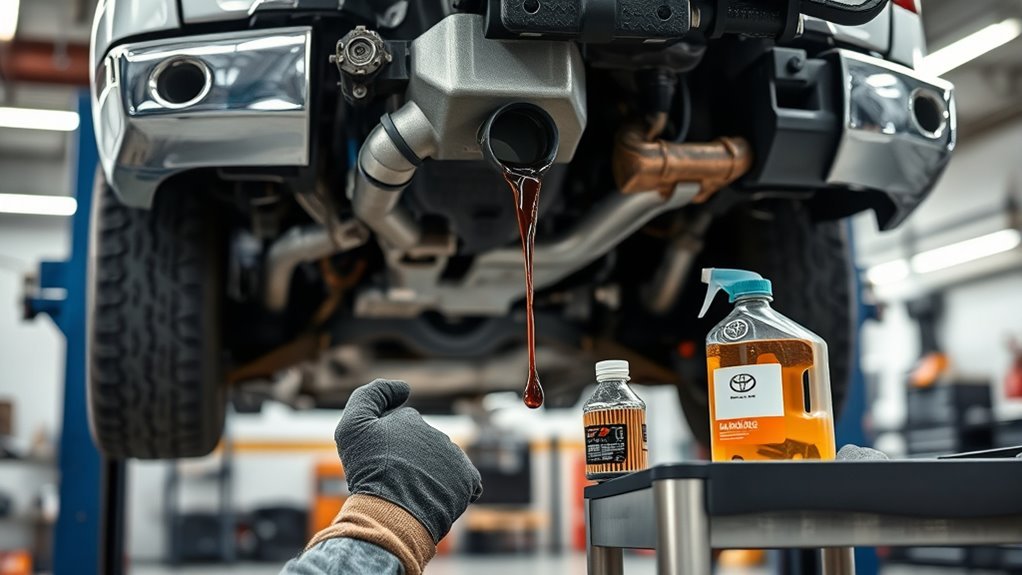
Drain and Inspect
- Confirm the engine is cold.
- Remove any underbody panels needed for access.
- Place the drain pan under the radiator drain point or the service location listed for your model.
- Open the drain carefully and collect the coolant.
- Inspect the drained coolant for rust, oil sheen, grit, sludge, or unusual odor.
- Inspect hoses, clamps, radiator fins, reservoirs, visible water pump areas, and drain fittings for leaks or corrosion.
Do not force plastic drain cocks or over-tighten fittings. If the drain point is stuck, damaged, or hard to access, stop and use a shop instead of breaking a cooling-system part.
Flush Only If the System Needs It
If the old coolant is clean and the truck is being serviced on schedule, a drain-and-refill is usually the right service. If the coolant is rusty, muddy, oily, or contaminated by the wrong fluid, the system may need additional flushing, diagnosis, or parts replacement. Use only a cleaner that is compatible with Toyota cooling systems, and follow the product label and service manual. Do not use compressed air, high pressure, or improvised procedures that can damage the heater core or seals.
Refill and Bleed Air
- Close the specified drain point and reinstall any removed hoses, shields, or covers correctly.
- Fill the correct circuit slowly with the Toyota-approved coolant specified for the truck.
- Use the fill or vacuum equipment called for by the model-specific procedure.
- Follow the exact bleeding procedure, including any heater-control setting the service information requires.
- Monitor the temperature gauge and check for leaks. Stop if the temperature begins to rise abnormally.
- Let the engine cool fully, then recheck the reservoir level and adjust it to the specified mark.
Note: Bleeding steps vary by engine and model year. Do not rely on a universal “hold at 3000 RPM” rule. Use the factory procedure or a professional vacuum-fill tool if the system traps air.
Common Issues After a Tundra Coolant Flush: Diagnosis and Fixes
After coolant service, watch the truck closely during the first few drives. Small problems are easier to fix before they turn into overheating or leaks.
| Symptom | Likely cause | What to do |
|---|---|---|
| Temperature rises after service | Air pocket, low level, thermostat issue, blocked flow | Stop driving, let it cool, recheck level, bleed properly, and inspect for leaks. |
| Heater blows cold | Air in heater core or low coolant | Follow the model-specific bleeding procedure and recheck the cold coolant level. |
| Coolant smell or puddle | Loose clamp, drain leak, damaged hose, cracked reservoir | Pressure-test the system and repair the leak before driving far. |
| Foamy or discolored coolant | Wrong coolant mix, contamination, trapped air | Stop mixing fluids and have the system inspected. |
| Grinding or whining near water pump area | Possible bearing or pump problem | Do not assume coolant alone will fix it; inspect the pump and belt-driven components. |
Long-life coolant is not lifetime coolant. The schedule is generous, but overheating, leaks, rust, sludge, or unknown coolant history should move service to the top of your list.
Tools and Tips to Make Coolant Service Easier
The easiest coolant service is the one you prepare before opening the system. Buy the correct coolant, confirm the capacity and procedure for your model year, and set up a safe drain area before you start. A spill-free funnel or vacuum-fill tool can save time by reducing trapped air.
- Use the right coolant: Toyota SLLC or a Toyota-approved equivalent.
- Do not mix unknown formulas: Mixing coolant chemistries can reduce corrosion protection.
- Do not skip bleeding: Air pockets can cause overheating or poor heater performance.
- Do not ignore leaks: A coolant replacement will not fix a cracked hose, weak cap, bad clamp, or failing water pump.
- Record the service: Write down date, mileage, coolant used, and any parts replaced.
[Products Worth Considering]

These heavy-duty running board side steps are designed to improve access to your Toyota Tundra without reducing ground clearance. Built for Double Cab and CrewMax front door applications, they offer practical convenience for everyday entry, roof loading, and off-road use. The durable iron construction and easy no-drill installation make them a reliable upgrade for rugged driving.

This all-in-one radiator pressure tester and vacuum refill kit helps diagnose cooling system leaks, measure temperature, and refill coolant efficiently. It includes a wide range of adapters for broad vehicle compatibility, plus a pressure tester, vacuum refiller, thermometer, and storage case for organized use. Designed for DIY mechanics and professionals, it simplifies coolant service while reducing guesswork and unnecessary repairs.

This coolant bypass valve is a direct replacement for select Toyota models, helping regulate coolant flow for stable engine temperature and dependable performance. Built from high-temperature, corrosion-resistant materials, it is designed to handle demanding driving conditions while supporting long-term durability. Its straightforward design also makes installation quick and hassle-free.
Used Coolant Disposal
Used coolant should not go down a drain, onto the ground, into a storm drain, or into household trash. Store it in a sealed container and take it to an approved antifreeze recycler, auto-service facility, or household hazardous waste program. The U.S. EPA notes that common ethylene-glycol antifreeze is toxic and that used antifreeze may contain dissolved heavy metals.
Frequently Asked Questions
How often should I flush the coolant in a Toyota Tundra?
For a Tundra using Toyota Super Long-Life Coolant, replace the coolant first at 100,000 miles or 120 months, then every 50,000 miles or 60 months after that. Service it sooner if it is contaminated, leaking, rusty, or disturbed during repairs.
Is Toyota coolant lifetime?
No. Toyota Super Long-Life Coolant lasts a long time, but it is not lifetime coolant. Toyota’s maintenance schedule still calls for replacement at the stated mileage or time interval.
What coolant does a Toyota Tundra use?
Use Genuine Toyota Super Long-Life Coolant or a similar high-quality ethylene-glycol coolant that matches Toyota’s long-life hybrid organic acid technology requirements. Check the owner’s manual for your exact model year and do not rely on color alone.
Should I use a chemical coolant flush cleaner?
Not for every scheduled service. If the coolant is clean, a drain-and-refill with the correct coolant is usually the right maintenance step. Use a cleaner only when contamination, rust, or a repair diagnosis calls for it, and only with a product compatible with Toyota cooling systems.
Does a Toyota Tundra need a coolant flush or a drain-and-refill?
Toyota’s scheduled service is a drain-and-refill. A full chemical flush is not automatically required. Consider additional cleaning only when contamination, rust, a wrong-fluid mix, or a repair diagnosis justifies it.
How much coolant does a Toyota Tundra need?
Coolant capacity varies by model year, engine, cooling circuit, and how completely the system drains. Use the owner’s manual or factory repair data for the exact truck, and buy enough approved coolant for the specified circuit instead of relying on a universal capacity chart.
Conclusion
For a 2024 U.S. Toyota Tundra, replace engine coolant and intercooler coolant first at 100,000 miles or 120 months, then every 50,000 miles or 60 months. Use Toyota Super Long-Life Coolant or a specification-matched equivalent, and diagnose leaks, contamination, or overheating before treating the job as routine maintenance. Check the guide for your exact truck, record the service date and mileage, and schedule the next replacement by whichever limit comes first.
Sources
- Toyota 2024 Tundra Warranty & Maintenance Guide: factory coolant replacement interval, Toyota coolant specification, and maintenance guidance.
- Toyota Manuals & Warranties: official Toyota owner’s manuals and maintenance guide lookup by model year.
- Toyota Tundra Owner’s Manual: If Your Vehicle Overheats: hot coolant and overheating safety guidance.
- U.S. EPA: How Do I Dispose of Used Antifreeze?: used antifreeze toxicity and disposal considerations.
- Poison Control: Antifreeze Safety: poisoning risk for people and pets.

[…] For another factory-schedule maintenance topic, see the Toyota Tundra coolant replacement interval. […]
[…] The scheduled interval assumes the correct coolant and a healthy system. A leak, overheating event, component replacement, wrong fluid, or contamination can require earlier service. For a deeper interval and service-method explanation, see the site’s Toyota Tundra coolant flush interval guide. […]
[…] Toyota’s coolant guidance says coolant requirements and service timing depend on the vehicle and coolant formula. Use the exact owner’s manual, not coolant color, to select a product. For related maintenance planning, see the Tundra coolant flush interval guide. […]
[…] coolant service rather than only topping off the reservoir. For broader interval guidance, see the Toyota Tundra coolant change interval guide, then confirm the schedule for the 2015 model year in Toyota’s maintenance […]