
Last updated July 31, 2026 · Safety, source, model-year, and cooling-circuit guidance rechecked against current Toyota owner resources.
Affiliate disclosure: Auto Review Nest may earn a commission from qualifying purchases. This does not affect the price you pay.
If your Toyota Tundra is overheating, pull over as soon as it is safe, turn off the air conditioning, shut the engine off, and wait for the cooling system to cool completely. Do not open a hot radiator or pressurized coolant-reservoir cap. After cooling, check the coolant level, visible leaks, hoses, radiator airflow, and the exact warning shown. Overheating at idle usually points toward an airflow or fan problem, while overheating at highway speed or under towing load more often requires checks for low coolant, trapped air, restricted radiator flow, thermostat trouble, or weak water-pump circulation. Repeated overheating, steam, persistent white exhaust smoke, milky oil, rough running, or unexplained coolant loss means the truck should be towed for professional testing.
Quick Answer
Stop driving a Tundra that shows a sustained high engine-coolant temperature, steam, or boiling coolant. Let it cool completely before checking the reservoir level and visible leaks. Do not diagnose the problem by touching hot hoses or reaching near a moving fan. Match the overheating pattern to the diagnostic map below, then confirm the suspected cause with a pressure test, scan data, fan test, thermostat test, or coolant-flow check before replacing parts.
Key Takeaways
- Check the exact warning, cold coolant level, and visible leaks before buying parts.
- Idle-only overheating usually deserves an airflow and fan check; highway or towing overheating deserves a coolant-flow and load check.
- Do not touch hot hoses, open a hot cap, or put hands near electric fans, which can start without warning.
- Use the coolant specification and bleeding procedure for the exact model year, engine, cooling circuit, and market.
- Tow the truck if overheating repeats or appears with steam, persistent white smoke, milky oil, rough running, or unexplained coolant loss.
What’s in This Article
- At a Glance: Toyota Tundra Overheating Diagnostic Map
- Quick Triage: How to Tell If Your Tundra Is Overheating
- Why Is My Toyota Tundra Overheating?
- Check Coolant Flow Through the Radiator, Pump, and Heater Core
- Test the Thermostat, Radiator Cap, and Coolant Mix
- Pressure-Test the System and Check Head Gasket Warning Signs
- Repair Priorities: Start With Simple Fixes Before Major Parts
- What to Try at Home vs. When to Call a Mechanic
- What to Tell Your Mechanic for Faster Diagnosis
- Frequently Asked Questions
At a Glance: Toyota Tundra Overheating Diagnostic Map
First, read and record the exact message or warning light. This guide addresses engine-coolant overheating. If the display names the transmission, hybrid system, intercooler circuit, or another component, follow the matching procedure in the owner’s manual instead of assuming the engine-cooling system caused it. Use the pattern below to choose the next test, not to declare a failed part from one symptom.
| Overheating pattern | Likely area to inspect | Best next step |
|---|---|---|
| Temperature rises quickly after warm-up | Low coolant, trapped air, thermostat, or circulation | Cool fully, check level and leaks, then test thermostat and scan temperature data if it repeats |
| Runs hot at idle or in traffic | Fan clutch or electric-fan circuit, blocked fins, or low coolant | Inspect airflow and verify fan operation from a safe distance |
| Runs hot on the highway, while towing, or on grades | Low coolant, radiator restriction, trapped air, thermostat, water pump, or load heat | Stop driving and request pressure, flow, and temperature-data checks |
| Overheats after coolant service | Low final fill, trapped air, wrong coolant, loose clamp, or leak | Recheck the cold level and use the exact model-year refill and bleeding procedure |
| Warning appears immediately after a cold start | Possible coolant-temperature sensor, connector, circuit, or implausible scan reading | Treat it as real until scan data and stored diagnostic codes confirm the reading |
| Overheats with weak cabin heat | Low coolant, trapped air, or heater-circuit restriction | Check the cold level and bleeding first; inspect HVAC controls only after coolant flow is confirmed |
| Overheats with persistent white smoke, milky oil, or repeated bubbling | Possible head gasket, cylinder head, or engine-block leak | Tow the truck and request combustion-gas, compression, or leak-down testing |
Model-year and powertrain note: U.S.-market 2022-and-newer Tundras use a twin-turbo V6 with a water-cooled intercooler. Toyota maintenance information may identify engine coolant and intercooler coolant separately. Identify the warning and affected circuit before opening, filling, pressure-testing, or bleeding anything.
Note: Low coolant, trapped air, a weak pressure cap, and fan problems can overlap. Confirm the pattern with a test before replacing the thermostat, radiator, water pump, or engine parts.
Quick Triage: How to Tell If Your Tundra Is Overheating
Watch for a rising temperature gauge, a high engine-coolant-temperature warning, reduced power, steam, a sweet coolant smell, or coolant pushed from the reservoir. The instrument display and warning design vary by model year, so identify the exact message before choosing a diagnostic path.
Toyota’s Tundra owner resources direct drivers to stop the vehicle in a safe place when the high coolant-temperature warning indicates that the engine is overheating. Follow the manual for the exact truck before attempting further checks.
Warning: Never open a hot radiator cap or pressurized coolant-reservoir cap. Hot coolant and steam can escape under pressure and cause severe burns. Keep hands, clothing, and tools away from belts and fans; electric fans can start without warning.
If steam is coming from under the hood, do not open the hood until the steam stops. Once the truck is safely parked, turn off the air conditioning and shut the engine off. Turning the cabin heater to maximum may move a small amount of heat, but it is not a repair and must not be used as permission to continue toward your destination.
After the engine is fully cool, check the reservoir level, the ground beneath the truck, hose connections, the radiator, and the water-pump area for wetness or dried coolant residue. Do not squeeze or touch hoses to diagnose circulation. A technician can compare scan-tool temperature data and non-contact temperature readings across the radiator without relying on an unsafe hand test.
Use the Toyota Tundra coolant type guide to understand coolant selection, but verify the final specification in the owner’s manual for the exact model year, engine, cooling circuit, and market.
Why Is My Toyota Tundra Overheating? Common Causes
The most useful inspection order starts with faults that are common, visible, and inexpensive to confirm: low coolant, an external leak, blocked airflow, a damaged hose, or a pressure-cap problem. Next come trapped air, thermostat operation, fan performance, radiator restriction, water-pump circulation, and applicable belt-drive problems. Internal engine testing belongs earlier only when white smoke, milky oil, rough running, rapid pressure buildup, or unexplained coolant loss appears.
Thermostat, Water Pump, and Coolant Flow Problems
A thermostat that stays closed can block flow to the radiator and cause a rapid temperature rise after warm-up. A worn water pump can leak, make bearing noise, or circulate coolant poorly. Trapped air after service can create hot spots, weak cabin heat, gurgling, and an unstable temperature reading.
Use the operating pattern to choose a test. A fast rise after warm-up supports thermostat and temperature-data checks. Heat that appears mainly while towing or climbing supports a closer look at coolant level, radiator flow, pump circulation, cooling-circuit bleeding, and the system’s condition under load.
| Symptom | Confirmation step |
|---|---|
| Temperature rises soon after warm-up | Compare scan data with thermostat opening and radiator temperature change |
| Temperature rises under sustained load | Pressure-test for leaks and check radiator flow, pump condition, load, and coolant bleeding |
| Temperature reading is implausible from a cold start | Compare scan-tool coolant temperature with ambient temperature and check the sensor circuit |
How to Confirm the Likely Area Before Buying Parts
- Record the pattern: Note whether the warning appears at idle, highway speed, during towing, after service, or immediately after a cold start.
- Confirm with a test: Use a cold-level inspection, cooling-system pressure test, scan data, fan-circuit test, thermostat test, or radiator-flow test as appropriate.
- Replace only the failed part: Do not replace a radiator, water pump, thermostat, or head gasket based on hose temperature or one warning alone.
Radiator, Hoses, Belts, and Airflow Restrictions
A radiator can lose cooling capacity because of internal restriction, damaged fins, external debris, corrosion, or a leak. A hose can restrict flow if it kinks, delaminates internally, softens, or collapses. A weak pressure cap can lower the system’s boiling margin or allow coolant loss.
- Check radiator condition: With the engine off and cool, look for damaged fins, packed debris, corrosion, wet areas, and dried coolant residue.
- Inspect the cooling stack: Check accessible areas between the condenser and radiator for packed leaves, insects, mud, or road debris. Do not bend fins or disassemble hot components.
- Inspect every visible hose: Look for cracks, bulges, kinks, abrasion, soft spots, collapsed sections, and loose clamps.
- Inspect applicable belt drives: Where the model-year repair information shows a belt-driven water pump or mechanical fan, inspect the belt, routing, and tensioner for damage or slipping.
- Test the pressure cap: Replace a visibly damaged cap with the correct specification or have it pressure-tested.
- Verify fan operation safely: Test the fan clutch or electric-fan system that applies to the truck’s model year and engine. Do not reach into the fan area.
Fix a confirmed leak, belt problem, or airflow restriction before authorizing a larger repair. A low coolant level or weak cap can create symptoms that resemble thermostat, radiator, or water-pump failure.
Check Coolant Flow Through the Radiator, Pump, and Heater Core
Poor coolant circulation can come from low coolant, trapped air, a stuck thermostat, restricted radiator passages, a weak pump, or a problem in the affected cooling circuit. Begin with a cold engine on level ground. Confirm the reservoir level according to the owner’s manual and inspect for obvious leaks. Never open a hot pressurized cap to look for coolant movement.
A technician can evaluate circulation by comparing engine-coolant-temperature scan data, heater output, and non-contact temperature readings across the radiator. A large temperature difference may support a restriction or flow problem, but it does not identify the failed part by itself. Thermostat position, pump performance, coolant level, trapped air, and radiator restriction can produce overlapping results.
Check cabin heat as a supporting clue. Weak heat can accompany low coolant, trapped air, or heater-core restriction. If coolant flow and both heater hoses are confirmed hot but cabin air remains cool, the fault may be in the HVAC blend-door or control system rather than the engine-cooling circuit.
Toyota’s coolant guidance says coolant requirements and service timing depend on the vehicle and coolant formula. Use the exact owner’s manual, not coolant color, to select a product. For related maintenance planning, see the Tundra coolant flush interval guide.
[Products Worth Considering]

The OEMTOOLS coolant vacuum refill kit helps quickly refill a vehicle’s cooling system while removing trapped air that can lead to overheating and engine damage. It also performs vacuum leak tests to help confirm system integrity and reduce the chance of repeat repairs. With multiple bushings, adapters, and a tapered cone seal, it is designed for flexible use on many radiator and coolant bottle necks.

This engine water pump kit is designed to help maintain reliable cooling performance across a wide range of compatible Toyota, Lexus, Scion, and Pontiac vehicles. Built with aluminum and tested for leak-free operation, it offers a direct replacement solution that supports engine efficiency and long-term service life. The kit includes a professional water pump and gasket for a convenient installation-ready repair.

This engine coolant thermostat with seal is designed to help maintain proper engine temperature and support efficient cooling system performance. It is compatible with a wide range of Toyota, Lexus, Ford, Chevrolet, Mitsubishi, Scion, and Pontiac models, making it a versatile replacement choice for many vehicles. With included seal and durable metal-and-rubber construction, it offers a convenient fitment solution for cooling system repairs and maintenance.
Test the Thermostat, Radiator Cap, and Coolant Mix
Test the thermostat, pressure cap, and coolant condition before replacing a radiator or water pump. Each part can affect temperature control, but visual symptoms alone do not prove which one failed.
- Test the thermostat: Follow the repair manual for the exact engine. Replace it if controlled testing shows that it sticks, opens late, or does not meet specification.
- Inspect and test the pressure cap: Look for damaged seals, corrosion, or a weak spring. Use the cap rating specified for the truck rather than choosing one by appearance.
- Check coolant condition: Look for rust, sludge, an oil film, debris, or evidence that incompatible formulas were mixed.
- Use the specified coolant: Follow the owner’s manual for the exact model year, engine, cooling circuit, and market. Do not choose by color alone, and do not add water to coolant labeled premixed.
- Bleed trapped air: Use the model-year and circuit-specific refill and bleeding procedure. Recheck the cold level after the first full heat cycle only as the manual directs.
Do not use water alone as a normal refill. Water lacks the freeze, boil, corrosion, and lubrication protection of the specified coolant mixture. If the owner’s manual permits water during an emergency when coolant is unavailable, treat it as temporary, stop again if the temperature rises, and have the correct coolant concentration restored promptly.
[Products Worth Considering]

This coolant electric water pump is designed as a replacement for select Toyota vehicles, helping maintain proper engine cooling performance and reliable temperature control. Built to OE specifications, it offers fitment support for compatible Avalon, Camry, and RAV4 models with 2.5L L4 engines. It also includes cross-reference part numbers for easier matching and comes with after-sales support for covered defects.

This coolant thermostat is a direct replacement designed for a wide range of Toyota, Lexus, and Scion vehicles. It helps maintain proper engine temperature, supports reliable cooling system performance, and installs easily without special tools or programming. Built to meet OEM standards, it offers durable, stable operation and dependable fitment for compatible models.

AISIN OE matched engine coolant thermostat delivers consistent temperature control for reliable cooling system performance. Built with high-quality materials and designed for perfect OE form, fit, and function, it helps maintain efficient engine operation across a wide range of compatible Lexus, Scion, and Toyota vehicles. The correct OE specified operating temperature supports dependable cooling, while note that a gasket is not included.
Pressure-Test the System and Check Head Gasket Warning Signs
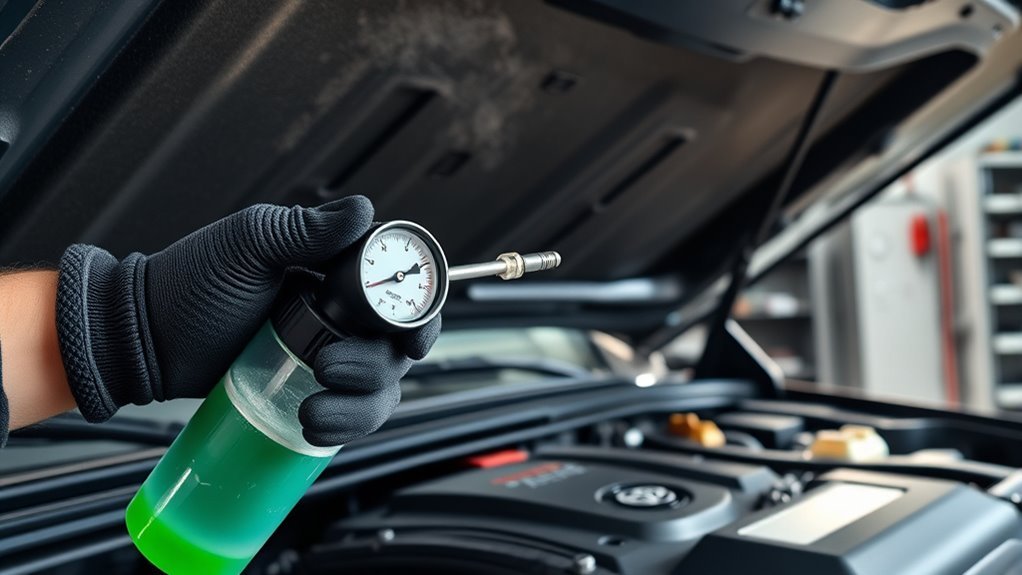
A cooling-system pressure test can expose leaks at hoses, clamps, the radiator, water pump, pressure cap, reservoir, and heater circuit. Test only with the equipment, pressure limit, connection point, and procedure specified for the vehicle and cooling circuit. Record the starting pressure, pressure loss, and any visible leak instead of replacing parts from residue alone.
Persistent white exhaust smoke after warm-up, milky or frothy oil, unexplained coolant loss, rough running, repeated bubbling, or pressure building quickly from a cold start can support an internal-leak diagnosis. Fel-Pro’s head-gasket guidance lists overheating, coolant loss, white smoke, bubbling, contaminated oil, and rough running among warning signs, but these symptoms do not identify the exact failed component without testing.
| Check | What the result can show |
|---|---|
| Cooling-system pressure test | An external leak or pressure loss that needs further tracing |
| Combustion-gas test | Combustion gases present in the cooling system |
| Compression or leak-down test | A cylinder-sealing problem and the cylinder involved |
| Oil and coolant inspection | Cross-contamination that supports internal-leak testing |
A brief white vapor cloud on a cold morning can be normal condensation. Persistent white smoke after warm-up, especially with coolant loss or rough running, needs prompt diagnosis. Ask the shop to distinguish a head-gasket leak from a damaged cylinder head, engine block, or another source before approving major engine work.
[Products Worth Considering]
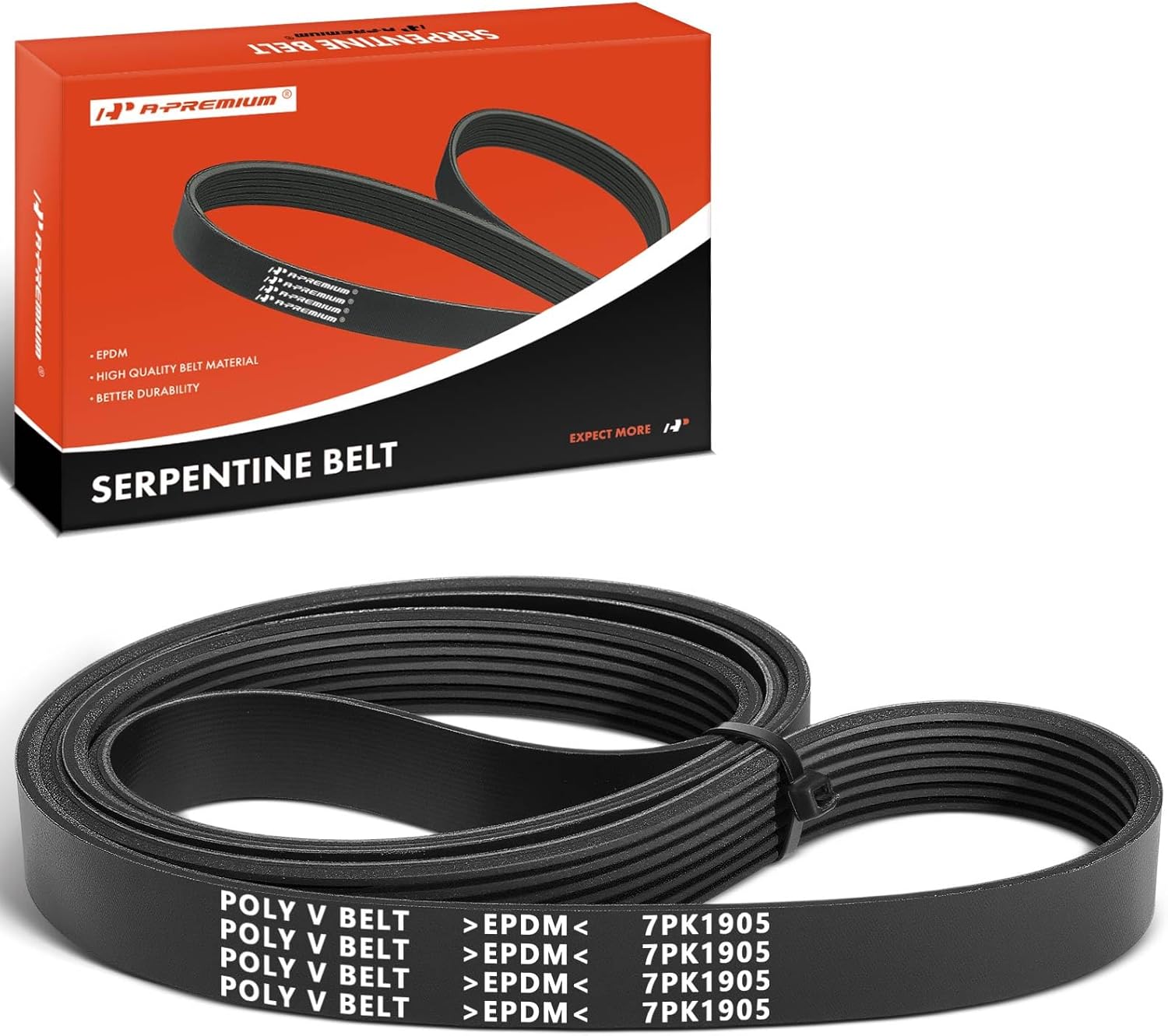
This A-Premium serpentine belt is engineered for select Toyota, Scion, and Pontiac vehicles with the L4 2.4L gas engine, delivering dependable air conditioning drive performance. Made with durable EPDM and precision dimensions, it helps resist cracking, reduce noise, and maintain stable tension for smooth operation. It's designed for straightforward installation and backed by a one-year unlimited-mileage guarantee for added confidence.

This precision straight edge is designed for accurate engine block and cylinder head inspections, helping machinists and mechanics check flatness with confidence. Made from thick cold rolled steel and finished with a protective powder coat, it offers durability, rigidity, and long-term reliability in demanding shop environments. A reusable edge cover and hang hole add convenience for storage and care.

This professional water pump kit is designed as a direct OE replacement for select Toyota and Lexus 3.5L V6 vehicles, helping restore reliable engine cooling performance. Built to strict quality standards and tested for leak-free operation, it includes the necessary gasket for easier installation and a secure fit. It offers a practical upgrade for drivers seeking dependable cooling system maintenance and long-lasting performance.
Repair Priorities: Start With Simple Fixes Before Major Parts
Use test results to move from low-cost external faults to circulation problems and then to internal engine testing. Do not replace several cooling-system parts at once unless inspection has confirmed that each one failed.
Model-year note: Tundra engines, fan systems, fill points, coolant circuits, thermostat procedures, and warning displays vary by generation and powertrain. Check the owner’s manual and repair information for the exact truck before ordering parts or bleeding the system.
Simple Troubleshooting Steps You Can Try First
- Write down the exact warning message and whether the gauge rose gradually or suddenly.
- After complete cooldown, check the reservoir level and inspect the ground, hoses, clamps, radiator, and pump area for leaks.
- Inspect coolant condition for rust, sludge, oil, debris, or signs of incompatible coolant mixing.
- With the hood open only when safe, observe from a distance whether the applicable fan system operates. Never reach near a fan, belt, or pulley.
- Schedule a cooling-system pressure test and scan-data check if the leak or temperature pattern is not obvious.
Record outside temperature, vehicle speed, towing or cargo load, air-conditioning use, recent cooling-system work, and how quickly the warning returns. Compare the event with the Toyota Tundra maintenance schedule so overdue coolant or belt inspection is not missed.
When to Replace Cooling System Parts
Replace a part when inspection or testing identifies a failure. A leaking hose, damaged cap seal, failed fan circuit, slipping belt, out-of-spec thermostat, restricted radiator, or leaking or noisy water pump each has a different confirmation step. Replacing parts in sequence without test results can hide the original fault and add air or new leaks.
| Priority | Action |
|---|---|
| 1 | Confirm the warning, cold coolant level, leaks, cap, hoses, clamps, belts where applicable, and airflow |
| 2 | Test fan operation, thermostat behavior, sensor data, and coolant bleeding |
| 3 | Test radiator flow, water-pump condition, and heater-circuit flow |
| 4 | Test for combustion gases, cylinder leakage, or internal engine damage |
What to Try at Home vs. When to Call a Mechanic
At home, limit the inspection to a fully cooled truck parked safely on level ground. You can record the warning, check the reservoir level, inspect visible hoses and clamps, look for coolant residue, and clear loose debris from accessible areas of the cooling stack without bending fins. Stop if the procedure requires opening a hot system, removing parts, working near moving fans, or crawling under an unsupported truck.
| Reasonable cold-engine checks | Call a mechanic or arrange a tow |
|---|---|
| Read the exact warning and record when it appears | Steam, boiling coolant, or a warning that returns after cooldown |
| Check reservoir level and visible coolant condition | Coolant loss with no visible source |
| Inspect visible hoses, clamps, fins, belts where applicable, and residue | Persistent white smoke, milky oil, rough running, or repeated bubbling |
| Note idle, highway, towing, and post-service patterns | Pressure testing, bleeding, electrical diagnosis, or part removal is required |
After a severe overheat, arrange an inspection before towing, hauling, climbing long grades, or resuming normal use, even if the warning disappears after cooldown. A return to normal temperature does not prove that the leak, airflow fault, circulation problem, or secondary engine damage is gone.
Coolant safety: Keep new and used coolant away from children and pets, clean spills immediately, and store drained coolant in a sealed, labeled container for proper recycling or disposal.
What to Tell Your Mechanic for Faster Diagnosis
Give the shop the model year, engine or powertrain, mileage, exact warning message, and the conditions that trigger it. State whether the temperature rises at idle, in traffic, at highway speed, while towing, on grades, with the air conditioning on, or immediately after a cold start.
List recent coolant top-offs, flushes, radiator work, hose repairs, thermostat replacement, water-pump replacement, collision damage, or electrical work. Include outside temperature, trailer or cargo load, grade, vehicle speed, how long the engine had run, whether cabin heat changed, and whether the coolant level falls between cold checks.
Report steam, smells, visible leaks, white smoke, rough running, bubbling, milky oil, warning lights, and any stored diagnostic codes. Ask for the test results, not only the proposed part, including cold and hot scan data, pressure-test results, fan command and operation, thermostat behavior, radiator temperature pattern, pump condition, and combustion-gas or leak-down results when internal leakage is suspected.
Frequently Asked Questions
What are common causes of overheating on a Toyota Tundra?
Common causes include low coolant, external leaks, trapped air, a stuck thermostat, poor radiator airflow, a restricted radiator, a weak pressure cap, a failing water pump, an applicable belt-drive problem, or an internal engine leak. Start with the coolant level and visible leaks after the engine is fully cool, then confirm the suspected part with a test.
Can you drive a Toyota Tundra while it is overheating?
No. If the engine-coolant temperature stays high, a warning appears, steam rises, or coolant boils, pull over as soon as it is safe, turn off the air conditioning, shut the engine off, and let it cool. Continued driving can turn a minor cooling-system problem into major engine damage.
Why does a Tundra overheat only at highway speed?
Highway or towing overheating can point to low coolant, trapped air, restricted radiator flow, a weak water pump, a thermostat problem, or heat load that exposes a marginal cooling system. Record the speed, trailer or cargo load, outside temperature, grade, and warning shown, then have coolant flow and system pressure tested.
Why does a Tundra overheat at idle but cool down while driving?
That pattern often points to poor airflow at low speed. Check for blocked radiator or condenser fins and have the fan clutch or electric-fan circuit tested for the truck’s model year and engine. Low coolant can produce the same pattern, so check the cold level first.
Why does a Tundra overheat after a coolant change?
Overheating after service commonly points to a low final fill, trapped air, an incorrect bleeding procedure, a loose clamp, a leak, or incompatible coolant. Let the engine cool, recheck the correct reservoir, and follow the exact model-year and cooling-circuit refill and bleeding procedure in the owner’s or repair manual.
What coolant should you use in a Toyota Tundra?
Use the coolant specification in the owner’s manual for the exact model year, engine, cooling circuit, and market. Do not select coolant by color alone, and do not add water to a product labeled premixed. If the existing coolant is unknown or contaminated, ask a Toyota dealer or qualified shop before mixing products.
Does white smoke mean a Tundra has a bad head gasket?
Persistent white exhaust smoke after warm-up can mean coolant is entering a combustion chamber, but it does not identify the failed part by itself. A head gasket, cylinder head, or engine block fault can cause it. Cold-start vapor can be normal condensation; white smoke with coolant loss, rough running, or repeated overheating needs prompt testing.
What should you do first when a Tundra overheats?
Pull over safely, turn off the air conditioning, shut the engine off, and wait for the system to cool completely. Do not open a hot radiator or pressurized reservoir cap. After cooling, check the correct reservoir level, visible leaks, damaged hoses, blocked fins, and the exact warning message.
Why is coolant bubbling in the overflow tank?
Bubbling can result from trapped air, boiling coolant, a weak cap, low coolant, or combustion gases entering the cooling system. It is not proof of a head-gasket failure by itself. Repeated bubbling with coolant loss, white smoke, rough running, or pressure building soon after a cold start warrants professional testing.
How do you know if the thermostat is stuck?
A thermostat that stays closed can cause a fast temperature rise after warm-up and poor radiator circulation. A thermostat that stays open usually causes slow warm-up rather than overheating. Confirm operation with scan data, controlled temperature testing, or service-manual diagnosis instead of touching hot hoses.
Can a bad coolant-temperature sensor make a Tundra look like it is overheating?
Yes. A failed engine-coolant-temperature sensor, connector, or circuit can produce an implausible reading or warning, especially immediately after a cold start. Treat the warning as real until a scan tool compares coolant-temperature data with ambient or measured engine temperature and checks stored diagnostic codes.
Should you turn the heater on when a Tundra overheats?
Turning the cabin heater to maximum may move a small amount of heat away from the engine, but it is not a repair. Pull over safely and shut the engine off. Do not continue toward your destination; use the heater only during the few moments needed to reach the nearest safe shoulder or parking area.
Vehicle Safety Disclaimer: This article is for informational purposes only and does not replace professional vehicle diagnosis or repair. Always use the Toyota owner’s manual for the exact model year and consult a qualified mechanic before driving, testing, or repairing an overheating vehicle.
Conclusion
A Toyota Tundra that overheats needs a safe stop and a test-based diagnosis. Let the engine cool completely, identify the exact warning and cooling circuit, and begin with coolant level, visible leaks, hoses, airflow, applicable belt drives, and the pressure cap. Use the driving pattern to choose the next test for the fan system, thermostat, sensor data, radiator flow, water pump, or trapped air. Do not keep driving through a high-temperature warning. Arrange a tow when overheating repeats or appears with steam, persistent white smoke, milky oil, rough running, or unexplained coolant loss.
References
- How Often to Change Engine Coolant, Toyota, accessed July 31, 2026
- 2026 Tundra Manuals and Warranties, Toyota, accessed July 31, 2026
- Absolute Powerhouse: Next-Generation 2022 Toyota Tundra, Toyota USA Newsroom, accessed July 31, 2026
- Cracked Head vs. Blown Head Gasket, Fel-Pro, accessed July 31, 2026


[…] unusually cool can produce weak cabin heat. If the truck overheats, stop driving and follow the Toyota Tundra overheating guide or obtain professional […]
[…] Stop towing if the temperature rises again after a cool-down or after you reduce load. Also stop for coolant leaks, steam, repeated coolant loss, a slipping transmission, harsh shifting, or a repeat high-transmission-temperature warning. Use roadside help or a repair shop instead of trying to finish the trip under heavy load. For non-towing diagnosis, see the site’s Toyota Tundra overheating causes and fixes guide. […]