
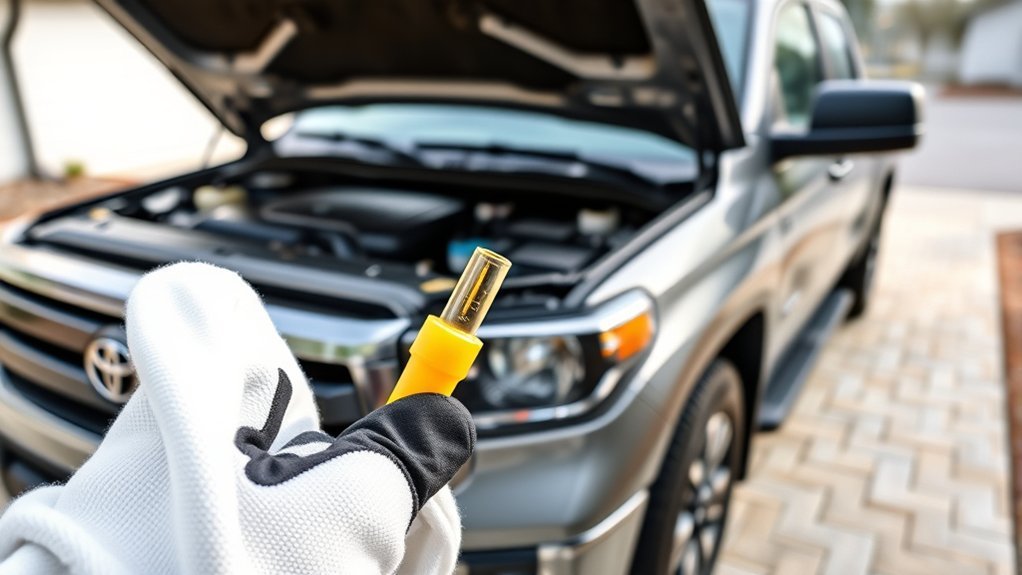
Low oil can damage your Toyota Tundra long before a warning light appears. You can avoid that risk with a quick dipstick check on level ground. This guide shows you when to check the oil, how to read the dipstick, how much oil to add, and what signs mean your truck needs attention.
What’s in This Article
- Quick Answer: How to Check Tundra Engine Oil
- When to Check Oil on a Toyota Tundra
- Tools to Check Tundra Oil (Dipstick, Funnel, SAE 0W-20)
- How to Prepare Your Tundra for an Accurate Oil Check
- How to Check Oil With the Dipstick
- What the Dipstick Marks Mean (Dots, Quarts, Settling Time)
- How Much Oil to Add and How to Avoid Overfilling
- Troubleshooting Common Issues (Hard-to-Find Dipstick, Inconsistent Readings, Leaks)
- Clean-Up, Safe Oil Disposal, and Logging Checks
- Why Oil Checks Matter for the 2013 Tundra 5.7L (Signs of Trouble)
- Frequently Asked Questions
- Conclusion
Quick Answer: How to Check Tundra Engine Oil
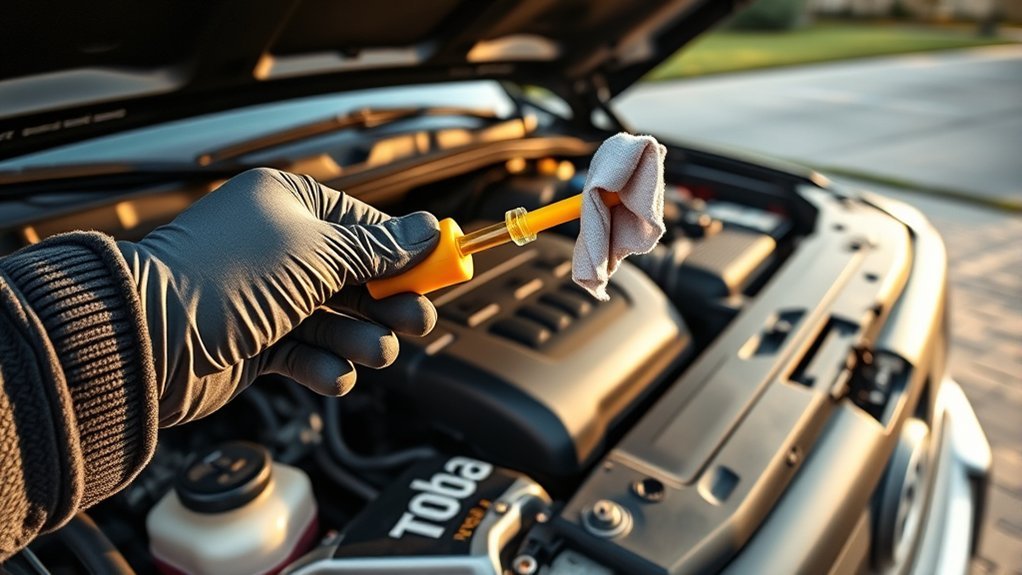
Park your Toyota Tundra on level ground, run the engine for a few minutes, then shut it off. Wait a few minutes so the oil can drain back into the pan. Pull the brightly colored engine oil dipstick, wipe it clean, reinsert it fully, then pull it out again. The oil level should sit between the two marks.
If the level sits below the lower mark, add SAE 0W-20 oil in small amounts unless your oil cap or owner’s manual lists a different grade. Recheck after each small pour so you don’t overfill the engine. Keep a clean rag, a funnel, and a spare quart in your truck for easier checks.
Key Takeaways
- Check your Tundra’s engine oil at least once a month and before long trips.
- Use level ground, a warm engine, and a short settling time for a better reading.
- Add oil slowly, then recheck the dipstick before adding more.
- Confirm the correct oil grade on the oil cap or in your owner’s manual.
- Inspect for leaks if the oil level drops between normal checks.
When to Check Oil on a Toyota Tundra
Check your Tundra’s engine oil at least once a month and before any long trip. Oil level can drop through normal use, leaks, or engine wear. A quick check helps you catch problems before they become expensive.
Check again after every oil change to set a clear baseline. This makes it easier to spot abnormal oil use later. You should also check more often after towing, hauling, off-road driving, or long highway trips.
Temperature changes can affect how oil flows and reads on the dipstick. In cold weather, warm the engine briefly before checking. In hot weather, wait a few minutes after shutdown so the oil can settle safely.
| When to Check | Why It Matters |
|---|---|
| Monthly | Tracks oil level and normal oil use |
| Before long trips | Reduces the risk of low oil on the road |
| After oil changes | Sets a baseline for future checks |
| After towing or hauling | Checks oil after heavy engine load |
Tools to Check Tundra Oil (Dipstick, Funnel, SAE 0W-20)
You only need a few basic items to check and top off your Tundra’s engine oil. Start with a clean rag or lint-free cloth. You’ll use it to wipe the dipstick before taking the final reading.
Keep a funnel nearby if you need to add oil. A funnel helps keep oil off the engine and out of nearby parts. It also reduces the chance of dirt entering the oil fill opening.
Use the oil grade listed on your oil fill cap or in the owner’s manual. Many 5.7L Tundras use SAE 0W-20, but the correct grade can vary by year, engine, and market. Don’t rely on memory when the cap gives you a quick check point.
Note: If your oil cap and owner’s manual disagree, follow the owner’s manual or ask a Toyota service professional.
[Products Worth Considering]

Castrol EDGE 0W-20 advanced full synthetic motor oil is engineered for drivers seeking strong wear protection, excellent viscosity control, and thermal stability. It delivers superior performance in critical engine areas, including fuel economy, high-temperature protection, sludge control, and wear defense. Designed for extended oil-change intervals, it helps keep modern engines running smoothly under demanding conditions.

These adjustable oil filter pliers are designed to help remove engine filters, conduit, and fittings with better reach and control in tight spaces. The bent head design improves access, while soft nonslip grips add leverage and comfort during use. Built with high carbon steel and a Permalock fastener, they offer dependable strength and long-lasting performance.

MAXLONE Car Spray with Triphene is a waterless detailer that makes quick cleaning and shine simple with just spray and wipe use. It helps repel water, dirt, and grime while adding a deep glossy finish and durable protection for paint, glass, plastic, and metal. Designed for versatile use and easy application, it offers long-lasting results with a concentrated formula that is eco-friendly and made for home or professional-style detailing.
How to Prepare Your Tundra for an Accurate Oil Check
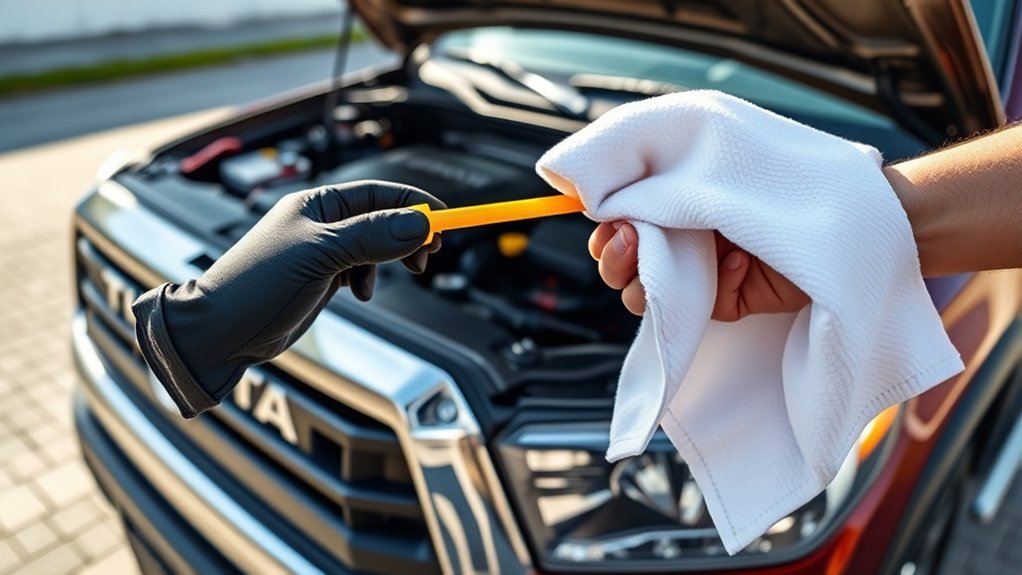
Park your Tundra on level ground before checking the dipstick. A slope can shift oil in the pan and give you a false reading. Set the parking brake so the truck stays stable while you work.
Run the engine for a few minutes, then shut it off. Wait several minutes so the oil can drain back into the oil pan. This short pause gives you a cleaner and more useful reading.
Open the hood and find the brightly colored dipstick handle. Gather your rag, funnel, and the correct oil before you start. That way, you can check and top off without stopping midway.
How to Check Oil With the Dipstick
Use the dipstick in a clear order so you don’t misread the level. The first pull often shows smeared oil. The second pull gives the reading you should trust.
- Park the truck on level ground and set the parking brake.
- Warm the engine for a few minutes, then shut it off.
- Wait several minutes so the oil can settle in the pan.
- Pull the dipstick and wipe it clean with a lint-free cloth.
- Reinsert the dipstick fully so it seats all the way down.
- Pull it out again and read the oil level between the marks.
- Add oil slowly if the level sits below the lower mark.
- Recheck the level after each small pour before adding more.
| Action | Tip |
|---|---|
| Locate dipstick | Look for a bright handle near the engine |
| Clean dipstick | Use a lint-free cloth or clean rag |
| Reinsert fully | Seat it all the way for a better reading |
| Add oil gradually | Pour a small amount and recheck |
| Replace cap | Tighten the oil fill cap when finished |
[Products Worth Considering]

This spill-proof radiator coolant filling funnel kit helps you refill cooling systems cleanly while reducing trapped air pockets that can affect heater and engine performance. It includes a 5-inch extension bar and 45-degree elbow for easier access under shrouds or at awkward angles. Color-matched caps for dedicated adapters make setup simpler and more organized.

The Drymate XL Oil Spill Mat is designed to trap and contain messy liquid leaks while protecting your garage floor from stains and damage. Its absorbent surface wicks away moisture, and the waterproof, slip-resistant backing helps keep motor oil, brake fluid, gasoline, and coolant from soaking through. Reusable, durable, and easy to clean, it offers a practical long-term solution for garage and shop spill protection.

Verified Fitment: Compatible with 2009-2023 Dodge Challenger, Dodge Charger, and Chrysler 300 models equipped with a 5.7L V8 HEMI engine. Not for 3.6L or 6.4L engines. Confirm the vehicle year, engine, original part number, and dipstick length before ordering.
What the Dipstick Marks Mean (Dots, Quarts, Settling Time)
The two dipstick marks show the safe operating range. Oil at the lower mark means the engine needs oil soon. Oil near the upper mark means the level is full enough.
On many engines, the space between the lower and upper marks equals about one quart. Treat that as a guide, not an exact measuring tool. Add small amounts because a half quart can move the reading more than you expect.
- Check after settling: Wait a few minutes after shutdown so oil drains into the pan.
- Add in small pours: Use about a quarter to half quart at a time.
- Watch repeat drops: Falling levels can point to leaks or oil burning.
How Much Oil to Add and How to Avoid Overfilling
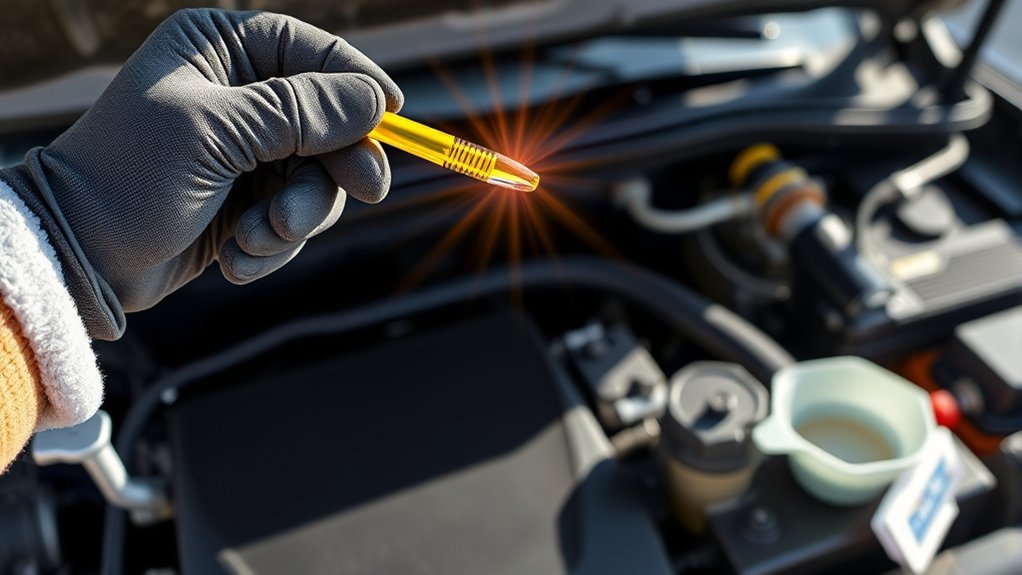
Add oil slowly when the dipstick reads low. Start with about one-quarter to one-half quart. Wait a few minutes, then recheck the dipstick before adding more.
Stop when the oil sits between the lower and upper marks. You don’t need to fill past the upper mark. Too much oil can foam, raise crankcase pressure, and lead to leaks or poor lubrication.
Warning: Don’t drive with oil far above the upper mark, because overfill can harm lubrication and seals.
Be careful with oil additives. Use only products that Toyota approves or that a trusted mechanic recommends for your engine. Some additives can change oil behavior and hide symptoms without fixing the cause.
[Products Worth Considering]


[Vehicle Fitment]: Compatible with Ford F-150 2011-2014 V8 5.0L, fit for Mustang 2011-2014 V8 5.0L ----- with Ford Coyote 5.0-Liter Gasoline V8 Engine
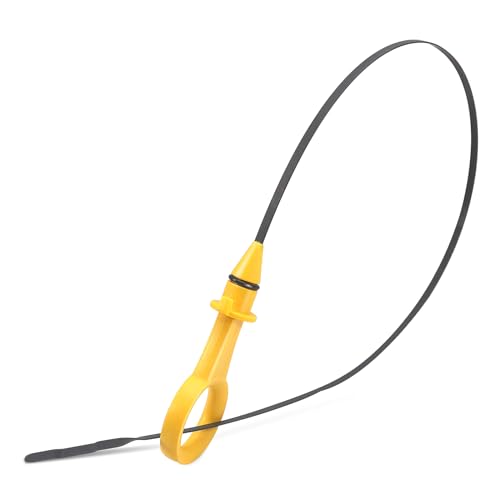
Audi Fitment: Compatible with 2009-2013 A3 and A3 Quattro; 2009-2016 A4 and A4 Quattro; 2010-2017 A5 Quattro; 2015-2018 Q3 and Q3 Quattro; and 2011-2017 Q5. For listed 2.0L turbo 4-cylinder applications only. Confirm year, model, engine and reference number before ordering.
Troubleshooting Common Issues (Hard-to-Find Dipstick, Inconsistent Readings, Leaks)
If you can’t find the dipstick, check your owner’s manual for the exact location. Look along the front or side of the engine bay for a bright handle. Don’t pull other tubes or caps if you’re unsure.
If your readings change each time, repeat the basic setup. Park on level ground, wait a few minutes after shutdown, and seat the dipstick fully. A half-inserted dipstick can show a false low or high level.
- Check the setup: Level ground and full dipstick insertion help prevent bad readings.
- Inspect for leaks: Look around the oil filter, drain plug, valve covers, and under the truck.
- Watch ground spots: Fresh oil marks under the truck need prompt inspection.
- Check oil color: Milky oil, fuel smell, or heavy grit can point to a bigger issue.
Clean-Up, Safe Oil Disposal, and Logging Checks
Wipe up oil drips right away with absorbent pads or rags. Oil on hot engine parts can create smells and smoke. Wear rubber gloves if you may touch used oil.
If you collect used oil, keep it in a sealed and labeled container. Take used oil and oil-soaked materials to a local recycling center or hazardous-waste site. Never pour oil onto soil, into drains, or into storm gutters.
Keep a simple log of each oil check. Write down the date, mileage, dipstick level, oil added, and any odd color or smell. These notes help you spot leaks or oil burning early.
Why Oil Checks Matter for the 2013 Tundra 5.7L (Signs of Trouble)
Oil checks matter because low oil reduces lubrication in your 5.7L engine. Poor lubrication can raise heat, increase wear, and damage moving parts. A quick dipstick check can catch low oil before the engine makes noise.
If your 2013 Tundra 5.7L loses oil between checks, don’t ignore it. The engine may have an external leak or may burn oil internally. Track each top-off so you can explain the pattern to a mechanic.
Low Oil Symptoms
Knocking, ticking, or rattling can mean the engine lacks enough oil for safe lubrication. You may also see the oil pressure warning light. If that light comes on, stop driving when it’s safe and check the oil level.
- Listen for noise: Persistent knocking or ticking needs a prompt oil check.
- Watch warning lights: Treat an oil pressure light as urgent.
- Check performance: Low oil can come with rough running or reduced response.
Abnormal Consumption
A falling oil level between checks can point to abnormal consumption. Blue exhaust smoke, frequent top-offs, or oil smell can mean the engine burns oil. Worn piston rings, valve seals, or gasket issues can cause these symptoms.
Don’t rely on additives as your main fix. They may reduce symptoms for a short time, but they won’t repair worn parts. Check the oil often, record the loss, and schedule an inspection if the pattern continues.
Pro tip: Take a photo of the dipstick reading each month so you can compare oil level trends.
Frequently Asked Questions
Can I Check Oil Immediately After Driving a Short Distance?
You can check it after a short drive, but don’t read it the second you shut the engine off. Wait a few minutes so the oil can drain back into the pan. This gives you a more accurate dipstick reading.
How Often Should Oil Be Professionally Changed Versus DIY Top-Ups?
Follow the oil change interval in your owner’s manual or maintenance guide. Many drivers change oil every 5,000 to 10,000 miles, depending on use and oil type. Top-offs help between services, but they don’t replace a full oil change.
Does Synthetic Oil Change the Dipstick Reading Procedure?
No, synthetic oil does not change the dipstick process. You still park level, wait briefly after shutdown, wipe the dipstick, reinsert it, and read it again. The oil type does not change those steps.
Can Cold Weather Affect the Oil Level Reading Accuracy?
Cold weather can thicken oil and make the reading less clear. Warm the engine briefly, shut it off, and wait several minutes before checking. This helps the oil flow back into the pan.
Is It Safe to Drive With the Oil Slightly Below the Full Mark?
Yes, you can usually drive if the oil sits between the lower and upper marks. You don’t need to keep it exactly at full. Add oil soon if it sits at or below the lower mark.
Conclusion
Your Tundra’s dipstick gives you one of the fastest ways to protect the engine. Check the oil monthly, before long trips, and after heavy use like towing or hauling. Add the correct oil in small amounts, then recheck before pouring more. If the level keeps dropping, inspect for leaks and get the truck checked before damage grows.
References
- Toyota Owner’s Manuals and Warranty Guides — Toyota Motor Sales, U.S.A.
- Managing, Reusing, and Recycling Used Oil — U.S. Environmental Protection Agency
- Motor Oil — U.S. Department of Energy


[…] oil level or pressure, degraded oil, worn internal parts, bad fuel, lean mixtures, ignition faults, exhaust […]