Last updated: July 31, 2026 · Repair-cost data, diagnostic guidance, lift safety, and source links rechecked
A Toyota Tundra wheel bearing noise usually sounds like a steady hum, growl, rumble, or grind that rises with road speed. It may get louder or quieter during a gentle turn as vehicle weight shifts from one side to the other. No wheel play does not rule out a bad bearing because a sealed bearing can become noisy before it becomes loose.
Confirm the diagnosis in a clear order: compare the noise at different speeds, note how it reacts to gentle steering, inspect the tires and brakes, and then perform wheel-play and hand-spin checks only after the truck is safely supported. Tires, brakes, CV axles, loose lug nuts, suspension wear, and drivetrain faults can create similar sounds.
Quick Answer
A bad Toyota Tundra wheel bearing often makes a humming, rumbling, growling, or grinding sound that follows vehicle speed and may change during gentle turns. A noisy sealed bearing may still have no detectable wheel play. Confirm it with tire and brake checks, a safely supported wheel-play test, a hand-spin comparison, and professional inspection when the results are unclear.
Key Takeaways
- Wheel bearing noise usually follows vehicle speed, not engine RPM.
- A noise that changes during gentle left-right steering can point toward a loaded wheel bearing, but it is not a final diagnosis by itself.
- No wheel play does not clear a sealed bearing that is humming, growling, or rough.
- Always use wheel chocks, the correct lift point, and jack stands before touching or spinning a raised wheel.
- Bad tires, brake drag, CV joints, loose lug nuts, and differential noise can mimic a bad bearing.
- Stop driving and arrange inspection or towing if you feel severe wobble, smell burning, see smoke, hear harsh grinding, or find obvious wheel looseness.
At a Glance
| Time Required | 20–45 minutes for basic checks |
| Difficulty | Moderate; diagnosis is DIY-friendly, but replacement may require shop tools |
| Tools Needed | Wheel chocks, floor jack, jack stands, gloves, flashlight, torque wrench, and an optional non-contact infrared thermometer |
| Typical Cost | $475–$804 for the national RepairPal wheel-bearing estimate, before taxes, fees, location adjustments, and related repairs; model-year estimates can differ |
Tundra-Specific Check: Before ordering parts or comparing quotes, record the truck’s model year, front or rear axle, 2WD or 4WD configuration, tire size, wheel offset, and any recent hub, axle, brake, wheel, or suspension work. The part design, required procedure, and labor quote can differ by axle and generation.
Quick Diagnostic Checklist for Tundra Wheel-Bearing Noise
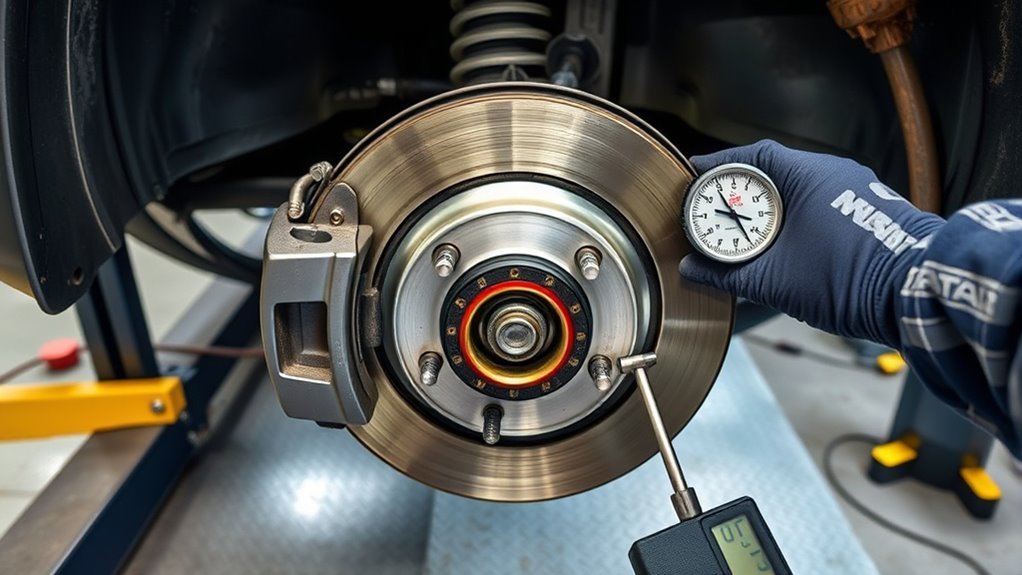
Use this order before buying a hub assembly or bearing:
- Road test first. Drive on a smooth, quiet road and listen for a hum, rumble, growl, or grind that rises with vehicle speed.
- Steer gently left and right. If the sound changes when the truck’s weight shifts, a wheel bearing becomes more likely.
- Rule out brakes. Brake noise often changes when the pedal is applied; bearing noise commonly remains while the pedal is released.
- Inspect tires. Cupped, chopped, uneven, or aggressive tires can roar like a bad bearing.
- Lift safely. Chock the wheels, use the correct lift point, and support the truck with jack stands before touching the wheel.
- Check play. Hold the tire at 12 and 6 o’clock and rock it. Then repeat at 3 and 9 o’clock.
- Spin and compare. Spin the suspect wheel from the outer tread and compare its sound and resistance with the matching wheel on the other side.
One clue is not proof. Confidence rises when several independent checks agree: speed-sensitive noise, a repeatable turning-load change, rough hand rotation, abnormal play after suspension faults are ruled out, or a technician isolating vibration at the hub. A tire rotation that moves the noise points away from the bearing.
Warning: Never put any part of your body under a Tundra supported only by a jack. Use wheel chocks and properly rated jack stands, and follow the lift points in the Toyota owner’s manual for your exact model year.
What Does a Bad Toyota Tundra Wheel Bearing Sound Like?
The most common Toyota Tundra wheel bearing symptoms are sound, vibration, heat, and looseness. You may not get all of them at once. A sealed hub bearing can be noisy long before you feel obvious wheel play.
Timken’s wheel-hub guidance lists humming, rumbling, growling, and load-sensitive grinding among possible bearing symptoms. It also cautions that tires, drivetrain parts, CV joints, brakes, suspension faults, alignment problems, and improper lug-nut torque can create similar symptoms.
Loud Humming, Rumbling, Growling, or Grinding
A worn wheel bearing often makes a steady sound from one corner of the truck. It may start as a low hum at neighborhood speed and turn into a louder growl on the highway. A harsher grind can mean more advanced bearing damage or another rotating part dragging.
- Noise rises and falls with vehicle speed.
- Noise usually does not follow engine RPM while parked.
- The noise often continues while coasting with the accelerator released because the wheels are still turning.
- Noise may feel like it comes through the floor, steering wheel, or seat.
Do not choose the replacement side only by where the sound seems loudest inside the cab. Wheel-end noise can travel through the frame, suspension, floor, and steering system. Compare the turning response and both sides physically.
Noise That Changes When Turning
Turning loads one side of the truck more than the other. If the sound gets louder during a gentle left turn, the right-side bearing is often suspect because that side is more heavily loaded. If it gets louder during a gentle right turn, the left-side bearing is often suspect. This is a clue, not a guarantee.
| Road-test clue | Often points to | Still check |
|---|---|---|
| Louder on gentle left turn | Right wheel bearing | Right tire, brake, hub, and suspension |
| Louder on gentle right turn | Left wheel bearing | Left tire, brake, hub, and suspension |
| No change while turning | Tire, drivetrain, or evenly loaded bearing noise | Tire wear, differential, brakes, and both hubs |
How Should You Road-Test Tundra Wheel-Bearing Noise?
A useful road test is calm, controlled, and repeatable. Choose a safe road with low traffic, consistent pavement, and enough room to compare speeds without abrupt steering or braking. Stop the test if the truck wobbles, wanders, grinds harshly, or feels unsafe.
Speed-Dependent Noise Changes
Wheel bearing noise normally follows wheel speed. The pitch or volume changes as the truck moves faster or slower. If the sound changes only when the engine revs while the truck is parked, look away from the wheel bearing and toward engine-driven accessories, exhaust shields, or other engine-area causes.
- Low speed: a faint hum, roughness, or growl may be present.
- Highway speed: the hum may become a clear drone or roar.
- Coasting with the accelerator released: bearing noise may continue because wheel speed remains.
- Braking: if the noise appears mainly or only while braking, inspect pads, rotors, calipers, shields, and debris first.
Noise When Turning
Use gentle steering inputs only. A quick swerve on a public road is unsafe and can also make tire noise harder to judge. If the sound changes with light left-right steering, record which direction made it louder and repeat the observation only when conditions remain safe.
| Condition | What it suggests |
|---|---|
| Hum increases during a turn | Loaded-side bearing, tire, or suspension issue |
| Hum decreases during a turn | The unloaded side may contain the noisy component |
| Clicking or popping on sharp turns | CV axle, outer CV joint, or excessive wheel-end play |
| Grinding mainly while braking | Brake pad, rotor, caliper, shield, or debris issue |
Load and Tire Effects
Towing, hauling, off-road impacts, larger tires, wider wheels, low tire pressure, and wheel-offset changes can add stress at the wheel end. They can also create or amplify tire noise that sounds like a bearing. Do not assume the bearing is bad only because the truck has a drone.
- Compare the sound unloaded versus loaded, but do not add cargo or a trailer solely for diagnosis.
- Inspect tires for cupping, feathering, chopped tread blocks, or uneven wear.
- Check tire pressures when cold and set them to the door-jamb placard unless a qualified tire professional has specified a different pressure for a modified load-and-tire setup.
- If noise changes after rotating tires, suspect tire wear before replacing a bearing.
Diagnostic Tip: If you are not sure whether the sound is tire roar or bearing hum, rotate the tires front-to-rear if the tire pattern and vehicle setup allow it. A noise that moves with a tire points away from the wheel bearing at its original corner.
Safety First: Before You Lift the Truck
Wheel bearing checks require the wheel to be off the ground, but a full-size pickup is heavy. Treat the lift setup as part of the diagnosis, not an afterthought.
- Park on firm, level ground.
- Set the parking brake unless the exact approved procedure requires a wheel to rotate and specifies otherwise.
- Chock the wheels that stay on the ground.
- Loosen lug nuts only if you plan to remove the wheel; do not remove them while the truck is on the ground.
- Use the lift points listed in the Toyota owner’s manual for your exact year.
- Lower the truck onto properly rated jack stands before touching, rocking, or spinning the wheel.
- Keep hands clear of pinch points, brake rotors, dust shields, suspension gaps, and hot parts.
Note: Toyota’s Tundra jack guidance warns against placing any part of the body beneath a vehicle supported only by the tire jack and says to use a jack stand when access beneath the vehicle is necessary. A tire-change jack is intended for emergency tire service, not routine diagnosis or repair.
Is It Wheel-Bearing Noise or Tire, Brake, CV, or Differential Noise?
Several problems can imitate a bad Tundra wheel bearing. Use the condition that triggers the sound, not the sound alone, to narrow it down.
| Sound or symptom | More likely cause | Quick check |
|---|---|---|
| Steady hum or growl that rises with speed | Wheel bearing or tire wear | Road test, tire rotation, lift-and-spin comparison |
| Squeal or grind mainly while braking | Brake pads, rotors, caliper, dust shield, or debris | Inspect pads, rotor faces, hardware, and backing plates |
| Clicking or popping on tight turns | CV axle or outer CV joint | Inspect CV boots and listen during controlled low-speed turns |
| Thump or vibration that changes by road surface | Tire wear, balance, or wheel damage | Inspect tread and rotate tires if the pattern allows it |
| Whine that changes with throttle load | Differential or drivetrain issue | Compare acceleration, deceleration, and accelerator-off coasting |
Also check the lug nuts. A loose wheel can create vibration, clicking, wobble, or brake-pulsation symptoms and can become dangerous quickly. Tighten lug nuts only to the correct torque specification for your exact Tundra year and wheel type.
How Do You Check a Tundra Wheel Bearing at Home?
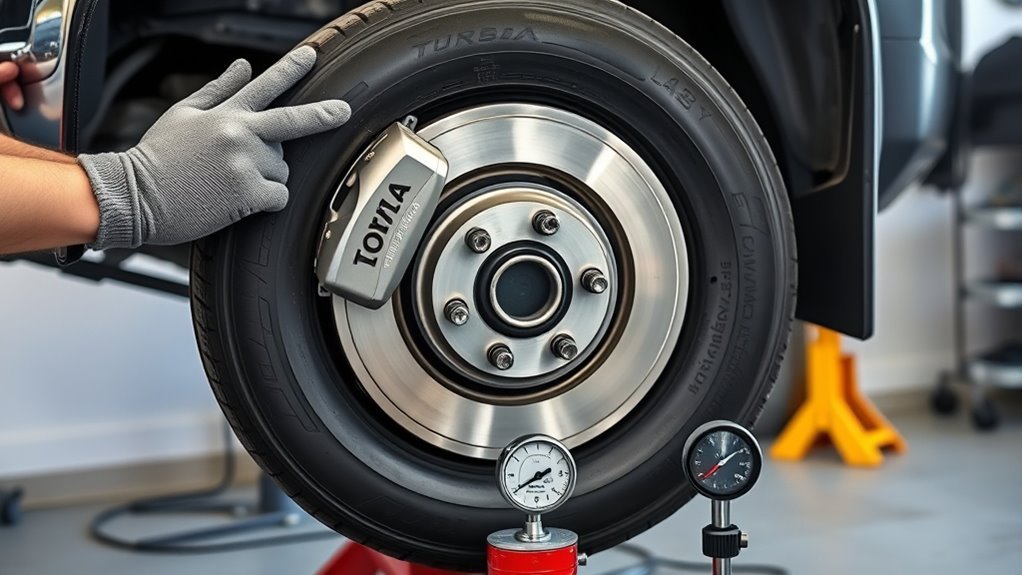
After the truck is safely supported, you can perform two basic checks: wheel play and spin feel. These checks do not replace a professional diagnosis, but they can reveal looseness, roughness, brake drag, or another wheel-end problem that needs prompt inspection.
[Products Worth Considering]

This click torque wrench delivers accurate, repeatable tightening for automotive and home repair tasks, helping prevent over-tightening and fastener damage. Its dual-range scale, knurled non-slip grip, and durable ratchet head make it easy to use, while the included extension bar and storage case add extra convenience.

The MaxxHaul Solid Rubber Wheel Chock 2-Pack provides dependable vehicle stabilization for cars, trucks, trailers, and RVs in garages, driveways, job sites, and campgrounds. Its solid rubber construction, non-slip traction surface, and built-in handle make placement easy while delivering long-lasting grip and all-weather durability for safer parking and storage.
Wheel Play and Wiggle
Grab the tire at 12 and 6 o’clock and rock it inward and outward. Then grab it at 3 and 9 o’clock and repeat. A little tire-sidewall flex is normal, but a clear clunk or visible movement at the hub is not.
- Play at 12 and 6: possible wheel bearing, ball joint, or suspension wear.
- Play at 3 and 9: possible wheel bearing, tie rod, steering, or suspension wear.
- No play but a loud hum: a sealed bearing can still be damaged, so continue the diagnosis.
- Clunk plus brake-pedal pulsation: inspect the hub, lug nuts, rotor runout, suspension joints, and caliper hardware.
Spin Test for Grinding
Spin the tire from its outer tread and listen near the wheel without placing your face, fingers, clothing, or tools near rotating or pinch-point areas. A healthy wheel should rotate smoothly without a rough, gritty, or grinding feel. Light pad contact can be normal, while a bent dust shield or dragging brake can imitate a rough bearing.
- Spin the tire slowly from the tread and listen.
- Compare the sound and resistance with the matching wheel on the opposite side.
- Keep hands away from the rotor, hub, dust shield, suspension gaps, and other pinch points while the wheel is moving.
- If the wheel feels rough, gritty, loose, or unusually resistant, schedule an inspection before continuing normal driving.
Heat Warning: Do not touch a rotor, caliper, hub, or wheel immediately after driving. Use a non-contact infrared thermometer if available and compare matching locations on both sides. A hotter corner can come from a bearing or a dragging brake, so heat alone does not identify the failed part.
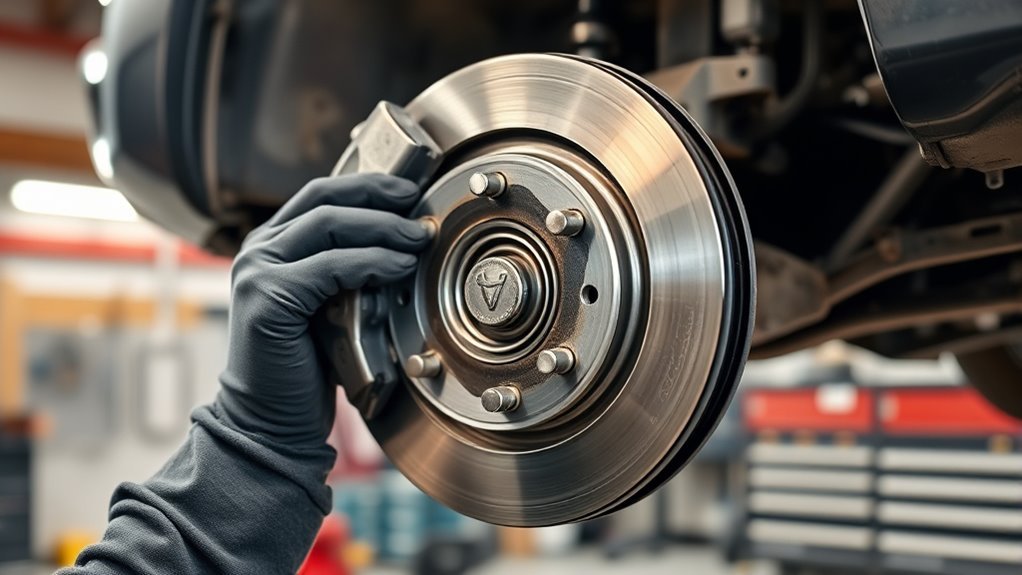
Inspecting Brakes, Rotors, and CV Boots: What to Look For
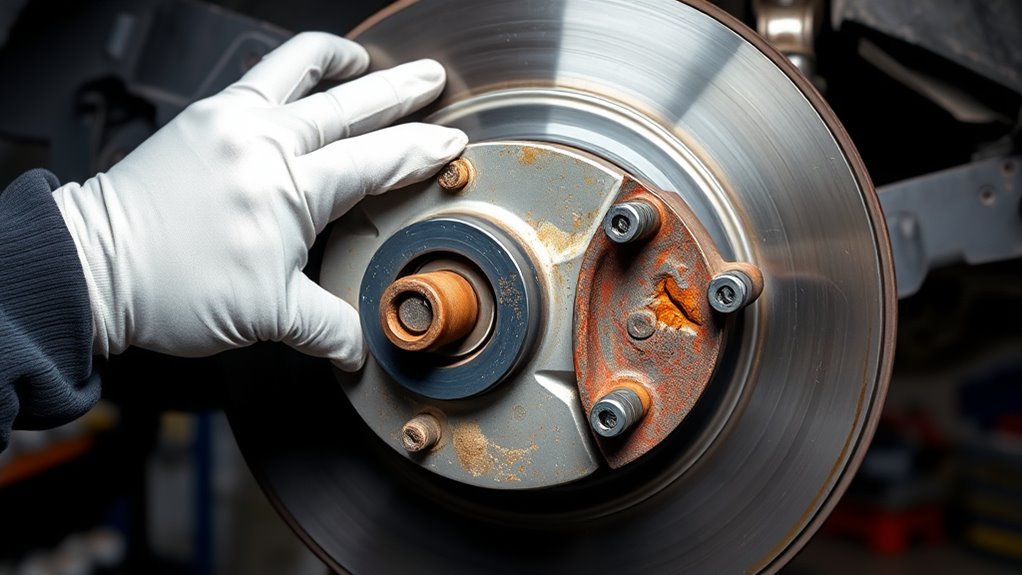
Because brake and CV problems can copy wheel bearing symptoms, inspect the visible parts while the wheel is safely raised or removed.
- Brake pads: look for uneven wear, metal-to-metal contact, broken hardware, or debris between the pad and rotor.
- Rotors: look for deep grooves, heat spots, heavy rust ridges, cracks, or a bent dust shield touching the rotor.
- Calipers: check for uneven pad wear, damaged hardware, or a wheel that does not spin as freely as the opposite side.
- CV boots: look for splits, grease spray, loose clamps, or clicking during tight low-speed turns.
- ABS wire and sensor area: inspect for damaged wiring, loose connectors, or warning lights after hub work or off-road impacts.
Can a Tundra Wheel Bearing Be Bad Without Play?
Yes. A sealed wheel bearing can develop raceway or rolling-element damage that produces humming, rumbling, growling, vibration, or heat before the assembly becomes loose enough to fail a wheel-play test. No movement at 12 and 6 o’clock therefore does not rule out a bearing problem.
Many wheel bearings are sealed assemblies, so you usually cannot clean, repack, or visually inspect the internal rollers, balls, races, and grease. Once a sealed bearing is confirmed to be noisy, rough, loose, leaking, or overheated, replacement is normally the practical repair.
| Visible or felt sign | What it can mean |
|---|---|
| Humming, rumbling, or growling | Bearing wear, tire noise, or another rotating driveline source |
| Noise changes with gentle turning | Load-sensitive hub, tire, or suspension issue |
| Rough feel during hand spin | Internal bearing damage, brake drag, or shield contact |
| Heat, burning smell, or smoke | Severe bearing or brake problem; stop driving |
| ABS, traction, or stability warning light | Possible wheel-speed sensor, hub, wiring, or related fault |
Warning: Do not keep driving a Tundra with a hot wheel, smoke, a burning smell, harsh grinding, or obvious wheel looseness. Severe wheel-bearing failure can damage nearby parts and may allow the wheel to wobble or separate.
Common Causes: Water, Impacts, Rims, Tires, and Load Stress
Wheel bearings can fail from wear, contamination, impact damage, overload, poor installation, or related wheel-end problems. Tundras that tow, haul, run larger tires, encounter mud and water, or take repeated off-road impacts may place more load on wheel-end components than a lightly used stock truck.
A sealed hub may remain tight even after internal damage starts. Noise that rises with speed, changes under steering load, or appears after an impact deserves inspection before it develops into looseness, heat, or secondary damage.
- Water and mud: can contaminate the internal grease if a seal or sealing surface is damaged.
- Impacts: potholes, curbs, crashes, or hard off-road hits can damage bearing surfaces even when no damage is visible outside.
- Oversized tires or aggressive offset: can increase leverage and loading at the hub and bearing.
- Heavy towing or hauling: adds load and heat, especially if tire pressure, wheel torque, or suspension condition is neglected.
- Poor installation: incorrect pressing, wrong fastener torque, contaminated mounting surfaces, damaged sensor wiring, or a low-quality part can shorten service life.
How Much Does Toyota Tundra Wheel Bearing Replacement Cost?
RepairPal’s Toyota Tundra wheel-bearing estimate, updated July 25, 2026, is $475–$804 before taxes, fees, location differences, and related repairs. Its model-year estimates vary, so use the national range as a planning figure rather than a guaranteed quote.
A dealer, independent shop, mobile mechanic, or DIY repair may be an option, but the right choice depends on your Tundra’s year, front or rear location, 2WD or 4WD setup, corrosion, and bearing design.
Ask whether a quote covers a bearing alone, a complete hub assembly, or a bearing-and-hub press operation. Those are different jobs and should not be compared by price alone. Some wheel ends use assemblies that unbolt from the steering knuckle or axle area. Other applications require a press and special support tools. Applying force through the wrong bearing race or using incorrect fastener torque can damage a new part before the truck returns to service.
- Toyota Genuine parts: provide a factory-fit reference for the exact truck.
- Premium aftermarket parts: may also be suitable when catalog fitment, sensor compatibility, warranty, and supplier quality are confirmed.
- Unknown economy parts: may create repeat noise, ABS faults, fit problems, or early failure that erases the initial saving.
- Pair replacement: is not automatically required. Inspect both sides and replace both only when both are worn, contaminated, noisy, damaged, or included in a justified repair plan.
Note: After hub or wheel work, lug nuts should be tightened in the proper pattern to the Toyota specification for the exact model year and wheel. Guessing with an impact wrench can create improper clamping, wheel damage, brake symptoms, or an unsafe condition.
When Should You Stop Driving With Tundra Wheel-Bearing Noise?
Stop driving and arrange inspection or towing if the noise becomes a loud grind, the wheel feels loose, the truck wanders, the steering wheel shakes badly, one corner is abnormally hot, smoke appears, a burning smell develops, or ABS and traction-control warnings appear with wheel-end noise. A significantly worn bearing should not remain in normal service.
A faint new hum with no looseness, heat, warning lights, steering change, or grinding still needs prompt inspection. Until it is checked, avoid towing, heavy payloads, high speed, rough roads, and unnecessary driving.
When you call a shop, give a short, useful description:
- “The noise is a hum/growl/grind from the front/rear left/right area.”
- “It starts around ___ mph and gets louder as speed increases.”
- “It gets louder when turning left/right.”
- “I checked the wheel and found play/found no play at 12 and 6 o’clock.”
- “The wheel felt rough/hot/normal compared with the other side.”
- “Please inspect the hub bearing, brakes, tire wear, CV axle, lug torque, suspension joints, and wheel-speed sensor before replacing parts.”
Questions to Ask Before Authorizing Repair
Before approving the job, ask the shop a few direct questions:
- Which wheel bearing tested bad, and what tests confirmed it?
- Is the quote for a bearing, a complete hub assembly, or a pressed bearing-and-hub job?
- Will the quote include parts, labor, taxes, shop supplies, alignment if required, and related repairs?
- Are you using a Toyota Genuine, premium aftermarket, or economy part?
- Will the ABS wheel-speed sensor, wiring, brakes, axle, and suspension joints be inspected during the repair?
- Will lug nuts and axle or hub fasteners be torqued to the Toyota service specification?
- Did you check my VIN for a relevant recall or service campaign before I pay out of pocket?
Use Toyota’s owner resources and the NHTSA recalls and investigations search for vehicle-specific checks. Do not assume that a recall applies only because another Tundra had a similar noise.
Frequently Asked Questions
How long do Toyota Tundra wheel bearings typically last?
RepairPal states that sealed wheel bearings can last 100,000 miles or more, but that is not a guaranteed lifespan or scheduled replacement interval. Heavy towing, larger tires, impact damage, water intrusion, poor installation, corrosion, and low-quality parts can shorten service life.
Can I drive with Toyota Tundra wheel bearing noise?
A faint new hum still needs prompt inspection, and you should avoid towing, heavy loads, high speed, and unnecessary driving until the cause is known. Stop driving and arrange towing if the truck has harsh grinding, wheel looseness, severe vibration, wandering, abnormal heat, smoke, a burning smell, or warning lights with wheel-end noise.
Can a Tundra wheel bearing be bad with no wheel play?
Yes. Internal bearing-surface damage can create humming, growling, rumbling, vibration, or heat before the assembly becomes loose enough to show movement during a wiggle test. Use the road test, tire and brake inspection, hand-spin comparison, and professional diagnosis together.
Can wheel bearing noise affect AWD or 4WD systems?
A worn bearing can add vibration or movement near the hub, axle, brakes, and wheel-speed sensor. If the sensor signal or wiring is affected, ABS, traction-control, stability-control, or 4WD-related warnings may appear. Scan the relevant modules and inspect the hub, tire, brake, sensor, and wiring before blaming the transfer case or differential.
Should I use Toyota Genuine or aftermarket wheel bearings?
Toyota Genuine parts provide a factory-fit reference. A premium aftermarket bearing or hub may also be suitable when it matches the exact Tundra configuration and its sensor compatibility, warranty, and supplier quality are confirmed. Avoid choosing only by the lowest purchase price when labor is expensive.
Can I replace a Toyota Tundra wheel bearing myself?
Basic diagnosis is possible at home, but replacement difficulty depends on the year, axle, corrosion, and bearing design. A removable hub assembly may be more approachable than a pressed-bearing job. Seized fasteners, axle or hub torque, ABS wiring, press work, and safe support of a full-size truck can make professional service the safer choice.
Sources
- Timken — Symptoms of a Worn Wheel Hub Bearing — supports symptom patterns, turning-load clues, competing causes, wheel vibration, lug-torque concerns, brake-wear cautions, and ABS-related faults.
- RepairPal — Toyota Tundra Wheel Bearing Replacement Cost — supports the $475–$804 estimate updated July 25, 2026, model-year variation, typical symptoms, diagnosis, lifespan guidance, replacement-design variation, and severe-failure warnings.
- Toyota Owners — Tundra Manuals and Warranties — supports using the exact-year Toyota manual, warranty information, and official owner resources.
- Toyota Owners — 2022 Tundra Hybrid Flat-Tire and Jack Guidance — supports wheel chocking, correct jack positioning, jack-use limitations, and using a jack stand when access beneath the vehicle is necessary.
- NHTSA — Search Safety Issues — supports checking vehicle-specific recalls and investigations rather than assuming coverage from a similar symptom.
- Georgia Department of Public Safety — Wheels in Flight Fact Sheet — provides commercial-vehicle safety context on wheel separation associated with wheel-fastener and wheel-bearing maintenance failures.
Conclusion
A Tundra wheel bearing noise should not be ignored, but sound alone is not enough to authorize a repair. Start with a controlled road test, compare how the noise changes with speed and gentle turning, inspect the tires and brakes, and then lift the truck safely for wheel-play and spin comparisons.
No wheel play does not rule out a noisy sealed bearing. If the wheel is loose, abnormally hot, grinding, smoking, affecting steering, or triggering warning lights, stop driving and have the hub, brakes, tire, CV axle, suspension joints, lug torque, and wheel-speed sensor inspected before additional damage develops.