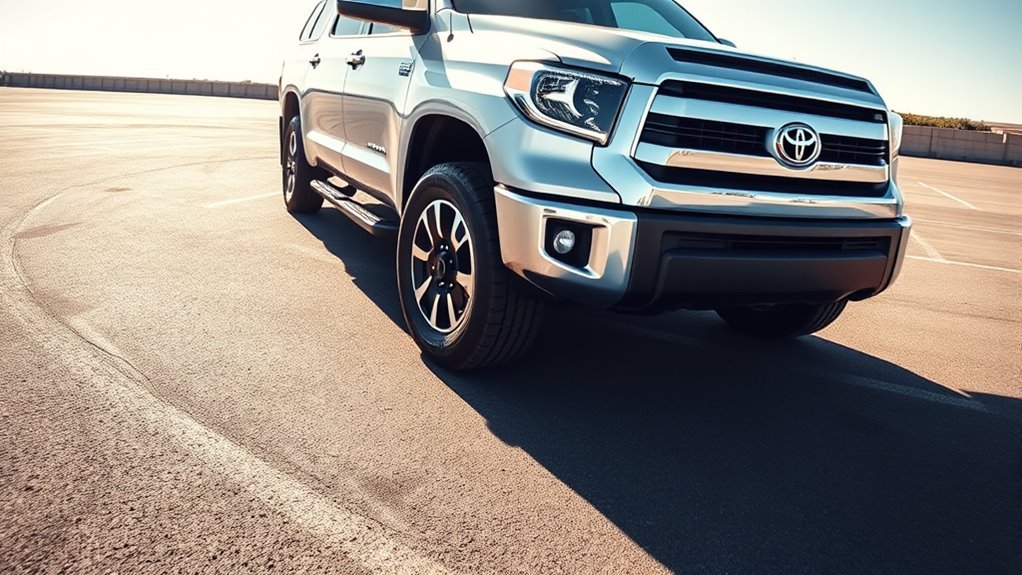
The Toyota Tundra’s turning radius depends on the 2020 configuration you drive. Toyota lists a 44.0-foot curb-to-curb turning circle for most 2020 Tundra short-bed and standard-bed models and a 49.0-foot turning circle for long-bed models. That equals an approximate turning radius of 22.0 feet (6.7 m) to 24.5 feet (7.5 m). Wheelbase, bed length, steering geometry, and overall body size all affect how much space you need for U-turns, curb maneuvers, and tight parking.
What’s in This Article
- Toyota Tundra Turning Radius: Official 2020 Numbers
- How Turning Radius Is Measured and Why It Matters
- Size, Wheelbase, and the Tundra’s Turning Circle
- How the Tundra’s Turning Radius Compares to Rival Pickups and Semis
- Tundra Turning Radius in Real Driving: Parking, U-Turns, City Maneuvers
- Reduce Turning Space: Driving Tips and Setup Changes
- Choose the Right Tundra Configuration If Maneuverability Matters
- Frequently Asked Questions
Toyota Tundra Turning Radius: Official 2020 Numbers
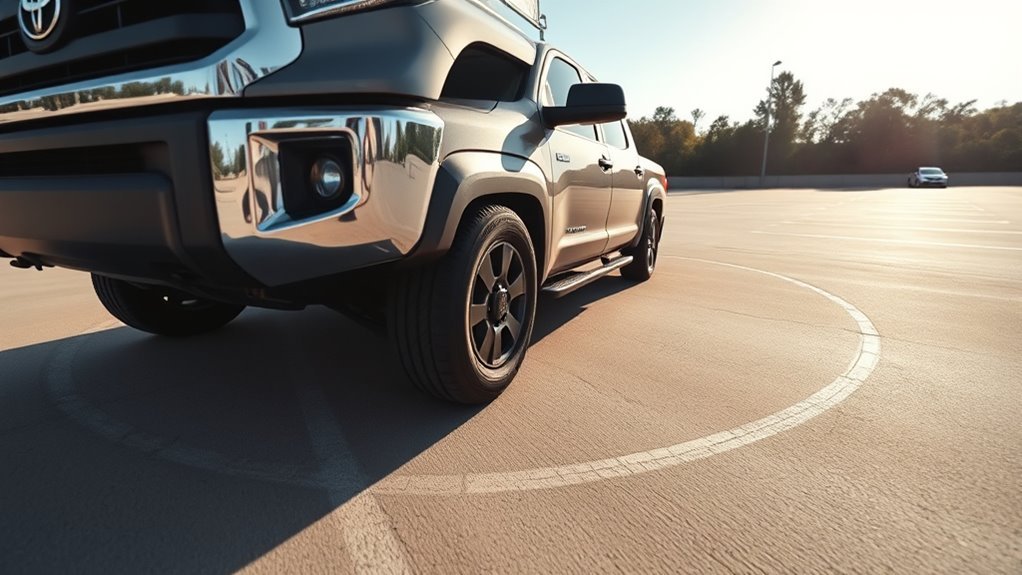
Toyota lists the 2020 Tundra’s turning circle diameter at 44.0 feet for most standard-bed and short-bed models. Long-bed models list a 49.0-foot curb-to-curb turning circle. If you divide those figures in half, you get an approximate turning radius of 22.0 feet (6.7 m) to 24.5 feet (7.5 m).
That matters because many drivers use “turning radius” and “turning circle” as if they mean the same thing. They don’t. The turning circle describes the full diameter of the smallest circle your truck can make, while the turning radius describes half that circle.
Quick Answer
The 2020 Toyota Tundra has a 44.0-foot curb-to-curb turning circle on most standard-bed and short-bed models. Long-bed models need more room, with a 49.0-foot turning circle. In radius terms, that equals about 22.0 to 24.5 feet.
Key Takeaways
- Use 44.0 feet as the key turning circle number for most 2020 Tundra models.
- Expect long-bed Tundra models to need more room, with a 49.0-foot turning circle.
- Remember that turning radius equals half of the turning circle diameter.
- Choose a shorter bed if tight parking and U-turns matter most to you.
- Plan wider entry lines in lots, alleys, and narrow streets.
The Tundra gives you reasonable maneuverability for a full-size pickup, but it still needs more room than compact trucks and cars. You can handle city streets, alley turns, and curbside parking with confidence when you plan your path early. You’ll also avoid many curb strikes by leaving more clearance than you would in a smaller vehicle.
How Turning Radius Is Measured and Why It Matters
You measure turning circle by steering to full lock and recording the diameter of the smallest circle the vehicle can trace. Automakers usually publish this as curb-to-curb turning circle, not true turning radius. You can estimate the radius by dividing the published circle diameter by two.
This metric helps you judge maneuverability before you enter tight spaces. A smaller circle makes U-turns, tight parking, and alley turns easier. A larger circle means you need more planning and more correction room.
Measuring Turning Circle
To measure a vehicle’s turning circle, you turn the steering wheel fully in one direction and drive a slow, steady circle. You then measure the full width of that circle from one outer tire path to the opposite outer tire path. For the 2020 Toyota Tundra, Toyota lists 44.0 feet for most models and 49.0 feet for long-bed versions.
You can use this number to compare models and predict how the truck will behave in tight places. The Tundra’s figure suits a full-size pickup, but it does not match the easy rotation of smaller trucks or sedans. That tradeoff comes with stronger cargo and towing capability.
Practical Driving Effects
When you park or thread a 2020 Toyota Tundra through city streets, the turning circle affects every low-speed move. You’ll need wider entry angles than you would in a compact pickup. You’ll also need more care when you cut around curbs, islands, and parked cars.
- Easier planning for U-turns in wide lanes
- Fewer surprises when you enter tight parking rows
- Better control of the truck’s swept path
- More clearance needed than with compact trucks
- Far less space needed than with large commercial rigs
Size, Wheelbase, and the Tundra’s Turning Circle
The Tundra’s wheelbase and overall dimensions shape its low-speed turning behavior. A longer wheelbase improves straight-line stability, but it also makes tight turns harder. Wider bodywork also increases the clearance you need beside curbs, posts, and parked vehicles.
Wheelbase and Maneuverability
The 2020 Tundra’s full-size layout favors stability, payload support, and towing strength. Toyota lists a 145.7-inch wheelbase and 228.9-inch length for a common Double Cab 6.5-foot bed configuration. That size helps the truck feel steady on the road, but it also increases the space you need for tight turns.
You’ll notice this most in parking lots and narrow side streets. The truck tracks well once moving, but you need a wider setup before sharp turns. For city use, shorter configurations help more than trim level or styling changes.
- 44.0-foot turning circle for most 2020 Tundra models
- 49.0-foot turning circle for long-bed models
- 145.7-inch wheelbase on common standard-bed configurations
- 228.9-inch overall length on common Double Cab standard-bed models
- More room needed than with compact pickups
Body Size Versus Turning
The Tundra’s length and width affect the space your truck sweeps through during a turn. A longer bed or longer wheelbase increases the arc you need. A wider body also makes curbside clearance more important.
Compared with an 18-wheeler, the Tundra remains much easier to place on city streets. Compared with a Tacoma, sedan, or compact sport utility vehicle (SUV), the Tundra needs more room. You gain utility, but you give up some tight-space agility.
Steering Geometry Effects
Steering geometry connects wheel angle, wheelbase, and tire path. The Tundra’s rack-and-pinion steering helps it turn in a stable and predictable way. Still, the truck’s long body limits how tight that turn can feel.
- Wheelbase length raises the space needed for tight turns
- Body width increases side clearance needs
- Maximum wheel angle controls the inner tire path
- Ackermann geometry helps the front tires follow different arcs
- Bed length changes rear overhang and swept path
How the Tundra’s Turning Radius Compares to Rival Pickups and Semis
The 2020 Tundra’s 44.0-foot turning circle fits the full-size pickup class better than the compact-truck class. A 2020 Tacoma, for example, lists a 40.6-foot turning circle on many configurations, while some long-bed Tacoma versions list 44.1 feet. That makes the Tacoma easier to rotate in many urban spaces.
Against large commercial trucks, the Tundra feels much easier to manage. Semi trucks often need far wider sweep paths because the tractor and trailer move through different arcs. That difference helps explain why a Tundra can handle most city and worksite routes, even when it still feels large in tight parking rows.
| Vehicle | Typical Turning Circle | What It Means for You |
|---|---|---|
| 2020 Toyota Tundra standard or short bed | 44.0 feet curb-to-curb | Good for a full-size pickup, but not compact |
| 2020 Toyota Tundra long bed | 49.0 feet curb-to-curb | Needs more room for U-turns and parking |
| 2020 Toyota Tacoma | About 40.6 to 44.1 feet curb-to-curb | Usually easier in tight urban spaces |
| Large semi truck | Often much wider than a pickup | Needs wider roads, loading space, and turning room |
[Products Worth Considering]

This heavy-duty car ramp set provides a stable, reliable lift for routine maintenance like oil changes, tire rotations, brake work, and undercarriage inspections. Built from high-impact poly with a non-skid tread and rubber feet, it helps keep vehicles secure while offering a lightweight, corrosion-resistant alternative to steel ramps. The wide, gradual design supports a broad range of vehicles, from compact cars to trucks, SUVs, and vans.

This 6-pack engine oil filter set is designed for Toyota applications and compatible cross-reference part numbers, helping support clean oil flow and dependable engine protection. Built from quality materials and featuring 99% multi-pass efficiency, it is made to help extend engine life and maintain performance between service intervals. The included six filters make it a practical choice for routine maintenance and multiple oil changes.

This custom-fit windshield sunshade is designed specifically for Toyota Camry models from 2018 through 2026, helping block harsh sunlight and keep your interior cooler. Its layered construction improves heat insulation and privacy while the foldable memory-metal frame makes installation, removal, and storage quick and easy. Built for a snug fit and reliable everyday use, it offers a cleaner alternative to universal sunshades.
Tundra Turning Radius in Real Driving: Parking, U-Turns, City Maneuvers
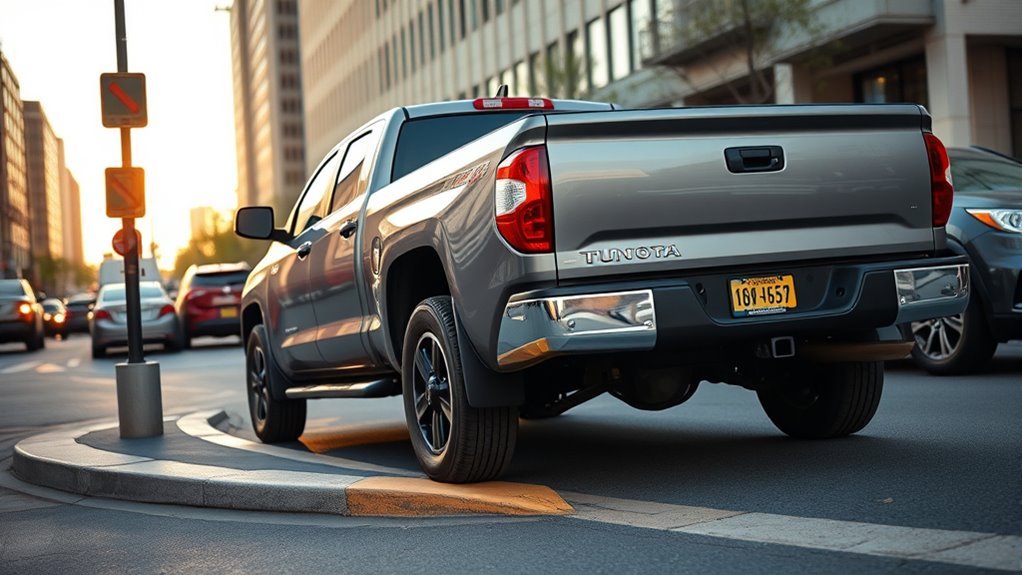
Once you know the official turning circle, real-world driving becomes easier to judge. The Tundra can handle parking, U-turns, and tight city streets, but it rewards smooth planning. You’ll get better results when you start wide, steer early, and watch the rear corner.
- Plan U-turns early: choose wider streets or use a three-point turn when space looks tight.
- Use parking aids: check mirrors, the rear-view camera, and parking sensors before you commit.
- Watch the rear sweep: remember that the back corner travels wide during sharp turns.
- Enter parking rows wide: create a cleaner angle before you turn into a space.
- Practice slowly: use an empty lot to learn your pivot points and overhang.
These habits help you drive the Tundra with less stress. You’ll still need space, but you won’t need to guess.
Warning: Don’t force a tight U-turn if traffic, curbs, or parked cars leave little correction room.
Reduce Turning Space: Driving Tips and Setup Changes
You can’t change the Tundra’s factory steering geometry, but you can reduce wasted space. Use a controlled three-point turn instead of forcing a wide U-turn on narrow roads. Start from the outside of the lane when safe, then turn smoothly toward your exit path.
Keep tire pressure at Toyota’s recommended setting for your truck. Proper pressure helps steering feel more predictable at low speeds. Worn tires, poor alignment, or incorrect pressure can make the truck feel slower to respond.
Use every visibility aid you have. Angle your mirrors, check the rear-view camera, and scan painted lines before you turn. Small setup choices can save you from extra corrections.
Pro tip: In tight lots, pull past the space before turning so the rear wheels can follow a cleaner arc.
Choose the Right Tundra Configuration If Maneuverability Matters
If maneuverability matters most, choose the shortest Tundra configuration that still meets your needs. A shorter bed reduces rear overhang and helps you place the truck more easily. A long bed gives you more cargo length, but it raises the space you need for U-turns and tight parking.
- Choose a short bed when city driving matters most.
- Use a long bed only when cargo length matters more than agility.
- Check wheelbase and overall length before you buy.
- Test parking and U-turns during the test drive.
- Compare the Tundra with a Tacoma if tight streets shape your daily driving.
You don’t need to avoid the Tundra because of its size. You just need the right configuration and the right driving habits. That choice gives you a better mix of utility and control.
Frequently Asked Questions
What Is the Turning Radius of the Toyota Tundra?
The 2020 Toyota Tundra’s turning radius is about 22.0 feet for most models when you divide the 44.0-foot turning circle by two. Long-bed models have a 49.0-foot turning circle, which equals about a 24.5-foot radius.
What Is the Turning Radius of the Toyota Tacoma Compared to the Tundra?
The 2020 Toyota Tacoma lists a turning circle of about 40.6 feet on many configurations. Some long-bed Tacoma versions list 44.1 feet, which puts them close to many Tundra models.
What Is Considered a Good Turning Radius?
A good turning radius depends on vehicle size. Small cars and compact SUVs usually turn tighter than full-size pickups. For a full-size truck, a 44.0-foot turning circle gives you usable daily maneuverability.
Is a 10m Turning Circle Good?
Yes, a 10-meter turning circle is tight for many passenger vehicles. It equals about 32.8 feet in diameter, which beats most full-size pickups in tight parking and U-turns.
Does Bed Length Change the Tundra’s Turning Space?
Yes, bed length can change how much room you need. Toyota lists a 49.0-foot turning circle for long-bed 2020 Tundra models, compared with 44.0 feet for many standard-bed and short-bed versions.
Conclusion
The 2020 Tundra’s key number is a 44.0-foot turning circle for most models, with long-bed versions rising to 49.0 feet. You’ll drive it more confidently when you treat those figures as planning tools, not just specs. Choose a shorter configuration if you face tight streets, small lots, or frequent U-turns. With smart setup and smooth inputs, you can keep the Tundra useful without making tight spaces feel stressful.
References
- 2020 Toyota Tundra eBrochure – Toyota, 2020
- Used 2020 Toyota Tundra Specs & Features – Edmunds, 2020
- 2020 Toyota Tundra Specs – Car and Driver, 2020
- 2020 Toyota Tacoma Product Information – Toyota Canada, 2020