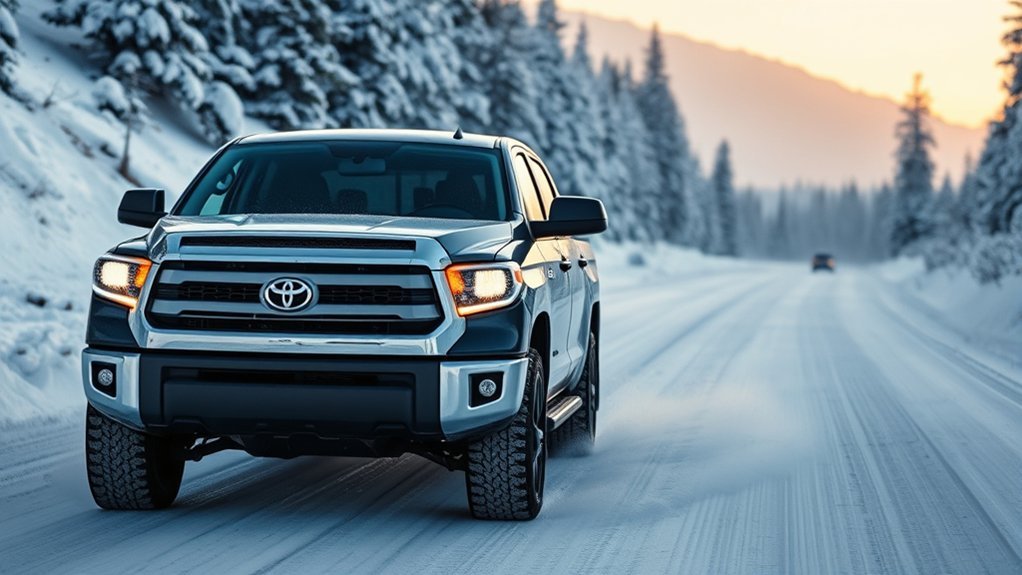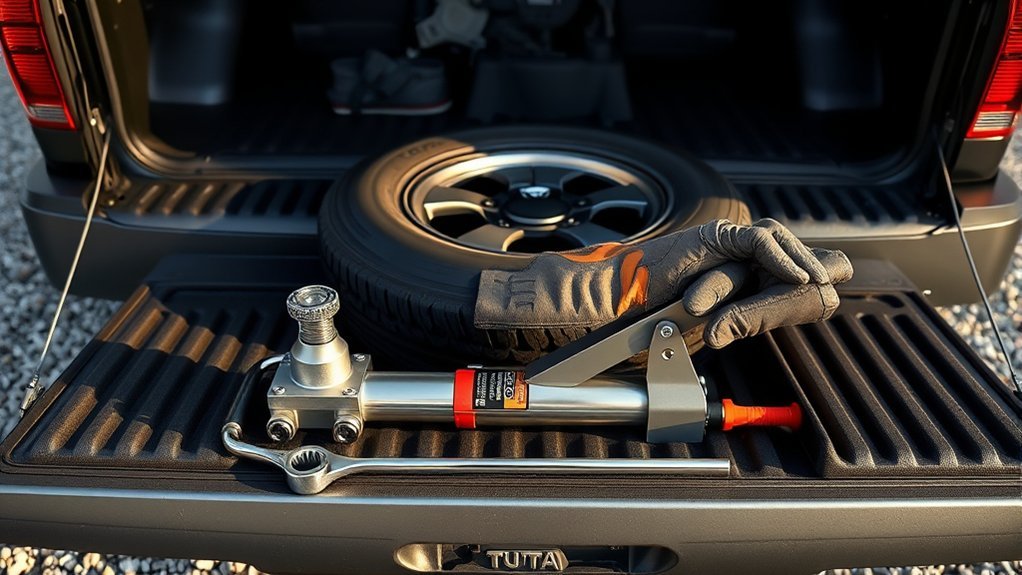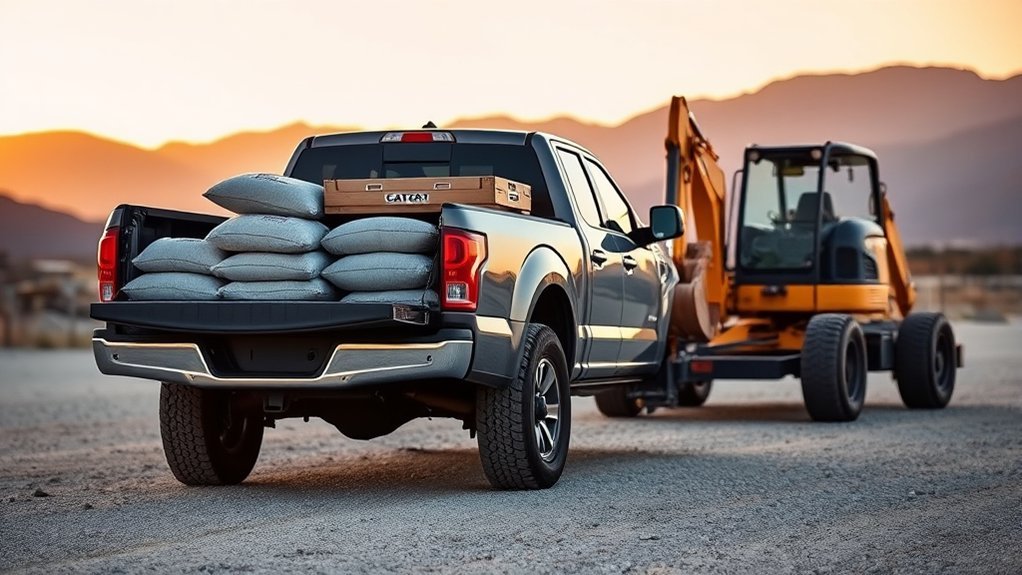
Payload and towing capacity are easy to mix up because both deal with weight. The simplest way to separate them is this: payload is what your vehicle carries, while towing capacity is what your vehicle pulls. If you load the bed and hitch a trailer at the same time, both limits matter at once.
Quick Answer
Payload matters most when the weight sits in or on the vehicle, including passengers, tools, cargo, and trailer tongue weight. Towing capacity matters when the weight is behind the vehicle. For safe loading, stay within both limits, plus GVWR, GAWR, GCWR, hitch, tire, and trailer ratings.
Key Takeaways
- Payload capacity is the maximum weight your vehicle can carry, including people, cargo, accessories, and tongue or king-pin weight when towing.
- Towing capacity is the maximum loaded trailer weight your vehicle can pull, but it can be reduced by passengers, cargo, options, hitch type, and axle limits.
- Tongue weight is part of the load on the tow vehicle, so it uses up payload even though the trailer is behind you.
- The lowest rating wins: never exceed GVWR, GAWR, GCWR, hitch rating, tire rating, trailer rating, or the manufacturer’s towing limit.
At a Glance
| Time Required | 10–20 minutes to check labels and run the math; longer if you use a public scale |
| Difficulty | Easy to moderate |
| Tools Needed | Owner’s manual, door-jamb labels, calculator, trailer specs, and ideally a certified scale ticket |
| Cost | Usually free; a public scale ticket may cost a small fee |
Payload vs. Towing Capacity: The Core Difference
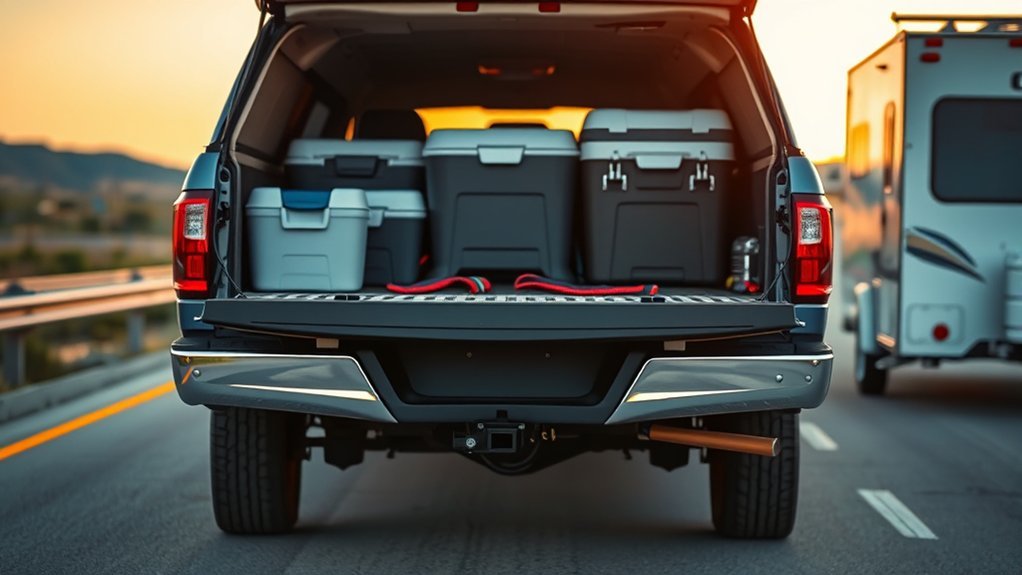
Payload and towing capacity answer two different questions. Payload capacity tells you how much weight the vehicle can carry on its own frame. That includes passengers, cargo in the cab, cargo in the bed, accessories, and the downward force from a trailer coupler. Towing capacity tells you how much loaded trailer weight the vehicle can pull when properly equipped.
| Limit | What It Controls | Examples |
|---|---|---|
| Payload capacity | Weight carried by the vehicle | Passengers, tools, bed cargo, bed cap, toolbox, hitch equipment, trailer tongue weight |
| Towing capacity | Loaded trailer weight pulled by the vehicle | Boat trailer, camper, utility trailer, equipment trailer |
Which one matters more depends on the job. If you are filling the bed with mulch, sand, firewood, tools, or passengers, payload is the first limit to check. If you are pulling a camper or trailer, towing capacity matters, but payload still matters because the trailer’s tongue weight presses down on the vehicle.
Warning: Do not use the maximum payload and maximum towing number at the same time unless your specific vehicle ratings allow it. Passenger weight, cargo, accessories, hitch hardware, and tongue weight can reduce the trailer weight you can safely tow.
What Is Payload Capacity?
Payload capacity is the maximum weight your vehicle can carry. For most drivers, the best place to find it is the Tire and Loading Information label on the driver-side door edge or B-pillar. Ford’s payload guidance describes it as the combined weight of cargo and passengers and notes that trailer tongue weight or king-pin weight is also part of payload when towing. You can review that guidance here: Ford payload capacity guide.
The basic formula is:
Payload capacity = GVWR − curb weight
That formula is useful, but the door label is usually faster and more accurate for your exact vehicle as built. It already reflects the vehicle’s factory configuration. If you add a bed cap, steel bumper, winch, drawer system, larger hitch hardware, or other accessories, subtract that added weight from the available payload.
| Payload Item | How to Count It | Why It Matters |
|---|---|---|
| Passengers | Add actual body weight for everyone in the vehicle | People use payload just like cargo does |
| Tools and cargo | Add the weight of everything in the cab and bed | Dense loads can overload a truck before the bed looks full |
| Accessories | Subtract added equipment from available payload | Bed caps, bumpers, winches, racks, and storage systems reduce capacity |
| Trailer tongue weight | Count it as payload on the tow vehicle | A trailer can overload the vehicle even when trailer weight is under the tow rating |
| Firewood, sand, gravel, soil | Use actual supplier weights or a scale when possible | Moisture and material density can change the weight dramatically |
Note: A load such as sand, gravel, wet soil, or fresh-cut firewood can be much heavier than it looks. When the material is dense or wet, use a scale or supplier weight instead of guessing.
What Is Towing Capacity?
Towing capacity is the maximum loaded trailer weight your vehicle can pull when it is properly equipped. It depends on the vehicle, engine, transmission, axle ratio, drivetrain, cooling equipment, brakes, hitch type, and manufacturer testing. The Society of Automotive Engineers’ SAE J2807 standard establishes performance requirements and calculation methodology for tow-vehicle gross combination weight rating and trailer weight rating.
The common shortcut is to subtract the tow vehicle’s weight from GCWR, but the safer real-world version is:
Estimated available trailer weight = GCWR − actual loaded tow-vehicle weight
Then compare that result against every other limit. Your usable towing capacity is the lowest number among the manufacturer’s max trailer rating, GCWR, GVWR, rear GAWR, hitch rating, receiver rating, ball mount rating, tire ratings, tongue-weight limit, and trailer rating.
The safest rule is simple: the lowest rated component controls the whole setup.
For exact towing data, check your owner’s manual, towing guide, and VIN-specific resources when available. Ford, for example, provides a towing calculator for supported F-Series trucks, and GM provides owner’s manuals and trailering supplements through its manuals and guides portal.
Weight Ratings You Need to Know Before Loading
Before deciding whether to haul or tow, learn the labels and ratings that control the setup. These are the numbers that keep the vehicle stable, steerable, and within its engineered limits.
| Term | Meaning | Why It Matters |
|---|---|---|
| GVWR | Gross Vehicle Weight Rating: maximum allowed weight of the loaded vehicle | Controls total vehicle weight with passengers, cargo, accessories, and tongue weight |
| GAWR | Gross Axle Weight Rating: maximum weight allowed on each axle | Rear axle overload is common when towing or hauling dense bed cargo |
| GCWR | Gross Combined Weight Rating: maximum loaded weight of vehicle plus trailer | Helps estimate how much trailer weight remains after loading the vehicle |
| Curb weight | Vehicle weight with standard equipment and required fluids, before passengers and cargo | Used in basic payload estimates, but actual scale weight is better |
| Payload capacity | Maximum combined weight of occupants and cargo | Found on the Tire and Loading label for most U.S. light vehicles under 10,000 lb GVWR; federal label language is addressed in 49 CFR §571.110 |
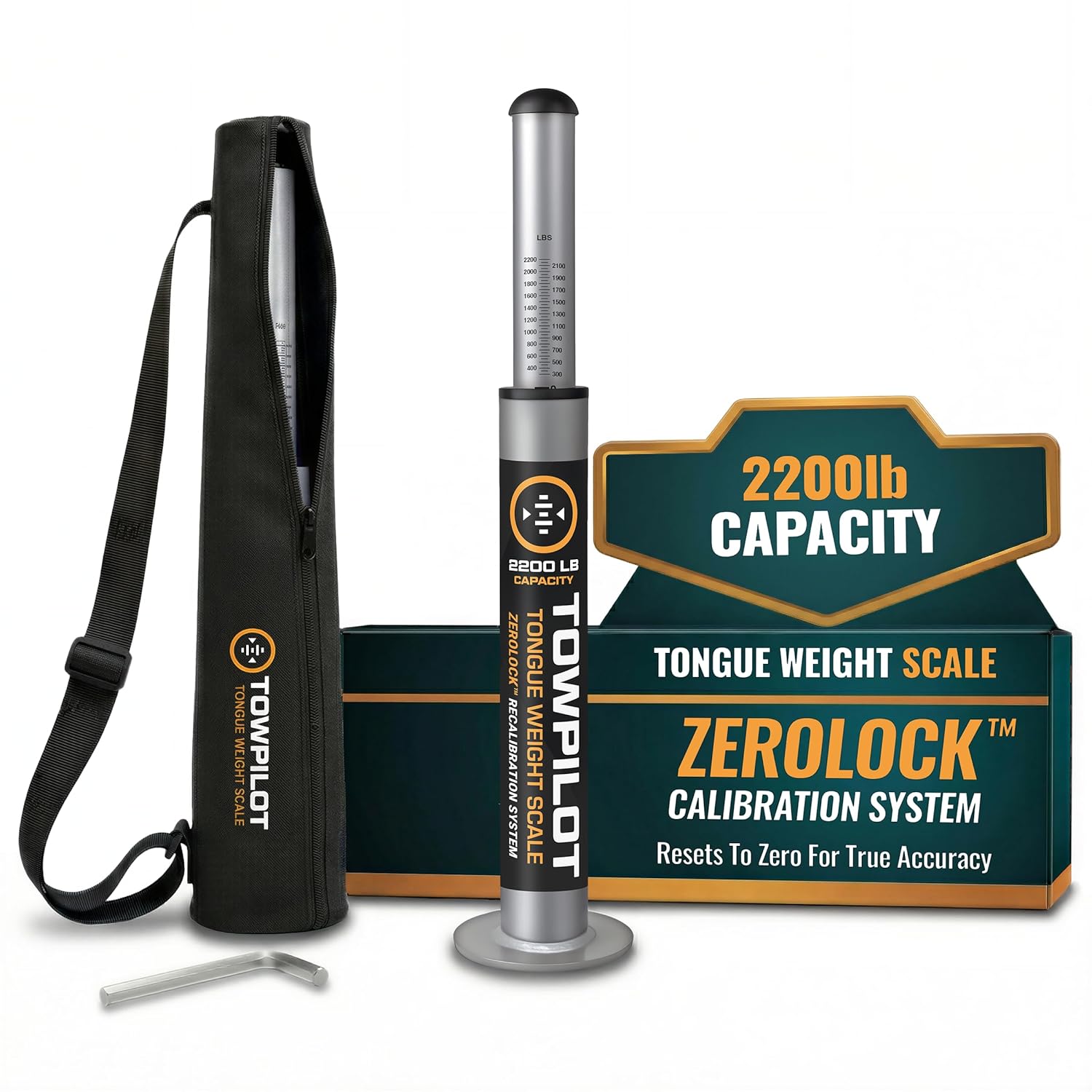
| Tongue weight | Downward force the trailer places on the hitch | Counts against payload and affects steering, braking, and trailer sway |
| Hitch rating | Maximum trailer and tongue weight allowed by the receiver, ball mount, hitch ball, or weight-distribution setup | A low-rated hitch component can reduce the whole towing setup |
Calculate & Compare: Formulas, Tongue Weight, Example
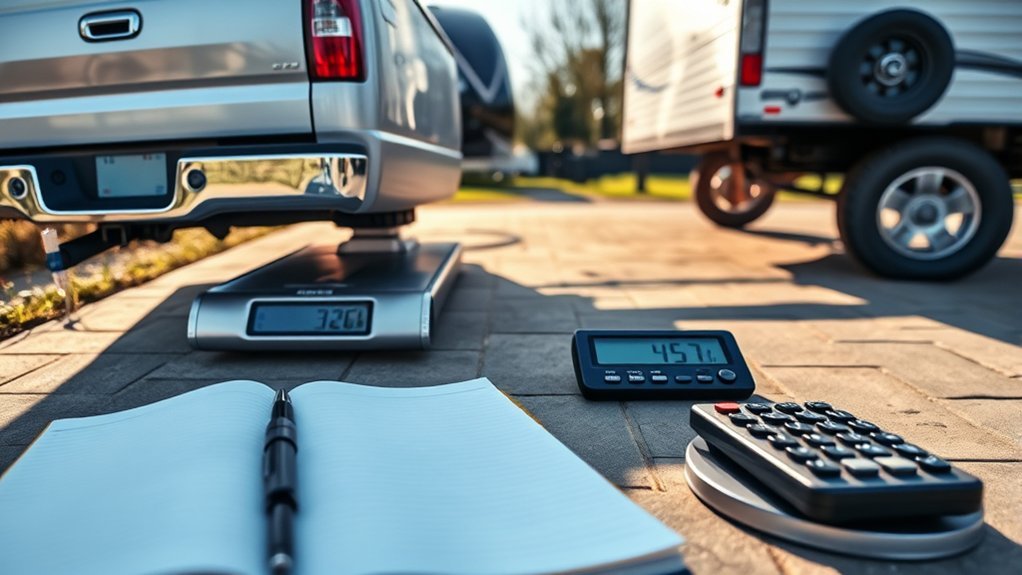
Use the formulas below as a planning tool, then confirm the final setup with your labels, manual, trailer specs, and scale weights.
| Calculation | Formula | Best Use |
|---|---|---|
| Basic payload estimate | GVWR − curb weight | Useful if you know the exact curb weight |
| Available payload before towing | Payload rating − passengers − cargo − accessories | Shows how much payload remains before tongue weight |
| Tongue weight estimate | Loaded trailer weight × 10% to 15% for many bumper-pull trailers | Planning estimate only; follow your vehicle and trailer manual |
| Estimated available trailer weight | GCWR − actual loaded tow-vehicle weight | Better than using curb weight because it includes people, cargo, fuel, and equipment |
[Products Worth Considering]

These aluminum alloy tire valve stem caps provide durable, corrosion-resistant protection for your vehicle’s valve stems while helping maintain stable tire pressure. The rubber seal design helps block dust, moisture, and debris, reducing the risk of air leakage and valve damage. Easy to install and styled for a clean look, they fit a range of cars, SUVs, trucks, and motorcycles.

This Toyota hitch cover helps protect your trailer hitch receiver from dirt and debris while adding a clean factory-style look to your vehicle's rear end. Designed for easy use, it offers a simple way to finish off your towing setup when the hitch is not in use. Its lightweight design makes it convenient to handle and install.

This custom-designed cargo net helps keep the rear trunk of a 2026 Toyota RAV4 neat, secure, and organized. Its stretchable elastic mesh construction helps prevent groceries, tools, and sports gear from sliding around, while the built-in bottom pocket and smart clips add extra storage control. A top pull tab makes installation and removal quick and easy for everyday convenience.
Worked Example
Assume a truck has a 1,700 lb payload rating. You add two passengers, tools, a bed cover, and hitch equipment before connecting a trailer.
| Item | Weight | Payload Remaining |
|---|---|---|
| Starting payload rating | 1,700 lb | 1,700 lb |
| Two passengers | 350 lb | 1,350 lb |
| Tools and cargo | 250 lb | 1,100 lb |
| Bed cover and hitch equipment | 150 lb | 950 lb |
| Estimated trailer tongue weight | 900 lb | 50 lb |
In this example, the trailer may be within the advertised tow rating, but the truck is almost out of payload. Adding a cooler, generator, extra passenger, or more bed cargo could push it over the payload rating or rear axle rating.
Pro Tip: For the most accurate numbers, weigh the vehicle loaded for the trip, then weigh the vehicle and trailer together. A certified scale ticket can show whether the combined weight and axle weights are within rating.
How to Find Your Real Payload and Tow Rating
Do not rely only on a brochure number or a generic online chart. Two trucks that look similar can have different ratings because of engine, axle ratio, cab size, bed length, drivetrain, wheels, tires, options, and tow package.
- Check the Tire and Loading Information label. Look for the line that says the combined weight of occupants and cargo should never exceed a specific number.
- Check the certification label. This label lists GVWR and GAWR. Pay close attention to rear GAWR if you haul dense bed cargo or tow with heavy tongue weight.
- Read the owner’s manual and towing guide. Use the section for your exact engine, drivetrain, axle ratio, cab, bed, and hitch type.
- Check the hitch and ball mount. The receiver, ball mount, hitch ball, coupler, and weight-distribution setup each have their own rating.
- Confirm trailer weight loaded, not empty. Use the trailer’s GVWR or an actual scale weight after adding water, fuel, propane, tools, gear, and cargo.
- Use a scale when close to the limit. Weighing is the best way to confirm actual vehicle weight, trailer weight, tongue weight, and axle loads.
[Products Worth Considering]

This comprehensive master disconnect tool kit is designed to remove fuel lines, A/C lines, transmission cooler lines, and other quick-connect fittings on a wide range of vehicles. It includes multiple color-coded tools and sizes to help speed up repairs, reduce line damage, and improve workflow for DIY users and professional technicians alike. The set comes organized in a portable case for easy storage, transport, and quick access.

Designed for Toyota RAV4 models from 2013 through 2018, this three-piece windshield wiper set delivers clear, quiet performance for dependable visibility in changing weather. The precision-fit blades provide streak-free wiping, simple installation, and durable all-season use with reduced wind noise and consistent pressure across the windshield.

This three-piece windshield wiper set is designed for compatible Toyota RAV4 and Highlander models to help deliver clear visibility in everyday driving. The natural rubber blades feature a graphite-treated surface for quiet, smooth wiping performance and reliable weather resistance. Installation is quick and tool-free, making it easy to replace worn blades on the front and rear of your vehicle.
When to Haul vs. Tow: Rules, Common Mistakes, Safety Checklist
Choose hauling when the cargo fits securely in or on the vehicle and stays within payload, GVWR, GAWR, and tire limits. Choose towing when the cargo is too large, too bulky, or better supported by trailer axles. Either way, secure the load properly. NHTSA’s secure-load guidance reminds drivers to tie down cargo, cover loads when needed, avoid excessive cargo, and double-check before driving.
[Products Worth Considering]

This master ball joint removal kit gives you the tools needed to remove and install ball joints, tie rod ends, Pitman arms, and other front-end components. It is designed for broad compatibility with many GM, Chevrolet, Ford, and Dodge vehicles, including a range of light trucks, vans, and SUVs. Built from forged steel and stored in a molded ABS case, it offers durable performance and organized portability for garage or shop use.

This collapsible trunk organizer helps keep your vehicle neat with multiple compartments, mesh pockets, and removable dividers for flexible storage. Made from waterproof, stain-resistant Oxford fabric with reinforced handles and a non-slip bottom, it is designed to stay secure while handling groceries, tools, sports gear, and travel essentials. When not in use, it folds flat for convenient storage in your trunk or home.
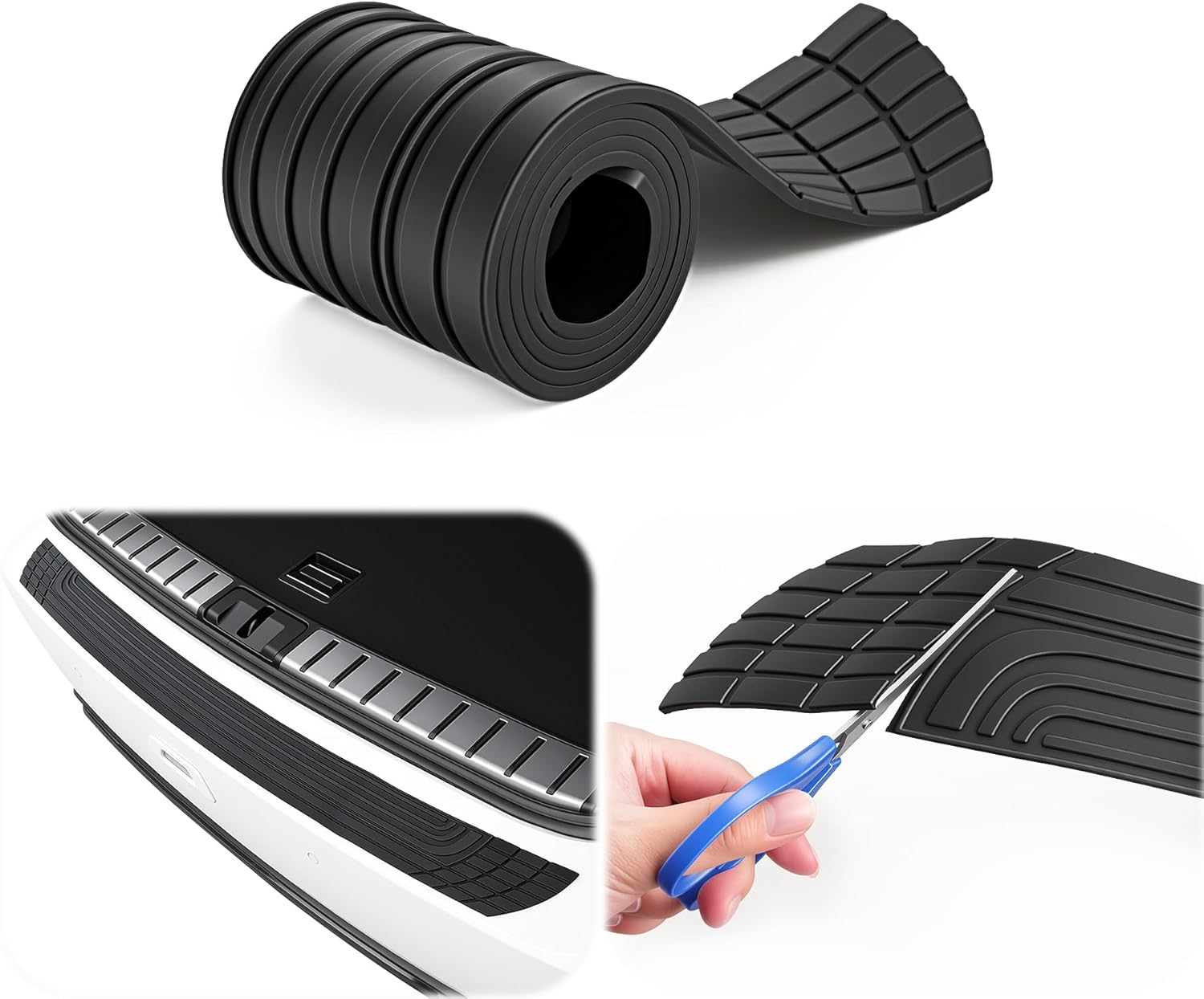
Protect your vehicle’s rear bumper from scratches, scuffs, and everyday loading damage with this universal bumper protector. Its flexible rubber design helps absorb impact and features an anti-slip groove pattern for added security when placing cargo in the trunk. Easy to install without drilling or welding, it is a practical exterior accessory for most cars and SUVs.
Haul When
- The cargo fits fully in the bed or cargo area without unsafe overhang.
- The total of passengers, cargo, accessories, and supplies stays under payload capacity.
- Front and rear axle weights remain under GAWR.
- The load can be tied down so it cannot shift, fall, leak, or blow out.
Tow When
- The cargo is too long, tall, bulky, or heavy for the bed.
- The trailer keeps the load better supported by its own axles.
- The loaded trailer weight is within the vehicle’s tow rating and GCWR.
- Tongue weight, hitch rating, GVWR, rear GAWR, and tire ratings all remain within limits.
Common Mistakes to Avoid
- Ignoring tongue weight: A 7,500 lb trailer with 12% tongue weight adds about 900 lb to the tow vehicle.
- Using empty trailer weight: Campers, boats, and utility trailers get heavier after fuel, water, propane, tools, and cargo are added.
- Forgetting accessories: Bed caps, racks, winches, and storage systems reduce available payload.
- Only checking one number: A setup can be under tow rating but over payload or rear axle rating.
- Using the wrong hitch setup: Weight-carrying and weight-distributing ratings can be different.
- Neglecting tire pressure and load rating: Tires must match the load and be inflated according to the vehicle label/manual guidance.
Pre-Trip Safety Checklist
- Confirm payload rating, GVWR, GAWR, GCWR, and max trailer rating.
- Add passengers, cargo, accessories, hitch hardware, and tongue weight.
- Check hitch receiver, ball mount, hitch ball, safety chains, and coupler ratings.
- Verify trailer lights, brake controller, breakaway switch, and tire condition.
- Distribute trailer cargo so the trailer tracks straight and does not sway.
- Secure all bed, roof, and trailer cargo with straps, netting, or a tarp as needed.
- Drive slower, leave more braking distance, and recheck straps and connections after a short distance.
Frequently Asked Questions
What does a 4,000 lb payload mean?
A 4,000 lb payload means the vehicle is rated to carry up to 4,000 lb of combined occupants, cargo, accessories, and any trailer tongue or king-pin weight. It does not mean you can ignore axle, tire, hitch, or towing limits.
What does payload capacity mean?
Payload capacity is the maximum weight your vehicle can carry. It includes passengers, cargo, add-on equipment, and trailer tongue weight when towing. On many light vehicles, the Tire and Loading Information label states the combined weight of occupants and cargo that should not be exceeded.
Does tongue weight count against payload?
Yes. Tongue weight or king-pin weight presses down on the tow vehicle, so it counts against payload and can also affect rear axle weight. This is why a trailer can be under the tow rating but still overload the vehicle.
Can I use maximum payload and maximum towing capacity at the same time?
Usually not. Maximum published towing numbers often assume a specific configuration and limited cargo in the tow vehicle. Once you add passengers, gear, accessories, and tongue weight, your available trailer weight or available payload may drop.
What happens if I exceed payload or towing capacity?
Exceeding a rating can reduce steering control, increase stopping distance, overload tires and axles, create trailer sway, overheat drivetrain components, and increase wear. It may also affect warranty or insurance outcomes after a crash or breakdown.
Conclusion
Payload and towing capacity serve different jobs, but they overlap whenever you tow. Payload covers everything the vehicle carries, including passengers, cargo, accessories, and trailer tongue weight. Towing capacity covers the loaded trailer behind you. Before you haul or tow, check the exact labels and manual for your vehicle, add the real weights, and remember that the lowest rating controls the whole setup. Staying within those limits helps protect steering, braking, tires, suspension, drivetrain, and everyone around you.
Sources
- Ford — What is the payload capacity? — supports payload label location, payload definition, accessory reductions, and tongue/king-pin weight counting as payload.
- Ford — Towing Dictionary — supports towing terminology such as GVWR, GCWR, payload, curb weight, and tongue weight.
- SAE International — SAE J2807_202411 — supports current tow-vehicle trailer weight rating methodology.
- 49 CFR §571.110 — supports U.S. tire/load placard and vehicle capacity weight requirements for many light vehicles.
- NHTSA — Drive Safe: Secure Your Load — supports cargo-securement safety guidance.
- GM Support — Manuals and Guides — supports using manufacturer manuals and trailering supplements for vehicle-specific towing information.