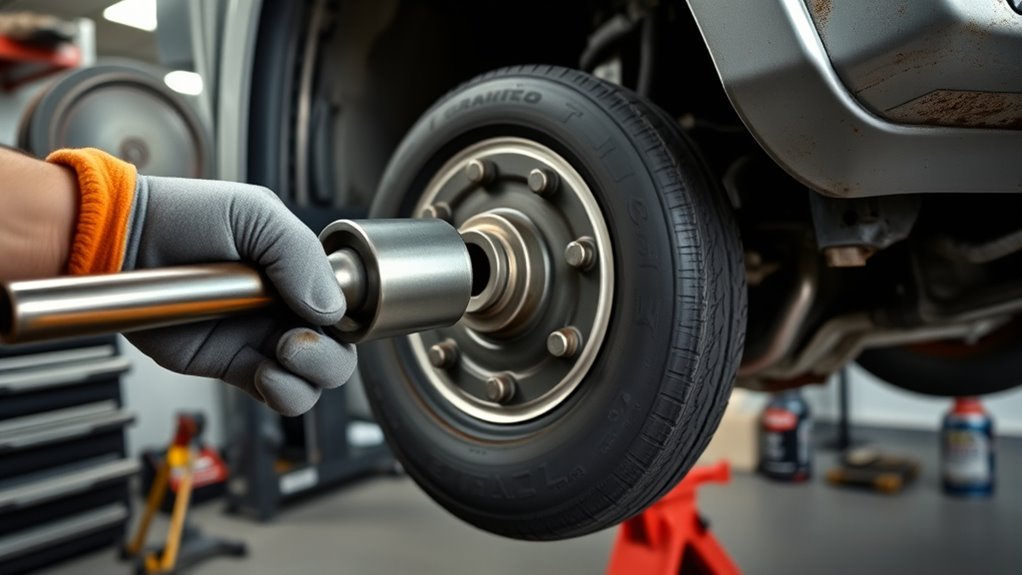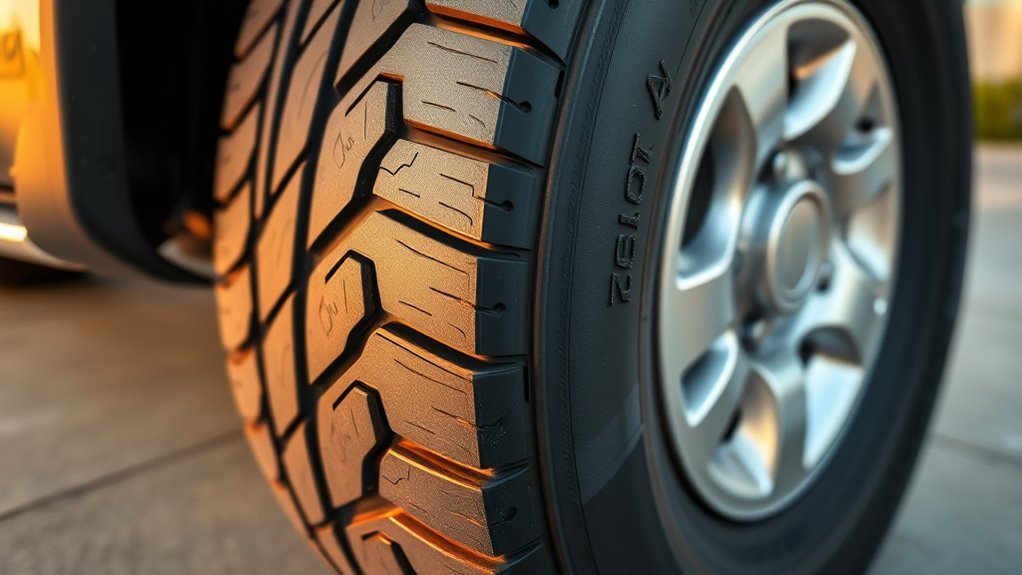
To check your 4Runner tire date code, find the DOT Tire Identification Number (TIN) on each tire and read its final four digits. The format is WWYY: the first two digits are the manufacturing week and the last two are the year. For example, 1422 means the tire was made in week 14 of 2022. Check both sidewalls because the complete TIN may appear on only one side. Tire age is only one part of the decision: replace a tire sooner for unsafe damage or tread worn to 2/32 inch, and have any tire over six years old checked by a qualified technician as Toyota recommends. When replacing tires, use the size and specifications listed for your exact 4Runner model year and grade rather than assuming one universal size.
Last updated: September 14, 2026 — tire-age guidance, 4Runner fitment, tread limits, warranty guidance, and authoritative sources reviewed.
Affiliate disclosure: AutoReviewNest may earn from qualifying purchases. This does not affect the price you pay.
4Runner Tire Age Quick Decision Guide
| What you find | What to do |
|---|---|
| Tread at 2/32 in. (1.6 mm) or wear bars are flush | Replace the tire |
| Bulge, deep cut, exposed cords, separation, or repeated air loss | Stop relying on the tire and have it professionally evaluated/replaced |
| More than 6 years old | Toyota says it should be checked by a qualified technician even if damage is not obvious |
| Approaching the tire maker’s maximum service age | Follow that manufacturer’s replacement limit; NHTSA notes age recommendations commonly fall within a 6–10 year range |
| Age or history cannot be confirmed | Check both sidewalls and records; have a tire professional assess it if the date remains unknown |
These are separate checks. A newer tire can still require replacement because of damage or tread wear, while an older tire can require professional inspection even when the tread looks deep. See the NHTSA TireWise guidance and your model-year Toyota owner’s manual for the applicable guidance.
Read Your 4Runner’s Tire Date Code (Step-By-Step)
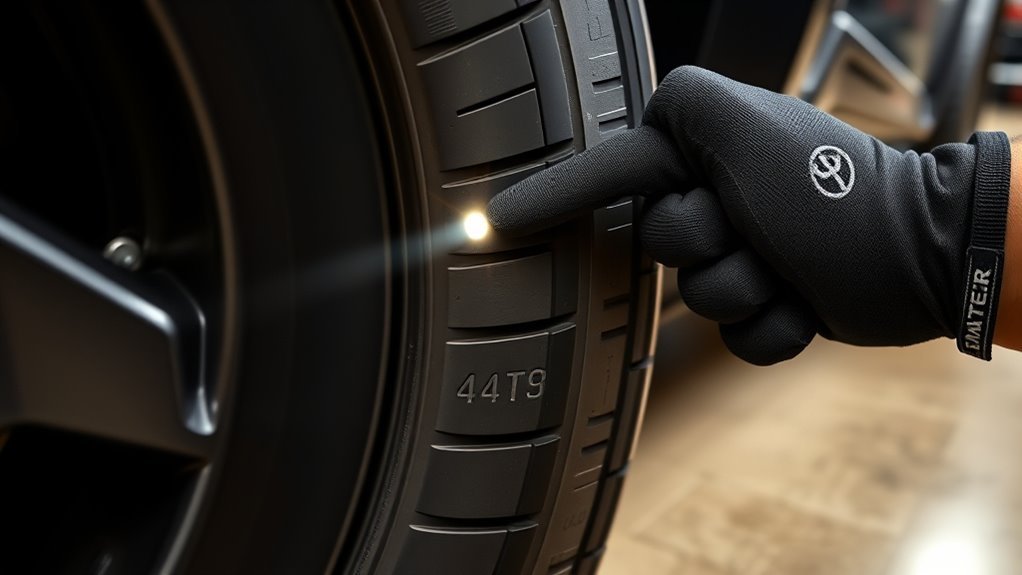
Start with the letters DOT on the tire sidewall. The date code is the final four digits of the complete Tire Identification Number on tires manufactured since 2000. The first two digits identify the production week and the last two identify the year. A code ending in 2619, for example, means week 26 of 2019.
If the DOT sequence you can see does not end in four numbers, inspect the other sidewall. NHTSA notes that the full TIN may not appear on both sides. A three-digit date format indicates a tire manufactured before 2000; a tire that old is far beyond the age range discussed in modern service recommendations and should not be treated as normal road-service rubber.
Record the date from all four road tires and the spare. Do not assume they are the same age: a previous owner may have replaced one or more tires at different times.
Locate the DOT/TIN on Each 4Runner Tire
Look around the sidewall for DOT followed by letters and numbers. The complete sequence identifies the tire for regulatory and recall purposes, while its final four digits identify the manufacturing week and year. If the visible side does not include those four digits, inspect the inboard sidewall.
Find DOT On Sidewall
Clean enough dirt from the sidewall to make the molded characters readable, then look for the DOT marking near the other tire identification information. Do not confuse the date code with the tire size, maximum pressure, load marking, or other molded numbers. You only need the last four digits of the complete TIN to determine manufacturing week and year.
| Example ending | Meaning |
|---|---|
| 1422 | Week 14 of 2022 |
| 4823 | Week 48 of 2023 |
| 0526 | Week 5 of 2026 |
Check Inside Sidewall
If the outward-facing DOT marking does not contain the four-digit date code, inspect the inner sidewall with good lighting. A phone camera, mirror, or flashlight may make the code easier to read without removing the wheel. If you cannot safely see the inboard marking, ask a tire shop to identify it rather than crawling under a vehicle supported only by a tire-changing jack.
- Clean dirt only as needed to expose the molded characters.
- Find the complete DOT/TIN and record its final four digits.
- Repeat the process for all four road tires and the spare.
Inspect Both Tire Sides
Checking both sidewalls matters because federal tire-identification rules require the full TIN on at least one sidewall, and the date portion may not be visible on the side facing outward. NHTSA specifically advises consumers to look on both sides when checking tire age.
| Action | Purpose |
|---|---|
| Clean the sidewall | Make faint molded characters readable |
| Check both faces | Find the complete TIN and date code |
| Record WWYY | Track the actual manufacture date of each tire |
Quick Tread & Sidewall Checks for Age Damage
The DOT date tells you how old a tire is, but it does not tell you whether the tire is safe by itself. Inspect the tread and both sidewalls at the same time. NHTSA says tires should be replaced when tread reaches 2/32 inch (1.6 mm), and Toyota also identifies visible treadwear indicators and significant tire damage as replacement triggers.
- Use a tread-depth gauge: check more than one groove and more than one point around each tire because wear may not be even.
- Check the wear bars: if the tread is level with the built-in indicators, replacement is due.
- Use the penny test as a quick backup: insert a penny with Lincoln’s head down. If the top of his head remains visible, tread is around the 2/32-inch replacement threshold.
- Inspect for damage: look for bulges, deep cuts, exposed cords, separation, significant cracking, puncture damage, or repeated pressure loss.
- Watch for uneven wear: one-sided, cupped, or irregular wear can point to alignment, balance, suspension, pressure, or rotation issues that should be diagnosed.
For inflation, use the cold pressure on your 4Runner’s Tire and Loading Information label rather than the maximum pressure molded on the tire. See the site’s guide to set tire pressure using the 4Runner door placard.
Are Your Tires Too Old? Age Guidelines and Risks
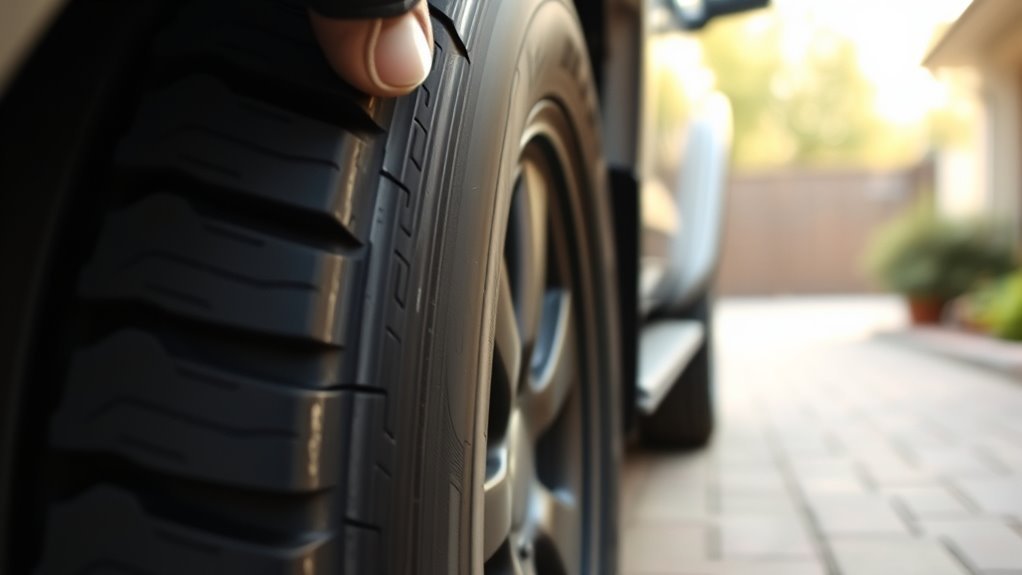
Tire age matters because rubber and other tire components change over time, and visual appearance alone cannot reveal every form of aging. Toyota states that any tire over six years old must be checked by a qualified technician even if it has rarely been used or damage is not obvious. NHTSA says some vehicle and tire manufacturers recommend age-based replacement between six and ten years regardless of treadwear. Your final replacement limit should therefore follow the guidance for your specific tire brand plus your Toyota manual.
[Products Worth Considering]

This smart color coded tire tread depth gauge makes it easy to check tread wear at a glance with clear red, yellow, and green ranges. Calibrated from 0 to 1 inch in 1/32 inch increments, it helps you quickly assess tire condition for safer driving and timely replacements. The pocket clip design makes it convenient to carry and use on trucks, motorcycles, cars, and other passenger vehicles.
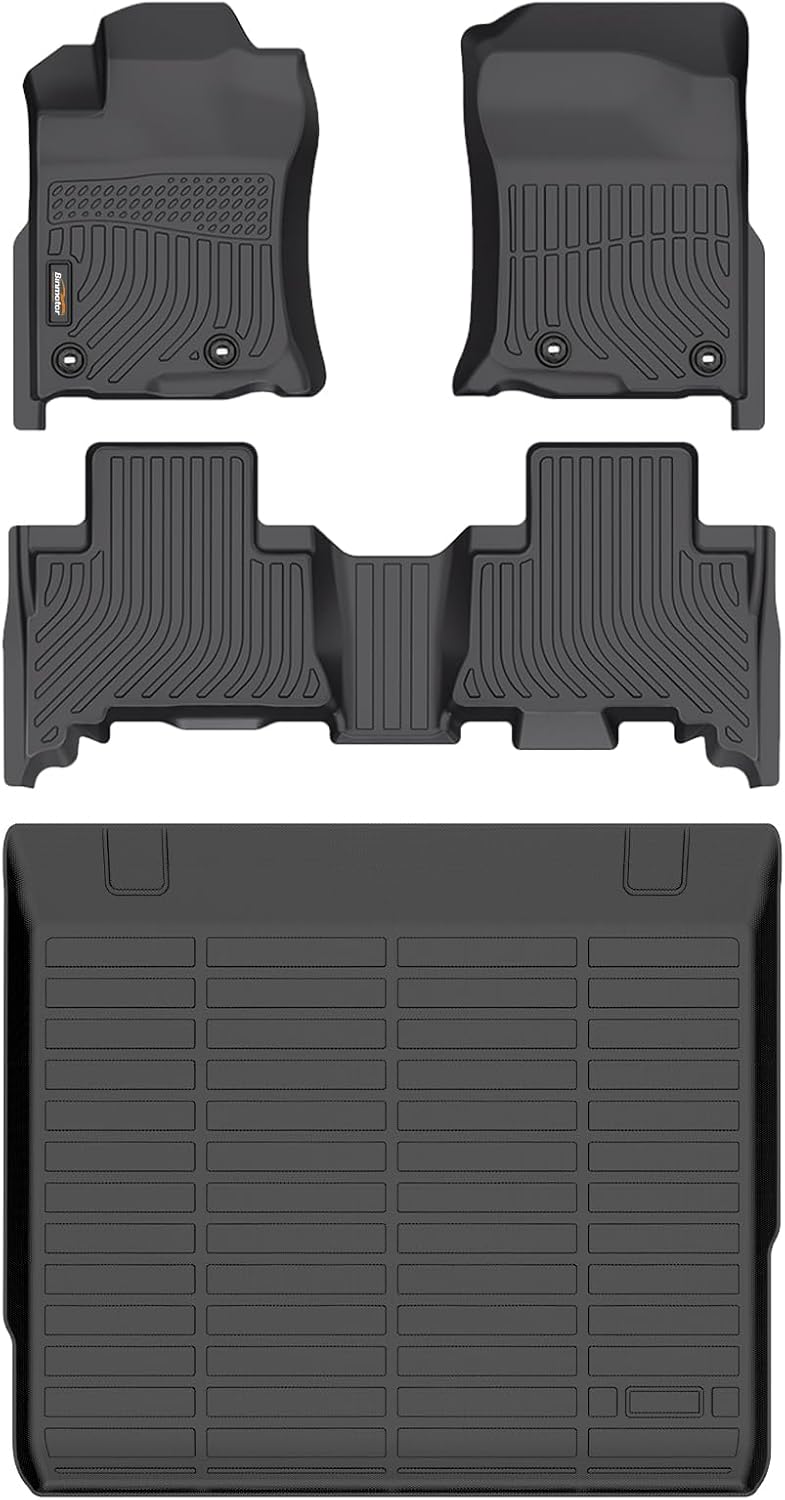
These custom-fit floor mats and cargo liner are designed for select Toyota 4Runner models and provide full-coverage protection for your interior. Made from durable TPE material with raised edges and non-slip buckles, they help contain dirt, spills, snow, and debris while staying securely in place. The waterproof design is easy to clean, making them a practical all-weather upgrade for everyday driving.

The NOCO Boost GB70 is a compact yet powerful jump starter designed to safely revive dead 12V batteries in seconds. It combines UltraSafe spark-proof protection, a built-in power bank, and a bright LED flashlight in a rugged, portable design that fits easily in a glove box or emergency kit. Built for cars, trucks, SUVs, boats, motorcycles, and more, it delivers dependable emergency starting power whenever you need it.
How Old Is Too Old for a 4Runner Tire?
There is no single federal expiration date that makes every tire unsafe on the same birthday. Use age as one decision factor alongside tread, damage, maintenance and operating conditions.
- Before six years: continue normal pressure, tread and damage inspections; age alone does not prove a tire is safe or unsafe.
- After six years: Toyota says the tire should be checked by a qualified technician even when it looks normal.
- At the tire manufacturer’s maximum age: follow that maker’s replacement instruction. Michelin and Toyo, for example, publish a 10-year outer replacement recommendation for their tires.
- At any age: replace or professionally evaluate tires with serious damage, repeated air loss or tread at the replacement threshold.
That approach is more accurate than automatically treating every six-year-old tire as failed or every five-year-old tire as safe.
What Changes as Tires Age?
Service, storage, heat, sunlight, maintenance and other environmental conditions can affect tire aging. NHTSA warns that aging cannot be assessed simply by looking at the outside of a tire and recommends professional attention when an older tire develops pressure loss, vibration, noise or other performance problems.
| Age/condition | Recommended action |
|---|---|
| Under 6 years with no defects | Routine tread, pressure and damage checks |
| More than 6 years | Qualified inspection per Toyota guidance |
| At tire maker’s maximum service age | Replace according to that manufacturer’s instruction |
| Unsafe damage or 2/32-in. tread at any age | Replace or professionally evaluate immediately |
Tires 6–10+ Years Old: Inspect or Replace
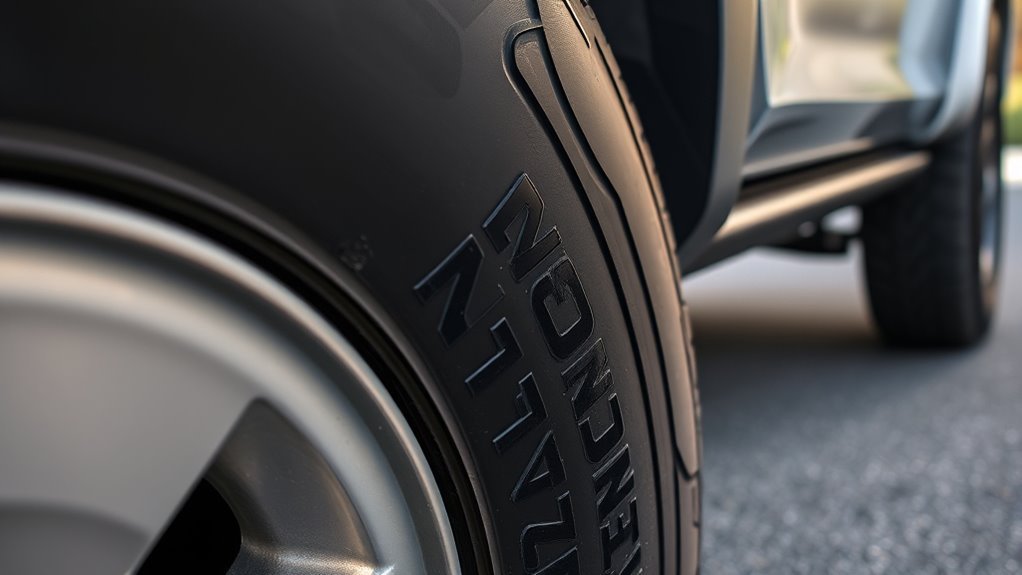
For a 4Runner tire older than six years, start with Toyota’s requirement for a qualified inspection rather than deciding from tread appearance alone. Then check the age limit published by the tire manufacturer. NHTSA notes that manufacturer recommendations vary, while major tire makers such as Michelin and Toyo publish a 10-year maximum-age replacement recommendation for their tires.
- Replace sooner if tread has reached 2/32 inch or the wear bars are flush.
- Do not keep using a tire with a bulge, significant structural damage, visible separation, exposed reinforcement, or repeated unexplained pressure loss.
- Have vibration, new noise, recurring air loss, or unusual wear investigated even if the tire is below its age limit.
- Check the spare’s date and condition too; rarely used spare tires still age.
For additional age guidance, see NHTSA TireWise and the recommendations from your tire’s manufacturer.
[Products Worth Considering]

These OEM-style mud flaps are designed for Toyota RAV4 and RAV4 Hybrid models to help reduce mud, stone, and road spray damage while driving. The no-drill installation uses adhesive and included hardware for a fast, secure fit, and the durable PP thermoplastic construction is built to handle harsh weather conditions. They also provide a helpful reduction in rear road noise on rough surfaces.

This battery terminal maintenance kit helps remove corrosion fast and adds ongoing protection for cleaner, more reliable electrical connections. The dual-ended brushes restore terminal contact surfaces while the color-coded anti-corrosion washers help prevent future buildup on cars, trucks, RVs, boats, and other 6V or 12V batteries.

【Package & Compatibility】 2 pieces 10x2.5 inch solid tires and 2 pieces tire levers. Compatible with Ninebot by Segway MAX G30 G30P G30E G30LP G30LE / Hiboy S2 MAX.
Choosing Replacement Tires (and Compatible Wheels) for a 4Runner
Do not use P265/70R17 as a universal 4Runner replacement specification. Tire size varies by model year and grade. For example, Toyota’s 2025 U.S. 4Runner information lists 265/70R17, 265/70R18, and 265/55R20 across different grades. Earlier generations and modified vehicles can differ again.
Start with the Tire and Loading Information placard on your own 4Runner and confirm the specification in the model-year owner’s manual. Match the required size, construction and load capability, and make sure any wheel change remains compatible with the vehicle and tire-pressure monitoring system. Toyota also warns against mixing incompatible tire sizes, constructions and substantially different tread patterns or treadwear.
| Check | Where to verify it |
|---|---|
| Original tire size | Driver-door Tire and Loading Information placard |
| Cold inflation pressure | Vehicle placard / owner’s manual |
| Load capability and service description | Vehicle requirements and replacement-tire sidewall |
| Model-year restrictions | Toyota owner’s manual |
| Replacement tire age | Four-digit DOT/TIN date code |
If your 4Runner is 4WD, be especially cautious about installing one tire that differs substantially from the others in size, construction or wear. Follow Toyota’s model-year instructions and the tire manufacturer’s replacement/matching guidance rather than relying on a generic online fitment number.
[Products Worth Considering]

Compatible Models: Our wheel lug studs are compatible with Lexus 2001-2003 LS430, 2010-2021 GX460, compatible with Toyota 2000-2006 Tundra, 2009-2014 Matrix, compatible with Pontiac 2003-2010 VIBE, compatible with Scion 2004-2006 XA. Please refer to the picture for more applicable models
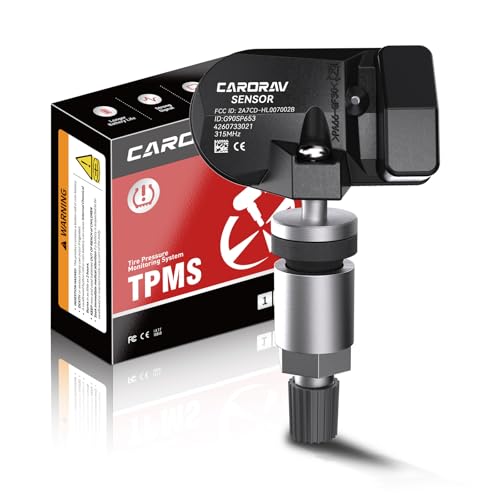
[FITMENT]: The CARORAV tire pressure sensor fit for 2003-2019 Toyota 4Runner, 2006-2012 Toyota Avalon, 2013 Early Toyota Avalon, 2006-2011 Toyota Camry, 2007-2013 Toyota Corolla, 2007-2014 Toyota FJ Cruiser, 2007-2013 Toyota Highlander, 2005-2016 Toyota Land Cruiser, 2007-2014 Toyota Matrix, 2006-2015 Toyota Prius, 2012-2016 Toyota Prius V ect. Please refer to Product Description for specific application of model and year

[𝐔𝐏𝐆𝐑𝐀𝐃𝐄𝐃 𝐓𝐏𝐌𝐒]- The Upgraded Infineon Chips provide more efficient power management, precise sensing and control capabilities, as well as reliable security performance. The upgraded battery features a larger capacity of 350mAh, which represents a 75% increase compared to conventional tire pressure sensors available in the market. With a long service life of 8 years under normal usage of 12,000 miles per year, it offers enhanced durability
Track Tire Age & Maintenance for Long-Term Safety
A simple tire log makes age easier to manage. Record the four-digit DOT date code when you buy the vehicle or install a new set, then track rotations, pressure checks, tread measurements and any repairs. Check your road tires and spare rather than assuming they were manufactured together.
- Record the DOT date, installation date and tire position.
- Check inflation and tread at least monthly and before long trips.
- Inspect again after hard off-road use, impacts or other events that may have damaged a tire.
- Follow the rotation interval in your model-year Toyota maintenance guide; Toyota’s general guidance is approximately 5,000–8,000 miles.
- Use the cold PSI on the vehicle placard rather than the tire’s sidewall maximum-pressure marking.
Stored tires also age. If you keep a seasonal set off the vehicle, store it in a clean, cool, dry, dark location away from direct sunlight, heat, petroleum products and ozone-generating electrical equipment. Michelin publishes similar storage guidance for protecting tires from environmental aging.
Frequently Asked Questions
What Do the Last Four Digits of a Tire DOT Code Mean?
They show the manufacturing week and year. The first two digits are the week and the final two are the year. A code ending in 1422 means the tire was made during week 14 of 2022. If the visible DOT string does not end with four digits, check the other sidewall for the complete TIN.
How Old Is Too Old for a 4Runner Tire?
Toyota says any tire over six years old should be checked by a qualified technician even if it looks normal. NHTSA notes that tire and vehicle manufacturers may recommend age-based replacement between six and ten years. Follow the maximum age specified by the manufacturer of the tire installed on your 4Runner.
Can Aftermarket Tire Brands Void My 4runner Warranty?
No. An aftermarket tire brand does not automatically void your Toyota warranty. The Federal Trade Commission explains that warranty coverage generally cannot be denied solely because a third-party part was used. A manufacturer may, however, deny coverage for damage caused by an unsuitable or defective aftermarket part or improper installation.
How Do Seasonal Storage Conditions Impact Tire Aging?
Heat, sunlight, ozone and poor storage can accelerate aging. Store removed tires in a clean, cool, dry, dark location away from direct sunlight, heat sources, fuels, solvents and ozone-producing electrical equipment. Inspect stored tires before putting them back into service and still use their DOT manufacture date when considering age.
Are Run-Flat or Spare Tires Subject to the Same Age Rules?
Spare and run-flat tires still age, but the exact service-life recommendation depends on the tire manufacturer. NHTSA specifically warns owners not to forget the spare because it may remain in a vehicle for many years with little use. Check its DOT date, pressure and condition along with the road tires.
Can Tire Age Be Estimated if DOT Code Is Worn Off?
You cannot reliably determine a tire’s manufacturing week and year from tread wear, cracking or appearance alone. First check the opposite sidewall because the complete TIN may be molded there. If the code is truly unreadable, look for purchase or service records and have a tire professional inspect the tire. Unknown age and unknown service history should be treated as additional uncertainty when deciding whether to keep using it.
Conclusion
Checking a 4Runner’s tire age takes only a few minutes: find the complete DOT/TIN, read the final four digits as week/year, and record the code for every road tire and the spare. Then judge the tire on three separate factors: age, tread depth and physical condition. Replace tires at the treadwear limit or when serious damage is present, have tires over six years old professionally checked as Toyota recommends, and follow the tire manufacturer’s maximum-age guidance. When replacement is needed, verify the exact size and requirements from your own 4Runner’s placard and model-year manual rather than assuming one tire specification fits every 4Runner.