

Your Toyota 4Runner’s correct tire pressure is the cold PSI printed on the Tire and Loading Information label inside the driver’s door area. A value around 33 PSI is common on many current-generation factory setups, but the exact number can change by model year, tire size, trim, spare type, and replacement tire construction. Use the label on your own vehicle instead of a generic online number.
Last updated: September 16, 2026 — tire-pressure, TPMS, towing, and replacement-tire guidance rechecked against current Toyota, NHTSA, Toyo Tires, and Michelin references.
Quick Answer
Set each cold tire to the front, rear, and spare-tire pressures shown on your 4Runner’s door label. Check before driving or after the vehicle has been parked for at least three hours; if you must move it first, keep that movement under about 1 mile (1.5 km) before measuring. Do not use the maximum PSI molded into the tire sidewall, and only reset or set TPMS when your model-year manual calls for it.
Key Takeaways
- A value around 33 PSI is common on many current-generation 4Runners, but the door-jamb label—not a universal 33 PSI rule—is your main pressure reference.
- Measure pressure when the tires are cold and use a separate gauge even if your dashboard shows individual readings.
- Do not add a fixed amount of PSI for towing or cargo. Follow the vehicle label, owner’s manual, and tire load guidance.
- LT-metric, oversized, or otherwise modified tires may need a pressure calculated from a load-and-inflation table.
- TPMS procedures vary by generation and model year. Depending on the vehicle, setup may use the multi-information display or a physical reset switch.
At a Glance
| Time Required | About 10 to 15 minutes |
| Difficulty | Easy |
| Tools Needed | Accurate tire-pressure gauge, air compressor or pump, and the correct owner’s manual |
| Cost | Usually free if you already have a gauge and air source |
What Tire Pressure Should a Toyota 4Runner Use?
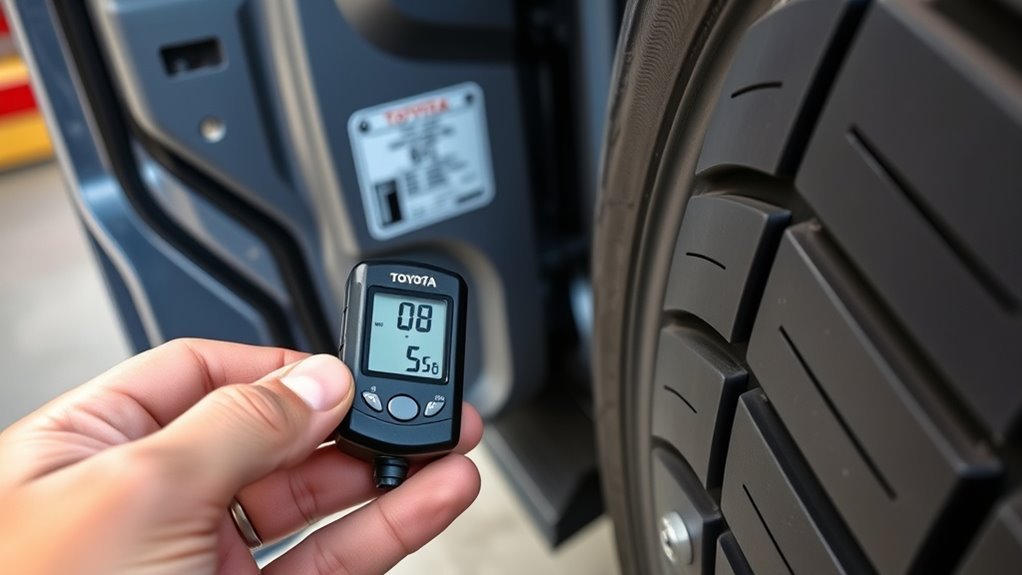
Use the cold inflation pressure printed on your own vehicle’s label. A value around 33 PSI is common on many current-generation factory-equipped 4Runners, but it is not a safe universal answer for every generation, trim, wheel size, spare type, or replacement tire. The front and rear values may also differ on some vehicles.
The National Highway Traffic Safety Administration says the vehicle manufacturer’s recommended cold pressure is found on the Tire and Loading Information label or in the owner’s manual. Toyota publishes separate manuals for each year, including the 2025 4Runner and 2026 4Runner, because specifications and procedures can change.
Why online PSI charts disagree: The 4Runner spans multiple generations and tire packages. A chart can be accurate for one year or wheel size and wrong for another. If an online number or tire size does not match your door label, use the label and the exact model-year manual instead.
| Tire setup | Best pressure source |
| Original-size factory tires | Driver’s door Tire and Loading Information label |
| Same-size replacement tires | Start with the vehicle label, then confirm any special instructions from the tire maker |
| Different-size or LT-metric tires | A verified load-and-inflation table and professional fitment advice |
| Temporary or compact spare | The separate spare-tire value on the label, tire, or owner’s manual |
Note: The PSI molded into a tire sidewall is normally a maximum-rating value associated with the tire’s load capacity. It is not the normal road-pressure recommendation for your 4Runner.
Where Is the Toyota 4Runner Tire Pressure Placard?
Open the driver’s door and look at the door jamb or B-pillar area. The Tire and Loading Information label lists the original tire size and the recommended cold tire pressure for the front and rear tires. It may also show a separate spare-tire pressure and the vehicle’s combined occupant-and-cargo limit.
Read every line before adding air. If the label gives different front and rear pressures, follow those separate values. If the label is missing, damaged, or no longer matches the installed tires, use the exact model-year Toyota owner’s manual and ask a qualified tire professional to confirm the setup.
Why Should You Check 4Runner Tire Pressure Cold?
Tire pressure rises as the tire warms from driving, sunlight, and higher outdoor temperatures. The door label is a cold-pressure specification, so checking a warm tire can make an underinflated tire appear closer to the target.
For a practical cold reading, check before driving or after the 4Runner has been parked for at least three hours. Toyota and tire-industry guidance also treat a tire as cold when the vehicle has moved less than about 1 mile (1.5 km) after that cold soak. NHTSA recommends checking all tires, including the spare, at least once a month with an accurate gauge.
- Cold readings are repeatable and match the label’s test condition.
- Underinflation can increase heat buildup, tire wear, and fuel use.
- Overinflation can reduce ride comfort and contribute to uneven wear or impact damage.
- TPMS is a warning system, not a replacement for manual pressure checks.
Check pressure cold, set it to the vehicle label, and leave the normal pressure increase from driving alone.
How Do You Set Toyota 4Runner Tire Pressure Step by Step?
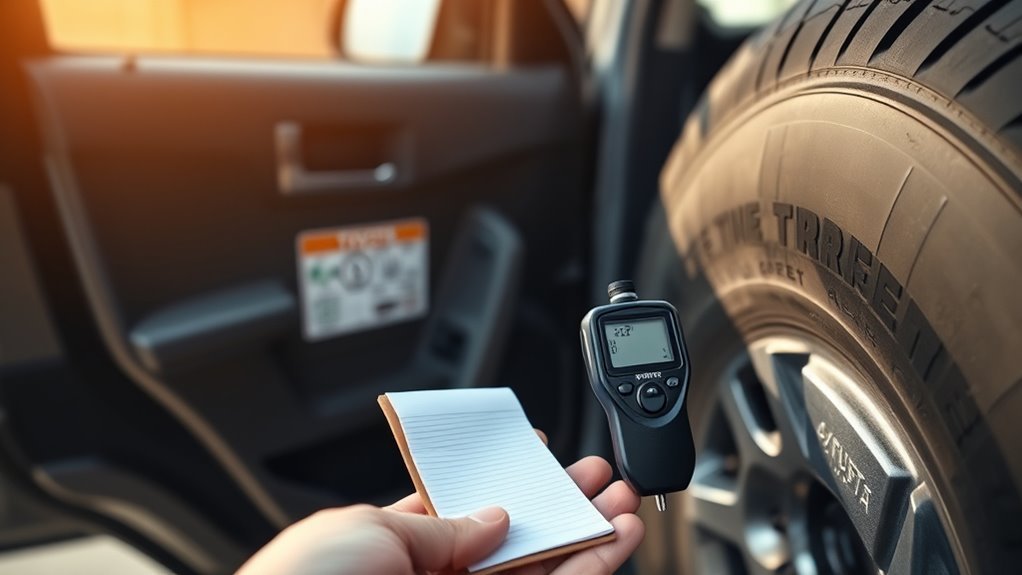
- Park safely. Use level ground, apply the parking brake, and let the tires cool if you have been driving.
- Read the label. Write down the front, rear, and spare cold-pressure values.
- Inspect each tire. Look for cuts, bulges, embedded objects, cracked valve stems, or an obviously low tire.
- Remove the valve cap. Keep it clean so dirt does not enter the valve.
- Press the gauge firmly onto the valve. A brief hiss is normal, but a continuous hiss means the gauge is not seated correctly.
- Compare the reading with the label. Add air in short bursts if the tire is low.
- Release excess air carefully. Recheck after each small adjustment.
- Repeat for every road tire. Do not assume all tires need the same value unless the label says so.
- Check the spare. A full-size spare may use a road-tire value, while a temporary spare can require a much higher pressure.
- Reinstall every valve cap. If one tire repeatedly loses air, have it inspected for a puncture, wheel leak, or valve problem.
Warning: Do not bleed air from a hot tire just because its reading is higher than the cold label value. Driving normally raises pressure. Recheck and make the final adjustment when the tire is cold.
[Products Worth Considering]

The JACO ElitePro Digital Tire Pressure Gauge delivers shop-grade accuracy with a clear digital readout, making it easy to maintain proper tire pressure for safer driving and better performance. Built with rugged brass and steel components, a protective guard, and a flexible air hose, it is designed for reliable use across cars, trucks, motorcycles, bikes, RVs, and trailers. The lock-on display, built-in bleeder valve, and bright backlit screen add convenience in any lighting condition.
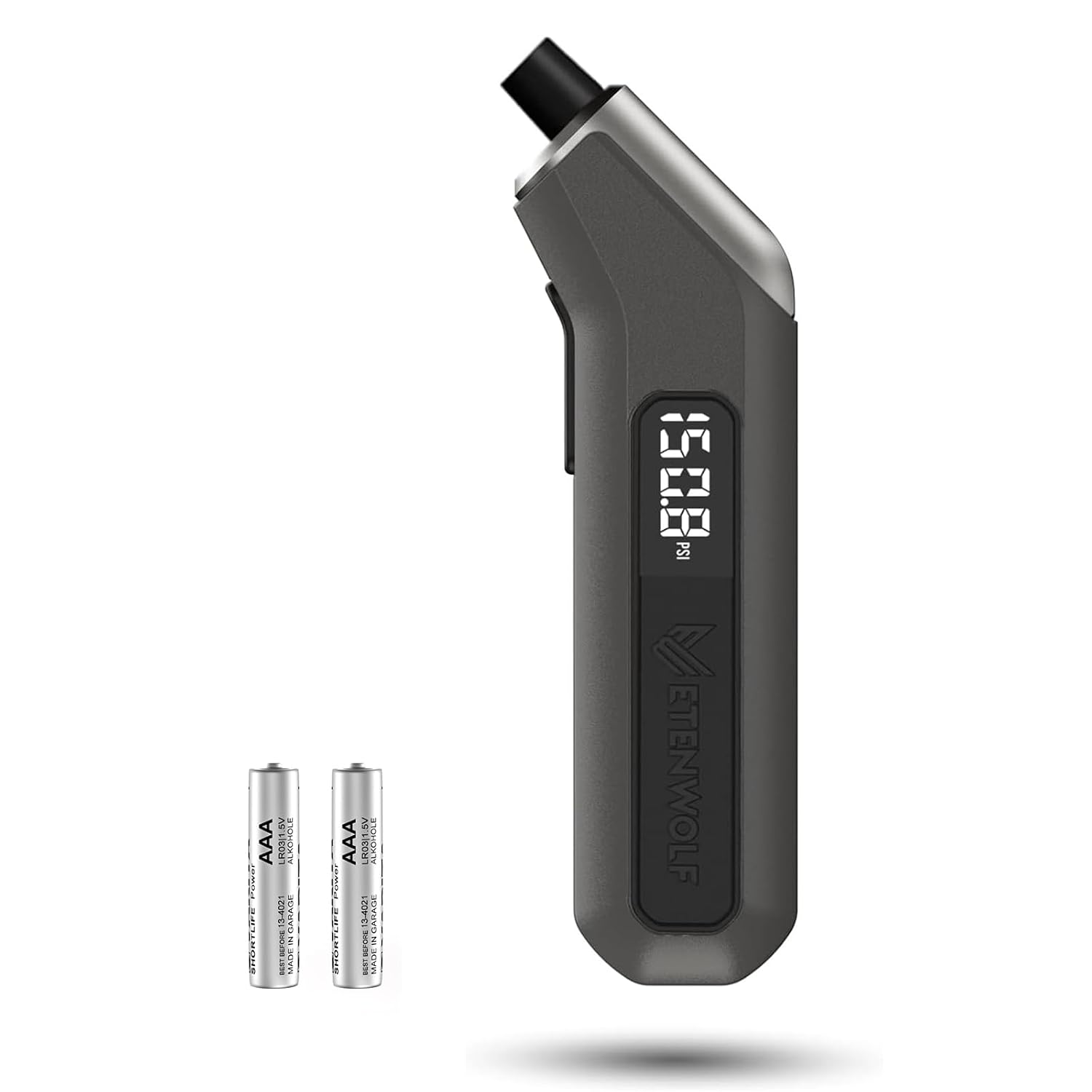
The ETENWOLF T300 digital tire pressure gauge delivers precise readings for cars, RVs, trucks, bikes, and heavy-duty vehicles with a wide measuring range and consistent accuracy. It is built to perform in extreme temperatures, includes a bright LED light for low-visibility use, and uses replaceable AAA batteries for convenient long-term operation. Durable enough to withstand rugged use, it is a practical tool for maintaining proper tire pressure across a variety of vehicles.
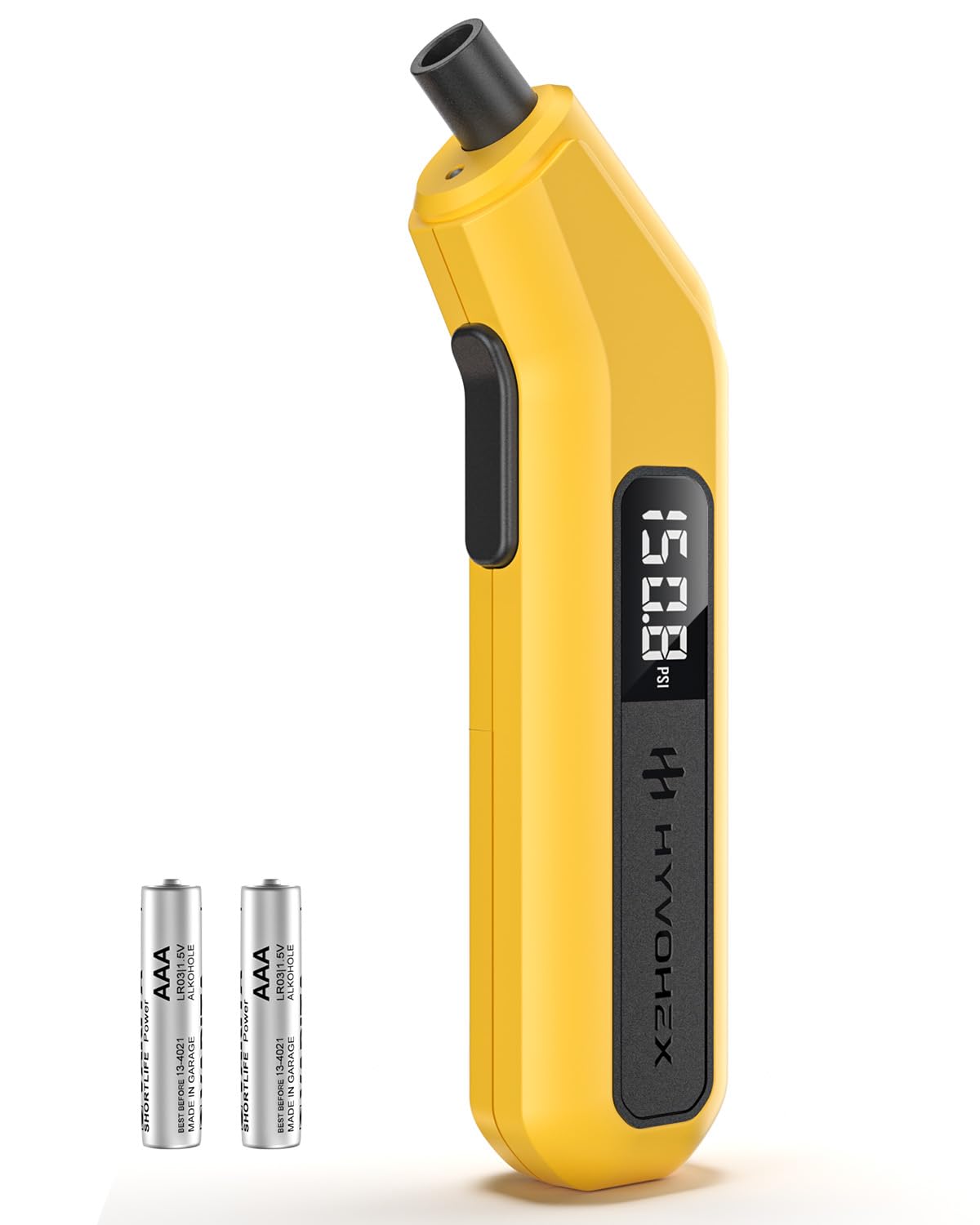
HYVOHEX digital tire pressure gauge delivers fast, accurate readings with an easy-to-read LED backlit display and a high-sensitivity sensor for reliable tire checks. Its valveless one-click operation, rotating valve head, and broad compatibility make it a practical tool for cars, bikes, and trucks. Built with a durable rubber shell and aluminum nozzle, it is compact enough to keep in your glove box or tool bag.
Should You Add PSI for Towing or Heavy Loads?
Do not use a rule such as “add 2 to 4 PSI for every 1,000 pounds.” That shortcut does not account for axle load, tire construction, tire size, load index, speed, or Toyota’s vehicle-specific limits.
Before towing or carrying a heavy load:
- Stay within the payload, axle, and towing limits shown on the certification label and in the owner’s manual.
- Use the cold pressures specified by Toyota for your tire and loading condition.
- If the manual provides a higher-pressure setting for a particular load or speed condition, follow that exact instruction.
- Confirm that the trailer’s tires are inflated to the trailer manufacturer’s cold specification.
- Recheck the 4Runner and trailer tires before departure, not after they become hot.
Extra cargo does not automatically mean you should raise pressure above the vehicle manufacturer’s approved value. Overloading is not corrected by adding more air. For towing hardware and receiver-class limits, see the 4Runner hitch receiver size and class guide.
[Products Worth Considering]

The NOCO GENIUS10 is an all-in-one smart charger, maintainer, trickle charger, and desulfator designed to keep 6V and 12V batteries performing at their best. It supports lead-acid and lithium batteries, charges deeply discharged batteries, and uses temperature compensation for safer, more accurate charging in changing conditions. Compact and versatile, it is ideal for a wide range of vehicles and long-term battery maintenance.

The AICEL TPMS Relearn Tool helps quickly reset and relearn tire pressure sensors on compatible GM vehicles after tire rotation, sensor replacement, or warning light issues. Designed for easy handheld use, it works with most cars, SUVs, and pickup trucks and can save time by eliminating unnecessary trips to the auto store. Its durable ABS housing and simple activation process make it a practical tool for keeping the tire pressure monitoring system operating properly.

Ample Lift for Easy Tire Changing: Featuring an impressive 5 1/2" lift, this Trailer Aid tandem tire changing ramp provides extra clearance, making it ideal for routine maintenance tasks on trailers and RVs.
What PSI Should LT or Aftermarket 4Runner Tires Use?
Changing from an original-equipment passenger or metric tire to an LT-metric tire can change the pressure needed to carry the same load. An LT tire may require more pressure than the original tire, but its sidewall maximum is still not the target.
Use this process for a modified setup:
- Record the original tire size, load index, and cold PSI from the door label.
- Confirm the replacement tire’s size, load range, load index, wheel-width compatibility, and speed rating.
- Use the replacement tire maker’s load-and-inflation table to find the pressure that provides at least the original load capacity.
- Account for the 4Runner’s actual front and rear axle loads, especially with armor, roof cargo, bumpers, drawers, passengers, or a trailer.
- Have the final pressure reviewed by the tire manufacturer, installer, or another qualified professional.
- Set TPMS to the new approved pressure only if the owner’s manual provides that function.
Toyo Tires’ load-and-inflation guidance explains that optional sizes should be matched through published tables, while original-equipment sizes should use the vehicle label. Michelin similarly advises matching a replacement tire’s load capability to the original tire at the vehicle manufacturer’s recommended pressure.
Pro Tip: If your 4Runner has significant permanent modifications, weigh the vehicle by axle when loaded as you normally drive it. Actual axle weights give a tire professional better data than guesswork or a chalk test alone.
[Products Worth Considering]
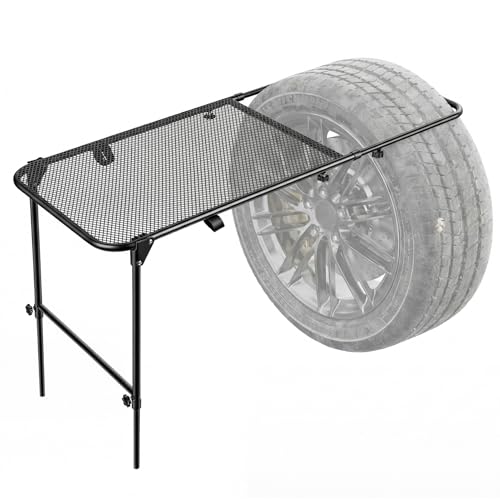
Portable and Space-Saving: Tailored for tailgating, camping, and road trips, this foldable car tire table adapts to various outdoor activities. Stays stable on uneven terrains, ensuring a reliable surface for your outdoor adventures, enhancing your camping experience in diverse environments.

Quality Material: the vehicle wheel table is made of carbon steel, it boasts excellent hardness and resistance to bending for added stability, it is designed with 2 corners support that ensure it keeps balanced on diverse terrains; What's more, it features contractible legs for auxiliary support

Versatile Outdoor Use: Creates an instant workstation or meal prep surface anywhere your vehicle goes overlanding, camping, tailgating, hunting, fishing, RV'ing, biking and even job sites and automotive work
What PSI Should You Use When Airing Down a 4Runner Off-Road?
Lowering tire pressure can improve traction and ride comfort on sand, rocks, or rough trails, but there is no single safe off-road PSI for every 4Runner. The correct range depends on tire construction, wheel width, bead retention, vehicle weight, terrain, speed, and whether beadlock wheels are used.
- Air down only for low-speed off-road use and use an accurate deflator or gauge.
- Reduce speed and avoid sharp steering inputs that can unseat a tire bead.
- Inspect the sidewalls frequently for pinching or damage.
- Carry a compressor capable of reinflating all four tires.
- Return the tires to the approved cold road pressure before sustained pavement or highway driving.
If you are also choosing between low range and driver-assist modes for the trail, see 4Runner Crawl Control vs. Low Range. Tire pressure and drivetrain mode solve different traction problems, so set each independently.
Warning: Do not copy another driver’s trail pressure without matching tire, wheel, vehicle weight, and terrain. Excessively low pressure can cause bead loss, sidewall damage, poor steering response, or tire failure.
How Does Temperature Affect 4Runner Tire Pressure?
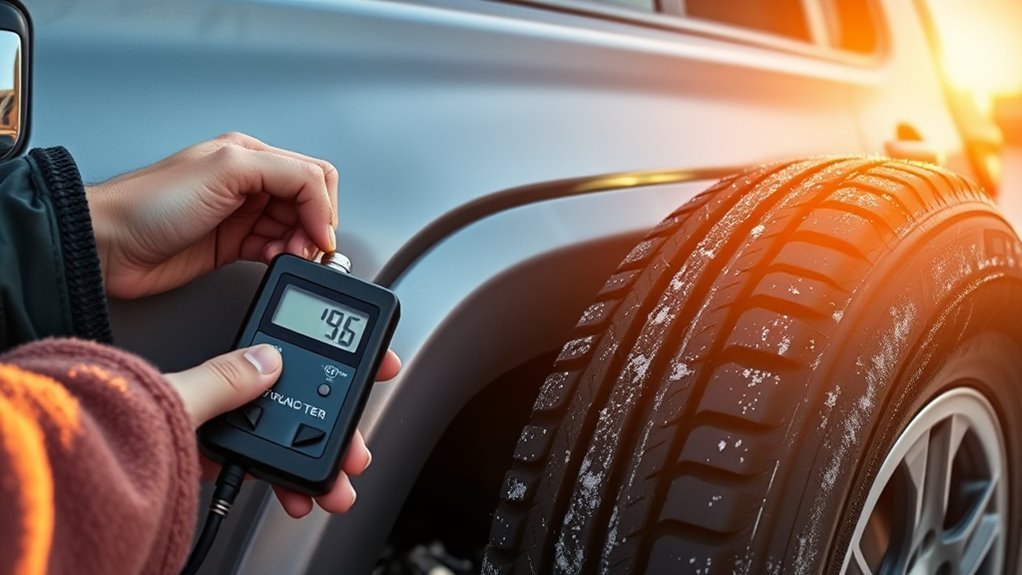
Air pressure changes with temperature. A common rule of thumb is about 1 PSI for each 10°F change, although the exact change varies. A cold snap can turn a marginal tire into a TPMS warning, while normal driving can raise the displayed pressure several PSI.
Cold vs. Warm PSI
Set pressure from a cold reading. A warm reading is useful for spotting a major difference between tires, but it should not replace the cold adjustment. If you must add air while traveling, inflate enough to avoid driving on a clearly low tire, then recheck all pressures after the vehicle has cooled.
Temperature Pressure Change
Do not chase every temporary rise or fall during the day. Set the tires to the label in the morning or under another consistent cold condition, then recheck after a major seasonal change. A TPMS light that appears on a cold morning and turns off later still deserves a gauge check because the cold pressure may be near the warning threshold.
When to Recheck
- At least once a month
- Before a long trip or towing
- After a sharp temperature change
- After hitting a pothole, curb, or trail obstacle
- When the TPMS light comes on
- After tire service, rotation, replacement, or a wheel change
- Whenever one tire looks lower or loses pressure faster than the others
If tire age is part of the concern, use the 4Runner tire date-code and age guide to read the DOT date code and decide when age needs a closer inspection.
What Tire Pressure Mistakes Should 4Runner Owners Avoid?
- Using the sidewall maximum: It is not the normal vehicle pressure recommendation.
- Assuming every 4Runner uses 33 PSI: The correct value depends on the exact vehicle and tire setup.
- Checking immediately after driving: Warm pressure is naturally higher.
- Bleeding warm tires down to the cold label: They may be underinflated after cooling.
- Adding a fixed amount for towing: Use Toyota’s loading guidance instead of an invented formula.
- Ignoring the spare: A spare that has not been checked for months may be unusable when needed.
- Trusting TPMS alone: The warning may not appear until a tire is significantly low.
- Resetting TPMS with incorrect pressure: This can teach the system the wrong benchmark on vehicles that support pressure setting.
- Mixing unmatched tires: Different sizes, constructions, or load ratings can affect handling and TPMS operation.
When Should You Reset the Toyota 4Runner TPMS?
Adding air does not always require a manual TPMS reset. On many 4Runners, the warning clears after the tires are corrected and the vehicle is driven. Initialization or pressure setting is more likely to be required after changing the specified pressure, changing tire size, rotating tires on systems that track wheel position, replacing sensors, or switching wheel sets.
2025–2026 4Runners With Multi-Information-Display Controls
Current-generation 4Runners use the multi-information display for tire-pressure setting. The exact choices can vary by model year and configuration, so use the manual for your exact vehicle. A common 2025–2026 sequence is:
- Park safely and adjust every tire to the approved cold pressure.
- Turn the ignition or power system on as directed by the manual.
- Open Vehicle Settings in the multi-information display.
- Select TPWS Setting, then Tire Pressure Setting.
- Choose Setting by Current Pressure when you are teaching the system the correctly adjusted current pressures. If your display offers a specified-pressure option, use it only as the manual directs.
- Confirm the setting. On current Toyota procedures, the tire-pressure warning light can blink slowly three times while the system accepts the setting.
- Drive only if the manual instructs you to complete sensor registration or wheel-position learning.
Older 4Runner Reset Button
Some earlier 4Runners use a physical tire-pressure reset switch under the driver-side dash, while other fifth-generation years provide a TPWS initialization command through the multi-information display. On applicable vehicles, initialization starts only after the tires are set to the correct cold pressure. Do not copy a reset procedure from a different model year; use the exact owner’s manual for the switch, menu, and drive-learning steps your 4Runner uses.
Note: A TPMS reset does not repair a puncture, weak sensor battery, damaged transmitter, unregistered sensor, or incompatible wheel. Fix the cause before trying repeated resets.
Understand the TPMS Light
| What the light does | Likely meaning | What to do |
| Stays on | One or more tires may be significantly underinflated | Stop safely, inspect the tires, and check all pressures with a gauge |
| Comes on during cold weather, then goes off | Cold pressure may be near the warning threshold | Check and correct the tires while cold |
| Flashes for about a minute, then stays on | The TPMS may have a system or sensor fault | Arrange diagnosis instead of repeatedly adding air or resetting |
NHTSA explains that a solid TPMS warning indicates significant underinflation, while a light that flashes for 60 to 90 seconds and then remains on can indicate a system malfunction.
How Do You Troubleshoot 4Runner Tire Pressure and TPMS Problems?
| Problem | Checks and next step |
| One tire loses pressure repeatedly | Inspect for a puncture, leaking valve, bead leak, cracked wheel, or impact damage. Repair the cause rather than topping it up indefinitely. |
| Light remains on after correct inflation | Confirm all road tires and the monitored spare, if equipped. Recheck cold, then follow the model-year manual’s drive or setting procedure. |
| Pressure display shows dashes | The system may still be learning wheel positions or may not recognize a sensor. Follow the registration procedure or seek service. |
| Warning started after new wheels or tires | Verify compatible sensors, registered ID codes, correct wheel set, tire size, and approved inflation pressure. |
| Gauge and dashboard disagree | Compare when cold with a known-accurate gauge. Dashboard readings may update slowly after inflation. |
Frequently Asked Questions
What is the correct tire pressure for a Toyota 4Runner?
Use the cold front, rear, and spare pressures printed on the Tire and Loading Information label inside the driver’s door area. Some newer 4Runners list about 33 PSI, but the exact value is not universal across all years and tire setups.
Should all four 4Runner tires use the same PSI?
Only if the door label lists the same pressure for front and rear. Follow separate front and rear values when shown. The spare may also have a different specification.
Do I need to reset TPMS after adding air?
Not always. A low-pressure warning often clears after the tires are corrected and the vehicle is driven. Use initialization or pressure setting only when the owner’s manual requires it for your model year, tire change, wheel rotation, sensor registration, or new pressure benchmark.
Why does the TPMS light come on during a cold morning?
Cold air lowers tire pressure. A tire that was already close to the warning threshold may trigger the light overnight and rise again as the day or tire warms. Check and adjust the tires cold instead of ignoring the warning.
Should I use the PSI printed on the tire sidewall?
No for normal original-equipment use. The sidewall number is a tire rating, not the 4Runner’s normal road-pressure target. Use the vehicle label unless a qualified tire professional has calculated an approved pressure for a changed tire size or construction.
How often should I check 4Runner tire pressure?
Check at least monthly, before long trips or towing, after major temperature changes, and whenever the TPMS light appears. Include the spare in the routine.
Do 2025 and 2026 Toyota 4Runners use 33 PSI?
A value around 33 PSI cold is common on many current-generation factory setups, but do not assume every 2025 or 2026 tire, trim, or spare uses the same value. Confirm the front, rear, and spare pressures on your own Tire and Loading Information label.
Should I add PSI for towing or heavy cargo?
Do not add a fixed number of PSI just because you are towing or carrying more cargo. Stay within Toyota’s payload and axle limits, start with the approved cold-pressure guidance for your setup, and use any higher-load pressure only when your exact owner’s manual or verified tire load-and-inflation data calls for it.
Conclusion
Your 4Runner does not need a guessed pressure. Before your next drive, read the vehicle label, measure every tire cold, and set the road tires and spare to their approved values with an accurate gauge. Treat towing, LT tires, off-road airing down, and TPMS setup as separate situations that require the exact Toyota manual or verified tire-manufacturer load data. If one tire keeps losing pressure, repair the cause instead of repeatedly topping it up.
Sources
- NHTSA TireWise: Tire Safety Ratings and Awareness: cold-pressure checks, door-label guidance, monthly checks, and TPMS warning meanings
- Toyota 2025 4Runner Manuals and Warranties: model-year-specific owner’s manual reference
- Toyota 2026 4Runner Manuals and Warranties: current 4Runner owner’s manual reference
- Toyo Tires Load and Inflation Tables: pressure selection for optional tire sizes and altered fitments
- Michelin Tire Assistance FAQs: replacement-tire load capability and inflation guidance



[…] For inflation, use the cold pressure on your 4Runner’s Tire and Loading Information label rather than the maximum pressure molded on the tire. See the site’s guide to set tire pressure using the 4Runner door placard. […]