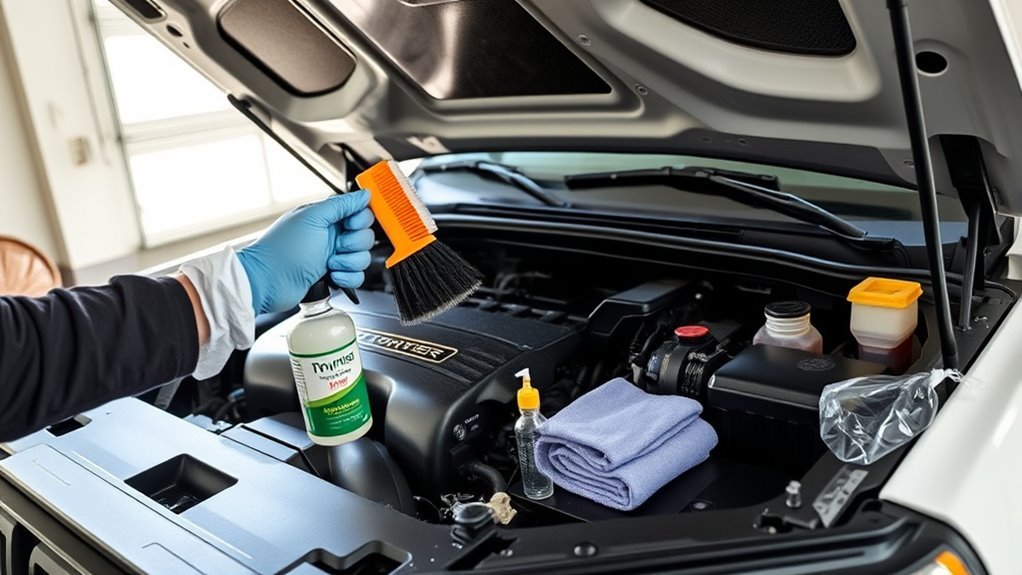
Cleaning a Toyota 4Runner engine bay is safe when you keep the process gentle: cool the engine, protect electrical parts, use a mild cleaner, rinse with low pressure, and dry everything before driving. The goal is not to blast the bay spotless. It is to remove mud, oil film, salt, and dust without pushing water into connectors, sensors, or sealed components.
Quick Answer
To clean a 4Runner engine bay safely, let the engine cool, cover the battery, alternator, fuse box, exposed connectors, intake openings, and coil areas, then spray a diluted mild degreaser in small sections. Agitate with a soft brush, rinse gently with low pressure, dry thoroughly, and check for leaks or warning lights before driving.
Key Takeaways
- Use a cool engine, mild cleaner, soft brushes, microfiber towels, and a low-pressure rinse.
- Cover electrical parts before spraying, and never blast coil packs, fuse boxes, alternators, sensors, intake openings, or hybrid components.
- Follow the cleaner label for dilution and dwell time; do not let degreaser dry on the engine bay.
- Keep dirty wash water away from storm drains whenever possible, especially if the bay has oil, grease, mud, or road salt buildup.
- After cleaning, dry connectors, test-start the engine, check for leaks, and stop if warning lights or rough running appear.
At a Glance
| Time Required | 45–90 minutes, including drying and inspection |
| Difficulty | Easy to moderate |
| Tools Needed | Mild degreaser, spray bottle, soft detail brushes, microfiber towels, plastic bags or foil, painter’s tape, low-pressure hose, gloves, eye protection |
| Cost | About $10–$40 if you already have towels and a hose |
Quick 5-Step Engine-Bay Wash for a 4Runner
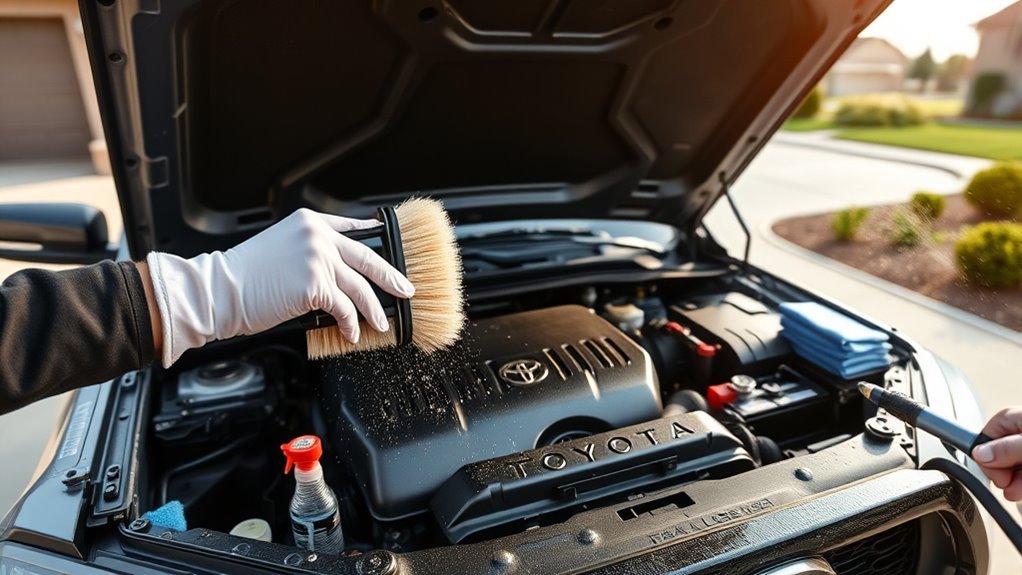
Use this quick process when the bay is dirty from dust, mud, light oil film, road salt, or normal off-road use. If you see damaged wiring, fuel smell, active fluid leaks, or chewed insulation, stop and repair the problem before adding water.
- Cool and inspect the engine bay. Park in shade, open the hood, and let the engine cool until parts are safe to touch.
- Protect sensitive components. Cover the battery, fuse box, alternator, exposed connectors, intake openings, and coil-pack areas with plastic bags, foil, or clean towels. Use tape only where it will not leave residue.
- Clean one section at a time. Spray a diluted mild degreaser, agitate with a soft brush, and let it dwell only as long as the label allows. For Simple Green, the brand’s engine-cleaning directions call for a short 3–5 minute dwell, not a long soak.
- Rinse gently. Use a low-pressure hose or a spray bottle of clean water. Aim runoff away from electrical parts and work from the upper areas down.
- Dry, uncover, and test. Blot with microfiber towels, dry connectors promptly, remove covers by folding them inward, then test-start the engine and check for leaks or warning lights.
Warning: Do not clean a hot engine, spray water into the intake, blast electrical connectors, or use harsh chemicals such as bleach, vinegar, brake cleaner, gasoline, or strong solvents. If your 4Runner is a 2025+ hybrid model, avoid orange high-voltage cables and hybrid components entirely and check the correct Toyota owner’s manual before cleaning.
Before You Start: Where to Wash and What to Avoid
Choose the cleaning location before you choose the cleaner. Engine-bay runoff can carry detergent, oil, grease, mud, road salt, brake dust, and small metal particles. The safest option is a self-serve wash bay that captures wastewater, or a driveway setup where runoff can be contained and kept away from storm drains.
The U.S. EPA’s stormwater guidance explains that vehicle wash water can carry hydrocarbons, metals, and detergents into local waterways. UNC Environment, Health and Safety also advises not washing vehicles into storm drains. If your engine bay is only dusty, a damp towel or waterless wipe-down is often cleaner, safer, and easier than a full rinse.
Note: Check the correct model-year manual through Toyota’s owner manual portal. Engine-bay layouts differ between 2010–2024 4Runners and newer 2025+ turbo or hybrid models.
Prepare the 4Runner Engine Bay: Cool Down, Inspect, and Gather Tools
Preparation matters more than water pressure. A careful setup protects the electronics, gives the cleaner time to work, and helps you spot problems before they become expensive.
Cool the Engine Completely
Let the engine cool to the touch before spraying cleaner or water. Do not spray cold water on a hot engine to cool it faster. Sudden cooling can stress hot parts, and steam can push moisture into places you do not want it.
| Action | Why It Helps | Typical Time |
|---|---|---|
| Park in shade | Reduces surface heat | 15–30 min |
| Open the hood | Improves airflow | 5 min |
| Touch-test safe areas | Prevents burns | When cool |
| Cover sensitive parts | Reduces water intrusion | Before spraying |
| Stage tools nearby | Keeps the job controlled | While cooling |
Inspect for Leaks and Damage
Look and feel around the engine bay before adding moisture. Check hose ends, clamps, the radiator area, coolant reservoir, power-steering area on older models, valve-cover edges, and any place with oily dust stuck to it. Oil, coolant, brake fluid, or fuel odor should be handled before cleaning.
- Inspect hose connections and clamps for seepage, cracks, swelling, or soft spots.
- Check the radiator, reservoir, and overflow lines for stains or wetness.
- Smell for fuel or coolant odors, which can point to a hidden leak.
- Take a quick phone photo before cleaning so you can compare routing, covers, and connector positions later.
Gather Cleaning Tools
Use gentle tools. A 4Runner engine bay does not need a hard scrub brush or a pressure-washer blast for normal maintenance cleaning.
- Spray bottle with diluted mild degreaser or automotive all-purpose cleaner
- Soft nylon detail brushes in two sizes
- Microfiber towels for wiping and drying
- Plastic bags, foil, painter’s tape, or clean towels for covers
- Low-pressure hose, pump sprayer, or clean-water spray bottle
- Gloves and eye protection
- Small flashlight for checking wet connectors and leaks
- Leaf blower, shop air, or compressed air if used carefully and from a safe distance
Protect the Battery, Coils, Fuse Box, Alternator, and Connectors
Before spraying cleaner, cover the parts that should not receive direct water. For a light wash, covering the battery is usually enough. Disconnect the negative battery terminal only if the owner’s manual allows it and you are comfortable with possible system resets. Do not place foil across bare battery terminals.
The safest engine-bay cleaning method is controlled, not aggressive: protect sensitive parts first, clean in small sections, rinse gently, and dry before starting the engine.
| Part to Protect | How to Protect It | What to Avoid |
|---|---|---|
| Battery and terminals | Cover with plastic or towel | Foil touching bare terminals |
| Fuse box | Cover lid and seams | Direct rinse at seams |
| Alternator | Cover loosely or wipe by hand | Soaking or pressure washing |
| Coil-pack areas | Avoid direct spray | Water pooling around plugs |
| Sensors and connectors | Cover exposed plugs | High-pressure water |
| Air intake openings | Cover securely | Any water entering intake |
Pro Tip: Remove loose leaves, sand, pine needles, and mud chunks with a gloved hand, vacuum, or soft brush before using cleaner. Less loose debris means less dirty runoff and less chance of grit being pushed into seams.
[Products Worth Considering]

Simple Green Pro HD Heavy Duty Cleaner Concentrate is a professional-grade, non-corrosive cleaner and degreaser designed for demanding commercial and industrial jobs. It quickly cuts through tough grease, grime, and stains on floors, walls, equipment, appliances, and vehicles while remaining safe on metal surfaces. Ideal for contractor use, kitchens, baths, pressure washing, parts washing, and ultrasonic cleaning, it delivers versatile all-purpose cleaning power in one formula.

Armor All Multi-Purpose Car Cleaner Spray delivers an all-in-one clean for interior surfaces, helping restore that just-detailed look throughout your vehicle. It is designed for dashboards, vinyl, fabric, carpet, clear plastic, and consoles, and it helps remove tough dirt, dust, grime, and stubborn stains while providing odor control. Scientifically engineered for automotive surfaces, this cleaner helps refresh your car interior without drying out or damaging delicate materials.
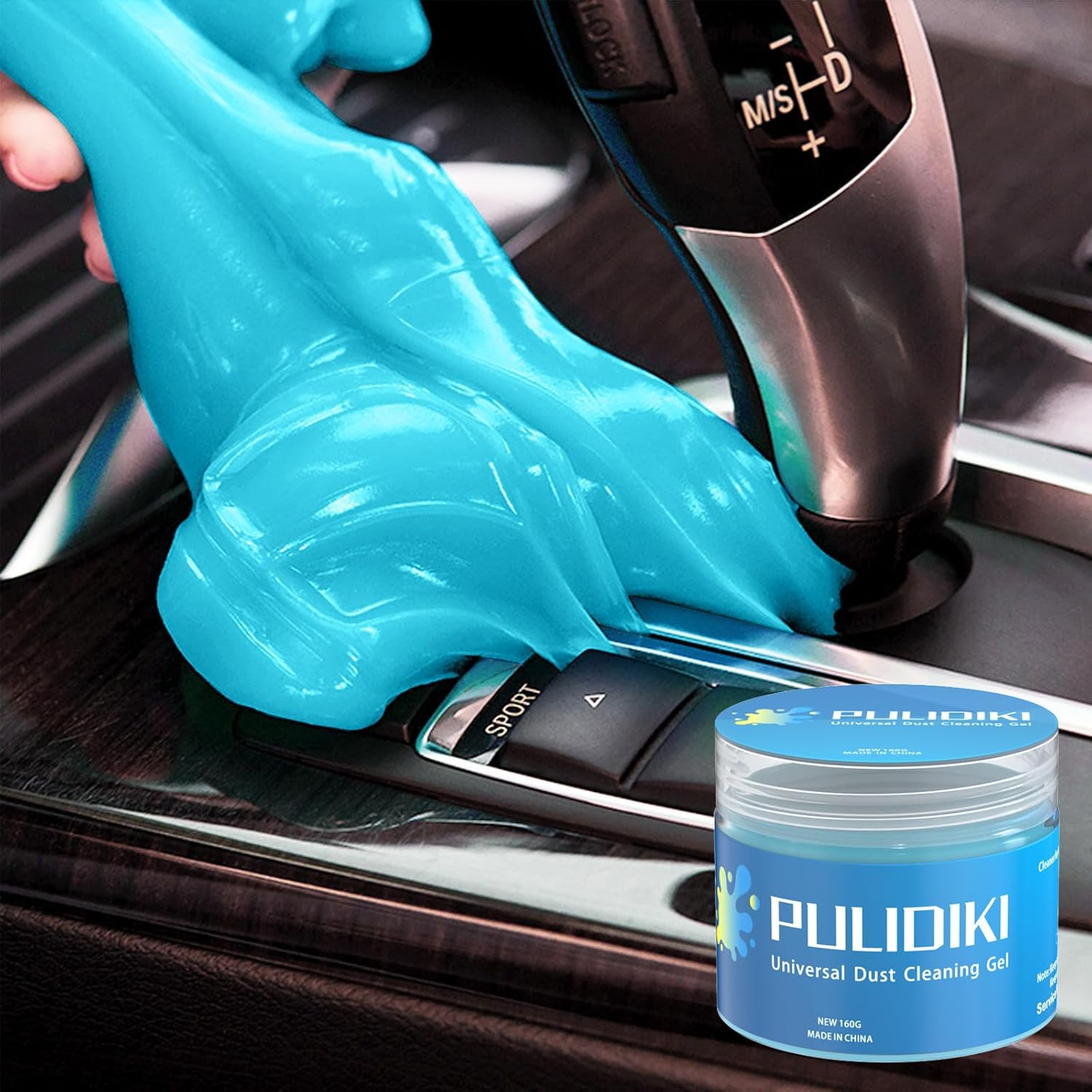
PULIDIKI Car Cleaning Gel is a reusable detailing putty designed to lift dust and debris from hard-to-reach spots inside your vehicle. It helps clean air vents, cup holders, dashboards, and other tight spaces while also working on keyboards, remotes, and other water-resistant surfaces. Made with a lavender scent and natural materials, it offers a simple, mess-free way to keep your car and everyday electronics looking tidy.
Choose the Right Cleaner: Simple Green, Powersports Degreaser, or Mild Soap
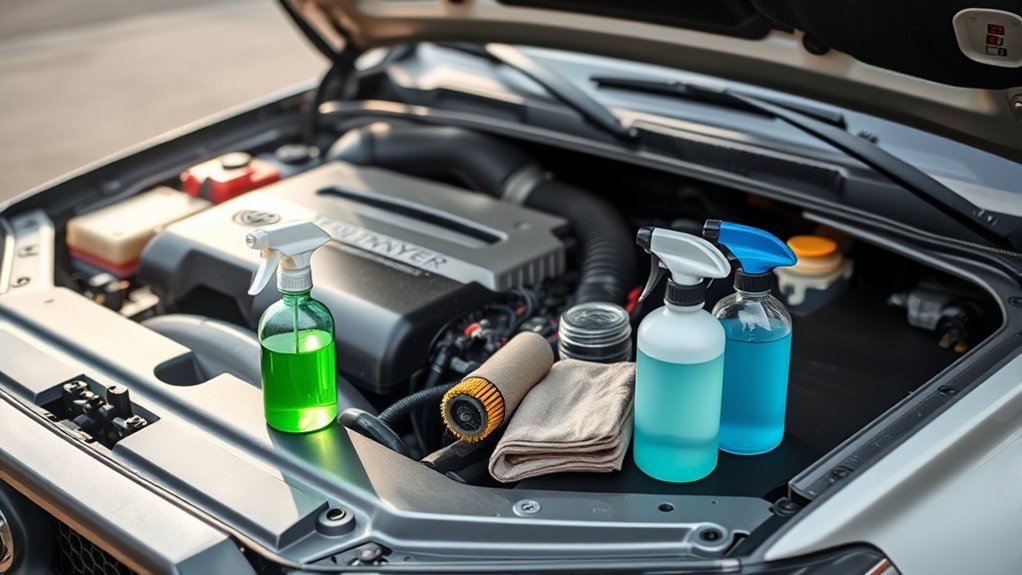
Pick the mildest cleaner that will do the job. For a dusty or lightly dirty bay, mild car soap and water may be enough. For greasy areas, use a diluted automotive degreaser or all-purpose cleaner according to the label. Simple Green’s engine-cleaning guide recommends a cool engine, protected electrical parts, agitation with a non-metallic brush, rinsing, and thorough drying.
Be careful around bare or uncoated aluminum. Simple Green’s aluminum guidance says unprotected aluminum should have brief contact time, should be rinsed thoroughly, and may need protection afterward to reduce oxidation. That is why section-by-section cleaning is better than soaking the entire bay.
- Light dust: damp microfiber towel, mild soap, or waterless detail spray.
- Normal road grime: diluted automotive all-purpose cleaner or mild degreaser.
- Oil film or trail mud: powersports or automotive degreaser at label dilution.
- Bare aluminum or delicate areas: short dwell time, spot test, and thorough rinse.
Warning: Do not use bleach, vinegar, oven cleaner, brake cleaner, gasoline, diesel, or harsh solvents in the engine bay. These can damage rubber, corrode metals, remove protective coatings, or create unsafe fumes.
[Products Worth Considering]

Meguiar's Keep Clear Headlight Coating helps maintain crystal-clear headlights on both new and restored lenses for improved nighttime visibility and a cleaner look. Its durable UV-protective formula helps resist hazing, yellowing, and discoloration while delivering lasting clarity for up to a year. The easy aerosol spray application makes it simple to protect and refresh your headlights with minimal effort.

Meguiar's PlastX Clear Plastic Cleaner & Polish restores clarity to uncoated plastic surfaces by reducing light scratches, haze, yellowing, and oxidation. Its versatile formula works on headlights, taillights, plexiglass, and other clear plastics while leaving a protective water-resistant finish for improved visibility and safer nighttime driving.

Engine Degreaser: Kraken Engine Cleaner is a great product for removing burned oil from around the edges of your valve covers or the dirt cooked onto the top of the engine cover.
Clean Section by Section: Spray, Agitate, and Wait Briefly
Work in small zones instead of soaking the full bay. A 12–18 inch area is easier to control, and it keeps cleaner from drying on hot spots, bare aluminum, plastic, or painted metal.
- Spray a small area. Avoid sensors, exposed plugs, the alternator, fuse box seams, intake openings, and coil-pack areas.
- Agitate gently. Use a soft nylon brush on brackets, plastic covers, hose surfaces, and dirty seams.
- Let the cleaner dwell briefly. Follow the label. For Simple Green engine cleaning, use about 3–5 minutes. Do not let cleaner dry.
- Blot heavy residue. Use microfiber towels to lift grease before rinsing. This reduces runoff and makes the rinse easier.
- Move to the next section. Repeat until the bay is clean enough for inspection and maintenance.
For stubborn grease, apply a second light round instead of using a harsher chemical or aggressive water pressure. Patience is safer than force.
Rinse With Low Pressure to Avoid Water Intrusion
Low pressure is the rule. Use a gentle hose flow, pump sprayer, or spray bottle. A wide, soft rinse removes cleaner without forcing water into plugs, seals, sensors, and modules.
Use a Low-Pressure Nozzle
Choose a nozzle that creates a soft fan instead of a hard jet. Hold the hose far enough away that water falls across the surface rather than striking it. The purpose is to rinse cleaner away, not to pressure-clean the engine.
- Select a gentle flow setting.
- Keep the nozzle moving in smooth passes.
- Maintain distance from covers, connectors, and seams.
- Pause often and blot areas that are holding water.
Aim Away From Connectors
Water inside connectors can lead to corrosion, misfires, sensor faults, or rough running. Aim the rinse at metal brackets, plastic covers, and the engine block surfaces that are safe to clean. Avoid direct spray on electrical plugs, coil packs, sensor housings, fuse box seams, alternator openings, and the intake tract.
| What to Protect | Safer Method |
|---|---|
| Electrical plugs | Cover, wipe around them, and dry promptly |
| Coil-pack areas | Avoid direct rinse and check for pooling |
| Sensor housings | Use a damp towel instead of direct spray |
| Alternator | Wipe by hand or rinse only nearby surfaces |
| Post-rinse connectors | Inspect and dry before starting |
Rinse From Top Down
Start high and work downward so cleaner and loosened dirt do not run back across finished areas. Keep the rinse light around the firewall, inner fenders, and front engine areas where wiring harnesses and plugs are common.
- Begin near the upper front and side areas.
- Let runoff carry grime downward.
- Rinse greasy pockets gently and wipe if needed.
- Dry as you go instead of flooding the bay.
Use a Waterless or Low-Water Method for Light Dust
Many 4Runner engine bays do not need a full rinse. If the bay is dusty but not greasy, use a damp microfiber towel, a soft brush, and a small amount of mild cleaner sprayed onto the towel instead of directly onto the engine. This is the safest method around older connectors, aftermarket accessories, winch wiring, auxiliary fuse panels, and sensitive electronics.
- Brush loose dust out of corners.
- Spray cleaner onto the towel, not the engine.
- Wipe plastic covers, painted metal, and accessible brackets.
- Use a dry towel for the final pass.
- Use cotton swabs or a small detailing brush for tight spots.
This method is slower, but it creates almost no runoff and greatly reduces water-intrusion risk.
Dry, Detail, and Dress Plastics, Rubber, and Metal Components
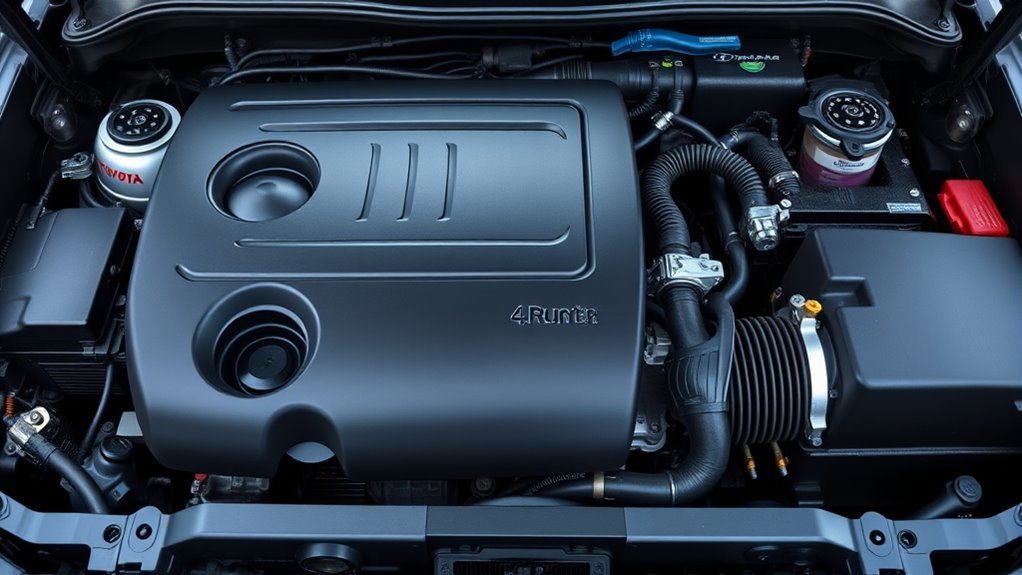
Drying is not optional. Water left in plug wells, connector seams, or low spots can cause problems later. Start with microfiber towels, then use gentle air if available. Keep compressed air or a leaf blower at a distance so you move water out of crevices without forcing it deeper into connectors.
- Blot standing water from covers, brackets, and hose areas.
- Dry around connectors and fuse box seams first.
- Remove protective covers carefully by folding them inward so trapped water does not spill onto electrical parts.
- Use a non-solvent rubber or plastic dressing only after surfaces are dry.
- Buff excess dressing so it does not attract dust.
For rubber hoses and seals, use a water-based, non-solvent dressing. For metal parts, avoid greasy coatings that collect dust. If you polish any bare metal, keep polish away from belts, pulleys, electrical connectors, and painted labels.
Use a Pressure Washer or Steam Cleaner Safely and When to Avoid Them
A pressure washer is usually unnecessary for a 4Runner engine bay. If you use one, treat it as a controlled rinse tool, not a blasting tool. Use a wide fan, low force, and distance. Never aim pressure at the alternator, fuse box, sensors, coil packs, intake, wiring connectors, belt-driven accessories, or hybrid components.
Steam can loosen grime with less liquid water, but it still creates heat and moisture. Use it only in short passes and keep it away from electrical connectors, labels, rubber boots, and modules. For most DIY cleaning, a pump sprayer, soft brush, towels, and a low-pressure hose are safer.
Note: If your 4Runner has aftermarket lights, dual batteries, a winch, air compressor, snorkel, or auxiliary fuse panel, inspect and cover those added electrical parts too. Aftermarket wiring is often more exposed than factory wiring.
Post-Clean Checks, Test-Start, and Maintenance Schedule After Off-Road Trips
Before starting the engine, remove every cover and towel from the bay. Confirm that no rag, plastic bag, or tape is near belts, pulleys, fans, or hot exhaust parts. Then inspect the areas you cleaned.
- Check for wet connectors, loose plugs, or water pooling.
- Look for fresh leaks around hoses, clamps, reservoirs, and the radiator area.
- Make sure the intake path is dry and uncovered.
- Start the engine and let it idle while you watch for warning lights.
- Listen for rough idle, misfire, squealing belts, clicking, or unusual fan noise.
- Cycle lights, fans, and basic accessories to confirm normal operation.
If everything is normal, take a short drive to help evaporate remaining moisture. When the engine cools again, recheck the bay for damp spots, leaks, or residue.
Troubleshooting After Cleaning
If the engine runs poorly after cleaning, do not keep driving and hope it clears up. Most post-clean issues come from water near ignition parts, connectors, sensors, or the intake.
| Symptom | Likely Cause | What to Do |
|---|---|---|
| Rough idle or misfire | Moisture near coils or connectors | Shut off, dry affected areas, and let the bay air out |
| Check-engine light | Wet sensor connector or disturbed plug | Inspect connectors; scan codes if the light remains |
| No start | Battery terminal, fuse box, intake, or electrical issue | Stop and inspect; call a professional if unsure |
| Squealing belt | Water or dressing on belt/pulley | Do not apply dressing; let dry and inspect belt condition |
| New fluid smell | Leak revealed by cleaning | Find and repair the leak before driving far |
Clean the engine bay at least once a year, or sooner after heavy mud, water crossings, salted winter roads, beach driving, or dusty trail use. A quick inspection after each off-road trip is better than waiting until grime hides leaks and cracked hoses.
Frequently Asked Questions
How do you clean a 4Runner engine bay without damaging it?
Let the engine cool, remove loose debris, cover the battery, alternator, fuse box, exposed connectors, intake openings, and coil-pack areas, then clean in small sections with a mild diluted cleaner. Rinse with low pressure, dry thoroughly, remove all covers, and test-start the engine before driving.
Is it safe to clean a car engine bay?
Yes, it is generally safe when you use a cool engine, gentle cleaner, low-pressure water, and proper electrical protection. It is not safe to blast the bay with high pressure, spray the intake, soak electrical parts, or clean over active leaks or damaged wiring.
What is the best cleaner for a 4Runner engine bay?
For light dust, use mild soap or a damp microfiber towel. For grease, use a diluted automotive degreaser or all-purpose cleaner such as Simple Green, following the label for dilution and dwell time. Avoid harsh solvents, bleach, vinegar, and cleaners that can damage rubber, aluminum, painted parts, or protective coatings.
Can I pressure wash my 4Runner engine bay?
A pressure washer is not recommended for most DIY engine-bay cleaning. If you use one, keep it far back, use a wide fan, reduce force, and never aim at the alternator, fuse box, sensors, coil packs, connectors, intake, belts, or hybrid components. A low-pressure hose or pump sprayer is safer.
Should I disconnect the battery before cleaning the engine bay?
For a light low-pressure cleaning, covering the battery is usually enough. Disconnect the negative terminal only if your owner’s manual allows it and you are comfortable with possible system resets. Never place foil across bare battery terminals, and never leave covers or towels in the bay before starting.
Sources
- Toyota Owners — 4Runner manuals and warranties — model-year manual lookup and owner documentation.
- Toyota Owners — 2025 4Runner Hybrid engine compartment — newer 4Runner engine-compartment reference.
- Simple Green — Cleaning engines — cleaner selection, electrical protection, dwell, rinse, and drying guidance.
- Simple Green — Aluminum FAQ — bare aluminum contact-time and rinsing caution.
- U.S. EPA — Vehicle Maintenance and Washing Stormwater BMP — runoff and storm-drain pollution guidance.
- UNC EHS — Vehicle maintenance stormwater practices — practical storm-drain and vehicle-washing precautions.
Conclusion
A clean 4Runner engine bay makes inspections easier, helps you spot leaks sooner, and keeps trail mud, salt, and grime from building up around hoses and brackets. Keep the process mild: cool engine, protected electrical parts, label-safe cleaner, low-pressure rinse, and thorough drying. If you are ever unsure about a connector, hybrid component, leak, or warning light, skip the rinse and use a hand-wipe method or have a professional inspect it first.