Last updated: July 31, 2026 — model-generation differences, current Lexus LX operation, diagnosis order, fluid guidance, safety notes, sources, and schema were reviewed.
How this guide was checked: The operating descriptions were compared with Toyota and Lexus owner information, Toyota’s AHC technology history, current Lexus LX technical releases, and NHTSA rollover-stability context. This guide does not claim hands-on pressure testing or repair work on every AHC generation.
Active Height Control suspension (AHC) is Toyota and Lexus’s hydraulically assisted, self-leveling ride-height system. It can lower a Lexus LX or equipped Toyota Land Cruiser for access, maintain the designed stance under load, and raise the body for slow off-road clearance. The controls are not universal: many LX 470 and 100-series systems use LO, N, and HI, while newer LX 600 and LX 700h models use Low plus Normal, Hi1, and Hi2. Diagnose the exact generation before ordering parts or choosing an AHC conversion.
Quick Answer
AHC is worth keeping when the vehicle changes height normally, stays level, and you use its loading or off-road benefits. Start diagnosis with the symptom: a harsh or bouncy ride points first toward accumulators or damping faults, failure to raise points toward low fluid, leaks, pump or valve problems, and one-corner lean can involve a height sensor, mechanical spring setting, actuator, or leak. Consider conversion only after a model-specific written diagnosis shows several costly faults or parts-support problems.
Key Takeaways
- AHC controls ride height and load leveling. On newer LX models it also contributes to posture and spring-rate control, while AVS separately adjusts shock damping.
- Do not apply LX 470 height changes or speed rules to an LX 570, LX 600, or LX 700h. Mode names and automatic behavior changed by generation.
- A harsh ride does not automatically mean the AHC pump has failed. Diagnose accumulators, AVS, tire pressure, mechanical springs, fluid level, leaks, sensors, valves, and the pump in a logical order.
- Use only the suspension fluid specified in the owner’s manual. Do not substitute brake fluid, power-steering fluid, engine oil, or generic hydraulic oil.
- Repair is usually the stronger choice for an isolated fault. Conversion becomes more reasonable when several hydraulic and electronic faults overlap and factory adjustability is no longer important.
Which AHC System Do You Have?
Identify the model, year, market, trim, and suspension controls before using any specification in this guide. Toyota and Lexus reused the AHC name across systems with different modes and automatic behavior.
| Vehicle Family | Typical Selectable Heights | What This Means |
|---|---|---|
| Land Cruiser 100 / Lexus LX 470 | LO, N, HI | The older three-mode figures and fluid-check sequence in this article apply mainly to this generation. Confirm the exact market-specific manual. |
| Lexus LX 570 / Land Cruiser 200 with AHC | Generation-specific AHC modes with additional automatic height behavior | Do not reuse LX 470 dimensions. LX 570 systems can lower for access or highway driving and raise in low range, subject to the owner’s manual. |
| Lexus LX 600 / LX 700h | Low, Normal, Hi1, Hi2 | Newer AHC uses four named positions, integrates with drive and terrain settings, and works with AVS. Lexus lists AHC and AVS as standard across the 2026 U.S. LX lineup. |
Scope: The detailed LO/N/HI dimensions below are for many LX 470 and 100-series references. For an LX 570, LX 600, LX 700h, or a market-specific Land Cruiser, use the manual tied to the VIN before relying on a height change, speed threshold, fluid procedure, or service step.
What Is Active Height Control Suspension?
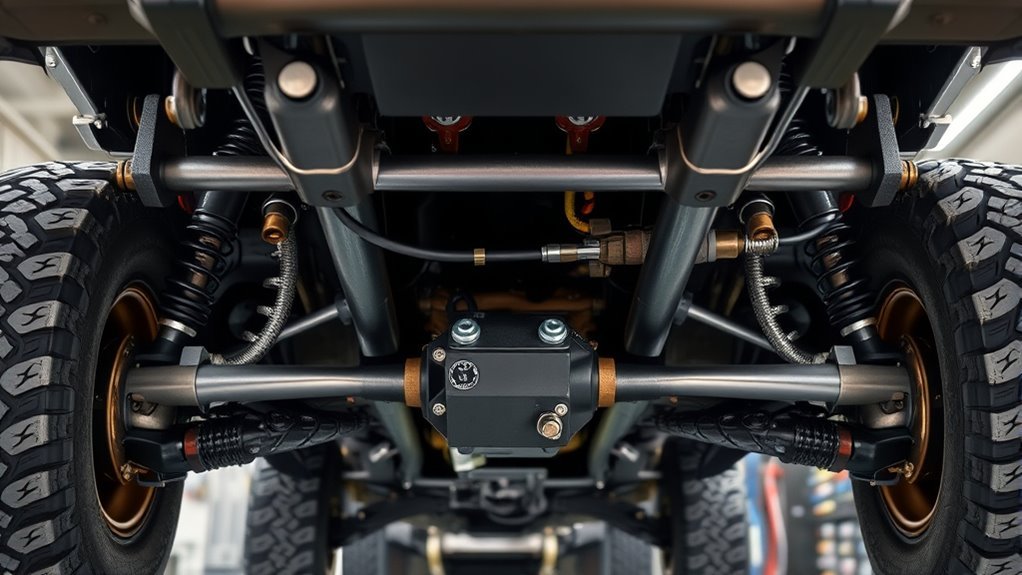
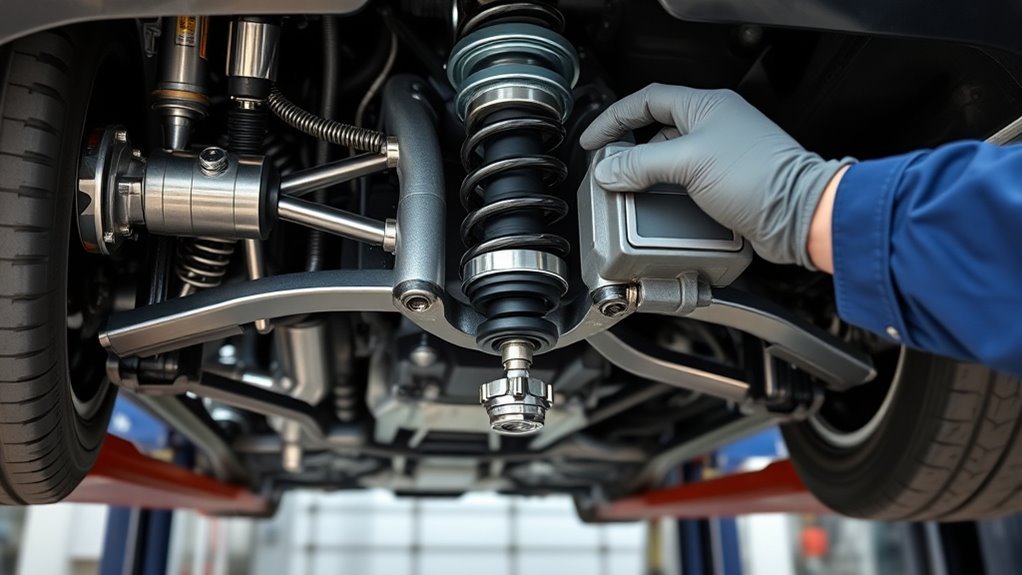
AHC is a hydropneumatic height-control and load-leveling system. Depending on generation, it combines mechanical springs with hydraulic pressure, gas-filled accumulators, height sensors, a pump, valves, actuators or shock assemblies, and a suspension control computer. The system changes fluid volume and pressure to move the body to a commanded height and keep the designed stance as passengers or cargo change.
AHC is not a basic lift kit, and it is not the same as every air suspension. Toyota describes the original Land Cruiser 100-series design as a hydropneumatic system that combines metal springs and gas springs with a hydraulic source. On newer Lexus LX models, AHC can also respond to pitch and roll by changing spring-rate control. Adaptive Variable Suspension (AVS) remains the separate damping-control system that changes shock response. The systems work together, but they do different jobs.
AHC also does not increase payload, axle, tire, hitch, or towing ratings. A level-looking vehicle can still be overloaded. Check the door label, owner’s manual, and the vehicle’s GVWR, GAWR, and GCWR limits before towing or carrying heavy cargo.
How Does Active Height Control (AHC) Work?

Height sensors report the body position to the suspension control computer. The computer then operates the hydraulic pump and control valves to move suspension fluid into or out of the relevant circuits. Gas-filled accumulators provide springing support, while the vehicle’s mechanical springs or torsion bars carry part of the load. AVS-equipped vehicles use separate damping actuators to change shock firmness.
Toyota’s history of the Land Cruiser 100-series describes a total AHC adjustment range of 90 mm, with an approximate 10-second upward change and 5-second downward change for that early design. Those figures are useful as historical context, not as universal pass/fail limits for every AHC vehicle. See Toyota’s AHC technology history.
In the 2003 Lexus LX 470 owner’s manual, AHC offers three selectable height modes: HI for rough roads and water, N for normal driving, and LO for easier entry, exit, loading, and unloading. The manual also describes automatic leveling for passengers and luggage within the vehicle’s load limits.
Newer LX 600 and LX 700h systems are different. In its LX 600 technical overview, Lexus describes Low for entry and exit, plus Normal, Hi1, and Hi2 while the vehicle is moving. The system can select height based on Drive Mode Select, Multi-Terrain Select, and transfer-case status. Always use the instructions for the exact model year.
Raising the vehicle increases its center-of-gravity height. High settings are therefore for conditions that need clearance, not for fast cornering or abrupt lane changes. Automatic lowering rules help limit inappropriate high-speed use, but they do not replace careful driving.
What Do Low, Normal, and High AHC Modes Do?
The table below is limited to the older LO/N/HI layout used on many LX 470 and Land Cruiser 100-series vehicles. “N” means Normal, not Neutral. Newer LX models use different mode names and automatic rules.
| Mode | Best Use | Typical Behavior |
|---|---|---|
| LO / Low | Getting in and out, loading cargo, unloading cargo | On many LX 470 systems, the front lowers about 50 mm and the rear about 40 mm from Normal. Low is generally for stopped use and should not be used on bumpy roads. |
| N / Normal | Daily driving, highway use, most towing and commuting | The standard ride height. AHC often returns to Normal automatically when conditions require it. |
| HI / High | Slow rough-road driving, water crossings, extra underbody clearance | On many LX 470 systems, the front raises about 40 mm and the rear about 50 mm from Normal. High is intended for low-speed rough-road use, not fast cornering. |
Warning: Do not treat High Mode like a performance setting. A raised SUV has a higher center of gravity, and abrupt steering can make it less stable. Use High Mode only where extra clearance is needed and keep speeds low.
What Are the Real Benefits of AHC?
AHC is most useful when it solves a specific problem: access to a tall SUV, maintaining the designed stance under changing load, or gaining temporary clearance at low speed. The benefit depends on the model because later systems also coordinate height and posture with drive and terrain settings.
Improved Loading and Access
Low Mode reduces the step-in and loading height. This is useful for passengers with limited mobility and for owners loading luggage, camping equipment, or other heavy cargo. Confirm that the area under the vehicle is clear before lowering it.
Self-Leveling Under Load
AHC can restore the designed body stance as passengers, cargo, or trailer tongue load changes. This helps preserve usable suspension travel and keeps the vehicle from relying only on visible rear squat as a load indicator. It does not raise the manufacturer’s payload, axle, tire, hitch, or towing limits. If the vehicle is overloaded, the selected height may be unavailable.
Increased Ground Clearance
A raised mode can add underbody clearance for ruts, rocks, uneven tracks, and model-approved water crossings. Use it only at the speeds and transfer-case settings allowed by the owner’s manual. High Mode does not make deep or moving floodwater safe.
Keep AHC for benefits you actually use. If the SUV never carries changing loads, never needs a lower access height, and rarely leaves pavement, simplicity may matter more than factory adjustability.
What Are the Most Common AHC Problems?
Start with the symptom instead of replacing the most expensive part first. AHC height control, gas accumulators, mechanical springs, AVS damping, tires, and sensors can produce overlapping complaints.
| Symptom | Likely Areas to Diagnose | Best First Check |
|---|---|---|
| Harsh, bouncy, or wooden ride while height still changes | Weak accumulators, AVS or damping fault, incorrect tire pressure, mechanical spring or torsion-bar setup | Check tire pressure, scan AHC/AVS codes, inspect accumulator condition, and measure normal ride height |
| Vehicle will not rise or takes unusually long | Low fluid, external leak, weak pump, valve restriction, wiring or control fault | Stop repeated cycling, inspect reservoir and lines, listen for pump operation, and scan codes |
| One corner sits high or low | Height sensor or link, actuator leak, mechanical spring setting, bushing or suspension damage | Measure all four corners on level ground and inspect the sensor link and hydraulic area at the affected corner |
| Vehicle settles after sitting | External or internal hydraulic leakage, valve leakage, tired mechanical support components | Record corner heights after parking, recheck them later, and inspect for fluid traces |
| Height-control warning flashes or stays on | Stored AHC/AVS fault, sensor, wiring, pump, valve, pressure, or fluid-level problem | Read manufacturer-capable diagnostic codes before clearing them |
| Pump runs frequently or for long periods | Pressure loss, leak, low fluid, valve issue, or incorrect height-sensor input | Stop if the reservoir is low or a leak is visible; continued pump operation can worsen the failure |
[Products Worth Considering]

This Yuirote universal car motor diagnostic tool helps drivers quickly detect engine fault codes and identify system issues for routine inspections and maintenance. It also supports electronic parking brake reset and emergency release functions, making it useful for handling EPB-related problems without a repair shop visit. Its compact, ergonomic design and broad vehicle compatibility make it a practical choice for car owners and DIY repair enthusiasts.
This fuel door spring clip is designed to restore proper gas tank door operation on a wide range of Toyota, Lexus, and Scion vehicles. It helps fix common issues like a stuck fuel door or one that opens too quickly, making refueling smoother and more convenient. Built as a direct replacement for compatible part numbers, it offers a practical repair solution for worn or broken clips.

This replacement gas cap is designed to restore a tight fuel-tank seal, helping reduce vapor leaks, prevent check engine light issues, and maintain proper fuel system performance. Built in OE-style form for a wide range of Toyota and Lexus vehicles, it offers a direct DIY fix with durable materials for reliable, long-lasting use.
What Makes an AHC Repair Expensive?
There is no reliable universal AHC repair price. An isolated sensor, link, or fluid-level issue is a different job from replacing corroded lines, multiple accumulators, a pump, valves, and worn mechanical suspension parts. Region, rust, parts availability, diagnostic time, bleeding, calibration, and alignment can change the total substantially.
| Estimate Line | What It Should State | Why It Matters |
|---|---|---|
| Diagnosis | Codes, measurements, leak findings, and tests performed | Prevents parts replacement based only on a symptom |
| Hydraulic repair | Exact line, actuator, accumulator, pump, or valve work | Separates an isolated repair from a system-wide refresh |
| Mechanical suspension | Torsion bars, coils, bushings, mounts, bump stops, and alignment | AHC cannot compensate for every worn mechanical component |
| Fluid, bleeding, and calibration | Specified fluid, bleed procedure, height setting, and road test | These steps affect final height, pressure, and ride quality |
| Warranty and follow-up | Parts coverage, labor coverage, and what happens if the symptom remains | Makes repair and conversion quotes easier to compare |
Pro Tip: Ask the shop to identify the failed component and the evidence for that diagnosis. “Replace the whole AHC system” is not a useful estimate unless the quote lists each failed part and the test that supports it.
How Do You Check AHC Fluid Safely?
The following sequence is for the older LX 470 procedure cited in this guide, not every AHC vehicle. Park unloaded on level ground. Start the engine, select LO, then select N. After the Normal indicator confirms the change, switch the ignition off and check that the reservoir level is between the MAX and MIN marks. Use the exact owner’s manual for your model before copying this sequence.
Use only Suspension Fluid AHC or the exact fluid specification named by the vehicle’s manual. Do not substitute brake fluid, power-steering fluid, engine oil, automatic-transmission fluid, or generic hydraulic oil. If the level is below MIN, treat that as a reason to inspect for leakage or prior incorrect service, not merely as a top-off task.
Fluid level alone does not confirm accumulator health, pump output, valve operation, or correct height calibration. A vehicle can have fluid within the marks and still ride badly or store AHC/AVS faults.
Warning: AHC is pressurized. Opening a bleeder or line can release fluid and make the body drop suddenly. Do not loosen hydraulic components unless you have the model-specific depressurizing, supporting, bleeding, and calibration procedure.
Should You Repair AHC or Convert to Regular Suspension?
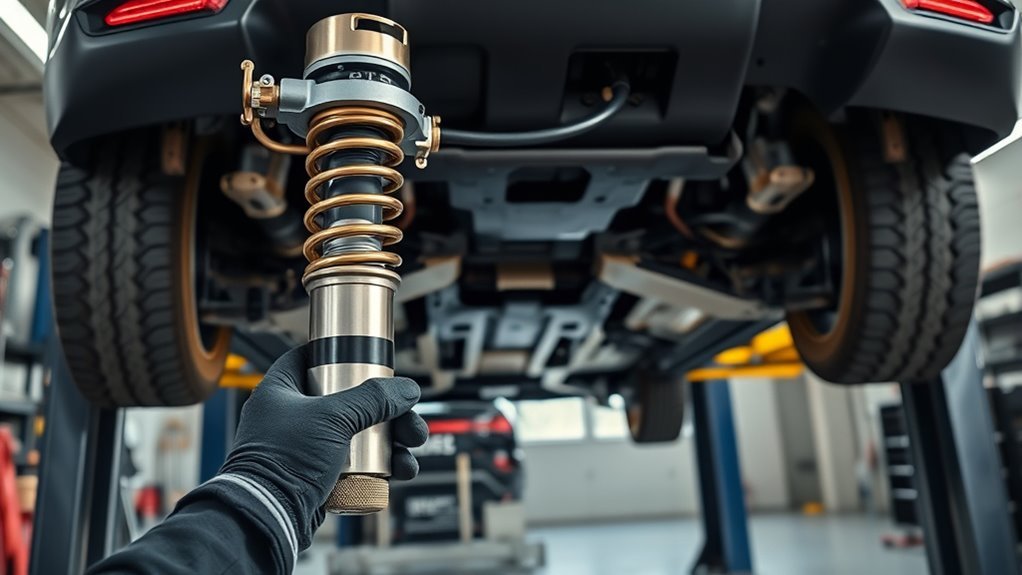
Use four questions: Is the diagnosis specific? How many systems are affected? Which AHC benefits do you use? What does the complete repair cost compared with a correctly engineered conversion? Do not choose conversion only because the vehicle rides harshly; failed accumulators or an AVS fault may be more limited than a full hydraulic-system failure.
[Products Worth Considering]

This PCV valve and hose kit is designed as a direct replacement for select Toyota, Scion, and Lexus applications, helping restore proper crankcase ventilation and engine performance. Built with durable NBR rubber and made for straightforward installation, it offers a reliable fit for compatible 2.4L models. It is a practical maintenance part for addressing worn or failing PCV components while supporting smoother engine operation.

This 2-piece suspension tool set combines a compact strut spreader with a high-leverage lower control arm prying tool to help speed up safe suspension service. Designed for many FWD, import, and domestic vehicles, it supports strut, hub, ball joint, and control arm work while helping reduce the risk of damage to surrounding components. Heavy-duty steel construction makes it a dependable choice for mechanics and serious DIY suspension repair.

This replacement gas cap is designed for a wide range of Toyota and Lexus models, offering a direct-fit solution for restoring a proper seal at the fuel tank. It helps address check engine light issues related to the fuel cap while providing easy installation and dependable performance. Built from durable materials and rigorously tested before shipping, it is a practical replacement for worn or damaged fuel caps.
Keep AHC If
- You tow, haul, camp, or off-road often enough to use height control regularly.
- The vehicle is otherwise in excellent condition.
- The fault is isolated, such as a known sensor, leak, or accumulator issue.
- You value the original Lexus/Toyota ride and factory functionality.
- You have access to a shop that understands AHC diagnosis and bleeding procedures.
Consider Conversion If
- The vehicle has multiple AHC failures at once.
- Parts availability or labor cost makes repair unreasonable.
- You use the SUV mostly as a simple daily driver or trail build.
- You prefer conventional springs and shocks that any suspension shop can service.
- The repair estimate is high compared with the vehicle’s market value.
| Option | Best For | Trade-Off |
|---|---|---|
| Repair AHC | Owners who want factory ride height control and self-leveling | Higher complexity and potentially higher future repair cost |
| Partial refresh | Vehicles with tired accumulators, bushings, or fluid but no major hydraulic failure | May not solve every hidden issue |
| Conventional conversion | Owners who want simplicity, predictable service, or a trail-focused setup | Loses factory self-leveling and adjustable height functions |
| Sell as-is | High-mileage vehicles with repair costs that exceed practical value | Lower sale price and smaller buyer pool |
Generation warning: An LX 470 conversion is not the same job as an LX 570 or current LX conversion. Older 100-series vehicles already use mechanical torsion bars and rear coils alongside the hydraulic system. A complete plan must state which hydraulic parts remain, which mechanical springs or torsion bars are reused or replaced, how ride height and alignment will be set, and how warning indicators will be handled.
How Do You Inspect AHC Before Buying or Repairing?
Use this as a pre-purchase screen or as preparation for a shop visit. It does not replace pressure testing, manufacturer-capable scanning, or model-specific repair information.
- Confirm the exact system: Record the VIN, model year, market, controls, warning messages, and whether AVS is fitted.
- Inspect before cycling: Check the reservoir and visible lines first. Do not keep operating the pump if fluid is low or a leak is active.
- Cycle only the valid modes: Follow the owner’s manual and time each change. Toyota’s 100-series history cites about 10 seconds up and 5 seconds down, but use those figures only as context, not a universal specification.
- Measure corner height: Park on level ground, use the same tire pressures, and record all four corners at Normal height.
- Listen to the pump: Note delayed start, long operation, repeated cycling, or abnormal noise.
- Check the parked stance: Record corner heights, leave the vehicle parked, and compare them later for settling.
- Inspect for leaks and corrosion: Look around lines, actuators, valves, accumulators, the pump area, and the reservoir.
- Scan AHC and AVS modules: Save current, history, and pending codes before clearing anything.
- Road test at Normal height: Note harshness, bouncing, bottoming, float, clunks, pull, uneven damping, and warning-light behavior.
- Review service records: Look for fluid service, accumulator work, hydraulic-line repair, pump or valve replacement, sensor calibration, spring or torsion-bar work, and alignment.
Which AHC Parts, Lift Options, and Conversion Kits Make Sense?
AHC aftermarket choices fall into three groups: model-matched replacement parts, modifications that retain AHC, and complete conventional-suspension conversions. Compatibility must be checked by VIN, generation, market, and current suspension configuration.
[Products Worth Considering]

This dual filter kit helps keep your vehicle running and riding cleaner by replacing both the engine air filter and cabin air filter at the same time. It is designed for a range of Toyota and Lexus hybrid models, helping support engine performance while reducing odors and airborne particles inside the cabin. Built with high-quality filtration materials, it offers a convenient maintenance solution for routine filter replacement.

This upgraded engine oil funnel kit makes oil changes cleaner and easier with a spill-proof design, flow control valve, and transparent body for precise filling. Built from durable polycarbonate and equipped with 12 adapters, two 45-degree elbows, and a debris filter, it fits a wide range of vehicles and works well in tight engine spaces. The secure, hands-free setup helps reduce mess while improving control during oil filling and fluid transfers.

This 2-piece oil control variable valve timing solenoid set is designed to help restore proper VVT operation and engine performance across a wide range of Toyota, Lexus, Scion, and Pontiac applications. Built to meet or exceed OE performance, it uses quality seals for reliable oil control and helps reduce issues caused by improper oil flow. It is a practical replacement choice for maintaining smooth engine timing and dependable drivability.
Replacement Parts
Replacement accumulators, bushings, lines, sensors, pumps, valves, actuators, and specified fluid can restore factory behavior when the rest of the system is healthy. Match every hydraulic and electronic part to the exact vehicle. A visually similar component is not proof of pressure, connector, calibration, or software compatibility.
AHC-Compatible Upgrades
Some owners retain AHC while changing mechanical spring support or target ride height. On older systems, torsion-bar adjustment, rear spring rate, sensor position, neutral hydraulic pressure, alignment, bump travel, and tire clearance interact. A lift that only moves a sensor link can create an incorrect operating range or hide a worn mechanical component.
Conversion Kits
A conversion removes some or all active height-control functions and relies on conventional mechanical springs, torsion bars, and dampers. The exact parts differ by generation. A complete kit or plan should specify spring rates for actual vehicle weight, damper valving, bump stops, retained and removed hydraulic parts, height-sensor and warning-light handling, brake-line and hose clearance, alignment targets, and loaded ride height. The trade-off is permanent loss of factory self-leveling and selectable height.
How Do You Choose an AHC Repair Shop?
A reliable repair starts with a model-specific diagnosis. A poor ride can involve accumulators, AVS damping, tire pressure, mechanical springs or torsion bars, bushings, hydraulic leaks, sensor calibration, pump output, or more than one fault.
Choose an installer who can explain:
- How the fault was diagnosed: Ask for saved codes, corner-height measurements, fluid findings, leak inspection, pressure or active tests where required, and the reason each test points to the proposed part.
- Which generation-specific parts are being replaced: Separate accumulators, sensors and links, lines, pump, valves, actuators or shocks, mechanical springs, bushings, fluid, and alignment work.
- How the system will be supported, depressurized, bled, and calibrated: These procedures differ by generation and can affect safety and final ride height.
- What fluid will be used: The invoice should name the exact fluid specified by the owner’s or repair manual, not a generic “hydraulic fluid.”
- How the final result will be checked: Ask for Normal-height measurements, code recheck, leak inspection, mode-cycle test, road test, and loaded-height check when relevant.
- What happens if the symptom remains: Get diagnostic responsibility, parts warranty, and labor warranty in writing.
Safety Note: Follow the exact owner’s-manual instructions for disabling height control before jacking, fitting tire chains, or performing service that could trigger automatic leveling. Support the vehicle with rated equipment; never rely on AHC to hold it up.
Is AHC Worth Keeping?
Keep AHC when the system is fundamentally healthy, the diagnosis is limited to one or two repairable faults, and you use access height, load leveling, factory ride integration, or low-speed clearance. The system remains standard across the 2026 U.S. Lexus LX lineup, which shows that Lexus still treats AHC and AVS as core chassis technologies rather than obsolete features.
Consider conversion when several hydraulic, electronic, and mechanical faults overlap; corrosion or parts support makes repair unpredictable; and you accept the permanent loss of self-leveling and selectable height. Compare complete quotes, not just kit price. Include diagnosis, removal, retained components, springs or torsion bars, dampers, warning-light handling, alignment, and a loaded road test.
Frequently Asked Questions
Is Active Height Control suspension worth it?
Yes, when the system is healthy and you use its access, load-leveling, ride-integration, or low-speed clearance benefits. It is less attractive when several expensive faults overlap and you prefer a simpler fixed-height suspension.
What are the first signs of AHC failure?
Common signs include a harsh or bouncy ride, one corner sitting high or low, slow or failed height changes, frequent pump operation, visible fluid leakage, settling after parking, or an AHC/AVS warning. Save diagnostic codes before clearing them.
How do I know if AHC accumulators are bad?
Weak accumulators often cause a hard, wooden, or bouncy ride even when the vehicle still changes height. That symptom is not conclusive by itself. Confirm it with the model-specific accumulator, pressure, fluid-movement, ride-height, and AHC/AVS diagnostic procedure.
What is the function of AHC?
AHC changes vehicle ride height and helps maintain the designed stance under changing load. Older systems commonly use Low, Normal, and High. Newer Lexus LX systems use Low, Normal, Hi1, and Hi2 and can coordinate height with drive and terrain settings.
What is the difference between AHC and AVS?
AHC manages ride height, load leveling, and on newer systems some posture and spring-rate functions. AVS changes shock-absorber damping. The systems can work together, but a height fault and a damping fault are not automatically the same repair.
Can I replace AHC with regular suspension?
Many older AHC-equipped vehicles can be converted, but the parts and procedure depend on generation. A complete conversion must address mechanical spring support, dampers, retained hydraulic parts, warning indicators, ride height, bump travel, and alignment. You lose factory self-leveling and selectable height.
Is AHC the same as air suspension?
No. Toyota and Lexus AHC is generally a hydropneumatic system that uses hydraulic fluid, gas-filled accumulators, valves, sensors, and mechanical springs. It should not be diagnosed or serviced as a basic air-spring system.
Can I drive with an AHC warning light?
Do not continue normal driving if the vehicle is very low, leaking fluid, bottoming out, unstable, or riding severely harsh. Stop safely and arrange inspection or towing. If the stance and ride feel normal, reduce speed, avoid heavy loads and rough roads, and have the AHC/AVS codes read promptly.
How much does AHC suspension repair cost?
There is no single reliable price. A sensor link or isolated leak differs greatly from multiple accumulators, corroded lines, pump or valve work, bleeding, calibration, and mechanical suspension repairs. Get a written estimate that separates diagnosis, parts, labor, fluid, calibration, alignment, and warranty.
Conclusion
AHC is a useful factory system, not one universal suspension design. The first decision is identifying whether you have an LX 470 or 100-series LO/N/HI system, an LX 570 or 200-series variant, or a newer LX 600/LX 700h system with Low, Normal, Hi1, and Hi2. That choice determines the correct fluid check, operating rules, diagnosis, parts, and conversion options.
Diagnose in order: record the warning and codes, inspect fluid and leaks, measure corner height, separate harsh-ride symptoms from height-change failure, and check mechanical suspension condition before condemning the pump or the entire system. Keep AHC when the fault is isolated and you use the benefits. Convert only after a complete generation-specific quote shows that simplicity and total cost matter more than self-leveling and selectable height.
Sources
- 2003 Lexus LX 470 Owner’s Manual — LX 470 AHC modes, older-generation height changes, operating warnings, and fluid-level procedure.
- Toyota 75-Year History: AHC Chassis Technology — Land Cruiser 100-series hydropneumatic design, 90 mm total adjustment range, approximate change times, and automatic leveling.
- Lexus: Introducing the 2022 LX 600 — newer AHC construction, Low/Normal/Hi1/Hi2 positions, drive-mode integration, and posture control.
- Lexus: 2026 LX Lineup — current U.S. lineup context for standard AHC and AVS.
- Lexus Owner Manuals — official source for model-year-specific controls, warnings, fluid procedures, and speed rules.
- 2026 Lexus LX Features — current LX suspension and AHC/AVS feature context.
- NHTSA Vehicle Safety Ratings — rollover-resistance and static-stability context for top-heavy vehicles.