
Last updated: September 16, 2026
Affiliate disclosure: As an Amazon Associate, AutoReviewNest earns from qualifying purchases. This does not affect the price you pay.
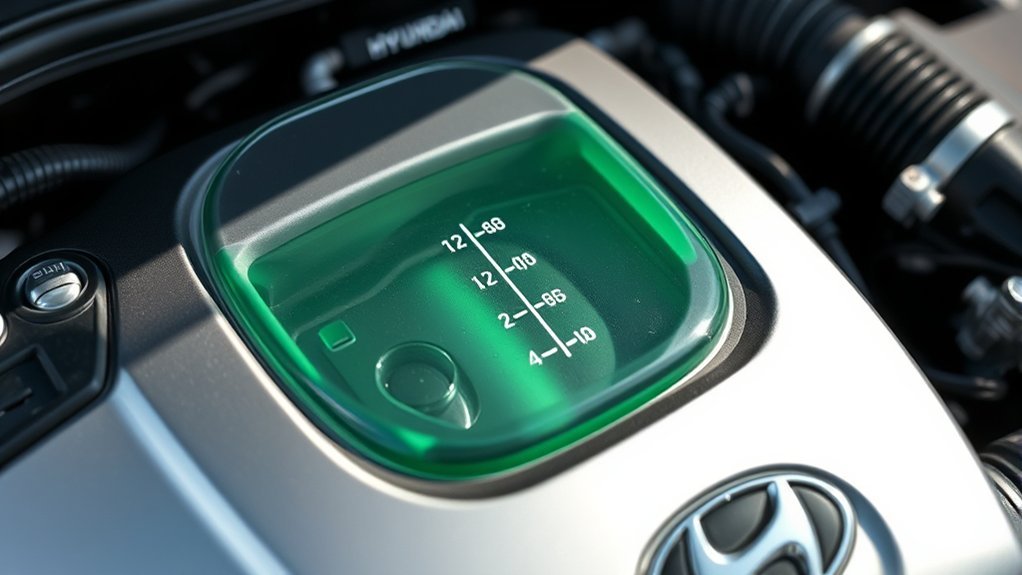
To check a Hyundai Sonata coolant level safely, park on level ground and use the check condition in the owner’s manual for your exact model year, powertrain, and market. Most later Sonata manuals use an engine-cool reservoir reading between MAX/F and MIN/L, but some older manuals specify a warm-idle reservoir reading. There is no single temperature rule for every Sonata generation. If the level is low, add only what your exact manual specifies, never open a hot pressurized cap, and treat repeated coolant loss, an empty reservoir, or overheating as a fault that needs diagnosis.
Quick Answer
For most later Hyundai Sonata models, check the translucent reservoir on level ground with the engine off and cool; the level should be between MAX/F and MIN/L. Some older Sonata manuals instead specify a warm-idle reservoir reading, so verify your exact manual before judging the level or adding fluid. Never open a hot pressurized cap. An empty reservoir, repeated loss, contamination, or overheating needs diagnosis.
Key Takeaways
- Most later Sonata manuals use a cool-engine reservoir check, but some older manuals specify another condition. Follow the procedure for your exact model year.
- Never open a hot coolant cap. Hot coolant and steam can escape under pressure even when you are only trying to top off the reservoir.
- The target reservoir range is generally between the MAX/F and MIN/L marks at the check condition specified by your manual.
- Use the fluid and mixture directions for your exact model year, engine, and market. Hyundai guidance commonly specifies phosphate-based ethylene glycol coolant for aluminum engine parts and distilled, deionized, or soft water when water is required.
- Some Sonata Hybrid generations have separate engine and inverter coolant circuits. Identify the correct reservoir before checking or adding fluid.
- Repeated low coolant, oily or milky coolant, sweet smells, puddles, weak cabin heat, or overheating can point to leaks or cooling-system problems.
At a Glance
| Time Required | 5–10 minutes, not including engine cool-down time |
| Difficulty | Easy |
| Tools Needed | Flashlight to check; thick towel, clean funnel, and gloves only if a safe top-off is needed |
| Cost | Usually $0 to check; coolant cost varies if topping off is needed |
Why Hyundai Sonata Coolant Check Instructions Vary by Model Year
Hyundai has not used one identical coolant-level procedure across every Sonata generation. Two owner-manual examples show why the model year matters:
| Owner-Manual Example | Check Condition | Low-Level Instruction |
|---|---|---|
| 2008 Sonata owner-manual archive | Reservoir between L and F with the engine warm at idle | Add engine coolant to F |
| 2025 Sonata owner-manual archive | Reservoir between MAX and MIN with the engine cool | Add distilled/deionized water to MAX, without overfilling |
These are examples, not a substitute for the manual in your own car. The safest rule is simple: identify the model year, powertrain, and market first, then follow that manual’s check condition and top-off wording exactly. For current vehicles, start with Hyundai’s 2025 U.S. Sonata digital owner’s manual or the manual for your exact VIN/model year.
Hyundai Sonata Coolant Level Action Guide
First confirm the check condition in your exact Sonata owner’s manual, then use the reservoir reading to decide what to do next. Do not rely on coolant color alone, because compatible products can use different dyes.
| Reservoir Reading at the Manual-Specified Check Condition | What It Means | Next Step |
|---|---|---|
| Between MAX/F and MIN/L | Normal range | No fluid is needed. Recheck during routine maintenance. |
| At or below MIN/L | Low coolant level | Follow the exact owner’s manual, top off to MAX/F, and inspect for leaks. |
| Reservoir empty | Possible leak, trapped air, or major coolant loss | Do not assume a top-off solves it. Avoid driving if the engine is hot or a warning is active, and arrange inspection. |
| Level falls again after topping off | Coolant is escaping or moving where it should not | Schedule a cooling-system pressure test or professional diagnosis. |
| Oily, milky, rusty, sludgy, or unusually dark | Possible contamination or neglected coolant | Do not mix in another product. Have the system inspected. |
How to Check Hyundai Sonata Coolant Level Safely
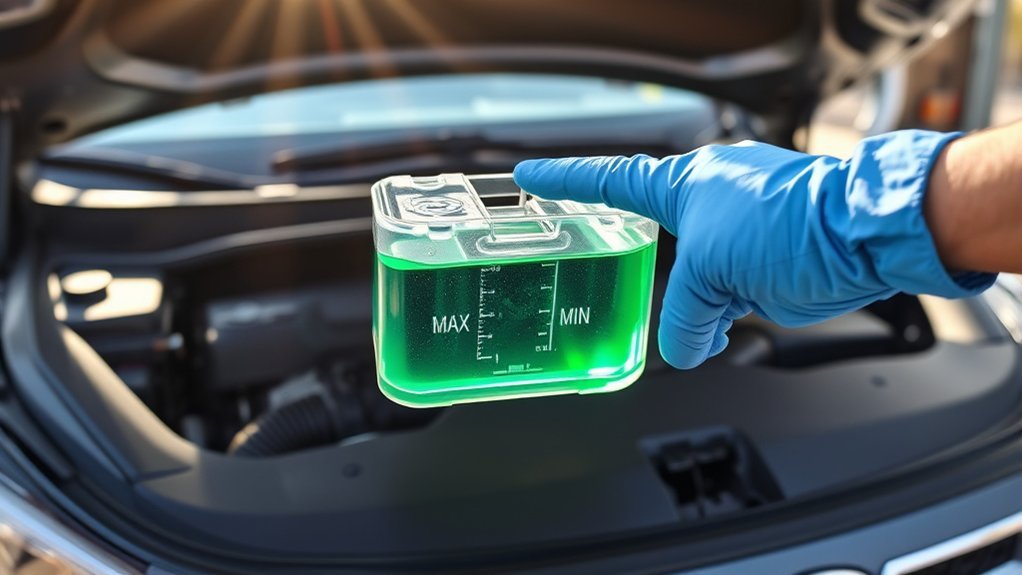
Warning: Never remove the coolant reservoir cap, radiator cap, or drain plug while the engine and radiator are hot. Hot coolant and steam can spray out under pressure and cause serious burns.
Model-year note: Hyundai’s procedure is not identical across every Sonata generation. Later manuals commonly specify checking the reservoir with the engine cool, while some older Sonata manuals specify a warm-idle reading. If your manual calls for a warm check, read the translucent reservoir without opening any hot cap.
Cooling-fan safety: Keep hands, clothing, and tools away from the electric cooling fan. On some Sonata models the fan can start or continue running even when the engine is off.
Use this check before a long trip, before winter, when a warning or sweet smell appears, or during your monthly maintenance routine. Reservoir shape and location can vary by Sonata generation and powertrain, so use the under-hood diagram or owner’s manual if the tank is not obvious.
- Park on level ground. A sloped driveway can make the reservoir reading look higher or lower than it really is.
- Confirm the check condition for your model year. Most later Sonata manuals specify an engine-cool reading. Some older manuals specify a warm-idle reservoir reading. If a warm reading is required, inspect the translucent tank only and do not open a hot cap.
- Open the hood and locate the coolant reservoir. On many Sonata models, the reservoir is a translucent plastic tank in the engine compartment. The exact location can vary by engine and model year, so check your owner’s manual if the layout is different.
- Read the side of the reservoir. Look for the MAX/F and MIN/L marks and compare the level at the check condition specified by your owner’s manual.
- Inspect the coolant condition. The fluid should look clean and consistent. Milky, oily, rusty, sludgy, or unusually dark coolant needs professional inspection. Do not identify coolant type by color alone.
- Check the hoses and area below the car. Look for wet spots, dried coolant residue, swollen hoses, cracks, or puddles under the radiator and engine bay.
- Top off only if needed. If the level is below MIN/L at the correct check condition, follow the exact owner’s manual for what to add. Some Sonata manuals direct you to add distilled/deionized water; others specify coolant. Add slowly to MAX/F and do not overfill.
- Close the cap fully. Make sure the coolant cap is seated and locked correctly before driving.
Hyundai’s 2025 Sonata coolant-level instructions say the level should be between MAX/F and MIN/L with the engine cool and that frequent additions require a cooling-system inspection. Archived Sonata manuals show why the model-year caveat matters: some older procedures use a different check condition. In every case, replace swollen or deteriorated cooling-system hoses and never open a hot pressurized cap.
Understanding Coolant Levels: What the Marks Mean
The reservoir marks account for coolant expansion and contraction as temperature changes. Most later Sonata manuals therefore specify a cool-engine reading, but the correct reference condition is the one printed in your exact owner’s manual.
What Do MAX/F and MIN/L Mean?
The MAX or F mark is the upper target and the MIN or L mark is the lower limit used by the reservoir check. For normal operation, the level should stay between those marks at the temperature or operating condition specified by your manual.
- At or near MAX/F: Usually normal when checked under the condition specified by your manual, as long as it is not overfilled.
- Between MAX/F and MIN/L: Normal range.
- At or below MIN/L: Add the owner’s-manual-specified fluid and inspect for leaks.
- Empty reservoir: Do not ignore it. The system may have a leak or trapped air, and the engine may overheat.
Why the Level Changes When Hot or Cold
Coolant expands as engine temperature rises, so the reservoir level can change after driving. On later Sonata models that specify a cool-engine check, wait for the engine to cool before using the marks as your reference. If an older manual specifies a warm-idle check, follow that procedure without opening a hot cap.
Note: A small change in coolant level between hot and cold is normal. A steady drop over days or weeks is not normal and should be investigated.
What Are the Signs of Low Coolant?
Low coolant may show up as a reservoir reading at or below MIN/L, a rising temperature gauge, dashboard warning, weak cabin heat, sweet smell near the front of the car, visible puddles, or dried residue around hoses and fittings. Coolant dye colors vary, so color alone does not confirm the correct product or the source of a leak.
If the coolant repeatedly returns to MIN/L after topping off, do not keep adding fluid without finding the cause. Frequent top-offs can hide a leak until the engine overheats.
What Happens If You Overfill Coolant?
Overfilling the coolant reservoir can cause overflow as the coolant expands. It can also make it harder to notice a real pressure or leak issue. Add only what your manual specifies and stop at MAX/F at the correct check condition.
What Coolant Should You Add to a Hyundai Sonata?
Use the coolant specification in the owner’s manual or under-hood label for your exact Sonata model year, engine, and market. Hyundai Sonata manuals commonly require an ethylene-glycol coolant compatible with aluminum cooling-system parts, and several generations specify a phosphate-based formulation. Do not assume the same wording, dye color, or top-off instruction applies to every year. Hyundai guidance also warns against alcohol or methanol coolant and against mixtures above 60% or below 35% antifreeze where that mixture table applies.
Hyundai mixture tables used in multiple Sonata manuals list a 50% water and 50% antifreeze mix for protection down to about -35°C (-31°F). That table is not a universal top-off instruction and does not replace your vehicle’s manual. If the coolant already in the system is unknown, do not choose a replacement by color or mix random coolant chemistries.
| Ambient Temperature | Antifreeze | Water |
|---|---|---|
| 5°F / -15°C | 35% | 65% |
| -13°F / -25°C | 40% | 60% |
| -31°F / -35°C | 50% | 50% |
| -49°F / -45°C | 60% | 40% |
When the manual calls for water, use distilled, deionized, or soft water only. Do not use hard tap water, because Hyundai warns against mixing it with the factory-filled coolant.
Before buying coolant: Do not choose a product from color, “Asian vehicle” labeling, or a generic fitment list alone. Confirm the exact specification for your Sonata model year, engine, and market before mixing anything into the system.
Sonata Hybrid note: Some Sonata Hybrid generations use separate engine and inverter coolant circuits. Confirm which reservoir you are looking at before adding fluid, because the fill point and service procedure can differ from a gasoline-only Sonata.
[Products Worth Considering]

This coolant electric water pump is designed as a replacement for select Toyota vehicles, helping maintain proper engine cooling performance and reliable temperature control. Built to OE specifications, it offers fitment support for compatible Avalon, Camry, and RAV4 models with 2.5L L4 engines. It also includes cross-reference part numbers for easier matching and comes with after-sales support for covered defects.

This cabin and engine air filter kit is designed for compatible Hyundai Sonata gas models from 2015 to 2019 with a 2.4L engine. It helps improve airflow, capture dust and impurities, and support cleaner cabin air and efficient engine performance. The kit is engineered for long service life and simple installation, making routine maintenance easier.

This filter combo is designed for Hyundai Sonata gas models from 2015 to 2019, including non-hybrid 2.4L vehicles, and replaces both the engine and cabin air filters in one convenient set. It helps improve engine airflow while also refreshing the cabin environment with activated carbon odor control and high-efficiency particle filtration for cleaner, quieter driving.
How Do You Add Coolant to a Hyundai Sonata?
If the coolant level is below MIN/L at the correct check condition, follow the exact top-off instruction in your owner’s manual. Many later Sonata manuals direct the owner to add distilled/deionized water to MAX/F for a low reservoir, while some earlier manuals specify coolant. Do not mix an unknown coolant type, and never open a hot pressurized cap.
- Confirm the engine is off and the cap area is fully cool before opening any coolant cap.
- Verify what your exact owner’s manual tells you to add.
- Wrap a thick towel around the cap.
- Turn the cap slowly to release any remaining pressure, then remove it only when safe.
- Use a clean funnel to avoid spills.
- Add the owner’s-manual-specified fluid slowly until the level reaches MAX/F.
- Reinstall the cap fully and wipe away any spills.
- If the level was only slightly low, no warning or overheating is present, and no leak is visible, monitor the level closely after the correct top-off. If it drops again or any warning appears, stop treating it as a routine top-off and arrange inspection.
Pro Tip: Save a photo of your Sonata’s coolant specification and top-off instructions on your phone. If you carry emergency top-off fluid, carry only the fluid your exact manual permits and label it clearly so it cannot be confused with washer fluid.
Do not pour engine coolant or antifreeze into the windshield washer reservoir. Coolant can smear the windshield, reduce visibility, damage paint, and create a safety hazard.
[Products Worth Considering]

This engine water pump kit is designed to help maintain reliable cooling performance across a wide range of compatible Toyota, Lexus, Scion, and Pontiac vehicles. Built with aluminum and tested for leak-free operation, it offers a direct replacement solution that supports engine efficiency and long-term service life. The kit includes a professional water pump and gasket for a convenient installation-ready repair.
These custom-fit all-weather floor mats are designed for compatible Hyundai Sonata and Kia K5 models to help protect your vehicle's interior from mud, slush, dirt, and spills. Made from odorless, durable rubber with a deep hexagon pattern, they offer reliable anti-slip coverage and are easy to remove and clean with water or a damp towel. The set is built for long-lasting use in every season and helps keep your car looking clean while supporting resale value.

This engine coolant thermostat with seal is designed to help maintain proper engine temperature and support efficient cooling system performance. It is compatible with a wide range of Toyota, Lexus, Ford, Chevrolet, Mitsubishi, Scion, and Pontiac models, making it a versatile replacement choice for many vehicles. With included seal and durable metal-and-rubber construction, it offers a convenient fitment solution for cooling system repairs and maintenance.
What Coolant Problems Should You Watch for in a Hyundai Sonata?
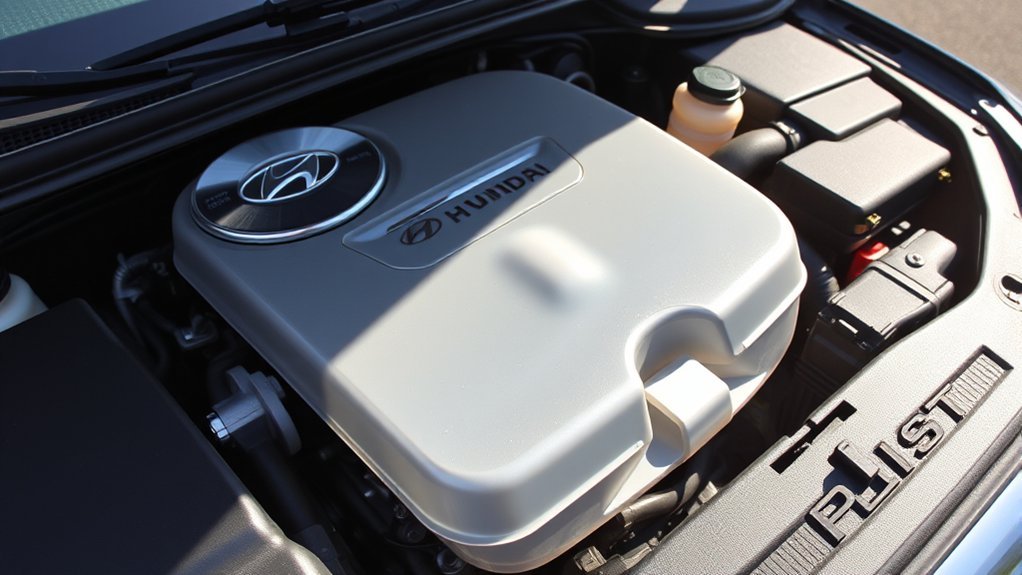
Coolant problems usually show up as level changes, leaks, overheating, contamination, or repeated need for top-offs. Catching these signs early can prevent engine damage.
[Products Worth Considering]

The OEMTOOLS coolant vacuum refill kit helps quickly refill a vehicle’s cooling system while removing trapped air that can lead to overheating and engine damage. It also performs vacuum leak tests to help confirm system integrity and reduce the chance of repeat repairs. With multiple bushings, adapters, and a tapered cone seal, it is designed for flexible use on many radiator and coolant bottle necks.

These custom-fit TPE floor mats are designed for Hyundai Sonata and Kia Optima models, delivering precise coverage with high-edge protection to help trap spills, dirt, and everyday messes. Built for all-weather durability, they offer anti-slip stability, odorless construction, and easy cleanup while helping preserve your vehicle's original carpet.

HAFIDI floor mats are custom-fit for select Kia Optima and Hyundai Sonata Hybrid models, using 3D laser scanning for precise coverage of the front and rear rows. Built from durable TPE with raised edges and anti-slip backing, they help contain dirt, water, snow, and spills while staying secure and easy to clean.
Why Does the Coolant Level Rise and Fall?
A small rise and fall between hot and cold is normal. A steady loss is not. If the level keeps dropping after you bring it back to MAX/F, inspect the hoses, radiator, reservoir, cap, water pump area, heater hoses, and the ground under the vehicle.
How Can You Detect a Possible Coolant Leak?
Coolant leaks may not always form a large puddle. Sometimes the coolant evaporates on hot engine parts and leaves crusty residue instead. Use this quick guide:
| Symptom | Possible Cause | What to Do |
|---|---|---|
| Coolant level keeps dropping | External leak, weak cap, hose issue, radiator leak, water pump leak | Inspect visually and schedule a pressure test. |
| Sweet smell after driving | Coolant escaping onto hot parts | Check for residue and avoid long drives until inspected. |
| Oily or milky coolant | Possible oil contamination, head gasket issue, or oil cooler issue | Do not ignore it; get professional diagnosis. |
| Temperature gauge rises | Low coolant, trapped air, fan problem, thermostat issue, leak | Pull over safely and follow overheating steps. |
| Puddle under the front of the car | Coolant leak, unless it is clear A/C condensation | Check color, smell, and location; repair leaks promptly. |
What to Do If Your Sonata Overheats
If the temperature gauge climbs, the warning light comes on, steam appears, or the engine loses power, treat it seriously. Follow Hyundai’s 2025 Sonata overheating procedure below and see this internal guide on handling Sonata overheating in hot weather for added prevention steps.
- Pull off the road as soon as it is safe.
- Shift to Park and set the parking brake.
- Turn off the air conditioning.
- If steam or coolant is coming from under the hood, stop the engine and do not open the hood until the coolant stops running or the steaming stops.
- Keep hands, clothing, and tools away from fans and belts.
- Do not remove the coolant cap while the engine is hot.
- If coolant is leaking out, stop driving and call for assistance.
Warning: Suddenly adding cold coolant to an overheated engine can damage engine components. Let the engine cool and add coolant slowly in small amounts only when it is safe.
How Often Should You Check Hyundai Sonata Coolant?
Hyundai owner-maintenance guidance calls for checking coolant at least monthly and checking radiator, heater, and air-conditioning hoses for leaks or damage at least twice a year. Some Hyundai schedules add a fuel-stop or charging-stop check, so use the owner-maintenance schedule for your exact Sonata rather than assuming that wording is universal.
Coolant replacement is separate from a level check and varies by Sonata model year, powertrain, market, and driving conditions. Hyundai’s 2025 U.S. Sonata owner’s manual lists the first engine-coolant replacement at 120,000 miles or 120 months, then every 24,000 miles or 24 months. Do not reuse that interval for a different model year or market without checking its maintenance schedule.
How Do You Maintain the Hyundai Sonata Cooling System?
- Check before winter. Coolant protects against freezing as well as overheating.
- Use the right mix. Do not run mostly water or mostly antifreeze unless your manual specifically calls for that ratio.
- Do not mix unknown coolants. If you do not know what is in the system, ask a qualified mechanic before topping off with a different product.
- Keep the cap sealed. A loose or damaged cap can reduce system pressure and contribute to overheating.
- Clean spills immediately. Antifreeze can be harmful if ingested and should be kept away from children and pets.
- Dispose of used coolant properly. Do not pour coolant onto the ground, into a storm drain, or into household plumbing. Use a local recycling or household hazardous waste program.
For broader maintenance context, see the Hyundai Sonata fluid-level checklist. If you are troubleshooting repeated loss or overheating rather than doing a routine level check, use the Hyundai Sonata cooling-system guide.
If the coolant level drops again after one correct top-off and recheck at the proper model-year check condition, record the level and arrange inspection instead of repeatedly adding fluid.
When Should You Call a Mechanic About Coolant Issues?
Call a mechanic or an authorized Hyundai dealer if you notice any of these problems:
- The coolant level keeps dropping after you top it off.
- The reservoir is empty or nearly empty.
- The engine overheats or the temperature warning light comes on.
- You see coolant leaking from the radiator, hoses, water pump area, or under the vehicle.
- The coolant looks oily, milky, rusty, sludgy, or contaminated.
- You smell a sweet coolant odor after driving.
- The heater blows cold air while the engine is warm.
- You are unsure which coolant type is already in the system.
Do not keep driving a Sonata that is actively overheating or losing coolant quickly. Continued operation can turn a cooling-system fault into severe heat-related engine damage.
Frequently Asked Questions
Can I check my Hyundai Sonata coolant when the engine is warm?
For most later Sonata models, use the cool-engine reservoir reading. Some older Sonata manuals specify a warm-idle check instead, so confirm your exact model year. If the manual calls for a warm check, read the translucent reservoir only; never open a hot coolant or radiator cap.
How long should I wait for a Hyundai Sonata engine to cool before checking coolant?
There is no universal number of minutes that is safe for every Sonata and every driving condition. If your manual specifies a cool-engine check, wait until the engine, reservoir, and cap area are cool and the system is no longer hot or pressurized before opening any coolant cap. If an older manual specifies a warm-idle reservoir reading, read the translucent tank only and do not open a hot cap.
Where is the coolant reservoir on a Hyundai Sonata?
Look for a translucent plastic reservoir under the hood with MAX/F and MIN/L marks. Its shape and position vary by model year and powertrain, so use the under-hood diagram or owner’s manual if you cannot identify it confidently.
Do I add coolant to the reservoir or the radiator?
For a routine level check, use the coolant reservoir and follow the fill point shown in your exact owner’s manual. Do not remove a radiator or coolant cap while the system is hot. Some powertrains have different layouts, so do not guess between caps or tanks.
Can I use tap water instead of demineralized water for coolant?
Do not use hard tap water. Hyundai guidance says to use deionized water, distilled water, or soft water when water is required and not to mix hard water into the factory-filled coolant.
How often should I check my Hyundai Sonata coolant level?
Check it at least monthly, before long trips, and before winter. Some Hyundai owner-maintenance schedules also call for a check when stopping for fuel or charging, so use the schedule and temperature condition specified by your exact Sonata manual.
What type of antifreeze is recommended for a Hyundai Sonata?
Use the coolant specified in your exact Sonata owner’s manual or under-hood label. Hyundai guidance commonly calls for a phosphate-based ethylene glycol coolant that protects aluminum engine parts. If the existing coolant is unknown, ask a Hyundai dealer or qualified repair facility to confirm compatibility before mixing products.
Is it safe to drive with low coolant?
Driving with low coolant is risky because the engine may overheat. If the level is just slightly low and there are no warning lights, top it off with the exact fluid directed by the owner’s manual and monitor it. If the reservoir is empty, the engine is overheating, or coolant is leaking, stop driving and get help.
What are the signs of a coolant leak?
Common signs include a falling coolant level, puddles under the front of the vehicle, a sweet smell after driving, dried coolant residue, overheating, or steam from under the hood. Oily or milky coolant can also point to contamination that needs diagnosis.
Should I fill coolant to the MAX line?
Yes, if the level is low at the check condition specified by your manual, add only what that manual directs and stop at MAX/F. Do not fill above MAX/F because the reservoir needs room for coolant expansion.
Why does my coolant level keep dropping but I do not see a puddle?
A leak may evaporate on hot engine parts, appear only under pressure, escape through a weak cap, or enter another part of the engine. If the level keeps dropping, have the cooling system pressure-tested.
Conclusion
Check your Hyundai Sonata coolant on level ground using the temperature or operating condition specified by your exact model-year, powertrain, and market manual. Most later Sonatas use a cool-engine reservoir check, while some older manuals differ. Read the reservoir against MAX/F and MIN/L, identify the correct reservoir on hybrid models, follow the exact top-off instruction, and never open a hot pressurized system. If the reservoir is empty, the level drops again, the coolant looks contaminated, or the engine overheats, stop treating it as a top-off task and arrange diagnosis.
Sources
- 2025 Hyundai Sonata Owner’s Manual: Checking the Coolant Level — backs the MAX/F and MIN/L reservoir guidance, hot-cap warning, coolant cap instructions, and coolant mixture table.
- Hyundai Owner Maintenance Schedule — backs monthly coolant checks and twice-yearly hose inspection guidance; exact stop-for-fuel or charging wording varies by vehicle.
- 2025 Hyundai Sonata Digital Owner’s Manual (U.S.) — provides the current U.S. Sonata maintenance sections and model-specific owner information used for the replacement-interval example.
- 2025 Hyundai Sonata Owner’s Manual: If the Engine Overheats — backs the overheating response and serious coolant-loss warning.
- 2008 Hyundai Sonata Owner’s Manual archive — documents an older Sonata procedure that specifies reading the reservoir between L and F with the engine warm at idle, supporting the model-year caveat.
- 2025 Hyundai Sonata Owner’s Manual archive — documents a later Sonata procedure that specifies checking between MAX and MIN with the engine cool and adding distilled/deionized water to MAX if the level is low.
- 2016 Hyundai Sonata Hybrid Owner’s Manual archive — documents separate engine-coolant and inverter-coolant checks on that hybrid generation.
- CDC/ATSDR: Ethylene Glycol Public Health Statement — backs antifreeze handling, storage, and ingestion safety warnings.
- U.S. EPA: How Do I Dispose of Used Antifreeze? — backs used antifreeze recycling and disposal guidance.


[…] If the engine oil will become due for service while the vehicle is stored—or is already due—complete the required service before storage. Check coolant condition and concentration when freezing temperatures are possible. For Sonata-specific coolant instructions, see the site’s Hyundai Sonata coolant-level guide. […]