Towing a trailer through mountain grades with a Toyota Tundra is not about forcing the truck to “muscle through.” It is about matching the trailer to the truck’s rated limits, setting the hitch and brakes correctly, choosing the right tow mode, and slowing down before heat or sway builds. Use this as a practical field checklist, but always follow your Toyota owner’s manual, trailer manual, hitch instructions, brake controller manual, tire placards, and local towing laws for your exact truck, trailer, and route.
Quick Answer
For mountain towing with a Tundra, verify tow ratings first, load the trailer with proper tongue weight, secure the hitch and chains, test the trailer brakes, and use Tow/Haul or Tow+ as your manual directs. Climb with steady throttle, descend in a lower gear, and stop if brakes, tires, or temperatures show trouble.
Key Takeaways
- Do not tow by guesswork: confirm TWR, GCWR, GVWR, GAWR, payload, tongue weight, hitch rating, and actual loaded trailer weight before the trip.
- Use Tow/Haul or Tow+ based on your model-year Toyota manual, trailer weight, and road conditions.
- Set trailer brake gain in a safe test area before the grade; the trailer and truck should slow together without wheel lock-up.
- On long descents, slow before the hill, select a lower range, use engine braking, and avoid riding the service brakes.
- Pull over safely if you feel brake fade, sway, vibration, tire damage, unusual smells, warning lights, or rapidly rising temperatures.
At a Glance
| Time Required | 30 minutes for the pre-drive check; longer if you need to weigh the trailer or adjust the hitch |
| Difficulty | Moderate; basic inspection skills plus careful brake and hitch setup |
| Tools Needed | Tire gauge, torque wrench, wheel chocks, flashlight, gloves, air compressor, owner’s manuals, and brake controller instructions |
| Cost | Usually $0–$50 for inspection supplies; more if you need a scale ticket, brake service, tires, or hitch parts |
Confirm Your Tundra’s Tow Ratings Before You Hitch
Before you inspect lights or pick a gear, confirm that the loaded trailer actually fits your Tundra. Toyota’s published ratings vary by model year, cab, bed, drivetrain, engine, tow package, and trim. Use your door labels, hitch label, trailer label, and Toyota owner’s manual for your exact Tundra, not a single number from an online chart.
| Rating or term | What to check before mountain towing |
|---|---|
| TWR | The maximum gross trailer weight your specific truck can tow. Do not exceed it. |
| GCWR | The maximum combined weight of truck, trailer, people, cargo, fuel, tools, and accessories. |
| GVWR / GAWR | The maximum allowed weight for the truck and each axle. Tongue weight counts against payload and axle ratings. |
| Payload | The weight of passengers, cargo, hitch hardware, tools, and trailer tongue weight carried by the truck. |
| Hitch and ball rating | The receiver, ball mount, hitch ball, coupler, pins, and weight-distribution parts must all meet or exceed the loaded trailer and tongue weight. |
| Actual trailer weight | Use a public scale when possible. “Dry weight” usually does not include water, propane, batteries, tools, food, gear, or aftermarket accessories. |
A weight-distribution hitch can help restore front-axle load and steering feel when tongue weight makes the rear of the truck squat, but only if the hitch, receiver, trailer frame, and coupler are rated for that setup. For a common industry reference point, SAE J2807 is the standard used to define performance requirements and methodology for tow-vehicle trailer weight ratings.
Warning: Never use the trailer’s GVWR alone as proof that the setup is safe. A mountain tow must also fit the Tundra’s payload, axle ratings, GCWR, hitch ratings, tire ratings, and braking capacity.
Pre-Drive Checklist: Tundra & Trailer (30-Min)
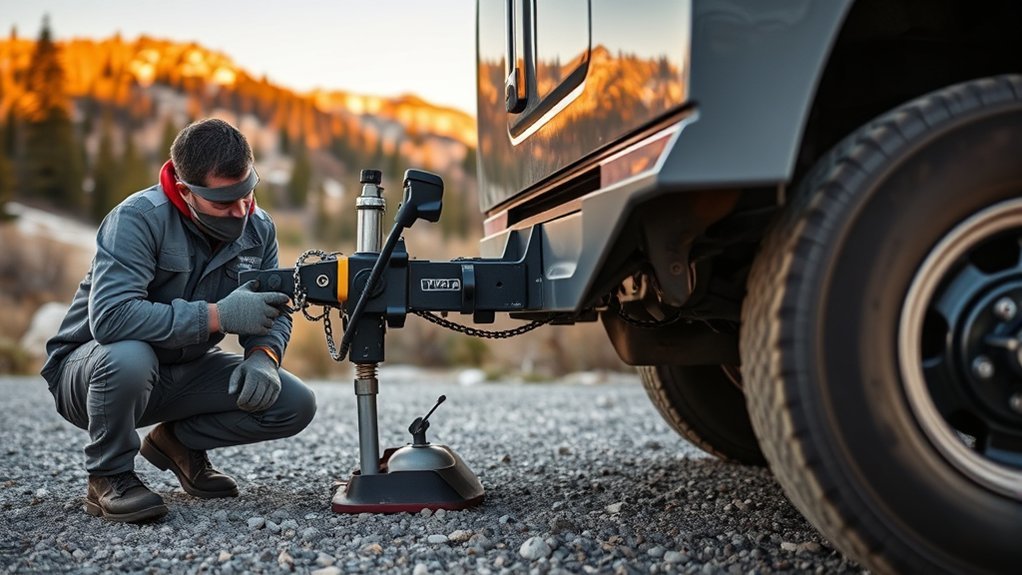
Spend at least 30 minutes on a methodical pre-drive checklist before you roll into the mountains. A good inspection catches the small failures that become big problems on long climbs, tight curves, and hot descents. The Oregon State University trailer safety pre-departure checklist backs up the same basics: tire pressure, lug torque, lights, brakes, hitch security, safety chains, wiring, breakaway connection, load balance, and route restrictions.
[Products Worth Considering]

This proportional trailer brake controller provides smooth, responsive braking by automatically matching your tow vehicle’s stopping force for safer trailer control. The bright LED digital display makes it easy to monitor voltage output in real time, while adjustable braking and sync settings help tailor performance to different trailers and road conditions. Designed for quick installation and broad compatibility, it supports 1 to 4 axle trailers for dependable towing confidence.
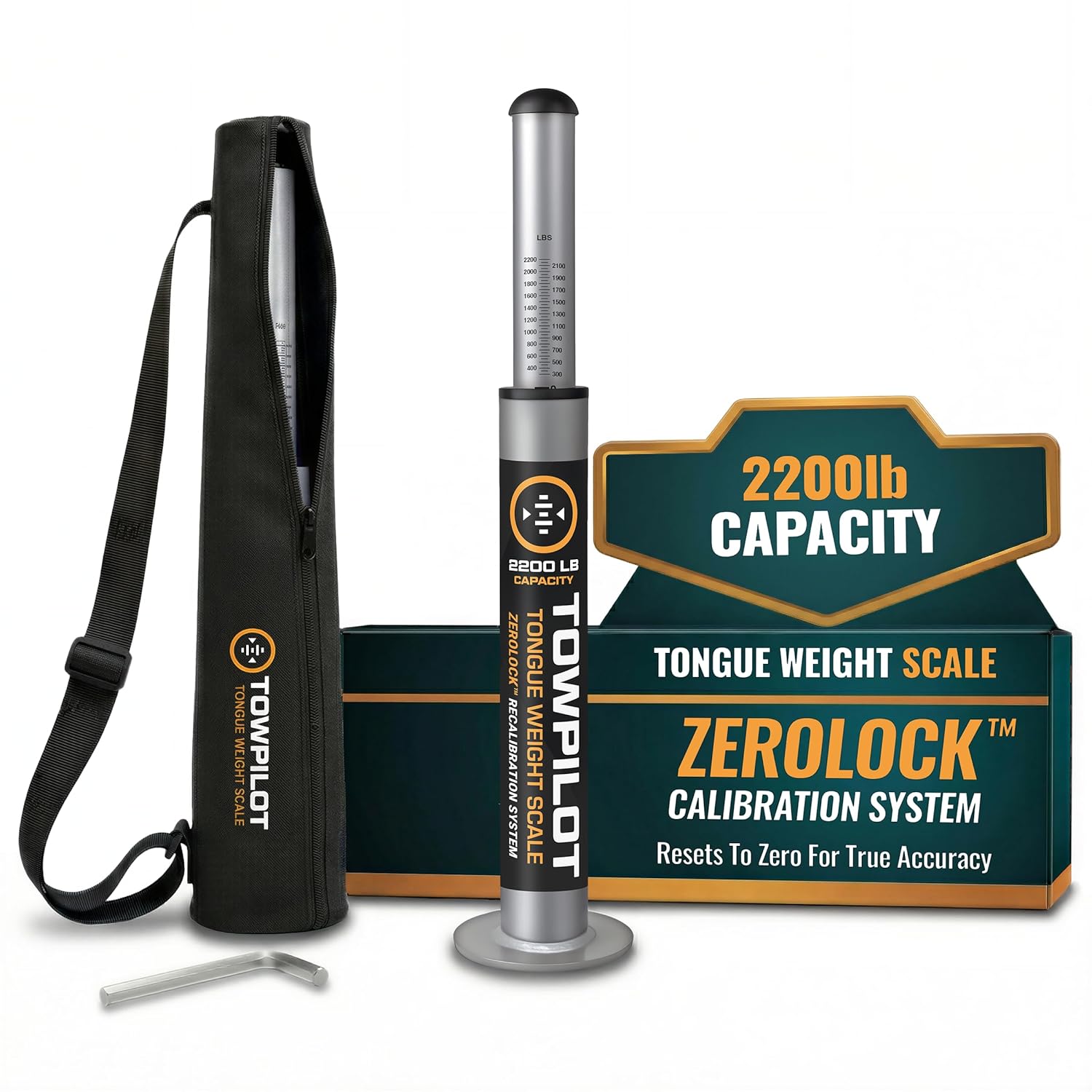
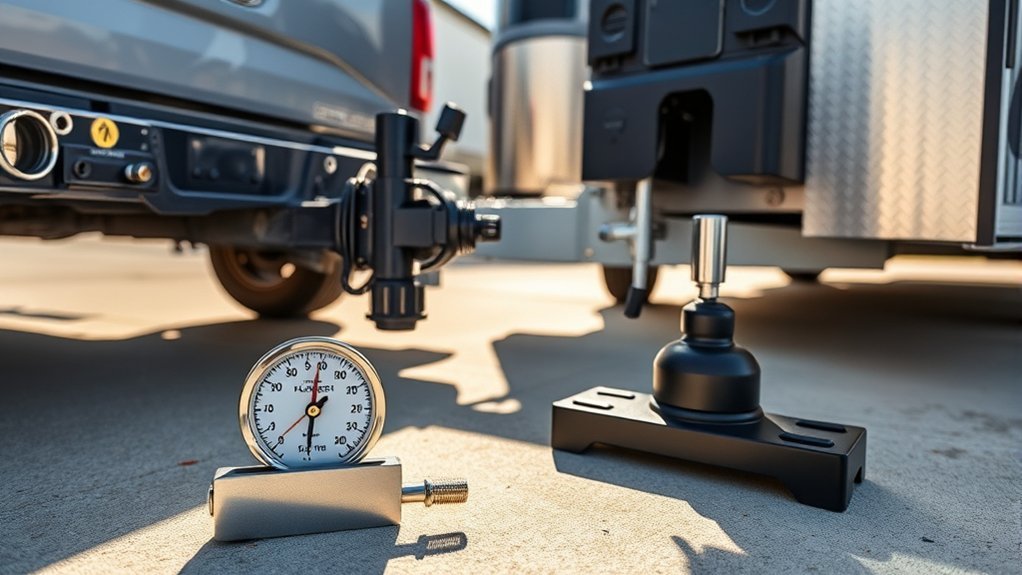
This trailer tongue weight scale helps you check hitch weight quickly and accurately before towing, reducing sway and improving overall safety. Built with durable steel and a spring mechanism, it works without batteries and includes a recalibration feature to maintain true-zero accuracy over time. It is designed for RVs, campers, and utility trailers, with a top plate that helps protect your coupler during use.

This Andersen Hitches weight distribution hitch kit is designed to improve towing stability with a grease-free friction cone and tension chain system that helps reduce sway and bounce. It features a universal setup with a 2-inch ball and 4-inch drop/rise to suit many bumper-pull trailer applications, while making hitching and unhitching faster and easier than traditional spring bar systems. Built in the USA, it offers dependable performance for travelers, workers, and outdoor enthusiasts who need confident towing control.
Tow Vehicle Check
- Check cold tire pressure on the Tundra, including the spare, against the tire placard and tire sidewall limits.
- Inspect tires for cuts, bulges, uneven wear, embedded objects, and age cracking.
- Confirm wheel lug nuts or bolts are tightened to the correct torque from your manual.
- Check engine oil, coolant, brake fluid, transmission warnings, and any maintenance due before towing.
- Make sure tow mirrors are adjusted so you can see both trailer sides and traffic behind you.
Hitch and Electrical Check
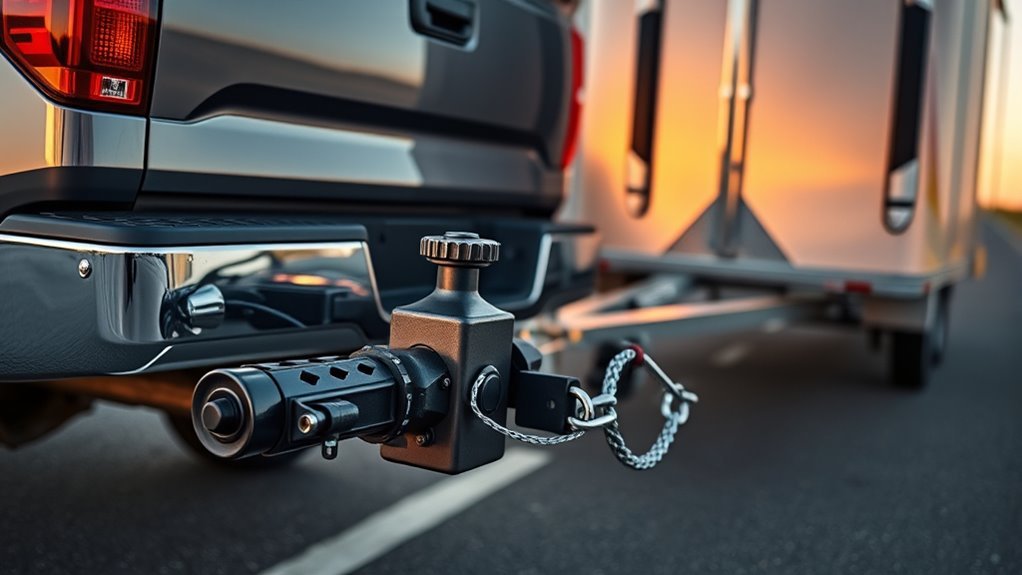
- Confirm the ball size matches the trailer coupler and the coupler is fully latched and pinned.
- Inspect the receiver, ball mount, hitch pin, clips, WDH head, spring bars, brackets, and fasteners.
- Cross the safety chains under the tongue with enough slack for tight turns, but not enough to drag.
- Connect the electrical plug so it cannot drag, pinch, or disconnect while turning.
- Connect the breakaway lanyard to the tow vehicle, not to the safety chains or ball mount.
- Test running lights, brake lights, turn signals, hazards, reverse lights if equipped, and the trailer brake controller connection.
Trailer and Load Check
- Verify trailer tire pressure cold, including the spare.
- Check trailer wheel bearings, suspension, shackles, fenders, brakes, and breakaway battery condition.
- Secure all cargo so it cannot slide rearward or side to side on grades.
- Keep the trailer level or slightly nose-down as the trailer and hitch manufacturer allows.
- Raise and lock the tongue jack, stabilizers, steps, doors, ramps, vents, and loose exterior items.
Route and Weather Check
- Review grade length, runaway truck ramps, pullouts, fuel stops, construction, bridge limits, tunnel restrictions, and local trailer speed rules.
- Check weather for wind, snow, ice, heavy rain, or heat that could affect tires and brakes.
- Plan a turn-around point before the road becomes too narrow, steep, or remote.
Pro Tip: Take one slow walk around the rig after the first 5–10 miles. Feel for unusual heat near hubs without touching hot parts, check that chains and wiring are still clear, and confirm the load has not shifted.
Set Up Hitch, Weight Distribution & Trailer Brakes
With the basic inspection complete, focus on the parts that control handling: hitch height, tongue weight, weight distribution, sway control, and trailer brake gain. Good mountain towing starts before the first hill.
[Products Worth Considering]

These replacement support brackets are designed to secure the spring bars on a trailer frame for CURT TruTrack weight distribution hitches. Their adjustable mounting holes help achieve precise leveling while the rigid construction supports integrated sway control for a steadier towing experience. A durable powder coat finish adds long-lasting protection, and the package includes two replacement brackets.

The CURT Venturer NEXT is a compact, time-delay electric trailer brake controller designed for dependable braking control from inside your vehicle. Its low-profile design, adjustable power and ramp time, and plug-and-play friendly setup make it a practical choice for towing with confidence. Built for 12-volt systems and compatible with electric over hydraulic brakes, it offers flexible installation without leveling or internal moving parts.

The CURT 17200 Trailer Sway Control Kit helps limit lateral trailer movement to improve towing stability and control. It is designed to work with most weight distribution hitches or a sway tab mount, and includes a weld-on tab, spacer plate, and adjustable hardware for flexible installation. Built for smoother, straighter towing, it helps reduce sway and makes towing more confident on the road.
Set Tongue Weight and Load Balance
Load heavy items low and near the trailer axle area, then secure them so they cannot move. Too little tongue weight can cause sway; too much tongue weight can overload the truck’s rear axle and lighten steering response. The safest method is to weigh the truck and trailer at a public scale, then compare the scale ticket with your Toyota, trailer, and hitch ratings.
Adjust the Weight Distribution Hitch
If you use a WDH, follow the hitch maker’s exact setup process. In general, you will measure the Tundra’s front and rear ride height before hitching, hitch the loaded trailer, then set the head angle, shank height, and spring bar tension so the truck and trailer sit level and steering authority is restored. Do not over-tension the bars, and do not use a WDH on a trailer frame or coupler that forbids it.
Set Trailer Brake Gain
Set brake gain before the mountain road, not halfway down a grade. If your Tundra has the factory trailer brake controller, use the trailer brake type and gain setup steps in your Toyota manual. If you use an aftermarket proportional controller such as the Tekonsha Prodigy iD brake controller, follow that controller’s installation and operating manual.
- Use a flat, dry, traffic-free test area.
- Start with the manufacturer’s recommended initial gain or setup value.
- At low speed, use the manual trailer-brake control to test trailer braking.
- Increase or decrease gain until the trailer helps slow the rig firmly without wheel lock-up.
- Recheck gain when trailer load, road surface, rain, snow, or elevation changes.
Note: More gain is not automatically safer. Too much trailer brake can lock the trailer wheels; too little can overwork the truck brakes. The goal is smooth, straight, synchronized stopping.
Use Tow/Haul, Tow+, Gears & Speed for Uphills and Downhills
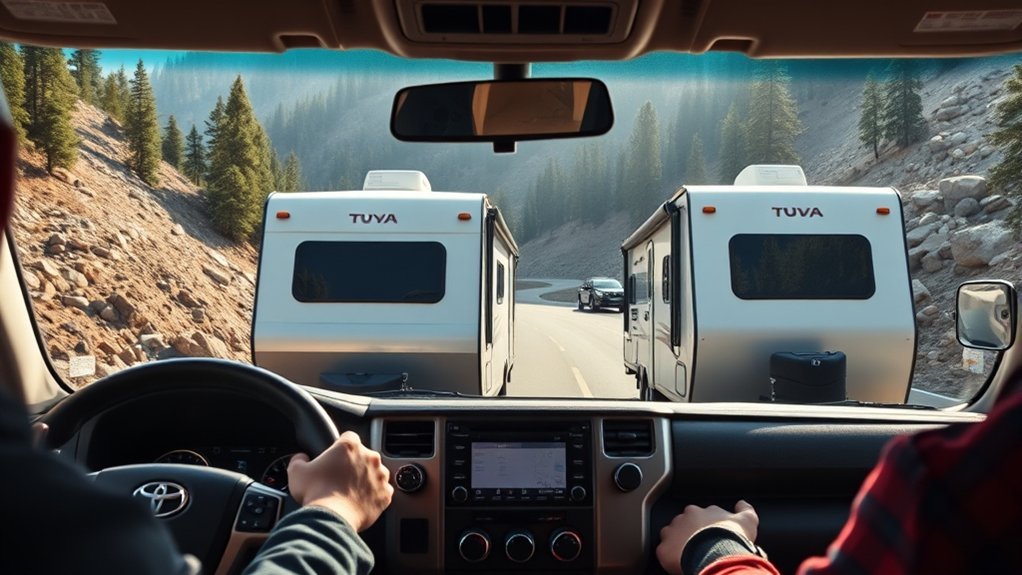
Engage the correct towing mode before the grade. Toyota’s newer Tundra guidance distinguishes Tow/Haul and Tow+ modes, so check your model year: some newer Tundras recommend Tow/Haul for lighter trailers and Tow+ for heavier trailers. Older Tundras may simply have Tow/Haul. Either way, the point is to reduce gear hunting, improve throttle response, and add engine braking when the truck is pulling or slowing a heavy load.
Climbing Grades
Climb with steady throttle instead of stabbing the pedal. If the transmission keeps hunting between gears, select a lower manual range that holds a stable gear without lugging the engine or forcing excessive RPM. The right gear may be S4 on one setup and a different range on another; speed, grade, trailer weight, and model year all matter.
- Build speed before the hill only where legal and safe.
- Stay in the right lane and let faster traffic pass.
- Do not use cruise control if it causes repeated downshifts or aggressive throttle.
- Watch coolant, transmission, and warning messages.
- Pull off safely if the truck smells hot, loses power, shows warnings, or temperatures climb quickly.
Descending Grades
Start the descent slowly. Select a lower range before speed builds, then let engine braking do as much work as practical. Use firm, controlled brake applications to bring speed down, then release the brakes so they can cool. Do not drag the brake pedal all the way down a long grade.
- Use the same general speed discipline you would use in a heavier commercial rig: slow before the grade, not after.
- Keep extra following distance because the trailer increases stopping distance.
- Watch for brake smell, smoke, pedal fade, pulsing, trailer push, or sway.
- Use signed truck pullouts or safe scenic pullouts to cool the rig when needed.
The safest mountain descent is the one you control before momentum takes over: choose the lower range early, keep speed modest, and save the service brakes for controlled speed corrections.
Monitor Transmission, Brakes & Tires: When to Stop
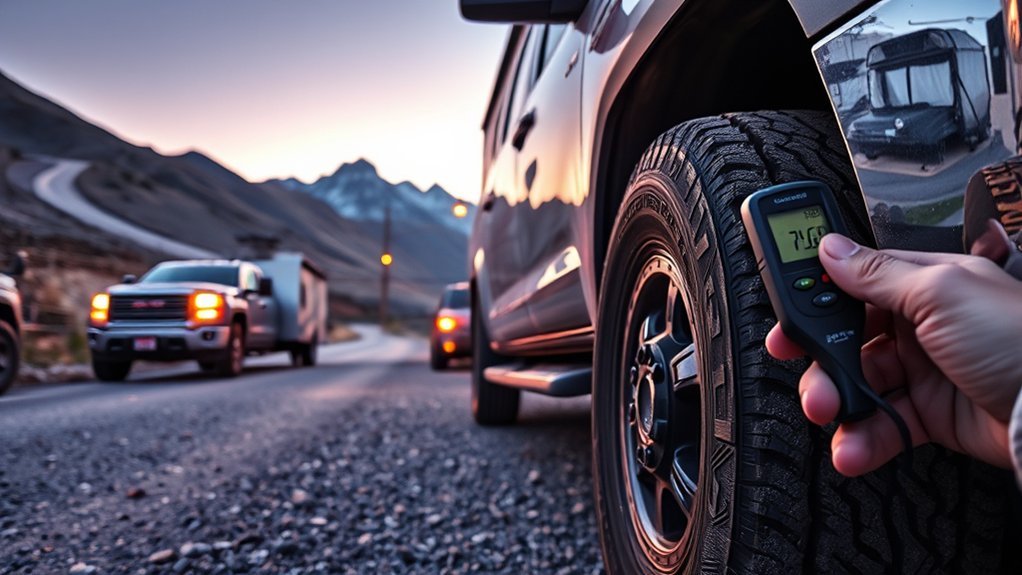
Good gear choice helps control heat, but you still need to know when to stop. Avoid using a single internet temperature number as your safety limit. Instead, watch the truck’s gauges, warning messages, brake feel, tire condition, and trailer behavior.
Stop Immediately If You Notice These Signs
- Brake pedal fade, longer stopping distance, smoke, or hot brake smell.
- Trailer sway that does not settle when you reduce speed smoothly.
- Vibration, thumping, wheel wobble, or a new pulling sensation.
- Transmission, coolant, brake, tire pressure, or trailer connection warnings.
- Rapid temperature rise, reduced power, or abnormal shifting.
- Tire bulges, sidewall cuts, tread separation, air loss, or overheated hubs.
What to Do During a Cooling Stop
- Choose a safe pullout where the trailer is fully clear of traffic.
- Keep the rig straight and use wheel chocks if you are on any slope.
- Let brakes and drivetrain cool naturally; do not splash water on hot brakes.
- Inspect tires, hubs, chains, wiring, hitch pins, WDH brackets, and cargo tie-downs.
- Recheck trailer brake gain only after the brakes have cooled and you can test safely.
- If fade, smoke, severe vibration, fluid loss, or warning lights continue, do not keep towing. Arrange service or recovery.
Warning: Never crawl under a truck or trailer supported only by a jack. Use wheel chocks and properly rated jack stands on stable ground, or call roadside service.
Must-Have Gear, Maintenance Steps & Emergency Plan
Mountain towing is easier when the truck, trailer, and tools are ready before the road gets remote. The goal is not to carry a full repair shop; it is to handle small issues safely and recognize when the right move is to stop.
[Products Worth Considering]

This proportional electric brake controller automatically applies trailer brakes based on your vehicle's braking force and speed for smoother, more responsive stopping. It is compatible with a wide range of tow vehicles and trailer setups, and includes an LED display for easy setup, diagnostics, and manual braking control. The included mounting hardware and plug-and-play port help make installation simple and convenient.
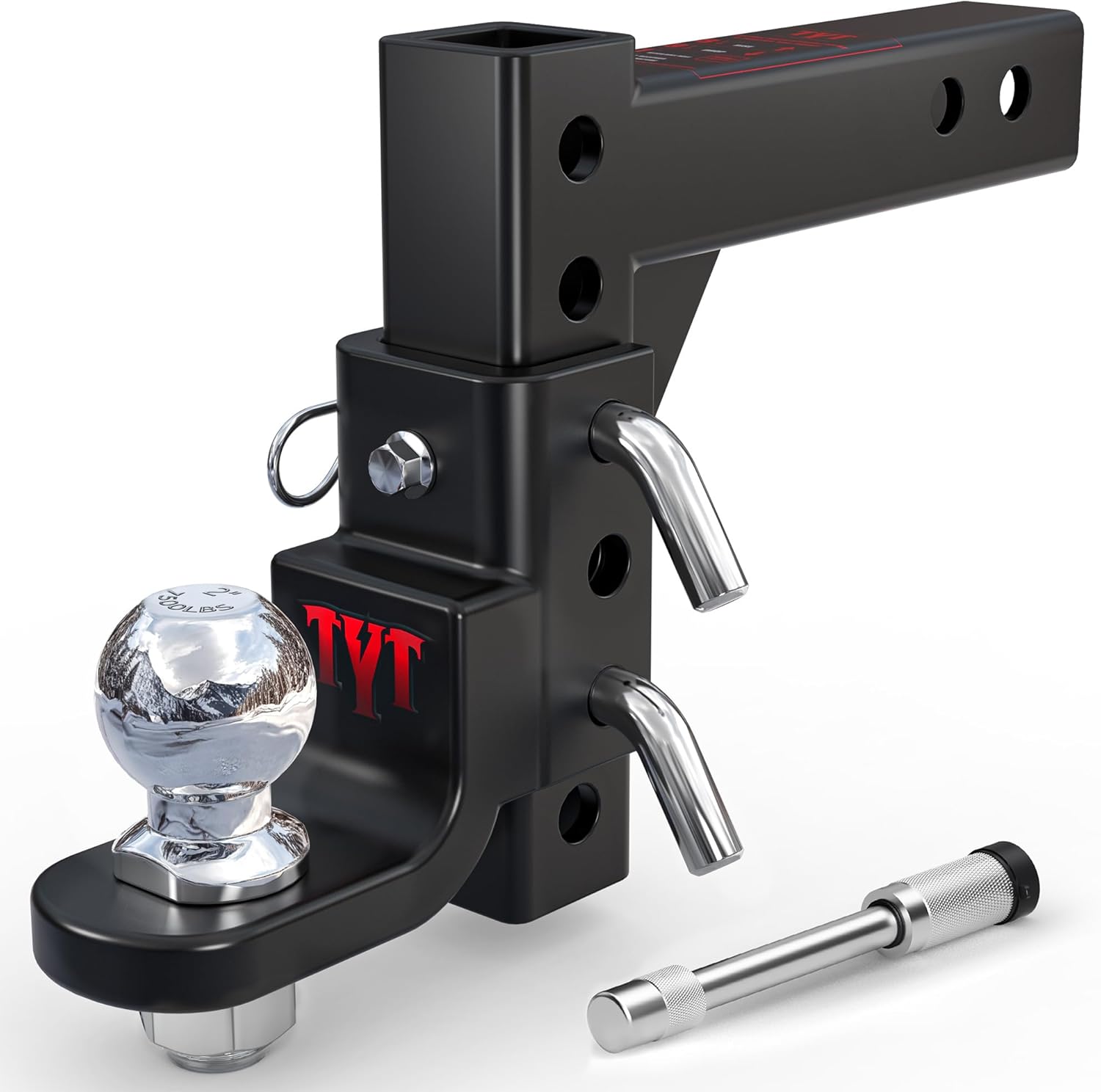
This adjustable trailer hitch ball mount is built for dependable towing with a standard 2-inch receiver and a high-capacity design suited for trucks, campers, boats, and utility trailers. Its adjustable rise and drop settings help you achieve a level tow, while the anti-rattle design supports a smoother, quieter ride. Complete with pins, clips, and a premium pin lock, it offers an easy installation and secure connection for everyday hauling needs.
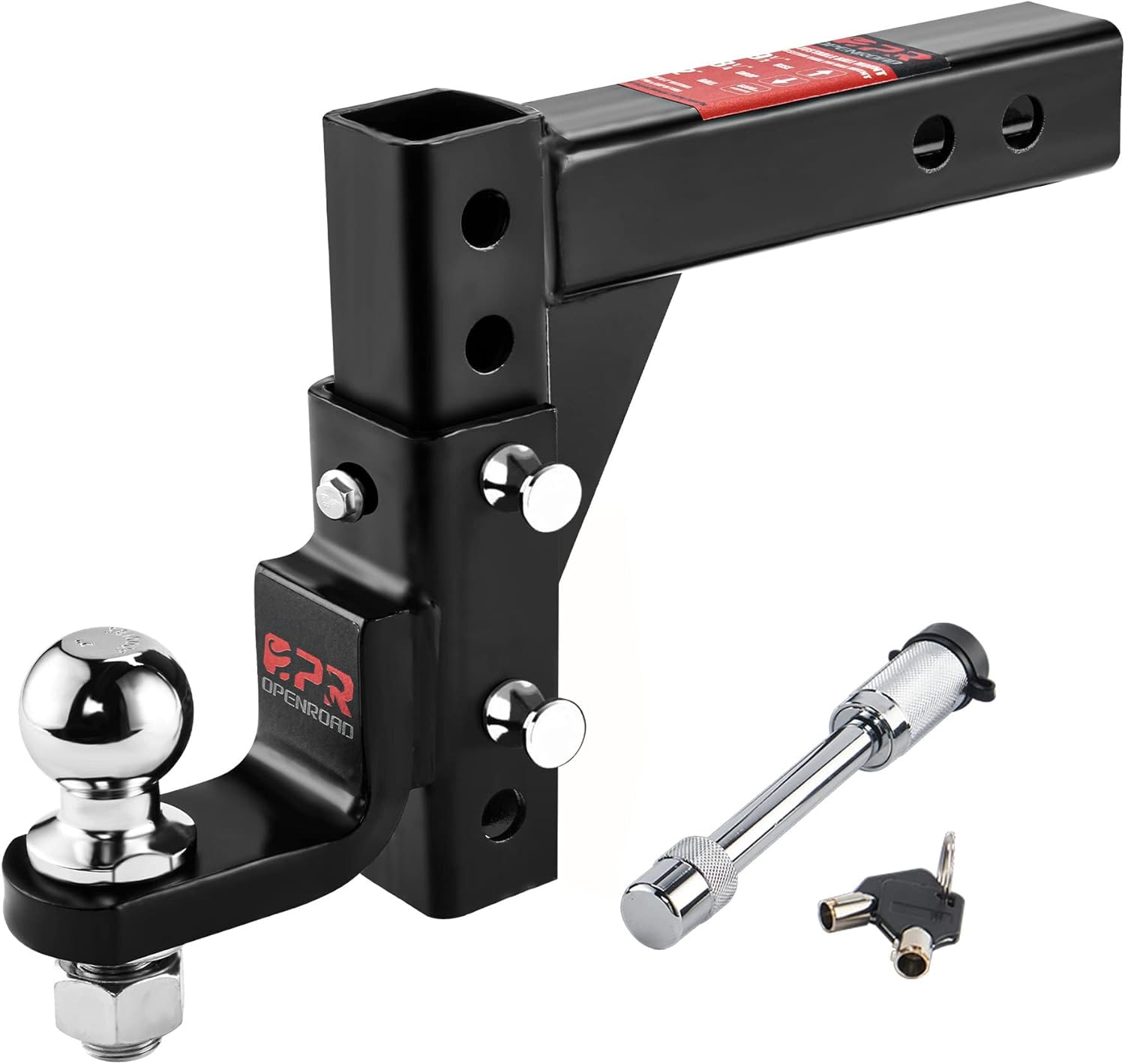
This adjustable trailer hitch ball mount is built for dependable towing with a strong steel construction and a versatile fit for 2-inch receivers. Its adjustable drop and rise settings help you dial in the right towing height, while the lock and keyed anti-theft design add security. A black powder-coated finish helps resist rust and wear for lasting performance on trucks and other towing setups.
Gear to Carry
- Torque wrench and sockets for wheel lugs and hitch hardware.
- Accurate tire pressure gauge and portable air compressor.
- Wheel chocks, reflective triangles or road flares, flashlight, gloves, and high-visibility vest.
- Spare tire for the Tundra and trailer, plus the correct jack and tools to use them safely.
- Spare fuses, electrical contact cleaner, zip ties, duct tape, and basic hand tools.
- Trailer breakaway battery tester or a way to confirm breakaway function per the trailer manual.
- Paper maps or downloaded offline maps for areas with poor signal.
Maintenance Before Mountain Towing
- Service trailer brakes, bearings, tires, and suspension before long trips.
- Replace old or weather-cracked trailer tires even if tread looks acceptable.
- Confirm brake fluid, coolant, engine oil, and transmission service are current.
- Inspect the receiver, hitch ball, WDH parts, safety chains, coupler, and breakaway cable for wear or damage.
- Check for open safety recalls on the truck and trailer components before a major trip.
Emergency Plan
Create an exit plan before the first steep grade. Know where you can turn around, where the next wide pullout is, where fuel is available, and which roads restrict trailers, propane, width, height, or weight. Give passengers clear roles: one person watches traffic during pullouts, one handles chocks, and one checks the trailer only when it is safe to exit.
Pro Tip: Practice a controlled stop, a brake-controller manual override test, and a slow parking-lot turn before towing into remote mountain roads. It is much easier to fix a bad setup near home than on a narrow grade.
Frequently Asked Questions
Should I use Tow/Haul mode in mountains?
Yes. Use Tow/Haul or Tow+ in mountains as your Tundra owner’s manual directs. These modes help the transmission hold gears longer, reduce gear hunting, improve response, and add engine braking. Newer Tundras may separate Tow/Haul and Tow+ by trailer weight, so check your exact model year.
What gear should I use going downhill with a trailer?
Use a lower manual range before speed builds. The best gear is the one that lets the engine help hold speed without over-revving and without forcing constant brake use. S4 may work for some Tundra setups, but the correct range depends on speed, grade, load, and model year.
How should I set trailer brake gain before a mountain descent?
Set gain in a flat, dry, traffic-free area before the descent. Follow the Toyota or brake controller manual, then test at low speed with the manual trailer-brake control. Adjust until the trailer brakes firmly without wheel lock-up and the truck and trailer slow together.
When do I need a weight distribution hitch?
Use a weight distribution hitch when your Tundra, trailer, receiver, and hitch manufacturer recommend or require it, especially when tongue weight causes rear sag or light steering. It must be compatible with the trailer frame and set up according to the hitch instructions.
When should I stop towing and inspect the rig?
Stop as soon as it is safe if you feel vibration, sway, brake fade, reduced stopping power, tire problems, warning lights, hot smells, smoke, rapid temperature rise, or abnormal shifting. Let the rig cool, inspect the hitch, brakes, tires, hubs, wiring, and load, and do not continue if the problem remains.
Conclusion
You have done the important work when the Tundra and trailer are matched, loaded, hitched, and tested before the grade. Use Tow/Haul or Tow+ as your manual directs, choose lower gears early, keep throttle and braking smooth, and stop before heat, sway, or fatigue gets ahead of you. A mountain road rewards patience: slow down, let the truck breathe, and give the trailer brakes, tires, and hitch the respect they deserve.
Sources
- Toyota Owners — Tundra Manuals and Warranties — supports using the exact model-year owner’s manual for ratings, operation, and maintenance.
- Toyota Owners — 2025 Tundra Automatic Transmission — supports Tow/Haul and Tow+ mode guidance for newer Tundras.
- Oregon State University — Trailer Safety Pre-Departure Checklist — supports tire, hitch, lights, brake, wiring, breakaway, load, and route checks.
- Tekonsha Prodigy iD Instruction and Operating Manual — supports following brake controller setup and operating instructions.
- SAE International J2807 — supports the role of standardized performance criteria for tow-vehicle GCWR and trailer weight ratings.