
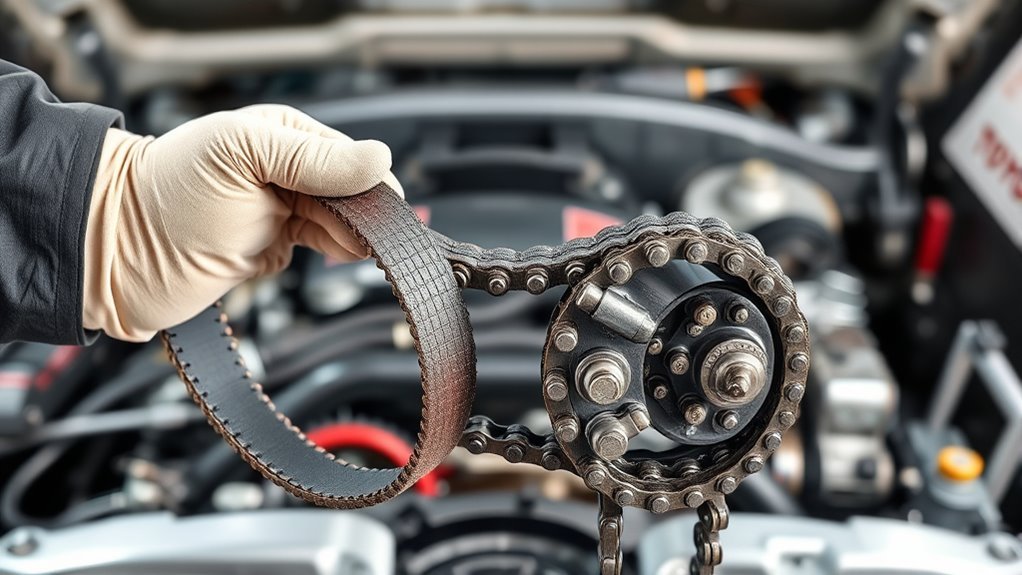
The Toyota Tundra does not have one simple “all years” timing-system answer. Some early Tundras use a timing belt, while many later engines use a timing chain. The safest answer depends on the model year and engine, especially if you own a 2000–2009 truck.
Quick Answer
Toyota Tundras can have either a timing belt or a timing chain. The 2000–2004 V6 and 2000–2009 4.7L V8 use timing belts. The 2005–2014 V6, 2007–2021 5.7L V8, 2010–2019 4.6L V8, and 2022–present twin-turbo V6 models use timing chains.
Key Takeaways
- There is no single Tundra “switch year” because Toyota changed timing systems by engine, not all at once.
- Belt-equipped Tundras generally need timing-belt replacement at 90,000 miles or 108 months, according to Toyota’s scheduled maintenance guides.
- Chain-equipped Tundras do not have a routine timing-chain replacement interval, but clean oil and correct oil level are still critical.
- If you hear front-engine rattling, see cam/crank correlation codes, notice misfires, or find timing-cover oil leaks, get a professional diagnosis promptly.
Toyota Tundra Timing Belt or Chain by Year and Engine
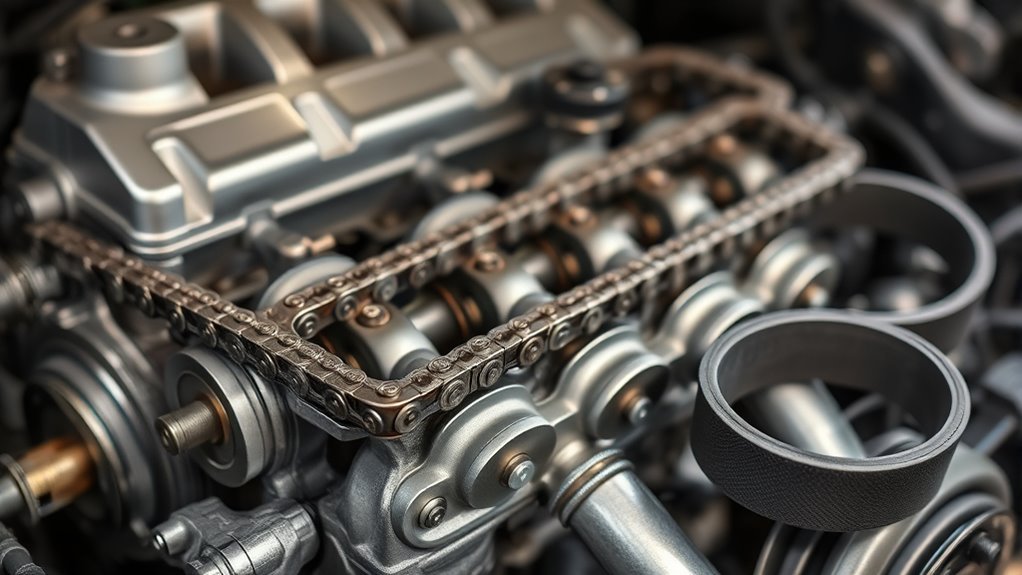
The most reliable way to answer this question is to match your Tundra’s engine to its model year. Toyota’s own timing belt/chain reference chart lists early V6 and 4.7L V8 Tundras as belt-equipped, while later V6 and V8 engines use chains. You can confirm the same information through your owner’s warranty and maintenance guide, VIN, under-hood emissions label, or a Toyota dealer.
| Tundra years | Engine | Timing system | What owners should do |
|---|---|---|---|
| 2000–2004 | 3.4L V6 | Timing belt | Follow Toyota’s timing-belt service interval and inspect related components. |
| 2000–2009 | 4.7L V8, 2UZ-FE | Timing belt | Toyota’s 2007 and 2008 guides list timing-belt replacement at 90,000 miles or 108 months. |
| 2005–2014 | 4.0L V6 | Timing chain | No routine timing-belt service; keep oil clean and diagnose chain noise early. |
| 2007–2021 | 5.7L V8 | Timing chain | No scheduled timing-chain replacement under normal service; watch for noise, leaks, and warning lights. |
| 2010–2019 | 4.6L V8 | Timing chain | Maintain oil level and oil-change schedule; repair tensioner or guide issues promptly. |
| 2022–present | i-FORCE twin-turbo V6 and i-FORCE MAX hybrid twin-turbo V6 | Timing chain | Follow the current Toyota maintenance guide for oil level, oil/filter changes, and inspections. |
Note: Equipment can vary by market, production date, and engine. If you are buying a used Tundra or do not know the engine, confirm by VIN before budgeting for timing service.
Why the Answer Changes by Tundra Engine
Toyota did not move the entire Tundra lineup from belts to chains in one year. Instead, the timing system changed as engines changed. That is why a 2007 Tundra can have different answers: the 4.7L 2UZ-FE V8 uses a timing belt, while the 5.7L V8 uses a timing chain.
This matters because a timing belt is a scheduled maintenance item. If it is overdue, it can leave you stranded and may cause expensive engine damage depending on the engine and failure conditions. A timing chain is a metal chain that runs inside the engine and is lubricated by engine oil. It normally does not have a routine replacement interval, but it still depends on clean oil, healthy tensioners, intact guides, and correct oil pressure.
The key correction: early Tundras were not all timing-chain engines. If your truck has the 2000–2009 4.7L V8, treat timing-belt service as required maintenance, not optional maintenance.
Timing-Belt Maintenance for Belt-Equipped Tundras
If your Tundra has the 2000–2004 3.4L V6 or the 2000–2009 4.7L V8, plan for timing-belt service. Toyota’s scheduled maintenance guides for belt-equipped Tundras list timing-belt replacement at 90,000 miles or 108 months. For the 4.7L 2UZ-FE, the 2007 guide specifically lists “Replace timing belt (2UZ-FE)” at that interval.
- Check the maintenance history. Look for a receipt showing the timing belt, mileage, date, and related parts replaced.
- Inspect for age as well as mileage. A low-mileage older truck can still be overdue by time.
- Ask about related components. During belt service, a shop may inspect or replace the water pump, tensioner, idlers, cam/crank seals, and drive belts if wear or leakage is present.
- Use a qualified technician. Timing-belt installation requires exact camshaft and crankshaft alignment.
Warning: Do not ignore an overdue timing belt on a belt-equipped Tundra. A failed belt can stop the engine immediately, and incorrect installation can cause severe engine damage.
[Products Worth Considering]

These custom-fit floor mats are designed to match the contours of compatible Kia Optima and Hyundai Sonata models for a secure, precise fit. Made from durable TPE material, they help protect your vehicle interior from spills, mud, snow, and everyday wear while remaining easy to clean and install.
Timing-Chain Maintenance for Chain-Equipped Tundras
If your Tundra has a timing chain, you do not schedule routine belt replacements. The maintenance focus shifts to oil quality, oil level, oil pressure, tensioners, guides, and early diagnosis. Toyota’s current maintenance guidance also stresses checking engine oil level and replacing the oil and filter at the required interval.
At a Glance
| Time Required | 10–20 minutes for owner checks; professional diagnosis varies |
| Difficulty | Easy for basic checks; advanced for chain/tensioner repair |
| Tools Needed | Owner’s manual, VIN, flashlight, dipstick, OBD-II scanner, mechanic’s stethoscope for diagnosis |
| Cost | Basic checks are free; sourced repair estimates vary by year, location, and engine |
For chain-equipped trucks, follow the maintenance schedule for your exact year. Many Toyota schedules call for regular service every 5,000 miles or six months, with oil/filter replacement based on the reminder, time, mileage, and driving conditions. Dusty roads, towing, heavy loading, and severe use can shorten service intervals.
Pro Tip: If you bought a used Tundra, start by confirming the engine and timing system before spending money. A VIN check or Toyota dealer parts lookup can prevent confusing a belt-equipped 4.7L V8 with a chain-equipped 5.7L V8.
Tundra Timing-Chain Failure Signs and How to Diagnose Them
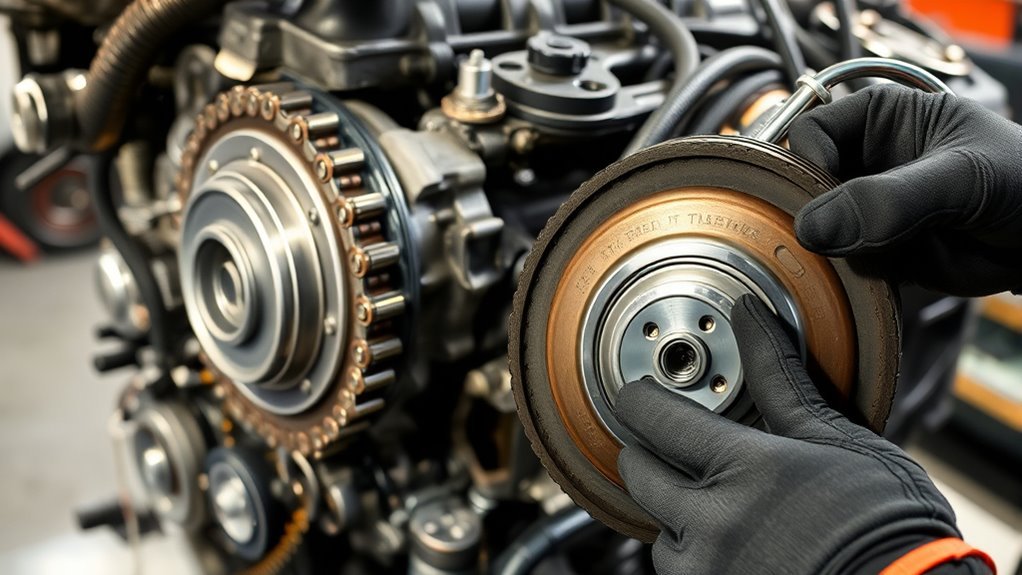
Timing-chain problems are less common than scheduled belt service, but they can happen. Do not assume a chain is “maintenance-free” if the engine has high mileage, poor oil-change history, sludge, low oil level, or a persistent front-engine rattle.
- Rattle or clatter at startup: A brief sound can have several causes, but repeated front-cover rattling may point to a tensioner, guide, or chain issue.
- Check engine light: Camshaft/crankshaft correlation codes can point to timing that is out of sync.
- Misfires or rough idle: Valve timing problems can cause uneven running, hesitation, and loss of power.
- Oil leaks near the timing cover: Leaks can lower oil level and may affect tensioner operation.
- No-start condition: A broken chain is rare, but if it happens, the engine may crank without starting.
A proper diagnosis may include scanning codes, checking oil level and condition, listening at the timing cover, inspecting for leaks, checking service history, and verifying camshaft timing with professional tools. Avoid replacing parts based only on noise; accessory pulleys, drive belts, exhaust leaks, and valvetrain noise can mimic timing-system sounds.
Replacement Cost, Repair Options, and When to See a Mechanic
Timing-system repairs vary widely by engine, year, labor rate, and whether related parts are replaced at the same time. For a belt-equipped Tundra, RepairPal estimates Toyota Tundra timing-belt replacement at about $891–$1,419 on average. For chain-equipped trucks, RepairPal estimates Toyota Tundra timing-chain tensioner replacement at about $1,379–$1,860 on average, with some model years higher.
A full timing-chain job can cost more than a tensioner-only repair because it may require deeper disassembly and replacement of chains, guides, tensioners, gaskets, seals, and fluids. For that reason, it is smart to get a written diagnosis and estimate before authorizing work.
- For a belt-equipped Tundra: replace the timing belt on schedule and inspect related components while the front of the engine is open.
- For a chain-equipped Tundra: do not replace the chain preventively unless there are symptoms, codes, wear, or a technician-confirmed fault.
- For persistent rattles or warning lights: stop guessing and get professional diagnosis before a small issue becomes a major repair.
- For DIY repairs: basic checks are fine, but timing belt or chain replacement is precision work and is best left to experienced mechanics unless you have the correct tools and service data.
[Products Worth Considering]

2008-2014 Corolla, 2009-2014 Matrix

Please confirm this item fits for your vehicle (Check Fitment Data Above or see description below)
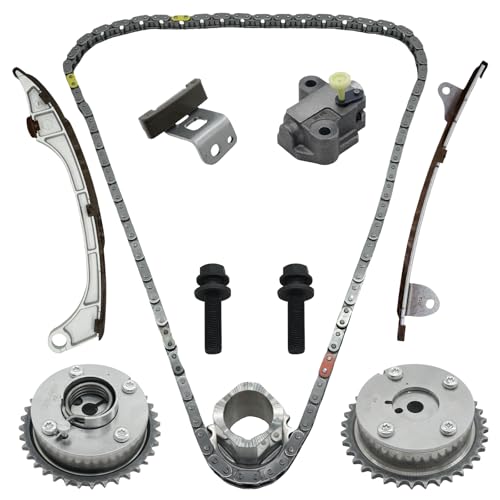
Compatible With: This timing chain kit compatible with Toyota Camry 2.5 2010-2014, RAV4 RAV 4 2.5 L 2009-2011, Highlander 2.7 2009-2014, Venza 2.7L 2009-2012, Sienna 2.7 2011-2012, Avalon 2.5L 2013, fits for Scion TC 2.5 2011-2012
How to Confirm Your Exact Tundra Timing System
Before you buy parts or schedule service, confirm the engine. Do not rely only on the model year, because some years offered more than one engine.
- Check the owner’s manual and warranty/maintenance guide for your exact year.
- Look for the engine family on the under-hood emissions label.
- Use your VIN with a Toyota dealer or trusted parts catalog.
- Review service records for timing-belt replacement history if you have a 2000–2009 truck.
- Ask a mechanic to verify visually if records are missing or the truck has an engine swap.
[Products Worth Considering]

[Vehicle Fitment]: Compatible with Toyota 4Runner 1996-2002, Tacoma 1995-2004, T100 1995-1998, Tundra 2000-2004 --- V6 3.4L
Frequently Asked Questions
Do Toyota Tundras have timing belts or timing chains?
Toyota Tundras have both, depending on the engine and year. The 2000–2004 V6 and 2000–2009 4.7L V8 use timing belts. Later engines, including the 4.0L V6, 5.7L V8, 4.6L V8, and 2022–present twin-turbo V6 engines, use timing chains.
What years of Toyota Tundra have a timing belt?
The main belt-equipped Tundras are the 2000–2004 3.4L V6 and the 2000–2009 4.7L V8. Toyota’s maintenance guides list timing-belt replacement at 90,000 miles or 108 months for belt-equipped models.
What years of Toyota Tundra have a timing chain?
Timing-chain Tundras include the 2005–2014 4.0L V6, 2007–2021 5.7L V8, 2010–2019 4.6L V8, and 2022–present i-FORCE and i-FORCE MAX twin-turbo V6 models.
What year did the Tundra switch to a timing chain?
There is no single switch year. The V6 changed to a chain in 2005, the 5.7L V8 arrived with a chain in 2007, and the 4.6L V8 used a chain from 2010. However, the 4.7L V8 kept a timing belt through 2009.
Is a Toyota Tundra timing chain maintenance-free?
No. A timing chain usually does not have a scheduled replacement interval, but it still depends on clean oil, correct oil level, good oil pressure, healthy tensioners, and intact guides. Poor maintenance can shorten chain-system life.
What is the difference between a timing chain and a timing belt?
A timing belt is a reinforced rubber belt that usually has a scheduled replacement interval. A timing chain is a metal chain inside the engine that runs in oil and often lasts much longer, but it can still wear if oil service is neglected.
How do I know which engine my Tundra has?
Check the owner’s manual, under-hood emissions label, VIN, service records, or Toyota dealer parts lookup. This is especially important for 2007–2009 trucks because some engines in those years use a belt and others use a chain.
Conclusion
The correct answer is engine-specific: some Toyota Tundras have timing belts, and many later Tundras have timing chains. If you own a 2000–2004 V6 or 2000–2009 4.7L V8, do not skip timing-belt service. If you own a chain-equipped Tundra, you can avoid routine belt replacement, but you still need clean oil, proper oil level, and quick diagnosis of rattles, leaks, misfires, or warning lights. When in doubt, confirm by VIN before ordering parts or delaying service.
Sources
- Toyota Customer Service: Does my vehicle have a timing belt or timing chain? — backs up Tundra belt/chain by year and engine.
- 2007 Toyota Tundra Scheduled Maintenance Guide — backs up 2UZ-FE timing-belt replacement at 90,000 miles or 108 months.
- 2008 Toyota Tundra Scheduled Maintenance Guide — backs up timing-belt replacement interval and maintenance-log details.
- 2025 Toyota Tundra Warranty & Maintenance Guide — backs up current oil/filter maintenance and severe-use interval guidance.
- Toyota 2026 Tundra specifications — backs up current i-FORCE and i-FORCE MAX twin-turbo V6 powertrain context.
- RepairPal Toyota Tundra Timing Belt Replacement Cost and RepairPal Toyota Tundra Timing Chain Tensioner Replacement Cost — back up current repair-cost estimate ranges.

[…] For model-year and engine-specific timing-system information, see the Toyota Tundra timing belt versus timing chain guide. […]