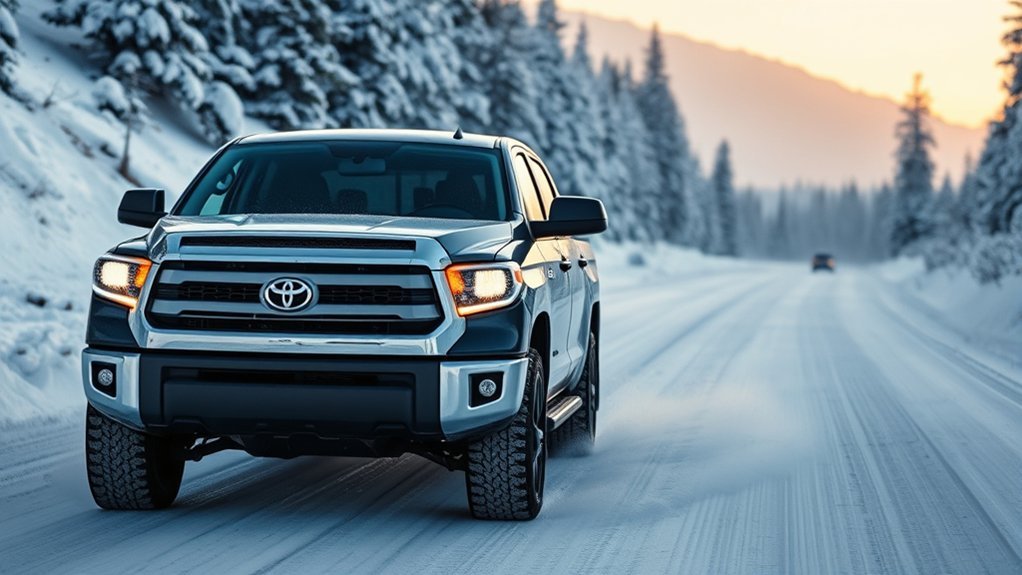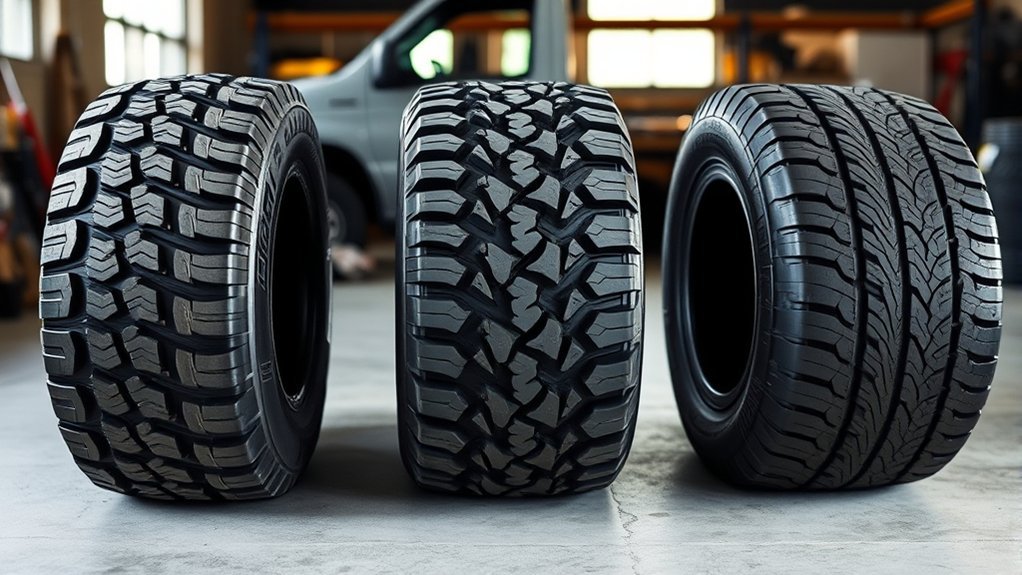
Choosing between all-terrain, mud-terrain, rugged-terrain, and highway tires comes down to one simple question: where do you drive most of the time? The best tire is not the most aggressive-looking one. It is the tire that matches your vehicle’s required size and load capacity, your normal road surface, your weather, and the amount of noise, wear, and fuel economy trade-off you are willing to accept.
Quick Answer
Choose highway tires if you drive mostly pavement and want the quietest ride. Choose all-terrain tires if you split time between daily driving and gravel, dirt, light trails, or mild snow. Choose mud-terrain tires only when deep mud, rocks, ruts, and off-road traction matter more than road noise, fuel economy, and tread life.
Key Takeaways
- Highway tires are best for pavement, commuting, towing on-road, quiet cabins, and fuel economy.
- All-terrain tires are the best middle ground for daily drivers that also see dirt roads, campsites, job sites, gravel, and light trails.
- Mud-terrain tires give the strongest off-road bite, but they usually bring more noise, faster wear, heavier weight, and weaker road comfort.
- Never choose by tread pattern alone. Match the tire size, load index, load range, and speed rating to your vehicle placard or owner’s manual first.
- For snow, look for the three-peak mountain snowflake symbol, but remember that a 3PMSF all-terrain tire is not always a full replacement for a dedicated winter tire.
At a Glance
| Time Required | 10–20 minutes to compare fitment, driving needs, and warranty details |
| Difficulty | Easy, but final fitment should be confirmed with a tire professional |
| Tools Needed | Vehicle door placard or owner’s manual, tire size, load index, pressure gauge, tread-depth gauge |
| Cost | Varies by size, load range, brand, warranty, and installation; compare total cost per mile, not just purchase price |
Quick Pick: Choose AT, MT, RT, or Highway in 30 Seconds
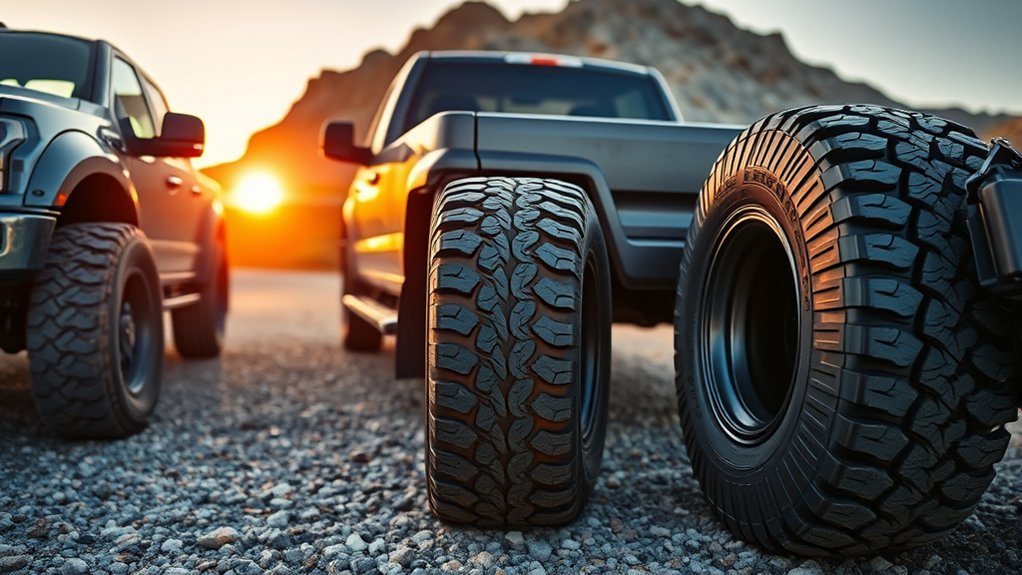
Use this fast rule first, then verify the fitment details before you buy:
| Your Main Driving | Best Tire Type | Why It Fits |
|---|---|---|
| 90%+ pavement, commuting, road trips, light towing | Highway / H/T | Quiet ride, stable handling, good fuel economy, long treadwear potential |
| Daily streets plus gravel, dirt roads, job sites, mild trails | All-Terrain / A/T | Balanced traction, comfort, durability, and everyday usability |
| Frequent trails, rocks, ruts, mixed dirt, occasional pavement | Rugged-Terrain / R/T | More off-road bite than A/T with better road manners than most M/T tires |
| Deep mud, sharp rock, loose climbs, off-road-first use | Mud-Terrain / M/T | Large voids, aggressive shoulders, and stronger off-road traction |
If you only need one tire for everyday driving and weekend dirt roads, all-terrain is usually the safest compromise. If your truck rarely leaves pavement, highway tires are usually the smarter buy. If you spend serious time in mud, rocks, and ruts, mud-terrain tires make sense—but only if you accept the noise, weight, wear, and wet-road trade-offs.
AT vs MT vs RT vs Highway Tires: Side-by-Side Specs
Tread design drives the biggest difference. Highway tires use tighter ribs and smaller tread voids for smooth rolling on pavement. All-terrain tires use more open tread blocks and shoulder features for gravel, dirt, light mud, and snow. Rugged-terrain tires sit between all-terrain and mud-terrain. Mud-terrain tires use large lugs and wide voids to clear mud and bite into loose ground.
| Tire Type | Best For | Road Noise | Off-Road Grip | Treadwear Expectation |
|---|---|---|---|---|
| Highway / H/T | Pavement, commuting, long trips, on-road towing | Lowest | Low | Often strongest, depending on model and warranty |
| All-Terrain / A/T | Daily driving plus gravel, dirt, job sites, light trails | Low to moderate | Moderate | Often good; many models offer mileage warranties |
| Rugged-Terrain / R/T | Mixed trails, overlanding, more aggressive looks | Moderate | Moderate to high | Usually between A/T and M/T |
| Mud-Terrain / M/T | Deep mud, rocks, ruts, off-road-first builds | Highest | Highest | Often shortest; check the exact tire’s warranty |
For a real-world example, the BFGoodrich All-Terrain T/A KO3 is an all-terrain tire with a 50,000-mile mileage warranty, while the Toyo Open Country M/T is marketed around maximum off-road traction, aggressive tread, and a limited warranty. That does not mean every A/T lasts 50,000 miles or every M/T wears out early; it means you should compare the exact model, size, and warranty instead of relying on a category average.
Note: The same tire line can perform differently by size, load range, and vehicle weight. Always check the manufacturer’s spec sheet for your exact size before comparing warranties or load capacity.
[Products Worth Considering]

This dial type tire tread depth gauge helps you quickly check tread wear on motorcycles, cars, trucks, and buses with easy-to-read 1/32-inch increments. Its colorful zone markings make it simple to assess tire condition for safer driving in different weather, while the durable zinc cast body and legible dial provide dependable everyday use.
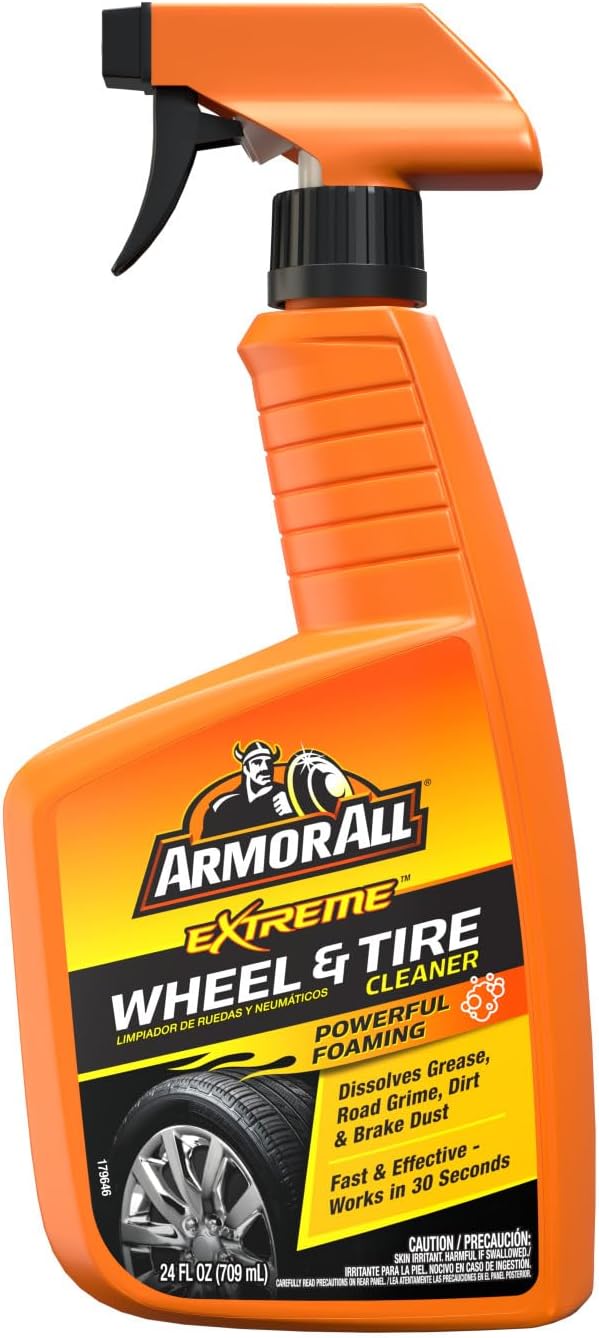
Armor All Extreme Wheel and Tire Cleaner is a powerful spray designed to cut through stubborn dirt, grease, tar, and brake dust on wheels and tires. It is safe for use on factory and aftermarket finishes, including alloy, steel, chrome, and plastic wheel trims, while its fast-acting formula works in just seconds. The deep-cleansing action helps reach hard-to-clean areas and leaves wheels looking clean and shiny.

This smart tire tread depth gauge provides quick, accurate readings from 0 to 1 inch in 1/32-inch increments, helping drivers assess tire wear with confidence. Its color-coded display makes it easy to see tread condition at a glance, while the pocket clip adds convenient portability for garages, glove boxes, and on-the-go inspections. Designed for use on trucks, motorcycles, automobiles, and other passenger vehicles, it is a simple tool for safer tire maintenance.
Load Ratings & Sidewalls: What Your Build Needs
Load range matters, but it is not the only number to check. Start with the tire size and load information on the driver-side door placard or in the owner’s manual. NHTSA recommends choosing the original tire size or another size recommended by the vehicle manufacturer. After that, confirm the load index, load range, inflation requirements, and speed rating.
A tire’s load range or ply rating indicates how much load the tire is designed to carry at a specific pressure. The load index is the more precise number for comparing carrying capacity. A heavier-duty tire can help with payload and towing, but it can also ride firmer, weigh more, and require different inflation pressure.
| Item to Check | Why It Matters |
|---|---|
| Tire size | Affects clearance, gearing, speedometer accuracy, braking, and handling |
| Load index | Shows the tire’s actual load-carrying capacity |
| Load range | Indicates strength and pressure/load limits, especially on LT tires |
| Speed rating | Must be appropriate for the vehicle and driving use |
| Sidewall construction | Helps with puncture resistance and stability, but may add weight and firmness |
Warning: Do not install a tire with less load capacity than the vehicle requires. Underinflation or overloading can cause excessive heat, tire damage, longer stopping distances, poor handling, and tire failure. Confirm towing and payload setups with a qualified tire professional.
Expected Lifespan, Noise & Maintenance Schedule
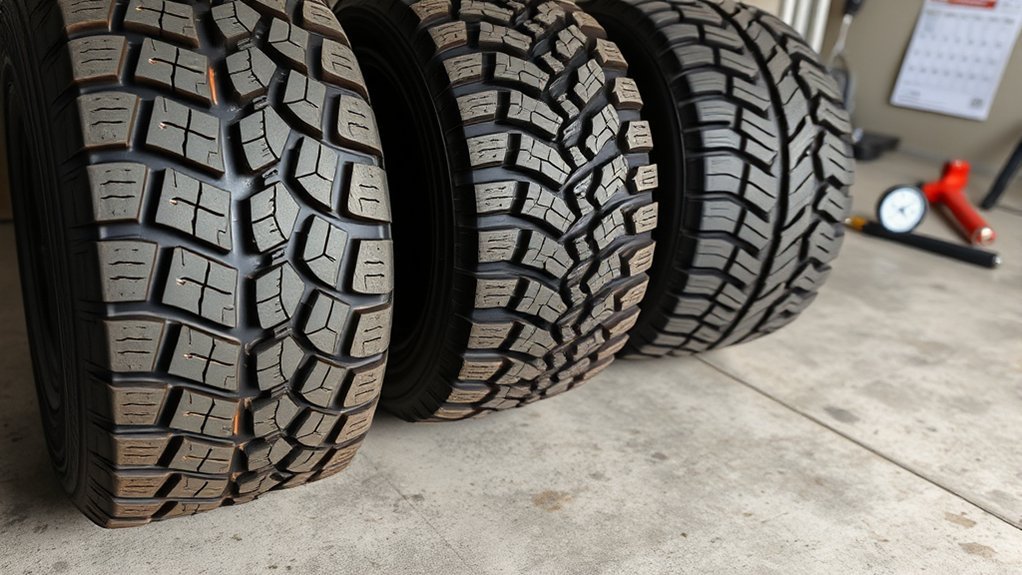
Tire life depends on compound, tread depth, alignment, rotation, inflation, load, speed, heat, road surface, and driving style. Highway and all-terrain tires often offer better treadwear potential than mud-terrain tires, but the exact warranty is more useful than a generic mileage estimate.
The best tread-life comparison is not “A/T vs M/T” alone. It is the exact tire model, size, load range, warranty, rotation history, alignment, and inflation pressure.
Expected Tire Lifespan
| Tire Type | What to Expect | What to Check Before Buying |
|---|---|---|
| Highway / H/T | Usually the best mix of quiet ride, fuel economy, and long treadwear for pavement | Mileage warranty, wet rating, towing/load capacity |
| All-Terrain / A/T | Good mixed-use life when rotated and inflated properly | Mileage warranty, 3PMSF availability, road-noise reviews |
| Rugged-Terrain / R/T | More off-road capability than A/T, usually with more noise and wear trade-off | Treadwear warranty, weight, wet braking, shoulder design |
| Mud-Terrain / M/T | Strong off-road traction, often louder and faster-wearing on pavement | Whether a mileage warranty exists, sidewall strength, wet-road performance |
Noise Levels Comparison
Noise rises as tread voids get larger and blocks become more aggressive. Mud-terrain tires tend to create the most cabin hum because their open lugs are built to clear mud and grab loose terrain. All-terrain tires are usually quieter because the blocks are tighter and more evenly spaced. Highway tires are normally the quietest because they are designed around pavement stability and smooth rolling.
If your truck is also your daily commuter, do not ignore noise. A tire that looks perfect in a parking lot can become tiring on long highway drives.
Maintenance And Rotation Schedule
Maintenance is where many tire-life claims are won or lost. Use a gauge to check cold inflation pressure at least monthly and before long trips, towing, or heavy loads. Do not rely only on how the tire looks; a tire can be dangerously underinflated without appearing flat. The recommended pressure comes from the vehicle placard or owner’s manual, not the maximum pressure molded on the sidewall.
- Pressure: Check cold pressure at least once a month and before heavy towing or long highway trips.
- Rotation: Follow the vehicle owner’s manual. If no interval is listed, many drivers rotate around oil-change intervals, but directional, staggered, dual-rear-wheel, and full-size-spare setups may need special patterns.
- Alignment: Check alignment if you see feathering, cupping, pulling, vibration, or uneven tread depth.
- Tread depth: Tires are worn out at 2/32 inch of remaining tread. For wet roads, snow, heavy trucks, or steer-axle safety margin, plan replacement earlier rather than waiting for the wear bars.
- Inspection: Look for cuts, bulges, exposed cords, punctures, cracking, and uneven wear.
Pro Tip: If you air down for sand, rocks, or slow trail work, reinflate before highway driving. Low pressure at higher speeds can build heat and damage the tire.
Which Tire for You: Commute, Mixed Trails, Extreme Off-Road?
Pick the tire that fits your normal use, not your rarest use. A mud-terrain tire may be the right answer for a trail rig, but it is usually the wrong answer for a truck that spends nearly every mile on pavement. A highway tire may be perfect for towing a boat on-road, but frustrating on muddy job sites. All-terrain is the practical middle ground for many trucks and SUVs.
| Use Case | Best Choice | Main Trade-Off |
|---|---|---|
| Daily commute and road trips | Highway / H/T | Limited off-road traction |
| Commute plus gravel, light trails, campsites | All-Terrain / A/T | More noise and rolling resistance than H/T |
| Overlanding, mixed trails, rough job sites | Rugged-Terrain / R/T | Less refined than A/T, less extreme than M/T |
| Deep mud, rock gardens, loose climbs | Mud-Terrain / M/T | More noise, weight, wear, and wet-road compromise |
For winter driving, do not rely on “M+S” alone. The three-peak mountain snowflake symbol means the tire met a minimum snow-traction requirement. That is useful for all-weather and all-terrain shoppers, but it still does not make every 3PMSF all-terrain tire equal to a dedicated winter tire on ice, packed snow, or very cold roads.
[Products Worth Considering]

This color coded tire tread depth gauge helps you quickly check tire wear and monitor when replacement is needed. Calibrated in easy-to-read 32nds with clear red, yellow, and green ranges, it offers fast visual results for cars, trucks, motorcycles, and other passenger vehicles. The pocket clip makes it simple to keep on hand for routine maintenance and safety checks.

The JACO ElitePro Digital Tire Pressure Gauge delivers shop-grade accuracy with a clear digital readout, making it easy to maintain proper tire pressure for safer driving and better performance. Built with rugged brass and steel components, a protective guard, and a flexible air hose, it is designed for reliable use across cars, trucks, motorcycles, bikes, RVs, and trailers. The lock-on display, built-in bleeder valve, and bright backlit screen add convenience in any lighting condition.

This smart color coded tire tread depth gauge makes it easy to check tread wear at a glance with clear red, yellow, and green ranges. Calibrated from 0 to 1 inch in 1/32 inch increments, it helps you quickly assess tire condition for safer driving and timely replacements. The pocket clip design makes it convenient to carry and use on trucks, motorcycles, cars, and other passenger vehicles.
Buying Checklist: Size, Load Range, Winter Rating, Noise, Cost Trade-Offs
Before choosing by tread pattern, work through this checklist in order:
- Confirm tire size: Use the driver-side door placard, owner’s manual, or manufacturer-approved alternate size.
- Confirm load capacity: Match or exceed the original tire’s load index and make sure the load range fits your payload and towing needs.
- Confirm speed rating: Choose a speed rating appropriate for the vehicle and use.
- Check wheel and clearance limits: Larger tires can rub, change gearing, affect braking, and alter speedometer readings.
- Choose the tread type: H/T for pavement, A/T for mixed use, R/T for more trail work, M/T for off-road-first traction.
- Check weather needs: Choose 3PMSF for regular snow; consider dedicated winter tires for severe winter driving.
- Compare warranties: Look for mileage warranty, road-hazard coverage, trial period, and exclusions.
- Estimate cost per mile: Divide installed price by realistic tread life or the warranty mileage. A cheaper tire is not always the better value.
- Read owner reviews carefully: Focus on vehicles similar to yours, the same tire size, and the same driving conditions.
- Plan maintenance: Budget for rotations, alignment checks, pressure checks, and earlier replacement if wet or snow traction drops.
Note: Light truck tires, P-metric tires, and LT tires are not interchangeable just because the tire diameter looks similar. Confirm the tire type, load capacity, and inflation requirements before switching.
[Products Worth Considering]

This LUMITECO tire tread depth gauge set makes it easy to monitor tire wear and maintain safer driving performance. The color-coded scale provides quick, easy-to-read measurements, while the compact pocket-size design and included clip make it convenient to keep in your vehicle or toolbox. Suitable for cars, trucks, motorcycles, and more, it offers a simple reusable way to check tread depth whenever needed.

This 50-pack of tire tread depth gauges offers a simple way to check tire wear quickly and accurately. Color-coded reading zones make it easy to see tread condition at a glance, while the compact design and pocket clip support convenient everyday carry. Built for repeated use, these gauges help drivers monitor tire safety with confidence.

This rooftop cargo carrier basket expands your vehicle’s storage space for road trips, camping, and hauling bulky gear. Built from tubular steel with a wind shield and easy universal mounting, it helps keep cargo secure while improving aerodynamics. The included waterproof bag, cargo net, and ratchet straps add extra protection and organization for travel.
Frequently Asked Questions
Are mud-terrain tires good on a highway?
Mud-terrain tires can be driven on the highway if they are properly sized, rated, inflated, and maintained, but they are not the best highway choice for most drivers. Their aggressive tread usually creates more road noise, more rolling resistance, faster wear, and less refined wet-road behavior than highway or all-terrain tires.
Are all-terrain tires good for freeway driving?
Yes, many all-terrain tires work well on the freeway, especially modern A/T models designed for daily driving. Expect slightly more noise, weight, and rolling resistance than a highway tire, but better traction on gravel, dirt, light mud, and some snow.
Should I get mud-terrain or all-terrain tires?
Choose all-terrain tires if your vehicle is a daily driver that sees occasional trails, gravel, snow, or job-site use. Choose mud-terrain tires if deep mud, rocks, ruts, and off-road traction are more important than quiet pavement driving, fuel economy, and long treadwear.
Do all-terrain tires last longer than mud-terrain tires?
Often, yes, but not always. All-terrain tires commonly use tread designs and compounds that are friendlier to pavement wear. Mud-terrain tires are built for bite and self-cleaning traction, which can increase road noise and wear. The best comparison is the exact mileage warranty and real-world reviews for your tire size.
Are 3PMSF all-terrain tires the same as winter tires?
No. A 3PMSF all-terrain tire has passed a snow-traction standard, which is better than relying on M+S alone. However, dedicated winter tires are still the better choice for frequent ice, packed snow, and very cold conditions.
Is Load Range E always better for a truck or SUV?
No. Load Range E can be useful for towing, payload, and heavier LT applications, but it can also ride firmer and may require different inflation pressure. Use the vehicle placard, load index, GVWR/GAWR, and tire manufacturer data instead of assuming the highest load range is automatically best.
Conclusion
Highway tires are the best match for pavement comfort, quiet driving, and road-trip efficiency. All-terrain tires are the best all-around choice for drivers who split time between daily streets and light off-road use. Rugged-terrain tires add a more aggressive middle ground. Mud-terrain tires are the right tool for serious off-road traction, but they ask you to give up quietness, tread life, fuel economy, and some road comfort.
Before you buy, verify the tire size, load index, load range, speed rating, winter rating, warranty, and installed cost. A tire that fits your real driving conditions will outperform a more aggressive tire that only fits the image you want.
Sources
- NHTSA TireWise — tire size, placard, pressure, and tire-safety guidance
- U.S. Tire Manufacturers Association Tire Care & Safety Guide — pressure checks, loading, tread depth, rotation, and inspection guidance
- Tire Rack Load Ranges / Ply Ratings — load range and load index explanation
- Tire Rack 3PMSF Guide — three-peak mountain snowflake snow-traction explanation
- BFGoodrich All-Terrain T/A KO3 — example of a modern all-terrain tire with a published mileage warranty
- Toyo Open Country M/T — example of an off-road-focused mud-terrain tire and manufacturer performance positioning