You can use synthetic oil in a Toyota Tundra, and for many newer Tundras it is the oil Toyota expects you to use. The best choice depends on your exact model year and engine: a 2006 Tundra 4.7L is typically a 5W-30 truck, while many newer Tundras call for 0W-20. Synthetic oil usually gives better cold-start flow, stronger heat resistance, and cleaner long-term operation, but it does not automatically let every Tundra use a longer oil-change interval.
Quick Answer
Use the viscosity listed in your Tundra owner’s manual. For a 2006 Toyota Tundra 4.7L, that usually means 5W-30. For many newer Tundras, Toyota specifies 0W-20. Synthetic is the better choice for cold starts, towing, heat, and cleanliness, but follow the factory oil-change interval for your year and engine.
Key Takeaways
- 2006 Tundra 4.7L: use 5W-30 oil that meets the manual’s oil quality requirements; synthetic 5W-30 is fine if it meets the spec.
- Newer Tundras: many specify 0W-20, but always confirm by model year, engine, and market.
- Do not extend intervals blindly: synthetic oil helps protection, but Toyota’s maintenance schedule still controls.
- Use a quality filter: Toyota OEM is the safest default; reputable aftermarket filters are acceptable when they match the application.
- Keep records: save receipts, note mileage/date, and use the right viscosity to avoid warranty and maintenance disputes.
Which Oil Should I Use for My Toyota Tundra?
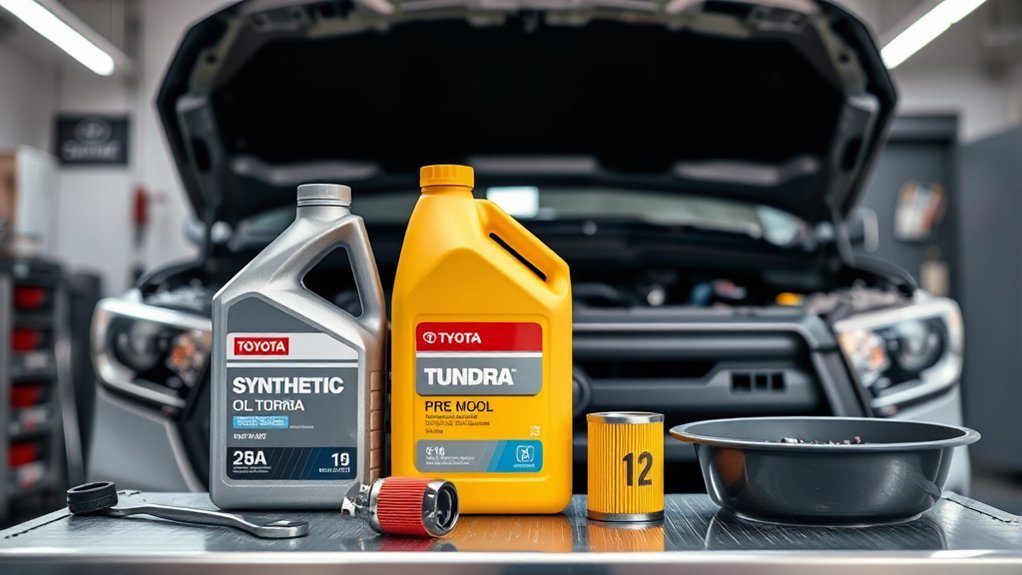
For a 2006 Toyota Tundra 4.7L V8, the safe choice is SAE 5W-30 engine oil that meets the oil quality standard shown in the owner’s manual. The Toyota owner’s manual is the final authority, and Toyota’s manual library is the best place to confirm the exact spec for your truck: 2006 Toyota Tundra Owner’s Manual.
If you want the strongest all-around protection, choose a full synthetic 5W-30 from a reputable brand, especially if your Tundra sees cold mornings, towing, steep grades, dusty roads, or long highway heat. Conventional 5W-30 can still work in an older Tundra when it meets the required spec and you change it on time, but synthetic gives you a wider safety margin.
| Tundra generation / engine | Common oil viscosity | Best advice |
|---|---|---|
| 2000–2006, including 4.7L 2UZ-FE V8 | Usually 5W-30 | Use 5W-30 that meets the manual’s oil standard. Synthetic is optional but smart. |
| Many 2010–2021 V8 models | Often 0W-20, depending on engine/year | Check your exact manual before buying oil. |
| 2022+ twin-turbo V6 and hybrid models | 0W-20 ILSAC GF-6A in many U.S. manuals | Use Toyota-approved 0W-20 or equivalent meeting the listed spec; see Toyota’s Tundra maintenance data. |
Note: If your Tundra has an engine swap, Canadian-market manual, fleet history, extreme mileage, or unusual oil consumption, verify the oil spec by VIN or ask a Toyota dealer before changing viscosity.
Synthetic vs. Conventional: What Tundra Owners Need
Synthetic oil is usually the better oil for a Toyota Tundra because it resists heat breakdown better, flows more easily during cold starts, and keeps deposits under control longer than conventional oil. That matters in a truck engine that may idle, tow, haul, or work in hot weather.
Conventional oil is mainly a budget choice for older Tundras that were originally designed around conventional or synthetic-blend oil. It can protect the engine when it meets the manual’s spec and you change it on schedule. The tradeoff is that conventional oil generally has less margin in extreme heat, cold, and heavy-load driving.
| Oil type | Best for | Main caution |
|---|---|---|
| Full synthetic | Cold starts, towing, high heat, newer 0W-20 engines, long-term cleanliness | Still follow Toyota’s maintenance interval; synthetic alone is not permission to stretch service. |
| Synthetic blend | Budget-minded older trucks driven normally | Protection depends heavily on the exact product and interval. |
| Conventional | Older engines where the manual allows it and short intervals are maintained | Less ideal for severe service, cold weather, and heavy towing. |
The cleanest recommendation is simple: use full synthetic if the cost difference is acceptable, but do not use the wrong viscosity just because the bottle says “synthetic.” Viscosity and specification matter first.
5W-30, 0W-30, or 0W-20: Pick the Right Viscosity for Your Climate
Oil viscosity is not a guess. The first number before the “W” describes cold-temperature performance, and the second number describes viscosity at operating temperature. Toyota explains this same idea in newer manuals: lower values before the W generally help cold startability, while the second number describes hot oil viscosity.
For a 2006 Tundra 4.7L, stay with 5W-30 unless your owner’s manual, Toyota service information, or a qualified Toyota technician gives you a clear reason to do otherwise. A 0W-30 oil may sound attractive in very cold weather, but it should not be treated as the default choice unless it satisfies the vehicle’s requirements.
For many newer Tundras, especially modern 0W-20 models, use the listed 0W-20 oil. In those engines, 0W-20 is not just about cold starts; it is part of the engine’s fuel-economy, lubrication, and emissions design.
Warning: Do not “go thicker” or “go thinner” based only on forum advice. The wrong viscosity can affect cold oil flow, variable valve timing operation, fuel economy, and warranty conversations on newer trucks.
[Products Worth Considering]

Castrol GTX Full Synthetic 5W-30 motor oil is designed to deliver maximum engine protection in severe driving conditions. It helps fight wear, control sludge, and resist viscosity breakdown while supporting longer intervals between oil changes. Formulated to meet or exceed key industry and vehicle manufacturer specifications, it offers dependable performance for modern engines.

Castrol EDGE 0W-20 advanced full synthetic motor oil is engineered for drivers seeking strong wear protection, excellent viscosity control, and thermal stability. It delivers superior performance in critical engine areas, including fuel economy, high-temperature protection, sludge control, and wear defense. Designed for extended oil-change intervals, it helps keep modern engines running smoothly under demanding conditions.

The ANENG SZ301 digital multimeter is a versatile testing tool for measuring AC/DC voltage, current, resistance, continuity, diode, capacitance, and live wire detection. It features a clear display, precise readings, and built-in safety protections including double fuses and overload protection, making it useful for electronics, automotive work, and household electrical troubleshooting. The kit includes a protective silicone case, test leads, and pre-installed batteries for convenient use right out of the box.
Warranty, Wear, and Engine Longevity: What Oil Choice Really Changes
Oil choice affects three things: lubrication at startup, protection under heat and load, and how clean the engine stays over time. Synthetic oil usually wins in all three areas, but the biggest real-world factor is still simple: use the correct oil and change it on time.
Warranty Coverage Implications
For a newer Tundra under warranty, use the exact viscosity and oil grade listed by Toyota. Toyota’s current support guidance says vehicles that require 0W-20 synthetic oil may have a 10,000-mile or 12-month oil-change interval, while vehicles where 0W-20 is only an option to 5W-20 or 5W-30 still require 5,000-mile or 6-month intervals even if 0W-20 is used. You can confirm that directly through Toyota’s synthetic oil interval guidance.
Keep receipts for oil and filters, write down mileage and date, and save service records. That paper trail helps if you ever need to show the truck was maintained correctly.
Long-Term Engine Wear
Synthetic oil can reduce stress during cold starts because it flows well at low temperatures. It also handles high oil temperatures better, which is useful for towing, hauling, mountain driving, and summer heat. Modern oil standards such as API SP and ILSAC GF-6A include newer performance requirements for gasoline engines, including tests related to wear and low-speed pre-ignition protection.
For an older high-mileage Tundra, synthetic oil is still a good choice, but check for seepage after switching. Synthetic oil does not “create” bad seals, but it can reveal leaks that were already close to showing up.
Best Oil Brands and Filters for Toyota Tundra (Recommended Options)
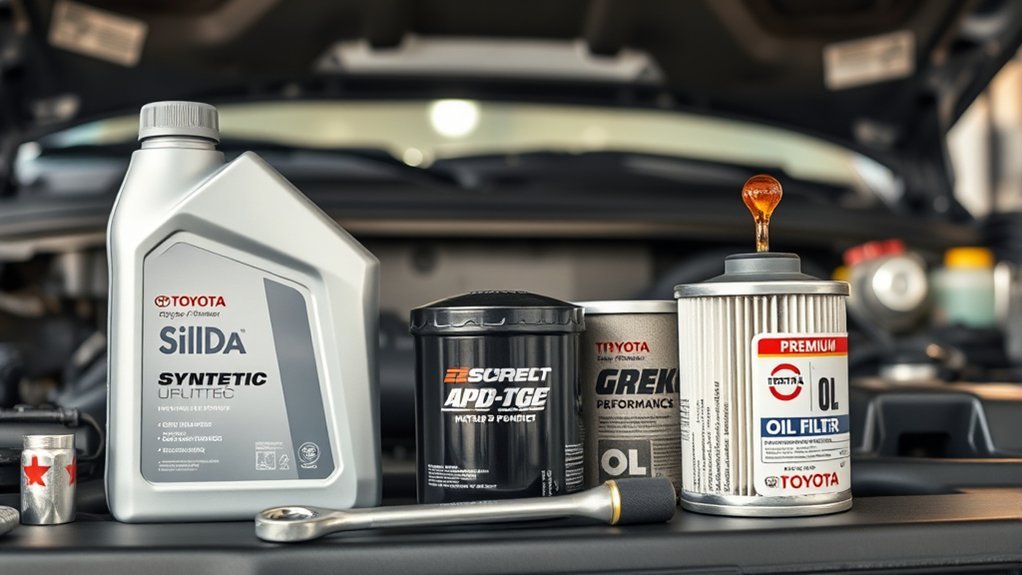
The best oil brand is the one that meets your Tundra’s required viscosity and oil specification. Toyota Genuine Motor Oil is the safest default because it is built around Toyota’s requirements. Reputable full-synthetic oils from major brands can also be good choices when the bottle clearly shows the correct SAE viscosity and API/ILSAC certification.
[Products Worth Considering]
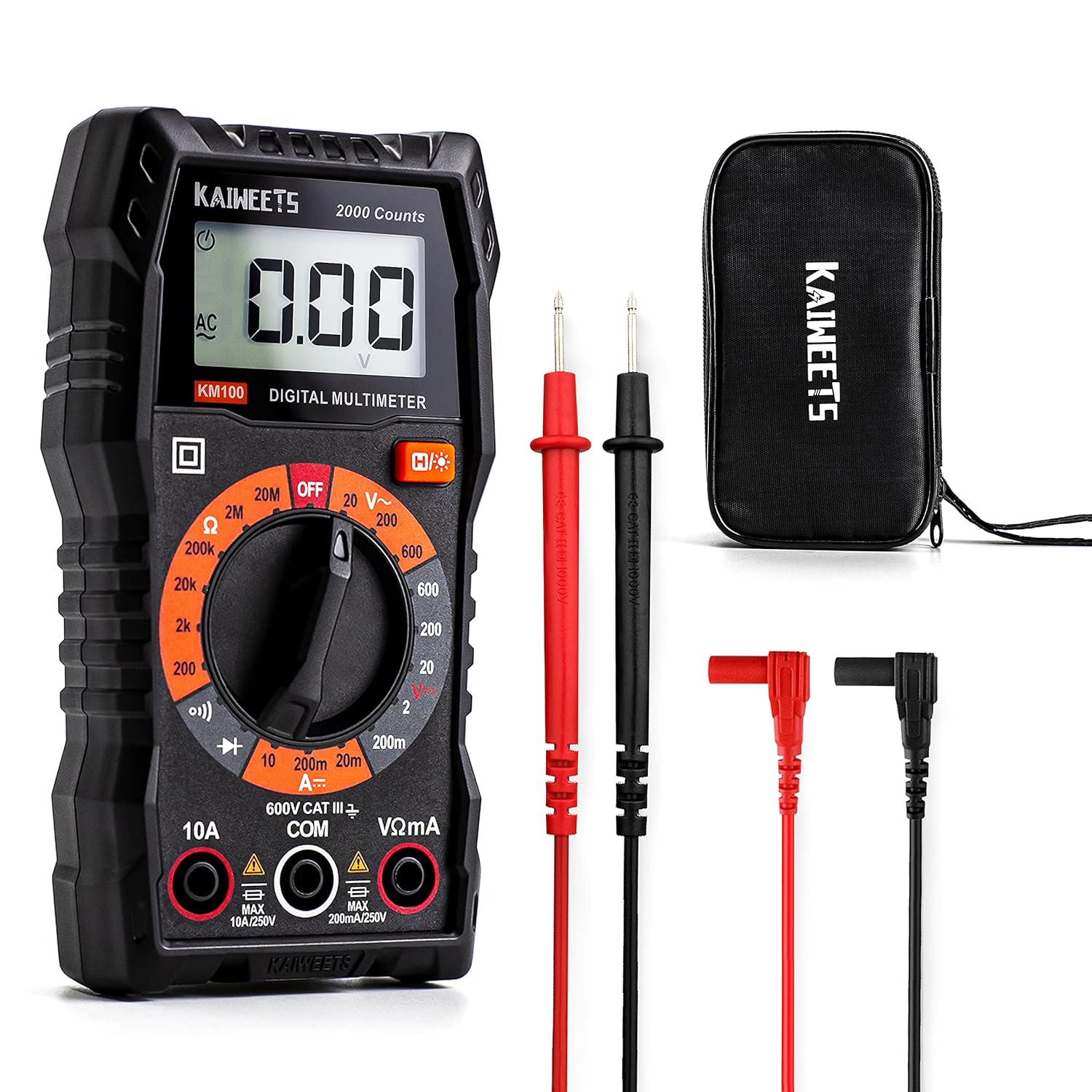
This KAIWEETS digital multimeter is a versatile tool for measuring AC/DC voltage, DC current, resistance, continuity, and diodes in home, automotive, and electrical applications. It includes pre-installed batteries, a carrying case, test leads, data hold, backlight, and overload protection for easier and safer everyday testing. Built with double fuses and rated for broad household and light professional use, it helps users diagnose electrical issues with confidence.

This digital multimeter is designed for accurate testing of AC/DC voltage, DC current, resistance, continuity, diodes, and batteries in everyday electrical troubleshooting. It features a large backlit LCD display, data hold, overload protection, and a protective stand with rubber cover for safer, easier use in home, automotive, school, and professional settings. Included test leads and battery make it ready to use right out of the box.

Advanced protection against the four main causes of engine breakdown: wear friction heat and deposits
Top Synthetic Brands
For a 2006 Tundra 4.7L, look for a quality 5W-30 full synthetic. For newer 0W-20 Tundras, look for 0W-20 full synthetic that meets the Toyota-listed oil grade. Mobil 1, Castrol Edge, Pennzoil Platinum, Valvoline Advanced, Amsoil, and Super Tech can all be reasonable options when the bottle matches the required spec. Do not buy by brand name alone; buy by viscosity and certification.
Best Oil Filters
An oil filter matters as much as the oil. Toyota OEM filters are the easiest safe choice. Wix, Purolator, Mobil 1, Fram Ultra, and other reputable filters can work well when they are the correct application for your engine. Match the filter by year, engine, and sometimes VIN.
Pro Tip: Change the filter every time you change the oil. A premium synthetic oil does not help much if the filter is cheap, clogged, or wrong for the engine.
Budget-Friendly Choices
If you want solid protection without overspending, buy the correct viscosity in a name-brand full synthetic when it is on sale, pair it with an OEM or proven aftermarket filter, and stick to the maintenance schedule. Store-brand full synthetics can be a smart value if they clearly meet the required API/ILSAC standard.
- Best safe default: Toyota Genuine Motor Oil + Toyota OEM filter.
- Best value route: full synthetic that matches the manual + quality aftermarket filter.
- Best high-mileage route: high-mileage full synthetic in the correct viscosity if your older engine has minor seepage or oil consumption.
Oil-Change Intervals, Costs, and DIY Tips: Synthetic vs. Conventional
Do not use one oil-change interval for every Tundra. A 2006 Tundra and a newer 0W-20 synthetic Tundra are not the same maintenance case.
At a Glance
| Time Required | 30–60 minutes for a careful DIY oil and filter change |
| Difficulty | Beginner to moderate |
| Tools Needed | Drain pan, socket/wrench, filter wrench if needed, funnel, gloves, rags, jack stands or ramps if extra clearance is needed |
| Cost | Varies by oil brand, filter, oil capacity, and local pricing |
| Situation | Interval guidance |
|---|---|
| 2006 Tundra 4.7L using 5W-30 | Follow the scheduled maintenance guide; many older schedules use 5,000 miles or 6 months. |
| Newer Toyota requiring 0W-20 synthetic | Toyota support guidance allows 10,000 miles or 12 months under normal conditions. |
| Towing, dusty roads, short trips, extreme heat/cold, heavy idling | Use the severe-service schedule in your maintenance guide; shorter intervals are often the safer choice. |
For a 2006 Tundra 4.7L V8, a typical oil-and-filter service is about 6.6 quarts, but always verify the capacity in the manual and use the dipstick as the final check after refilling, starting the engine, shutting it off, and letting the oil settle.
Note: Dispose of used oil and the used oil filter properly. The EPA recommends recycling used motor oil and draining/recycling used filters where accepted: EPA used oil recycling guidance.
[Products Worth Considering]


6X better wear protection on critical engine parts than industry standards**
Switching Oils and Troubleshooting: Leaks, Consumption, and Common Issues
Switching an older Tundra from conventional oil to synthetic is usually safe when you keep the same factory-approved viscosity. The main thing is to monitor the truck afterward. Check the valve covers, oil pan, drain plug, filter area, and rear main area for seepage after the first few drives.
- Check the dipstick weekly for the first month after switching oil types.
- Track oil consumption by mileage, not by memory.
- Use high-mileage synthetic if the engine has minor seepage and the product still matches the required viscosity.
- Do not overfill. Too much oil can cause foaming, leaks, and poor crankcase ventilation behavior.
- Investigate sudden consumption. A sudden drop may point to leaks, PCV issues, or internal wear.
If your Tundra starts leaking heavily, making new engine noise, smoking, or using oil quickly after a change, do not blame the oil and keep driving. Recheck the filter, drain plug, fill cap, dipstick tube, and oil level first. If everything looks correct, have a mechanic inspect it.
Frequently Asked Questions
Does a Toyota Tundra require synthetic oil?
Some do and some do not. A 2006 Tundra 4.7L generally needs 5W-30 oil that meets the manual’s standard; synthetic is optional but recommended for better protection. Many newer Tundras specify 0W-20, which is commonly synthetic and should be used exactly as Toyota lists it.
What is the best oil for a 2006 Toyota Tundra 4.7L?
Use SAE 5W-30 oil that meets the owner’s manual specification. A high-quality full synthetic 5W-30 is the best all-around choice if you want better cold-start flow, heat resistance, and engine cleanliness.
Can I use 0W-20 in a 2006 Toyota Tundra?
Do not use 0W-20 in a 2006 Tundra unless Toyota service information for your exact vehicle allows it. The safer choice for the 2006 4.7L is 5W-30. Newer Tundras that specify 0W-20 are different engines with different requirements.
Can synthetic oil cause leaks in an older Tundra?
Synthetic oil does not normally create leaks, but it can reveal weak seals or old gasket seepage that was already developing. After switching, check the oil level and inspect around the filter, drain plug, valve covers, and oil pan.
How often should I change synthetic oil in my Tundra?
Follow Toyota’s schedule for your year and engine. Newer Toyota vehicles that require 0W-20 synthetic may allow 10,000 miles or 12 months under normal conditions. Older trucks such as a 2006 Tundra often use shorter intervals, commonly 5,000 miles or 6 months.
Is a Toyota OEM oil filter required?
A Toyota OEM filter is the safest choice, but a reputable aftermarket filter is acceptable when it matches the exact year, engine, and application. Avoid bargain filters with unknown fit, weak seals, or poor filtration claims.
Conclusion
For most Toyota Tundra owners, synthetic oil is worth it, but the right viscosity matters more than the word “synthetic” on the bottle. Use 5W-30 for a 2006 Tundra 4.7L unless your manual says otherwise, and use 0W-20 on newer Tundras that specify it. Pair the oil with a quality filter, follow Toyota’s interval for your year and driving conditions, and keep records. That simple approach gives your Tundra the best chance at a long, clean, trouble-free engine life.
Sources
- Toyota 2006 Tundra Owner’s Manual — backs up owner’s-manual-first oil selection guidance for the 2006 Tundra.
- Toyota Support: Synthetic Oil Change Intervals — backs up Toyota’s 0W-20 synthetic interval guidance and the warning not to extend intervals on vehicles where 0W-20 is only optional.
- Toyota 2023 Tundra Maintenance Data — backs up modern Tundra 0W-20 / ILSAC GF-6A oil guidance.
- American Petroleum Institute: Latest Oil Categories — backs up API SP and ILSAC GF-6A oil-standard information.
- U.S. EPA: Managing, Reusing, and Recycling Used Oil — backs up responsible used-oil and used-filter recycling guidance.