
Last updated: September 16, 2026 · Reviewed by: [VERIFY: add the real reviewer name and relevant towing qualifications]
To calculate Tundra towing capacity from the door sticker, use three sources together: the door labels for occupant-and-cargo capacity, GVWR, GAWR, tire size and cold tire pressure; Toyota’s configuration-specific data for TWR and GCWR; and a scale for actual loaded weights. The sticker alone does not normally show the complete tow rating. Use the lower of Toyota’s TWR and GCWR minus the actual loaded truck-only weight as the trailer-weight ceiling, then confirm payload, tongue or pin weight, GVWR, each GAWR, tires, hitch hardware, trailer ratings and applicable brake requirements separately.
Quick Answer
Use a three-source check: door labels tell you the truck-side carrying limits, Toyota’s towing data supplies TWR and GCWR for the exact configuration, and a scale verifies actual loaded weights. The trailer-weight ceiling is the lower of Toyota’s TWR and GCWR minus the actual loaded truck-only weight. Then confirm payload, measured tongue or pin weight, GVWR, each GAWR, tires, hitch hardware, trailer ratings and applicable brake requirements separately.
Method: This calculation guide cross-checks Toyota specifications, federal vehicle-label rules, NHTSA capacity-label guidance and public-scale procedures. It does not claim hands-on testing of a specific truck-and-trailer combination.
Key Takeaways
- The Tire and Loading Information placard gives the combined weight of occupants and cargo that should not be exceeded.
- The Certification Label gives GVWR and GAWR. Stay under GVWR and under each axle rating separately.
- Find GCWR and TWR in Toyota’s owner’s manual, towing tables, build information or dealer data for your exact model.
- Tongue weight, fifth-wheel pin weight, passengers, cargo, accessories and hitch equipment all consume available payload.
- Use the lower of Toyota’s TWR and the GCWR-based trailer ceiling, then treat payload, GVWR, GAWR, tire, hitch, trailer and legal requirements as separate pass-or-fail checks.
At a Glance
| Time Required | 10–20 minutes for label and manual checks; longer if you also visit a public scale |
| Difficulty | Moderate |
| Tools Needed | Driver-door labels, Toyota owner’s manual or towing specs, calculator, loaded trailer estimate, public scale or tongue-weight scale |
| Cost | Free for label and manual checks; public-scale fees vary by location |
Tundra Towing Capacity From the Door Sticker: Calculation Worksheet
Run each calculation separately. Do not compare unlike ratings as though every number were a trailer-weight limit. TWR and the GCWR calculation produce trailer-weight ceilings. Payload, GVWR, GAWR, tire and hardware ratings are separate checks that the loaded combination must pass.
| Check | Formula or Comparison | What It Protects |
|---|---|---|
| Toyota trailer rating | Use Toyota’s TWR for the exact model year, cab, bed, drivetrain, powertrain and required equipment | Manufacturer-rated trailer-weight ceiling |
| GCWR trailer ceiling | GCWR minus the actual loaded truck-only weight | Combination-weight trailer ceiling |
| Remaining payload | Door capacity minus occupants, cargo, accessories and hitch equipment | Planning space for tongue or pin weight; confirm with scale weights |
| Truck weight | Loaded truck scale weight compared with GVWR | Pass-or-fail check for the loaded truck |
| Axle weight | Front and rear scale weights compared separately with GAWR | Pass-or-fail check for each axle |
| Final decision | Use the lower of TWR and the GCWR trailer ceiling, then verify every other rating separately | The complete towing system |
What Does the Tundra Door Sticker Show?
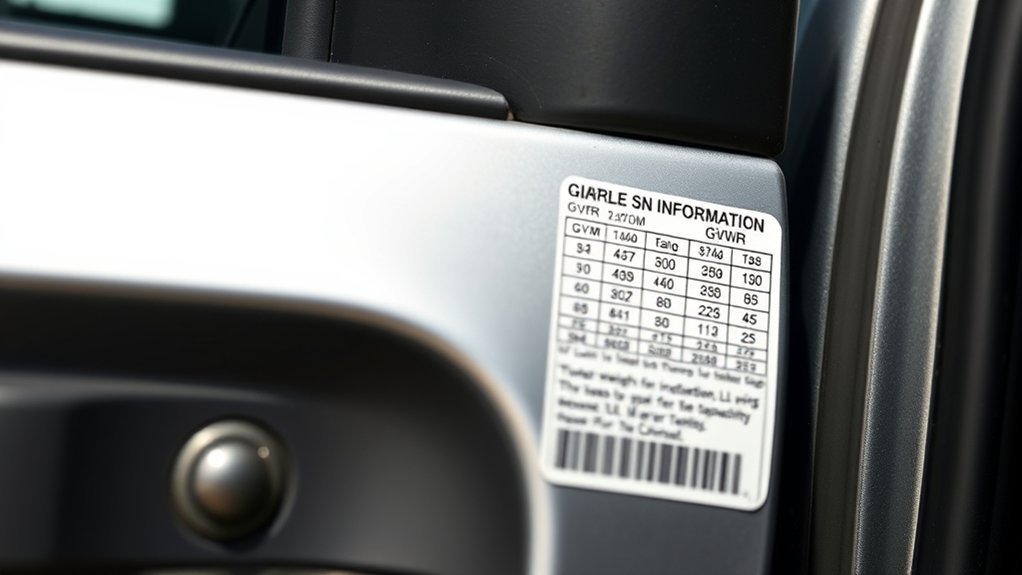
The driver-door area has two labels that matter for towing. The Certification Label lists the truck’s GVWR and GAWR. GVWR is the most the loaded truck itself can weigh. GAWR is the most each axle can carry.
Do not add the front and rear GAWR values to create a higher truck weight limit. The loaded truck must remain below its GVWR and below each individual axle rating.
The Tire and Loading Information placard lists tire size, cold tire pressure, seating capacity and the line that usually reads, “The combined weight of occupants and cargo should never exceed…” That line is the truck’s labeled occupant-and-cargo capacity. Use it as the starting payload ceiling for people, cargo, accessories, hitch equipment and trailer tongue or pin weight. For a line-by-line label walkthrough, see the Tundra door-jamb sticker guide.
Note: Do not assume GCWR, curb weight or trailer weight rating is printed on the Tundra door sticker. Some towing information may appear in Toyota tables tied to the model code or VIN, but the complete tow rating normally comes from the owner’s manual, Toyota specifications, build information or a Toyota dealer.
| Term | What It Means | Where to Check |
|---|---|---|
| Occupant-and-cargo capacity | Maximum combined weight of occupants and cargo added to the truck as labeled | Tire and Loading Information placard |
| GVWR | Maximum loaded weight of the truck itself | Certification Label |
| GAWR | Maximum loaded weight allowed on each axle | Certification Label and scale ticket |
| GCWR | Maximum loaded weight of the truck and trailer together | Toyota owner’s manual, towing tables or dealer data |
| TWR | Toyota’s trailer weight rating for the exact configuration | Toyota owner’s manual, Toyota specs or VIN/build information |
Where Do You Find the Exact Tundra Tow Rating?
Before doing any math, identify your exact truck: model year, cab, bed length, drivetrain, engine, trim, model code, factory towing equipment and any dealer-installed or aftermarket accessories. Then check the Toyota Tundra owner’s manual, Toyota towing tables or a Toyota dealer using your VIN.
For the 2026 U.S.-market Tundra, Toyota advertises maximum ratings of up to 12,000 lb for towing and 1,850 lb for payload. These are lineup maximums, not the ratings for every configuration. A different trim, drivetrain, bed, powertrain, accessory package, tire setup or added equipment can lower the usable rating. Check Toyota’s official Tundra specifications, your truck’s documents and the site’s configuration-focused Tundra towing-capacity guide instead of relying on a generic maximum.
Warning: Never tow based only on a brochure maximum. A Tundra advertised as capable of towing “up to” a certain weight may not match your Tundra. Use the exact rating for your configuration and stay below every truck, trailer, axle, tire, hitch, ball and applicable brake limit.
How Do You Run the Tundra Towing Calculation?
Start with the two calculations that produce trailer-weight ceilings, then run the remaining pass-or-fail checks. Do not compare a payload number or axle rating directly with trailer weight.
- Toyota trailer-rating ceiling: Start with Toyota’s TWR for your exact Tundra.
- GCWR trailer ceiling: Subtract the actual loaded truck-only weight from GCWR. Include passengers, fuel, cargo, hitch equipment and tools in the truck-only scale weight.
- Choose the lower trailer ceiling: The lower of Toyota’s TWR and the GCWR calculation is the maximum trailer weight allowed by those two checks.
- Payload check: For conservative planning, start with the door capacity number and subtract occupants, cargo, added accessories and hitch equipment to see how much room remains for tongue or pin weight. Confirm the final loaded truck and axle weights on a scale.
- GVWR check: Make sure the loaded truck remains below the GVWR printed on the Certification Label.
- Axle check: Make sure the front and rear axle scale weights remain below their separate GAWR values.
- Hardware, tire and trailer check: Confirm the receiver, ball mount, hitch ball, coupler, safety chains, truck tires, trailer tires, trailer GVWR and brake system are rated for the load.
Use this formula as a working check, not as the only answer:
Practical trailer-weight ceiling = the lower of Toyota TWR and GCWR minus actual loaded truck-only weight. The combination is acceptable only when payload planning, measured tongue or pin weight, GVWR, each GAWR, tire ratings, hitch and ball ratings, trailer ratings and applicable legal requirements also pass.
| If This Check Fails | What It Means | Safe Next Step |
|---|---|---|
| TWR or GCWR | The trailer or total combination is too heavy for the verified Toyota rating. | Reduce loaded trailer or combination weight, or use a tow vehicle with a higher verified rating. |
| Payload, GVWR or GAWR | The truck is carrying too much total or axle-specific load. | Reduce occupants, cargo, accessories or hitch load, or choose a lighter trailer or more suitable tow vehicle. |
| Hitch, tire or trailer rating | A component is the weak link even if the truck ratings pass. | Stay below that component’s rating. Correctly rated replacement hardware may remove that component bottleneck, but it does not raise Toyota’s truck ratings. |
Example Tundra Towing Calculation
Suppose your Tundra’s door placard gives an occupant-and-cargo capacity of 1,500 lb. You load 400 lb of passengers, 75 lb of gear and 75 lb of hitch equipment. That leaves:
1,500 − 400 − 75 − 75 = 950 lb available for tongue weight before reaching the labeled capacity.
If your loaded conventional trailer weighs 7,000 lb and measured tongue weight is 10%, the tongue weight is 700 lb. That leaves 250 lb of payload margin. If a loaded trailer weighs 10,000 lb at the same 10% tongue-weight percentage, it places 1,000 lb on the hitch and exceeds the remaining payload by 50 lb even if Toyota’s TWR and GCWR checks would otherwise allow that trailer.
The 10% figure is a payload-math example within Toyota’s commonly published 9% to 11% tongue-weight range for conventional Tundra towing. Do not treat one percentage as a universal target for every model year or trailer. Follow the range in your exact Tundra owner’s manual plus the trailer and hitch instructions, then measure the loaded setup.
Pro Tip: Use the Tundra tongue-weight guide for the percentage check, but use measured loaded tongue weight, truck GVW and axle weights for the final decision.
Which Weight Limit Usually Stops You First?
Payload is often the first limit reached when a Tundra tows a travel trailer. Tongue weight presses down on the hitch and consumes the truck’s occupant-and-cargo capacity. So do passengers, coolers, tools, bed cargo, bed covers, racks, aftermarket bumpers, recovery gear, weight-distribution equipment and anything else added to the truck.
For a fifth-wheel or gooseneck trailer, pin weight also counts against payload and rear-axle capacity. Confirm that Toyota and the hitch manufacturer approve the installation and loading arrangement for your truck.
Start with the capacity number printed on the Tire and Loading Information placard. Then subtract every real load added to the truck:
- Driver and passengers
- Cab and bed cargo
- Dealer-installed or aftermarket equipment not reflected in an updated capacity label
- Ball mount, weight-distribution parts, sway-control equipment and other hitch hardware
- Actual or estimated trailer tongue weight
- Fifth-wheel or gooseneck pin weight, when applicable
A weight-distribution hitch can redistribute load among the truck’s front axle, rear axle and trailer axles, but it does not increase the Tundra’s payload, GVWR, GAWR, GCWR, TWR, tire ratings or receiver rating. Use full tongue weight for conservative payload planning, then verify the actual loaded truck and axle weights on a scale. For setup details, see the Tundra weight-distribution hitch guide.
If the payload math is tight, do not “fix” it by loading the rear of the trailer heavier. Poor trailer loading can cause sway and steering instability. Reduce truck cargo, choose a lighter trailer, adjust trailer cargo only within the trailer manufacturer’s loading instructions or use a tow vehicle with more payload.
How Do You Verify the Labels, Model Code and Towing Equipment?
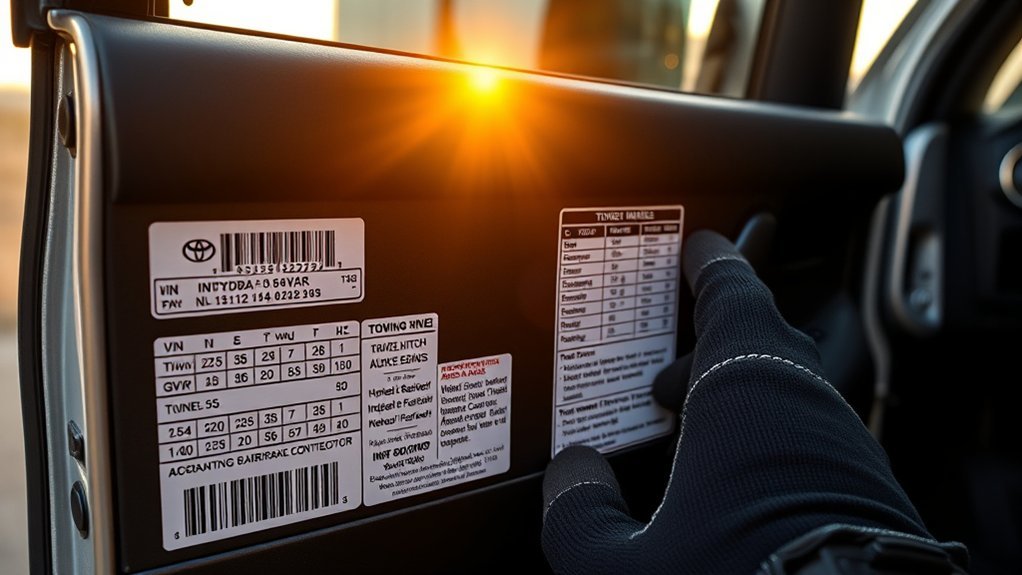
Use the door labels to record the VIN, GVWR, front GAWR, rear GAWR, occupant-and-cargo capacity, original tire size and cold tire pressure. Then match the truck to Toyota’s owner’s manual or towing tables. Some Toyota manuals use the model code shown on the Certification Label to select the correct GCWR and TWR table.
Check for a supplemental load-carrying-capacity label if equipment was installed before the truck’s first retail sale. NHTSA explains that a dealer may need to replace the placard when dealer-installed equipment makes the original capacity information inaccurate. For equipment added later, subtract its actual weight from the available capacity. See the NHTSA vehicle-capacity interpretation for the federal labeling explanation.
Current label-recall check: NHTSA Recall 26V179 covers certain 2024–2025 Tundra and certain 2024–2026 Tundra Hybrid vehicles whose load-carrying-capacity modification label may show inaccurate added-weight values. Use the NHTSA VIN recall lookup to confirm whether your truck is affected. A model-year match alone does not prove that a specific VIN is included.
Next, inspect the physical towing equipment. Look for labels or stamped ratings on the receiver, ball mount, hitch ball, coupler, safety chains and trailer. The lowest hardware rating controls the setup. A capable truck cannot safely compensate for an underrated hitch ball, weak ball mount, incorrect coupler size, damaged safety chains or trailer tires below the required load rating.
Also confirm trailer wiring and brakes. Heavier trailers may require a brake controller, breakaway system, properly rated safety chains and a 7-pin connector. State brake laws vary, so check the requirements for every jurisdiction in which you will tow and follow Toyota’s recommendations.
[Products Worth Considering]

This Andersen Hitches weight distribution hitch kit is designed to improve towing stability with a grease-free friction cone and tension chain system that helps reduce sway and bounce. It features a universal setup with a 2-inch ball and 4-inch drop/rise to suit many bumper-pull trailer applications, while making hitching and unhitching faster and easier than traditional spring bar systems. Built in the USA, it offers dependable performance for travelers, workers, and outdoor enthusiasts who need confident towing control.
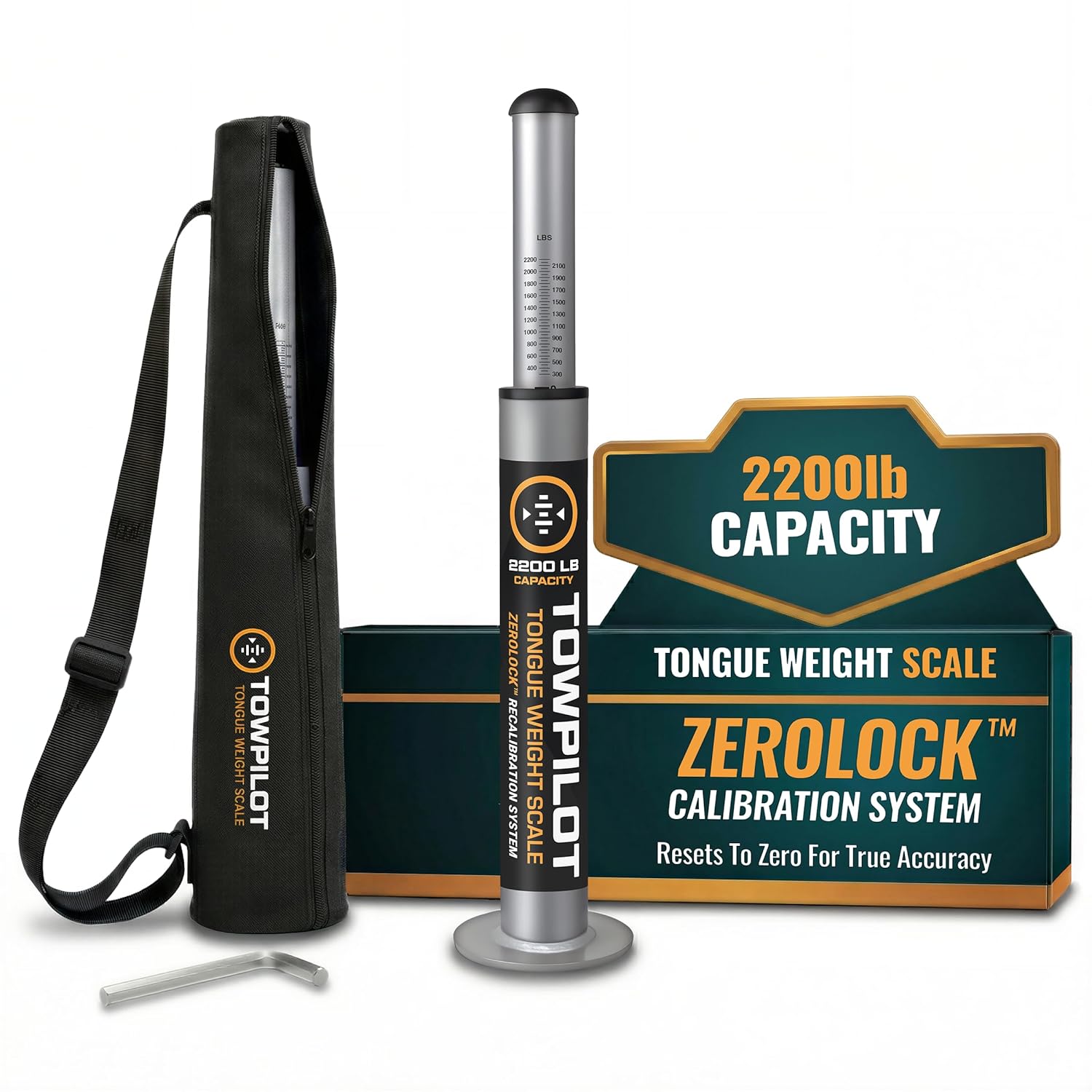
This trailer tongue weight scale helps you check hitch weight quickly and accurately before towing, reducing sway and improving overall safety. Built with durable steel and a spring mechanism, it works without batteries and includes a recalibration feature to maintain true-zero accuracy over time. It is designed for RVs, campers, and utility trailers, with a top plate that helps protect your coupler during use.
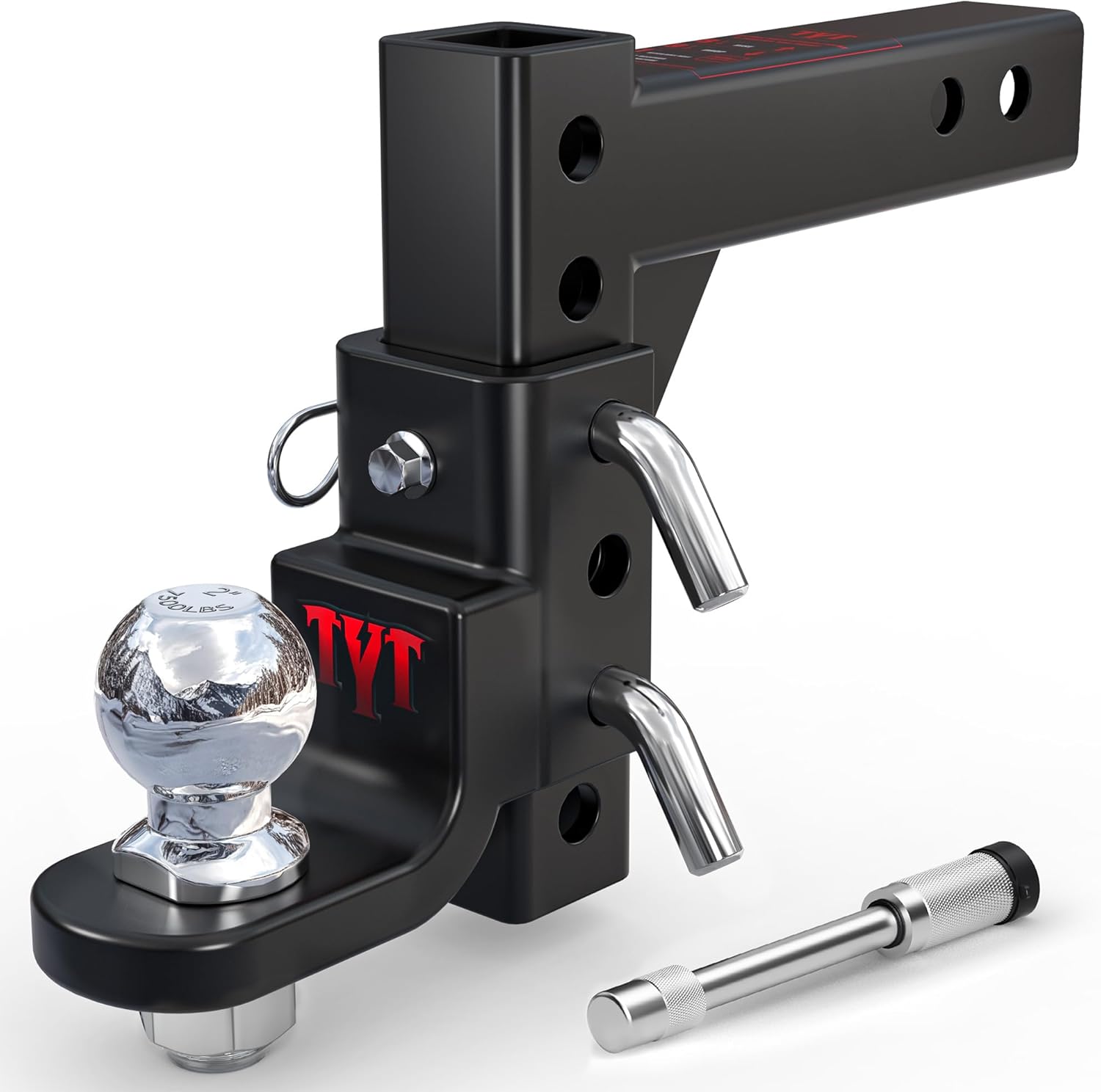
This adjustable trailer hitch ball mount is built for dependable towing with a standard 2-inch receiver and a high-capacity design suited for trucks, campers, boats, and utility trailers. Its adjustable rise and drop settings help you achieve a level tow, while the anti-rattle design supports a smoother, quieter ride. Complete with pins, clips, and a premium pin lock, it offers an easy installation and secure connection for everyday hauling needs.
How Do You Weigh a Tundra and Trailer?
Sticker and manual numbers are ratings. A public scale shows what the truck and trailer actually weigh. When using a three-platform scale, place the truck’s front axle, rear axle and trailer axle group on separate platforms where the scale operator permits. Review CAT Scale’s truck-and-trailer weighing instructions before arriving.
- Weigh the loaded truck by itself. Include the driver, passengers, fuel, cargo, hitch equipment and everything normally carried while towing. Record front axle, rear axle and total truck weight.
- Weigh the truck and trailer together. Load the trailer as it will travel, including water, propane, batteries, food, tools and personal gear. Record the front axle, rear axle, trailer axle group and combined weight.
- Compare the ratings. The truck total must remain below GVWR, each axle must remain below its GAWR and the combined weight must remain below GCWR.
- Calculate actual trailer weight. Subtract the loaded truck-only weight from the combined truck-and-trailer weight, provided the truck carries the same people, fuel, cargo and hitch equipment during both weighings.
- Measure tongue or pin weight. Use an appropriate tongue-weight scale when possible. Changes in truck axle weights can help evaluate hitch load, but a weight-distribution hitch transfers load and makes a simple axle-change estimate less direct. When adjusting a weight-distribution hitch, follow the hitch manufacturer’s scale procedure and use separate passes if it calls for measurements with the system engaged and disengaged.
Note: Curb weight is only a planning estimate. Actual loaded scale weight is better for final towing decisions because it includes your passengers, cargo, fuel, hitch setup and accessories.
[Products Worth Considering]
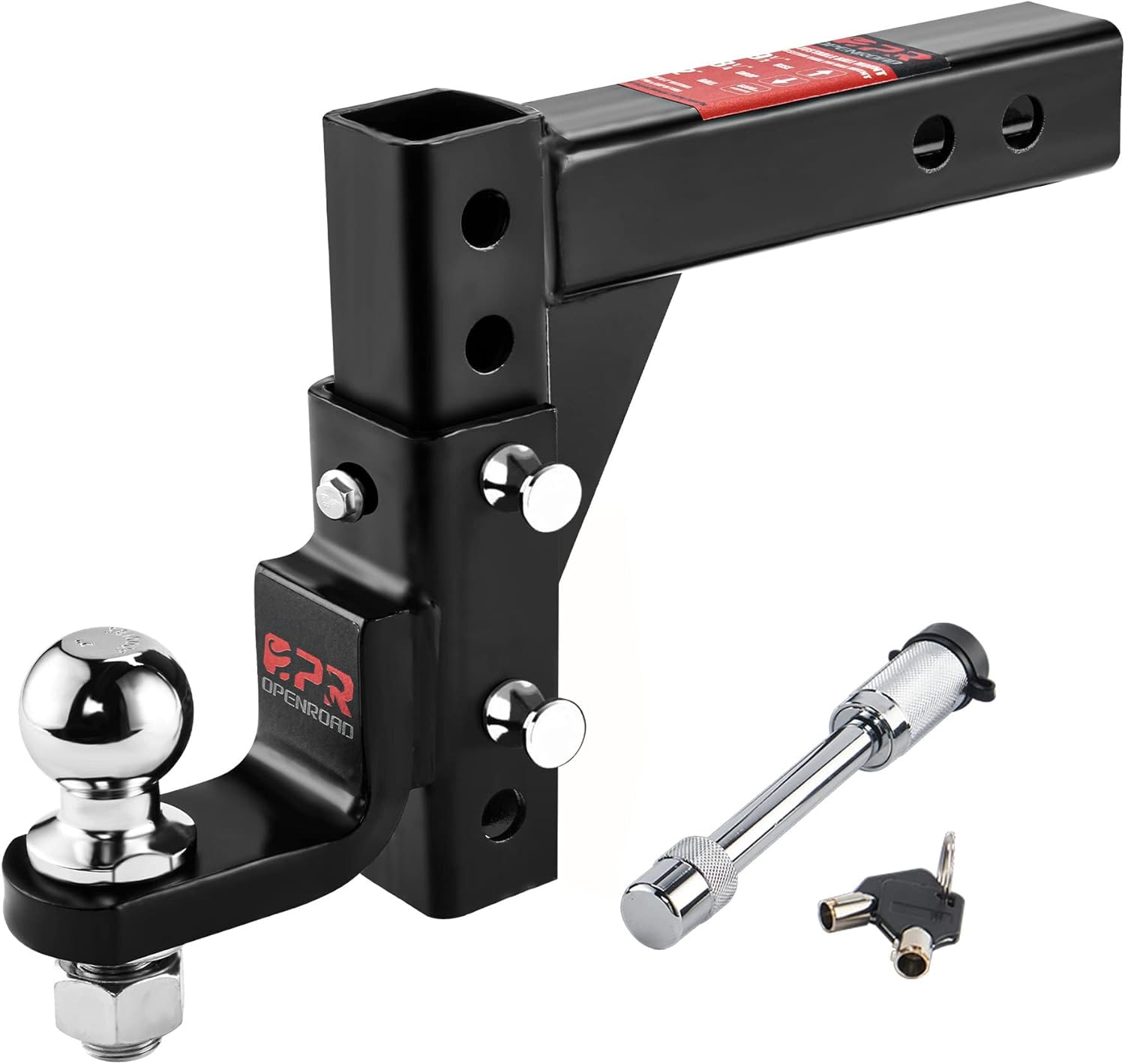
This adjustable trailer hitch ball mount is built for dependable towing with a strong steel construction and a versatile fit for 2-inch receivers. Its adjustable drop and rise settings help you dial in the right towing height, while the lock and keyed anti-theft design add security. A black powder-coated finish helps resist rust and wear for lasting performance on trucks and other towing setups.
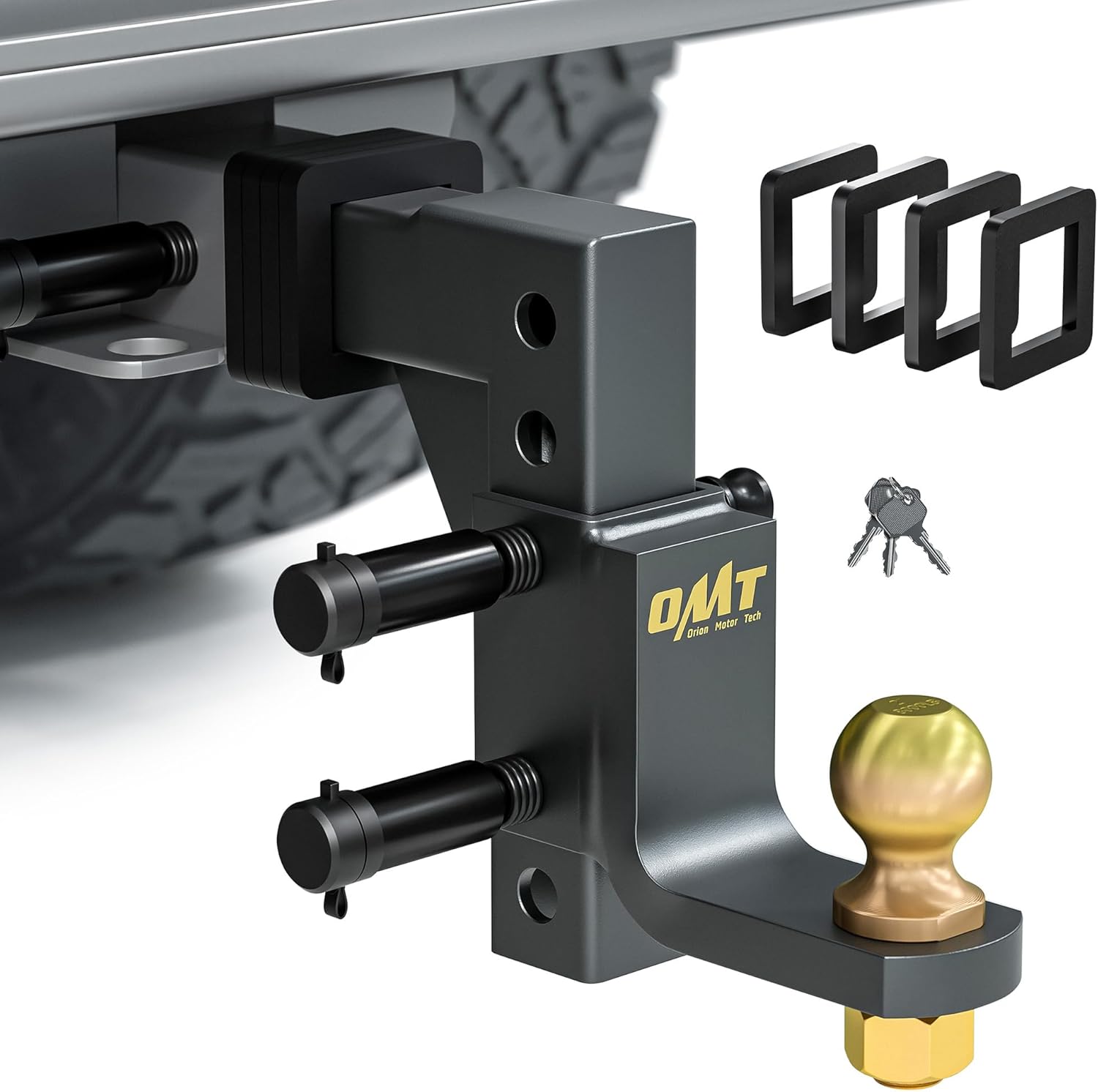
This adjustable trailer hitch ball mount is built for secure, versatile towing with a standard 2 inch receiver, a 2 inch ball, and both drop and rise adjustment for better fitment. Rated for heavy-duty towing and designed with anti-theft locking pins, it helps keep your trailer secure while resisting harsh weather and road conditions. The pre-assembled design makes installation fast and tool-free, so you can get hooked up and ready to tow with confidence.

This adjustable tri-ball trailer hitch gives you flexible towing support with three hitch ball sizes and a 4.5-inch rise and drop for level hauling across different vehicles and trailers. Built for durability and convenience, it includes a tow hook, D-ring shackle, and a secure locking system for dependable towing, recovery, and off-road versatility.
What Should You Do When the Numbers Do Not Match?
Sometimes the door label, Toyota manual, dealer information and scale readings do not appear to line up. Do not guess. Record the VIN, model code, GVWR, GAWR, capacity number, tire size and the Toyota TWR and GCWR table you used. Keep scale tickets for both the truck-only and truck-plus-trailer weighings.
Common reasons for mismatched numbers include dealer-installed equipment, aftermarket accessories, different tire or wheel load ratings, an incorrect model-code lookup, confusion between GVWR and GCWR or use of dry trailer weight instead of loaded trailer weight.
Do not use advertised dry trailer weight as the final towing number. Use the trailer’s loaded traveling weight, including batteries, water, propane, equipment, food, tools and personal cargo. Trailer GVWR is a maximum rating, not proof of the trailer’s actual loaded weight. Use a scale for the real number; use trailer GVWR only as a conservative planning ceiling when the final load is not yet known.
If a label is missing, damaged or clearly inconsistent, contact a Toyota dealer and request written clarification based on the VIN. Until Toyota or the dealer provides documented corrected specifications, use the lower verified rating and reduce the load.
What Should You Check Before Towing?
After the numbers work, inspect the complete setup before driving. Confirm the coupler is fully latched, the hitch pin is secured, the safety chains are crossed under the coupler with enough slack for turns, the breakaway cable is attached correctly and all lights work. Test trailer-brake operation according to the brake-controller and trailer manufacturer’s instructions.
Set tire pressures while the tires are cold. For the truck, follow the door placard or Toyota’s instructions unless Toyota specifies a different towing pressure. Do not automatically inflate the truck tires to the maximum pressure molded on the sidewall. Inflate the trailer tires according to the trailer and tire manufacturer’s requirements, and make sure every tire has enough load capacity.
Make sure the mirrors provide a clear view along both sides of the trailer. Drive slower than normal, leave more following distance and recheck the hitch, tires, chains and cargo during the trip. Towing changes steering, braking, acceleration and emergency handling even when every rating is within its limit.
[Products Worth Considering]
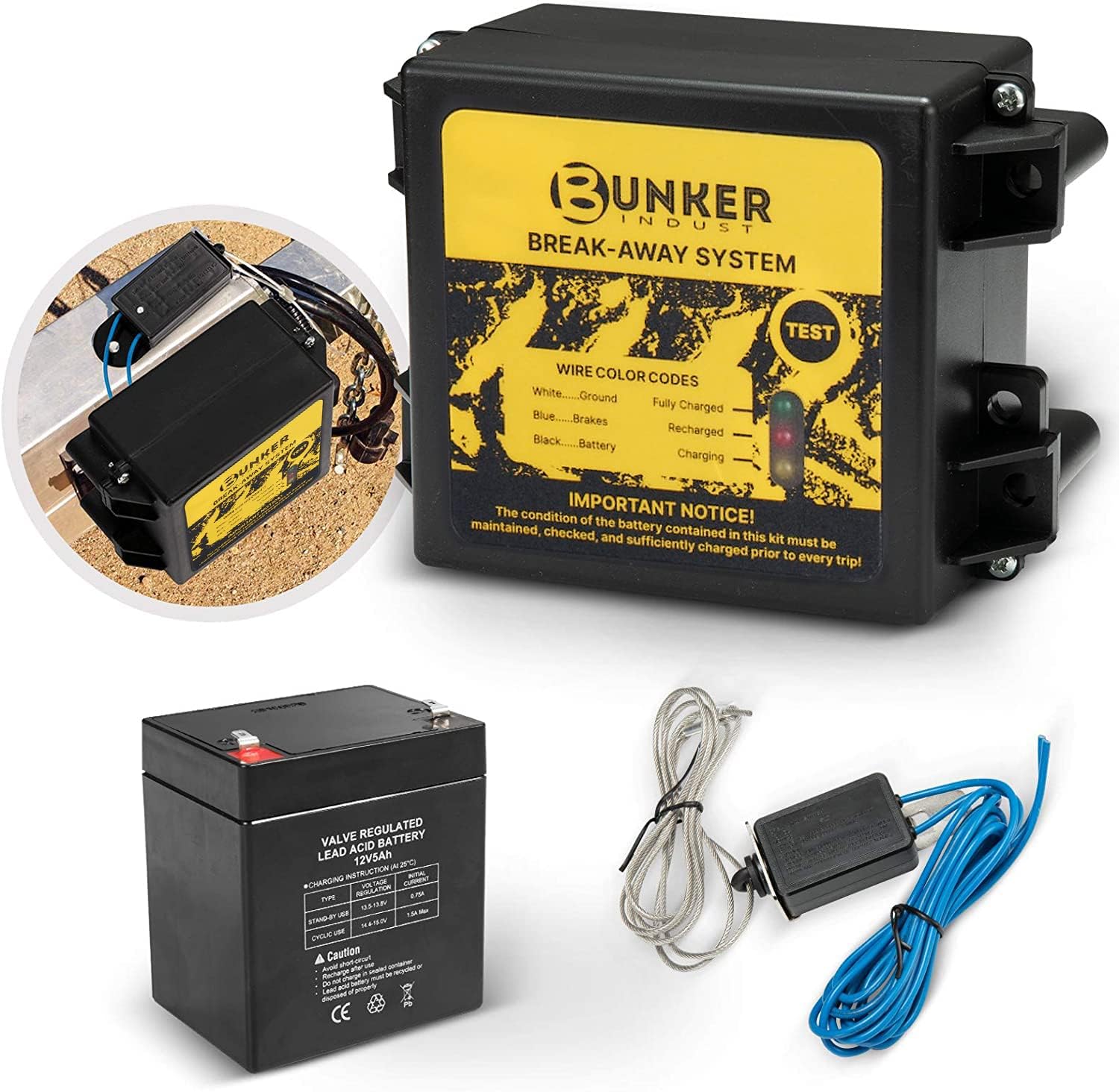
This trailer breakaway kit is designed for trailers with an existing electric brake system, helping activate the brakes if the trailer separates from the tow vehicle. It includes a battery, breakaway switch, and charger with an LED display for easy status checks, making it a practical safety upgrade for caravans and trailers. The side-mount design supports quick installation, while weather and corrosion resistance help it stand up to outdoor use.
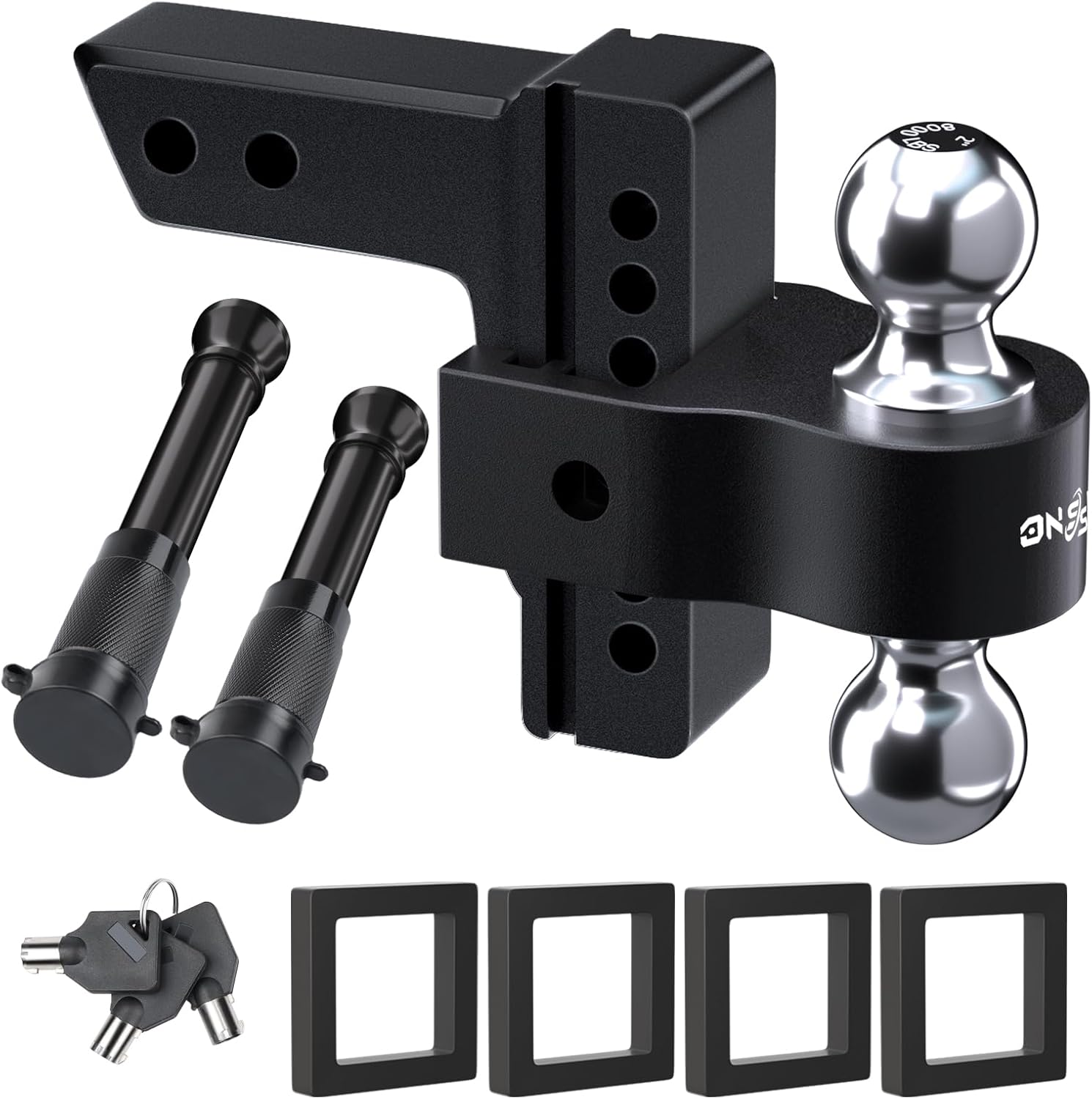
This adjustable trailer hitch is designed for 2-inch receivers and offers flexible towing with a 6-inch drop and rise range. Dual ball sizes help support different trailer setups, while the high-strength aluminum construction is built for dependable performance on tough jobs. Included hitch locks and silencers add security and help reduce noise for a smoother towing experience.

This adjustable trailer hitch ball mount is designed for 2-inch receivers and provides a versatile towing solution for heavy-duty trucks. Its high-strength steel construction supports reliable performance, while the adjustable drop and rise settings help achieve the right towing height. A black powder-coated finish adds corrosion resistance and helps protect against rust, scuffs, and scratches for lasting use.
Frequently Asked Questions
Can I find my exact Tundra towing capacity from the VIN?
A VIN helps identify the truck, but do not assume a generic VIN decoder provides the exact TWR or GCWR. Use Toyota build information or a Toyota dealer to match the VIN and model code to the correct owner’s-manual or towing-table values, then verify the door-label and scale limits separately.
How do I tell Tundra towing capacity by the door sticker?
Use the door labels to find occupant-and-cargo capacity, GVWR and GAWR. Then use Toyota’s owner’s manual, towing table or dealer VIN data to find GCWR and TWR. The labels provide essential truck-side limits, but they normally do not provide the complete towing capacity by themselves.
How do I know how much my Tundra can tow?
Find Toyota’s TWR and GCWR for your exact truck, then subtract the actual loaded truck-only weight from GCWR. Use the lower of that result and Toyota’s TWR as the trailer-weight ceiling. The setup must also remain within payload, GVWR, each GAWR, tire, hitch, trailer and applicable brake limits.
Where is GCWR on a Toyota Tundra?
GCWR is usually found in Toyota’s owner’s manual or towing specification tables. The correct value may depend on model year, model code, cab, bed, drivetrain, engine and equipment. Ask a Toyota dealer to verify it by VIN if you cannot confidently match the truck to the correct table.
Does trailer tongue weight count against Tundra payload?
Yes. Tongue weight presses down on the truck and consumes occupant-and-cargo capacity. Fifth-wheel and gooseneck pin weight also counts against payload. Remember to include people, cargo, accessories and hitch equipment in the same calculation.
Should I use curb weight or scale weight for towing math?
Use actual loaded scale weight whenever possible. Curb weight is useful for rough planning, but it may not include your passengers, cargo, hitch equipment and added accessories. GCWR minus the loaded truck-only scale weight produces a more realistic combination-weight check.
Can I add the front and rear GAWR to calculate Tundra GVWR?
No. Do not add the axle ratings to create a higher truck weight limit. The loaded truck must remain below the GVWR printed on the Certification Label and below the separate front and rear GAWR values.
Does a weight-distribution hitch increase Tundra towing capacity?
No. A properly adjusted weight-distribution hitch can redistribute part of the hitch load, but it does not increase Toyota’s TWR or GCWR. It also does not increase GVWR, GAWR, payload, tire capacity or the ratings of the receiver, ball mount, hitch ball or trailer.
Is Tundra payload the same as towing capacity?
No. Payload is the weight carried by the truck, including occupants, cargo, accessories, hitch equipment and the trailer load placed on the truck. Towing capacity is the rated trailer weight. A trailer can be below Toyota’s TWR and still overload payload, GVWR or the rear axle.
Is trailer GVWR the same as actual trailer weight?
No. Trailer GVWR is the trailer manufacturer’s maximum loaded rating. Actual trailer weight is what the trailer weighs when loaded for travel. Use a scale for the actual number, and do not substitute dry weight for loaded weight.
Conclusion
Your Tundra door sticker provides essential truck-side towing limits, but it does not give the complete tow rating. Use the three-source rule: record the door-label occupant-and-cargo capacity, GVWR, GAWR, tire data, VIN and model information; verify Toyota’s configuration-specific TWR and GCWR; then use scale weights for the loaded truck and combination. The trailer-weight ceiling is the lower of Toyota’s TWR and GCWR minus the actual loaded truck-only weight. The setup still must pass measured tongue or pin weight, payload, GVWR, each GAWR, tire, hitch, trailer and applicable brake requirements. If any required number cannot be confirmed, do not tow at the higher estimate.
Sources
- Toyota Tundra official specifications — 2026 Tundra lineup maximum towing and payload ratings.
- Toyota Tundra owner’s manuals — model-year manual lookup for towing specifications and configuration details.
- 49 CFR 567.4 Certification label requirements — GVWR, GAWR, VIN and certification-label requirements.
- 49 CFR 571.110 Tire and Loading Information requirements — capacity, tire-size and tire-pressure placard rules.
- NHTSA interpretation on vehicle capacity weight — capacity labels, GVWR and dealer-installed equipment.
- NHTSA Recall 26V179 recall notice — inaccurate load-carrying-capacity modification labels on certain 2024–2025 Tundra and 2024–2026 Tundra Hybrid vehicles.
- NHTSA VIN recall lookup — checks whether a specific truck is included in a safety recall or campaign.
- CAT Scale weighing instructions — axle placement for truck-and-trailer weighing.
- Safe Trailering Driver Education Program — trailer loading, tongue weight, hitch ratings and safety-chain guidance.

[…] Toyota lists inside bed lengths of 65.6, 77.6, and 96.5 inches. Every bed measures 58.7 inches wide, 48.7 inches between the wheel wells, and 20.9 inches deep. Your final choice should also account for rear-seat room, total truck length, turning circle, garage clearance, and the payload rating on the driver-door label. […]
[…] Start at the driver’s door area. The certification label identifies GVWR and the front and rear GAWR values for the truck as certified. The Tire and Loading Information label states the maximum combined weight of occupants and cargo. Read both labels; one does not replace the other. For a closer walkthrough, see how to read the Tundra door sticker. […]
[…] Check the Tundra door-jamb payload and weight labels. […]