
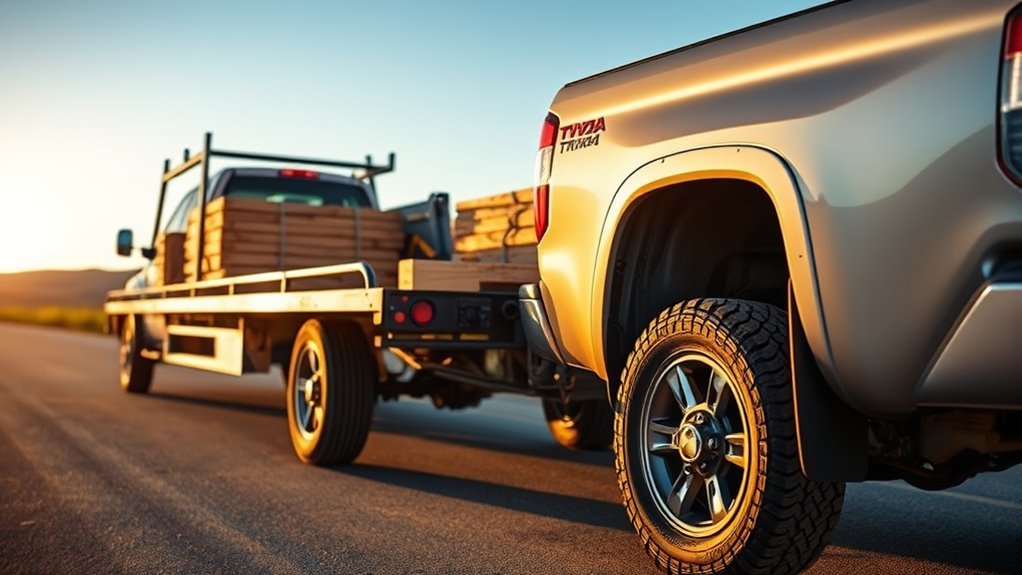
The 2025 Toyota Tundra towing capacity reaches 12,000 lb with a properly equipped i-FORCE SR5 Double Cab, 6.5-ft bed, 4×2/RWD. The strongest comparable i-FORCE 4×4 configuration is rated at 11,200 lb, while i-FORCE MAX hybrid models reach up to 11,450 lb. Those numbers are not universal: your actual limit depends on the exact cab, bed, drivetrain, powertrain, payload label, hitch rating, tongue weight, and trailer’s loaded weight.
Last updated: August 31, 2026 — towing and payload figures rechecked against Toyota’s 2025 specifications, owner information, and current recall information. This guide is source-based and does not claim a hands-on towing test.
Quick Answer
The 2025 Toyota Tundra towing capacity reaches 12,000 lb when properly equipped as an SR5 Double Cab 6.5-ft bed 4×2 with the i-FORCE 3.4L twin-turbo V6. The comparable i-FORCE SR5 Double Cab 4×4 peaks at 11,200 lb, and the strongest i-FORCE MAX configuration reaches 11,450 lb. Verify Toyota’s tow table and your door-jamb payload label before towing.
Key Takeaways
- The highest 2025 Tundra tow rating is 12,000 lb, but only on the right i-FORCE SR5 Double Cab 4×2 setup.
- The Tundra’s maximum payload is 1,940 lb, and payload includes occupants, cargo, options, hitch hardware, and trailer tongue weight.
- Toyota’s conventional-trailer guidance targets roughly 9% to 11% of loaded trailer weight on the tongue, subject to every lower truck, hitch, axle, tire, and trailer limit.
- i-FORCE MAX hybrid models deliver 437 hp and 583 lb-ft of torque, but they do not automatically have the highest tow rating.
- Your real-world limit is the lowest rated part of the system: truck, hitch, trailer, tires, axles, payload, and actual loaded weight.
- Camera-based towing aids help, but you should still use mirrors, a spotter when needed, and a VIN recall check before relying on backup-camera features.
What Is the 2025 Toyota Tundra Towing Capacity?
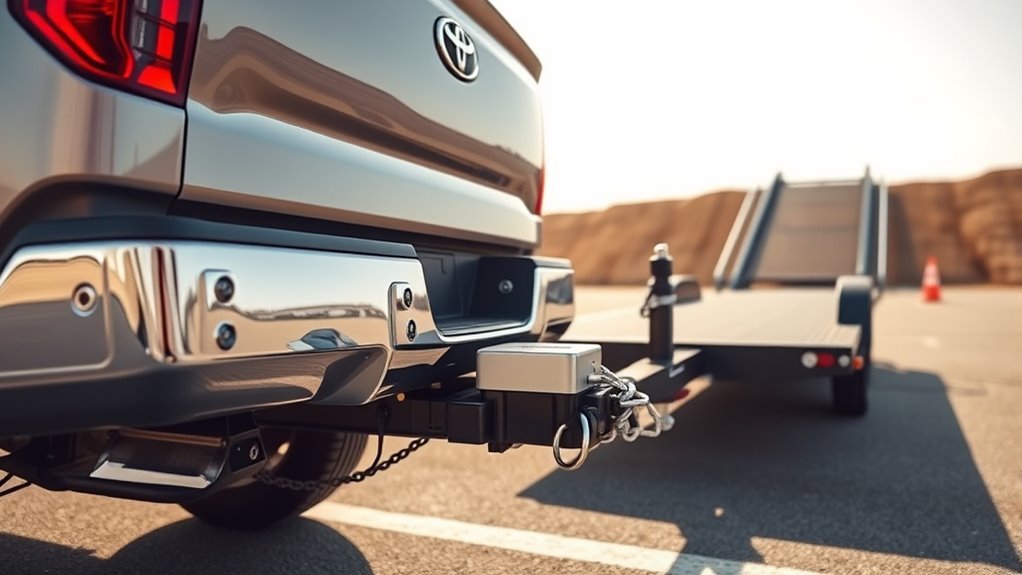
According to Toyota’s official 2025 Tundra materials, the truck offers an available maximum towing capacity of up to 12,000 lb and a maximum payload of up to 1,940 lb. Toyota also states that the available i-FORCE MAX hybrid powertrain produces 437 horsepower and 583 lb-ft of torque, while the i-FORCE twin-turbo V6 produces up to 389 horsepower and 479 lb-ft of torque.
The headline number is useful, but it is only the starting point. A Tundra with 4×4, a different bed, a CrewMax cab, luxury equipment, or the hybrid powertrain can have a lower rating because Toyota assigns towing limits by configuration.
The 12,000-lb figure is the highest published 2025 Tundra rating, not a promise that every Tundra can tow 12,000 lb.
2025 Toyota Tundra Towing Capacity by Engine, Cab, Bed, and Drivetrain
To reach the 12,000-lb ceiling, choose the i-FORCE 3.4L twin-turbo V6, SR5 trim, Double Cab, 6.5-ft standard bed, and 4×2/RWD. The examples below come from Toyota’s official 2025 specification table and show why trim, drivetrain, cab, and powertrain all matter.
| Powertrain / drivetrain | Configuration | Maximum towing rating |
|---|---|---|
| i-FORCE 4×2 | SR Double Cab, 6.5-ft bed | 8,300 lb |
| i-FORCE 4×2 | SR5 Double Cab, 6.5-ft bed | 12,000 lb |
| i-FORCE 4×4 | SR5 Double Cab, 6.5-ft bed | 11,200 lb |
| i-FORCE 4×2 | Limited Double Cab, 6.5-ft bed | 11,400 lb |
| i-FORCE 4×2 | Limited CrewMax, 5.5-ft bed | 11,350 lb |
| i-FORCE 4×4 | Limited CrewMax, 5.5-ft bed | 11,120 lb |
| i-FORCE MAX Hybrid 4×2 | Limited CrewMax, 5.5-ft bed | 11,450 lb |
| i-FORCE MAX Hybrid 4×4 | Limited CrewMax, 5.5-ft bed | 11,170 lb |
| i-FORCE MAX Hybrid 4×4 | TRD Pro CrewMax, 5.5-ft bed | 11,175 lb |
| i-FORCE MAX Hybrid 4×4 | Capstone CrewMax, 5.5-ft bed | 10,340 lb |
Note: Toyota’s table includes additional bed, cab, and trim combinations. Use the official Toyota towing table, your owner’s manual, and the labels on your exact truck instead of assuming another configuration’s rating applies to yours.
[Products Worth Considering]

This trailer coupler lock provides visible, dependable protection for your trailer with a rugged all-metal build and bright yellow finish that helps deter theft. Its universal adjustable design fits common coupler sizes and offers multiple locking positions for a secure, convenient setup. Built for all-weather use, it features protective rubber caps and anti-corrosion plating to help keep the locking mechanism working reliably.

This trailer hitch lock helps secure your trailer and hitch-mounted accessories with a high-strength steel pin designed for 2-inch receivers. It includes a weather-resistant cap to help keep out dust and moisture, plus rubber O-rings to reduce rattling during towing. With two copper keys and a sturdy lock core, it offers added peace of mind and dependable everyday protection.

This trailer hitch pin lock is designed to secure Class III and IV 2-inch and 2-1/2-inch tow receivers, helping keep hitch-mounted gear protected during travel and storage. Its rotating head, tubular key design, and weather-resistant cap make it easy to use while helping guard against moisture, dust, and rust. Built from solid carbon steel with a zinc alloy lock core, it offers dependable towing security for trailers, cargo carriers, bike racks, and more.
How Payload, GVWR, GAWR, and Towing Ratings Work Together
Towing capacity is only one limit. You also need to stay within payload, GVWR, GAWR, GCWR, hitch rating, tire load rating, and the trailer’s own ratings. Toyota notes that payload includes occupants, cargo, and added equipment. Trailer tongue weight also presses down on the truck and uses part of that available carrying capacity. See the separate Toyota Tundra payload capacity guide for a deeper payload breakdown.
| Term | What it means | Why it matters |
|---|---|---|
| Tow rating | Maximum trailer weight for that truck configuration | Do not exceed the rating for your exact engine, cab, bed, trim, and drivetrain. |
| Payload | Weight the truck carries, including people, cargo, accessories, hitch hardware, and tongue weight | A trailer can be below the tow rating while the truck is already over payload. |
| GVWR | Maximum allowed loaded weight of the truck itself | Exceeding it can overload the tires, brakes, suspension, and chassis. |
| GAWR | Maximum allowed weight on each axle | Tongue weight can overload the rear axle before the truck reaches its maximum trailer rating. |
| GCWR | Maximum combined loaded weight of truck and trailer | The entire loaded combination must stay within this limit. |
| Tongue weight | The downward trailer load applied at the hitch | Toyota’s conventional-trailer guidance targets 9%–11% of gross loaded trailer weight, but every lower hitch, truck, axle, tire, and payload limit still applies. |
For a fuller explanation of the weight-rating terminology, see the Tundra GVWR, GAWR, GCWR, and payload guide.
How to Calculate Your Real-World Towing Limit
Do this before you shop for a trailer or load the bed. The goal is to find the lowest limit in the complete setup rather than starting and ending with the biggest number in the brochure.
- Find your truck’s payload label on the driver-side door jamb. Use that number, not a generic online estimate.
- Find your exact tow rating from Toyota’s table for your trim, cab, bed, drivetrain, and powertrain.
- Use the trailer’s loaded weight, not just dry weight. Include water, propane, batteries, cargo, tools, fuel, and accessories.
- Calculate a tongue-weight target, then measure it. For conventional towing, Toyota’s guidance uses 9%–11% of gross loaded trailer weight. The applicable truck, receiver, hitch, axle, tire, and trailer ratings can require a lower ceiling within that range.
- Subtract people, cargo, accessories, hitch hardware, and measured tongue weight from available payload. If the result is negative, the truck is overloaded even when the trailer remains below the advertised tow rating.
- Confirm hitch, ball mount, hitch ball, coupler, safety chains, trailer tires, truck tires, and axle ratings meet or exceed the actual loaded setup.
- Check hitch-mode requirements. Do not assume the receiver’s weight-carrying and weight-distributing ratings are the same. Confirm the receiver label and Toyota’s instructions before towing a heavier trailer.
Warning: Never tow based on brochure maximums alone. The published tow rating, door-jamb payload and certification labels, owner’s manual, hitch rating, trailer rating, tire ratings, axle ratings, and actual loaded weights all have to work together.
[Products Worth Considering]

These custom-fit TPE floor mats are designed for Hyundai Sonata and Kia Optima models, delivering precise coverage with high-edge protection to help trap spills, dirt, and everyday messes. Built for all-weather durability, they offer anti-slip stability, odorless construction, and easy cleanup while helping preserve your vehicle's original carpet.
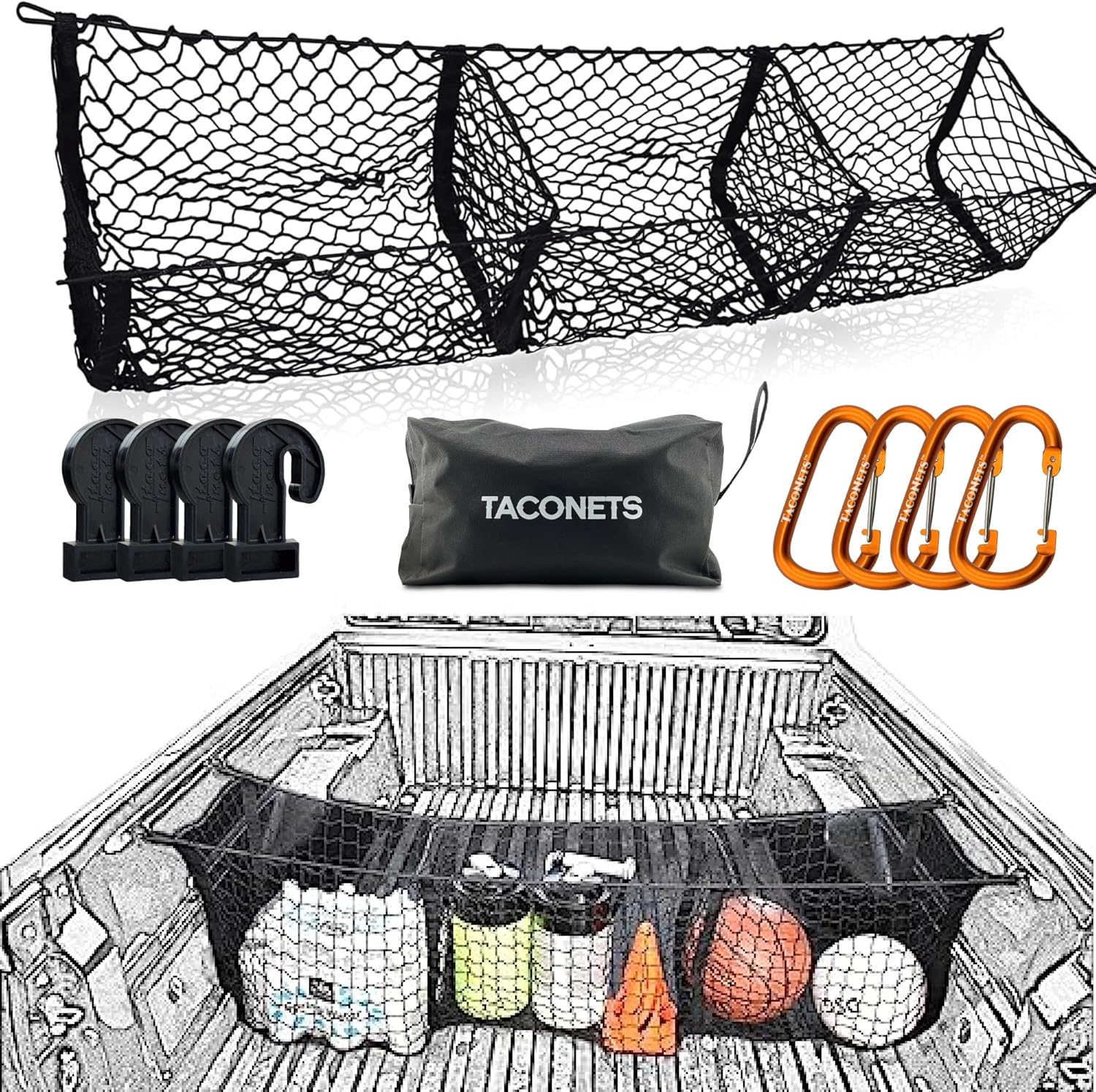
Keep your truck bed organized with this patented three-pocket cargo net designed for 2005-2026 Toyota Tacoma models with factory deck rails. It installs directly to the bed rails without extra cleats or hardware, making it a simple way to secure groceries, gear, and everyday cargo while keeping items accessible and contained.

HELPS PREVENT TRAILER SWAY: Only trailer hitch ball mount that accurately measures tongue weight. Through Patented Technology, Weigh Safe Hitches include built-in scales that allow you to safely load and tow any trailer
Example payload calculation
Assume your Tundra’s door-jamb payload label shows 1,500 lb. If your passengers weigh 400 lb, cargo in the cab and bed weighs 150 lb, hitch hardware weighs 75 lb, and measured trailer tongue weight is 900 lb, you have already used 1,525 lb of payload. That setup is overloaded even if the trailer itself remains below the truck’s published tow rating.
That is why the practical towing limit is often lower than the advertised maximum. Passengers, bed cargo, accessories, and tongue weight all compete for the same load-carrying capacity.
What Tongue Weight Should You Expect?
For conventional towing, Toyota’s owner guidance uses a target tongue weight of 9% to 11% of the trailer’s actual loaded weight. Use this formula as a starting point:
Target tongue weight = loaded trailer weight × 0.09 to 0.11
| Loaded trailer weight | 9% tongue weight | 11% tongue weight |
|---|---|---|
| 5,000 lb | 450 lb | 550 lb |
| 7,500 lb | 675 lb | 825 lb |
| 10,000 lb | 900 lb | 1,100 lb |
| 12,000 lb | 1,080 lb | 1,320 lb |
The calculated range is not permission to exceed another rating. For example, if the receiver, hitch hardware, rear GAWR, payload budget, or another component allows less than the calculated tongue load, that lower limit controls. The 12,000-lb example shows why a truck can approach its payload or hitch limit before it reaches the advertised maximum trailer rating.
Tundra Towing Features That Actually Help
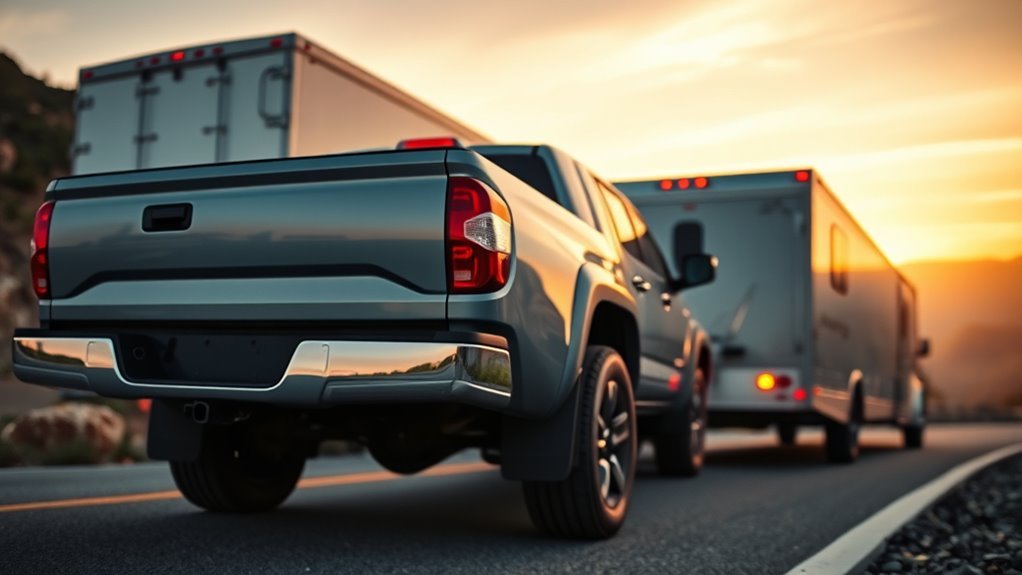
The 2025 Tundra offers several towing aids when properly equipped. Toyota’s 2025 materials list Tow/Haul driving modes, an available Panoramic View Monitor, Trailer Backup Guide with Straight Path Assist, and Blind Spot Monitor with Rear Cross-Traffic Alert and Trailer Merge Warning. For a deeper equipment breakdown, see the Toyota Tundra tow-package guide.
- Tow/Haul and Tow+: Toyota’s 2025 owner-manual wording recommends TOW HAUL for trailers weighing less than 5,000 lb and TOW+ for trailers weighing more than 5,000 lb on equipped trucks. That wording does not assign exactly 5,000 lb, so confirm the manual for your exact truck at that boundary.
- Integrated trailer brake controller: manages compatible electric and electric-over-hydraulic trailer brakes through the 7-pin connection, with adjustable gain and manual trailer-brake output.
- Trailer Backup Guide with Straight Path Assist: uses camera and trailer-angle information to assist with low-speed backing when the system is equipped and properly calibrated.
- Panoramic View Monitor: provides additional views around the truck during hitching and tight maneuvers, but it does not replace checking the surrounding area directly.
- Blind Spot Monitor with Trailer Merge Warning: can extend blind-spot assistance to account for a connected trailer when the required equipment is present.
Note: Toyota announced a January 2026 recall for certain 2024–2025 Tundra and Tundra Hybrid vehicles involving multimedia-display behavior that may affect the rearview image. Before relying on camera-based backing aids, check your VIN at NHTSA’s recall lookup or Toyota’s recall tool and complete any required repair.
[Products Worth Considering]

[Compatible Model And Year]: This Rear View Backup Carmera is compatible with Toyota Tundra 2007 2008 2009 2010 2011 2012 2013; Please check the fitment via amazonconfrimfit and your local dealer before purchasing.

【 Compatibility for Replacement】Compatible with 2007 Toyota Tundra, 2008 Toyota Tundra, 2009 Toyota Tundra, 2010 Toyota Tundra, 2011 Toyota Tundra, 2012 Toyota Tundra, 2013 Toyota Tundra.
How to Configure a 2025 Tundra for Safe Towing
At a Glance
| Time Required | 30–60 minutes for setup checks; longer if weighing at a public scale |
| Difficulty | Moderate |
| Tools Needed | Owner’s manual, door-jamb labels, tire-pressure gauge, torque wrench, trailer brake controller settings, public scale or tongue-weight scale |
| Cost | Usually low for checks; added hitch, brake, mirror, or scale equipment varies by trailer |
- Match the truck to the trailer. For the maximum published tow rating, the SR5 Double Cab 6.5-ft bed 4×2 i-FORCE setup is the key configuration. For every other setup, use Toyota’s exact table.
- Confirm factory towing equipment. Verify the hitch receiver, wiring connector, brake controller, cooling equipment, mirrors, and towing technology on your truck.
- Check the hitch configuration. Verify both the weight-carrying and weight-distributing limits on the receiver and follow Toyota’s owner’s-manual requirements for heavier trailers.
- Load the trailer correctly. Keep the trailer manufacturer’s loading instructions in mind, secure loose items, and include water, fuel, batteries, propane, accessories, and cargo in loaded weight.
- Measure actual weight. Weigh the trailer in travel-ready condition instead of relying on dry or empty brochure weight.
- Set trailer brakes correctly. Adjust the integrated trailer brake controller for the compatible trailer-brake type, actual load, and conditions according to Toyota and the trailer/brake manufacturer’s instructions.
- Check tires cold. Inflate truck and trailer tires to the applicable specified pressure and inspect tire condition, age, damage, and load rating.
- Use safety chains correctly. Cross the chains under the trailer tongue, leave enough slack for turns, and do not allow them to drag on the road.
- Test lights and breakaway equipment. Confirm brake lights, turn signals, marker lights, trailer brakes, and any required breakaway system work before departure.
- Select the appropriate towing mode. On equipped 2025 trucks, use Toyota’s Tow/Haul or Tow+ guidance for the loaded trailer weight; neither mode increases any tow, payload, axle, hitch, or tire rating.
- Drive conservatively. Leave extra following distance, brake earlier, reduce speed as conditions require, and avoid abrupt steering or lane changes.
- Recheck the setup after departure and at regular stops. Inspect the coupler, chains, wiring, tires, cargo securement, and hitch hardware. Follow the trailer, hitch, wheel, and fastener manufacturers’ specified inspection or retorque intervals.
For a reusable pre-departure sequence, see the Toyota Tundra towing checklist.
Pro Tip: Weigh the truck and trailer loaded the way you actually travel. Dry trailer weight can exclude water, batteries, propane, accessories, food, tools, passengers, and cargo that determine whether the real setup stays within its limits.
Frequently Asked Questions
Which 2025 Toyota Tundra can tow 12,000 lb?
The 2025 Toyota Tundra configuration rated for up to 12,000 lb is the i-FORCE SR5 Double Cab with the 6.5-ft bed and 4×2/RWD. It must be properly equipped, and you still need to remain within payload, GCWR, axle, tire, hitch, tongue-weight, and trailer limits.
How big of a trailer can a 2025 Toyota Tundra pull?
At peak, a properly equipped 2025 Tundra is rated to tow up to 12,000 lb. Many configurations are rated lower. The practical trailer limit also depends on loaded trailer weight, tongue weight, truck payload, GVWR, GAWR, GCWR, receiver and hitch ratings, tires, trailer brakes, cargo, and passengers.
Does the i-FORCE MAX hybrid tow more than the gas i-FORCE engine?
Not in the highest-rated 2025 configuration. The i-FORCE MAX hybrid produces more torque, but the top 12,000-lb rating belongs to an i-FORCE gas SR5 Double Cab 4×2. The strongest i-FORCE MAX rating in Toyota’s table is 11,450 lb for a Limited CrewMax 4×2 with the 5.5-ft bed.
Does payload reduce how much I can tow?
Yes. Passengers, bed cargo, accessories, hitch hardware, and trailer tongue weight all use the truck’s carrying capacity. A trailer can remain below the published tow rating while the truck exceeds its payload, GVWR, rear GAWR, tire rating, or another limit.
What tongue weight should a 2025 Tundra use?
For a conventional trailer, Toyota’s owner guidance targets tongue weight at 9% to 11% of the trailer’s actual loaded weight. That target does not override a lower payload, rear GAWR, receiver, hitch, tire, coupler, or other component rating.
Do I need a weight-distribution hitch with a 2025 Tundra?
For heavier trailers, the hitch configuration matters. Do not assume the receiver’s basic weight-carrying limit equals its higher weight-distributing rating. Toyota’s Tundra towing guidance requires weight-distribution considerations above the applicable threshold, so check the 2025 owner’s manual and the rating label on your exact receiver and hitch before towing above 5,000 lb.
Do I need a trailer brake controller to tow with a Tundra?
Many heavier trailers use their own braking system, and brake requirements vary by trailer and jurisdiction. The Tundra’s available integrated trailer brake controller can manage compatible electric and electric-over-hydraulic trailer brakes through the 7-pin connection. Follow the trailer manufacturer, brake-system instructions, applicable law, and your Tundra owner’s manual.
Where do I find my exact 2025 Tundra towing capacity?
Start with Toyota’s official 2025 Tundra specification table for your engine, drivetrain, trim, cab, and bed. Then confirm the owner’s manual, door-jamb payload and certification labels, receiver and hitch ratings, tire ratings, and trailer ratings. Use the lowest applicable limit.
Conclusion
The 2025 Toyota Tundra can be a serious tow vehicle, but its safe limit is configuration-specific. The headline maximum is 12,000 lb for the properly equipped SR5 Double Cab 6.5-ft bed 4×2 i-FORCE model, while the strongest i-FORCE 4×4 is rated at 11,200 lb and i-FORCE MAX models reach up to 11,450 lb. Before hitching up, confirm your exact Toyota rating, calculate and measure tongue weight, subtract passengers and cargo from available payload, check hitch and tire limits, verify brakes and lights, and weigh the trailer as it will actually travel. The safe limit is always the lowest rating in the complete truck-and-trailer system.
Sources
- Toyota 2025 Tundra eBrochure — official towing, payload, engine, configuration, and towing-feature specifications
- Toyota USA Newsroom: 2025 Toyota Tundra Adds TRD Rally Package and More — powertrain, tow rating, payload, chassis, and towing-feature context
- Toyota Owners Manual: 2025 Tundra Trailer Backup Guide — Trailer Backup Guide and Straight Path Assist operation
- Toyota Owners Manuals and Interactive Manual — model-specific towing, loading, hitch, tongue-weight, and driving-mode instructions
- SAE J2807_202411 — tow-vehicle gross combination weight and trailer weight rating methodology
- Toyota USA Newsroom: January 2026 Tundra/Tundra Hybrid Recall Notice — multimedia-display and rearview-camera recall affecting certain 2024–2025 vehicles

[…] trailer weight with the limits for your exact truck and towing equipment. Check the Tundra’s towing capacity, payload capacity, GCWR, GVWR, and GAWR, and the ratings on the receiver, ball mount, hitch ball, […]
[…] the Tundra towing capacity guide for model-specific rating context, then verify the final numbers in your owner’s manual and […]
[…] confirm that the truck, hitch, trailer, and load remain within the Toyota Tundra towing limits. Electrical repairs do not make an overloaded towing setup […]
[…] is not a magic towing-capacity upgrade. Your safe towing limit still depends on the Tundra’s tow rating, payload, gross combined weight rating, hitch rating, trailer weight, tongue weight, tire ratings, […]
[…] GCWR, receiver, ball mount, hitch ball, coupler, tire, and trailer ratings. Toyota lists the 2026 Tundra towing capacity at up to 12,000 lb when properly equipped, but the labels and manual for your exact truck […]
[…] Toyota’s official Tundra specifications, your truck’s documents and the site’s configuration-focused Tundra towing-capacity guide instead of relying on a generic […]