For a short bed vs long bed truck, choose the short bed when daily parking, garage fit, passenger space, and easy maneuvering matter most. Choose the long bed when you regularly haul long materials, 4×8 sheets, ladders, large toolboxes, or job-site gear. A standard bed around 6.5 feet is often the best middle ground, but bed labels are not universal, so compare the exact inside dimensions and cab-and-bed combination before you buy.
Last updated: August 31, 2026 · Author: [VERIFY: add the real author name and relevant truck/towing experience]
How this guide was checked: Current 2026 Ford, Ram, and Toyota bed information was cross-checked against manufacturer sources, the measurement method was checked against WEATHER GUARD guidance, and the towing-safety section was checked against Oregon Department of Transportation guidance. This is a source- and measurement-based comparison; it does not claim hands-on testing of every truck configuration.
Quick Answer
Pick a short bed if you drive in the city, park in tight spaces, carry passengers often, and haul light-to-medium cargo. Pick a long bed if you regularly haul long materials, ladders, large tools, or sheet goods and want less overhang. For mixed use, a standard bed around 6.5 feet is often the best compromise. If you need 4×8 sheets to sit fully inside the bed, verify both the usable 96-inch length and the width between the wheel wells on the exact truck.
Key Takeaways
- Short beds are best for daily driving, crew-cab family use, tight parking, and lighter weekend hauling.
- Long beds are best for contractors, frequent 4×8 sheet hauling, long cargo, large toolboxes, and job-site organization.
- Standard beds around 6.5 feet are the middle ground for buyers who need more cargo room without moving to a full 8-foot bed.
- Always measure the inside bed length and check the exact cab, trim, and model-year specs before buying covers, toolboxes, racks, or campers.
- For towing, bed length helps, but safe towing depends on payload, hitch rating, tongue weight, trailer brakes, tires, loading, and the owner’s manual.
At a Glance
| Best For | Choosing the right pickup bed length before buying a truck or accessory |
| Time Required | 10–20 minutes to measure, compare cargo, and check specs |
| Tools Needed | Tape measure, notepad, owner’s manual or manufacturer spec page |
| Main Trade-Off | Maneuverability versus maximum cargo length |
Quick Recommendation: Short Bed vs Long Bed
Choose a short bed if your truck is also your daily driver. It is easier to steer through narrow streets, park at stores, fit in more garages, and pair with a crew cab for passenger comfort. A short bed still handles furniture, bicycles, camping gear, mulch bags, small appliances, and most weekend projects with smart tie-downs or a bed extender.
Choose a long bed if your truck is mainly a work tool. A true 8-foot bed is the simplest choice for full 4×8 sheets, long lumber, ladders, pipe, large toolboxes, and bulky equipment. It also gives you more room to separate tools from materials so the bed stays organized instead of overloaded.
Choose a standard or regular bed around 6.5 feet if you need one truck for both work and daily life. It gives more cargo length than a 5.5-foot bed while staying easier to park than an 8-foot long bed.
Note: Bed labels vary by manufacturer. For 2026, Ford lists F-150 bed lengths of 5.5, 6.5, and 8.0 feet, while Ram lists 76.3 inches (6 feet 4 inches) as the maximum Ram 1500 bed cargo length. That is why you should compare actual dimensions instead of assuming every “long bed” is 8 feet.
Truck Bed Length Definitions: Short, Standard, and Long
Pickup bed names are useful shortcuts, but they are not universal measurements. Always compare the actual inside cargo length, not just the marketing label.
| Bed Type | Typical Length | Best Use | Main Trade-Off |
|---|---|---|---|
| Short bed | About 5.5–5.8 feet on many full-size crew-cab trucks; compact and midsize trucks vary | Daily driving, family use, bikes, camping gear, smaller furniture | Less room for long cargo and large toolboxes |
| Standard / regular bed | Often around 6.5 feet, depending on model | Mixed work, home projects, moderate hauling | Longer than a short bed, but still not a true 8-foot work bed |
| Long bed | Often about 8 feet on trucks that offer one | 4×8 sheets, long lumber, contractor tools, large equipment | Harder to park, turn, and fit in garages |
Current Model Examples Show Why Bed Labels Vary
Current trucks do not use one universal short/standard/long formula. These 2026 examples show why the exact model, cab, trim, and inside measurement matter more than the label alone.
| 2026 Truck | Current Bed-Length Example | What It Shows |
|---|---|---|
| Ford F-150 | 5.5, 6.5, and 8.0 feet | A full-size pickup can span short, standard, and long-bed choices, depending on configuration. |
| Ram 1500 | Maximum bed cargo length: 76.3 inches (6 feet 4 inches) | A current full-size pickup may not offer an 8-foot bed at all. |
| Toyota Tacoma | 5 or 6 feet | Midsize bed labels and choices do not map directly to full-size-truck categories. |
If you are comparing Toyota pickups specifically, see the Toyota Tacoma bed configuration guide and Toyota Tundra bed dimensions guide for model-specific measurements and cab pairings.
For full-size truck shoppers, the common choice is not only short bed versus long bed. It is usually cab plus bed combination. A crew cab with a short bed can be similar in total length to a smaller cab with a longer bed. That is why you should compare overall length, wheelbase, bed length, and rear-seat space together.
How to Measure Your Truck Bed Correctly
Measure before you buy a tonneau cover, camper shell, toolbox, bed rack, drawer system, liner, or bed extender. Advertised bed names are rounded, but accessories need the real usable dimensions and the exact fit guide for your truck’s model year and cab/bed configuration.
Measure From the Bulkhead
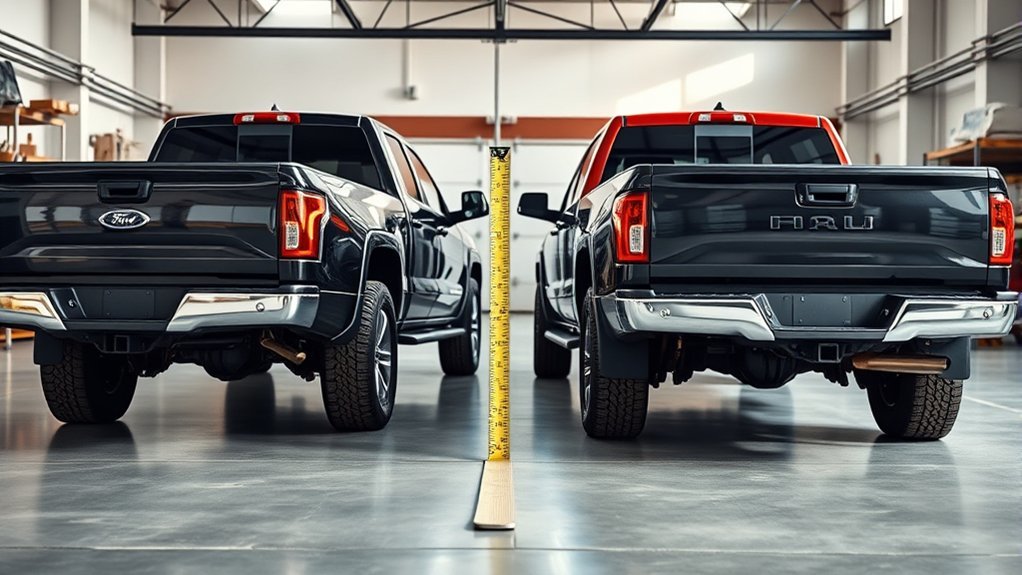
Place your tape measure at the inside face of the bulkhead, which is the front wall of the bed behind the cab. Pull the tape straight back to the inside edge of the closed tailgate. This gives you the usable interior length. WEATHER GUARD uses this inside-edge method for truck-box fitment. For a tonneau cover, cap, rack, or drawer system, also follow that accessory maker’s measuring instructions because some products reference the bed rails or other mounting points.
Measure the Tailgate Interior
Check the measurement again from the tailgate side. Keep the tape straight and level at the measurement point required by the accessory maker. A drop-in bedliner, toolbox, bed mat, tie-down, or rail-mounted accessory can reduce usable space, so measure the truck in the setup you actually plan to use.
| Step | Tool | Purpose |
|---|---|---|
| 1 | Tape measure | Confirm inside bed length |
| 2 | Straight edge or level | Keep the tape aligned |
| 3 | Notes or phone photo | Save dimensions before ordering accessories |
Check the Widest Point
Bed width matters just as much as length. Measure across the bed at the widest usable point, then measure between the wheel wells. Many loads, including plywood, pallets, drawer systems, and slide-in gear, depend on the narrowest usable width, not the outside width of the truck.
Pro Tip: If you plan to install a cross-bed toolbox, measure the space the box will occupy first. A toolbox can turn a standard bed into a short usable cargo floor for long items.
Decision Framework: Cargo, Towing, Passengers, and Parking
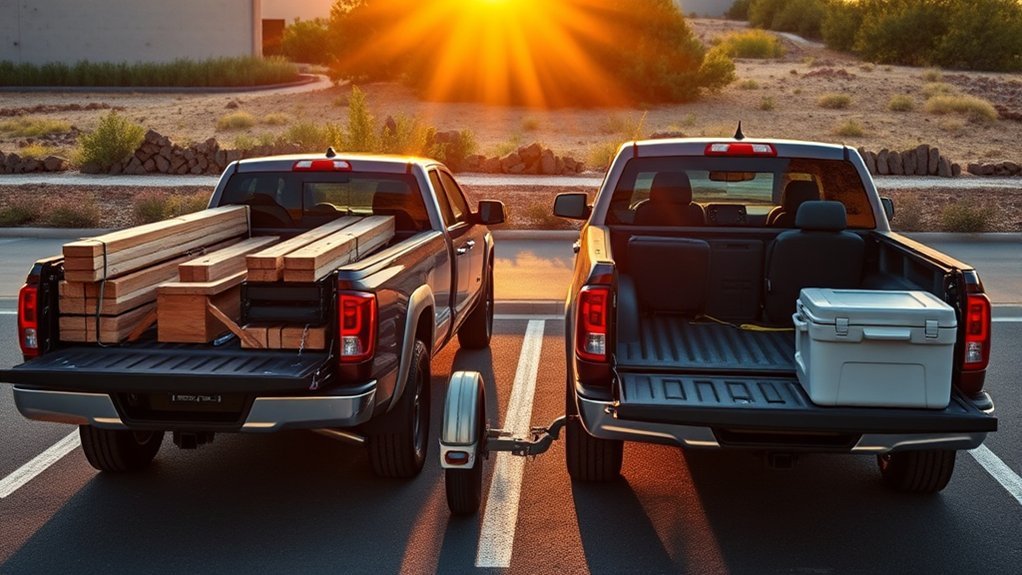
Use your normal week as the test. Do not buy for the one extreme load you might carry once a year unless that load is critical to your job. A truck that is perfect twice a year but annoying every day is usually the wrong truck.
| Your Priority | Better Pick | Why |
|---|---|---|
| City driving and tight parking | Short bed | Shorter overall length and easier low-speed maneuvering |
| Family use with a crew cab | Short bed or standard bed | Keeps passenger room without making the truck too long |
| Weekly home projects | Standard bed | More flexibility than a short bed without full long-bed size |
| Contractor work | Long bed | Better for sheet goods, ladders, toolboxes, and organized cargo |
| Frequent long cargo | Long bed | Less overhang and fewer special accessories needed |
| Occasional camping and bikes | Short bed | Racks and extenders can handle occasional long gear |
A 5-Question Bed-Length Test
- What do you haul every month? Choose for recurring cargo, not the rare oversized load.
- Does that cargo need the tailgate closed? If yes, measure the longest item and compare it with usable inside bed length.
- Will you tow a fifth-wheel or gooseneck trailer? Verify cab-to-trailer turning clearance and the approved hitch setup before choosing a short bed.
- Will the truck fit where you park? Check garage depth, driveway space, work-site access, and the truck’s full overall length.
- Will a toolbox, rack, drawer, or camper use part of the bed? Subtract that footprint before deciding how much cargo floor you really have.
A useful rule is to choose the shortest bed that safely handles your regular cargo and hitch geometry. For rare oversized loads, delivery or a properly rated trailer may be easier than living with extra truck length every day.
Cargo Capacity Needs
If you regularly haul large or heavy items, a long bed gives you the most straightforward cargo space. It reduces the need for diagonal loading, tailgate-down hauling, or multiple trips. This matters for plywood, drywall, lumber, ladders, pipe, appliances, landscape tools, and job-site gear.
If your cargo is usually groceries, luggage, bikes, coolers, camping bins, small furniture, or home-improvement supplies, a short bed is often enough. Add a bed divider, tie-downs, rack, or extender when you need extra flexibility.
Towing and Stability
A longer wheelbase can feel more settled when towing, but a longer bed does not automatically mean a higher tow rating or payload rating. Compare the exact truck configuration. Always check the payload label, gross vehicle weight rating (GVWR), gross axle weight ratings (GAWR), hitch rating, loaded trailer weight, tongue or pin weight, brake requirements, tire ratings, and owner’s manual. For a deeper explanation of these limits, see the GVWR, GCWR, GAWR, and payload guide.
Warning: Do not choose a truck for towing based on bed length alone. The Oregon Department of Transportation towing guide explains that too little tongue weight can cause trailer sway, while too much tongue weight can reduce steering response. Use manufacturer towing guides and weigh your loaded setup when the numbers are close.
| Factor | Why It Matters |
|---|---|
| Wheelbase | A longer wheelbase can improve straight-line stability |
| Payload | Tongue weight and passengers count against available payload |
| Hitch type | Receiver, fifth-wheel, and gooseneck setups have different fit needs |
| Trailer loading | Poor weight distribution can cause sway or steering problems |
| Speed and conditions | Sway risk rises with speed, wind, bumps, and sudden steering |
Passenger and Parking Needs
If you often carry adults, kids, pets, or car seats, cab size may matter more than bed length. Many buyers choose a crew cab with a short bed because it gives real rear-seat comfort while keeping the truck manageable in parking lots and driveways.
If you choose a long bed, measure your garage and driveway first. Include mirrors, bumper clearance, trailer hitch length, and room to walk around the truck. A long bed can be perfect for work and frustrating at home if it blocks the sidewalk or will not fit indoors.
What Fits: Cargo Examples for Short vs Long Beds
Think in real cargo examples rather than bed labels. The table below shows where each bed length usually makes sense.
| Cargo | Short Bed | Standard Bed | Long Bed |
|---|---|---|---|
| Groceries, luggage, coolers | Excellent | Excellent | Excellent, but more truck than needed |
| Bicycles and camping bins | Good with tie-downs or rack | Very good | Excellent |
| Small furniture | Good | Very good | Excellent |
| 4×8 plywood or drywall | Usually needs tailgate down or angled support | Often needs tailgate down | Best for 96-inch length; verify at least 48 inches of usable width if you need sheets flat between the wheel wells |
| Long lumber or ladders | Needs rack or extender | Better with rack | Best |
| Large cross-bed toolbox | Consumes a lot of usable length | Manageable | Best |
A short bed can do more than many buyers expect, but it depends on accessories and planning. A long bed does more with less planning, especially when the cargo is long, flat, heavy, or awkward.
[Products Worth Considering]

This foldable car trash can helps keep your vehicle interior clean and organized with a waterproof, leakproof liner and durable Oxford fabric construction. Its hanging strap design fits most cars, SUVs, and trucks, and it can also double as a handy storage bag for snacks, toys, tools, and more. Lightweight and easy to fold away when not in use, it offers practical everyday convenience for travel and commutes.

This Toyota hitch cover helps protect your trailer hitch receiver from dirt and debris while adding a clean factory-style look to your vehicle's rear end. Designed for easy use, it offers a simple way to finish off your towing setup when the hitch is not in use. Its lightweight design makes it convenient to handle and install.

This magnetic socket organizer set keeps your most-used sockets neatly sorted, secured, and easy to grab in the garage or toolbox drawer. Built with durable aluminum alloy and ABS, it uses strong magnets and spring-loaded clips to hold sockets firmly in place while allowing quick insertion and removal at any angle. The color-coded rails help separate sizes for faster identification and a cleaner, more efficient workspace.
How Bed Length Affects Towing Stability and Hitching
Bed length can affect towing through overall truck length, wheelbase, and hitch clearance, but these are configuration-specific. A longer-wheelbase version may feel more settled in straight-line towing, while a longer bed can provide more clearance between a fifth-wheel trailer and the cab. Neither point means that a longer bed automatically has a higher tow rating.
For conventional bumper-pull trailers, focus on the complete towing setup: loaded trailer weight, tongue weight, receiver rating, ball mount, brake controller, tire pressure, and remaining payload. For fifth-wheel and gooseneck trailers, bed length matters because the hitch is in or over the bed and the trailer must clear the cab in tight turns. A short-bed truck may require a sliding hitch, an approved offset system, a compatible rotating pin box, or a trailer front-cap design that provides enough clearance. Do not assume one solution fits every truck and trailer; confirm compatibility with the truck, hitch, and trailer manufacturers.
- Long bed advantage: More room for hitch placement, cargo, tools, and trailer clearance.
- Short bed advantage: Easier maneuvering when not towing, especially in cities and tight campsites.
- Safety rule: Confirm the exact hitch setup with the truck manufacturer, trailer manufacturer, and hitch manufacturer.
Does Bed Length Change Payload, Towing, Fuel Economy, or Ride?
Bed length by itself does not determine payload, tow rating, fuel economy, or ride quality. Those numbers and behaviors come from the complete configuration: cab, wheelbase, engine, drivetrain, axle ratio, suspension, tires, curb weight, options, and towing package. Compare the exact trucks you are considering instead of assuming the longer bed always has more capability.
- Payload: Use the payload or tire-and-loading label on the exact truck. A larger bed does not automatically create more payload capacity.
- Tow rating: Check the manufacturer towing guide for the exact cab, bed, engine, drivetrain, axle ratio, and equipment package.
- Fuel economy: Compare the EPA rating for the exact configuration. Do not assume a short bed always uses less fuel or a long bed always uses more.
- Ride and stability: Wheelbase, suspension, tire choice, load, and road conditions matter. A longer-wheelbase truck may feel more settled, but bed length alone is not a ride-quality rating.
Maneuverability, Parking, and Garage-Fit Trade-Offs
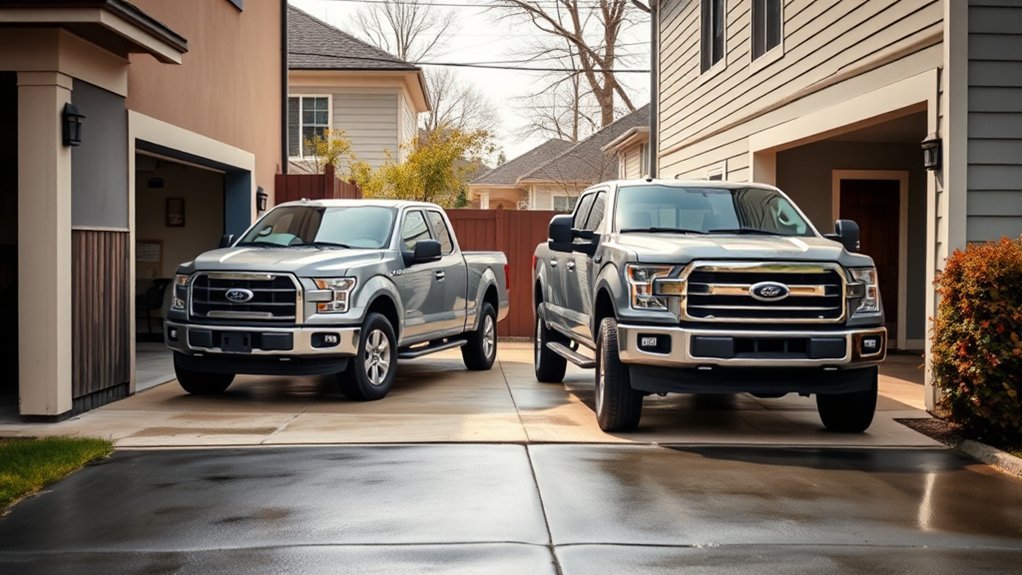
A short bed is easier to live with when space is limited. You will notice it when making U-turns, backing into tight spaces, using drive-through lanes, parking downtown, and fitting inside a residential garage. For many drivers, that everyday convenience matters more than the few times a year they need maximum bed length.
A long bed asks for more planning. You may need a longer driveway, wider parking spaces, more backing room, and more attention at gas stations or job sites. The trade-off is that you gain a bed that can handle larger cargo without special accessories.
Note: Before choosing a long bed, measure your garage depth with the door closed. Leave room for the front bumper, rear bumper, hitch, walking space, and anything stored along the garage wall.
[Products Worth Considering]
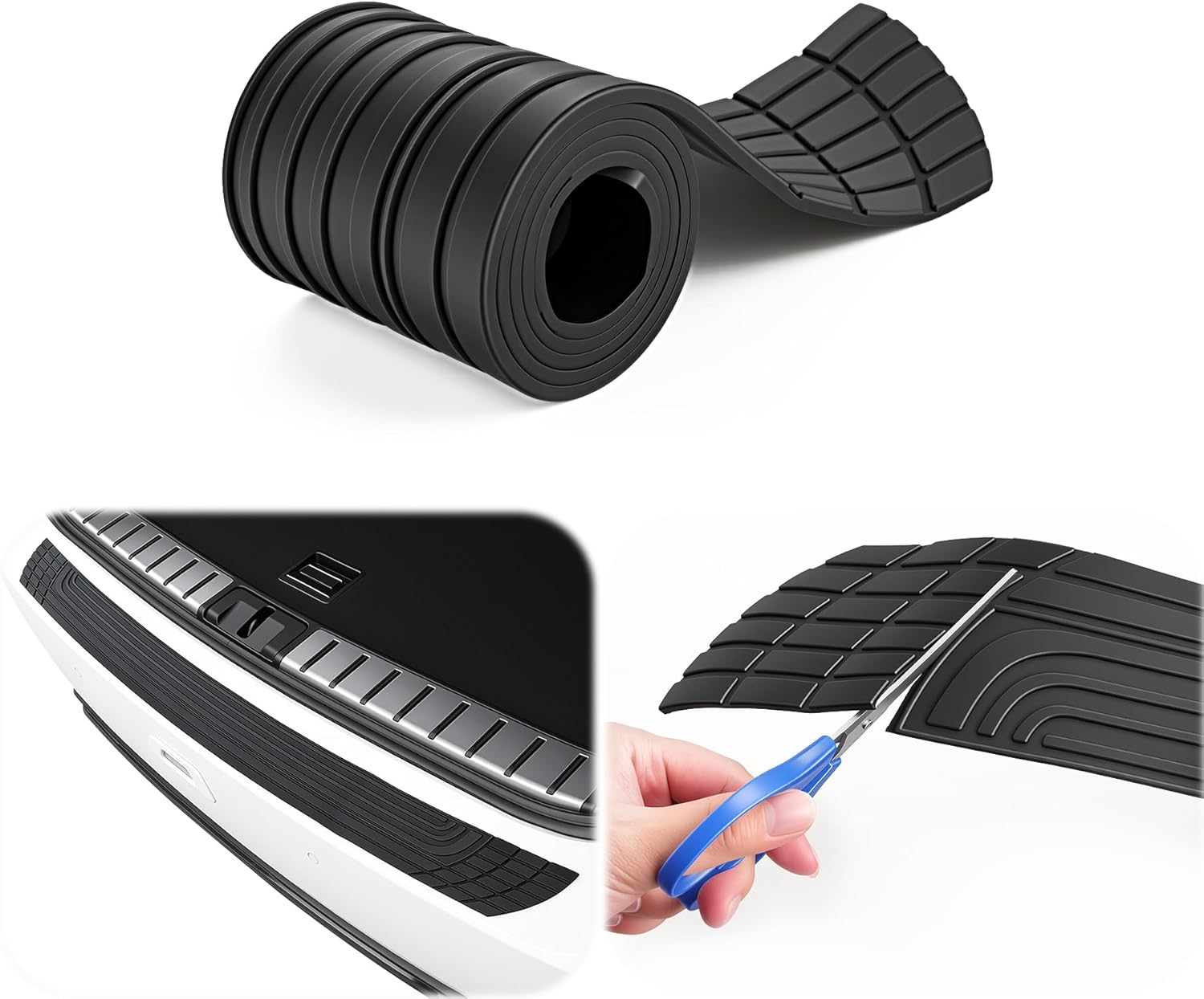
Protect your vehicle’s rear bumper from scratches, scuffs, and everyday loading damage with this universal bumper protector. Its flexible rubber design helps absorb impact and features an anti-slip groove pattern for added security when placing cargo in the trunk. Easy to install without drilling or welding, it is a practical exterior accessory for most cars and SUVs.

This door handle cover protector is designed to fit select Toyota models, helping guard exterior handles against scratches, dings, and daily wear. Made from durable ABS material, it offers a sleek glossy black look that blends with the vehicle’s original styling while maintaining smart key functionality. Installation is quick and simple, making it an easy upgrade for added protection and a cleaner appearance.

Bendix Premium Ceramic Front Brake Pads are engineered to match original equipment fit, form, and function for a straightforward replacement. Built with durable materials to help resist wear and corrosion, they support consistent braking performance and reduced brake fade for everyday driving. These pads are a dependable choice for compatible Pontiac, Scion, Toyota, and related vehicles.
Work Needs: Toolboxes, Materials, and Contractor Use
If the truck earns money, choose the bed that protects your workflow. Contractors, remodelers, electricians, plumbers, landscapers, and farm users often benefit from a long bed because tools and materials can stay organized instead of stacked on top of each other.
- Tool storage: A long bed leaves more usable floor space after adding a cross-bed toolbox, side boxes, or drawer system.
- Material management: Long lumber, pipe, conduit, ladders, and sheet goods are easier to secure with less overhang.
- Job-site efficiency: Fewer trips and less unpacking can matter more than daily parking convenience.
If you only handle occasional home projects, a short or standard bed may be smarter. You can rent a trailer, use a bed extender, or schedule delivery for rare oversized loads instead of driving a longer truck every day.
Which Bed to Pick: Families, Contractors, and Overlanders
The right bed depends on your main role for the truck. Use these buyer profiles as a quick match.
[Products Worth Considering]

This custom-fit floor mat set is designed for Toyota RAV4 models from 2019 to 2025, including hybrid and gas versions, to deliver complete interior protection. It covers the passenger area, rear seat backs, trunk, and door sill areas with high edges and a seamless fit that helps block spills, dirt, pet hair, and scratches. Made from odorless all-weather TPE with a non-slip surface, it is easy to clean and built for everyday use.

This aftermarket front bumper tow hook eye cover cap set is designed to fit Toyota RAV4 AX40 models from 2016 to 2018, providing a direct replacement for the original left and right covers. Made from durable ABS plastic, these caps offer a precise fit, weather resistance, and reliable protection while restoring the clean factory look of the bumper.

These custom-fit seat covers are tailored for Toyota RAV4 gasoline models from 2019 through 2025, giving your SUV a refined interior upgrade with a precise OEM-inspired look. The spill-resistant faux leather surface helps protect against daily messes, scuffs, and pet wear while staying easy to clean, and the reinforced airbag-compatible stitching supports safety without sacrificing style. A secure strap, zipper, and Velcro installation system helps keep the covers in place for a stable, comfortable fit in all seasons.
Families and Daily Drivers
Pick a short bed if your truck needs to handle school runs, grocery trips, sports gear, commuting, and weekend errands. A crew cab with a short bed keeps passenger space high and total length reasonable. Add a tonneau cover or bed divider to keep smaller cargo from sliding around.
Contractors and Trade Work
Pick a long bed if you regularly carry tools, ladders, sheet goods, saws, compressors, job boxes, or materials. The extra bed length reduces overhang, improves organization, and makes the truck feel like a mobile workspace.
Overlanders, Campers, and Weekend Adventurers
Pick based on your gear system. A short bed works well for bikes, rooftop tents, light camping bins, and weekend travel. A long bed is better for sleeping platforms, slide-out kitchens, larger water storage, recovery gear, and bulky equipment. If you plan to sleep in the bed, measure your height against the usable bed length with the tailgate closed.
The Standard Bed Compromise
A standard bed around 6.5 feet is often a strong mixed-use choice when that size is available on the truck you want. It gives you more cargo room than a short bed, often leaves more space around toolboxes and racks, and remains shorter than a comparable 8-foot-bed configuration. If you are unsure, test-drive the available cab-and-bed versions and compare their full overall lengths before deciding.
Short-Bed Upgrades: Extenders, Racks, and Toolboxes
Short-bed owners can add useful cargo capacity without switching trucks. The key is choosing accessories that solve your real problem instead of filling the bed with gear you rarely use.
- Bed extenders: Help support longer cargo when the tailgate is down. They are useful for lumber, bikes, kayaks, and bulky weekend gear.
- Bed racks: Move long items above the bed, leaving the floor open for bins, coolers, tools, or camping gear.
- Low-profile toolboxes: Add secure storage while stealing less usable bed space than a full-size cross-bed box.
- Bed dividers: Keep groceries, luggage, and smaller tools from sliding to the front of the bed.
- Tonneau covers: Protect cargo from weather and improve daily usability, but confirm fit before buying.
These upgrades make a short bed more flexible, but they do not fully replace the simple cargo length of a long bed. If you carry long materials every week, buy the longer bed instead of trying to accessorize around the wrong platform.
Common Mistakes to Avoid
- Buying for rare loads: Do not choose an 8-foot bed only because you might haul plywood once a year.
- Ignoring garage fit: Measure your parking space before choosing a long bed.
- Forgetting the toolbox: A large toolbox can remove substantial usable cargo length, so measure its footprint before choosing the bed.
- Assuming all brands use the same labels: Short, standard, regular, and long can mean different things by manufacturer.
- Using bed length as a towing shortcut: Check tow ratings, payload, tongue weight, hitch ratings, brakes, and tires.
- Skipping accessory measurements: Tonneau covers, caps, racks, liners, and drawer systems are model-specific.
Frequently Asked Questions
What is the main difference between a short bed and a long bed truck?
A short bed favors daily maneuverability, parking, garage fit, and common crew-cab use. A long bed favors cargo length, large toolboxes, long materials, and work-focused organization. The better choice is the one that fits your regular cargo and parking needs.
Can a short bed carry 4×8 plywood?
Yes, but a short bed usually needs the tailgate down, secure support, or an approved bed extender. An 8-foot bed gives you the 96-inch length needed for a 4×8 sheet with the tailgate closed, but you must still verify the bed has enough usable width if you want the sheet to lie flat between the wheel wells.
Is a long bed better for towing?
A longer bed can provide more fifth-wheel or gooseneck clearance, and a longer-wheelbase configuration may feel more settled. It does not automatically have a higher tow rating. Use the exact truck’s payload, axle, hitch, tire, and manufacturer towing limits.
Do I need a sliding fifth-wheel hitch with a short bed?
Not every short-bed setup uses the same solution. Some combinations require a sliding hitch, while others use an approved offset system, rotating pin box, or trailer design that provides the needed cab clearance. Confirm the exact truck, hitch, pin-box, and trailer compatibility before towing.
Does bed length affect payload capacity?
Bed length alone does not determine payload. Cab style, drivetrain, engine, options, suspension, and curb weight can all change the rating. Use the payload or tire-and-loading label on the exact truck you plan to buy.
Is a short bed better for resale?
There is no universal resale winner. Demand varies by market and truck type: short-bed crew cabs often suit daily-use buyers, while long beds can be more desirable for work, farm, fleet, or fifth-wheel use. Condition, mileage, trim, drivetrain, and local demand usually matter more than bed length alone.
Can an adult sleep in a short truck bed?
It depends on the adult’s height and the truck’s usable inside bed length. Some people can sleep diagonally or with the tailgate down, but a standard or long bed usually provides more room. Measure the actual sleeping platform after accounting for liners, drawers, or other gear.
How do I know my exact truck bed size?
Measure from the inside face of the bulkhead to the inside edge of the closed tailgate, then measure usable width and the space between the wheel wells. Compare those numbers with the manufacturer’s specs and the accessory maker’s fit guide for your model year and cab/bed configuration.
Conclusion
Pick a short bed if you want easier parking, better daily maneuverability, and a truck that works well with a crew cab. Pick a long bed if you regularly haul long materials, 4×8 sheets, ladders, large toolboxes, or job-site equipment. Choose a standard bed if you need a practical middle ground.
The smartest choice is the shortest bed that safely handles your regular cargo and hitch setup without making daily parking harder than necessary. Measure the bed and your garage, check the exact manufacturer specs, account for toolboxes or racks, and confirm towing and hitch-clearance requirements before you buy.
Sources
- Ford 2026 F-150 official specs — current 5.5-, 6.5-, and 8.0-foot bed-length examples and cab/trim configuration context.
- 2026 Ram 1500 FAQ — current maximum listed bed cargo length of 76.3 inches (6 feet 4 inches).
- Toyota 2026 Tacoma overview — current 5- and 6-foot Tacoma bed availability.
- Oregon Department of Transportation towing guide — towing safety, tongue weight, hitching, and trailer-loading guidance.
- WEATHER GUARD truck bed measuring guide — inside-edge measurement method and fitment checks for truck boxes.