You’re choosing between electric trailer brakes and surge trailer brakes because the right system changes how your trailer stops, backs up, handles water, and stays legal. Electric brakes give you driver-adjustable control through a brake controller. Surge brakes use the trailer’s forward push against the hitch to apply hydraulic pressure automatically. The best choice depends on loaded trailer weight, terrain, tow-vehicle wiring, water exposure, maintenance access, and local brake laws.
Quick Answer
Choose electric trailer brakes for heavier loads, steep grades, changing cargo weights, and driver-adjustable braking. Choose surge hydraulic brakes for many boat trailers and simple tow setups where water exposure is common and you do not want to install an in-cab brake controller.
Key Takeaways
- Electric brakes offer the most control because the driver can adjust gain and use a manual override from the tow vehicle.
- Surge brakes are simple and water-friendly because they do not need wheel-end electric brake magnets, but they still need hydraulic and corrosion checks.
- Heat performance depends on brake hardware, not just actuation type: disc brakes generally shed heat better than drums, while many standard electric trailer brakes are still drum brakes.
- Legal requirements vary by location, loaded trailer weight, and commercial versus personal use, so verify the rules before towing.
Electric vs Surge Trailer Brakes: Quick Comparison
| Factor | Electric Trailer Brakes | Surge Hydraulic Trailer Brakes |
|---|---|---|
| How they activate | Brake controller sends power to electric brake assemblies or to an electric-over-hydraulic actuator. | Trailer momentum compresses the coupler actuator, pushing hydraulic fluid to the brakes. |
| Driver control | High. Gain and manual override can be adjusted from the cab. | Lower. Braking depends on trailer push against the actuator. |
| Best fit | Cargo, RV, utility, equipment, livestock, and heavier trailers with changing loads. | Boat trailers and simple setups where water exposure is common. |
| Water exposure | Needs sealed wiring, protected connectors, and careful inspection after immersion. | Generally more water-tolerant, but corrosion and brake-fluid service still matter. |
| Backing up | Normally backs up without a hydraulic reverse lockout. | May need a reverse lockout solenoid, manual lockout, or free-backing drum brakes. |
| Main drawback | Requires controller wiring, good grounds, and electrical troubleshooting. | Can lag during sudden stops and gives the driver less direct control. |
[Products Worth Considering]
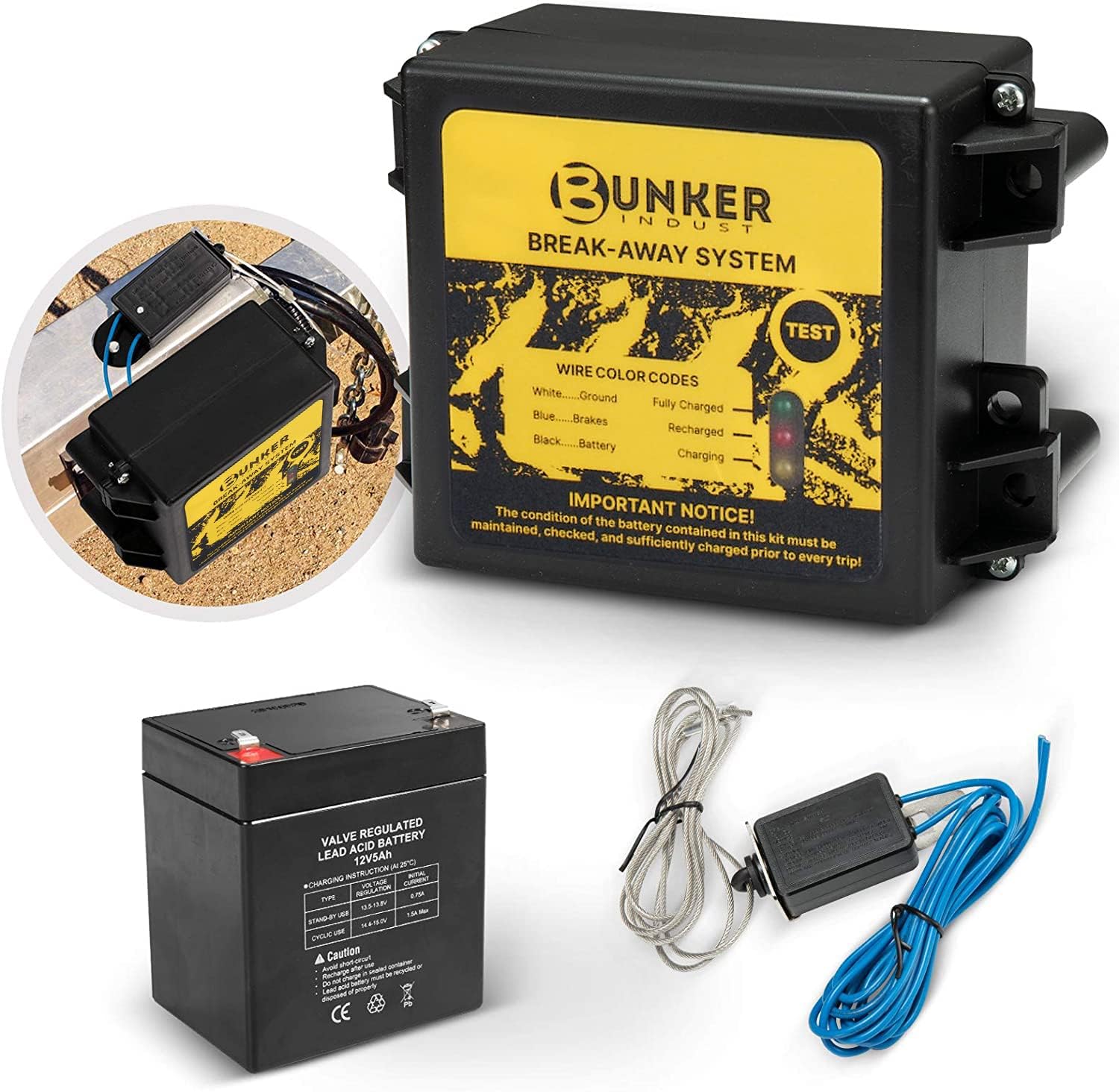
This trailer breakaway kit is designed for trailers with an existing electric brake system, helping activate the brakes if the trailer separates from the tow vehicle. It includes a battery, breakaway switch, and charger with an LED display for easy status checks, making it a practical safety upgrade for caravans and trailers. The side-mount design supports quick installation, while weather and corrosion resistance help it stand up to outdoor use.

This proportional trailer brake controller provides smooth, responsive braking by automatically matching your tow vehicle’s stopping force for safer trailer control. The bright LED digital display makes it easy to monitor voltage output in real time, while adjustable braking and sync settings help tailor performance to different trailers and road conditions. Designed for quick installation and broad compatibility, it supports 1 to 4 axle trailers for dependable towing confidence.

This proportional electric brake controller automatically applies trailer brakes based on your vehicle's braking force and speed for smoother, more responsive stopping. It is compatible with a wide range of tow vehicles and trailer setups, and includes an LED display for easy setup, diagnostics, and manual braking control. The included mounting hardware and plug-and-play port help make installation simple and convenient.
Electric Trailer Brakes: How They Work and Best Uses
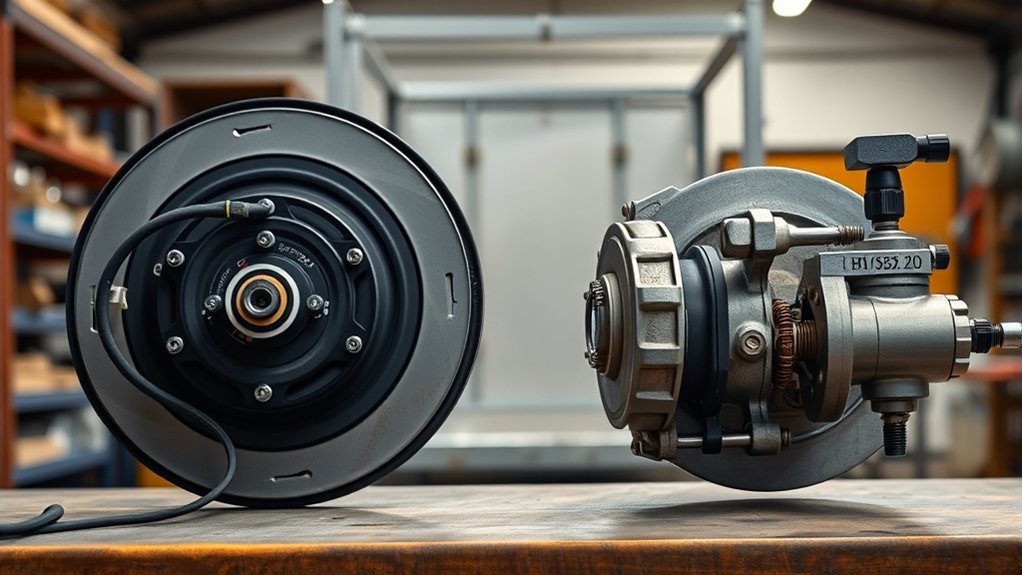
Electric trailer brakes use a brake controller in the tow vehicle to send power to the trailer brake assemblies. In a standard electric drum brake, that power energizes a magnet inside the brake assembly. The stronger the controller output, the more braking force the trailer applies. Dexter’s light-duty service manual explains that electric brakes can be adjusted at the controller for different road and load conditions and have very little lag after the tow vehicle brakes are applied.
A proportional brake controller is usually the better choice for heavier or more frequent towing because it responds to tow-vehicle deceleration. A time-delayed controller is cheaper and simpler, but it applies braking on a preset ramp rather than matching deceleration as closely. Either way, the controller gain must be adjusted so the trailer helps stop the combination without locking the trailer wheels or pushing the tow vehicle.
Pro Tip: Set brake-controller gain with the trailer loaded the way you will tow it. A controller that feels perfect empty can be too weak or too aggressive once cargo, water, livestock, or equipment is added.
[Products Worth Considering]

The CURT Venturer NEXT is a compact, time-delay electric trailer brake controller designed for dependable braking control from inside your vehicle. Its low-profile design, adjustable power and ramp time, and plug-and-play friendly setup make it a practical choice for towing with confidence. Built for 12-volt systems and compatible with electric over hydraulic brakes, it offers flexible installation without leveling or internal moving parts.

The CURT 52010 Trailer Breakaway Switch helps keep towing safer by automatically engaging trailer brakes if the trailer disconnects from the tow vehicle. It features silver contact points for a dependable electrical connection, plus a nylon case and pull pin assembly designed to handle outdoor use and secure activation. The included metal mounting tab makes installation simple on trailers with electric brakes.

The REDARC Tow-Pro Liberty delivers smooth proportional braking for confident everyday towing on roads and highways. Its compact remote design helps preserve cabin space while supporting 1 to 2 axle trailers and integrating with compatible vehicle wiring harnesses for a factory-style fit. Built for demanding towing conditions, it offers reliable control for RVs, campers, trailers, and boats.
Best Uses for Electric Trailer Brakes
- Heavy or changing loads: Adjustable gain helps match braking force to the actual loaded trailer weight.
- Steep grades and mountain driving: Direct control and manual override can help manage sway and braking balance.
- RV, cargo, utility, livestock, and equipment trailers: These trailers often benefit from predictable, driver-tuned braking.
- Drivers who tow more than one trailer: Many controllers let you adjust settings for different trailers and load conditions.
What to Check Before Choosing Electric Brakes
Before choosing electric brakes, confirm that your tow vehicle has the correct trailer connector, brake-controller wiring, charging circuit, and ground path. Also check the tow vehicle’s GCWR, the trailer’s GVWR, axle ratings, tire ratings, and hitch/tongue-weight rating. Electric brakes do not make an overloaded trailer safe.
Electric brakes are less convenient for repeated submersion because wiring, connectors, and magnets can corrode or short if water gets inside the system. For occasional rain and road spray, use sealed connectors, protected wiring, and dielectric-safe maintenance practices recommended by the component manufacturer.
Surge (Hydraulic) Trailer Brakes: How They Work and Best Uses
Surge brakes are self-contained hydraulic trailer brakes. When the tow vehicle slows, the trailer pushes forward against the surge actuator in the coupler. The actuator telescopes, pushes the master cylinder, and sends hydraulic pressure to the trailer brakes. Dexter’s surge actuator installation manual describes this as the “surge” or “push” of the trailer toward the tow vehicle, which supplies hydraulic pressure to the trailer brakes.
The biggest advantage is simplicity. A basic surge setup does not require an in-cab electric brake controller, so it can be easier to tow with different vehicles. Surge brakes are also common on boat trailers because the wheel-end brake system avoids electric brake magnets and controller wiring at the brake assembly.
Best Uses for Surge Brakes
- Boat trailers: Surge hydraulic systems are commonly used where launch ramps, spray, and marine exposure are routine.
- Moderate, predictable loads: They work best when the trailer weight and road conditions do not change dramatically.
- Level or gently rolling roads: They are simple and effective in normal stop-and-go driving.
- Shared tow vehicles: Since no in-cab controller is required for a basic surge system, compatibility can be easier.
Reverse Lockout and Backing Up
Surge brakes can apply when you back uphill or push the trailer in reverse, because the coupler may compress just like it does during braking. Many surge disc-brake trailers use an electric reverse lockout solenoid tied to the tow vehicle’s reverse-light circuit. Some drum-brake setups use free-backing brakes. Others have a manual lockout for short backing maneuvers.
Note: Never tow forward with a manual surge-brake lockout engaged. It can disable trailer braking when you need it most.
Performance: Stopping Power, Heat Handling, and Responsiveness
Electric and surge systems can both stop safely when they are correctly sized, installed, adjusted, and maintained. The difference is how much control you have and how quickly the system responds.
- Stopping power: Electric brakes can apply almost as soon as the tow vehicle braking signal reaches the controller. Surge brakes must wait for the trailer to push into the actuator, so the feel can be less immediate.
- Heat handling: Heat performance depends heavily on whether the trailer has drum or disc brakes, the trailer weight, downhill speed, and maintenance condition. Hydraulic disc brakes usually dissipate heat better than drums, but they may be used with surge or electric-over-hydraulic actuation.
- Responsiveness: Electric brakes give the driver a manual override and gain adjustment. Surge brakes react automatically, but the driver cannot directly increase trailer braking from the cab.
- Stability: A properly adjusted electric controller can help reduce the feeling of the trailer pushing the tow vehicle. A poorly adjusted controller, however, can cause grabbing, wheel lockup, or weak braking.
The safest trailer brake setup is not simply “electric” or “surge.” It is the system that is rated for the loaded trailer, matched to the brake hardware, adjusted correctly, and maintained before every trip.
Where Electric-Over-Hydraulic Fits
Electric-over-hydraulic systems combine an in-cab electric brake controller with a hydraulic actuator on the trailer. This setup is common when a trailer owner wants the control of electric activation with the heat and wet-weather advantages of hydraulic disc brakes. It is usually more expensive than standard electric drums or basic surge brakes, but it can be a strong choice for heavier boat, equipment, and performance trailers.
Durability & Maintenance: Water Exposure, Wiring, and Service Needs
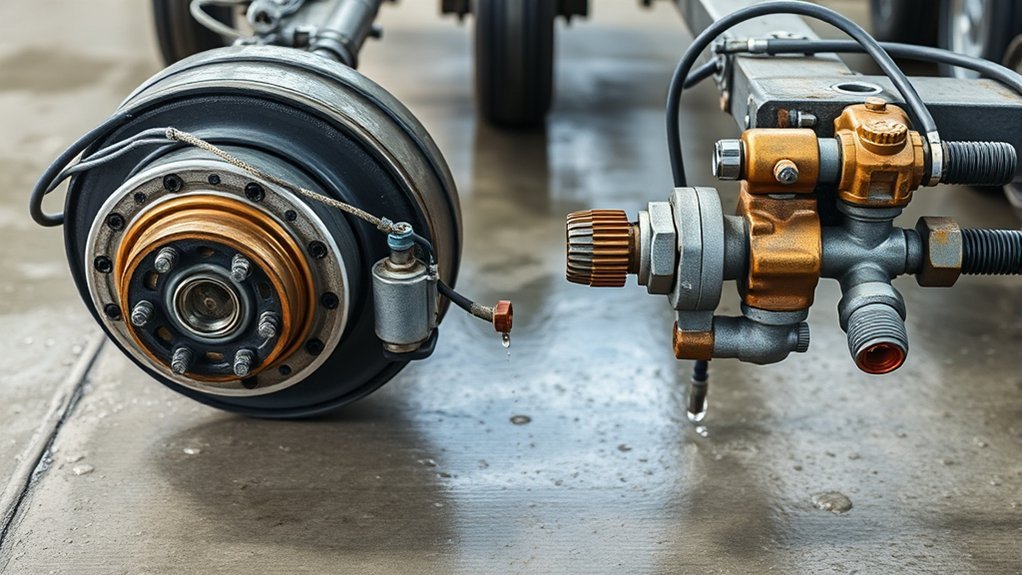
Durability depends on the environment. Electric brakes avoid hydraulic fluid service but rely on clean wiring, good grounds, magnets, and controller output. Surge brakes avoid in-cab controller wiring but rely on a coupler actuator, master cylinder, brake lines, fluid, wheel cylinders or calipers, and corrosion-free mechanical parts.
Water Resistance Needs
If you frequently launch a boat or tow in salt spray, surge hydraulic brakes are usually the more practical choice. They are not maintenance-free or magically waterproof, but they are generally more tolerant of immersion than standard electric drum brakes because they do not rely on electric magnets inside the brake assembly.
- Surge brakes: Rinse after saltwater use, inspect the actuator, check brake lines and hoses, and watch for fluid leaks or corrosion.
- Electric brakes: Protect wiring, use weather-sealed connectors, inspect magnets and grounds, and avoid repeated submersion unless the system is specifically designed for that use.
- Disc vs drum: Disc brakes can shed water and heat well, but they still need caliper, pad, rotor, and fluid maintenance.
Wiring and Service
Electric brakes need regular checks for frayed wires, loose connections, corrosion, damaged insulation, and weak grounds. Dexter recommends annual inspection even for low-mileage trailers because corrosion can still occur. Standard electric trailer brakes may also need manual adjustment as the shoes wear, while self-adjusting models reduce that task.
Surge brakes need hydraulic service. Check brake fluid level and condition, inspect the actuator travel, examine brake lines and hoses, confirm the coupler moves freely, and bleed the brakes when the system has been opened or feels spongy. Use the correct actuator for the brake type: drum and disc systems can require different actuator designs and reverse-lockout hardware.
Maintenance Checklist Before You Tow
- Before each trip: Check coupler latch, safety chains, breakaway cable or switch, lights, trailer connector, tires, lug nuts, and visible brake damage.
- For electric brakes: Test controller output, confirm even braking, inspect wiring at the axle, and adjust standard electric brakes when needed.
- For surge brakes: Check brake fluid, inspect for leaks, test actuator movement, confirm the reverse lockout works, and inspect for corrosion after water exposure.
- After hard downhill towing: Let brakes cool and check for hot wheels, burning smell, fade, or one wheel running much hotter than the others.
Safety & Legal: Breakaways, Controllers, and Compliance
Trailer brake laws depend on where you tow, whether the trailer is used commercially, and the trailer’s loaded weight. Federal commercial motor vehicle rules in 49 CFR §393.42 and 49 CFR §393.43 are useful references, but personal-use trailer rules are often set by states or provinces. Always check the rules for every place you tow through, not only where the trailer is registered.
Warning: Trailer brake work affects stopping distance and vehicle control. Follow the tow vehicle, trailer, axle, brake, and actuator manufacturer instructions. If you are not comfortable testing or servicing brakes, use a qualified trailer technician.
Breakaway Systems
A breakaway system applies the trailer brakes if the trailer separates from the tow vehicle. Electric brake trailers usually use a breakaway switch and onboard battery. Surge hydraulic trailers may use a mechanical breakaway cable or actuator-specific system. The important point is not the brake type; it is whether the breakaway equipment is present, correctly connected, charged or functional, and legal for the trailer’s use.
Controller and Tow-Vehicle Compatibility
Electric and electric-over-hydraulic systems require a compatible brake controller. Confirm the controller supports the brake system you have, especially if you are using electric-over-hydraulic disc brakes. Also confirm the 7-way connector, charge line, ground, fusing, and trailer battery are correctly wired.
Surge brakes do not need an in-cab brake controller for normal operation, but they still need correct hitch height, a compatible coupler, free actuator movement, working safety chains, and a legal breakaway setup. Dexter’s surge actuator guidance also notes that the trailer should be level and the towing components must be rated for the trailer’s GVWR.
Choose One: Checklist by Load, Terrain, Tow Vehicle, and Budget
Use the trailer’s loaded weight, not empty weight, when choosing brakes. Cargo, water, fuel, batteries, coolers, tools, and accessories can push a trailer into a different legal and safety category.
[Products Worth Considering]

This brake bleeder bottle is designed to make fluid bleeding easier for one-person use with a built-in check valve and magnetic mount. The flexible hose fits most bleeder valves and helps reduce the chance of air entering the system during service. With a practical fluid capacity and universal fit, it is a handy tool for brake maintenance and repair.
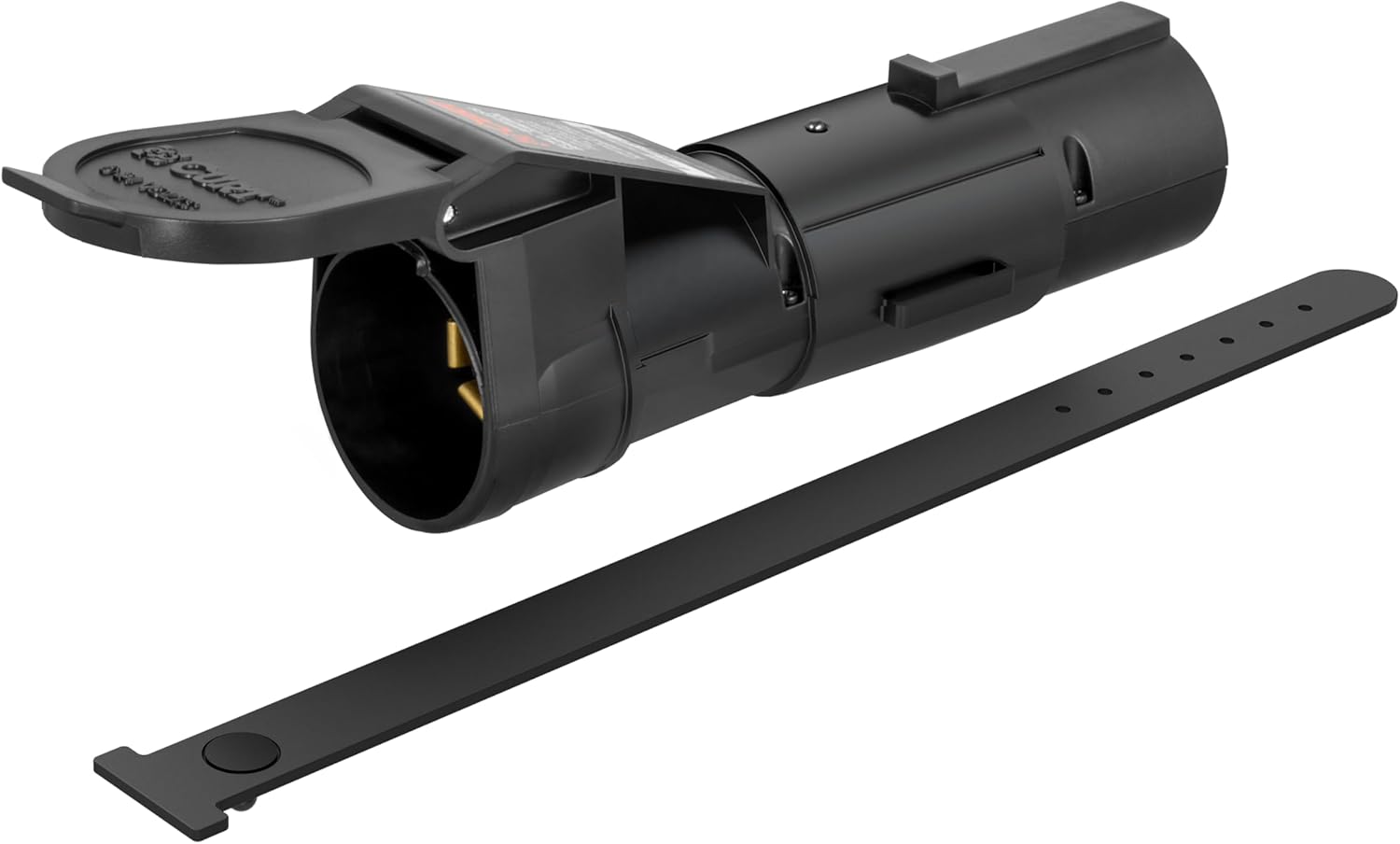
The CURT Echo mobile trailer brake controller offers smart, smartphone-based brake control with a simple plug-and-play design that connects between your vehicle and trailer 7-way plugs. Its portable construction makes it easy to transfer between compatible towing setups, while the durable potted enclosure helps protect against weather and vibration. With proportional braking support and app-based profile management, it delivers a modern, responsive towing experience.

This brake bleeder hose kit helps remove old brake fluid and air from motorcycle brake and clutch systems quickly and efficiently. Its one-way check valve prevents air from being drawn back into the system, while the easy-to-connect clips make bleeding simple for routine maintenance. Built for reliable use, it is a practical tool for keeping motorcycle braking performance responsive.
Choose Electric Trailer Brakes If
- You tow heavy cargo, RVs, livestock, equipment, or trailers with changing load weights.
- You drive hills, mountains, long descents, or mixed terrain.
- You want in-cab gain adjustment and manual trailer-brake override.
- Your tow vehicle already has, or can safely accept, a compatible brake controller and 7-way wiring.
- You prefer easier electrical diagnostics over hydraulic bleeding and fluid service.
Choose Surge Trailer Brakes If
- You tow a boat trailer that is frequently submerged at launch ramps.
- You want a self-contained system that can be towed by multiple compatible vehicles without installing a controller in each one.
- Your loads are moderate and predictable.
- You mostly tow on level roads or gentle grades.
- You are comfortable maintaining hydraulic fluid, lines, actuator movement, and corrosion protection.
Budget and Upgrade Path
Basic surge systems can be cost-effective because they avoid an in-cab controller installation. Standard electric drum brakes may cost more when you include controller wiring, but they give better driver control. Electric-over-hydraulic disc systems are usually the premium path because they combine controller input with hydraulic disc braking, but they also add actuator cost and more parts to diagnose.
Do not choose only by upfront price. A cheaper system that is wrong for your load, water exposure, or terrain can cost more through brake wear, unsafe stopping, corrosion, or compliance problems.
Troubleshooting Common Trailer Brake Symptoms
| Symptom | Likely Causes | What to Check |
|---|---|---|
| Trailer pushes the tow vehicle | Low controller gain, weak magnets, poor ground, air in hydraulic lines, worn pads/shoes | Controller setting, wiring, brake adjustment, fluid level, and brake wear |
| Brakes grab or lock | Gain too high, contaminated linings, out-of-adjustment brakes, sticky actuator | Reduce gain, inspect drums/rotors, clean components, check actuator travel |
| One wheel is much hotter | Dragging brake, seized caliper, bad bearing, uneven adjustment | Stop towing until the wheel, bearing, and brake are inspected |
| Surge brakes drag in reverse | Reverse lockout not working, wrong actuator, no free-backing drum setup | Reverse-light circuit, lockout solenoid, manual lockout, and brake/actuator compatibility |
| Controller shows error or no trailer | Open circuit, poor ground, corroded plug, damaged brake wire | 7-way plug, ground wire, axle wiring, breakaway switch wiring, and magnets |
Frequently Asked Questions
What are surge brakes on a trailer?
Surge brakes are self-contained hydraulic trailer brakes. When the tow vehicle slows, the trailer pushes into the coupler actuator, which pressurizes brake fluid and applies the trailer brakes. They are common on boat trailers because they do not require an in-cab brake controller for normal braking.
How do I know if my trailer has electric brakes or surge brakes?
Look at the coupler and wiring. A surge-brake trailer has a sliding hydraulic actuator built into the coupler and usually a brake-fluid reservoir. An electric-brake trailer usually has brake wires running to the axle and needs a brake controller signal through the trailer connector.
Can you reverse with surge brakes?
Yes, but the trailer must have the correct reverse setup. Many surge disc-brake trailers use an electric reverse lockout solenoid, while some drum-brake trailers use free-backing brakes. A manual lockout may be used only as the manufacturer allows and should never be left engaged while towing forward.
Do surge brakes need a brake controller?
Basic surge hydraulic brakes do not need an in-cab brake controller because the coupler actuator creates hydraulic pressure automatically. Electric-over-hydraulic brakes are different: they use an electric controller to power a hydraulic actuator.
Are electric trailer brakes waterproof?
Standard electric trailer brakes are not the best choice for repeated submersion unless the manufacturer specifically rates the setup for that use. Water can damage wiring, connectors, grounds, and brake magnets. Boat trailers usually use surge hydraulic or electric-over-hydraulic disc systems instead.
Which trailer brake type is better for heavy loads?
Electric brakes are usually better for heavy or changing loads because the driver can adjust gain and use manual override. For premium heavy-duty or marine setups, electric-over-hydraulic disc brakes can provide strong braking with controller-based activation.
Conclusion
You now know the practical difference: electric trailer brakes give you adjustable, in-cab control, while surge hydraulic brakes apply automatically through the trailer’s coupler actuator. Choose electric for heavier trailers, varied cargo, hills, and the best driver control. Choose surge for many boat trailers, simpler tow-vehicle compatibility, and frequent water exposure. Whichever system you choose, match it to the loaded trailer weight, brake hardware, tow vehicle rating, terrain, maintenance routine, and the laws where you tow.
Sources
- Dexter Light Duty Complete Service Manual — electric brake operation, controller modulation, adjustment, and maintenance context.
- Dexter Light Duty Surge Actuator Installation Manual — surge actuator operation, brake/actuator matching, hitching, corrosion, and safety guidance.
- Dexter Electric Trailer Brake Maintenance Tips — inspection, wiring checks, adjustment intervals, and corrosion notes.
- 49 CFR §393.42 — federal commercial motor vehicle brake equipment requirements and exceptions.
- 49 CFR §393.43 — federal commercial breakaway and emergency braking requirements.
- Dexter BrakeRite Electric/Hydraulic Brake Actuation System Manual — electric-over-hydraulic actuator operation and breakaway/controller context.