Your Toyota Tundra VIN is a 17-character vehicle identification code that identifies the truck and helps verify its manufacturer, vehicle attributes, model year, assembly plant, production sequence, recall status, and parts fitment. Start with the full VIN, decode it through the NHTSA VIN Decoder, then use separate Toyota, title-history, and theft-check tools for information that is not contained in the VIN itself.
Last updated: August 31, 2026 — Toyota/NHTSA VIN coding, recall, title-history, and theft-check resources rechecked.
Quick Answer
A Toyota Tundra VIN tells you the truck’s manufacturer identifier, vehicle attributes, check digit, model year, assembly plant, and sequential production number. For a current 2026 Tundra, Toyota’s NHTSA filing uses 5TF as the WMI, T in position 10 for the 2026 model year, and X in position 11 for Toyota Motor Manufacturing Texas. Use the NHTSA VIN Decoder for decoding and Toyota’s recall lookup for VIN-specific recall checks.
Key Takeaways
- A modern Toyota Tundra VIN has 17 characters and does not use the letters I, O, or Q.
- Positions 1–3 identify the WMI; positions 4–8 describe manufacturer-coded vehicle attributes; position 9 is the check digit.
- Position 10 identifies model year: P = 2023, while Toyota’s current 2026 filing uses T = 2026.
- Position 11 identifies the plant; Toyota’s 2023 and 2026 Tundra filings use X for Toyota Motor Manufacturing Texas.
- Positions 12–17 are the manufacturer-assigned production sequence and should be used as part of the complete VIN.
- Use separate tools for different jobs: NHTSA for decoding, Toyota/NHTSA for recalls, NMVTIS for title history, and NICB VINCheck for participating-insurer theft/salvage records.
At a Glance
| Time Required | 5–10 minutes for a basic VIN check |
| Difficulty | Easy |
| Tools Needed | 17-character VIN, NHTSA decoder, Toyota recall lookup, title/registration documents |
| Cost | Free for basic decoding, recall checks, and NICB VINCheck; NMVTIS-approved history reports may charge a fee |
What a Tundra VIN Is and Why It Matters
A Toyota Tundra’s Vehicle Identification Number, or VIN, is a standardized 17-character code assigned to the truck for identification. Under federal VIN requirements, a VIN contains manufacturer-identification, vehicle-description, check-digit, model-year, plant, and production-sequence information.
For a buyer, owner, mechanic, or parts counter, the full VIN helps answer practical questions:
- Is this truck really the model year and configuration the seller claims?
- Does it have an open safety recall or Toyota service campaign?
- Which OEM parts and accessories fit this exact truck?
- Do the dashboard, doorjamb, title, registration, and insurance records agree?
- Does a separate title or history database show brand, odometer, salvage, or other concerns?
Toyota states that the current Tundra is assembled at Toyota Motor Manufacturing Texas in San Antonio. Its current facility information lists Tundra and Tundra HEV among the plant’s products. Still, decode the individual truck’s full VIN instead of applying a current production assumption to every Tundra generation.
Where to Find Your Tundra VIN (Truck and Documents)
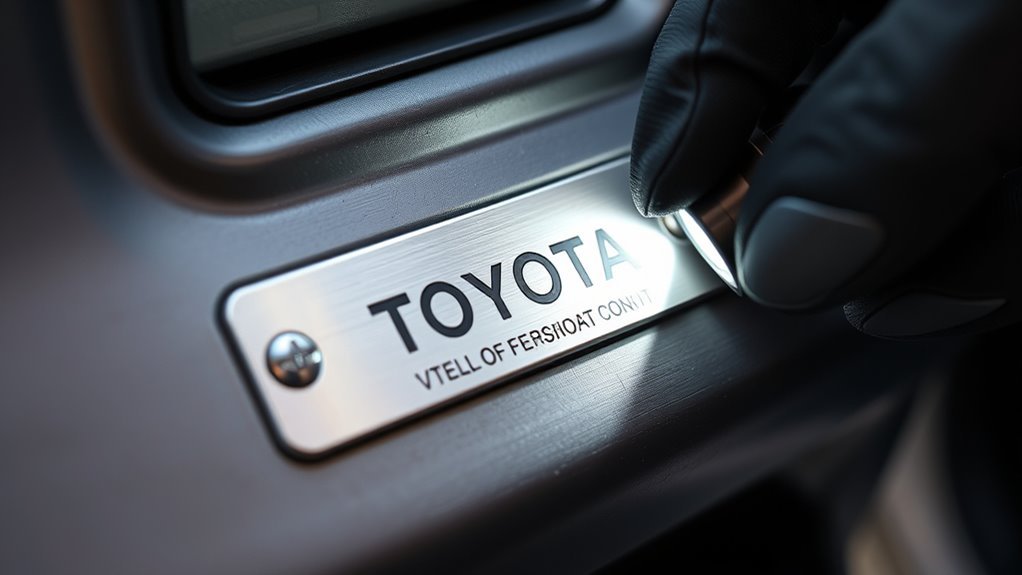
Start with the physical truck, then compare the number against the paperwork. Toyota’s official parts site says the 17-digit VIN can be found on the top of the dash, driver-side doorjamb, insurance card, and vehicle registration card.
- Dashboard: Look through the windshield at the driver-side dashboard area.
- Driver-side doorjamb: Open the driver’s door and check the certification label near the latch area.
- Registration and title: Compare the printed VIN with the truck’s VIN plates and labels.
- Insurance card: Confirm the VIN matches your active policy documents.
- Dealer or service paperwork: Check repair orders, warranty documents, or Toyota owner records.
Warning: Do not ignore a VIN mismatch. A different VIN on the title, dashboard, doorjamb, or insurance record can result from a paperwork error, prior repair issue, title problem, or possible tampering. Resolve the mismatch before buying or registering the truck.
Toyota Tundra VIN Positions at a Glance
Use this table as your quick map before decoding a Tundra VIN character by character.
| VIN Position | Section | What It Tells You |
|---|---|---|
| 1–3 | WMI | World Manufacturer Identifier: manufacturer and vehicle-type information |
| 4–8 | VDS | Vehicle Description Section: manufacturer-coded attributes such as body/cab, trim or series, engine, drivetrain, and weight class depending on model year |
| 9 | Check digit | Mathematical validation character used to catch many VIN transcription errors |
| 10 | Model year | Model-year code; P = 2023 and T = 2026 in the applicable modern cycle |
| 11 | Plant | Assembly-plant code |
| 12–17 | Sequential number | Manufacturer-assigned production sequence used as part of the complete VIN |
Tundra WMI: What the First 3 VIN Characters Mean
The first three VIN characters are the World Manufacturer Identifier, usually shortened to WMI. This section identifies the manufacturer and vehicle type according to the applicable manufacturer filing.
For the 2026 Tundra, Toyota’s VIN submission to NHTSA lists 5TF as the WMI for a Toyota truck manufactured by Toyota Motor Manufacturing Texas in the United States. Do not assume every older Tundra uses the same WMI. Toyota production arrangements and VIN coding can differ by model year, so enter the complete 17-character VIN into an official decoder when accuracy matters.
Note: A WMI is useful for manufacturer and origin checks, but it is only the first three characters. It cannot replace a full VIN decode.
VDS (Positions 4–8): Body, Series, Engine and Options
Positions 4–8 make up the Vehicle Description Section, or VDS. This is where Toyota’s model-year-specific coding describes important vehicle attributes. Depending on the filing, the decoded data can include body or cab type, bed length, trim or series, engine, fuel type, drivetrain, restraint information, and GVWR class.
That makes the VDS especially useful when you need to confirm a truck’s configuration before ordering parts, comparing a seller’s listing with the physical truck, or checking whether a claimed trim and drivetrain agree with manufacturer data.
- Body/cab confirmation: Helps distinguish manufacturer-coded cab, body, or bed configurations.
- Engine-related data: Helps confirm engine and fuel-system information when available in Toyota/NHTSA data.
- Series and trim: Can distinguish manufacturer-coded grade or series information for a particular model year.
- Drivetrain: Current manufacturer data can distinguish two-wheel-drive and four-wheel-drive configurations.
- Brake/GVWR or restraint data: Can help service and parts systems identify the correct vehicle class and equipment.
Verified 2026 Tundra VDS Example
Toyota’s 2026 Tundra VIN filing gives a useful example of why you should decode positions 4–8 as a group instead of guessing from one character. In that filing, VDS LA5DB identifies an SR5 Double Cab with a 5.5-foot bed, the V35A-FTS 3.4L gasoline V6, four-wheel drive, Toyota’s 75 Series classification, and GVWR Class F (7,001–8,000 lb).
That example is specific to Toyota’s 2026 coding. Do not reuse a 2026 VDS table to decode an older truck without checking the manufacturer information for that model year.
Pro Tip: When ordering parts, use the full VIN instead of year/make/model alone. Two Tundras from the same model year can differ in body configuration, drivetrain, trim, engine-related equipment, or factory-installed components.
Check Digit & Model Year: How Positions 9 and 10 Work
Positions 9 and 10 serve different jobs: position 9 validates the VIN structure, while position 10 identifies the model year.
Check Digit Purpose
The ninth VIN character is the check digit. It is not a feature code. It is calculated from the other VIN characters to help detect many transcription mistakes.
A failed check-digit test does not automatically prove fraud because a VIN may simply have been typed incorrectly. Recheck every character against the truck and its documents before drawing a conclusion.
How the Check Digit Is Calculated
The standardized calculation assigns numeric values to VIN characters and weight factors to VIN positions. The weighted values are added and divided by 11. The remainder determines the ninth character; when the remainder is 10, the check digit is X.
You do not need to calculate it manually during a routine ownership check. An official VIN decoder can validate and decode the number much faster.
What Do “P” and “T” Mean in a Tundra VIN?
The tenth VIN character identifies the model year. Toyota’s 2023 Tundra filing uses P for the 2023 model year, while its 2026 Tundra filing uses T for the 2026 model year. Model-year codes repeat over longer VIN cycles, so interpret the character as part of the complete VIN rather than in isolation.
The model-year character does not tell you the exact production day or month. For an exact build month or production date, check the certification label and Toyota/dealer records where available.
Positions 11–17: Plant Code and the Tundra Serial Number
Positions 10–17 make up the Vehicle Identifier Section. For practical Tundra decoding, use this split:
| Field | Purpose |
|---|---|
| Position 10 | Model-year code |
| Position 11 | Plant of manufacture |
| Positions 12–17 | Manufacturer-assigned sequential production number |
Toyota’s 2023 and 2026 Tundra VIN filings use X in position 11 for Toyota Motor Manufacturing Texas. Positions 12–17 form the production sequence, but use those characters as part of the complete 17-character VIN when matching Toyota, NHTSA, title, insurance, and service records.
What Does a 2026 Toyota Tundra VIN Tell You?
Toyota’s current manufacturer filing provides a concise, authoritative 2026 reference. The first three positions use 5TF for the current Tundra WMI. Position 10 uses T for model year 2026, and position 11 uses X for Toyota Motor Manufacturing Texas. Positions 4–8 then carry Toyota’s detailed VDS coding for body, trim, engine, drivetrain, series, restraints, and GVWR information.
| 2026 Field | Verified Code | Meaning |
|---|---|---|
| Positions 1–3 | 5TF | Toyota Motor Manufacturing Texas — truck |
| Position 10 | T | 2026 model year |
| Position 11 | X | Toyota Motor Manufacturing Texas |
How to Decode a Toyota Tundra VIN Step by Step
- Find the VIN on the truck. Start at the driver-side dashboard and driver-side doorjamb.
- Compare documents. Match the VIN against the title, registration, insurance card, and sales paperwork.
- Check length and characters. Confirm it has 17 characters and does not include I, O, or Q.
- Decode the VIN. Use the NHTSA VIN Decoder for manufacturer-reported data.
- Check recalls. Use Toyota’s recall lookup and the NHTSA recall lookup.
- Confirm parts fitment. Use Toyota’s official parts store or a Toyota dealer with the full VIN.
- Review title history. For a used truck, consider a report from an approved NMVTIS data provider.
- Check participating-insurer theft and salvage records. Run the VIN through NICB VINCheck.
- Inspect before buying. A clean set of VIN checks does not replace a title review, professional inspection, or test drive.
5-Minute Used-Tundra VIN Check
If you are standing beside a used Tundra, use this order. Each step answers a different question, so do not treat one clean result as a substitute for the others.
- Match the physical VIN. Compare the dashboard and doorjamb VIN with the title or registration.
- Decode the full number. Use NHTSA vPIC to confirm manufacturer-reported identity and configuration data.
- Check open recalls. Run the VIN through Toyota and NHTSA recall tools.
- Check title and brand history. Use an NMVTIS-approved provider for title, brand, odometer, junk/salvage, and insurance total-loss information available to the system.
- Run NICB VINCheck. Check participating-insurer records for an unrecovered stolen vehicle or certain salvage/flood records.
- Inspect the truck. Check condition, frame, repairs, electronics, drivetrain, fluids, tires, and service history before paying.
[Products Worth Considering]

This LISEN MagSafe car mount charger combines wireless charging and a magnetic phone holder in one compact solution for everyday driving. With both dashboard and vent mounting options, a strong magnetic hold, and broad compatibility for popular iPhone and MagSafe-supported Android phones, it helps keep your device secure, accessible, and powered on the road.

This Toyota navigation SD card provides updated North America maps and points of interest for compatible factory navigation systems. It is preloaded with recent road and location data to help drivers find destinations, services, and routes more easily across the U.S. and Canada. Designed for select Toyota models, it offers a simple plug-and-play replacement for the original navigation card.

AUTOBOO windshield wiper blades are designed for dependable all-season visibility with smooth, streak-free wiping in rain, snow, and heat. The bracketless aerodynamic design helps reduce noise and drag while the memory spring steel structure delivers even pressure for consistent windshield contact. Built for quick installation on compatible U/J hook arms, these blades offer a quiet, reliable upgrade for everyday driving.
What You Can Do With a Tundra VIN: Recalls, Parts, History, Theft

A Tundra VIN is useful because it lets you connect the physical truck with manufacturer, recall, title, insurance, and parts databases. Those databases do different jobs, so use more than one when buying a used truck.
[Products Worth Considering]
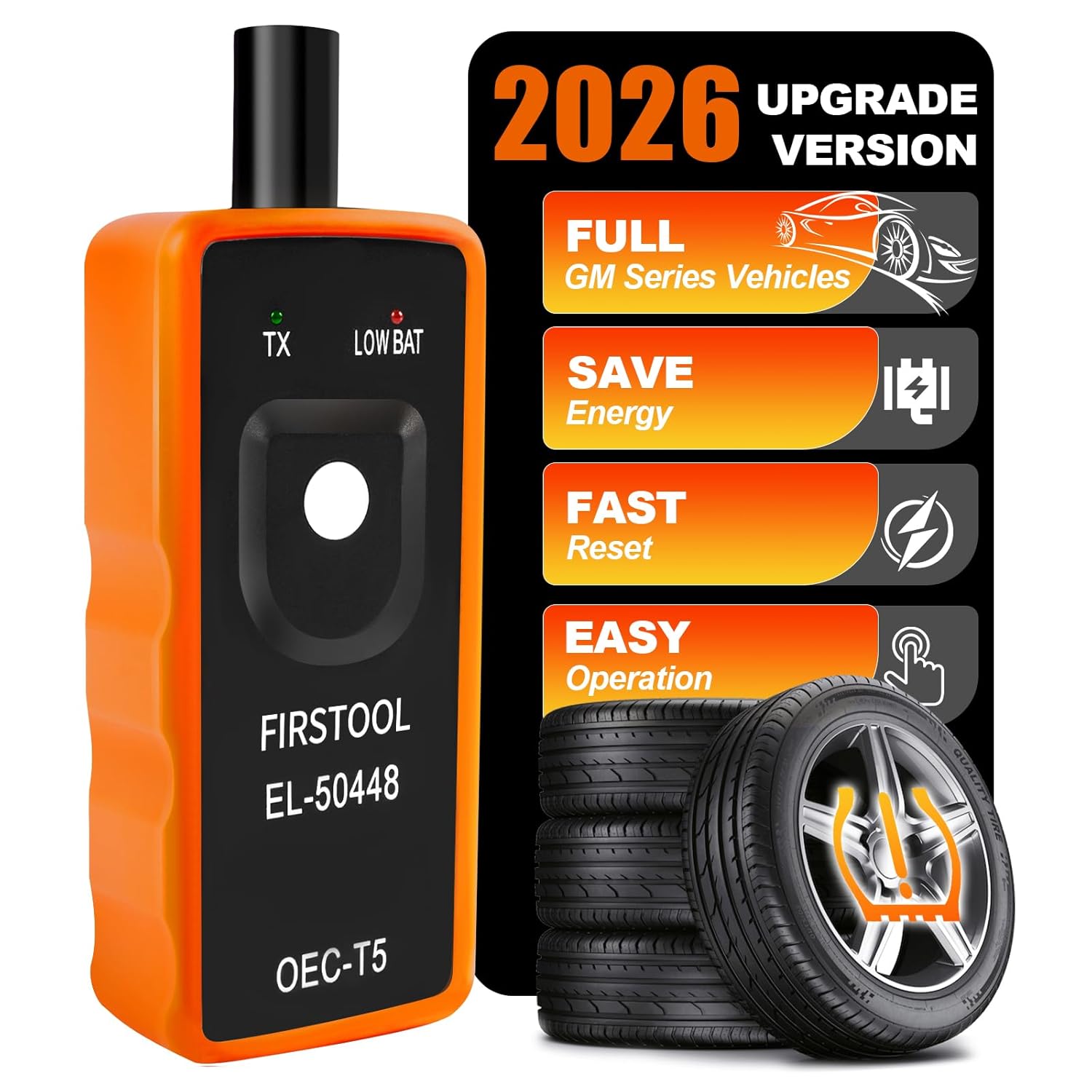
This EL-50448 TPMS relearn tool helps quickly activate and reset tire pressure sensors so your vehicle’s monitoring system stays accurate after tire rotations, sensor replacement, or seasonal tire changes. Designed for many GM-related vehicles and compatible with common 315 and 433 MHz TPMS systems, it offers simple one-button operation and reliable performance for clearing warning lights and relearning sensor positions.

Masoll’s TPMS sensor set includes four advanced sensors and a relearn tool to help GM vehicle owners replace factory tire pressure sensors at home. Designed for broad compatibility with GM vehicles after 2006, it supports dual-frequency operation for easier fitment across Chevy, GMC, Buick, Cadillac, Pontiac, and select trucks. With low power use, high accuracy, and DIY installation, it offers a convenient way to clear TPMS warnings and restore proper tire pressure monitoring.
Recall and Safety Checks
Enter the VIN into Toyota’s official recall lookup to check open Toyota safety recalls and service campaigns. You can also use NHTSA’s VIN recall search to check whether a specific vehicle has an unrepaired safety recall.
Recall status can change as campaigns are added or repairs are completed, so check again before buying a used Tundra and after receiving a recall notice.
Parts and Compatibility
Toyota’s official parts system accepts a full VIN and can use vehicle-specific data to help narrow compatible components. That matters for brake parts, engine components, electronics, body parts, and accessories.
For best results, search with the complete VIN rather than relying only on year, make, and model.
History, Title, and Theft Checks
For title-related history, use an NMVTIS-approved provider. NMVTIS reports are designed to provide information such as current title data, brand history, odometer information, and available junk, salvage, and insurance total-loss information.
Do not rely on NMVTIS as a theft-record database. The U.S. Department of Justice states that NMVTIS itself does not contain theft records. For a separate free check, NICB VINCheck searches participating-insurer records for vehicles reported stolen and not recovered, plus certain salvage or flood-damage records.
Warning: No VIN database is complete. A clean decoder, NMVTIS report, NICB result, or recall lookup does not prove that a truck has never been damaged, repaired, stolen, flooded, or misrepresented. Combine database checks with the physical truck, documents, and an independent inspection.
What a Toyota Tundra VIN Cannot Prove
A VIN is an identity key, not a mechanical inspection. The encoded number and the databases connected to it cannot prove that the truck is currently in good mechanical condition, that every accident was reported, that previous repairs were performed correctly, or that every theft, flood, auction, or service event exists in the databases you searched.
A VIN also gives the model year rather than the exact build date. When an exact production month matters, check the certification label and manufacturer or dealer records. For a used purchase, treat the VIN as the start of your verification process rather than the final verdict.
Best Free and Paid Toyota Tundra VIN Tools
Use the source that matches the question you are trying to answer. No single VIN tool covers identity, recalls, parts, title history, theft records, and physical condition.
| Need | Best Tool | Important Limit |
|---|---|---|
| Manufacturer VIN decoding | NHTSA VIN Decoder | Manufacturer-reported identity/spec data; not a complete accident or title-history report |
| Toyota recalls and campaigns | Toyota Recall Lookup | Recall/campaign status, not overall vehicle condition |
| Federal recall cross-check | NHTSA Recalls | Shows applicable unrepaired recalls, not service or accident history |
| OEM parts fitment | Toyota Genuine Parts | Useful for fitment; it is not a title or history check |
| Title, brand and odometer history | NMVTIS-approved providers | NMVTIS does not itself contain theft records |
| Participating-insurer theft/salvage check | NICB VINCheck | Not a comprehensive vehicle-history report; coverage depends on participating-insurer data |
Common Toyota Tundra VIN Mistakes and Red Flags
- Using 16 or 18 characters: Modern Tundra VINs should have 17 characters.
- Confusing 0 and O: The letter O is not used in a VIN; check whether the character is zero.
- Confusing 1 and I: The letter I is not used in a VIN; check whether the character is one.
- Reading only the first character: Decode the complete WMI and full 17-character VIN.
- Using one model year’s VDS table for another: Manufacturer coding can change; verify the applicable year.
- Assuming model year equals build date: Position 10 gives model year, not the exact manufacturing date.
- Ignoring document mismatches: Dashboard, doorjamb, title, registration, and insurance VINs should agree.
- Trusting screenshots only: Enter the VIN yourself into official tools before paying a deposit.
- Using only one history database: NMVTIS and NICB answer different questions.
- Skipping inspection: VIN checks do not reveal every mechanical, frame, flood, or repair issue.
Frequently Asked Questions
What does my Toyota Tundra VIN tell me?
A Toyota Tundra VIN tells you manufacturer-identification data, manufacturer-coded vehicle attributes, the check digit, model year, assembly plant, and production sequence. When decoded through Toyota or NHTSA data, it can also help confirm details such as body configuration, engine, drivetrain, series, restraints, or GVWR class when those fields are supplied for that model year.
Where is the VIN on a Toyota Tundra?
Toyota says the 17-digit VIN can be found at the top of the dashboard and on the driver-side doorjamb. It also appears on documents such as the vehicle registration and insurance card. Compare the physical VIN with the paperwork before buying a used truck.
How do I check a Toyota Tundra manufacturing date by VIN?
The VIN’s 10th character gives the model year, not the exact manufacturing date. For an exact build month or production date, check the driver-side certification label and Toyota or dealer records where available.
What does “P” mean in a Toyota Tundra VIN?
When P appears in position 10 of a Toyota Tundra VIN in the applicable modern VIN cycle, it identifies the 2023 model year. Toyota’s 2023 Tundra VIN filing confirms P as the 2023 model-year code.
What does “T” mean in a 2026 Toyota Tundra VIN?
Toyota’s 2026 Tundra VIN filing uses T in position 10 for the 2026 model year. The same filing uses X in position 11 for Toyota Motor Manufacturing Texas.
Can I use a Tundra VIN to check open recalls?
Yes. Enter the 17-character VIN into Toyota’s recall lookup and NHTSA’s recall tool. VIN-specific recall status can change as campaigns are added or repairs are completed, so recheck when buying a used truck or after receiving a recall notice.
Is there a free Toyota Tundra VIN decoder?
Yes. NHTSA’s vPIC VIN Decoder provides free manufacturer-reported decoding data. Toyota and NHTSA also provide free recall checks, and NICB offers a separate free VINCheck for participating-insurer theft and certain salvage or flood records. A detailed NMVTIS-approved vehicle-history report may require payment.
Can a VIN prove a used Toyota Tundra has never been damaged or stolen?
No. A VIN lets you query several useful databases, but no single report is complete. NMVTIS does not itself contain theft records, and NICB VINCheck depends on participating-insurer data. Combine VIN checks with the title, physical VIN labels, service information, a professional inspection, and a test drive.
Conclusion
A Toyota Tundra VIN gives you a reliable starting point for verifying a truck’s identity, manufacturer-coded configuration, model year, assembly plant, recalls, and parts fitment. First match the 17-character VIN on the truck with the paperwork, then decode it through NHTSA and check Toyota/NHTSA recall databases.
For a used Tundra, continue beyond the basic decoder. Use an NMVTIS-approved source for title and brand information, run NICB VINCheck separately for participating-insurer theft and salvage records, and inspect the truck in person. A VIN can connect you with valuable records, but no database replaces the physical vehicle, its documents, and a professional inspection.
Sources
- 49 CFR Part 565 — Vehicle Identification Number Requirements — federal VIN structure and check-digit requirements.
- NHTSA VIN Decoder — official VIN-decoding tool using manufacturer-reported data.
- NHTSA Manufacturer Information Database — Toyota Motor Manufacturing Texas — manufacturer and Tundra information.
- Toyota Safety Recalls & Service Campaigns Lookup — VIN-specific Toyota recall and service-campaign checks.
- NHTSA Recall Lookup — VIN-specific federal safety-recall checking.
- Toyota Genuine Parts and Accessories — VIN-based parts lookup and Toyota’s listed VIN locations.
- Toyota Motor Manufacturing Texas — current San Antonio plant and Tundra production information.
- NMVTIS Approved Vehicle History Providers — official vehicle-history provider guidance.
- Understanding an NMVTIS Vehicle History Report — title, brand, odometer, junk/salvage, and insurance information covered by NMVTIS.
- NICB VINCheck — free participating-insurer check for unrecovered stolen vehicles and certain salvage or flood records.