If your Toyota Tundra’s transmission is slipping, treat it as a warning sign, not a normal aging symptom. Slipping usually feels like the engine revs rising without matching road speed, delayed engagement from Park to Drive, shudder under light throttle, harsh gear changes, or a brief loss of drive. Start with safety, then verify the fluid spec for your exact model year, check for leaks and codes, and decide whether a basic service, dealer diagnostic, or transmission-shop inspection is the right next step.
Quick Answer
If your Tundra transmission is slipping, stop driving if RPMs flare, the truck loses drive, shifts bang hard, fluid smells burnt, or a warning light appears. Check the correct ATF level and condition, scan for transmission codes, inspect for leaks, and check Toyota/NHTSA recalls before approving major repairs.
Key Takeaways
- Do not keep driving through severe slipping, burning smells, fluid leaks, repeated RPM flares, or a truck that barely moves in Drive.
- Confirm the exact fluid spec by model year, owner’s manual, dipstick/fill label, or Toyota service information before adding ATF.
- Many late-model Toyota transmissions use sealed WS-fluid procedures, so fluid level checks may require scan-tool temperature data and a level/check plug.
- Before paying for internal transmission work, scan for codes, check open recalls by VIN, inspect for leaks, and rule out engine or driveline problems that can mimic slipping.
- A drain-and-fill or filter service may help if fluid is low or degraded, but burnt fluid, metal debris, or pressure faults usually need professional diagnosis.
At a Glance
| Time Required | 15–30 minutes for basic checks; 1–3 hours for a fluid/filter service on serviceable models |
| Difficulty | Beginner for symptoms, leaks, and OBD scan; intermediate to advanced for fluid service or sealed-transmission level checks |
| Tools Needed | OBD-II scanner, flashlight, clean white towel, gloves, drain pan, torque wrench, correct ATF, and service information for your exact model year |
| Cost | $0–$80 for basic checks; commonly $100–$350 for fluid service; diagnostic or internal repair costs vary widely by shop, model year, and failure |
Immediate Symptoms and When to Stop Driving
Stop driving your Tundra as soon as it is safe if the transmission slips hard enough to affect acceleration, the truck hesitates when pulling into traffic, or the drivetrain makes a heavy thump during gear changes. Continued driving can overheat the fluid, damage clutch packs, contaminate the valve body, or turn a smaller problem into a full rebuild.
Warning: Tow the truck instead of driving it if it will not move normally in Drive or Reverse, RPMs flare repeatedly, the transmission warning light or check-engine light is on with harsh shifting, ATF is leaking heavily, or you smell burnt fluid after a short drive.
Use this quick decision guide before you do any testing:
| Symptom | What It May Mean | Best Next Step |
|---|---|---|
| RPM rises but speed does not | Low fluid, clutch slip, pressure loss, or torque converter issue | Stop, check leaks/fluid, scan for codes |
| Hard bang into gear | Pressure control, mount, driveline, or internal shift issue | Avoid hard throttle; schedule diagnosis |
| Burnt odor or smoke | Overheated ATF or severe internal wear | Do not continue driving |
| Barely moves on cold start | Low ATF, pump/pressure issue, filter restriction, or internal wear | Tow or get mobile inspection |
| Shudder at steady speed | Torque converter clutch, fluid condition, misfire, or driveline vibration | Scan codes and road-test carefully |
Write down when the slip happens: cold or hot, uphill or flat road, towing or unloaded, 1–2 shift or highway lockup, and whether the check-engine light came on. A short symptom log helps a technician separate fluid, electronics, torque converter, valve-body, and internal clutch problems faster.
Confirm Model Year, Fluid Spec, and Recall Status First
Before adding fluid or approving repairs, identify your exact Tundra model year, engine, drivetrain, and transmission. Older Tundras and late-model Tundras do not all use the same service procedure or fluid. Many late-model Toyota automatic transmissions use Toyota Genuine World Standard Automatic Transmission Fluid, but you should still verify the required ATF in the owner’s manual, repair manual, dipstick marking, fill-plug label, or Toyota service information for your VIN.
Also check for open recalls and service campaigns before paying for major transmission work. Toyota’s recall lookup and the NHTSA recall lookup let you search by VIN. This matters because certain 2022–2024 Tundra and Tundra Hybrid vehicles were included in NHTSA campaign 24V-125 for unexpected vehicle movement in Neutral, with a dealer transmission control ECU software update as the remedy. That recall is not the same as classic slipping under acceleration, but it is important transmission-related context for late-model owners.
Note: A recall, TSB, or tech tip is usually VIN-, year-, symptom-, and condition-specific. Do not assume every Tundra has the same campaign or repair. Check your VIN and ask the dealer to print the applicable campaigns and service bulletins.
Check Transmission Fluid: Level, Color, Smell, and Simple Tests
Transmission fluid is the first practical check because low, wrong, contaminated, or overheated ATF can cause slipping, shudder, delayed engagement, and harsh shifts. The correct method depends on whether your Tundra has a dipstick or a sealed/overflow-style transmission.
If your Tundra has a transmission dipstick, warm the truck as directed by the manual, park on level ground, apply the parking brake, leave the engine running if the manual calls for it, move the shifter through each position, then check the dipstick. Wipe it, reinsert it fully, and read it again. Do not overfill; too much ATF can foam and cause poor hydraulic pressure.
If your Tundra does not have a dipstick, do not guess by adding fluid through the fill port. Toyota says automatic transmissions that use WS fluid are sealed and do not use periodic dipstick checks; level inspection is a temperature-sensitive service procedure. A Toyota dealer or transmission shop with Toyota service data can check the level through the correct fill/check process.
| Check | Normal | Fault |
|---|---|---|
| Level | Within the correct range or overflow procedure | Low, overfilled, or unknown level on sealed unit |
| Color | Clean red/pink to light amber, depending on age and fluid type | Very dark, opaque, or contaminated |
| Smell | Mild petroleum smell | Acrid or burnt odor |
| Debris | No grit on towel; light paste on magnets can be normal | Metal flakes, clutch material, or heavy sludge |
Put a drop of ATF on a clean white towel. If it spreads evenly and smells normal, fluid condition is less likely to be the root cause. If it smells burnt, looks gritty, or leaves dark residue, avoid a power flush and get the transmission inspected. A drain-and-fill may be reasonable on a serviceable unit, but burnt fluid plus slipping often points to internal wear, pressure loss, or torque converter trouble.
Pro Tip: If the fluid is low, find the leak before topping off. Common leak points include the pan gasket, drain/fill plugs, cooler lines, output shaft seal, and areas around the transmission cooler.
Scan for Codes and Rule Out Problems That Mimic Slipping
A basic OBD-II scan can save time and money. Even if the check-engine light is off, pending or history codes may show transmission control, torque converter clutch, pressure control, speed sensor, solenoid, or communication faults. Record every code before clearing anything.
Slipping symptoms can also come from systems outside the transmission. Rule these out before approving internal transmission repairs:
- Engine misfire or power loss: A misfire, fuel delivery issue, turbo/boost problem on late models, or limp mode can feel like transmission slip.
- Traction control intervention: Wheelspin, stability control, or uneven tire sizes can cut power and change shift behavior.
- Driveshaft or U-joint clunk: A driveline thump may be mistaken for a harsh transmission shift.
- Transfer case or 4WD binding: Incorrect 4WD use on dry pavement can create jerks, drag, and driveline stress.
- Brake drag: A sticking caliper can make the truck feel sluggish even when the transmission is working.
- Low battery voltage: Weak voltage can trigger confusing electronic transmission behavior on newer trucks.
If codes point to line pressure, torque converter clutch, solenoid performance, speed sensors, or transmission control module issues, diagnose those before replacing the whole transmission. If codes point to engine or emissions faults, fix those first and retest.
Test the Torque Converter, Pressure, and Valve Body Signs
A careful road test can separate a torque converter shudder from general clutch slip. A torque converter clutch problem often feels like a rumble-strip vibration or shudder at steady light throttle, especially when the converter is locking or unlocking. General transmission slipping usually feels like flare between shifts or RPM rising without matching acceleration.
During a safe, short road test, note:
- Which gear or speed range causes the slip or shudder.
- Whether the problem happens cold, hot, or only after towing.
- Whether manual shift mode changes the symptom.
- Whether the RPM flare happens during a shift or while already in gear.
- Whether the transmission temperature rises faster than normal.
Pressure and valve-body checks are usually professional tests. A technician may compare commanded gear, turbine speed, output speed, lockup status, line pressure, and solenoid activity with scan-tool data. If the pan is removed, they can inspect the magnets, fluid residue, filter, valve body, and wiring harness for clues.
A slipping transmission is a symptom, not a diagnosis. The real cause may be fluid level, a leak, pressure control, solenoid command, torque converter clutch behavior, internal clutch wear, or an engine problem that only feels like slip.
For late-model Tundras that recently had engine, transmission, hybrid module, or torque converter work, ask whether Toyota Tech Tip T-TT-0748-24 applies. That Toyota/NHTSA-posted tech tip warns that torque converter assembly damage can occur if installation is incorrect and highlights oil pump drive sprocket alignment during installation. This is not a driveway check; it is a professional service-history clue after major drivetrain work.
DIY Fixes to Try First: Fluid/Filter Change, Pan Inspection, and Solenoids
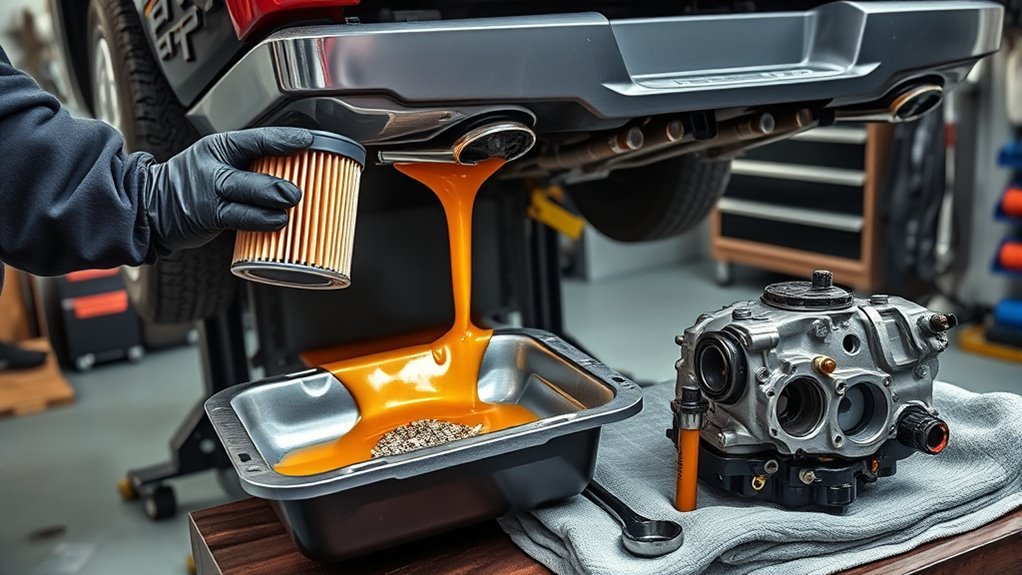
If the truck is still driving normally enough for a controlled service and there is no severe burning smell, heavy debris, or major leak, start with the least invasive steps. For models with a serviceable pan and filter, a drain-and-fill plus filter/O-ring replacement can help restore correct fluid flow if the fluid is old, low, or contaminated. Use only the ATF specified for your exact Tundra.
Warning: ATF can be hot enough to burn skin. Support the truck securely on rated jack stands, keep it level for fluid checks, and never crawl under a vehicle supported only by a jack.
| Task | Tool | Success Criteria |
|---|---|---|
| Fluid check or drain-and-fill | Correct ATF, drain pan, service procedure | Correct level, no overfill, no burnt smell |
| Filter/O-ring service | Torque wrench, gasket/O-ring kit | Proper seal, no leaks, no cross-threaded bolts |
| Pan inspection | Flashlight, magnet, clean towel | Only light paste; no flakes or chunks |
| Connector and harness check | Visual inspection, contact-safe cleaner if needed | No corrosion, oil intrusion, broken wiring, or loose plugs |
| Solenoid testing | Multimeter and model-specific specifications | Resistance and operation match Toyota service data |
| Recordkeeping | Receipts, photos, code report | Clear service history for warranty or shop diagnosis |
Avoid a high-pressure flush on a transmission that is already slipping badly, smells burnt, or has heavy debris in the pan. In that condition, a flush may not fix the underlying wear and can make diagnosis harder. If symptoms remain after correct fluid level, clean connectors, and a basic service, move to pressure testing and valve-body diagnostics.
[Products Worth Considering]

These genuine Toyota oil drain plug gaskets are designed to help maintain a reliable seal during oil changes, reducing the chance of leaks and supporting proper engine maintenance. With an OEM fit and trusted Toyota quality, they are a practical choice for routine service on compatible vehicles. The convenient quantity pack is ideal for keeping multiple maintenance intervals covered.

This mech-style heavy metal key fob cover is designed to protect compatible Toyota E-style smart keys with a precise 1:1 fit. Built with a durable zinc alloy frame and soft silicone buttons, it helps guard against daily wear while keeping full access to key functions. The set includes a metal keychain and screwdriver for easy installation, making it a practical upgrade for select Toyota models.

This automotive test light combines a bright LED voltage display with quick polarity indication for fast, accurate circuit checks in a wide range of vehicle systems. It helps diagnose battery, charging, lighting, and fuse issues with a sharp stainless probe, long spring wire, and easy-to-use alligator clip for efficient troubleshooting.
Should You Keep Driving, Tow, or Schedule Diagnostics?
Use this practical rule: if the truck feels unsafe, tow it. A tow bill is usually cheaper than replacing a transmission damaged by overheating or clutch material circulating through the hydraulic system.
| Situation | Risk Level | Recommended Action |
|---|---|---|
| One mild shudder, no lights, normal fluid, no leaks | Low to moderate | Schedule diagnosis; avoid towing or hard acceleration |
| Repeated RPM flare or delayed engagement | High | Limit driving; inspect fluid/leaks/codes immediately |
| Burnt smell, heavy leak, or metal in pan | Very high | Tow to a shop |
| Truck barely moves or loses drive | Severe | Do not drive; tow |
| Late-model truck with open transmission-related recall | Varies | Call Toyota dealer with VIN before paying for repairs |
[Products Worth Considering]

This comprehensive master disconnect tool kit is designed to remove fuel lines, A/C lines, transmission cooler lines, and other quick-connect fittings on a wide range of vehicles. It includes multiple color-coded tools and sizes to help speed up repairs, reduce line damage, and improve workflow for DIY users and professional technicians alike. The set comes organized in a portable case for easy storage, transport, and quick access.

This Yuirote universal car motor diagnostic tool helps drivers quickly detect engine fault codes and identify system issues for routine inspections and maintenance. It also supports electronic parking brake reset and emergency release functions, making it useful for handling EPB-related problems without a repair shop visit. Its compact, ergonomic design and broad vehicle compatibility make it a practical choice for car owners and DIY repair enthusiasts.

This 2-piece oil control variable valve timing solenoid set is designed to help restore proper VVT operation and engine performance across a wide range of Toyota, Lexus, Scion, and Pontiac applications. Built to meet or exceed OE performance, it uses quality seals for reliable oil control and helps reduce issues caused by improper oil flow. It is a practical replacement choice for maintaining smooth engine timing and dependable drivability.
Dealer vs. Transmission Shop: Diagnostics, Costs, TSBs, and Warranty Options
After basic checks, choose the shop based on the truck’s age, warranty status, symptoms, and repair history. A Toyota dealer is the best first stop if the truck is still under factory powertrain warranty, has an open recall or service campaign, needs TCM calibration work, or recently had major drivetrain work. Toyota’s 2026 Tundra Warranty & Maintenance Guide lists powertrain coverage for 60 months or 60,000 miles for covered defects and includes transmission/transaxle internal parts and the torque converter.
An independent transmission shop can be a strong choice for older Tundras, out-of-warranty trucks, rebuild decisions, used/remanufactured unit sourcing, and hands-on hydraulic diagnosis. The key is Toyota truck experience. Ask whether the shop can read Toyota transmission data, perform temperature-based fluid checks, test line pressure if applicable, diagnose valve-body issues, and provide a written warranty on parts and labor.
- Choose a Toyota dealer first when: the truck is under warranty, a recall or campaign may apply, TCM software is involved, or Toyota service history matters for a claim.
- Choose a transmission specialist when: the truck is older, out of warranty, has confirmed internal wear, or you need rebuild/reman/used-unit options.
- Compare written quotes: ask for diagnostic findings, codes, fluid condition, line-pressure results, parts type, labor hours, warranty length, and whether programming is included.
- Be careful with used transmissions: a low purchase price can be offset by labor, programming, unknown mileage, and short warranty coverage.
Costs vary widely. A fluid service may stay in the low hundreds, while solenoid, valve-body, torque converter, rebuild, or full replacement work can climb quickly. Do not approve a full transmission replacement based only on “it’s slipping.” Ask for the evidence: codes, pressure readings, fluid/pan condition, road-test data, and why a smaller repair will not solve it.
[Products Worth Considering]

This custom-fit 4-pin trailer wiring harness adds reliable towing light connectivity for compatible Toyota RAV4 and RAV4 Prime models, with plug-and-play installation into the vehicle's rear wiring. It powers trailer tail lights, brake lights, and turn signals, while the included dust cover helps protect the connector when not in use. Built with durable bonded wire and corrosion-resistant terminals, it is designed for dependable performance on everyday towing setups.

This windshield sun shade umbrella is designed for Toyota Tundra models from 2007 to 2026, helping block harsh sunlight and reduce interior heat buildup. Its reflective cooling coating and high-density fabric work together to protect dashboards, seats, and trim while keeping the cabin more comfortable. The umbrella-style design installs quickly, folds down easily, and stores neatly for everyday convenience.

This set of four ignition coils is designed to restore smooth engine performance and reliable starting for compatible Toyota, Scion, and Lexus applications. Built to meet or exceed OE specifications, these coil packs help reduce misfires, hesitation, and check engine light issues while supporting stronger ignition output. The direct-fit design makes installation straightforward, and the package includes a warranty for added peace of mind.
Frequently Asked Questions
What can I do to help my Tundra transmission stop slipping?
Stop driving hard, check for leaks, confirm the correct ATF spec, verify fluid level using the proper procedure, scan for codes, and inspect the pan/filter if the model is serviceable. If the fluid is burnt, metal is present, or the truck keeps slipping after the correct fluid level is restored, get professional diagnostics instead of continuing to drive.
Do Toyota Tundras have transmission problems?
Some Tundras develop transmission complaints such as slipping, shudder, harsh shifts, delayed engagement, or software-related concerns, but the cause depends heavily on model year, mileage, maintenance, towing use, and repair history. Late-model owners should check Toyota and NHTSA recall lookups by VIN before paying for transmission repairs.
Can I drive a Tundra with a slipping transmission?
Only drive a short distance to a safe location if the symptom is mild and the truck still moves normally. Do not keep driving if RPMs flare repeatedly, the truck loses drive, shifts bang hard, fluid leaks, a burnt smell appears, or warning lights come on. In those cases, towing is the safer choice.
Will changing the transmission fluid fix slipping?
It can help if slipping is caused by low, wrong, or degraded fluid and the transmission has not been damaged. It usually will not fix worn clutch packs, a failing torque converter, pressure loss, valve-body wear, or heavy metal contamination. If the fluid smells burnt or the pan has debris, diagnose before flushing.
Is there a Toyota Tundra transmission recall?
There has been a transmission-related recall for certain 2022–2024 Tundra and Tundra Hybrid vehicles involving unexpected vehicle movement in Neutral. Recall eligibility is VIN-specific, so use Toyota’s recall lookup or NHTSA’s recall lookup before assuming your truck is covered.
What is the difference between shudder and slipping?
Shudder feels like a vibration or rumble-strip sensation, often during torque converter clutch lockup at steady speed. Slipping feels like the engine revs rise but the truck does not accelerate in proportion. Both need diagnosis, but they can point to different causes.
Conclusion
A slipping Tundra transmission needs a calm, step-by-step response. Stop driving when symptoms are severe, check the correct fluid level and condition, scan for codes, inspect for leaks, and verify recalls by VIN before paying for repairs. Basic fluid and filter service may help when the issue is mild and fluid-related, but burnt ATF, metal debris, repeated RPM flare, pressure faults, or loss of drive call for professional diagnosis. The smart path is simple: protect the truck first, gather evidence second, and approve repairs only after the shop can explain the cause.
Sources
- Toyota Genuine World Standard Automatic Transmission Fluid — backs Toyota ATF WS identification and fluid-purpose discussion.
- Toyota Support: sealed WS transmission fluid checking — backs the sealed-transmission/no-dipstick guidance.
- Toyota Recall Lookup — backs VIN-specific recall and service-campaign checking.
- NHTSA Recall Lookup — backs official recall, complaint, investigation, and manufacturer-communication checking.
- NHTSA Recall 24V-125 Acknowledgment Letter — backs the 2022–2024 Tundra/Tundra Hybrid automatic-transmission recall context.
- Toyota Tech Tip T-TT-0748-24 via NHTSA — backs the late-model torque-converter installation precaution context.