Toyota Tundra Tire Size and Load Data: What to Check First
Auto Review Nest Editorial Team · Last updated: August 21, 2026
To read your Toyota Tundra tire size and load data, start with the two labels on the driver-side door jamb. The Tire and Loading Information Label gives you the original tire size and recommended cold pressure. The Certification Label gives you the truck’s gross vehicle weight rating (GVWR) and front and rear gross axle weight ratings (GAWR).
Next, read the complete service description on the tire sidewall. In a marking such as P275/65R18 113T, the first part identifies the tire’s type and dimensions, 113 is the load index, and T is the speed rating. Do not approve a replacement tire by load index or load range alone. Match its load capacity at the required pressure, especially when changing from a P-metric tire to an LT tire.
Quick Answer
Check the Tundra’s Tire and Loading Information Label for the original tire size and cold PSI. Check the Certification Label for GVWR and front and rear GAWR. Then compare those requirements with the tire sidewall’s size, load index, speed rating, load class, maximum load, and maximum pressure. Do not divide GVWR by four to select tires. Use axle ratings and the correct load-inflation table for any nonstock size or P-to-LT change.
Key Takeaways
- Use the Tire and Loading Information Label for the original tire size and recommended cold pressure.
- Use the Certification Label for GVWR and front and rear GAWR.
- Use the sidewall to confirm the actual size, load index, speed rating, load class, maximum load, maximum pressure, and DOT date.
- Match replacement tires to the original load capacity at the required pressure, not just a load-range letter.
- Check front and rear axle loads separately when towing or carrying a heavy payload.
- Use the door placard for original-equipment cold tire pressure, not the maximum pressure molded into the tire.
Toyota Tundra Tire Data Quick Reference
| Label or Marking | What It Means | How to Use It |
|---|---|---|
| Tire and Loading Information Label | Original tire size, cold PSI, seating, and occupant-and-cargo information | Use it as the starting point for original-equipment replacement tires |
| Certification Label | GVWR plus front and rear GAWR | Use the separate axle ratings when checking loaded tire requirements |
| P275/65R18 | P-metric tire, 275 mm width, 65% aspect ratio, radial, 18-inch wheel | Confirm that the full size matches Toyota’s specification or an approved alternative |
| 113T | 113 load index and T speed rating | Check both ratings and the applicable load-inflation table |
| SL, XL, C, D, or E | Load or pressure class; C, D, and E are commonly used on LT tires | Do not treat the letter as proof of capacity at your current PSI |
| DOT code ending in 2324 | Manufactured during the 23rd week of 2024 | Use it to check age and recall information |
Where Do You Find Tire and Load Data on a Tundra?
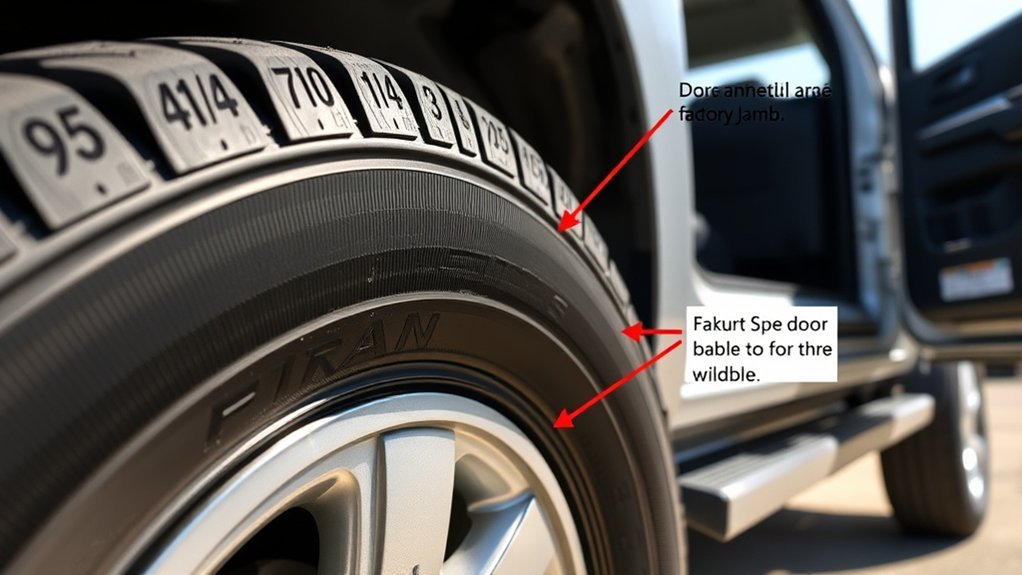
Start at the driver-side door jamb. Your Tundra may have two different labels that serve different purposes. The Tire and Loading Information Label lists the original tire size, recommended cold pressure, seating information, and the combined weight limit for occupants and cargo.
The Certification Label lists the truck’s GVWR and separate front and rear GAWR. These axle ratings matter because passengers, bed cargo, accessories, and trailer tongue weight do not load all four tires equally.
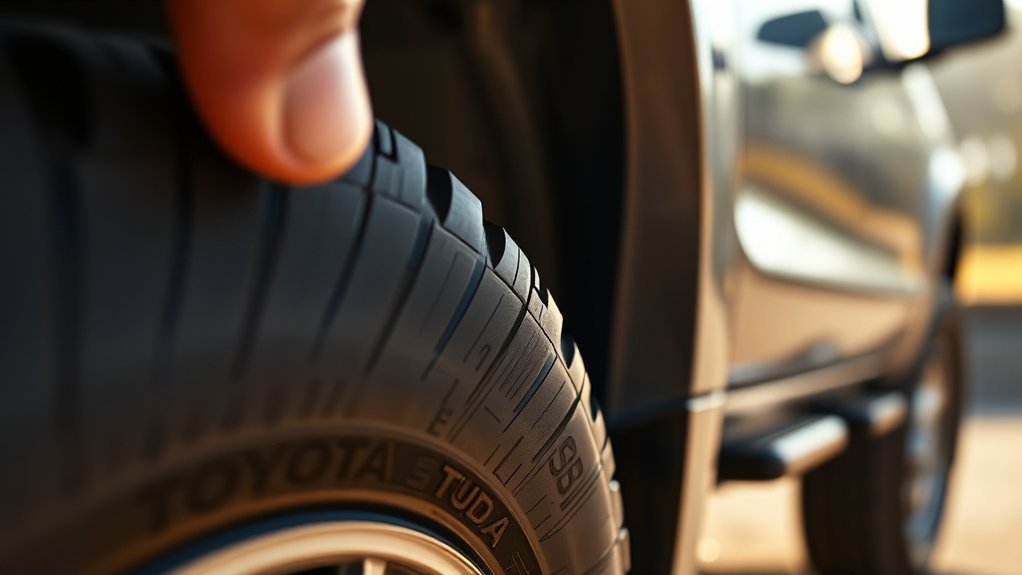
Then inspect the tire sidewall. It identifies the tire actually installed, including its size, service description, load class, maximum load, maximum pressure, and DOT Tire Identification Number. Use the door labels for the vehicle’s requirements and the sidewall for the tire’s actual markings.
If the tire type, size, service description, or required pressure differs from Toyota’s original specification, confirm the replacement with the owner’s manual, a tire manufacturer’s load-inflation table, and a qualified tire professional.
What Tire Size Does Each Tundra Trim Come With?
Third-generation Tundra (2022 and newer) factory tire sizes vary by trim and wheel package. Always confirm your exact size on the driver-door placard — trims are reshuffled between model years. [VERIFY: confirm each size and its exact metric vs. P-metric prefix against Toyota's official specification page or your owner's manual — the sizes below are compiled from third-party fitment listings, not Toyota directly]
| Trim (2022+ / third-gen) | Factory Tire Size |
|---|---|
| SR5 | 275/65R18 [VERIFY] |
| TRD Off-Road / TRD Pro | 285/65R18 [VERIFY] |
| Limited / Platinum / 1794 Edition | 265/60R20 [VERIFY] |
| Capstone | 265/55R22 [VERIFY] |
Note that current factory-fitment listings for these sizes generally show them without a leading “P” (metric designation) rather than as P-metric sizes. That matters for the worked example below: don’t assume your Tundra’s sidewall starts with “P” just because a generic example does — read your own sidewall and placard directly. [VERIFY: confirm P-metric vs. metric prefix per trim/model year]
[Products Worth Considering]
This replacement windshield wiper blade set is designed for Toyota RAV4 models from 2006 to 2012, offering a complete front and rear fit for dependable all-weather visibility. The premium rubber blades help deliver streak-free, quiet wiping while the aerodynamic design reduces wind lift and noise for smoother performance. Built for easy installation and long service life, it is a convenient upgrade for restoring clear driving vision.

These aluminum alloy tire valve stem caps provide durable, corrosion-resistant protection for your vehicle’s valve stems while helping maintain stable tire pressure. The rubber seal design helps block dust, moisture, and debris, reducing the risk of air leakage and valve damage. Easy to install and styled for a clean look, they fit a range of cars, SUVs, trucks, and motorcycles.

This windshield sun shade umbrella is designed for Toyota Tundra models from 2007 to 2026, helping block harsh sunlight and reduce interior heat buildup. Its reflective cooling coating and high-density fabric work together to protect dashboards, seats, and trim while keeping the cabin more comfortable. The umbrella-style design installs quickly, folds down easily, and stores neatly for everyday convenience.
What Does P275/65R18 113T Mean on a Tundra?
A complete marking such as P275/65R18 113T contains both the tire size and its service description (this example uses a P-metric prefix for illustration — your Tundra’s actual sidewall may use a non-prefixed metric size instead, so confirm on your own tire):
- P identifies a P-metric passenger-type tire.
- 275 is the nominal section width in millimeters.
- 65 means the sidewall height is 65% of the section width.
- R means radial construction.
- 18 means the tire fits an 18-inch wheel.
- 113 is the load index.
- T is the speed rating.
A 113 load index maps to 2,535 pounds in a standard load-index chart. Do not use that number alone to approve a Tundra tire. Tire type, inflation pressure, the original-equipment requirement, and the applicable P-metric, metric, or LT load table still matter.
For factory-size tires, use the recommended cold pressure on the door label. The National Highway Traffic Safety Administration defines a cold tire as one that has not been driven for at least three hours. Check before driving when possible.
Warning: The pressure molded into the sidewall is a tire limit associated with its rated load. It is not automatically the correct daily pressure for your Tundra.
How Do You Decode P, 275, 65, R, and 18?
The first character identifies the tire-sizing system. A leading P means P-metric. A leading LT means light-truck metric. Some tires have no P or LT prefix and use another metric standard, so two tires with similar-looking dimensions may follow different load tables.
The 275 is the nominal section width measured at the tire’s widest point. A wider tire can change wheel-well clearance, steering feel, rolling resistance, road noise, and the wheel width needed for safe mounting.
The 65 is the aspect ratio. It means the sidewall height is approximately 65% of the 275 mm section width. Changing the width or aspect ratio changes the tire’s overall diameter and can affect clearance and electronic speed calculations.
The R identifies radial construction. The final 18 is the wheel diameter in inches. An 18-inch tire must be mounted on an approved 18-inch wheel with a compatible width and load rating.
What Does the Speed-Rating Letter Mean?
The letter after the load index is the tire’s speed rating. It identifies a tested operating limit under specified load and pressure conditions. It is not a recommended road speed and does not account for damage, underinflation, overloading, heat, weather, or road conditions.
Replacement tires should meet Toyota’s required service description unless Toyota or the tire manufacturer approves a different application. A higher speed or load rating does not raise the Tundra’s GVWR, GAWR, payload, towing rating, or safe operating speed.
What Is the Difference Between Load Index and Load Range?
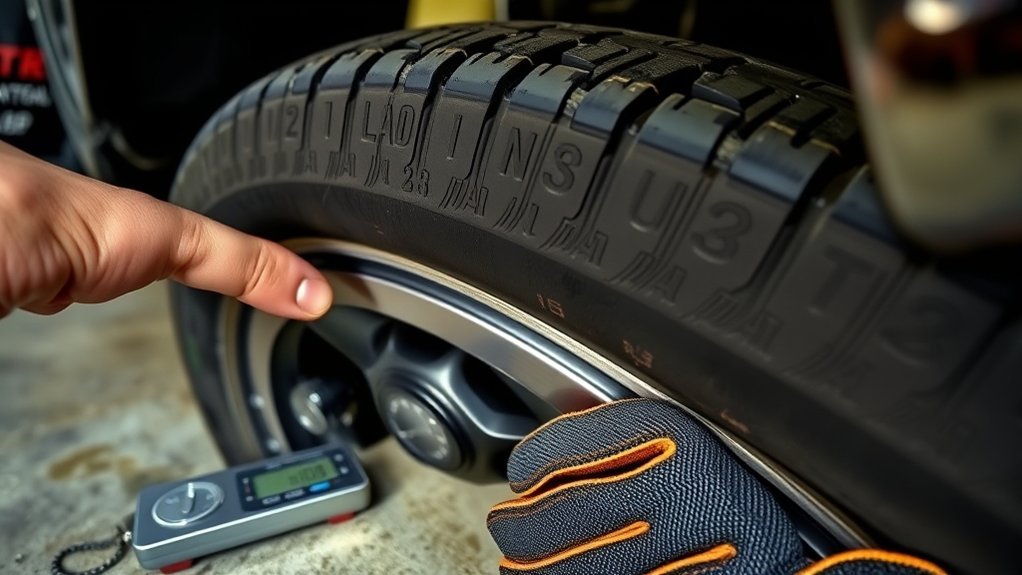
Load index is a numeric code in the service description. It maps to a standardized maximum load under specified operating conditions. You must convert the number with a recognized load-index chart.
Load range identifies a load-and-pressure class. Passenger-type tires commonly use Standard Load or Extra Load markings, often shown as SL or XL. LT tires commonly use letters such as C, D, or E. These letters are modern strength and pressure classes, not a literal count of physical plies.
A higher load-range letter may permit more load at a higher pressure in a given tire size. It does not prove that the tire carries more at your Tundra’s existing placard PSI. Check the exact tire’s sidewall and load-inflation table.
- Confirm the complete tire size and sizing system.
- Convert the load index with an authoritative chart.
- Check the SL, XL, or C/D/E marking and the sidewall maximums.
- Find the tire’s capacity at the pressure required for your application.
- Confirm that the wheel and valve can support the required pressure and load.
Do not choose a tire by load range alone. A Load Range E tire can still have the wrong dimensions, wheel requirements, speed rating, load capacity at your intended PSI, or clearance for your Tundra.
P-Metric vs. LT-Metric Tires: Why Can the Same Size Need Different PSI?
P-metric and LT-metric tires follow different load-inflation standards. An LT version of the same nominal size does not automatically carry the original load at the original P-metric placard pressure. LT tires often need more pressure to support an equivalent load.
Toyo Tires warns that load index cannot be used independently when comparing tire systems. Its light-truck guidance also states that the listed capacity of a P-metric or metric tire is divided by 1.10 when it is applied to a light truck. When the truck retains the exact original tire type and size, Toyota’s placard pressure already reflects the original application.
If you change from P-metric to LT-metric, LT-metric to P-metric, or one metric system to another, use the correct load-and-inflation table. Match or exceed the original tire’s load-carrying capacity at the specified pressure. Do not copy the old PSI onto the new tire without verifying it.
Note: An LT tire’s higher sidewall pressure limit does not mean you should inflate it to that limit. Use the pressure needed to carry the required load without exceeding the tire, wheel, valve, or vehicle limits.
How Do You Match Tire Capacity to Tundra GAWR and Payload?
Do not select replacement tires by dividing GVWR by four. A Tundra does not necessarily place one-quarter of its loaded weight on each tire. Bed cargo and trailer tongue weight can place a larger share on the rear axle.
Use the front and rear GAWR from the Certification Label. On a single-rear-wheel Tundra, dividing each axle’s GAWR by two gives you a preliminary per-tire axle requirement. You must still confirm the original tire’s load capacity at placard pressure and the replacement tire’s capacity at its intended pressure.
| Check | What to Do |
|---|---|
| Original tire requirement | Record the size and cold PSI from the Tire and Loading Information Label |
| Front axle requirement | Record front GAWR and compare it with the combined capacity of the two front tires |
| Rear axle requirement | Record rear GAWR and compare it with the combined capacity of the two rear tires |
| Nonstock tire check | Use the correct load-inflation table to match the original required capacity |
| Loaded-truck check | Weigh the front and rear axles separately with passengers, cargo, accessories, and trailer attached |
| Hardware check | Confirm wheel load rating, wheel pressure rating, valve capability, and clearance |
Toyota’s 2026 Tundra camper guidance illustrates the correct heavy-load check: weigh the front and rear axles separately, keep each axle below its GAWR, and keep the truck below GVWR.
A tire with extra capacity can provide an appropriate match for a demanding application, but it does not increase the truck’s legal or manufacturer-set load limits. GVWR, GAWR, payload, hitch, wheel, suspension, and towing limits still apply.
How Do You Read the DOT Tire Date Code?
The complete DOT Tire Identification Number is molded into a sidewall. The final four digits on tires manufactured since 2000 identify the week and year of manufacture. A code ending in 2324 means the tire was produced during the 23rd week of 2024.
The complete code may appear on only one side of the tire. If you see a shorter partial code without the four-digit date, inspect the opposite sidewall. Also check the spare because it ages even when it is rarely used.
NHTSA says some vehicle and tire manufacturers recommend replacing tires that are six to ten years old, regardless of remaining tread. Follow Toyota’s instructions and the tire manufacturer’s service-life guidance rather than treating one age as universal.
Inspect every tire for cracking, cuts, bulges, exposed material, irregular wear, vibration, repeated air loss, or impact damage. Age is only one part of the decision. Replace a damaged or questionable tire even when its date code is newer.
What Should You Check Before Changing Tundra Tire Size?
A larger tire can change ground clearance and appearance, but it can also affect steering effort, braking feel, acceleration, fuel use, gearing, speedometer and odometer readings, ABS, stability control, traction control, and transmission behavior.
Confirm all of these items before ordering:
- Model year, trim, drivetrain, suspension, and brake package
- Wheel diameter, width, offset, center bore, and load rating
- Tire section width, overall diameter, load system, and service description
- Clearance at full steering lock and through suspension travel
- Upper control arm, fender liner, mud flap, body mount, and brake clearance
- Spare-tire fit and compatibility with the other four tires
- Wheel and valve pressure limits
- Required cold pressure from an approved load-inflation table
A wheel-well check while the truck is parked does not prove the tire will clear under braking, cornering, articulation, or a heavy bed load. Use the Tundra wheel and bolt-pattern guide to verify generation-specific wheel details, then have a qualified shop inspect a major size or offset change.
Keep tire type, construction, and dimensions matched across all four positions unless Toyota specifies otherwise. Meaningful circumference differences can create handling and drivetrain problems, particularly on four-wheel-drive trucks.
For daily-driving pressure once your replacement tires are mounted, see the recommended Tundra tire pressure guide.
[Products Worth Considering]

This mech-style heavy metal key fob cover is designed to protect compatible Toyota E-style smart keys with a precise 1:1 fit. Built with a durable zinc alloy frame and soft silicone buttons, it helps guard against daily wear while keeping full access to key functions. The set includes a metal keychain and screwdriver for easy installation, making it a practical upgrade for select Toyota models.
This set of four pre-programmed TPMS sensors is designed as a direct-fit replacement for compatible Toyota, Lexus, and Scion vehicles. It helps restore accurate tire pressure monitoring without sensor programming, and each unit is factory-tested for dependable performance. Built for long service life, these sensors offer a convenient solution for replacing worn or failed tire pressure monitors.

This set of four pre-programmed TPMS sensors is designed to restore accurate tire pressure monitoring for a wide range of Toyota, Lexus, and Scion vehicles. Built to OE-quality standards with long battery life and broad compatibility, these sensors help maintain proper tire pressure, improve safety, and eliminate TPMS warning lights when installed and activated correctly.
Replacement-Tire Checklist Before You Buy
- Photograph the Tire and Loading Information Label.
- Photograph the Certification Label with front GAWR, rear GAWR, and GVWR.
- Photograph the complete sidewall marking on the current tire.
- Record whether the current tire is P-metric, metric, or LT-metric.
- Record the load index, speed rating, SL/XL or load-range marking, maximum load, and maximum pressure.
- Confirm the replacement wheel’s width, offset, load rating, and pressure rating.
- Use the correct load-inflation table for any size or tire-type change.
- Weigh the truck axle by axle when towing or hauling near a rating.
[Products Worth Considering]

This AUTOBOO windshield wiper blade set is designed to fit Toyota RAV4 models from 2013 to 2018 with an OE-style replacement fit. It includes front and rear blades for clear visibility, quiet operation, and dependable all-weather performance, while the easy J/H arm installation helps make replacement quick and simple.

Designed for Toyota RAV4 models from 2013 through 2018, this three-piece windshield wiper set delivers clear, quiet performance for dependable visibility in changing weather. The precision-fit blades provide streak-free wiping, simple installation, and durable all-season use with reduced wind noise and consistent pressure across the windshield.

This three-piece windshield wiper set is designed for compatible Toyota RAV4 and Highlander models to help deliver clear visibility in everyday driving. The natural rubber blades feature a graphite-treated surface for quiet, smooth wiping performance and reliable weather resistance. Installation is quick and tool-free, making it easy to replace worn blades on the front and rear of your vehicle.
Frequently Asked Questions
How do you read tire and loading information on a Tundra?
Start with the Tire and Loading Information Label for the original tire size and cold pressure. Then check the Certification Label for GVWR and front and rear GAWR. Finally, compare the tire sidewall for the actual size, load index, speed rating, load range or SL/XL marking, maximum load, maximum pressure, and DOT date code.
What does P275/65R18 113T mean?
P identifies a P-metric tire, 275 is the section width in millimeters, 65 is the aspect ratio, R means radial construction, and 18 is the wheel diameter in inches. The 113 is the load index, and T is the speed rating.
What does 235/50R18 97W mean?
235 is the nominal section width in millimeters. The 50 aspect ratio means the sidewall height is 50% of the width. R means radial construction, and 18 is the wheel diameter. A 97 load index maps to 1,609 pounds under its specified conditions, while W is a 168 mph speed rating. The speed rating is an operating limit, not a recommended driving speed.
Should tire capacity match GVWR or GAWR?
Check both vehicle limits, but evaluate tire capacity by axle rather than dividing GVWR by four. The two tires on each axle must support that axle’s required load at the intended pressure. Keep the loaded truck below front GAWR, rear GAWR, and total GVWR.
Can you replace P-metric tires with LT tires on a Tundra?
You may be able to use an approved LT replacement, but the same nominal size may need a different pressure to carry the original load. Use the correct P-metric and LT load-inflation tables, confirm wheel and valve ratings, and have the final application checked by a qualified tire professional.
Will 285/65R20 tires fit a stock Tundra?
There is no universal stock-Tundra answer. Fitment depends on the model year, trim, wheel width and offset, suspension height, brake package, liner position, and loaded suspension travel. Confirm full-lock and suspension clearance before installation.
Is load range E better for a Tundra?
Load Range E is not automatically better. It may suit heavy loads, rough-road use, or an application that requires its pressure and capacity, but it can add weight and ride firmness. Choose it only after confirming the exact load requirement and required inflation pressure.
Should you use door jamb pressure or sidewall pressure?
Use the cold pressure on the door label for the original tire size and type. The sidewall pressure is a tire limit, not the normal daily target. If you change tire size or switch between P-metric and LT tires, use an approved load-inflation table to determine the required pressure.
Sources
- NHTSA TireWise: tire size, cold pressure, maintenance, and tire age
- Toyo Tires: reading tire sidewall markings
- Toyo Tires: load and inflation tables
- Michelin: tire load index and speed rating guidance
- Toyota: 2026 Tundra axle and vehicle weight guidance
Automotive Safety Disclaimer: This article provides general information and does not replace the instructions for your exact model year, tire, wheel, or loading setup. Confirm tire size, pressure, service description, load capacity, wheel limits, and fitment with your Toyota owner’s manual, door labels, tire manufacturer, or a qualified tire professional before driving, towing, or hauling.
Conclusion
Your safest replacement-tire check starts with five records: the original tire size, original cold PSI, front GAWR, rear GAWR, and the replacement tire’s complete service description. Do not rely on load range alone, the tire’s maximum pressure, or GVWR divided by four.
Keep the original tire type and size when possible. For any P-to-LT conversion, plus-size fitment, or major load change, use the correct load-inflation table and verify the loaded axle weights. That process protects tire capacity, handling, braking, clearance, and the Tundra’s manufacturer-set limits.