A new Toyota Tundra does not need to be babied forever, but Toyota does recommend a short break-in period. The safest way to handle it is simple: drive smoothly, avoid towing at first, avoid sudden stops unless safety requires them, and do not hold one speed or one load for a long time during the first 1,000 miles.
Quick Answer
For a Toyota Tundra break-in, avoid sudden stops for the first 200 miles, do not tow a trailer for the first 500 miles, and for the first 1,000 miles avoid extremely high speeds, sudden acceleration, continuous low-gear driving, and constant speed for long periods.
Key Takeaways
- Use Toyota’s first 200, 500, and 1,000-mile break-in limits as your baseline.
- Toyota’s Tundra guidance focuses on smooth driving and varied speed, not a published 4,000-RPM cap.
- Do not tow during the first 500 miles; after that, build load gradually and stay within your truck’s ratings.
- The first scheduled maintenance visit is not the same thing as a required 1,000-mile oil change.
- Warning lights, knocking, rough running, or loss of power are dealer issues, not normal break-in behavior.
At a Glance
| Time Required | First 1,000 miles of driving |
| Difficulty | Easy |
| Tools Needed | Owner’s manual, maintenance guide, tire-pressure gauge, service log |
| Cost | $0 unless maintenance or inspection is needed |
Why the Toyota Tundra Break-In Period Matters

The break-in period helps the engine, driveline, brakes, and tires settle into normal use without unnecessary early stress. It is not a magic guarantee of engine life, and it will not prevent every future problem, but it is one of the easiest ways to start ownership correctly.
Recent Toyota Tundra owner materials describe the break-in period in practical driving terms: avoid sudden stops early, do not tow right away, avoid sudden acceleration, avoid extremely high speeds, avoid continuous low-gear driving, and avoid holding one constant speed for a long time. You can verify your exact model year in the Toyota Tundra Owner’s Manual or, for hybrid models, the Toyota Tundra Hybrid Owner’s Manual.
Note: Always follow the owner’s manual for your exact year, engine, drivetrain, and market. Toyota can revise owner materials, and towing or maintenance guidance can vary by model year.
Toyota Tundra Break-In Schedule by Mileage
| Mileage | What to Avoid | Why It Helps |
|---|---|---|
| 0–200 miles | Avoid sudden stops unless needed for safety. | Gives the braking system and tires a gentle start without unnecessary heat or shock. |
| 0–500 miles | Do not tow a trailer. | Keeps heavy load, extra heat, and high driveline stress off new components. |
| 0–1,000 miles | Avoid extremely high speeds, sudden acceleration, continuous low-gear driving, and constant speed for extended periods. | Lets the truck see varied, moderate conditions instead of one repeated load pattern. |
Warning: Safety comes first. If you need to brake hard or accelerate quickly to avoid a crash, do it. Break-in guidance should never override safe driving.
Tundra Break-In Rules: Immediate Dos and Don’ts
[Products Worth Considering]

This upgraded engine oil funnel kit makes oil changes cleaner and easier with a spill-proof design, flow control valve, and transparent body for precise filling. Built from durable polycarbonate and equipped with 12 adapters, two 45-degree elbows, and a debris filter, it fits a wide range of vehicles and works well in tight engine spaces. The secure, hands-free setup helps reduce mess while improving control during oil filling and fluid transfers.

This NewYall pack of two oil filters is designed for a wide range of Toyota, Lexus, and Scion vehicles from the 2005 to 2014 model years. Each filter includes a gasket seal O-ring element for a proper fit and reliable oil filtration, helping support clean engine oil flow and routine maintenance. It is a practical replacement choice for many popular sedans, SUVs, and hybrids.

This A-Premium cartridge engine oil filter is designed for a wide range of Toyota and Lexus vehicles, helping support cleaner oil flow and dependable engine protection. With high filtration efficiency and included O-rings, it offers a practical replacement solution for routine maintenance. Built for extended service intervals, it is suitable for conventional or synthetic oil applications.
Do Drive Smoothly
Use gentle throttle, easy braking, and normal traffic speeds. You do not need to crawl around town, but you should avoid flooring the accelerator, racing from stoplights, or loading the truck hard while it is new.
Do Vary Your Speed
For the first 1,000 miles, do not hold one speed for a long time. On a highway trip, skip cruise control and vary your speed gently when traffic allows. On local roads, mix light acceleration, steady cruising, and gradual deceleration.
Do Not Tow During the First 500 Miles
Trailer towing adds load to the engine, transmission, brakes, tires, suspension, cooling system, and driveline. Wait until after 500 miles before towing, then start with lighter loads before using the truck near its maximum rating.
Do Not Chase an Unofficial RPM Number
You may see advice online about staying under a specific RPM, but Toyota’s recent Tundra break-in wording does not publish a simple 4,000-RPM rule. A better target is to follow Toyota’s actual guidance: avoid sudden acceleration, extremely high speeds, continuous low gears, and long periods at one constant speed.
How to Vary Speed, RPM, and Load Safely
Varying speed does not mean driving unpredictably. It means avoiding hours of identical speed, throttle, and load. If you are on a long highway drive, keep both hands on the wheel, stay with the flow of traffic, and make small speed changes only when they are legal and safe.
The goal is smooth variety: normal city driving, light highway driving, gentle acceleration, and no extended one-speed cruising during the first 1,000 miles.
- Use mixed routes: combine city streets, suburban roads, and short highway stretches when possible.
- Skip cruise control early: cruise control can hold one speed and one load for too long during the break-in period.
- Avoid full-throttle starts: accelerate smoothly and leave extra space so you are not forced into hard stops.
- Avoid long low-gear pulls: do not force the truck to climb, haul, or engine-brake hard in low gears for long periods.
Pro Tip: If you must drive home from the dealer on the highway, do not panic. Keep it smooth, avoid cruise control, vary speed when safe, and take a short break if the trip is long.
Brake, Towing, and Cruise-Control Limits

[Products Worth Considering]

This 6-pack engine oil filter set is designed for Toyota applications and compatible cross-reference part numbers, helping support clean oil flow and dependable engine protection. Built from quality materials and featuring 99% multi-pass efficiency, it is made to help extend engine life and maintain performance between service intervals. The included six filters make it a practical choice for routine maintenance and multiple oil changes.
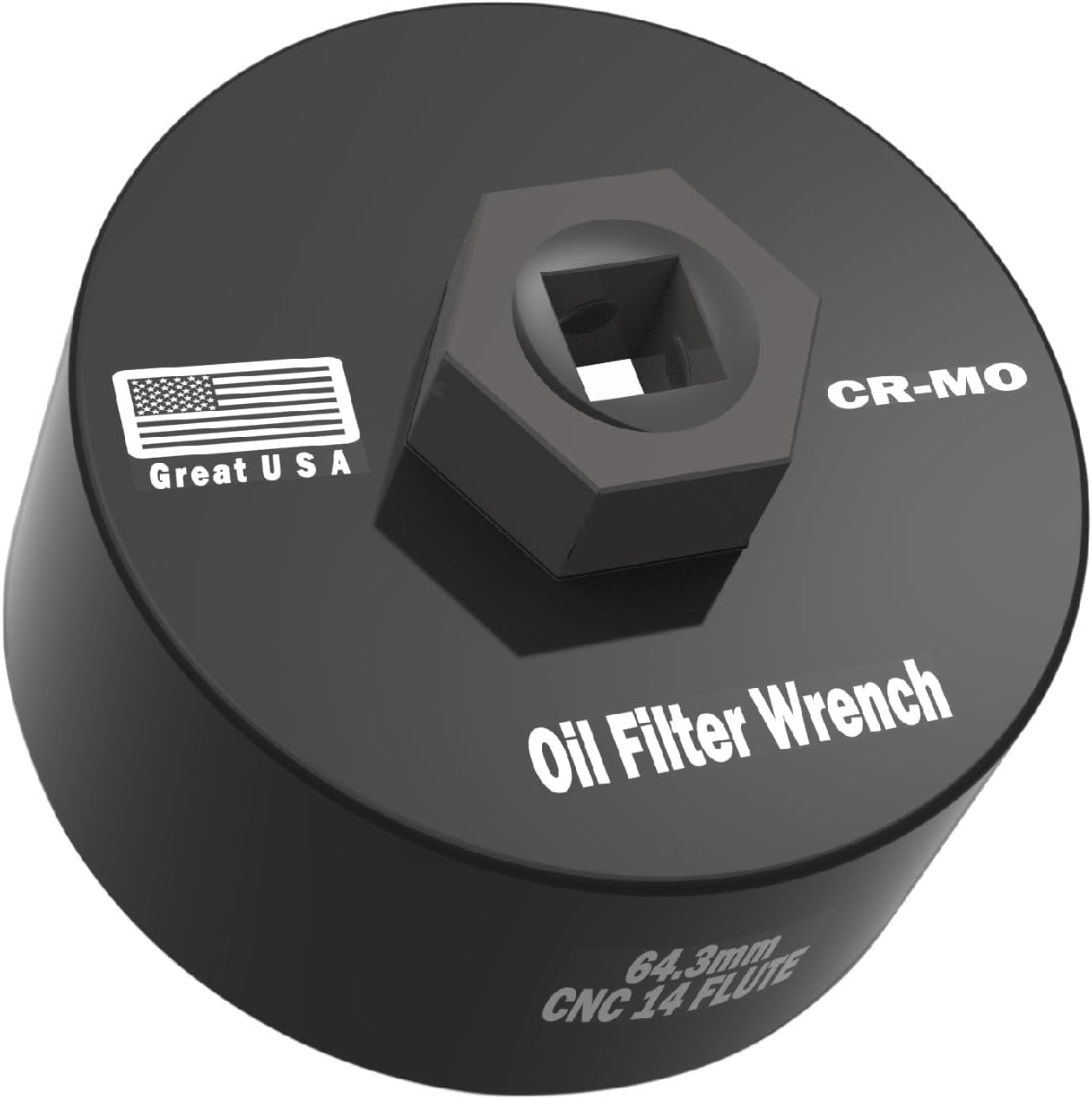
This precision oil filter wrench is designed for Toyota and Lexus cartridge-style filters, delivering a secure 14-flute fit for smooth removal and installation without slipping. Made from hardened chrome-molybdenum steel with a low-profile design, it works well in tight engine spaces and pairs with common drive tools for easier oil changes.

This flexible oil funnel is designed to make fluid changes cleaner and easier by guiding oil around obstacles like skid plates and crossmembers. Its shape-retaining core and silicone body can be molded for custom positioning, while the heat-resistant, leak-proof design helps prevent spills during draining and filter removal. Reusable and easy to clean, it works well for cars, trucks, motorcycles, and other hard-to-reach fluid fill or drain applications.
Brake Guidance for the First 200 Miles
During the first 200 miles, avoid sudden stops when you can. Look farther ahead, leave extra following distance, and slow down early. Normal braking is fine; the point is to avoid unnecessary panic stops and repeated heavy braking.
Towing Guidance for the First 500 Miles
Do not tow a trailer during the first 500 miles. After that point, check the towing section of your owner’s manual, confirm your truck’s payload and tow rating, set tire pressures correctly, and make sure the trailer is loaded and braked properly.
Cruise-Control Guidance for the First 1,000 Miles
Toyota’s wording warns against driving at a constant speed for extended periods. The easiest way to follow that advice is to avoid cruise control during the first 1,000 miles, especially on long highway drives.
Oil, Transmission, and Early Service: What to Do and When
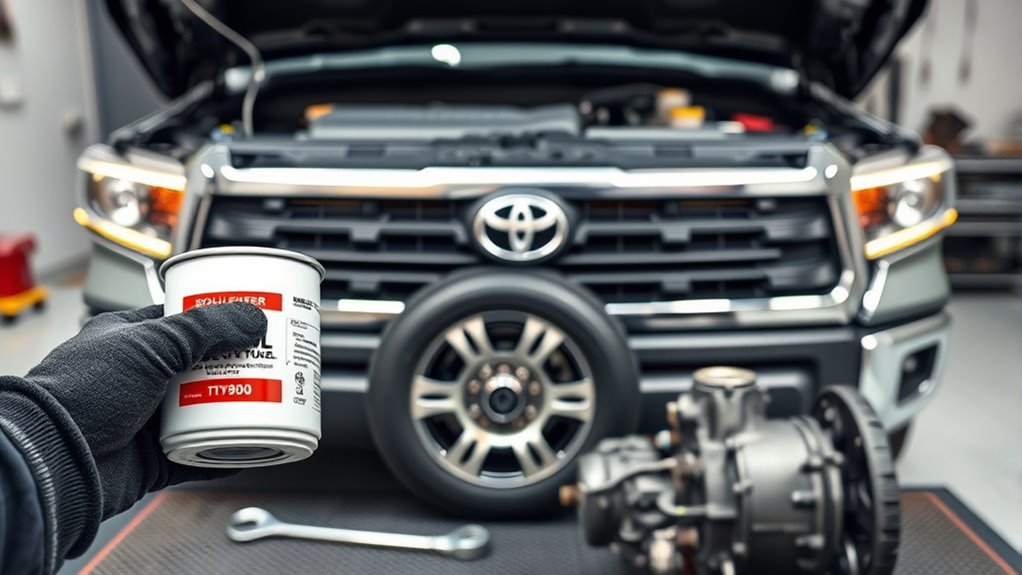
Break-in driving and scheduled maintenance are related, but they are not the same thing. Toyota’s maintenance guide recommends scheduled maintenance every 5,000 miles or six months, whichever comes first, and it explains that engine oil level should be checked routinely. Use the Toyota Tundra Warranty & Maintenance Guide for the official chart.
| Item | Practical Guidance |
|---|---|
| Oil level | Check regularly, especially during early ownership and before long trips. |
| Oil and filter | Follow Toyota’s maintenance chart. Many normal-use schedules call for oil/filter replacement at 10,000 miles or 12 months, while dusty-road use can require 5,000-mile or 6-month intervals. |
| Tire rotation and inspection | Expect routine service items at 5,000-mile or six-month intervals. |
| Transmission and driveline fluids | Follow the maintenance guide and ask a Toyota dealer for guidance if you tow, haul heavy loads, drive off-road, or operate in dusty conditions. |
Note: Some owners choose an early oil change for peace of mind. That is a personal maintenance choice, not the same as a Toyota-required 1,000-mile break-in oil change. Keep receipts for any service you do.
[Products Worth Considering]

FOCUSFILTER 04152-YZZA1 OEM grade oil filter is designed to help protect your engine with reliable filtration and 10K mile protection. It cross references multiple OE part numbers and fits a wide range of Toyota and Lexus applications, making it a practical replacement for routine maintenance. Built for compatible vehicles including Camry, Avalon, Highlander, Tacoma, RAV4, Sienna, ES 350, and RX 350.

This proportional trailer brake controller provides smooth, responsive braking by automatically matching your tow vehicle’s stopping force for safer trailer control. The bright LED digital display makes it easy to monitor voltage output in real time, while adjustable braking and sync settings help tailor performance to different trailers and road conditions. Designed for quick installation and broad compatibility, it supports 1 to 4 axle trailers for dependable towing confidence.
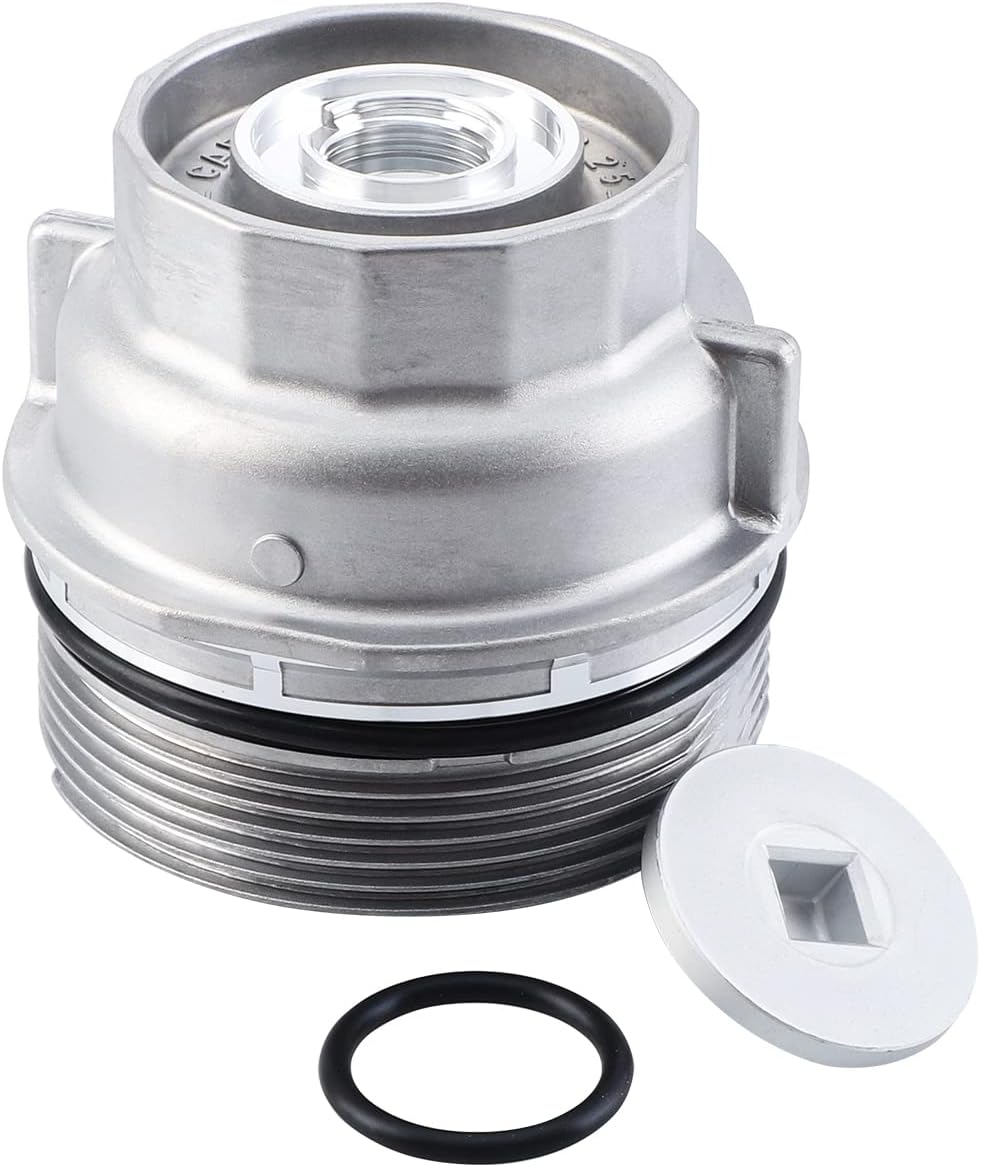
This oil filter housing cap assembly is designed as a replacement for select Toyota and Lexus vehicles, helping restore proper sealing and reliable oil filter function during routine maintenance. Built to meet OEM standards, it supports leak-free performance and long-lasting durability while fitting a wide range of popular models across multiple years.
Common Owner Mistakes, Troubleshooting, and When to Contact Your Dealer
Most break-in mistakes are easy to avoid. The bigger risk is treating a brand-new truck like it is ready for full towing, full throttle, and long high-speed cruising from the first day.
| Mistake | Better Choice |
|---|---|
| Towing before 500 miles | Wait until after 500 miles, then start with lighter loads. |
| Using cruise control on a long first trip | Vary speed gently when traffic and road conditions allow. |
| Hard launches or full-throttle passes | Use smooth acceleration until the first 1,000 miles are complete. |
| Ignoring warning lights or rough running | Contact a Toyota dealer and check for open recalls by VIN. |
| Assuming all model years are identical | Use the owner’s manual and maintenance guide for your exact truck. |
What If You Already Accelerated Hard or Used Cruise Control?
Do not panic over one brief mistake. A short burst of acceleration, a few minutes of cruise control, or one unavoidable hard stop is unlikely to ruin the truck. Get back to smooth, varied driving and follow the rest of the break-in period as closely as you can.
When to Call the Dealer
Contact your dealer if the truck develops engine knocking, rough running, a no-start condition, warning lights, fluid leaks, abnormal brake vibration, or loss of power. These are not normal break-in symptoms. You can also check open safety campaigns through the Toyota recall lookup or the NHTSA recall tool.
Frequently Asked Questions
How do you break in a new Toyota Tundra?
Drive smoothly, avoid sudden stops for the first 200 miles, do not tow for the first 500 miles, and avoid extremely high speeds, sudden acceleration, continuous low-gear driving, and long periods at one constant speed for the first 1,000 miles.
Do new Toyota Tundras need a break-in period?
Yes. Toyota owner materials recommend break-in precautions to help extend vehicle life. The guidance is simple: brake gently early, avoid towing at first, and keep driving smooth and varied during the first 1,000 miles.
What mileage is the Toyota Tundra break-in period?
Use three milestones: 200 miles for avoiding sudden stops, 500 miles for avoiding trailer towing, and 1,000 miles for avoiding extremely high speeds, sudden acceleration, continuous low gears, and long constant-speed driving.
Can I take a highway trip during the Tundra break-in period?
Yes, but avoid setting cruise control and sitting at one speed for hours. Vary speed gently when safe, avoid hard acceleration, and take breaks on long trips.
Does the Tundra need an oil change at 1,000 miles?
Toyota’s maintenance guide does not require a 1,000-mile break-in oil change for every Tundra. Follow the maintenance chart for your model year and driving conditions. An early oil change is optional if you want extra peace of mind.
Conclusion
The Toyota Tundra break-in period is easy to follow once you use the right mileage points. For the first 200 miles, avoid sudden stops unless safety requires them. For the first 500 miles, do not tow. For the first 1,000 miles, drive smoothly, vary speed, avoid sudden acceleration, avoid extremely high speeds, and do not hold one constant speed for long periods. After that, keep following Toyota’s maintenance guide and check your VIN for any open recalls or service campaigns.
Sources
- Toyota Tundra Owner’s Manual — Driving the vehicle — break-in precautions for recent Tundra guidance.
- Toyota Tundra Hybrid Owner’s Manual — Driving the vehicle — break-in precautions for hybrid models.
- 2025 Toyota Tundra Warranty & Maintenance Guide — service intervals, oil/filter notes, and special operating conditions.
- Toyota Recall Lookup — VIN-specific Toyota safety recall and service campaign checks.
- NHTSA Recalls — official U.S. safety recall lookup by VIN, vehicle, equipment, tire, or car seat.