Last updated: July 14, 2026
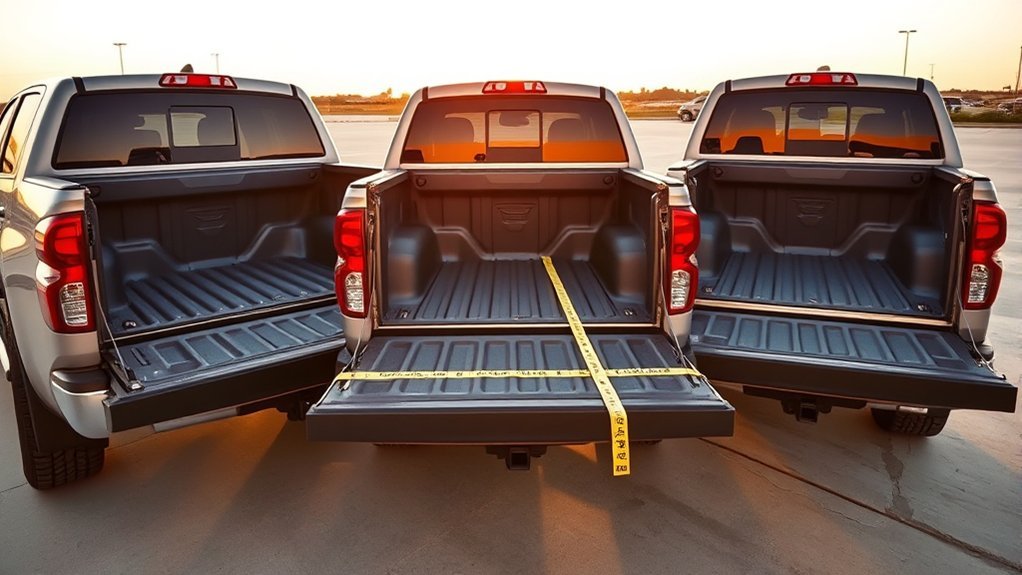
The 2026 Toyota Tundra has 5.5-foot, 6.5-foot, and 8.1-foot beds. Choose the 5.5-foot bed for CrewMax passenger space and the shortest family-friendly configuration. Pick the 6.5-foot bed for the best balance of cargo length, cab choice, and daily use. Choose the 8.1-foot bed if you regularly carry long lumber, ladders, pipe, or jobsite equipment.
Toyota lists inside bed lengths of 65.6, 77.6, and 96.5 inches. Every bed measures 58.7 inches wide, 48.7 inches between the wheel wells, and 20.9 inches deep. Your final choice should also account for rear-seat room, total truck length, turning circle, garage clearance, and the payload rating on the driver-door label.
How this guide was checked: The recommendations below compare Toyota’s published 2026 bed dimensions, cab pairings, rear legroom, overall lengths, turning circles, and load-label guidance. Cargo examples are measurement-based and do not claim physical fit testing of every pallet, ATV, motorcycle, or accessory.
What’s in This Article
- Quick Answer: Which Tundra Bed Should You Choose?
- Tundra Bed Dimensions (5.5 Ft, 6.5 Ft, 8.1 Ft)
- Bed Width, Wheel-Well Clearance & Usable Length
- CrewMax vs Double Cab: Bed Length and Passenger Space
- What Fits in Each Bed: Lumber, Pallets, ATVs, Gear
- How Bed Size Affects Payload, Towing, and Maneuverability
- Bed Features That Matter: Composite Bed, Tie-Downs, Lighting, Tailgate
- Best Tundra Bed by Use Case: Daily Driver, Contractor, Recreation
- Trim & Configuration Availability: Which Trims Offer Which Beds
- Frequently Asked Questions
Quick Answer: Which Tundra Bed Should You Choose?
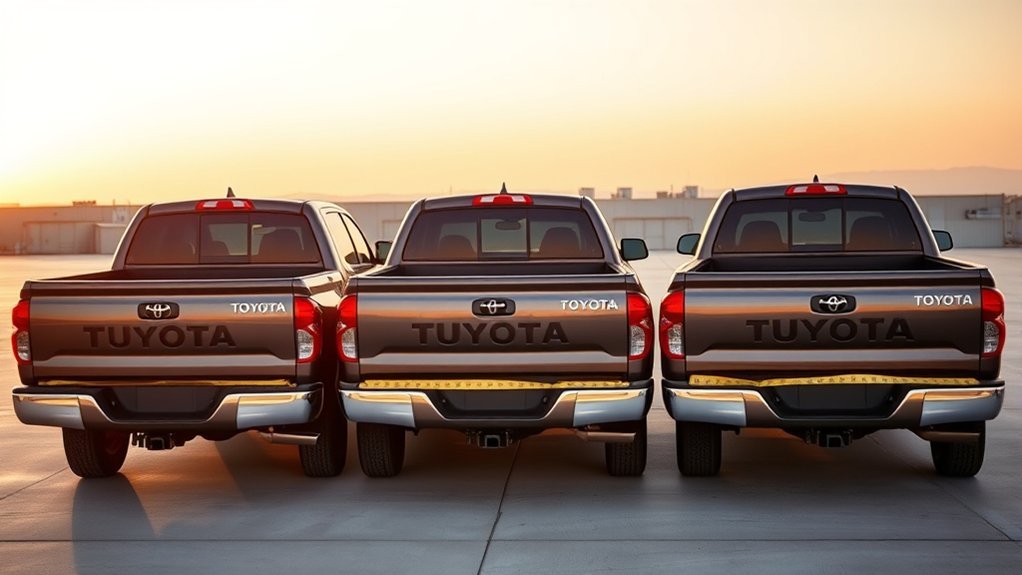
Choose the 5.5-foot bed if you want CrewMax rear-seat room, easier daily parking, and enough space for routine household or recreational cargo. Choose the 6.5-foot bed if you want the most flexible option. It adds exactly 12 inches of inside length over the 5.5-foot bed and works with either Double Cab or CrewMax configurations. Choose the 8.1-foot bed if long cargo matters more than second-row space or compact parking.
Key Takeaways
- The 2026 Tundra beds measure 65.6, 77.6, and 96.5 inches long inside.
- The 6.5-foot bed adds 12 inches over the short bed; the 8.1-foot bed adds another 18.9 inches.
- CrewMax offers 41.6 inches of rear legroom, compared with 33.3 inches in Double Cab.
- A CrewMax 5.5-foot truck and a Double Cab 6.5-foot truck are both about 233.6 inches long.
- Payload includes passengers, cargo, accessories, and trailer tongue weight.
- Use the exact truck’s driver-door label and build sheet before loading or towing.
[Products Worth Considering]

This custom-fit truck bed mat is designed for the 2022-2026 Toyota Tundra 6.5-foot short bed, providing full coverage without any cutting or drilling. Its anti-slip surface helps keep cargo stable on rough roads, while the durable TPE construction resists wear, cracks, and damage to help protect your truck bed for the long haul.

This compact adapter upgrades compatible factory wired CarPlay or Android Auto systems to wireless convenience for both iPhone and Android users. It uses WiFi 6 and Bluetooth 5.4 for fast, stable connections with quick auto-connect startup and reliable voice, navigation, and music performance. Its mini plug-in design helps keep the dashboard tidy while supporting easy setup and broad vehicle compatibility.

This custom-fit truck bed mat is designed for Toyota Tacoma models from 2005 to 2023 with a 5FT bed, helping protect your truck bed from scratches, dirt, mud, rain, and snow. Made from durable TPE material, it offers all-weather performance, a non-slip surface, and easy cleaning without special tools or vehicle modifications.
Tundra Bed Dimensions (5.5 Ft, 6.5 Ft, 8.1 Ft)
Toyota uses rounded bed names for shopping, but the inside measurements determine what fits. The 2026 beds measure 65.6, 77.6, and 96.5 inches long. Width and depth remain the same across all three sizes.
| Bed Name | Inside Length | Inside Width | Between Wheel Wells | Depth | Compatible Cab | Best For |
|---|---|---|---|---|---|---|
| 5.5-foot bed | 65.6 in | 58.7 in | 48.7 in | 20.9 in | CrewMax | Daily driving and passenger comfort |
| 6.5-foot bed | 77.6 in | 58.7 in | 48.7 in | 20.9 in | Double Cab or CrewMax | Mixed work, home, and recreation use |
| 8.1-foot bed | 96.5 in | 58.7 in | 48.7 in | 20.9 in | Double Cab | Long materials and jobsite cargo |
The 6.5-foot bed gives you exactly one additional foot of cargo floor over the 5.5-foot bed. The 8.1-foot bed adds 18.9 inches over the 6.5-foot bed and 30.9 inches over the short bed. Measure your longest regular cargo before choosing, then check the total truck length and garage space.
Bed Width, Wheel-Well Clearance & Usable Length
All three 2026 Tundra beds provide 58.7 inches of total inside width, 48.7 inches between the wheel wells, and 20.9 inches of depth. The 48.7-inch wheel-well measurement matters most for plywood, drywall, pallets, toolboxes, and other flat cargo.
A nominal 48-inch-wide sheet has only 0.7 inch of total clearance between the wheel wells. An 8.1-foot bed measures 96.5 inches inside, leaving only 0.5 inch beyond the nominal 96-inch length of a 4-by-8 sheet. Bed mats, liners, warped sheets, damaged edges, and measurement tolerances can reduce that margin.
The shorter beds need the tailgate down, a bed extender, a rack, or another suitable support method for full 8-foot materials. Never rely on length alone. Secure the load so it cannot shift, slide, lift, or leave the truck.
Pro tip: Measure the cargo, bed accessories, garage, and closed-tailgate clearance with the same tape measure before ordering the truck or accessories.
CrewMax vs Double Cab: Bed Length and Passenger Space
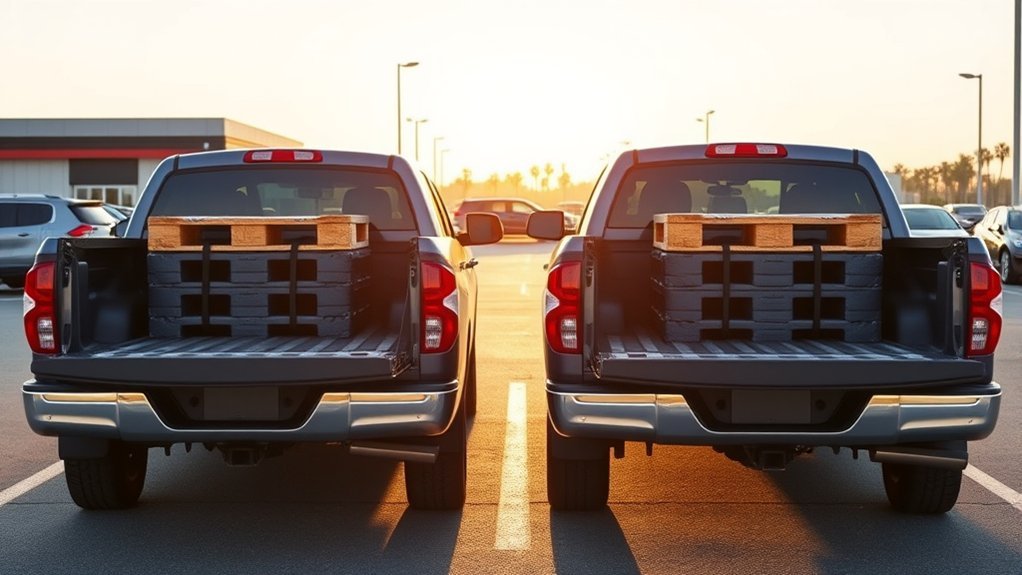
Choose CrewMax if adults, children, or clients use the rear seat often. Toyota’s 2026 product information lists 41.6 inches of rear legroom in CrewMax and 33.3 inches in Double Cab. CrewMax pairs with the 5.5-foot or 6.5-foot bed, while Double Cab pairs with the 6.5-foot or 8.1-foot bed.
| Configuration | Inside Bed Length | Approx. Overall Length | Approx. Turning Circle | Rear Legroom | Main Trade-Off |
|---|---|---|---|---|---|
| CrewMax, 5.5-ft bed | 65.6 in | 233.6 in | 48.6 ft | 41.6 in | Most passenger room in a shorter truck |
| Double Cab, 6.5-ft bed | 77.6 in | 233.6 in | 48.6 ft | 33.3 in | One more foot of bed, less rear-seat space |
| CrewMax, 6.5-ft bed | 77.6 in | 245.6 in | 50.0 ft | 41.6 in | Full rear room and more bed length |
| Double Cab, 8.1-ft bed | 96.5 in | 252.5 in | 52.0 ft | 33.3 in | Maximum cargo length and largest parking footprint |
The CrewMax 5.5-foot and Double Cab 6.5-foot configurations are approximately the same overall length. Your choice between them is mainly a trade between 8.3 inches of rear legroom and 12 inches of bed length. The CrewMax 6.5-foot truck keeps the larger rear seat but adds about 12 inches to the vehicle.
Warning: Published specifications are comparison figures. Use the load-carrying label on the exact truck because passengers, factory options, dealer accessories, and aftermarket equipment reduce the remaining payload.
[Products Worth Considering]

These tie down anchors add secure cargo attachment points to compatible Toyota Tacoma and Tundra truck beds, helping keep motorcycles, tools, and other loads stable during transport. Built with a corrosion-resistant finish and precise fitment, they are designed for reliable performance and long service life. Installation is straightforward, making them a practical upgrade for everyday hauling and secure bed organization.

Expand your vehicle's storage with this universal roof rack cargo basket, designed to carry gear securely on road trips, camping adventures, and everyday hauling. Built from powder-coated steel with rust-resistant treatment, it offers dependable durability in harsh weather while the wind deflector, side rails, and reflective accents help protect cargo and improve travel safety. Installation is simple with universal U-bolts, making it a practical fit for many vehicles with crossbars.

FITMENT - {{ Enter the LICENSE PLATE in the Amazon Confirmed Fit tool at the top of this page to confirm your vehicle fitment with this product. }} Compatible with 2007-2021 Toyota Tundra | CrewMax [Cab Size Note: Only fit CrewMax Cab with 4 full-size doors. NOT for Double Cab with 2 full-size front doors & 2 narrower rear doors. (See Image for more info)]
What Fits in Each Bed: Lumber, Pallets, ATVs, Gear
The bed name alone cannot confirm whether a large item fits. Measure the item’s full length, widest point, wheelbase, height, loaded weight, ramp angle, and tie-down locations. Include any bed mat, toolbox, divider, rack, or tonneau hardware that reduces usable space.
| Cargo | Dimension Check | Practical Guidance |
|---|---|---|
| 4-by-8 plywood or drywall | 48 in wide by 96 in long | Nominally fits between the 48.7-in wheel wells. The 8.1-ft bed offers 96.5 in of inside length; shorter beds need tailgate-down support or overhang. |
| Common North American pallet | 40 in by 48 in | The 48-in side is nominally narrow enough for the wheel-well gap, but only 0.7 in of total clearance remains. Measure the actual pallet and bed accessories. |
| 8-ft lumber, pipe, or trim | Nominally 96 in long | The 8.1-ft bed provides the closest tailgate-closed fit. Shorter beds need approved support and securement. |
| Motorcycle or mower | Check wheelbase, full length, handlebar width, weight, and ramp angle | Do not assume fit from the bed name. Confirm tailgate support, ramp rating, tie-down geometry, and payload. |
| ATV or powersports equipment | Check tire-to-tire width, overall length, height, and loaded weight | Wheel-well clearance, rear-window clearance, ramps, and secure anchor points can matter more than bed length. |
Use properly rated straps and suitable anchor points. The National Highway Traffic Safety Administration advises securing cargo so it cannot drop, shift, leak, or escape from the vehicle.
Note: A nominal fit does not guarantee easy loading. Leave space for your hands, straps, edge protection, and any movement caused by road vibration.
[Products Worth Considering]

Bed cleat tie down anchor compatible with 2005-2024 Tacoma 2007-2024 Tundra,only applicable to trucks equipped with deck track systems,please carefully check if the vehicle model matches the OE number before purchasing

Quick & Easy Rail Installation: Compatible with Toyota Tacoma 2005–2026 & Toyota Tundra 2008–2026 equipped with factory bed rail systems. The dual-knob locking design mounts directly onto the rail for a clean and convenient cargo tie-down setup without permanent modification
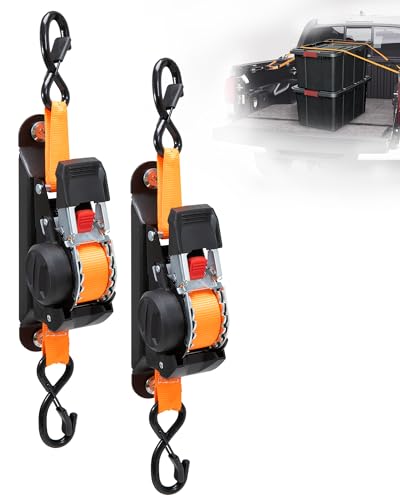
Perfect fit : Retractable ratchet straps are compatible with Toyota Tacoma & Tundra Bed Rails System, no drilling required, just use screws to install on the lathe and it's ready to use, Ultimate ratchet straps become a part of the truck bed, Perfect fit for Toyota Tacoma Bed
How Bed Size Affects Payload, Towing Trade-Offs, and Maneuverability
Bed length affects cargo room and total truck size, but it does not determine payload or towing by itself. Toyota advertises up to 1,850 pounds of payload and up to 12,000 pounds of towing for the 2026 U.S. Tundra when properly configured. Review the configuration-specific Tundra towing capacity instead of applying the maximum to every truck.
Payload includes the driver, passengers, cargo, tools, installed accessories, and trailer tongue weight. A heavier cab, hybrid system, four-wheel-drive equipment, premium trim, toolbox, running boards, or other accessories can reduce the load you can add.
The shortest Tundra configurations are about 233.6 inches long. A CrewMax with the 6.5-foot bed is about 245.6 inches long, while a Double Cab with the 8.1-foot bed reaches about 252.5 inches. The turning circle also grows from about 48.6 feet to as much as 52 feet.
- Payload: use the driver-door load-carrying label on the exact truck.
- Towing: count trailer tongue weight against payload.
- Parking: measure the garage, driveway, door opening, and turning space.
- Loading: keep heavy cargo low and secure it against movement.
Bed Features That Matter: Composite Bed, Tie-Downs, Lighting, Tailgate
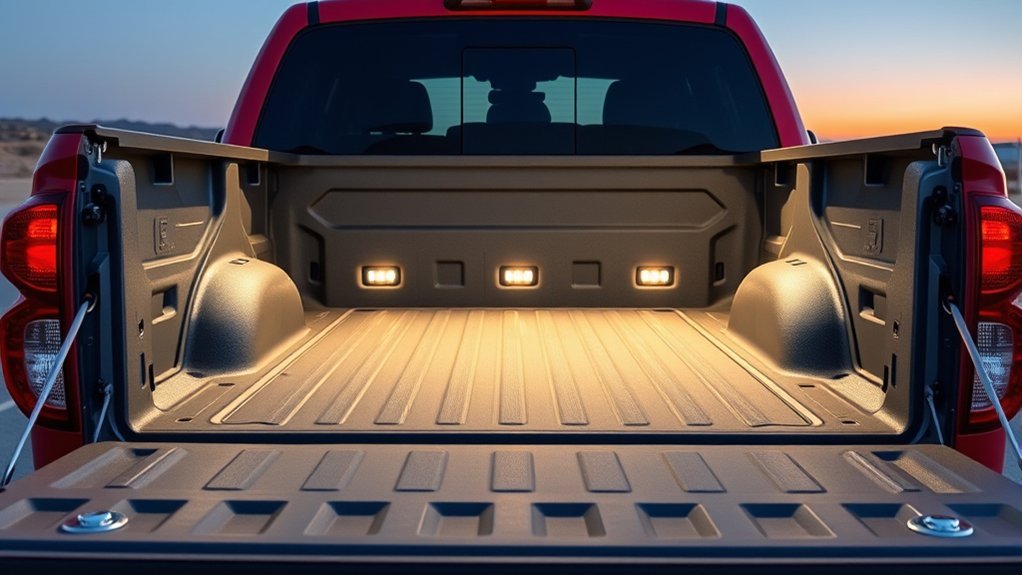
The 2026 Tundra includes a standard aluminum-reinforced sheet-molded composite bed. Toyota describes it as resistant to impacts, dings, normal wear, and rust. The deck rail system, bed lighting, bed camera, power tailgate, and 120V/400W AC outlet depend on the trim or package.
Durable Composite Bed
The composite surface avoids the exposed-metal floor found in some conventional beds. It still needs proper load securement and protection from sharp edges, concentrated impacts, chemicals, and sliding equipment.
Adjustable Tie-Downs
The available deck rail system lets you reposition compatible cleats along the sides of the bed. This can improve strap angles for boxes, bikes, coolers, tools, and other irregular cargo. Use straps with adequate working-load ratings and inspect them before each trip.
Integrated Bed Lighting
Available integrated lighting helps you inspect cargo, tie-down points, and the tailgate area after dark. The available bed camera can also help you monitor a load from the cabin, but it does not replace a physical securement check.
Best Tundra Bed by Use Case: Daily Driver, Contractor, Recreation
Your best Tundra bed depends on the task you perform most often. Use the largest recurring cargo item, rear-seat needs, parking space, and payload label as the deciding factors.
Daily Driving Practicality
Choose the CrewMax with the 5.5-foot bed if rear-seat comfort and daily parking matter most. It is about 233.6 inches long and provides 41.6 inches of rear legroom. The bed still handles routine luggage, sports equipment, shopping, camping containers, and small project supplies when they are properly secured.
Measure your garage before buying. A nominal 20-foot garage measures 240 inches, which leaves only about 6.4 inches of total length around a 233.6-inch truck. Shelving, door hardware, wall trim, trailer hitches, and the need to walk around the truck can make that margin unusable.
Contractor Hauling Capacity
Choose the Double Cab with the 8.1-foot bed when long boards, ladders, pipe, fencing, or jobsite equipment drive the purchase. The 96.5-inch inside length is the best match for nominal 8-foot materials, but the truck is about 252.5 inches long and has a larger turning circle.
Before loading concrete, tile, generators, tools, or material pallets, check the Tundra door-jamb payload and GVWR labels. Count passengers, installed equipment, and trailer tongue weight as part of the load.
Recreational Gear Fit
The 6.5-foot bed is the most flexible choice for mixed recreation and daily use. It adds one foot over the short bed and works with either cab. Choose CrewMax when passengers need the larger rear seat. Choose Double Cab when you want the same bed length in a truck that is approximately 12 inches shorter.
For bikes, motorcycles, ATVs, coolers, boards, and camping systems, measure the largest item with all racks, tires, handlebars, lids, and accessories installed. Confirm ramp ratings, tie-down locations, payload, tailgate use, and tonneau or topper clearance.
Trim & Configuration Availability: Which Trims Offer Which Beds
Cab choice controls the basic bed pairings. The 2026 Double Cab offers the 6.5-foot or 8.1-foot bed. CrewMax offers the 5.5-foot or 6.5-foot bed.
For the 2026 U.S. lineup, the 8.1-foot bed is listed with SR and SR5 Double Cab configurations. Premium trims generally focus on CrewMax and the shorter bed choices. Confirm the exact drivetrain, powertrain, package, and regional availability in Toyota’s build tool before ordering.
| Cab | Bed Options | Rear Legroom | Main Strength | Best Buyer |
|---|---|---|---|---|
| CrewMax | 5.5 ft or 6.5 ft | 41.6 in | Rear-seat comfort | Family, daily driver, mixed use |
| Double Cab | 6.5 ft or 8.1 ft | 33.3 in | Cargo length | Contractor, farm, jobsite, long cargo |
For a complete exterior-size comparison, see the 2026 Toyota Tundra dimensions and garage-fit guide. This page focuses on choosing the bed, while that guide covers full vehicle dimensions in greater detail.
Frequently Asked Questions
What Are the Different Bed Sizes for Tundras?
The 2026 Toyota Tundra offers 5.5-foot, 6.5-foot, and 8.1-foot beds. Their exact inside lengths are 65.6 inches, 77.6 inches, and 96.5 inches.
What’s the Biggest Size Bed You Can Get on a Toyota Tundra?
The biggest 2026 Tundra bed is the 8.1-foot long bed, which measures 96.5 inches inside. Toyota pairs it with the Double Cab. Current U.S. listings show it with SR and SR5 configurations.
Can a Tundra Carry a 4×8 Sheet of Plywood?
A nominal 4-by-8 sheet can fit between the Tundra’s 48.7-inch wheel wells, but only 0.7 inch of total width clearance remains. The 8.1-foot bed provides 96.5 inches of inside length. Shorter beds require tailgate-down support, a rack, a bed extender, or controlled overhang.
Does the CrewMax Come With a 6.5-Foot Bed?
Yes. The 2026 CrewMax can be configured with a 6.5-foot bed on applicable trims. This truck is about 245.6 inches long, roughly 12 inches longer than the CrewMax 5.5-foot configuration.
Does a Longer Bed Mean More Payload?
Not necessarily. Payload depends on the cab, trim, drivetrain, powertrain, factory equipment, and installed accessories. Use the load-carrying label on the exact truck. Passengers, cargo, accessories, and trailer tongue weight all consume payload.
Will a Tundra Fit in a 20-Foot Garage?
The shortest 2026 Tundra configurations are about 233.6 inches long, while a nominal 20-foot garage is 240 inches. That leaves only about 6.4 inches of total length, so the fit is usually too tight for comfortable clearance. The 245.6-inch CrewMax 6.5-foot truck and 252.5-inch Double Cab 8.1-foot truck exceed 20 feet.
Conclusion
Choose the 5.5-foot Tundra bed for maximum CrewMax passenger room and the easiest daily-driver configuration. Choose the 6.5-foot bed for the best overall balance, especially when you need one truck for family trips, home projects, and recreation. Choose the 8.1-foot bed when long materials and work cargo justify the larger parking footprint and smaller Double Cab rear seat.
Before buying, measure your longest cargo, garage, driveway, and accessories. Then confirm the exact cab-and-bed pairing, load-carrying label, configuration-specific tow rating, and current Toyota build availability.
References
- 2026 Toyota Tundra – Toyota, 2026
- 2026 Tundra i-FORCE Product Information – Toyota Canada, 2026
- 2026 Toyota Tundra: A Bold New Chapter in Full-Size Pickup Excellence – Toyota USA Newsroom, 2025
- 2026 Toyota Tundra Specifications and Configuration Information – Cars.com, 2026
- Drive Safe: Secure Your Load – National Highway Traffic Safety Administration
- North American 48-by-40-Inch Pallet – CHEP