Last updated: July 31, 2026
The 2026 Toyota Tundra bed sizes are 5.5 feet, 6.5 feet, and 8.1 feet. Their exact inside lengths are 65.6, 77.6, and 96.5 inches. Choose the 5.5-foot bed for CrewMax passenger space and easier daily parking. Choose the 6.5-foot bed for the best balance of cargo length, cab choice, and daily use. Choose the 8.1-foot bed when long materials and jobsite cargo matter more than rear-seat space or maneuverability.
Toyota lists the same 58.7-inch inside width, 48.7-inch wheel-well clearance, and 20.9-inch depth for all three beds. Your final choice should also account for rear-seat room, total truck length, turning circle, garage clearance, and the Tundra door-label payload rating.
How this guide was checked: We compared Toyota’s published 2026 bed dimensions, cab pairings, overall lengths, rear legroom, turning circles, and load-label guidance. Cargo examples are measurement-based and do not claim physical testing of every pallet, motorcycle, ATV, rack, cover, or bed accessory.
What’s in This Article
Quick Answer
Choose the 5.5-foot CrewMax bed for frequent passengers and easier daily use. Choose a 6.5-foot bed for the most flexible cargo-and-cab combination. Choose the 8.1-foot Double Cab bed when carrying long materials is the main reason you need the truck.
Key Takeaways
- The 6.5-foot bed adds exactly 12 inches of inside length over the 5.5-foot bed.
- The 8.1-foot bed adds 18.9 inches over the 6.5-foot bed and 30.9 inches over the short bed.
- CrewMax provides 41.6 inches of rear legroom, compared with 33.3 inches in Double Cab.
- A CrewMax 5.5-foot truck and Double Cab 6.5-foot truck are both about 233.6 inches long.
- Payload includes occupants, cargo, installed accessories, hitch equipment, and trailer tongue weight.
Which Toyota Tundra Bed Size Should You Choose?
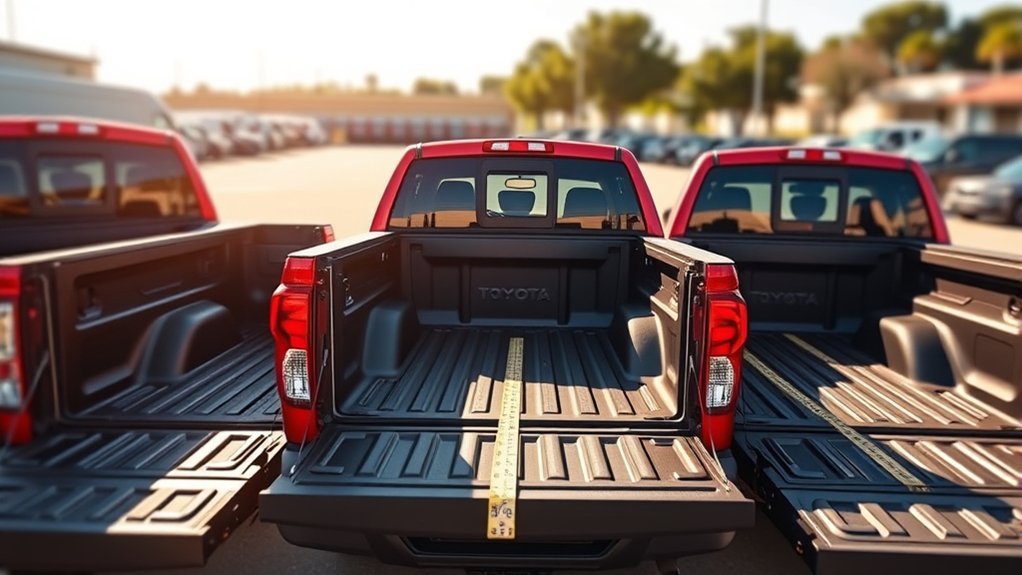
Choose the 5.5-foot bed if rear-seat room and daily parking matter most. Toyota pairs this bed with CrewMax, giving you the larger second row while keeping the truck close to the shortest current Tundra length.
Choose the 6.5-foot bed if you need one truck for family trips, home projects, recreation, and occasional work. It adds one full foot of cargo floor over the short bed and works with either Double Cab or CrewMax.
Choose the 8.1-foot bed if long boards, pipe, ladders, fencing, farm supplies, or jobsite equipment drive the purchase. Toyota pairs this bed with Double Cab, so you trade rear-seat space and compact parking for the longest cargo floor.
| Configuration | Inside Bed Length | Approx. Truck Length | Approx. Turning Circle | Rear Legroom | Best For |
|---|---|---|---|---|---|
| CrewMax, 5.5-foot bed | 65.6 inches | 233.6 inches | 48.6 feet | 41.6 inches | Passengers and daily driving |
| Double Cab, 6.5-foot bed | 77.6 inches | 233.6 inches | 48.6 feet | 33.3 inches | More bed in a shorter truck |
| CrewMax, 6.5-foot bed | 77.6 inches | 245.6 inches | 50.0 feet | 41.6 inches | Passenger and cargo balance |
| Double Cab, 8.1-foot bed | 96.5 inches | 252.5 inches | 52.0 feet | 33.3 inches | Long cargo and work use |
Important: Check Toyota’s current build tool or the truck’s window sticker before buying. Bed availability can change with trim, drivetrain, powertrain, package, and market.
[Products Worth Considering]

This custom-fit floor mat set is designed for Toyota RAV4 models from 2019 to 2025, including hybrid and gas versions, to deliver complete interior protection. It covers the passenger area, rear seat backs, trunk, and door sill areas with high edges and a seamless fit that helps block spills, dirt, pet hair, and scratches. Made from odorless all-weather TPE with a non-slip surface, it is easy to clean and built for everyday use.

This windshield sun shade umbrella is designed for Toyota Tundra models from 2007 to 2026, helping block harsh sunlight and reduce interior heat buildup. Its reflective cooling coating and high-density fabric work together to protect dashboards, seats, and trim while keeping the cabin more comfortable. The umbrella-style design installs quickly, folds down easily, and stores neatly for everyday convenience.

Custom-designed for Toyota RAV4 gasoline models from 2013 to 2018, this full-coverage interior protection set includes front and rear floor mats, a cargo liner, seat back protectors, and door sill guards. Built with odorless TPE and 3D laser fit precision, it helps block spills, dirt, pet hair, and daily wear while staying securely in place for a clean, family-friendly cabin.
What Are the Exact 2026 Tundra Bed Dimensions?
Toyota uses rounded bed names for shopping, but the inside measurements determine what fits. The three 2026 beds measure 65.6, 77.6, and 96.5 inches long. Width, wheel-well clearance, and depth remain the same across all three sizes.
| Bed Size | Inside Length | Inside Width | Between Wheel Wells | Inside Depth | Compatible Cab |
|---|---|---|---|---|---|
| 5.5-foot bed | 65.6 inches | 58.7 inches | 48.7 inches | 20.9 inches | CrewMax |
| 6.5-foot bed | 77.6 inches | 58.7 inches | 48.7 inches | 20.9 inches | Double Cab or CrewMax |
| 8.1-foot bed | 96.5 inches | 58.7 inches | 48.7 inches | 20.9 inches | Double Cab |
The 6.5-foot bed gives you exactly 12 more inches of cargo floor than the 5.5-foot bed. The 8.1-foot bed adds 18.9 inches over the 6.5-foot bed and 30.9 inches over the short bed.
A nominal 48-inch-wide sheet is narrow enough to sit between the 48.7-inch wheel wells, but only 0.7 inch of total width clearance remains. The 8.1-foot bed provides 96.5 inches of inside length, only 0.5 inch more than a nominal 8-foot sheet. Bed mats, damaged edges, warped material, and measurement tolerances can reduce that margin.
What Fits in Each Tundra Bed?
Bed length is only one part of cargo fit. Width, weight, tie-down position, tailgate support, ramp angle, bed accessories, and rear-window clearance can matter just as much.
| Cargo | Measurement Check | Practical Guidance |
|---|---|---|
| 4-by-8 plywood or drywall | Nominally 48 by 96 inches | Nominally fits between the wheel wells. The 8.1-foot bed offers the closest tailgate-closed fit. Shorter beds need proper tailgate-down support, a rack, a bed extender, or controlled overhang. |
| Common North American pallet | Commonly 40 by 48 inches | The 48-inch side is nominally narrow enough for the wheel-well gap, but measure the actual pallet and allow room for loading equipment and bed accessories. |
| 8-foot lumber, pipe, or trim | Nominally 96 inches long | The 8.1-foot bed provides the closest closed-tailgate match. Shorter beds require approved support and securement. |
| Motorcycle or mower | Full length, wheelbase, handlebar width, weight, and ramp angle | Do not assume fit from the bed name. Confirm tailgate support, ramp rating, tie-down geometry, payload, and rear-window clearance. |
| ATV or powersports equipment | Tire-to-tire width, full length, height, and loaded weight | Wheel-well clearance, ramps, anchor locations, rear-window clearance, and payload may matter more than nominal bed length. |
Leave room for your hands, straps, corner protection, and movement caused by road vibration. Secure every load with properly rated equipment so it cannot shift, fall, leak, or escape from the vehicle.
[Products Worth Considering]

This Toyota hitch cover helps protect your trailer hitch receiver from dirt and debris while adding a clean factory-style look to your vehicle's rear end. Designed for easy use, it offers a simple way to finish off your towing setup when the hitch is not in use. Its lightweight design makes it convenient to handle and install.

This custom-designed cargo net helps keep the rear trunk of a 2026 Toyota RAV4 neat, secure, and organized. Its stretchable elastic mesh construction helps prevent groceries, tools, and sports gear from sliding around, while the built-in bottom pocket and smart clips add extra storage control. A top pull tab makes installation and removal quick and easy for everyday convenience.

This mech-style heavy metal key fob cover is designed to protect compatible Toyota E-style smart keys with a precise 1:1 fit. Built with a durable zinc alloy frame and soft silicone buttons, it helps guard against daily wear while keeping full access to key functions. The set includes a metal keychain and screwdriver for easy installation, making it a practical upgrade for select Toyota models.
Tundra Bed and Load-Floor Features
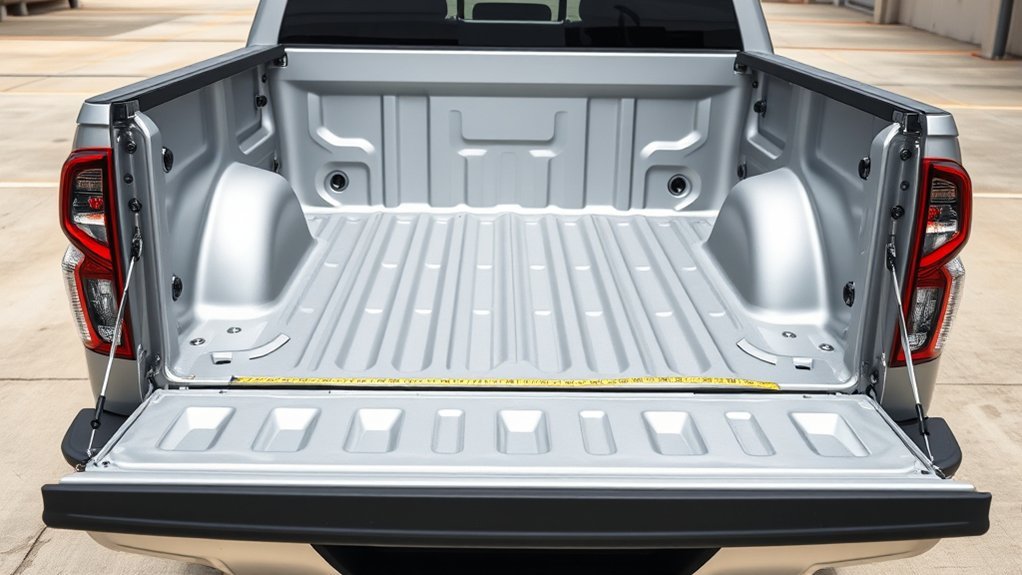
The Tundra uses a standard composite bed that Toyota describes as resistant to dents, impacts, dings, normal wear, and rust. Depending on trim and package, available equipment can include a deck rail system, LED bed lighting, a bed camera, a power tailgate, and a 120V/400W alternating current outlet.
- Composite bed: Protects the cargo surface from normal impact and corrosion concerns, but sharp edges and concentrated loads can still cause damage.
- Deck rail system: Lets you reposition compatible cleats to improve strap angles around boxes, bikes, coolers, tools, and irregular cargo.
- LED bed lighting: Helps you inspect cargo and tie-down points after dark.
- Bed camera: Can help you monitor a load from the cabin, but it does not replace a physical securement check.
- 120V/400W outlet: Can power compatible small tools, chargers, and inflators near the tailgate.
Which Tundra Cab Comes With Each Bed?
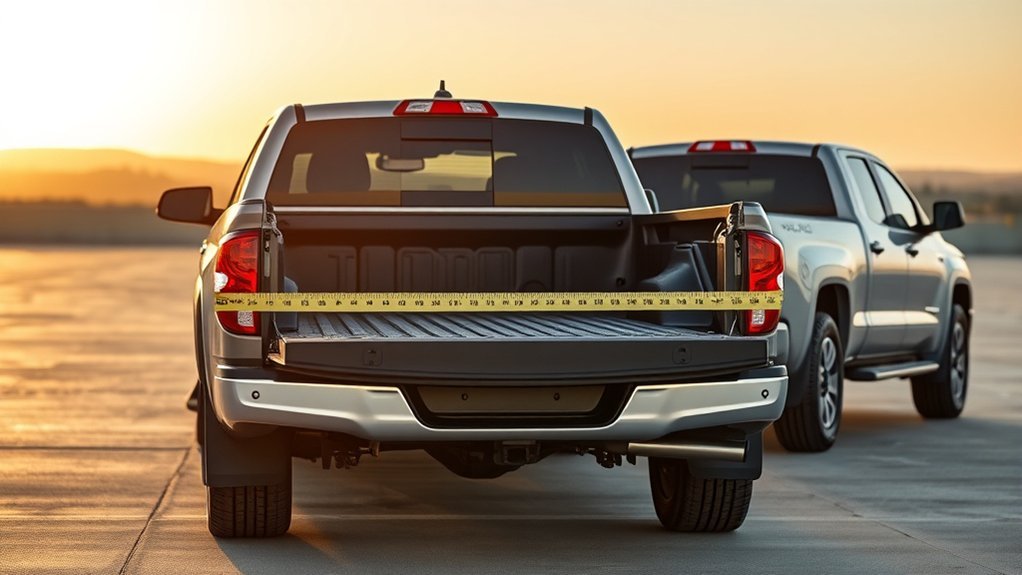
Double Cab models pair with the 6.5-foot or 8.1-foot bed. CrewMax models pair with the 5.5-foot or 6.5-foot bed.
The CrewMax 5.5-foot configuration and Double Cab 6.5-foot configuration are both about 233.6 inches long. This means you can gain one foot of inside bed length without making the truck longer if you accept the Double Cab’s smaller rear seat.
CrewMax provides 41.6 inches of rear legroom. Double Cab provides 33.3 inches. Choose CrewMax when adults, children, clients, or a work crew use the back seat regularly. Choose Double Cab when cargo length matters more than rear-seat comfort.
| Cab | Bed Options | Rear Legroom | Main Strength |
|---|---|---|---|
| CrewMax | 5.5 or 6.5 feet | 41.6 inches | Passenger comfort |
| Double Cab | 6.5 or 8.1 feet | 33.3 inches | Cargo length |
For the current 2026 U.S. lineup, the 8.1-foot bed is listed with SR and SR5 Double Cab configurations. Premium trims generally focus on CrewMax and shorter bed choices. Confirm the exact drivetrain, powertrain, package, and regional availability before ordering.
Pro tip: Check the window sticker or Toyota build summary. A listing that only says “Tundra CrewMax” or “Tundra Double Cab” does not provide enough information to confirm bed length.
How Does Bed Size Affect Payload, Towing, and Maneuverability?
Bed length changes cargo room, wheelbase, turning circle, and overall truck length. It does not determine payload or towing capacity by itself.
Toyota advertises up to 12,000 pounds of towing and up to 1,850 pounds of payload for a properly configured 2026 U.S. Tundra. Those are maximum headline ratings, not the rating for every truck. Cab, bed, trim, drivetrain, powertrain, factory equipment, and installed accessories can all change the final numbers.
Payload includes the driver, passengers, bed cargo, cab cargo, installed accessories, hitch hardware, and trailer tongue weight. A bed cover, rack, toolbox, running boards, recovery equipment, or other added parts can reduce the capacity left for people and cargo.
Use the exact truck’s load-carrying label and review its configuration-specific Tundra towing capacity. Do not apply the maximum advertised figure to every Tundra.
- Payload: Start with the driver-door Tire and Loading Information label.
- Towing: Count trailer tongue weight against available payload.
- Parking: Measure the garage, driveway, door opening, and turning area.
- Loading: Keep heavy cargo low, distribute it appropriately, and secure it against movement.
Warning: Never choose a payload or towing limit from bed size alone. Use the lowest applicable truck, axle, tire, hitch, trailer, and load-carrying limit for the exact setup.
How Do Garage Fit, Cargo, and Passengers Change the Best Choice?
The shortest current Tundra configurations are about 233.6 inches long. A CrewMax with the 6.5-foot bed is about 245.6 inches long. A Double Cab with the 8.1-foot bed reaches about 252.5 inches.
A nominal 20-foot garage is 240 inches long. That leaves only 6.4 inches of total length around a 233.6-inch truck before accounting for the closed garage door, wall trim, shelves, trailer hitch, front clearance, or space to walk around the truck. The two longer configurations exceed 20 feet.
For complete exterior measurements, see the 2026 Toyota Tundra dimensions and garage-fit guide.
Garage Clearance Considerations
Measure the garage’s usable closed-door depth, not its advertised size. Check the garage-door hardware, shelving, bikes, water heaters, steps, cabinets, wall trim, and the space needed to open the tailgate.
Also check the garage-door width, mirror clearance, driveway angle, and turning space in front of the door. A truck may technically fit inside but still be frustrating to park every day.
Bed Length Vs. Seating
Choose CrewMax if adults or children ride in the back often. Its 41.6 inches of rear legroom make it the stronger family and work-crew choice.
Choose Double Cab if the rear seat mainly carries bags, tools, or occasional short-trip passengers. The smaller rear cabin lets you access the 8.1-foot bed or use the 6.5-foot bed without increasing overall length beyond the shorter Tundra footprint.
Best Tundra Bed by Use Case
- Daily family truck: CrewMax with the 5.5-foot bed.
- Family plus longer recreational cargo: CrewMax with the 6.5-foot bed.
- More bed without a longer truck: Double Cab with the 6.5-foot bed.
- Contractor, farm, or regular long-load use: Double Cab with the 8.1-foot bed.
- Motorcycles, ATVs, or mowers: Choose only after checking actual equipment dimensions, ramp rating, tailgate support, payload, and tie-down geometry.
How Do You Choose Accessories for a Tundra Bed?
Before buying a cover, mat, rack, toolbox, rail cleat, bed divider, or other accessory, match it to the exact model year, nominal bed length, deck-rail equipment, and any installed bed caps or liners. A product described only as “fits Toyota Tundra” does not provide enough fitment information.
A hard cover usually offers stronger cargo security and weather protection. A soft cover generally costs less and provides faster access, but it normally offers less theft resistance.
A rack can carry ladders, kayaks, bikes, or rooftop equipment, but its own weight reduces remaining payload. Confirm the rack’s bed-length compatibility, rail mounting method, load rating, tonneau-cover compatibility, cab clearance, and whether the stated rating applies on-road, off-road, or while parked.
Toolboxes and bed dividers also use cargo length and may block rail cleats, outlets, lighting, or tonneau-cover hardware. Measure the installed footprint rather than relying only on the product title.
[Products Worth Considering]

This custom-fit cargo liner is designed for Toyota RAV4 hybrid and gas models from 2019 through 2025, delivering seamless coverage for the trunk and rear seat backs. Made from all-weather TPE, it helps protect against spills, dirt, pet hair, scratches, and everyday cargo wear while staying odorless and easy to clean. The integrated one-piece design with double fixation helps keep the mat securely in place for dependable use.

This frameless convex blind spot mirror helps expand your field of view for safer lane changes, passing, and merging. The HD glass design offers a clear, wide-angle rear view, while the swivel mount supports flexible positioning for cars, SUVs, trucks, vans, and RVs. Easy to install and built for all-weather use, it is a practical upgrade for everyday driving confidence.

This multifunctional car seat back organizer combines a cup holder, phone holder, and purse hook in one compact accessory to help keep rear-seat essentials neatly arranged. Designed for easy headrest installation, it adds convenient storage for drinks, phones, bags, and other everyday items while helping reduce clutter during travel. The universal fit and durable construction make it a practical upgrade for most vehicles.
Frequently Asked Questions
What Are the Different Bed Sizes for Tundras?
The 2026 Toyota Tundra offers nominal 5.5-foot, 6.5-foot, and 8.1-foot beds. Their exact inside lengths are 65.6 inches, 77.6 inches, and 96.5 inches.
What Is the Biggest Bed Available on a Toyota Tundra?
The biggest 2026 Tundra bed is the 8.1-foot bed, which measures 96.5 inches inside. Toyota pairs it with Double Cab configurations. Current U.S. listings show the long bed with SR and SR5 models.
How Long Is a Toyota Tundra CrewMax With a 5.5-Foot Bed?
A 2026 Tundra CrewMax with the 5.5-foot bed is about 233.6 inches long in U.S. specifications. This is approximately the same overall length as a Double Cab with the 6.5-foot bed.
Does the Tundra CrewMax Come With a 6.5-Foot Bed?
Yes. Applicable 2026 CrewMax configurations can be ordered with a 6.5-foot bed. That truck is about 245.6 inches long, approximately 12 inches longer than the CrewMax 5.5-foot configuration.
Can a 4-by-8 Sheet Fit in a Toyota Tundra Bed?
A nominal 48-inch-wide sheet can sit between the Tundra’s 48.7-inch wheel wells, leaving only 0.7 inch of total width clearance. The 8.1-foot bed provides 96.5 inches of inside length. Shorter beds need proper tailgate-down support, a rack, a bed extender, or controlled overhang.
Does a Longer Tundra Bed Mean More Payload?
Not necessarily. Payload depends on the complete configuration, including cab, bed, trim, drivetrain, powertrain, factory equipment, and installed accessories. Use the load-carrying label on the exact truck. Occupants, cargo, accessories, hitch equipment, and trailer tongue weight all consume payload.
Will a Toyota Tundra Fit in a 20-Foot Garage?
The shortest 2026 Tundra configurations are about 233.6 inches long, while a nominal 20-foot garage measures 240 inches. That leaves only 6.4 inches of total length before accounting for the closed door, walls, shelves, hitch, or walking room. The 245.6- and 252.5-inch configurations exceed 20 feet.
Is the Tundra Bed Wider Than the Tacoma Bed?
Yes. The 2026 Tundra bed measures 58.7 inches wide inside. The Tundra is Toyota’s full-size pickup, while the Tacoma is a smaller midsize truck with a narrower cargo bed and smaller overall footprint.
Which Tundra Bed Is Best for Daily Driving?
The CrewMax with the 5.5-foot bed works best for most daily drivers because it combines the larger rear seat with one of the shortest Tundra configurations. Choose the 6.5-foot bed when its additional cargo length justifies the larger footprint or smaller Double Cab rear seat.
Conclusion
Choose the 5.5-foot Tundra bed for CrewMax passenger space and the easiest daily-driver configuration. Choose the 6.5-foot bed for the best overall balance, especially when one truck must handle family trips, home projects, recreation, and occasional work. Choose the 8.1-foot bed when regular long-load hauling justifies the larger parking footprint and smaller Double Cab rear seat.
Before buying, measure your longest recurring cargo, usable garage space, driveway, and planned accessories. Then confirm the exact cab-and-bed pairing, load-carrying label, configuration-specific towing rating, and current Toyota availability.
References
- 2026 Toyota Tundra — Toyota, 2026
- 2026 Toyota Tundra Product Information — Toyota Canada, 2026
- 2026 Toyota Tundra — Toyota USA Newsroom, 2025
- 2026 Toyota Tundra Specifications and Configurations — Cars.com, 2026
- 2026 Toyota Tundra Trims and Dimensions — Edmunds, 2026
- How to Secure Your Load — National Highway Traffic Safety Administration